


















































Kerala Backwater Wedding — A Complete Planning Guide for NRI Couples
A Kerala backwater wedding combines the most distinctive natural landscape in India with a living cultural heritage, a world-class luxury resort ecosystem, and the specific stillness of a setting that produces wedding experiences and photographs unlike anything else in the Indian destination wedding landscape. This complete guide covers everything NRI couples need to know about planning a Kerala backwater wedding — from houseboat versus resort versus hybrid formats, the venue landscape across Alappuzha, Kumarakom and Kollam, the January to March seasonal window, Kerala Hindu and Syrian Christian ceremony traditions, houseboat logistics and regulations, authentic Kerala catering and decor approaches, realistic budget frameworks, and the common mistakes that turn one of India's most extraordinary wedding destinations into an avoidable planning challenge.


The Wedding That Moves
There is a particular kind of stillness on the Kerala backwaters that people who have experienced it describe with a consistency that suggests they are all trying to capture the same thing.
Not silence — the backwaters are never silent. The water moves. The birds call across the surface of the lake. The palm fronds shift in the coastal breeze. The distant sound of a village going about its morning arrives across the water with the specific clarity that open water carries. It is not silence. It is the opposite of the noise that urban life produces — purposeful, directional, urgent noise — replaced by the ambient, unhurried sound of a landscape that has been doing exactly this for centuries before you arrived and will continue doing it long after you leave.
It is the sound of a place that is genuinely at peace with itself.
And it is, for a growing number of NRI couples who have found that every other beautiful Indian wedding setting still carries the energy of performance and display, the most compelling argument for a Kerala backwater wedding. Not the photographs — though the photographs are extraordinary, the kind that people save to their phones from other people's wedding albums and show to partners as evidence of what is possible. Not the houseboat aesthetic — though there is something about a kettuvallam moving through still water at sunset that produces an image so specifically beautiful that no amount of descriptive language entirely captures it.
The argument is the stillness The quality of unhurried presence that a backwater wedding creates — for the couple, for the family, for the guests who arrive from London and Toronto and Dubai and discover, in a landscape they have never encountered, a version of India that is nothing like what they expected and everything like what they needed.
Kerala's backwaters — the network of lakes, rivers, canals, and lagoons that runs along Kerala's coastline for approximately nine hundred kilometres — are one of the most distinctive natural environments in India. Alappuzha, known as the Venice of the East, sits at the heart of this network. Kumarakom, on the banks of Vembanad Lake, offers the most dramatic expanse of open water. Kollam, at the southern end of the Ashtamudi Lake, provides a less-visited but equally beautiful alternative.
For NRI couples planning a destination wedding that combines natural beauty with cultural authenticity, intimate scale with genuine luxury, and the specific emotional quality of a place that feels like nowhere else — the Kerala backwater wedding is a proposition that deserves serious, complete consideration.
This guide provides everything needed to consider it completely.
The Setting Options: Water, Shore, and Hybrid
The backwater wedding is not a single format. It is a family of formats — each using the backwater landscape differently, each with its own specific advantages and challenges, and each suited to a different kind of couple and a different kind of celebration.
The Houseboat Wedding
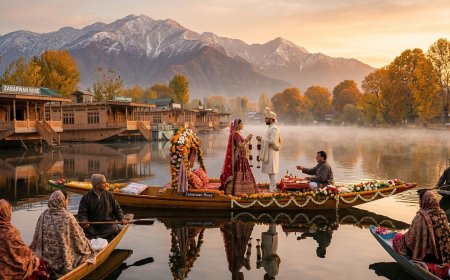
The kettuvallam — the traditional Kerala rice barge, now converted to luxury houseboat — is the image most associated with Kerala backwater weddings. A wedding that happens on the water — the ceremony performed on the deck of a houseboat as it moves through the backwaters, or moored at a specific location chosen for its setting — is the most distinctively Kerala of all the backwater wedding formats.
What the houseboat wedding delivers:
• Complete exclusivity: A private houseboat creates an entirely contained, exclusive event environment. The wedding happens on water, separated from the world by the liquid moat of the backwater itself.
• The moving backdrop: A houseboat that moves during the celebration creates a continuously changing backdrop — the landscape shifting around the guests as the celebration proceeds.
• Intimate scale: Houseboats are intimate by nature a houseboat wedding works best for small guest counts — typically 20 to 60 guests — where the intimacy of the format is an asset rather than a limitation.
What the houseboat wedding demands:
• Catering logistics: A houseboat kitchen is not a wedding catering kitchen. Quality catering for a houseboat wedding requires either a very skilled onboard team or a support vessel carrying additional kitchen infrastructure.
• Guest mobility limitations: Guests on a moving houseboat cannot easily leave or join the celebration once it is underway elderly guests, guests with mobility limitations, and guests with young children require specific consideration in the houseboat format.
• Weather vulnerability: A houseboat on open water is more exposed to wind and rain than a shore-based venue. The monsoon makes houseboat wedding events genuinely inadvisable.
The Backwater Resort Wedding
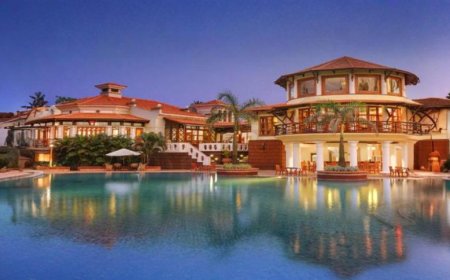
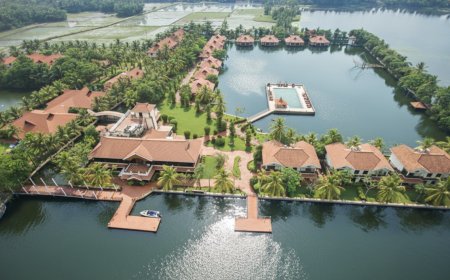
Kerala's backwater region has developed one of India's finest luxury resort landscapes — properties whose design integrates the backwater setting so completely that the distinction between the resort and the water is deliberately blurred.
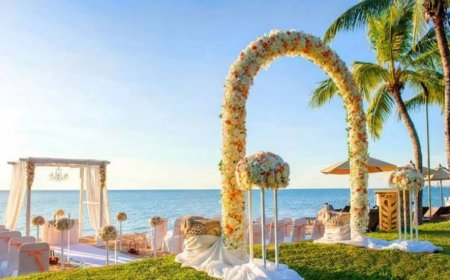
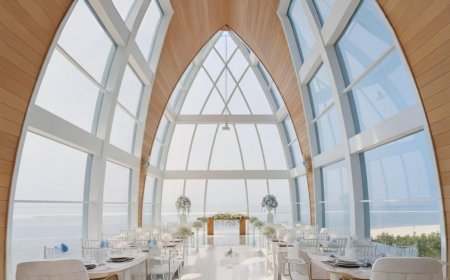
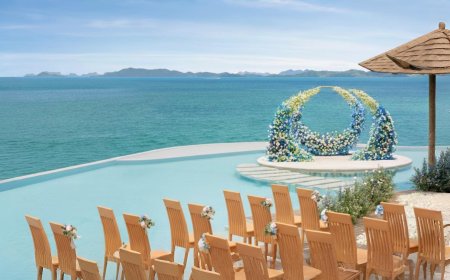
The resort wedding on the backwaters uses the water as the essential backdrop and context rather than the literal event space. Ceremonies happen on resort lawns or jetties that extend into the water. Receptions happen in pavilions open to the backwater breeze. The water is visible, audible, and present throughout — without the logistical complexity of a fully waterborne event.
What the backwater resort delivers:
• Full infrastructure: Kitchen, power, accommodation, bathrooms, event spaces — the resort provides the complete operational infrastructure that a houseboat cannot.
• Larger guest capacity: Resort venues can accommodate 100 to 300 guests — significantly more than the houseboat format.
• Weather protection: Resort venues have indoor spaces that provide weather backup — essential for Kerala's climate, which has more rainfall risk than many couples realise.
• The backwater aesthetic without the backwater logistics: The visual experience of the backwaters — the water, the palms, the light — without the operational complexity of being on the water.
The Hybrid Backwater Wedding
The most comprehensive and most memorable backwater wedding programmes combine both formats — using houseboat experiences for specific portions of the programme and resort venues for others.
A worked hybrid example:
• Arrival day: Guests arrive at the resort. Welcome dinner on the resort's backwater lawn.
• Pre-wedding celebration day: Mehendi and sangeet at the resort. Guest houseboat excursion through the backwaters — an experience of the landscape that sets the context for everything that follows.
• Wedding day: Ceremony at the resort's waterfront pavilion. Post-ceremony houseboat cruise for the couple and immediate family — the wedding photographs taken on the water at golden hour.
• Reception: On the resort lawn, open to the backwater, with the water visible and the evening light over Vembanad Lake.
This hybrid format captures the houseboat's aesthetic gift — the specific beauty of the couple on the water — while using the resort's infrastructure for the events that require it.
The Venue Landscape: Where Kerala Backwater Weddings Happen
Alappuzha — The Backwater Capital
Alappuzha — Alleppey in common usage — is the heart of Kerala's backwater geography and the centre of its destination wedding landscape. The town sits on a network of canals and is the primary departure point for backwater houseboats. Its proximity to the open water of Vembanad Lake creates the variety of water settings — narrow canal, open lake, village waterway — that makes the backwater landscape so visually rich.
Key venues in and around Alappuzha:
Marari Beach Resort — CGH Earth: A CGH Earth property — Kerala's most respected heritage hospitality group — the Marari Beach Resort sits on the coastline near Alappuzha. It combines beach and backwater access with the CGH Earth commitment to authentic Kerala design and sustainable operation. CGH Earth properties are among the most respected in Kerala's destination wedding market for their design quality, their operational reliability, and their specific expression of Kerala's architectural and culinary heritage.
Kumarakom Lake Resort: On the shores of Vembanad Lake, the Kumarakom Lake Resort is one of Kerala's most established luxury backwater properties. Traditional Kerala architecture, private pool villas extending over the lake, and an event infrastructure that has been refined through years of destination wedding experience make it one of the most reliable options in the backwater wedding landscape.
Coconut Lagoon — CGH Earth: A CGH Earth property accessible only by boat — which immediately establishes the backwater immersion that the format promises. The water-access-only approach creates an exclusivity of arrival experience that other properties cannot replicate. Heritage Kerala mansions, traditional houseboats, and the specific design philosophy of CGH Earth combine to create a genuinely distinctive wedding environment.
Kumarakom — The Lake Setting
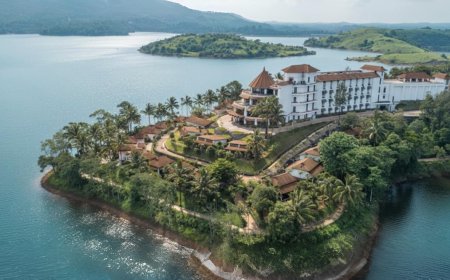
Kumarakom, on the eastern shore of Vembanad Lake, offers the most dramatic open-water setting in the Kerala backwater region. The lake's expanse — visible from the resort properties that line its shore — creates the specific quality of light and openness that the best backwater wedding photographs are built on.
The Zuri Kumarakom: A large-format luxury resort with extensive lake frontage, strong wedding event infrastructure, and accommodation that can host a full destination wedding programme. The Zuri's lake-facing event spaces and its established wedding programme make it one of the most logistically reliable choices in the Kumarakom landscape.
Kumarakom Lake Resort: As noted above — one of the most respected and most established backwater wedding properties in Kerala. Its villa accommodation, its lake access, and its event spaces have been refined through years of destination wedding experience.
Kollam and Ashtamudi Lake
For NRI couples seeking a less visited, more intimate backwater experience — away from the peak-season congestion of Alappuzha and Kumarakom — Kollam and the Ashtamudi Lake offer a genuinely beautiful alternative.
The Ashtamudi Lake is one of Kerala's largest lakes — a dramatic expanse of open water with a distinctly different character from Vembanad. The destination wedding ecosystem here is less developed than in Alappuzha — which means fewer vendor options and less operational infrastructure, but also lower venue costs, less competition for dates, and a more genuinely undiscovered quality.
For NRI couples willing to invest in the coordinator support that a less-developed wedding ecosystem requires, Kollam and Ashtamudi offer a backwater wedding experience that the photographs from Alappuzha and Kumarakom do not yet capture.
The Kerala Wedding Programme: Cultural Dimensions
The Kerala Hindu Wedding
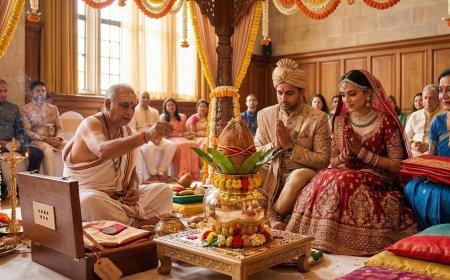
For NRI couples from Kerala Hindu backgrounds — Nair, Namboothiri, Ezhava, and other communities — the Kerala wedding ceremony has its own specific traditions that are distinct from the pan-Indian Hindu wedding format that North Indian ceremonies follow.
Key distinctions of the Kerala Hindu ceremony:
• The Nischayam: The formal engagement ceremony — held before the wedding — where the families formally agree to the marriage. For NRI couples, this ceremony is often combined with the wedding programme in Jaipur or conducted separately before the wedding trip.
• The Muhurtham timing: The ceremony timing in Kerala Hindu traditions is set by the specific muhurtham — the auspicious time determined by the couple's horoscopes. NRI couples need to confirm the muhurtham timing with the family's astrologer well in advance — because it determines the ceremony schedule around which the entire day's programme is built.
• The Manthrakodi: The giving of the wedding saree — a ceremony that carries specific significance in Kerala Hindu traditions.
• The simplicity of the ceremony: Compared to the elaborate multi-ritual North Indian Hindu wedding, many Kerala Hindu ceremonies are notably simpler in their ritual content — which creates more programme space for the personal, cultural, and celebratory dimensions of the event.
The Syrian Christian Kerala Wedding
Kerala has one of India's oldest Christian communities — the Syrian Christians, whose traditions trace to the first century AD and whose wedding ceremonies combine ancient Syriac liturgy with Kerala cultural elements in a way that is found nowhere else in the world.
For NRI couples from Syrian Christian Kerala backgrounds, the church ceremony — conducted in a Kerala church, ideally one with the specific architectural character of the oldest Syrian Christian churches — is the centre of the wedding. The backwater setting provides the venue for the celebration that follows.
What Syrian Christian Kerala couples should know:
• Kerala's oldest churches — Mar Thoma churches, Orthodox churches, Catholic churches of the Latin rite — are among the most architecturally distinctive in India. A wedding in one of these churches, followed by a reception at a backwater resort, creates a programme with extraordinary cultural depth.
• The liturgical requirements of the ceremony must be coordinated with the specific church authority — NRI couples should identify and contact the relevant church authority early in the planning process.
The Seasonal Reality: When to Plan a Kerala Backwater Wedding
As the weather guide established, Kerala's outdoor wedding window is among the most constrained in India — bounded by two separate monsoon systems.
January to Early March — The Optimal Window
January: Kerala's best outdoor wedding month. The northeast monsoon has passed. The air is clear, the landscape is at its post-monsoon greenest, and the temperatures — 26°C to 32°C — are warm without being oppressive. The backwater light in January — the quality of morning and evening light over still water — is extraordinary.
February: Conditions remain excellent. Temperatures begin to rise slightly. Still the second-best outdoor wedding month in Kerala.
Early March: Manageable but transitional. Pre-monsoon heat and humidity begin to build. Evening events remain pleasant Mid-to-late March requires careful event timing — outdoor events should be confined to late afternoon and evening.
The November-December Question
November and December present the specific Kerala challenge — the northeast monsoon, which brings rainfall to Tamil Nadu and the southeastern coast, also affects southern Kerala. November in particular carries meaningful rainfall risk for Alappuzha and Kumarakom.
The practical guidance: If November or December is the only viable window — because of NRI guest travel schedules, visa timelines, or other constraints — plan with complete indoor backup for all events and engage a Kerala-specialist planner who can advise on the specific rainfall pattern for the target date.
April to September — Avoid
The southwest monsoon arrives in Kerala in late May or early June — earlier than anywhere else in India — and runs through September. April and May bring pre-monsoon heat and humidity. Outdoor backwater wedding events from April through September are not advisable.
The Logistical Realities: What the Backwaters Require
Guest Arrival and Connectivity
The Kerala backwater region is connected to the rest of India — and to international airports — through a combination of air, rail, and road connections that NRI couples must plan carefully.
The relevant airports:
• Cochin International Airport (Kochi): The primary international gateway for the backwater region. Well-connected to major Indian cities and with direct or one-stop international connections from the UK, UAE, USA, and Singapore, Approximately one to two hours by road from Alappuzha and Kumarakom.
• Thiruvananthapuram International Airport: Relevant for couples with guests concentrating in southern Kerala or Kollam.
The road from Kochi to Alappuzha:
The NH66 highway connecting Kochi to Alappuzha is a well-maintained route that takes approximately one to one and a half hours under normal traffic conditions. NRI couples should factor in road transfer logistics for all guests arriving at Kochi airport — particularly for early morning arrivals when the road is clearest and late evening arrivals when the drive is most pleasant.
Houseboat Logistics and Regulations
The Kerala houseboat industry is regulated by the Kerala Tourism Department and the Inland Waterway Authority of India. Houseboats used for events must be licensed for the purpose — and the regulatory landscape for private events on houseboats has become more structured as the industry has grown.
What NRI couples need to know about houseboat event regulations:
• Confirm that any houseboat proposed for a wedding event is licensed for event hosting — not merely for tourist accommodation
• Confirm that the houseboat operator has the necessary permissions for the specific event format — particularly for ceremonies involving fire
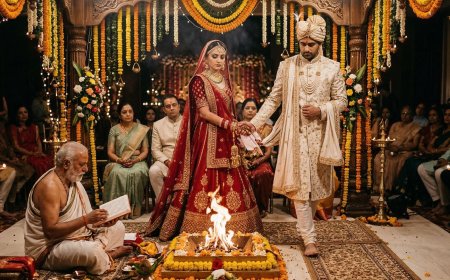
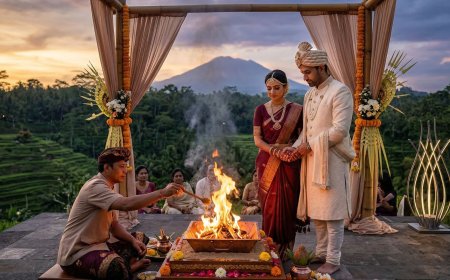
• The sacred fire of the Hindu ceremony requires specific safety arrangements on a wooden vessel — this is a genuine safety consideration, not merely a regulatory one
• Noise levels on houseboats in residential waterway areas may be subject to community expectations that are not formally regulated but are practically significant
Catering on the Water
Kerala cuisine is one of India's most distinctive and most celebrated culinary traditions — and the opportunity to serve authentic Kerala cuisine at a Kerala backwater wedding is one of the most compelling arguments for the setting.
What makes Kerala backwater catering distinctive:
• The sadya: The traditional Kerala feast — served on a banana leaf, in a specific sequence of dishes, with the specific flavours of coconut, curry leaf, mustard, and tamarind that define Kerala's culinary identity — is one of the most culturally resonant catering choices for a Kerala wedding. A sadya at a backwater wedding, served on the resort lawn or the houseboat deck, is an experience that guests from Kerala backgrounds respond to with intense emotional recognition.
• The seafood: Alappuzha and Kumarakom are fishing communities. The freshwater fish of the backwaters — karimeen, the pearl spot fish that is specific to Vembanad Lake — and the coastal seafood of the Arabian Sea coastline are available at a quality and a freshness that no other setting can match.
• The coconut-forward cuisine: Kerala's use of coconut — in every form, at every meal, in every context — gives its cuisine a specific richness and sweetness that is unlike any other Indian regional tradition.
Catering quality considerations for houseboat events:
The houseboat kitchen — a small galley kitchen on a vessel designed for four to eight guest accommodation — is not equipped for wedding-scale catering. Quality houseboat wedding catering requires either a support vessel with expanded kitchen capability or pre-preparation at a shore kitchen with careful transport and service logistics.
The Decor Approach: Working With the Landscape
The Principle of Natural Integration
Kerala's backwater landscape is one of the most naturally beautiful in India. The specific quality of that beauty — the green of the coconut palms against the silver of the water, the simple forms of traditional Kerala architecture against the open sky, the abundance of tropical florals in the landscape — is best honoured by a decor approach that integrates with the natural environment rather than competing with it.
The decor mistake that is most common at Kerala backwater weddings:
Importing the elaborate, maximalist decor style of a North Indian wedding — the chandelier installations, the heavy floral arrangements, the complex architectural structures — into a setting that is naturally simple and naturally beautiful. The result is a visual competition between the decor and the landscape that the landscape always wins — leaving the decor looking expensive, incongruous, and slightly desperate.
What works with the Kerala backwater setting:
• Natural materials: Coir, bamboo, rattan, terracotta, banana fibre — materials that are native to the Kerala landscape and that extend the landscape's visual vocabulary rather than contradicting it
• Tropical florals: Hibiscus, bird of paradise, heliconia, anthurium, lotus — the flowers of Kerala's landscape, used abundantly in their natural forms rather than in the engineered arrangements of a North Indian wedding decor
• Banana leaf and coconut: The banana leaf — used in Kerala culture as a serving vessel, a ceremonial element, and a decorative material — is one of the most powerful and most specific visual elements available to a Kerala backwater wedding decorator
• Oil lamps: The nilavilakku — the traditional Kerala oil lamp — is both a ceremonial element of the Kerala wedding and one of the most beautiful light sources available for evening events. A Kerala backwater resort at night, lit primarily by nilavilakku, is a specific visual experience that electric lighting cannot replicate
• Water elements: Floating flowers, floating candles, water-level lighting — elements that engage the water itself as a decorative surface
The Colour Palette
Kerala's natural colour palette — the deep green of the palms, the white of the coconut flower, the terracotta of the laterite stone, the gold of the rice harvest, the deep red of the hibiscus — is one of the most beautiful natural colour systems in India.
A Kerala backwater wedding palette built from these colours — rather than importing the red and gold of North Indian wedding conventions or the white and green of Western minimalist aesthetics — produces a visual coherence between the setting and the celebration that is deeply satisfying and deeply specific.
Common Mistakes NRI Couples Make With Kerala Backwater Weddings
Underestimating the Rainfall Risk
Kerala receives more annual rainfall than almost any other part of India — and its rainfall is not confined to the monsoon months. November through December carry meaningful northeast monsoon risk. April brings pre-monsoon showers. Even in the optimal January to March window, occasional unseasonal rain is possible.
Correction: Every Kerala backwater wedding requires a complete, equipped indoor backup for all outdoor events. This is not an optional contingency — it is the basic risk management requirement of planning an outdoor event in one of India's wettest states.
Planning for More Guests Than the Houseboat Format Accommodates
The houseboat wedding is intimate by design and by physical constraint. A couple who plans a houseboat ceremony for 150 guests is planning an event that the format cannot deliver — resulting either in inadequate space, multiple houseboats that fragment the event, or a logistical complexity that overwhelms the intimate quality that makes the format compelling.
Correction: If the guest count exceeds 60, plan the ceremony at a resort waterfront location and use houseboats for the portrait session and for specific programme elements rather than for the full event.
Not Engaging a Kerala-Specialist Planner
Kerala's backwater wedding landscape has its own specific regulatory requirements, its own specific vendor ecosystem, and its own specific operational challenges that a general India wedding planner who handles Kerala occasionally does not fully understand.
Correction: Engage a planner with a specific Kerala portfolio — ideally one with established relationships with the CGH Earth properties and with the Kerala houseboat operators who are licensed for event hosting.
Ignoring the Cultural Dimension
Many NRI couples plan a Kerala backwater wedding primarily as a scenic destination choice — without engaging with Kerala's specific cultural traditions, its specific culinary heritage, or the specific ceremonies of their own Kerala community background.
The result is a beautiful setting hosting a generic Indian wedding — which misses the most compelling dimension of what a Kerala backwater wedding can be.
Correction: Engage with Kerala's cultural specificity — the sadya, the nilavilakku, the specific music traditions, the specific textile heritage of the region — and build those elements into the wedding programme. The setting and the culture together produce something that neither produces alone.
Not Planning for Humidity
Kerala in January is warm and has a coastal humidity that is more significant than its temperatures suggest. Guests in elaborate wedding attire — particularly heavily embroidered garments — may find sustained outdoor exposure in January Kerala more physically demanding than they anticipated.
Correction: Plan outdoor event timing for late afternoon and evening when temperatures are lower and the water breeze is more pleasant. Ensure all indoor spaces are adequately air-conditioned. Brief guests on the climate — particularly NRI guests arriving from the UK or Canada who may not have experienced tropical coastal humidity.
The Kerala Backwater Wedding Budget Framework
The following gives a realistic budget framework for a Kerala backwater wedding of 80 to 120 guests in the January to February optimal season.
Venue hire — backwater resort, two to three days: • ₹4–15 lakhs depending on property tier and season
Catering — Kerala cuisine focus: • ₹2,000–₹5,000 per plate depending on resort catering or independent caterer
Houseboat hire — portrait session and programme element: • ₹50,000–₹2 lakhs per day depending on vessel quality and duration
Décor — natural material, Kerala-appropriate: • ₹4–12 lakhs across all events
Photography and videography: • ₹3–10 lakhs for quality coverage including houseboat session
Entertainment — Kerala classical music, traditional performance: • ₹1–4 lakhs across events
Wedding planner — Kerala specialist: • ₹2–6 lakhs for full service
Guest accommodation: • ₹8,000–₹25,000 per room per night depending on property
Airport transfers and local transportation: • ₹1–3 lakhs for full guest transfer management
Total realistic budget for a quality Kerala backwater wedding of 80 to 120 guests: ₹25–65 lakhs with significant variation by venue tier and guest count.
The Wedding in the Landscape That Has Always Been There
The Kerala backwaters have been doing what they do for longer than anyone can accurately remember.
The water moving through the channels between the rice paddies. The coconut palms bending slightly in the coastal breeze. The fishermen moving across the surface of Vembanad Lake in the early morning. The birds calling across the still water at dusk. The specific quality of light that exists in this specific place — the silver-green light of a Kerala morning, the gold light of a Kerala evening — that exists nowhere else in quite the same way.
This landscape does not need a wedding to be beautiful. It has been beautiful for centuries without one.
But there is something that happens when a wedding — with its specific human weight of love and family and beginning and commitment — is placed within this landscape. The two things meet each other. The ceremony's ancient human significance and the landscape's ancient natural significance find, in the specific moment of a Kerala backwater wedding, a resonance that produces the particular quality that every couple who has done this tries and mostly fails to adequately describe.
It is not just beautiful. It is true. It is the specific truth of two people beginning together in a place that has been here since before beginning was a concept — a place that will continue to be here long after the celebration is memory.
Plan it carefully. Execute it thoughtfully. Choose the season and the venue and the cultural elements that honour what the landscape offers.
And then stand on the deck of the kettuvallam as it moves through the still water at golden hour — or on the resort lawn as the evening breeze comes off Vembanad Lake — and let the place do what it has always done.
Be beautiful. Be still. Be exactly what it is.
Your wedding will be all the better for it.
Published by NRIWedding.com — The Premium Global Platform for Non-Resident Indians Planning Indian Weddings From Abroad.
What's Your Reaction?
 Like
0
Like
0
 Dislike
0
Dislike
0
 Love
0
Love
0
 Funny
0
Funny
0
 Angry
0
Angry
0
 Sad
0
Sad
0
 Wow
0
Wow
0