


































































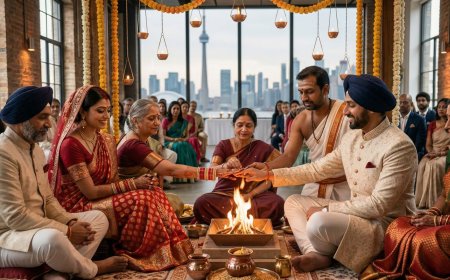



Jim Corbett Jungle Resort Weddings — Wildlife, Romance and Everything NRI Couples Need to Know
For NRI couples who want a destination wedding that goes beyond beautiful backdrops to deliver a genuinely unforgettable experience — one where wild elephants move through the forest on the morning of the ceremony and tiger sightings become the wedding story told for decades — Jim Corbett National Park offers something no other Indian destination can. This complete guide covers everything NRI couples need to know about planning a Jim Corbett jungle resort wedding — from the resort landscape and venue selection, the three-day wildlife-integrated programme, the optimal November to February season, jungle-appropriate decor and catering, wildlife safety briefing for guests, safari programme planning, realistic budget frameworks, and the common mistakes that turn one of India's most extraordinary wedding destinations into an avoidable planning challenge.


The Wedding That Woke Up to Elephants
The morning of the wedding day began the way no other wedding morning begins.
Not with the makeup artist arriving at seven. Not with the family gathering in the corridor outside the bridal suite. Not with the particular combination of excitement and logistical anxiety that characterises the early hours of a wedding day in every other setting.
It began with elephants.
A herd — four adults and two calves, moving through the forest edge on the far side of the resort lawn — doing what elephants do in the early morning in the Terai foothills of the Himalayas. Moving through the landscape with the specific unhurried authority that only very large animals in their own territory possess. Completely indifferent to the fact that fifty people were watching them from the resort's viewing deck with the particular quality of attention that wildness produces — breath held, voices dropped, the human world suspended in the presence of something older and larger than itself.
The bride watched them from the window of her room for forty minutes before anyone came to begin the makeup.
She said, afterward, that it was the moment the wedding became real to her. Not the ceremony — though the ceremony was everything it was supposed to be. Not the photographs — though the photographs, taken against the sal forest at golden hour, were unlike any wedding photographs she had seen. The elephants. The specific, unrepeatable fact of standing in her wedding clothes watching wild elephants move through a forest on the morning of her wedding.
That is what Jim Corbett offers.
Not a scenic backdrop. Not a picturesque setting. Not the manufactured wildlife experience of a zoo or a safari park. But the genuine, unscripted, unpredictable presence of a living wild ecosystem — one of India's oldest and most important — as the context within which a wedding celebration takes place.
The Jim Corbett National Park — India's oldest national park, established in 1936, named after the hunter-turned-conservationist who devoted his later life to protecting the Bengal tigers and leopards he had once hunted — covers over five hundred square kilometres of Himalayan foothills in the Kumaon region of Uttarakhand. Its sal forests, its river valleys, its grasslands and hills create a landscape of extraordinary, unhurried beauty — a beauty that has nothing to perform and nothing to prove, that exists entirely on its own terms.
For NRI couples who have been to enough beautiful weddings to know that beauty alone is not what makes a wedding unforgettable — that the weddings which stay with guests and couples for decades are the ones that produced a genuine experience, a felt reality, a moment of actual wildness or actual peace or actual connection with something beyond the celebration itself — Jim Corbett is a proposal that deserves serious consideration.
This guide makes that consideration complete.
The Core Reality: What a Jim Corbett Wedding Actually Involves
The Location and Landscape
Jim Corbett National Park sits in the Nainital district of Uttarakhand — approximately two hundred and fifty kilometres from Delhi, accessible by road in approximately five to six hours or by train to Ramnagar followed by a short road transfer.
The park is divided into five zones — Bijrani, Jhirna, Dhikala, Durga Devi, and Sonanadi — each with different wildlife density and accessibility characteristics. The wedding resort landscape sits on the periphery of the park and in the buffer zones — in the Corbett region broadly defined — rather than within the core national park boundaries where permanent structures are not permitted.
The Corbett landscape that surrounds these resorts:
• The sal forest: The dominant forest type of the Corbett region — tall, clean-trunked sal trees creating a canopy that filters light in a way that is specific to this landscape and that produces the particular quality of jungle photography that Corbett weddings are known for • The Ramganga river: The river that runs through the park — its valley creating the grasslands and riverine forest that support the park's wildlife • The Himalayan foothills: The distant ridgeline of the Himalayan foothills visible from much of the Corbett landscape — providing the specific quality of mountain-horizon backdrop that no other Indian wildlife destination offers • The wildlife: Tigers, leopards, elephants, gharials, king cobras, over six hundred species of birds — the Corbett ecosystem's wildlife is not guaranteed to appear at a wedding but is sufficiently present in the landscape that encounters are common and genuine
The Wedding Resort Landscape
The Jim Corbett region has developed, over the past two decades, a resort landscape that ranges from luxury properties with genuine design quality to budget resorts whose marketing outpaces their delivery. For NRI couples planning destination weddings, the quality gradient is significant — and the due diligence required to identify the genuinely suitable properties is greater than in more developed destination wedding markets.
The properties that consistently deliver quality wedding experiences:
The Riverview Retreat: One of the oldest and most respected properties in the Corbett region. The resort sits on the Kosi river — the western boundary of the park — with direct river frontage that creates one of the most distinctive event settings in the destination wedding landscape. The sound of the Kosi river as a constant background to the wedding events, the river stones and riverine forest as the visual environment, the specific quality of the Kosi valley light — these are the elements that make Riverview Retreat weddings consistently distinctive.
Jim's Jungle Retreat: A property with a specific connection to the Corbett conservation legacy — named for Jim Corbett himself, operating with a genuine commitment to the wildlife and forest context that surrounds it. The resort's design — cottages and pavilions integrated into the sal forest — creates an immersive jungle experience that more commercially oriented properties cannot replicate.
The Tarangi Resort: A larger-format property with more conventional luxury hotel infrastructure and stronger capacity for larger wedding events. For NRI couples with guest counts above 150, Tarangi offers the event infrastructure that the more boutique properties cannot.
Solluna Resort: A boutique luxury property with design quality that is among the highest in the Corbett region — intimate, carefully designed, and oriented toward the kind of couple for whom the quality of the environment matters more than the scale of the event.
The Jim Corbett Wedding Programme: What Three Days Looks Like
The Jim Corbett destination wedding is at its most compelling when it is planned as a three-day immersive programme — where the wildlife and forest experience is woven into the wedding programme rather than treated as an optional extra.
Day 1 — Arrival and the Jungle Welcome
The journey is part of the experience.
The drive from Delhi to Corbett — through the Terai lowlands, through the mango groves and sugarcane fields of western Uttarakhand, into the increasingly forested approaches of the Corbett buffer zone — is a journey that prepares guests for the destination in a way that an airport arrival never does. NRI guests who have been in India for forty-eight hours before the wedding, making their way through Delhi's urban intensity, arrive at the Corbett resort with the specific quality of arrival that a genuine landscape transition creates.
The welcome experience in the jungle context:
• A bonfire welcome: The evening bonfire — a standard offering at most Corbett resorts — takes on specific significance in the jungle context. The sound of the forest at night, the possibility of wildlife sounds in the darkness beyond the firelight, the specific quality of a sky unpolluted by urban light — these elements give the bonfire welcome a genuinely immersive quality.
• The naturalist briefing: Most quality Corbett resorts have in-house naturalists who can brief arriving guests on the wildlife and ecology of the surrounding landscape. A thirty-minute naturalist briefing — explaining what the guests might see, hear, and experience over the following days — immediately orients guests to the specific world they have entered and builds the anticipation that makes wildlife encounters more meaningful.
• A jungle-themed welcome dinner: Kerala uses its culinary heritage. Jaipur uses its royal culinary tradition. Corbett uses the cuisine of the Kumaon hills — pahadi cuisine, with its specific use of local grains, local spices, and locally foraged ingredients — as the culinary identity of the welcome experience. A welcome dinner that introduces guests to this specific regional tradition, served outdoors in the forest context, begins the cultural immersion that makes a destination wedding different from a wedding that happens to be in a beautiful place.
Day 2 — Pre-Wedding Celebrations
The jungle safari as a pre-wedding programme element:
The morning of the day before the wedding — before the mehendi or sangeet — is the natural time for a group jungle safari. The Corbett zones open for safari at dawn — the best time for wildlife activity — and a group safari for the wedding party and close family creates a shared experience that generates the kind of conversation and laughter and collective memory that no planned entertainment can produce.
What the safari delivers:
• The possibility — never a certainty, always a possibility — of a tiger sighting. A Corbett tiger sighting on the morning before the wedding is the wedding story that gets told for years.
• Bird encounters of extraordinary quality — Corbett's bird density is such that even non-birders find themselves captivated by the specific beauty of a great hornbill or a kingfisher or a crested serpent eagle encountered at close range.
• The forest experience itself — moving through sal forest in an open jeep at dawn, with the light coming through the canopy and the forest waking around the vehicle, is a sensory experience that is compelling regardless of what wildlife is or is not encountered.
The mehendi in the jungle context:
A mehendi celebration in the Corbett landscape — on the resort lawn with the forest edge visible, with the sound of the forest as ambient background, with jungle-inspired floral design and the specific aesthetic of natural materials — is a version of that celebration that is genuinely of its place.
The sangeet around the bonfire:
The Corbett sangeet has a natural home — the bonfire clearing, under the sal canopy, with the forest sounds as counterpoint to the music. The transition from the formal sangeet programme to the bonfire dancing that follows it is the most natural transition in the Corbett wedding programme. Guests who were initially uncertain about the jungle setting have typically been entirely won over by this point.
Day 3 — The Wedding Day
The wedding ceremony in the sal forest:
A wedding ceremony set at the edge of the sal forest — with the forest as the backdrop, with the specific quality of Corbett morning light filtering through the canopy — is one of the most photographically distinctive ceremony settings available in the Indian destination wedding landscape.
The specific photography opportunities:
• The forest edge ceremony: The couple at the centre of the frame, the sal trees rising behind them, the dappled forest light creating the specific quality of natural illumination that no studio can replicate.
• The river setting: For resorts with river frontage — particularly the Riverview Retreat on the Kosi — the river itself as foreground and backdrop creates images of extraordinary visual power.
• The wildlife encounter portrait: The couple in their wedding attire in the jungle landscape — with a deer in the background, with a langur in a tree above, with the forest light on their faces — produces the photographs that make Corbett weddings immediately identifiable and immediately distinctive.
• The Himalayan backdrop: On clear days — particularly in the winter season — the distant Himalayan ridgeline is visible from the Corbett landscape. A wedding portrait with snow peaks on the horizon is available in very few Indian wedding settings.
The evening reception:
The Corbett evening reception — outdoors, under the jungle sky, with the forest sounds as ambient backdrop, with lighting designed to create warmth against the darkness of the forest — is the culmination of a three-day experience that has been building toward this specific moment. Guests who have spent three days in the jungle arrive at the reception with a quality of presence and engagement that banquet hall weddings almost never produce.
The Wildlife Dimension: Managing the Unpredictable
The Gift and the Challenge
The wildlife that makes Jim Corbett weddings distinctive is also the element that makes them uniquely unpredictable. Wildlife does not respect event schedules. A herd of elephants moving through the resort grounds at the moment the ceremony is about to begin is an extraordinary experience — and also a logistical complication that requires calm management rather than panic.
What NRI couples need to understand about wildlife at their wedding:
• Elephant presence is common: The Corbett buffer zone has a resident elephant population that moves through resort areas regularly. Encounters are more likely in the morning and evening. Resort staff are experienced in managing these encounters safely — guests should follow resort guidance immediately and without argument.
• Leopard sightings are possible: Leopards are present in the Corbett landscape and are occasionally seen near resort perimeters, particularly at night. Resort lighting and layout are designed with wildlife safety in mind.
• Tiger sightings near resorts are rare: Tigers are present in the ecosystem but typically avoid the human activity around resort areas. A tiger sighting from the resort itself would be extraordinary rather than expected.
• Snake awareness: The Corbett ecosystem has a rich herpetofauna — king cobras, common kraits, Russell's vipers are all present. Guests should be briefed on basic safety practices — not walking barefoot in grass at night, checking footwear left outside, staying on paths rather than walking through undergrowth.
Briefing Guests on Wildlife Safety
A comprehensive guest briefing on wildlife safety — delivered by the resort naturalist on arrival day — is not optional at a Corbett wedding. It is the basic responsibility of care that the host couple owes to guests who may have no previous experience of living in proximity to wild animals.
The briefing should cover:
• What wildlife may be encountered and what to do when it is • Basic snake safety practices • Not feeding any wildlife under any circumstances • What to do if an elephant or other large animal is seen near an event space • The resort's specific emergency protocols
Framing the briefing positively:
The wildlife safety briefing should be framed as an enhancement of the experience — as the context that makes the wildlife encounters meaningful and safe — rather than as a list of risks that might make anxious guests more anxious. The message is: we are in a living wild ecosystem, here is how to engage with it respectfully and safely.
The Seasonal Reality: When to Plan a Corbett Wedding
The Jim Corbett region has a clear seasonal structure that directly determines when a destination wedding is advisable.
November to February — The Optimal Window
November: Post-monsoon Corbett is at its most lush — the landscape is green, the rivers are running, the wildlife is active. Temperatures are pleasant — 20°C to 28°C during the day, dropping to 10°C to 15°C at night. Evening outdoor events require light wraps or shawls but are entirely comfortable.
December and January: The peak wildlife season — the dry winter conditions concentrate wildlife near water sources, making tiger and elephant sightings more frequent than at other times of year. Temperatures drop significantly — daytime 15°C to 22°C, nights 5°C to 10°C. Outdoor events in December and January require heating infrastructure — but the crisp, clear air and the specific quality of winter light in the Corbett landscape make this the most photographically beautiful period.
February: Temperatures begin to rise pleasantly. Wildlife remains active. February is arguably the best month for a Corbett wedding — comfortable daytime temperatures, warmer nights than January, good wildlife activity, and the first hints of spring in the sal forest.
March — The Transition
March brings rising temperatures and the beginning of the pre-summer dry season. Wildlife activity remains good — actually increases as water sources become scarcer. Daytime temperatures become warm — 28°C to 35°C — but evenings remain pleasant.
April to June — The Hot Season
Temperatures in April and May reach 35°C to 42°C. The landscape dries and the sal forest loses some of its lushness. Outdoor events are not advisable in the heat of the day but evening events remain possible with appropriate cooling provisions.
July to October — The Monsoon
The Corbett region receives significant monsoon rainfall from July through September. The park itself is closed to visitors during the monsoon. Destination wedding events in the monsoon season are not advisable.
The Decor Approach: The Jungle Aesthetic
The Natural Integration Principle
Like the Kerala backwater wedding, the Jim Corbett wedding is most successful when its decor approach integrates with the natural environment rather than competing with it.
The Corbett landscape's visual vocabulary:
• The sal forest: Tall, clean lines, filtered light, the specific green-brown palette of the sal canopy
• The river stones: The smooth, varied grey stones of the Kosi and Ramganga riverbeds — natural, abundant, free — are one of the most beautiful and most contextually specific decorative materials available
• The local timber: The natural wood tones of the forest — used in furniture, in structural elements, in decorative pieces — extend the forest aesthetic into the event space
• The tribal and regional craft tradition: The Kumaon hills have a specific craft tradition — wooden carving, copper work, the specific textile patterns of the hill communities — that can be incorporated into the decor as authentic regional expression
What works in the Corbett decor context:
• Earthy, natural palette: Terracotta, ochre, forest green, warm ivory, deep brown — colours that belong to the landscape rather than contradicting it
• Natural material abundance: Dried grasses, branches, river stones, wooden elements, bamboo — materials that are native to the forest context
• Botanical wildness: Flowers and greenery arranged with the specific aesthetic of wild abundance rather than the manicured precision of a florist's studio — arrangements that look as if they could have been gathered from the surrounding forest
• Fire and candlelight: The Corbett evening, lit primarily by candles and oil lamps with the forest darkness surrounding the event space, creates an atmosphere that electric lighting cannot replicate
What to avoid:
• Chandelier installations and formal ballroom aesthetics — contextually wrong in a jungle setting and visually competing with the natural environment
• Synthetic materials and artificial flowers — inconsistent with an environment whose entire appeal is natural authenticity • Heavy floral arrangements in conventional wedding-industry style — the elaborate North Indian wedding floral aesthetic is a visual mismatch with the Corbett jungle setting
Common Mistakes NRI Couples Make With Corbett Weddings
Choosing the Resort Based on Price Rather Than Quality
The Corbett region has a significant number of resorts that market themselves as luxury wedding venues but whose actual infrastructure — kitchen quality, event space, accommodation standard, backup power — does not support the expectations that the marketing creates.
Correction: Visit or arrange a representative visit to any Corbett resort before booking. Specifically assess the kitchen infrastructure, the event space quality, the accommodation standard, the backup power provision, and the management's experience with destination wedding events. References from previous destination wedding clients are essential.
Not Briefing Guests About the Environment
NRI guests arriving from the UK, USA, or Canada may have no previous experience of living in proximity to wild animals. Without adequate briefing, wildlife encounters — however wonderful — can produce anxiety rather than wonder, and basic safety practices may not be observed.
Correction: Include wildlife and environment briefing in the guest welcome — both in written form in the guest welcome pack and verbally from the resort naturalist on arrival day.
Planning Events That Conflict With Wildlife Activity Patterns
Wildlife is most active at dawn and dusk — the same times that are most photographically beautiful and therefore most attractive for outdoor wedding events. A ceremony timed at dawn coincides with peak wildlife activity on the resort perimeter — which is an extraordinary coincidence and also a potential complication.
Correction: Discuss event timing with the resort management in the context of typical wildlife activity patterns. Build the event schedule with awareness of when wildlife encounters are most likely — treating them as experiences to be embraced rather than complications to be avoided, while ensuring that the event programme has the flexibility to accommodate them.
Underestimating the Distance and Travel Logistics
Five to six hours by road from Delhi is not a trivial journey for elderly guests, for guests with young children, or for NRI guests who have been traveling internationally for twenty or more hours before the road transfer. The arrival experience at a Corbett resort after this journey is part of the wedding programme — and a poorly managed arrival is a poor beginning.
Correction: Arrange comfortable, high-quality transport for guest transfers — not the cheapest available vehicle but the most comfortable one. Plan arrival day with adequate rest time before any scheduled programme element. Consider whether helicopter transfers — available for the Delhi to Corbett route — are appropriate for elderly guests or guests with mobility limitations.
Not Having a Monsoon-Proof Backup for Shoulder Season Events
October and early November — the post-monsoon shoulder season — carry residual rainfall risk that couples sometimes underestimate because the monsoon is technically over. A shower in October Corbett can be brief but significant, and an outdoor event without cover is vulnerable.
Correction: For any Corbett wedding outside the peak November to February window, ensure that complete covered backup is available and equipped for all outdoor events.
The Jim Corbett Wedding Budget Framework
The following gives a realistic budget framework for a Jim Corbett destination wedding of 60 to 100 guests over three days in the November to February season.
Venue hire — jungle resort, three days: • ₹3–10 lakhs depending on property and season
Catering — per plate across all events: • ₹2,000–₹4,500 per plate
Décor — jungle-appropriate natural aesthetic: • ₹4–10 lakhs across all events
Photography and videography — including jungle portrait sessions: • ₹3–10 lakhs
Entertainment — bonfire, naturalist, folk music: • ₹1–3 lakhs
Safari experiences — group jeep safaris: • ₹50,000–₹1.5 lakhs for group safari programme
Wedding planner — Corbett specialist: • ₹2–5 lakhs
Guest accommodation: • ₹6,000–₹20,000 per room per night depending on property
Delhi to Corbett transfers — quality vehicles: • ₹1–3 lakhs for full guest transfer management
Total realistic budget for a quality Jim Corbett destination wedding of 60 to 100 guests: ₹20–50 lakhs with significant variation by resort tier and guest count.
The Emotional and Cultural Layer: Wildness as Wedding Witness
There is a philosophical dimension to the Jim Corbett wedding that is worth naming — beyond the practical planning considerations and beyond the aesthetic quality of the photographs.
The wedding ceremony is, at its deepest, an act of witness. Two people make a commitment in front of witnesses — family, friends, the community that will hold them to what they have promised. The witnesses matter. Their presence gives the commitment its weight and its public reality.
In Jim Corbett, the witnesses include the forest.
Not metaphorically. Not poetically. Literally — the sal trees that have been growing for longer than any wedding tradition, the river that has been running through this valley for longer than human memory, the wildlife that moves through this landscape with complete indifference to human celebration and complete integrity of its own existence.
The wedding that happens in the presence of wildness is a wedding that has been witnessed by something larger than the human world. Something that was here before us and will be here after us. Something that does not require our celebration and is not diminished by our absence.
For NRI couples who feel, sometimes, that the wedding industry's relentless escalation of scale and spectacle has lost touch with what a wedding is actually for — the Jim Corbett wedding offers a recalibration. A reminder that the most important thing happening is not the decor or the catering or the photography, but two people choosing each other in a specific place, at a specific time, in the presence of witnesses who include the oldest and most permanent things in the landscape.
The elephants do not care about the wedding.
That is precisely what makes their presence a gift.
Jim Corbett Wedding Planning Checklist
Twelve to Eighteen Months Before
• Confirm November to February target season
• Research and shortlist quality Corbett resort properties
• Engage Corbett-region wedding planner or experienced coordinator
• Arrange representative visits to shortlisted properties
• Build initial budget with destination wedding and remote location premium
Nine to Twelve Months Before
• Confirm resort and sign contract — with covered backup provision
• Begin guest accommodation planning — full resort block if possible
• Confirm Delhi to Corbett transfer logistics
• Begin wildlife safety briefing planning — identify resort naturalist
• Develop three-day programme framework including safari elements
Six to Nine Months Before
• Confirm all vendor contracts — decorator, photographer, catering, entertainment
• Finalise jungle-appropriate decor concept
• Begin guest travel communication — Delhi arrival logistics, road transfer details
• Confirm safari zone bookings — Corbett zones require advance booking
• Plan elderly guest and mobility provisions — road transfer comfort, accommodation accessibility
Three to Six Months Before
• Finalise day-by-day programme with timing and wildlife activity awareness
• Guest communication — environment briefing, clothing guidance, wildlife safety
• Confirm all event timing with resort in context of wildlife activity patterns
• Weather contingency planning — covered backup for all outdoor events
• Finalize transport arrangements — vehicle quality confirmation
Final Month
• Wildlife safety briefing materials prepared for guest welcome pack
• Final resort walkthrough — confirm event space setup and backup readiness
• Naturalist briefing scheduled for arrival day
• Weather monitoring — daily from two weeks before
• Final vendor briefing — jungle-specific logistics for each team
The Wedding the Forest Witnessed
Jim Corbett National Park was established to protect what was being lost.
The tigers and elephants and leopards that Jim Corbett had spent the first part of his life hunting and the second part of his life protecting. The sal forest that had been retreating before the agricultural expansion of the Terai. The rivers and grasslands and hill ecosystems that support one of India's richest concentrations of wildlife.
It worked. The park exists. The tigers are there. The elephants move through the forest edge in the early morning. The Kosi river runs clear over its stone bed. The sal canopy rises over the wedding ceremony space.
None of this was inevitable. It was the result of deliberate human choices — choices to protect, to conserve, to hold a boundary between the wild world and the expanding human one.
The NRI couple that chooses Jim Corbett for their wedding is, in a small but real way, participating in that choice. They are bringing their celebration to the forest rather than manufacturing the forest's appearance in a generic venue. They are choosing to be in the presence of the wild world — to let it witness their beginning, to let its sounds be the ambient soundtrack of their ceremony, to let its light be the light in their photographs.
That choice matters.
Not just for the wedding. But for what the wedding says about what the couple values — about the world they want to protect and the places they want their children to know.
Plan it with care. Execute it with respect for what surrounds it.
And then stand at the forest edge on your wedding morning — in your finest clothes, in the specific quality of the Corbett dawn light, with the sal trees rising behind you and the possibility of elephants somewhere in the middle distance — and let the forest witness what you are beginning.
It has been here long enough to know what matters.
Published by NRIWedding.com — The Premium Global Platform for Non-Resident Indians Planning Indian Weddings From Abroad.
What's Your Reaction?
 Like
0
Like
0
 Dislike
0
Dislike
0
 Love
0
Love
0
 Funny
0
Funny
0
 Angry
0
Angry
0
 Sad
0
Sad
0
 Wow
0
Wow
0