








































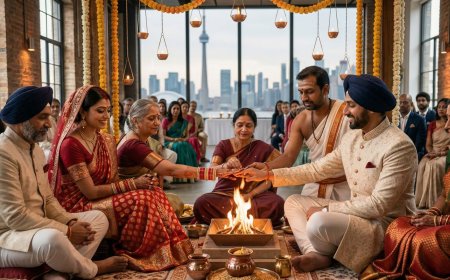



When the Shehnai Cries and the Qawwali Soars — The Sacred Sound of Muslim Weddings
Qawwali and shehnai are the soul of South Asian Muslim wedding celebrations — ancient musical traditions rooted in Sufi devotion and centuries of ceremonial practice. This complete guide covers the cultural and spiritual significance of both traditions, how they are performed across Pakistani, Indian Muslim, Hyderabadi, and Bangladeshi wedding cultures, and full practical guidance for NRI Muslim families sourcing live qawwali ensembles and shehnai players for weddings in the UK, USA, Canada, Australia, and UAE.

The musical traditions of South Asian Muslim weddings — the piercing lament of the shehnai at dawn, the ecstatic devotion of a qawwali that pulls an entire room to its feet — are not decoration. They are the wedding itself. For NRI Muslim families from Houston to Birmingham to Melbourne, finding that sound across oceans and time zones is one of the most emotionally urgent acts of cultural preservation they will ever undertake.
You grew up hearing it before you had words for it. The shehnai [the ancient double-reed wind instrument whose sound is woven into the DNA of South Asian weddings] playing somewhere in the early morning, its high, mournful, unbearably beautiful voice carrying over rooftops and through half-open windows, telling the whole neighbourhood that a wedding was happening today. Or the qawwali in the evening — the harmonium's drone, the tabla's conversation, the lead singer's voice climbing toward something that felt less like music and more like an open door to somewhere larger than the room you were sitting in. You didn't fully understand what you were hearing. You only knew it made your chest ache in a way that felt like love.
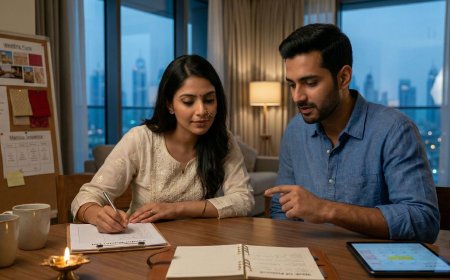
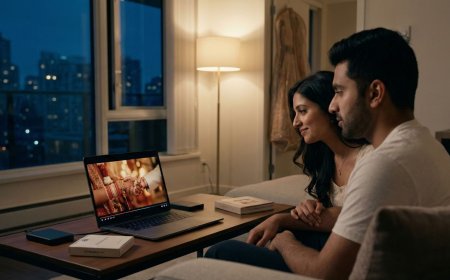
You are in Birmingham now, or in Houston, or in the eastern suburbs of Sydney. The wedding is yours — or your son's, or your daughter's — and you are sitting with a vendor list trying to figure out how to have that sound at a community hall in a country where nobody outside your family knows what a shehnai is. You are trying to explain to a venue manager why you need a live qawwali group for three hours and why a Spotify playlist of the same songs will not, under any circumstances, be the same thing.
You are right. It will not be the same thing. And you can have the real thing — exactly as it has always been — wherever in the world you are.
🌟 Did You Know?
The shehnai has been documented in South Asian wedding culture for over two thousand years — it appears in ancient Sanskrit texts as the surnai, an instrument played specifically at auspicious ceremonies to invoke divine blessing and ward away inauspicious energies. Ustad Bismillah Khan, the legendary shehnai maestro from Varanasi, came from a Muslim family of hereditary shehnai players and is credited with elevating the instrument from a ceremonial necessity to a concert art form — yet he always maintained that its truest home was the wedding, the threshold between one life and another.
Qawwali as a musical form traces its formal origins to the great Sufi poet-musician Amir Khusrau in 13th-century Delhi, who fused Persian, Arabic, Turkish, and Indian musical elements to create a sound specifically designed to produce hal [a Sufi state of spiritual transport and emotional dissolution] in listeners. The tradition passed through the Chishti Sufi order and became embedded in South Asian Muslim life so completely that qawwali today is performed at shrines, weddings, and private celebrations with equal reverence across Pakistan, India, Bangladesh, and their global diasporas.
In the NRI Muslim diaspora of the United Kingdom alone, live qawwali performance at weddings has seen a documented revival since 2015, with South Asian wedding planners in Birmingham, Bradford, and East London reporting that requests for live qawwali groups — rather than recorded music — have grown by an estimated forty percent in less than a decade, driven primarily by second-generation NRIs seeking conscious connection to a heritage they grew up knowing only at the edges.
What Is Qawwali & Shehnai at Muslim Weddings?
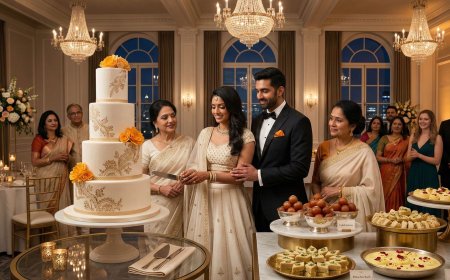
The musical architecture of a South Asian Muslim wedding is built around two distinct but philosophically connected traditions that together create the full emotional journey from the night before the wedding through to the celebration that follows the nikah [the Islamic marriage contract and ceremony].
The shehnai is played at the threshold moments — dawn on the wedding morning, the arrival of the baraat [the groom's wedding procession], the departure of the bride from her family home. Its sound is simultaneously celebratory and heartbreaking, which is precisely why it is so right for weddings. A wedding is both of those things at once. The shehnai knows this. It has always known this. A trained shehnai player at a Muslim wedding draws from a specific repertoire of ragas [classical Indian melodic frameworks] considered appropriate for each stage of the wedding — Bhairav for the dawn playing, Bhairavi for the moments of departure and farewell, more celebratory ragas for the procession and reception.
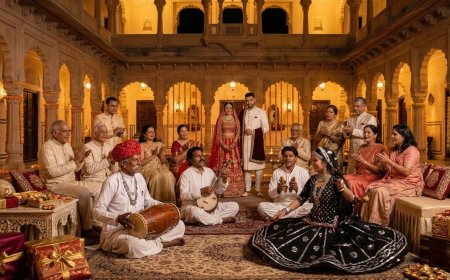
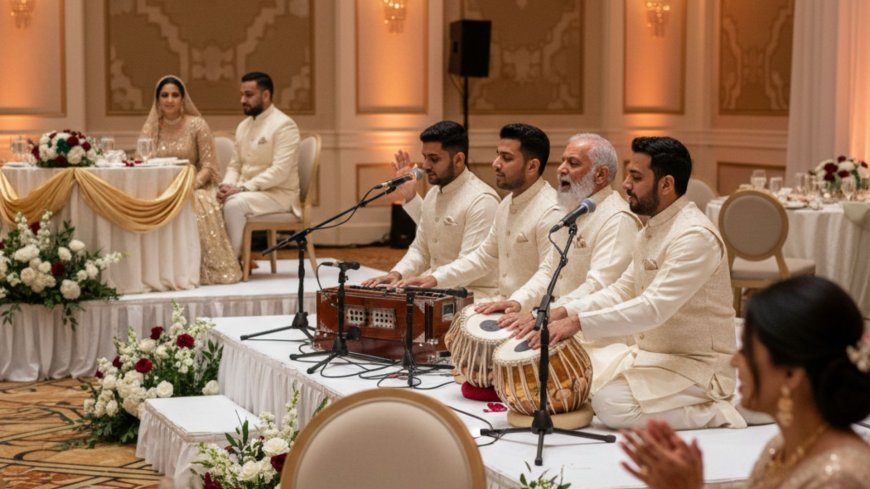
Qawwali is the music of the evening celebrations — the mehendi night, the post-nikah reception, sometimes the walima [the feast the groom's family hosts after the wedding]. A traditional qawwali ensemble consists of a lead singer, a chorus of supporting vocalists who repeat key lines and escalate the energy, one or two harmonium players, and a tabla player. The repertoire draws from the classical Sufi canon — the poems of Amir Khusrau, Bulleh Shah, Rumi in Urdu translation, and the great Punjabi Sufi poets — as well as a body of specifically wedding-oriented qawwali compositions that celebrate love, union, and divine blessing.
The physical experience of a live qawwali is cumulative. It begins decorously. It does not end that way. By the third or fourth composition, when the chorus has locked into the rhythm and the lead singer has found his altitude, something happens in a room that no recording can replicate — a collective surrender, a shared lifting, a room full of people who arrived as individuals and have become, for the duration of the music, something communal and open.
How Music Traditions Compare Across South Asian Muslim and Hindu Communities
| Community / State | Local Name / Tradition | Key Musical Element | How NRIs Abroad Adapt It |
|---|---|---|---|
| Pakistani Muslim (Punjabi) | Qawwali / Dholki songs | Live qawwali ensemble; dholki at mehendi; shehnai at dawn | Qawwali group hired from Pakistani community network; dholki player sourced locally; shehnai via South Asian music agencies |
| Pakistani Muslim (Sindhi) | Qawwali / Sindhi folk songs | Sindhi folk music at mehendi; qawwali at reception | Sindhi community music contacts; qawwali group for reception |
| Indian Muslim (Hyderabadi) | Qawwali / Hyderabadi wedding songs | Specific Hyderabadi Urdu musical tradition; qawwali essential | Hyderabadi community networks in Houston and Melbourne; travelling artists from Hyderabad |
| Indian Muslim (Lucknowi) | Qawwali / Thumri | Refined Urdu musical tradition; thumri sometimes alongside qawwali | Lucknawi community contacts; Urdu classical musicians in London and Toronto |
| Bangladeshi Muslim | Qawwali / Baul-influenced songs | Bengali Muslim wedding songs; qawwali at reception | Bengali community hall; qawwali group from South Asian network |
| Kashmiri Muslim | Chakri / Sufiana Kalam | Kashmiri Sufi musical tradition; specific Kashmiri instruments | Kashmiri community contacts; specific recordings used if live unavailable |
| Punjabi Hindu / Sikh | Shehnai / Dhol | Shehnai at wedding rituals; dhol at baraat | Shared South Asian music hire networks across communities |
| Himachali | Nagara / Shehnai | Shehnai and nagara drum for auspicious ceremonies | Himachali cultural associations; recordings supplemented by local musicians |
| Bengali Hindu | Shehnai (Shahnai) | Shehnai played at dawn before wedding rituals | Bengali cultural organisations; specialist musicians in London and Toronto |
| Rajasthani | Shehnai / Sarangi | Sarangi-led folk music; shehnai at ceremonies | Rajasthani community contacts; folk music groups available in diaspora cities |
| Tamil Muslim | Nadaswaram | The Tamil equivalent of the shehnai — played at all auspicious moments | Tamil Muslim community networks in Melbourne, Toronto, and London |
| Marathi Muslim | Shehnai / Qawwali | Shehnai at ceremony; qawwali at celebration | Marathi Muslim community contacts; combined South Asian music sources |
The Meaning Behind the Music
In Sufi philosophy — which forms the spiritual substratum of qawwali's existence in Muslim wedding culture — there is no meaningful distinction between divine love and human love. They are the same love at different scales. When Amir Khusrau wrote his wedding qawwalis, he was writing simultaneously about the love between a bride and groom and the love between the human soul and the divine. Every great qawwali holds this double meaning in perfect suspension. When the singer sings of longing and arrival, of separation and union, he is singing about the marriage before him and about the cosmic marriage of the soul to its source.
The shehnai carries a related meaning. Its sound — that specific combination of celebration and lamentation — reflects the South Asian philosophical understanding that every threshold is both a beginning and an ending, every arrival involves a departure, every union requires a separation. The shehnai does not pretend that a wedding is only joyful. It holds the full truth of the moment: joy and grief, arrival and farewell, the new life beginning and the old one ending.
For a non-South Asian partner or family member seeking the simplest truth: this music is the sound of a culture that understands love deeply enough to know that it contains everything — joy, sorrow, devotion, and surrender — and refuses to celebrate with anything less than the full range of what love actually is.
Doing It Abroad: The Practical Reality
The central challenge of bringing live qawwali and shehnai to a Muslim wedding outside South Asia is the sourcing challenge — finding performers who carry the tradition in their bodies, not just in their repertoire. A qawwali performed by musicians who know the form technically but have not grown up inside it will be competent and hollow. A qawwali performed by musicians for whom this is living tradition will change the room. The difference is audible in the first two minutes.
In London, the primary networks are in Southall and Wembley in West London, and in Bradford and Birmingham in the Midlands. The Pakistani and Indian Muslim music communities of these cities include several professional qawwali groups with full wedding experience. The South Asian music hire agencies on the Southall Broadway and the Wembley High Road can connect you with qawwali groups, shehnai players, and dholki players for a complete musical programme. Book your qawwali group at least four to six months before the wedding — the best groups are taken quickly. For a shehnai player specifically, look within the Punjabi and Indian Muslim music community and ask specifically for someone trained in the wedding repertoire, not just the classical concert tradition.
In Toronto, the South Asian music networks of Brampton and Mississauga are your primary resource. Several professional qawwali groups operate out of the Pakistani and Indian Muslim community, and the South Asian wedding music hire networks in these cities are well-established. Allow at least three to four months for booking.
In Houston, the South Asian music community of the Mahatma Gandhi District and the broader Indo-Pakistani community includes qawwali performers with wedding experience. The community mosques and South Asian cultural organisations are often the best first contact for performer recommendations.
In Sydney and Melbourne, the South Asian Muslim music communities are smaller but present. The Pakistani and Indian community organisations in Harris Park (Sydney) and the western suburbs of Melbourne can provide connections. For a shehnai player specifically, sourcing from the broader South Asian music community including Hindu and Sikh musicians is entirely appropriate — the shehnai tradition crosses community lines.
The venue challenge for live qawwali is primarily a sound and space question. A qawwali group performing well generates significant volume, and community halls with hard floors and low ceilings can create acoustic problems. Visit your venue in advance with your qawwali group leader or describe the space specifically and ask for their experience with similar venues. Many qawwali groups performing in diaspora communities have adapted their instrumentation and sound management for smaller and more acoustically challenging spaces.
For streaming to Pakistan, India, or Bangladesh — a qawwali at a wedding in London at 8:00 PM is 1:00 AM in Karachi and 12:30 AM in Lahore. For family who will stay up for the stream — and some will, absolutely — ensure the stream captures the audio quality of the live performance, not just the visual. A phone pointed at the stage does not capture qawwali. A microphone near the harmonium, connected to a laptop running a stable stream, comes much closer.
As a Destination Wedding in India
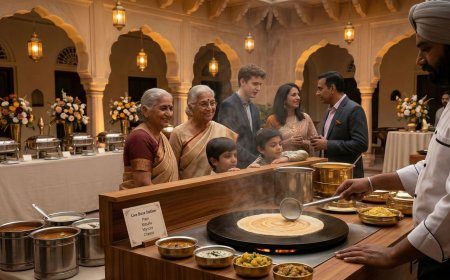
To have live qawwali and shehnai at a destination wedding in India is to have these traditions in the environment they were built for — where the performers carry not just the music but the entire cultural context that produces it, where the uncles in the back row know the words to the refrains and join in without being asked, where the shehnai at dawn reaches across a neighbourhood that understands exactly what it means.
Delhi is the heartland of the qawwali tradition — the city of Amir Khusrau, of the Nizamuddin Dargah where qawwali has been performed continuously for seven centuries, of a living community of professional qawwali musicians who can be engaged for wedding performances with the full depth of that lineage behind them. Lucknow brings the refinement of the Nawabi Urdu musical tradition. Lahore — for Pakistani destination weddings — has its own extraordinary qawwali tradition and a community of professional wedding performers of very high standard.
Brief your qawwali group before the event on the specific emotional arc you want — a mehendi night qawwali should feel different from a walima qawwali. Request a mix of the classical Sufi canon and the specifically wedding-celebratory compositions. For non-Indian or non-Muslim guests, a brief printed programme note explaining the tradition and translating two or three key refrains will make them participants rather than observers.
The shehnai player for a destination wedding in India should be briefed on the specific moments you want them to play — dawn on the wedding morning, the baraat arrival, the bidai [the bride's farewell]. These are the threshold moments that the shehnai was made for, and a skilled player will know exactly how to inhabit each one.
What You Need: The Music Checklist
Musical Performers and Equipment: Professional qawwali ensemble booked at least four to six months before the wedding — confirmed for wedding performance experience specifically; shehnai player booked at least three months before and briefed on the wedding repertoire and specific moments required; dholki player for mehendi night if part of the musical programme; sound system appropriate for the venue confirmed with the performers; streaming setup tested at least two days before the event if family abroad will be joining live.
People Required: Lead qawwali singer and ensemble as the musical heart of the celebration; shehnai player for the ceremony and baraat moments; a designated family member who knows the traditional refrains to help the diaspora guests participate in the qawwali's call-and-response structure; your wedding videographer briefed specifically on the audio capture of the live music — qawwali without its sound is not qawwali.
Preparation Steps: Research and contact qawwali groups at least six months before. Book your first-choice performers as soon as possible — do not wait. Visit the venue with the qawwali group leader or share detailed venue information. Prepare a printed or digital programme note for non-South Asian guests attending. Confirm the musical arc and repertoire with the performers at least two weeks before. Test the stream setup at least two days before if streaming to India or Pakistan.
NRI.Wedding connects Muslim NRI couples with professional qawwali ensembles and shehnai players including internationally travelling performers from India and Pakistan, diaspora city music networks in London, Toronto, Houston, and Sydney, wedding photographers and videographers experienced in capturing live South Asian music, and complete wedding planning checklists. Begin at NRI.Wedding.
5 Questions NRI Couples Always Ask
Can we have a qawwali at a non-Muslim venue that doesn't have Islamic décor or atmosphere?
Qawwali is extraordinarily adaptable — it has been performed in concert halls, in gardens, in banquet rooms, and in community centres across the world, and the tradition carries its atmosphere with it rather than requiring the space to provide it. What a qawwali needs is not a specific décor but a specific quality of attention — a room that is willing to listen. Brief your venue coordinator on the nature of the performance so they understand it is live classical music that may generate significant audience response, including people rising to their feet or clapping in rhythm. A good qawwali creates its own sacred space in whatever room it inhabits.
My partner is not Muslim and doesn't know qawwali. How do we include their family in the experience?
This is one of the most beautiful aspects of qawwali as a wedding tradition — it is designed to be felt before it is understood, and it reliably works on people who have never encountered it before. Prepare a brief one-page printed note explaining the tradition, its Sufi roots, and the meaning of two or three key refrains in the programme. Ask the qawwali group leader to introduce the first composition in English before beginning. Most non-South Asian guests who encounter a live qawwali for the first time describe it as one of the most moving musical experiences of their lives — the unfamiliarity of the language does not prevent the transport. The music does what it was designed to do regardless of the listener's background.
We cannot find a shehnai player in our city. What do we do?
The shehnai tradition in the diaspora is genuinely rarer than qawwali, and in some diaspora cities you may need to look across community lines. A skilled shehnai player from the Punjabi Hindu or Sikh community, or from the broader North Indian classical music tradition, will carry the same wedding repertoire and the same understanding of the instrument's ceremonial role. The shehnai does not belong to one community — it belongs to the South Asian wedding across all its traditions. Contact the South Asian music hire networks of your city specifically and ask for shehnai; if unavailable, consider an internationally travelling shehnai player from India for the wedding weekend, which is entirely feasible with six to eight months of advance planning.
How do we coordinate the qawwali with relatives streaming from Pakistan who want to participate in the call-and-response?
The call-and-response structure of qawwali — in which the audience joins the chorus on the repeated refrains — is one of the most joyful aspects of the tradition, and it can absolutely include participants joining via stream. Position your stream camera to capture both the performers and the room's response. Share the key refrain words with family in Pakistan or India before the event so they can join in from their side of the screen. Ask the qawwali group leader to acknowledge the remote family at the beginning of the performance — a good qawwali singer performing for a diaspora wedding audience is used to the expanded room.
Should the qawwali be at the mehendi night, the nikah reception, or the walima?
Ideally, all three — but if budget or logistics require prioritising, the post-nikah reception is the canonical setting for the most substantial qawwali performance. The nikah itself is a moment of solemnity and spiritual gravity; the qawwali that follows is the community's full-voice celebration of what has just been sealed. The mehendi night qawwali can be lighter and more playful in its selection, drawing from the wedding-song tradition alongside the Sufi canon. The walima qawwali, if included, is typically more devotional in character — a thanksgiving in music for the union that has been made.
The Emotional Angle
Nobody prepares the father for what the shehnai does to him.
He has been the practical one throughout — the bookings, the budget, the coordination with family in Lahore at midnight, the venue negotiations, the three hundred small decisions that a wedding requires. He has done all of it with his hands, keeping his heart at a careful distance, because there is too much to manage and he cannot afford to feel it all yet.
And then it is the morning of the wedding. The city outside is still dark. Someone has arranged for a shehnai player — his wife arranged it, she insisted, she said it had to be done properly — and the player is sitting in the corner of the room playing the dawn raga, the one that is specifically for this hour and this occasion. The notes rise into the dark room.
He did not expect it to do what it does.
He did not expect to hear, in that sound, every shehnai at every wedding he attended as a boy in Lahore, his own mother's expression at his sister's wedding, the specific quality of morning light in a Pakistani courtyard that he has not stood in for twenty years. He did not expect to understand, in the space of four bars, exactly what he has been carrying across the ocean all this time and what it has cost and what it has been worth.
The shehnai plays. His daughter, somewhere in the house, is being dressed for her wedding. His wife is with her.
He sits alone with the music and lets it say what he cannot.
A Moment to Smile
At a Pakistani Muslim wedding in Southall in the autumn of 2021, the qawwali ensemble had been performing for ninety minutes with considerable success — the room was fully in it, the aunties in the front row were clapping the rhythm, the younger generation who had initially looked uncertain had long since abandoned their uncertainty and were entirely swept up.
At this point the lead singer launched into a particularly rousing composition, the chorus locked in with him, the volume rose, and the sound system — a rental that had been slightly underpowered for the room from the beginning — gave up completely.
The silence lasted approximately three seconds.
The lead singer, without breaking his expression or his composure, simply began again — acoustically, no microphone, his voice filling the room on its own. The harmonium player adjusted. The tabla player played quieter. The chorus leaned in.
It was, by universal agreement of everyone present, the best part of the night. The sound system failure had turned a good performance into an intimate one. You could hear every breath.
The aunty in the front row said afterward that it was the most authentic qawwali she had heard outside of Lahore.
The sound system was never repaired. Nobody missed it.
Quotes from the Diaspora
"My husband's family is from Birmingham, mine from Karachi. We had a qawwali group for the reception and I had worried — I genuinely worried — that the Birmingham relatives would not know what to do with it. By the second composition his grandmother, who is eighty-three years old and had not been to a qawwali in fifteen years, was singing the refrain from her chair. You could hear her voice above everyone else's. I will hear that for the rest of my life." — Sana Qureshi, Pakistani Muslim community, Birmingham, UK
"We brought a shehnai player from the Indian community in Brampton — he was actually Punjabi Hindu, not Muslim, but he knew the wedding ragas completely. When he played at dawn on my son's wedding morning, I stood in the hallway and I could not move. I had not heard that sound since my own wedding in Lahore in 1987. I did not know I had been waiting to hear it again until it started." — Farida Hussain, Pakistani Muslim community, Mississauga, Canada
"The qawwali was the moment my Australian colleagues — three of them had come to the wedding — finally understood what I had been trying to explain for years about why this culture is worth preserving across oceans. They couldn't understand the words. They didn't need to. One of them told me the next day that she had cried without knowing why. I told her: that is what it is supposed to do. That is exactly what it is for." — Zara Ahmed, Indian Muslim community, Melbourne, Australia
The Sound Travels With You
Some things cannot be explained across cultural distance — they can only be heard. The qawwali that lifts a room into something communal and sacred, the shehnai that holds the full truth of a wedding morning in a single reed — these are not sounds that can be replaced by a playlist or approximated by something adjacent. They are specific. They carry specific history. They do specific things to specific people who have grown up hearing them, and they do surprising things to everyone else.
NRI.Wedding understands what is at stake when you say you want the real music at your wedding. We connect Muslim NRI families with professional qawwali ensembles and shehnai players across the diaspora and internationally, with wedding videographers who know how to capture live music in its full dimension, and with planning support that takes the sourcing burden off your family so you can be present for the moments that matter. The music is findable. The tradition is preservable. The sound is yours to carry.
Wherever in the world your wedding takes place, let it sound like home.
This article explores qawwali and shehnai traditions at South Asian Muslim weddings, covering Pakistani, Indian Muslim, Hyderabadi, Lucknawi, Bangladeshi, and Kashmiri communities, with practical guidance for NRI Muslim families planning weddings in the UK, USA, Canada, UAE, and Australia.
What's Your Reaction?
 Like
0
Like
0
 Dislike
0
Dislike
0
 Love
0
Love
0
 Funny
0
Funny
0
 Angry
0
Angry
0
 Sad
0
Sad
0
 Wow
0
Wow
0