
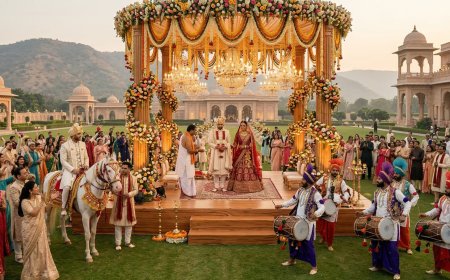











































































The Fire Remembers: Why Nothing in a Hindu Wedding Is Complete Without Agni
The sacred fire — Agni — is the theological heart of the Hindu wedding ceremony, functioning as divine witness, cosmic medium, and the force that makes marriage spiritually binding across four thousand years of Vedic tradition. For NRI couples planning weddings across the UK, US, Canada, UAE, and Australia, maintaining the ritual integrity of the Vivah Agni requires specialist pandits, compliant equipment, and careful venue negotiation. This guide covers the fire's meaning, community variations, and full practical guidance for diaspora couples.


Long before sustainability became a global movement, Indian wedding traditions were built on principles of zero waste, natural materials, and deep reverence for the earth. Today, as NRI couples across five continents grapple with the environmental weight of lavish celebrations, the answer is not a compromise between culture and conscience — it is a return to the ancient wisdom that Indian weddings were always grounded in. The most eco-friendly Indian wedding is not a modern invention. It is a remembering.
You have been doing the mental arithmetic. The floral waste from a single Indian wedding reception. The single-use plastic embedded in a hundred small ritual moments. The imported flowers flown in from Holland for a mandap that will stand for four hours. The food that will not all be eaten. The invitation cards. The favour boxes. The decorative items that will never be used again. You love Indian weddings with your whole heart — the colour, the ritual, the noise, the love made visible — and you are holding that love alongside a growing discomfort that has no easy name.
You are in Vancouver or Sydney or London, and you are planning a wedding that honours your culture and your conscience simultaneously. And the question sitting at the centre of your planning spreadsheet, quietly insistent, is this: how do you celebrate the way your grandparents celebrated — abundantly, joyfully, unapologetically — without the environmental cost that crept into Indian weddings somewhere between tradition and aspiration?
The answer, it turns out, has been in your grandmother's kitchen all along.
🌟 DID YOU KNOW?
A single large Indian wedding in India generates an estimated 30–40 kilograms of floral waste per event, with most conventionally decorated mandaps using non-biodegradable synthetic flowers and imported blooms treated with chemical preservatives. Traditional mandap decorations used entirely local, seasonal, and biodegradable materials — banana leaves, mango leaves, marigolds, and clay — that returned to the earth within days.
The global wedding industry is estimated to produce over 400 million pounds of waste annually, with Indian weddings — because of their multi-day, multi-event structure — contributing disproportionately. However, research by sustainable event consultancies in India has found that a fully traditional Indian wedding, using pre-industrial materials and practices, produces up to 70% less waste than its contemporary equivalent.
India's ancient Grihastha [householder] philosophy, which governs domestic and ceremonial life in Hindu tradition, explicitly incorporates the concept of aparigraha [non-accumulation, non-possessiveness] as a guiding principle — meaning that restraint, sufficiency, and respect for natural resources are not modern additions to Indian wedding ethics. They are foundational to it.
What Is an Eco-Friendly Indian Wedding — and Why Is It Actually a Return, Not a Departure?
The phrase "eco-friendly wedding" tends to conjure a particular aesthetic in the Western imagination — minimalist, neutral-toned, perhaps slightly austere. An Indian eco-wedding is none of these things. It is, in its truest form, as abundant and as beautiful and as sensory as any Indian wedding has ever been. The difference is not in the scale of the celebration. It is in the materials, the sourcing, the intention, and the wisdom that guides every choice.
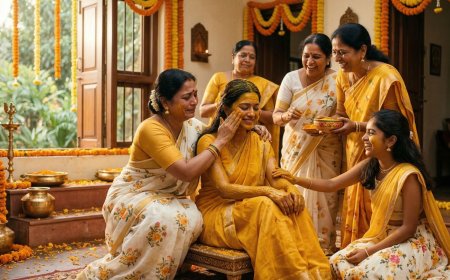
Traditional Indian weddings were, by necessity and by philosophy, entirely sustainable. The mandap [sacred wedding canopy] was constructed from bamboo poles tied with natural fibre, draped with fresh mango leaves and marigold garlands that would be composted after the ceremony. The thali [ceremonial plate] used in rituals was made of banana leaf or dried palash [flame of the forest] leaves stitched together — the original biodegradable plate, used across India for millennia. The kalash [sacred pot] was clay, made by local kumhars [potters], returned to the earth or kept for the next ceremony. The diyas [oil lamps] were clay. The rangoli [decorative floor art] was made from rice flour, turmeric, and flower petals. The food was seasonal, local, and cooked in bulk with the explicit cultural mandate of feeding everyone — anna danam [the gift of food] being one of the highest acts of spiritual merit in Hindu tradition.
The ecological crisis of the modern Indian wedding is not a result of tradition. It is a result of the departure from it — the substitution of synthetic for natural, imported for local, disposable for reusable, spectacular for meaningful. The eco-friendly Indian wedding movement is not asking couples to do less. It is asking them to do it the old way.
Community Comparison: Traditional Eco Practices Across India's Wedding Communities
| Community/State | Traditional Eco Practice | Natural Materials Used | What Was Lost in Modernisation | How NRIs Are Reviving It |
|---|---|---|---|---|
| Himachali | Entire wedding served on locally carved wooden platters and leaf cups | Walnut wood, pine leaf cups, locally grown flowers | Replaced by plastic crockery and synthetic decorations | NRI Himachali families sourcing carved wooden serving ware from artisan cooperatives in Himachal; leaf cups ordered from Indian eco-suppliers |
| Garhwali | Mandap constructed entirely from bamboo, banana leaves, and local wildflowers | Bamboo, mango leaves, seasonal mountain flowers | Replaced by metal frame mandaps and imported artificial flowers | Bamboo mandap frames now available from Indian eco-wedding suppliers; NRI couples briefing decorators to source local seasonal flowers |
| Kumaoni | Food cooked in iron and copper vessels over wood fire; served on leaf plates | Iron, copper, sal leaves, locally foraged herbs | Replaced by aluminium catering equipment and styrofoam | Kumaoni NRI families bringing copper vessels as family heirlooms; sal leaf plates ordered from diaspora eco-suppliers |
| Ladakhi | Ceremonies entirely outdoors; offerings made of locally grown barley and flowers | Barley, local wildflowers, clay | Replaced by indoor synthetic-decorated venues | Ladakhi NRI couples choosing outdoor garden venues; barley sourced from specialist South Asian grocers |
| Kashmiri Pandit | Use of chinar leaves and walnut in ceremony; clay kalash; locally woven fabrics | Chinar leaf, walnut, clay, Kashmiri wool | Replaced by plastic decoration and imported fabrics | Kashmiri NRI families sourcing hand-woven Pashmina fabrics and clay kalash from Kashmir Valley artisans online |
| Punjabi | Phulkari embroidery passed down through generations rather than new purchases; earthen kulhads for drinks | Phulkari fabric, clay kulhads, mustard flowers | Replaced by fast-fashion lehengas and plastic cups | Phulkari heirloom revival is strong in UK Punjabi communities; kulhad chai stations are now a popular NRI wedding trend |
| Marathi | Banana leaf feast; tulsi plant as sacred offering; cotton fabric rather than synthetics | Banana leaf, tulsi, cotton | Replaced by plastic-wrapped sweet boxes and synthetic décor | Banana leaf dining available from Maharashtrian caterers in Melbourne and Houston; tulsi plant gifting is reviving as a favour trend |
| Tamil | Kolam [floor art] in rice flour; fresh jasmine garlands; banana leaf dining; clay lamps | Rice flour, jasmine, banana leaf, clay, sesame oil | Replaced by vinyl floor stickers, imported roses, and LED candles | Tamil NRI communities in Singapore, UK, and Canada maintain kolam and jasmine traditions strongly; banana leaf dining available in major diaspora cities |
| Bengali | Shola pith [white plant pith] décor carved by artisans; earthen pots; mustard oil lamps | Shola pith, clay, mustard oil, white flowers | Replaced by thermocol decorations and imported blooms | Shola pith artisans in West Bengal now shipping internationally; Bengali NRI families in London commissioning custom pieces |
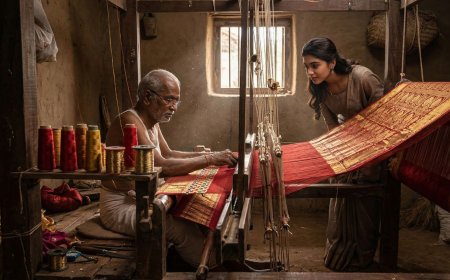
| Rajasthani | Lac jewellery and block-printed cotton fabrics; clay water pots; marigold and jasmine garlands only | Lac, cotton, clay, local flowers | Replaced by plastic jewellery and synthetic décor fabrics | Jaipur block-print fabric is experiencing a global NRI revival; lac jewellery available from Rajasthan artisan platforms shipping internationally |
The Meaning Behind Eco-Conscious Wedding Traditions
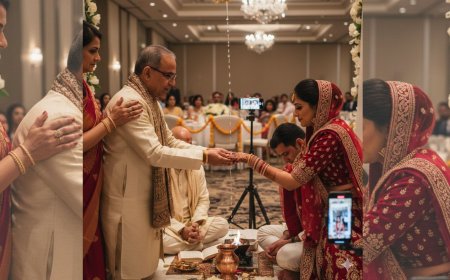
The Indian philosophical tradition has never separated the sacred from the natural. The five elements — Pancha Bhuta[earth, water, fire, air, and ether] — are not metaphors in the Hindu worldview. They are living presences, witnesses to every ceremony, participants in every ritual. When the havan fire is lit, Agni [the fire deity] is invoked as a literal witness to the marriage vows. When water is poured in the arghya [ritual water offering], it is offered to the cosmos. When flowers are placed at the mandap, they are not decoration. They are offering.
This is why the use of synthetic, chemical-laden, non-biodegradable materials in an Indian wedding is not simply an environmental problem. It is, from within the tradition's own logic, a spiritual inconsistency. You cannot invite the earth's sacred elements to witness your marriage while simultaneously generating waste that will persist in that earth for five hundred years.
The concept of Dharitri Mata [Mother Earth] as a living, sacred presence runs through every Indian regional tradition. The bhoomi puja [earth-blessing ceremony] performed before any construction acknowledges the earth's sanctity explicitly. Traditional wedding rituals were designed within this worldview — materials offered to the ceremony were materials that the earth could receive back without harm.
The eco-friendly Indian wedding is not a political statement. It is a theological one. It is the choice to honour your wedding's spiritual intentions all the way down to the materials you use to build it.
For any non-Indian partner or guest trying to understand why this matters: in Indian tradition, the earth is not a resource used for the ceremony. It is a guest at it.
Planning an Eco-Friendly Indian Wedding Abroad: The Practical Reality for NRI Couples
The practical challenge for NRI couples planning an eco-conscious wedding outside India is not a shortage of options. It is a shortage of aggregated information about where those options are. The diaspora eco-wedding industry is growing fast but is still fragmented — which means the couples who succeed are the ones who plan early and build their vendor network deliberately.
Start with flowers. The conventional wedding flower supply chain is one of the most carbon-intensive in the global event industry — blooms grown in Kenya or Ecuador, flown to Amsterdam, redistributed to wholesalers, and delivered to your venue in refrigerated trucks. The alternative is not bare tables. It is seasonal, local, and extraordinary. In the UK, British-grown flowers are available from specialist wedding florists who work with farm-direct suppliers — and for Indian weddings specifically, marigolds can be grown seasonally in the UK or sourced dried from Indian importers. Marigold garlands remain available year-round through diaspora grocery suppliers on Ealing Road in Wembley and Southall's Broadway. In Toronto, seasonal flower sourcing through the Ontario cut flower industry is well-developed; Indian wedding florists in Brampton and Mississauga increasingly offer locally grown garland options. In Sydney, the Parramatta flower market carries seasonal blooms that can be used for mandap decoration without the carbon footprint of imported alternatives.
For mandap construction, bamboo is your baseline. A bamboo and marigold mandap is not a budget option — it is the original luxury, the form the tradition was designed around. Bamboo mandap specialists exist in the UK, Canada, Australia, and UAE, though you may need to brief conventional Indian wedding decorators on your specific requirement. Bring reference images. Specify natural fibre ties rather than cable ties. Request fresh flowers rather than artificial. These conversations are easier than they used to be — the NRI eco-wedding aesthetic has enough momentum now that most Indian wedding decorators have at least one sustainable package.
For catering and serving ware, the leaf plate revolution is well underway. Patravali [traditional Indian leaf plates] made from sal, banana, or areca palm leaf are now manufactured at commercial scale and available through South Asian eco-product suppliers in every major diaspora city. In London, companies supplying Indian eco-tableware include dedicated online platforms shipping next-day. In Toronto and Houston, South Asian grocery wholesalers carry leaf plate products. Request that your caterer serve at least one course — ideally the main meal — on leaf plates, and eliminate single-use plastic from the event entirely.
For gifts and favours, the shift away from imported-plastic-wrapped boxes of almonds and synthetic fabrics is accelerating. Seed packets containing Indian herbs — tulsi, methi [fenugreek], dhania [coriander] — in recycled paper envelopes are one of the most culturally resonant and genuinely eco-friendly favour options available. A small clay diya with a note explaining its significance is another. Both are available through Indian artisan platforms shipping internationally, and both connect the favour meaningfully to the wedding's spiritual register.
For invitations, the digital shift is the single easiest eco-win in Indian wedding planning. An exquisitely designed digital invitation — in the aesthetic tradition of your community, with your family's colours and motifs — generates zero physical waste and reaches your diaspora guest list faster and more reliably than a posted card. For the families who truly want a physical keepsake, seed paper invitations embedded with wildflower or herb seeds are available from specialist printers in the UK, Canada, and Australia.
Planning an Eco-Friendly Indian Wedding in India: The Destination Wedding Opportunity
India's destination wedding industry is ahead of much of the world in eco-wedding infrastructure, partly because the raw materials — bamboo, marigolds, banana leaves, clay, handloom cotton — are locally abundant and economically competitive with synthetic alternatives, and partly because a growing number of Indian wedding planners have made sustainability their specific expertise.
For NRI couples returning to India for a destination wedding, the eco opportunity is extraordinary. A wedding in Rajasthan can use local Jaipur block-print fabrics, marigold garlands sourced from the famous Jaipur flower market, clay lamps from local kumhars, and a bamboo mandap constructed by craftspeople who have been doing it for generations. A Kerala backwater wedding can use locally woven coconut frond decorations, banana leaf feasts, and oil lamps filled with locally pressed coconut oil. A Himachal Pradesh mountain wedding can use pine and walnut wood serving ware, local wildflower garlands, and a mandap built from mountain bamboo.
Brief your India-based wedding planner specifically on your eco intentions — in writing, with examples. The best planners in India's destination wedding markets are increasingly fluent in sustainable wedding design. Ask specifically for: local and seasonal flower sourcing, bamboo or natural material mandap construction, leaf plate or clay crockery service for at least one event, elimination of single-use plastic across all events, and locally sourced fabrics for décor rather than imported synthetics.
For non-Indian guests attending a destination eco-wedding in India, the sustainable choices enhance rather than diminish the experience — because the natural materials, the handmade details, and the locally sourced elements are precisely what make the aesthetic feel genuinely Indian rather than generically luxurious.
What You Need: The Eco-Friendly Indian Wedding Checklist
Ritual and Décor Materials Bamboo mandap frame with natural fibre ties, fresh marigold and seasonal flower garlands, clay kalash and diyas, banana leaf or sal leaf plates for at least the main meal, cotton or handloom fabric for mandap draping, locally sourced flowers for all floral arrangements, seed paper or digital invitations, clay or terracotta favour vessels.
Catering and Service Seasonal and locally sourced menu items, elimination of single-use plastic from all service, leaf plate service for the main wedding feast, kulhad [clay cup] chai and coffee stations, commitment from caterer to donate surplus food to a local charity or food bank — anna danam as both tradition and practice.
Fabric and Clothing Prioritise heirloom and vintage pieces over new purchases where possible, choose handloom and natural fibre fabrics — silk, cotton, khadi — over synthetic alternatives, consider renting or borrowing rather than purchasing single-use ceremonial items such as the groom's sherwani or the flower girl's outfit.
NRI.Wedding's eco-wedding vendor network includes sustainable decorators, bamboo mandap specialists, leaf plate suppliers, seed paper invitation designers, and India-based eco-wedding planners across Rajasthan, Kerala, Himachal Pradesh, and Goa.
5 Questions NRI Couples Always Ask About Eco-Friendly Indian Weddings
Can an eco-friendly Indian wedding still look as beautiful as a conventional one?
Not only can it — it often looks more beautiful, because natural materials have a warmth, a texture, and an authenticity that synthetic alternatives cannot replicate. A bamboo and marigold mandap in the late afternoon light is more visually extraordinary than a chrome-and-artificial-flower structure. A banana leaf feast is more striking and more photogenic than a plastic plate buffet. Clay diyas create a quality of light that no LED alternative matches. The aesthetic of a traditional Indian eco-wedding is not rustic or austere — it is rich, warm, deeply sensory, and connected to a visual tradition that has been beautiful for thousands of years. The key is working with a decorator who understands this aesthetic and can execute it with confidence.
We want to reduce food waste but Indian weddings involve huge quantities of food. How do we manage this?
Food waste management is the single most impactful eco-decision in Indian wedding planning. The solution is not reducing the quantity of food — anna danam is sacred and abundance at the table is culturally non-negotiable. The solution is partnering with a food redistribution organisation before the wedding, not after. In the UK, organisations like FoodCycle and The Felix Project collect surplus catered food. In Canada, Second Harvest operates in major cities. In Australia, OzHarvest has a dedicated event catering rescue service. In Dubai, the Food Bank initiative operates similarly. Contact your chosen organisation six weeks before the wedding, confirm the logistics with your caterer, and ensure there are proper containers for surplus food storage. This single decision can redirect hundreds of kilograms of food to people who need it — which is not a compromise of Indian wedding culture. It is the fullest expression of it.
How do we handle the invitation situation — our families in India expect physical cards but we want to reduce paper waste?
The solution most NRI eco-couples find satisfying is a tiered approach: a beautifully designed digital invitation for the majority of guests, with a small run of physical invitations on seed paper or recycled cotton paper for the elderly relatives and immediate family members for whom a physical card carries deep significance. Seed paper invitations — which guests can plant to grow herbs or wildflowers — have become increasingly popular in NRI eco-wedding circles because they transform the invitation from waste into something living. They are available from specialist printers in the UK, Canada, and Australia, and can be designed in any Indian regional aesthetic.
My mother-in-law is worried that an eco-friendly wedding will look cheap or like we couldn't afford a proper celebration. How do we address this?
This is the most human question in eco-wedding planning, and it deserves a direct answer. The perception that natural materials equal budget constraints is a relatively recent one — for most of Indian history, handmade, locally sourced, and natural materials were the markers of quality and care, not their absence. The reframe that works best with older family members is not environmental but cultural: this is how Indian weddings were done before synthetic materials existed. This is the traditional way. This is what your grandmother's wedding looked like. When you show them reference images of a beautifully executed bamboo-and-marigold mandap, a stunning banana leaf feast, a glowing array of clay diyas — and when they see the actual result at the wedding — the concern about appearances typically dissolves. What older family members most want is a wedding that feels real, warm, and culturally rooted. An eco-wedding done well provides exactly that.
We want to offset the carbon footprint of our international wedding guests flying in. Is this genuinely meaningful or just greenwashing?
Carbon offsetting is a partial and imperfect tool, but it is not meaningless when chosen carefully. The key is selecting verified, high-integrity offset programmes — look for Gold Standard or Verified Carbon Standard certification — and being transparent with your guests about what you are doing and why. Better still, combine offsetting with direct action: plant trees in your family's home region in India as part of your wedding ceremony, contributing to a forest in Uttarakhand or a mangrove restoration project in Kerala. Several Indian environmental organisations offer wedding tree-planting programmes that provide a certificate and GPS coordinates of your trees. This transforms the carbon offset from an abstract transaction into a living, locatable, growing part of your wedding story — which is both more honest and more meaningful.
The Emotional Angle
There is a particular kind of grief that environmentally conscious NRI couples carry into wedding planning that is almost never spoken about directly. It is the grief of loving two things that seem to be in conflict: the abundance of Indian wedding culture — the colour, the excess, the deliberate overwhelming of the senses — and the knowledge of what that abundance costs the planet. It feels like a betrayal in both directions. Too Indian to simplify. Too conscious to ignore.
But here is what the eco-wedding conversation opens up, when it is entered with honesty: it opens up the conversation about what abundance actually means in Indian culture. True abundance, in the tradition your grandparents practiced, was never about accumulation. It was about generosity. It was about feeding everyone. It was about using the earth's materials with gratitude and returning them with care. The marigold offered at the mandap and composted afterward is not less abundant than the imported rose that will sit in a landfill for a decade. It is more abundant. It completed its purpose. It went back to where it came from.
What eco-conscious NRI couples are discovering — sometimes tearfully, sometimes with a kind of quiet joy — is that the most sustainable wedding is not a smaller wedding. It is a more intentional one. And intention, it turns out, is exactly what the tradition was always asking for.
Your grandmother did not compost her marigolds because she was an environmentalist. She did it because that was what you did with something sacred when its ceremony was complete. You gave it back.
A Moment to Smile
At an eco-conscious Punjabi wedding in Vancouver in the autumn of 2023, the couple had committed fully: bamboo mandap, marigold garlands, seed paper invitations, kulhad chai stations, leaf plate feast, and a strict no-single-use-plastic policy communicated clearly on the wedding website.
What they had not fully anticipated was the kulhad chai station.
The clay cups were a triumph — beautiful, warm, fragrant with the scent of the clay itself. The problem was that approximately forty percent of the guests, enchanted by the kulhads, quietly slipped them into their bags to take home. By the end of the evening, the chai station had run out of cups an hour before the event ended.
The catering coordinator found the bride at the edge of the dance floor and delivered this information with some anxiety.
The bride looked at the dance floor full of her family and friends, many of whom were visibly and happily carrying clay cups they intended to keep forever, and started laughing.
"That's fine," she said. "That's literally the opposite of waste."
She was right. Not a single kulhad went to landfill that night.
Quotes From the Diaspora
"We used my mother-in-law's phulkari dupatta as the chunni ceremony fabric instead of buying new cloth. She had been keeping it for thirty years. When it came out of the box, she cried for twenty minutes before she could help me put it on. I wouldn't trade that moment for any lehenga in any shop in London." — Navneet Gill-Sharma, Punjabi background, currently based in Wolverhampton, UK
"Our Tamil wedding in Sydney used banana leaf dining for the main feast. My Australian friends had never seen anything like it. One of them told me afterward it was the most beautiful table she had ever sat at. That banana leaf cost forty cents. The imported linen table setting we almost chose instead would have cost four hundred dollars." — Priya Subramanian, Tamil Brahmin background, currently based in Sydney, Australia
"We planted fifty trees in the Aravalli hills in Rajasthan as part of our wedding ceremony. We have the GPS coordinates. We check on them. Two years later, they are growing. Our wedding is still happening, somewhere, in a forest." — Deepika Rathore-Mehta, Rajasthani background, currently based in Dubai
Your Most Beautiful Wedding Is Also Your Most Honest One
The eco-friendly Indian wedding is not a trend. It is a homecoming — to the materials your tradition was built from, to the philosophy your ancestors practiced, to the understanding that a wedding which honours the earth is a wedding that honours everything the earth has given your family across generations.
NRI.Wedding's eco-wedding vendor network includes bamboo mandap specialists, seasonal flower sourcing partners, leaf plate and clay crockery suppliers, seed paper invitation designers, sustainable Indian fabric suppliers, and India-based eco-wedding planners who have made the traditional and the sustainable inseparable. Our planning checklists include a dedicated eco-wedding section, and our pandit network includes priests who can incorporate Prithvi vandana [earth blessing] and environmental intention into your ceremony's ritual sequence.
You do not have to choose between a beautiful wedding and a responsible one. That was never actually the choice.
The earth was always a guest at your wedding. It is time to treat it like one.
This article explores eco-friendly Indian wedding traditions across Himachali, Garhwali, Kumaoni, Kashmiri Pandit, Punjabi, Marathi, Tamil, Bengali, and Rajasthani communities, with practical guidance for NRI couples planning sustainable weddings in Vancouver, London, Sydney, Houston, Dubai, and destination weddings in Rajasthan, Kerala, and Himachal Pradesh.
What's Your Reaction?
 Like
0
Like
0
 Dislike
0
Dislike
0
 Love
0
Love
0
 Funny
0
Funny
0
 Angry
0
Angry
0
 Sad
0
Sad
0
 Wow
0
Wow
0