
























































Hair Accessories for the Sikh Bride in Jalandhar — What to Buy Beyond the Tikka
The maang tikka is the most recognised bridal hair accessory in Sikh weddings, but it is only the beginning of the complete hair story. From traditional passa and jhoomer pieces to phulkari braid elements, veni ornaments and fresh jasmine gajra, the Jalandhar wedding market offers a wide range of hair accessories that help Sikh brides create a complete and culturally rooted bridal hairstyle. For NRI brides returning to Punjab for wedding shopping, the city’s jewellery boutiques, accessory markets and artisan workshops provide traditional hair accessories that are rarely available abroad. This guide explains the complete Sikh bridal hair accessory vocabulary, where to buy each item in Jalandhar, and how to coordinate these pieces with the bridal hairstyle, jewellery and phulkari chope.

Hair Accessories for the Sikh Bride in Jalandhar — What to Buy Beyond the Tikka
The question arrived in the NRIWedding.com inbox on a Wednesday morning — sent from an email address with a Vancouver domain, written with the specific directness of a woman who has been thinking about something for long enough that the thinking has become a question that needs an external answer. The writer was Navjot. She was getting married in Jalandhar in three months. She had the lehenga. She had the jewellery. She had, after considerable deliberation, resolved the dupatta question in favour of a hand-embroidered phulkari chope that was currently being made by an artisan in Basti Sheikh and whose progress photographs she had been receiving every ten days with the specific satisfaction of watching something beautiful being made slowly and correctly.
What she did not have, and what the email was about, was the hair. Not the hairstyle — she had been consulting with a Jalandhar bridal hair stylist via WhatsApp for two months and the style itself was decided, a structured half-up arrangement with a braided element at the back and an open section at the front that would frame the face for the portrait photographs. What she did not have was the accessories — the specific pieces that would go into the hair, beyond the maang tikka that was already part of her jewellery set and that every guide she had read and every wedding she had attended had told her was the central and sufficient hair accessory for the Sikh bride.
She had been to three weddings in the last eighteen months — one in Surrey, one in Brampton, one in Melbourne — and at all three she had noticed, with the attention of a woman who was planning her own wedding and had activated the research mode that turns every social occasion into a field study, that the brides who looked most complete in the hair department were not the brides who had the most elaborate maang tikka. They were the brides who had built a complete hair accessory story — the tikka as the centrepiece, certainly, but surrounded by other pieces that gave the hair its full visual weight, its cultural specificity, its depth as a designed element of the bridal aesthetic rather than an area that had been addressed by the tikka and then left.
She wanted to know what those other pieces were. She wanted to know where to find them in Jalandhar. She wanted to know, specifically, what the Sikh bride's complete hair accessory vocabulary looked like beyond the tikka, and whether the Jalandhar market had what she needed to assemble it.
The email was four paragraphs. It contained more specific questions than most people ask in an entire shopping trip. Navjot was, it was clear, the kind of bride who deserved a complete answer.
This article is for Navjot — and for every Sikh NRI bride who has resolved the tikka and the lehenga and the jewellery and who is ready to think about the complete hair accessory story that the Jalandhar market can build for her, beyond the piece that every guide already covers.
The Sikh Bridal Hair — Its Cultural Context and Its Design Requirements
The Sikh bride's hair carries a specific cultural and aesthetic weight that is different from the bridal hair traditions of other Indian communities, and understanding this context is the foundation of building a hair accessory story that is both beautiful and appropriate.
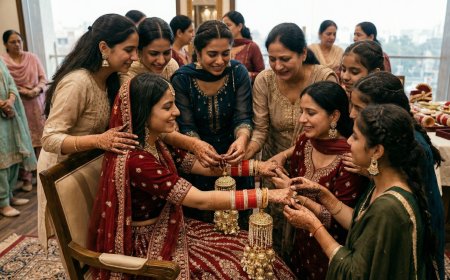
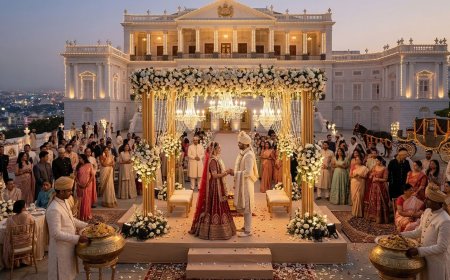
The Sikh wedding — the Anand Karaj — is conducted in the presence of the Guru Granth Sahib, and the aesthetic of the bride's presentation carries a dignity and a modesty that is specific to this context. This does not mean the bridal hair should be plain — Sikh bridal hair has a rich tradition of embellishment, from the phulkari-embellished braid to the elaborate flower arrangements of the traditional Punjabi bride. It means that the embellishment should feel natural and organic rather than theatrical, that the accessories should enhance the hair's own character rather than competing with it, and that the overall effect should read as a complete and considered aesthetic rather than an accumulation of individual pieces.
For the NRI Sikh bride — whose aesthetic has been shaped by living between cultures, whose bridal references include both the traditional Punjabi wedding and the international bridal imagery that her visual education has absorbed — the hair accessory question is the specific challenge of finding pieces that honour the cultural context while reflecting her own aesthetic sensibility. The Vancouver bride who has strong opinions about proportion, colour, and the relationship between embellishment and restraint is not well-served by the reflexive application of every available hair accessory category. She is well-served by a considered selection — the specific pieces, in the right combination and the right proportion, that build the hair story she has in mind.
The design requirements of the Sikh bridal hair are specific. The chope — the phulkari ritual dupatta — will be worn over the head at key moments of the Anand Karaj ceremony, which means the hair accessories must work both with the chope in place and without it. The pieces visible at the front and sides of the hair must coordinate with the maang tikka and the overall jewellery palette. The pieces at the back — the braid accessories, the bun adornments — must be visible to the photographer positioned behind the bride during the phera walk, which is one of the most significant photographic sequences of the entire wedding. The hair accessory story must be designed for the full three-hundred-and-sixty-degree view, not only for the frontal portrait.
Beyond the Tikka — The Complete Sikh Bridal Hair Accessory Vocabulary
The maang tikka is the foundational hair accessory of the north Indian bridal tradition, and it is the piece that every guide covers because it is the piece that every bride considers. What the guides rarely cover is the complete vocabulary of hair accessories that the Sikh bridal tradition carries, each with its own cultural history and its own design contribution to the complete hair story.
The passa is the side head piece — the ornamental pin or chain that sits at the temple or above the ear, hanging slightly into the hair. In the traditional Punjabi bridal vocabulary, the passa is worn on one side — typically the right — and it creates an asymmetric element in the hair design that has been part of the Punjabi bridal aesthetic for generations. The passa is not a universally worn piece in contemporary NRI Sikh weddings — some brides choose to omit it, others include it as a deliberate reference to the traditional vocabulary — but for the bride whose brief includes cultural specificity and historical rootedness, the passa is the piece that most distinctively marks her as a Punjabi bride in the complete bridal photograph. The Jalandhar market carries passa in Kundan, polki-look, and gold-plated formats at prices ranging from one thousand five hundred to twelve thousand rupees, with the quality range reflecting the Lajpat Nagar to specialist jeweller spectrum.
The jhoomer — also called the jhoomka passa or the side tikka — is a more elaborate version of the passa, with a dangling element that moves with the head and catches the light in the photographic context. The jhoomer is the piece that produces some of the most dynamic and interesting images in the Sikh bridal hair photography series — the candid shot in which the jhoomer has swung with the bride's movement, the portrait in which the dangling element adds depth to the otherwise static face photograph. It is also the piece most likely to become uncomfortable over the course of a long wedding day, as its weight — particularly in the heavier Kundan versions — can pull at the hair pin that secures it. The bride who chooses a jhoomer should choose it in a weight that the securing pin can hold comfortably for several hours.
The matha patti is the forehead chain — the piece that extends from the maang tikka or from its own central pin, with chains that sweep across the forehead and into the hair at the temples. In its full traditional form, the matha patti is an elaborate statement piece that frames the entire face. In its more contemporary interpretations, it is a lighter piece with a single central drape that adds a horizontal element to the vertical line of the maang tikka. The matha patti is the hair accessory that most dramatically transforms the bridal photograph — its presence in the frontal portrait creates a frame within a frame, drawing attention to the face in a way that no other accessory achieves. It is also the most demanding piece to wear correctly, requiring the securing pins to be set precisely and the chain tension to be calibrated so that the piece sits flat against the forehead rather than lifting or pulling. For the bride who chooses a matha patti, a rehearsal with the bridal hair stylist before the wedding day is not optional.
The sehra — the traditional fringe of flowers or embellishments worn across the forehead, typically by the groom but occasionally incorporated into the bride's hair accessory story in contemporary interpretations — is a category that the adventurous NRI Sikh bride may consider in a modified form. The contemporary bridal sehra interpretation for the bride, which incorporates fresh flowers or pearl strands as a soft fringe element in the hair, is a design direction that several Jalandhar bridal stylists have been developing for the NRI market and that produces photographs of genuine originality.
The veni — the braid ornament — is the accessory that addresses the back of the hair, which the bridal photograph demands is as carefully considered as the front. The veni takes multiple forms in the Punjabi bridal tradition: the flower string woven into the braid, the embellished braid pin that runs along the length of the plait, the structured braid ornament that sits at the end of a long braid and creates a visual conclusion to the hair's vertical line. The veni is the piece that most significantly affects the back-of-head photography — the phera walk photograph, the rear portrait, the candid images taken during the ceremony when the bride is facing away from the camera — and its selection should be made in the context of the back-of-head view rather than the frontal view.
The juda pin — the bun ornament — is the alternative to the veni for the bride whose hair is worn up rather than in a braid. The juda pin can take the form of a single large ornamental pin, a cluster of smaller pins, a structured ornamental piece that sits against the bun and creates a flat circular or fan-shaped adornment, or the flower-and-pin combination that the Punjabi bridal tradition has used for generations. The juda pin is the back-of-head piece for the up-do, and its selection should be made with the specific understanding of how it will photograph from behind — which is differently from how it looks in the mirror, because the mirror view is a reversed image and the photograph is not.
Fresh Flowers — The Jalandhar Market's Most Underused Hair Accessory
Fresh flowers are the hair accessory that the Jalandhar market makes most abundantly and most beautifully available, and they are the accessory that the NRI bride most consistently overlooks in favour of the jewellery-based alternatives. The oversight is understandable — the jewellery-based hair accessories are permanent, photographable across multiple sessions, and shippable to Vancouver. The fresh flowers require the Jalandhar flower market and a same-day purchase. But they produce, in the bridal photographs, something that no jewellery-based hair accessory can replicate: the specific living quality of a fresh flower in a bride's hair, the colour and texture and softness that the photograph captures with a warmth that metal and stone cannot equal.
The Jalandhar flower market — the wholesale and retail flower market that supplies the city's wedding vendors with the marigolds, roses, mogra, and jasmine strings that appear throughout the Indian wedding aesthetic — is available from early morning and carries, for the Sikh bride's hair, the gajra string of white jasmine or mogra that has been a part of the Punjabi bridal hair tradition for generations. The gajra is worn wound around a braid, pinned along the length of the veni, or wrapped around the base of a bun, and its white flowers against the dark fabric of the lehenga, against the gold of the jewellery, against the red thread of the phulkari chope, produce one of the most specifically beautiful images in the entire Sikh bridal photography canon.
The rose petals and marigold strings that the Jalandhar flower market also carries are used in the hair as colour accents — the saffron marigold in the braid against an ivory lehenga, the deep red rose at the base of a bun against a deep teal outfit. These are the touches that the bridal hair stylist in Jalandhar who knows the flower market will incorporate without being asked, because they are the aesthetic knowledge of a professional who has been working with these flowers in bridal hair for years. The NRI bride who is bringing her own hair accessory vision to the Jalandhar stylist should include in her brief the specific instruction to use fresh flowers from the market on the morning of the function — and should trust the stylist's knowledge of which flowers, in which configuration, will produce the photographs she has in mind.
The Table: Complete Hair Accessory Guide for the Sikh NRI Bride
| Accessory | Cultural Tradition | Placement | Best Hairstyle Pairing | Price Range (INR) | Jalandhar Source | Photography Impact |
|---|---|---|---|---|---|---|
| Maang Tikka | Central — universal Sikh bridal | Centre parting, forehead | All styles | ₹1,500–₹35,000 | Lajpat Nagar jewellers, Model Town | Essential — central portrait element |
| Passa / Side Tikka | Traditional Punjabi — right temple | Right temple, above ear | Half-up, open hair | ₹1,500–₹12,000 | Lajpat Nagar specialist jewellers | Strong — cultural specificity marker |
| Jhoomer / Jhoomka Passa | Traditional Punjabi — elaborate passa | Side of head, into hair | Half-up, open hair | ₹2,500–₹18,000 | Specialist jewellers, upper Lajpat Nagar | Dynamic — movement in candid shots |
| Matha Patti | Traditional north Indian — forehead chain | Across forehead, into temples | Open hair, minimal updo | ₹3,000–₹25,000 | Specialist jewellers, Model Town | Transformative — frames entire face |
| Veni / Braid Ornament | Traditional Punjabi — braid | Along braid length or end | Braid / half-up braid | ₹800–₹5,000 | Accessory market, flower vendors | Critical — back-of-head photography |
| Juda Pin / Bun Ornament | Traditional — bun | Against or through bun | Updo / structured bun | ₹800–₹8,000 | Lajpat Nagar accessory market | Important — rear portrait and ceremony |
| Gajra (fresh jasmine/mogra) | Deep traditional Punjabi — braid / bun | Wound through braid or bun | Braid, half-braid, bun | ₹200–₹600 | Jalandhar flower market (day of) | Extraordinary — living warmth in photographs |
| Marigold / Rose strings | Seasonal traditional | Accent in braid or at bun | All styles | ₹150–₹400 | Jalandhar flower market (day of) | Excellent — colour and texture accent |
| Pearl / Kundan braid pins | Contemporary — individual pins | Inserted along braid or into bun | Any style | ₹400–₹2,500 | Lajpat Nagar accessory market | Good — subtle sparkle element |
| Phulkari hair wrap | Specific Sikh — phulkari element | Wrapped in braid or as head covering accent | Braid / open braid | ₹1,000–₹4,000 | Basti Sheikh artisans | Deeply cultural — extraordinary in ceremony photographs |
The Phulkari Hair Element — The Most Specific Sikh Bridal Hair Accessory
The phulkari hair element deserves specific attention because it is the hair accessory most specific to the Sikh bridal tradition and the one that the NRI bride is least likely to have encountered in the wedding planning guides she has read. It is also, in the photographs of the ceremony, the accessory that most distinctively marks the bride as a Sikh bride in the most specific and beautiful sense.
The phulkari hair element is a narrow strip of hand-embroidered phulkari fabric — typically in the traditional red and gold or red and white of the phulkari tradition — that is woven into the braid, used as a wrap around the base of a bun, or incorporated as an accent piece in the braided portion of a half-up style. It echoes the phulkari chope that the bride will wear over her head during the Anand Karaj ceremony, creating a visual and cultural continuity between the head covering and the hair beneath it. When the chope is removed — during the portrait photography, during the reception — the phulkari hair element continues to carry the cultural vocabulary of the ceremony in a form that is smaller and more intimate than the full chope.
The Basti Sheikh artisans who produce the phulkari chope also produce, as an adjacent piece, the narrow phulkari strips that are used as hair elements. The bride who is commissioning a chope from a Basti Sheikh workshop should ask specifically about the hair strip at the same time — the artisan who is working in the tradition will know exactly what the hair strip is and will produce it in a matching embroidery style that creates the continuity between the two pieces. The price of a hand-embroidered phulkari hair strip is typically between one thousand and three thousand rupees, depending on the length and the embroidery density.
Coordinating the Hair Accessory Story — The Design Framework
The complete Sikh bridal hair accessory story is not an accumulation of pieces. It is a designed composition that works from the centre outward — the tikka as the anchor, the side pieces as the frame, the back pieces as the conclusion — and that maintains a consistent relationship between the pieces in terms of metal tone, embellishment vocabulary, and visual weight.
The first principle of the hair accessory composition is the metal tone consistency. Every piece in the hair — the tikka, the passa, the jhoomer, the veni pins, the braid accessories — should be in the same metal tone family as the lehenga embellishment and the jewellery. The bride with antique gold Kundan jewellery and antique gold zardozi embellishment on her lehenga should be sourcing hair accessories in antique gold rather than bright gold or silver. The visual consistency across the jewellery, the garment, and the hair is what produces the photographs in which everything reads as a single aesthetic rather than as a collection of individually nice pieces.
The second principle is the weight calibration — the relationship between the visual weight of the hair accessories and the visual weight of the other bridal elements. The heavily embellished lehenga supports heavier, more elaborate hair accessories. The lighter, more contemporary lehenga is better served by lighter, more restrained hair pieces. The matha patti and the full jhoomer are appropriate for the maximally embellished bridal look. The single braid pin and a simple veni are appropriate for the contemporary fusion look. The calibration must be made against the complete visual weight of the outfit, not against any individual element.
The third principle is the front-to-back composition planning — the understanding that the hair accessory story is experienced in the round during the wedding day and must be designed for the full three-hundred-and-sixty-degree view rather than only for the mirror reflection. The front composition — the tikka, the passa, the matha patti — is the composition for the portrait. The back composition — the veni, the juda pin, the phulkari element — is the composition for the ceremony. Both must be planned with their specific photographic contexts in mind.
Shopping the Jalandhar Market for Hair Accessories — The Practical Guide
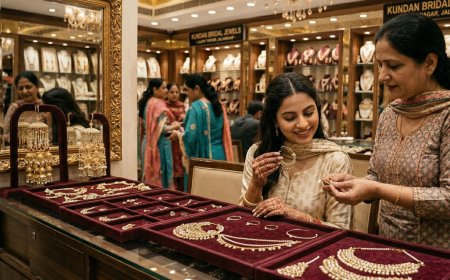
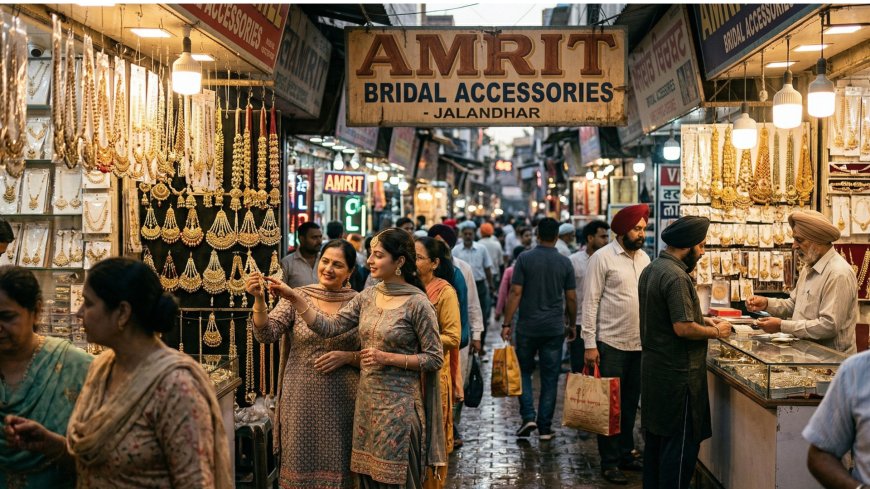
The hair accessory market in Jalandhar is distributed across the same geography as the broader jewellery and accessory market, with specific concentrations in the Lajpat Nagar area for the jewellery-based pieces and the specialist artisan workshops for the craft-based pieces.
The Lajpat Nagar accessory market carries the widest range of the jewellery-based hair accessories — the tikka variations, the passa and jhoomer pieces, the veni and juda pin options — at prices that sit in the accessible to mid-range of the market. The quality in Lajpat Nagar for hair accessories is similar to the quality for the other jewellery categories: the upper end of the market, in the shops that carry the better fashion jewellery and the quality gold-plated pieces, has hair accessories of genuine craft. The lower end carries pieces whose quality is reflected in their price.
The specialist jewellers of the Model Town area carry the higher-quality and more expensive versions of the jewellery-based hair accessories — the Kundan passa, the genuine polki-look jhoomer, the matha patti with real stone setting. The bride who has allocated a significant portion of her hair accessory budget to the passa or the matha patti should be shopping this end of the market rather than the Lajpat Nagar accessory market.
The Basti Sheikh artisans are the source for the phulkari hair elements, as established above, and the visit to commission the hair strip should happen alongside or immediately after the chope commission — the two pieces should be planned together and produced together to ensure the visual continuity that makes the phulkari hair element meaningful rather than incidental.
The flower market — available from early morning on the day of the function — is the source for the gajra, the marigold strings, and the fresh flower elements that complete the hair story. The flower purchase should be delegated to a trusted family member or the bridal hair stylist herself, who will know exactly how much to buy and how to transport the flowers so that they arrive at the morning appointment fresh.
The Remote Shopping Protocol for Hair Accessories
The NRI bride managing her hair accessory shopping from Vancouver has specific challenges in this category that are different from the challenges of the lehenga or the jewellery remote purchase. Hair accessories are small, their proportion relative to the head and the hairstyle is critical, and the photograph does not convey scale reliably. The passa that looks appropriate in a boutique photograph may look too large or too small against the bride's actual hair volume and head size. The matha patti chain whose drape looks graceful on a model photograph may sit incorrectly against the bride's specific forehead shape.
The remote shopping protocol for hair accessories should therefore prioritise the local trusted agent over the direct remote purchase wherever possible. The agent who knows the bride's head size — who has seen the bride's hair and its volume, who has attended a styling session or seen the bride in a similar hairstyle on a previous occasion — is in a position to assess proportion that the remote buyer cannot assess from a photograph. For the significant pieces — the passa, the matha patti, the jhoomer — the assessment of proportion requires a physical presence that the remote purchase cannot replicate.
For the simpler pieces — the veni pins, the braid accessories, the juda pin options — remote purchase from a video call assessment is more tractable, because proportion is less critical and the quality assessment is more straightforward. The video call that shows the back of the piece, the securing mechanism, and the metal finish in natural light provides adequate information for a decision on these categories.
The fresh flower elements cannot be remotely purchased — they are purchased on the morning of the function, from the Jalandhar flower market, by the trusted local person who knows the bridal stylist's requirements. This purchase should be pre-briefed: the type of flower, the quantity, the configuration required, and the specific time at which the flowers need to arrive at the styling appointment.
Common Mistakes Sikh NRI Brides Make With Hair Accessories in Jalandhar
The first mistake is treating the maang tikka as the complete hair accessory brief. The tikka is the anchor of the Sikh bridal hair story, but it is the beginning of the story rather than its entirety. The bride who has a beautiful tikka and has given no thought to the passa, the veni, the back-of-head composition, or the fresh flower elements will find that her hair, in the photographs taken from any angle other than the frontal portrait, looks unfinished — as though the design intention stopped at the centre parting and did not extend into the rest of the hair. The complete hair story requires the complete vocabulary.
The second mistake is not planning the hair accessories with the specific hairstyle in mind. The veni is appropriate for a braided style. The juda pin is appropriate for an updo. The matha patti works with open hair and does not work with a full updo that leaves no forehead visible. The passa sits correctly at the temple in a half-up style and awkwardly in a fully pulled-back style. Each hair accessory has a specific hairstyle context in which it works, and purchasing hair accessories without having confirmed the hairstyle produces pieces that cannot be worn in the way they were intended.
The third mistake is not consulting the bridal hair stylist before purchasing hair accessories. The bridal hair stylist who will be dressing the bride's hair on the wedding morning has professional knowledge about which accessories work with which hair types, which securing mechanisms hold for a full day in Jalandhar's climate, and which pieces photograph well in the specific lighting conditions of the wedding venue. The bride who arrives at the morning appointment with a collection of hair accessories that the stylist has not seen is arriving with pieces whose wearability has not been professionally assessed. The hair accessory selections should be shared with the stylist — via WhatsApp photograph — before the wedding day, with enough time for the stylist to raise any practical concerns.
The fourth mistake is underestimating the securing requirement for heavier pieces. The matha patti, the jhoomer, and the heavier passa pieces require robust securing mechanisms — the pins that hold these pieces in the hair must be appropriate for the weight of the piece and must be set with the skill of a professional stylist. Hair accessories that are secured inadequately will shift, pull, and eventually detach over the course of the wedding day. The bride who has purchased a beautiful but heavy matha patti and whose hair stylist has not worked with this specific piece before should ask for a practice session — a morning appointment before the wedding day in which the stylist learns to secure the piece correctly in the bride's specific hair.
The fifth mistake is not budgeting separately for the fresh flowers. The fresh flower elements of the hair are the least expensive and most transformative of the complete hair accessory story, but they require a specific budget allocation and a specific purchase logistics plan that the bride who has not pre-planned them will not execute correctly. The gajra string forgotten until the evening of the function is not available from the flower market at that hour. The fresh flower purchase must be in the plan — in the budget, in the logistics, and in the morning-of briefing to the person responsible for collecting it.
The Resolution
Navjot's email produced a reply that was longer than the original message and that covered, as completely as the reply format allowed, the complete answer to the questions she had asked. She replied the following morning — Vancouver time, which was the middle of the Jalandhar afternoon — with the specific efficiency of a woman who processes information quickly and acts on it immediately.
She had added the passa to the jewellery brief that was going to her Lajpat Nagar agent. She had added the phulkari hair strip commission to the Basti Sheikh conversation that was already happening for the chope — the artisan had, as predicted, known exactly what she was asking for. She had sent the hair stylist a WhatsApp with the question about fresh mogra and received a voice note back that ran to four minutes and covered, in the stylist's experience, exactly which flowers worked with which hair types in which configurations, culminating in a specific recommendation for the gajra wound through the braid with small rose accents at the base of the half-up section.
She had, she wrote in the reply, not previously known about the veni or the passa or the phulkari hair strip. She had not known that the back of her head was a photographic space that required as much attention as the front. She had not known that the fresh flowers from the Jalandhar flower market were the most culturally specific and most photographically alive element of the complete hair story.
She knew now.
Three months later, the photographs arrived — the ceremony photographs, the portraits, the candid images from the phera walk. The hair told a complete story in every frame. The tikka at the centre. The passa at the right temple. The phulkari strip wound through the braid, catching the same embroidery vocabulary as the chope above it. The gajra wound through the braid below the phulkari, white mogra against the dark hair, picked up in close-up by the photographer who had been in this work long enough to recognise the specific beauty of a fresh flower in a Sikh bride's hair on the morning of the Anand Karaj.
The email Navjot sent with the photographs said: you should see the back-of-head photographs. They are the best ones.
Plan the complete hair accessory story from the beginning of the shopping process — not after the lehenga and jewellery are confirmed, but alongside them. The hair is a designed element of the bridal aesthetic, not a residual category.
Commission the phulkari hair strip at the same time as the phulkari chope. The two pieces belong together aesthetically and should be made together from the same embroidery tradition.
Consult the bridal hair stylist before purchasing any hair accessories. Professional knowledge about securing, wearability, and the specific photographic conditions of the venue is not available from a shopping guide.
Plan the fresh flower purchase explicitly — the person responsible, the quantity, the timing, the specific flowers. The gajra forgotten on the morning of the function cannot be recovered in time.
Design the back-of-head composition as deliberately as the frontal composition. The phera walk photographs are taken from behind. The ceremony photographs are taken from behind. The hair story must work in the round.
Because the Sikh bride whose hair is a complete and considered story — from the tikka at the centre to the phulkari strip in the braid to the mogra wound through the plait to the juda pin at the conclusion of the updo — is not the bride who spent more money on her hair. She is the bride who understood that the hair, like everything else in the bridal aesthetic, rewards the attention given to it before the wedding day with photographs that are worth looking at for the rest of a life.
Published by NRIWedding.com — The Premium Global Platform for Non-Resident Indians Planning Indian Weddings From Abroad.
What's Your Reaction?
 Like
0
Like
0
 Dislike
0
Dislike
0
 Love
0
Love
0
 Funny
0
Funny
0
 Angry
0
Angry
0
 Sad
0
Sad
0
 Wow
0
Wow
0