































































Jutti Shopping in Jalandhar — The Complete Bridal and Wedding Footwear Guide
Punjabi juttis are one of the most iconic elements of wedding fashion in Punjab. From heavily embroidered bridal juttis to colorful pairs for bridesmaids and family members, Jalandhar has become one of the most popular shopping destinations for wedding footwear. For NRI brides returning to India for wedding preparations, the city’s footwear boutiques, traditional markets and artisan workshops offer craftsmanship and variety that are rarely available abroad. This guide explains where to shop for juttis in Jalandhar, how to choose the right bridal pair, how to coordinate footwear for bridesmaids and family members, and what NRI brides should know when purchasing juttis during a wedding planning trip to Punjab.

Jutti Shopping in Jalandhar: The Best Shops for Bridal, Bridesmaid and Family Footwear
The Afternoon That Turned Into Something Else Entirely
It is a Thursday afternoon in Jalandhar.
You arrived three days ago from Birmingham. You have spent those three days in a state of organised chaos that anyone who has returned to India for their wedding will recognize immediately — the vendor meetings that run long, the family visits that expand organically beyond their scheduled time, the meals that appear from multiple directions simultaneously, the general sense that the city is conspiring warmly and insistently to remind you that you left and that it is very glad you are back.
Today was supposed to be the jutti day. A focused, efficient two-hour exercise. You had a list. You had a budget. You had a reasonably clear idea of what you were looking for — bridal juttis for yourself, coordinated pairs for the four bridesmaids, and something appropriate for your mother and future mother-in-law without triggering a negotiation about who got the better pair.
It is now four hours later.
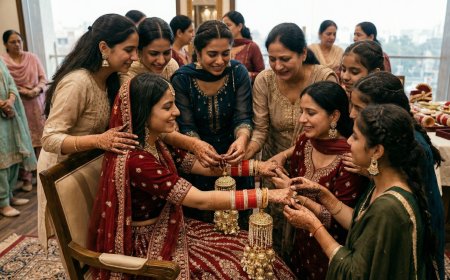
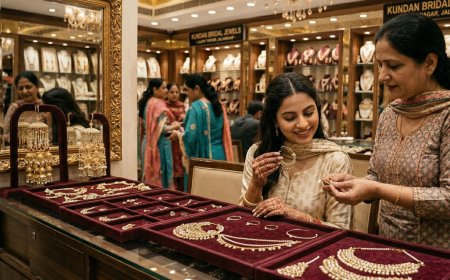
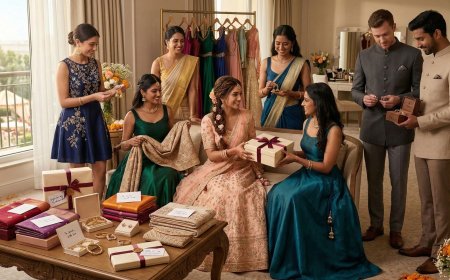
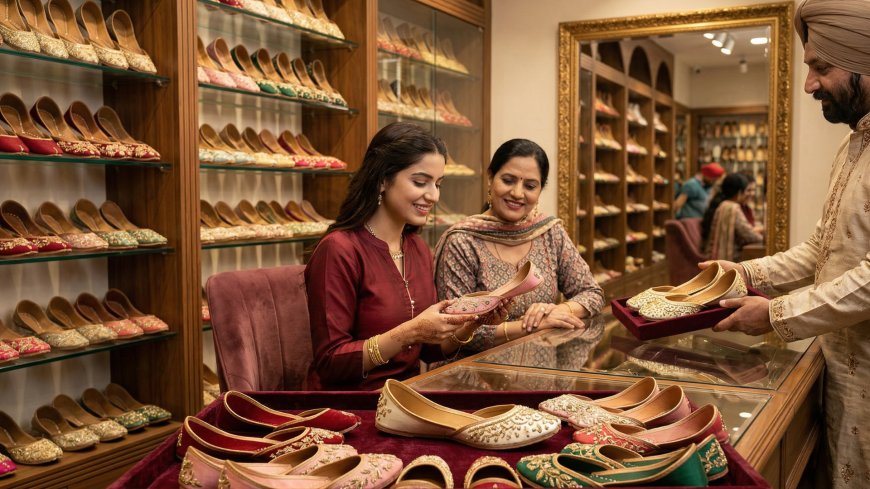
You are sitting on a low wooden stool in the third shop of the afternoon, your sandals somewhere to your left, surrounded by approximately forty pairs of juttis in various states of consideration. Your mother is holding a heavily embroidered gold pair that she has decided are perfect for you and that you have already, quietly, decided are not. Your future mother-in-law is engaged in a focused parallel negotiation with the shopkeeper about a pair of deep burgundy juttis that have nothing to do with your wedding color palette but that she clearly intends to purchase regardless. Your best bridesmaid is on her second round of the shop's middle shelves and has developed strong opinions about a pair of mirror-work flats that she cannot afford at the marked price but believes she can negotiate to within range if given sufficient time.
And you have found them.
The pair you were not specifically looking for but that are, unambiguously, the ones. Ivory silk base, fine gold thread work in a floral pattern that echoes the embroidery on your lehenga without copying it exactly, a heel height that is precisely manageable for a full day of ceremony and celebration, and a fitting that — after the three pairs that were almost right but not quite — feels like the shoes were made for your feet specifically.
You are going to buy these. But first you have to wait for the mother-in-law negotiation to resolve, retrieve your mother from the gold pair she has not yet relinquished, and figure out what has happened to the bridesmaid who went to look at the embroidered clutches at the back of the shop fifteen minutes ago and has not returned.
This is jutti shopping in Jalandhar. It is rarely as efficient as planned. It is almost always more enjoyable than expected. And when it results in the right pair — the pair that you will be wearing in the photographs your grandchildren will eventually see — it is one of the most satisfying shopping experiences the city offers.
This guide is the complete resource for making it as intelligent and as productive as it can be — covering the history and craft of the Punjabi jutti, the Jalandhar market's geography and shop landscape, the specific guidance for bridal, bridesmaid, and family footwear selection, the fitting and comfort considerations that matter across a full wedding day, the NRI-specific purchasing guidance for buying from abroad, and the care and customisation intelligence that ensures the perfect pair stays perfect.
The Punjabi Jutti: Understanding What You Are Actually Buying
Before the market geography and the shop recommendations, the craft — because understanding what a Punjabi jutti is, where it comes from, and what distinguishes a genuine quality piece from a mass-produced imitation is the knowledge that transforms shopping from a transaction into an informed acquisition.
The Punjabi jutti is a hand-crafted flat or very low-heeled shoe whose origins in the Punjab region extend across multiple centuries of craft tradition. The jutti's defining characteristics are its construction from genuine leather — traditionally from the toe and sole — combined with extensive surface embellishment in thread work, mirror work, gold and silver wire, beadwork, or a combination of these techniques applied by skilled artisans whose families have practiced the craft across generations.
The craft geography of the Punjabi jutti is concentrated in specific towns and districts of Punjab — Patiala, Ludhiana, and certain districts of rural Punjab have historically been the primary production centres. Jalandhar's role in the jutti market is primarily as a retail and finishing centre rather than a primary production centre — the city's geographic position as a commercial hub and its large NRI-oriented retail market have made it one of the most important jutti shopping destinations in Punjab, with shops sourcing from the production centres and finishing and retailing to a customer base that includes both local buyers and NRI families returning for weddings.
What distinguishes quality juttis:
The leather — genuine leather has a suppleness, a durability, and a comfort development over wearing time that synthetic alternatives cannot replicate. Quality juttis use genuine leather for the insole and often for the outer sole, creating a shoe that softens and molds to the foot across wearing and develops a comfort that synthetic alternatives do not. The thread work — hand-done thread embroidery has a texture, an irregularity of pattern, and a depth of craft visible on close inspection that machine embroidery cannot match. The tension variations in hand work, the slight imperfections that are the signature of hand production, and the density of the embroidery that quality hand work achieves are all markers of genuine craft. The mirror work — in quality juttis, individual mirrors are set and secured with thread work in a technique that creates structural security. In lower-quality pieces, mirrors are glued into position and will begin to detach with wear. The gold and silver wire work — the zardozi and naqshi techniques that create the most elaborate surface decoration on premium juttis — require skilled artisans whose craft years are reflected in the precision and the density of the work.
The fitting reality of Punjabi juttis:
Punjabi juttis run small by international sizing standards. The NRI bride accustomed to UK size 6 or US size 8 will typically need to size up by half to a full size in the Punjabi market. Additionally, the traditional jutti's flat construction and its fit around the foot — snug at the toe and slightly more generous at the heel — means that sizing assessment requires actual wearing rather than size chart reference. The jutti that fits correctly on initial wearing will loosen slightly with use as the leather softens and the embellishment settles. The jutti that feels slightly tight on first wearing will typically reach a comfortable fit after two to three hours of wear. The jutti that is uncomfortable at the point of purchase will not improve with wearing time.
The Jalandhar Jutti Market: Understanding the Geography
Jalandhar's jutti retail market is not concentrated in a single district. It is distributed across several commercial areas whose character, price range, and product focus differ meaningfully — and understanding this geography allows NRI shoppers to target the areas most relevant to their specific requirements rather than navigating the entire commercial city.
The Old City Markets: Tradition and Authenticity
The old city commercial areas — the lanes and markets surrounding the traditional commercial heart of Jalandhar, including areas around Guru Nanak Mission Chowk, the cloth market, and the adjacent lanes — contain the highest concentration of traditional jutti shops whose stock is closest to the authentic craft tradition. These shops typically source directly from the production artisans, carry significant inventory depth, and operate at price points that reflect the wholesale-adjacent nature of their sourcing.
The old city jutti market is where the most traditionally-styled juttis are found — the classic Punjabi forms in traditional color combinations and embellishment styles that have defined the craft for generations. It is also where the most experienced negotiating environment exists — the price stated is rarely the price paid, and the family that negotiates confidently and knowledgeably will pay significantly less than the family that accepts the first figure.
The limitations of the old city market for NRI brides are its physical environment — the narrow lanes, the crowded shopping conditions, the limited air conditioning, and the parking constraints that make a full family jutti expedition logistically challenging — and its variable English language service capability, which can create communication difficulties when NRI brides are trying to specify precise requirements for bridal customisation.
Model Town and Puda Complex: Contemporary Retail
The Model Town commercial area and the Puda Complex zone have developed a more contemporary jutti retail environment in recent years — shops that combine traditional jutti craft with more modern retail presentation, wider range of contemporary designs, better English-language service capability, and a shopping environment that is more comfortable for NRI families accustomed to organised retail formats.
The shops in this zone carry both traditional and contemporary designs, with a stronger representation of the fusion and designer jutti directions that NRI brides with contemporary aesthetic visions are increasingly seeking. Prices are somewhat higher than the old city market — the retail format and location premium is reflected in the price — but the shopping experience and the customisation capability are correspondingly more developed.
GT Road Corridor: Scale and Variety
The GT Road commercial development has produced several larger-format jutti retail operations that carry extensive inventory across the full range of styles, from classic traditional to contemporary designer, at competitive prices driven by the high volume their GT Road locations support. These shops are the most accessible for NRI families staying in GT Road area hotels and for guests arriving from outside the city whose time in Jalandhar is limited.
The GT Road jutti shops' strengths are their inventory breadth — the sheer variety of designs, colors, and price points available under one roof — and their organised retail format that makes the shopping experience more manageable for large family groups. Their limitation is that the high-volume retail model means that the most distinctive and most craft-intensive pieces are less likely to be found here than in the specialist shops of the old city or the curated boutiques of Model Town.
Specialist Bridal Jutti Boutiques
A small but growing category of specialist bridal jutti boutiques has emerged in Jalandhar in response to the NRI bridal market's demand for premium, curated, and customisable footwear. These boutiques occupy a different retail tier from the general jutti market — they carry smaller, more carefully selected inventory, offer genuine consultation services, operate with professional appointment systems that accommodate NRI planning timelines, and provide customisation services ranging from color modification to fully bespoke commission.
The best of these boutiques have invested in their understanding of the NRI bridal market — they understand the aesthetic vocabulary that NRI brides bring from their international exposure, they are familiar with the specific requirements of coordinated bridal party footwear, and they communicate in English with the confidence that international client relationships require. They are not cheap — the premium over the general market is real — but they deliver a service and a product quality that the general market cannot match for brides whose requirements are specific and whose occasion is significant.
Bridal Juttis: The Complete Selection Guide
The bridal jutti is the most consequential footwear decision of the wedding purchase program, and it deserves significantly more deliberation than many NRI brides give it relative to the attention they invest in the lehenga, the jewelry, and the overall bridal look.
The Aesthetic Integration Principle
The bridal jutti's relationship to the lehenga is not simply a color coordination exercise. It is an aesthetic integration challenge whose successful resolution requires the jutti to speak the same visual language as the lehenga — to use embellishment techniques, color relationships, and design motifs that are coherent with the lehenga's own vocabulary without being identical to it.
A heavily embroidered red bridal lehenga in traditional zardozi work typically calls for a jutti in the classic gold thread work tradition — the jutti's embellishment echoing the lehenga's technique in a shared vocabulary that creates visual continuity. A contemporary pastel lehenga in light embroidery might call for a jutti in a complementary or contrasting color with delicate mirror work or subtle thread detail — the jutti providing a visual punctuation rather than a continuation. A fusion bridal look with minimalist embellishment might call for a jutti that is deliberately simple — a clean silk base with a single line of embellishment — that completes the look without competing with it.
Getting the color right:
Bring a swatch of your lehenga fabric to every jutti shop you visit. Not a photograph — a physical swatch. Color perception in retail lighting is unreliable, and the jutti that looks like a perfect match under the shop's lighting may be visibly different against your lehenga in natural light. The physical swatch eliminates this uncertainty and allows a reliable color assessment in any lighting condition.
Understanding the Construction Options
Fully hand-embroidered bridal juttis represent the highest craft tier in the Jalandhar market. The embroidery — whether in gold thread zardozi, mirror work, phulkari-inspired thread techniques, or a combination — is worked entirely by hand across a production timeline of days to weeks depending on the complexity of the design. The result is a level of embellishment density, visual depth, and craft distinction that machine-produced alternatives cannot achieve. These are the juttis that reward close photographic attention and that look more beautiful in detail shots than they do at a distance.
Semi hand-crafted juttis combine machine-produced embellishment bases with hand-finishing work — hand-set mirrors, hand-applied thread accents, or hand-finishing of machine-laid embroidery foundations. They occupy the quality tier below fully hand-done work but significantly above purely machine-produced pieces. For NRI brides whose budget does not extend to fully hand-embroidered pieces but who want a quality noticeably above the mass market, the best semi hand-crafted options in the Jalandhar market represent genuine value.
Designer and contemporary bridal juttis combine traditional construction with contemporary design direction — unusual color combinations, non-traditional embellishment materials such as velvet, pearls, or rhinestones, and contemporary silhouette variations that depart from the classic Punjabi jutti form while retaining its essential flat or low-heeled construction and surface embellishment character. These are the pieces that align most naturally with contemporary fusion bridal looks and that photograph most distinctively for brides whose visual reference is the contemporary NRI bridal aesthetic rather than the traditional Punjabi wedding look.
The Comfort Assessment for a Full Wedding Day
The comfort of the bridal jutti across a full wedding day — a day that may extend from the morning preparation ritual through the ceremony, the photographic sessions, the reception, and the dancing — is a consideration that is consistently underweighted in the selection process relative to the aesthetic assessment.
Insole quality: The insole padding of the jutti determines the comfort baseline. A jutti with a well-padded insole maintains comfort significantly longer into a long day than one with a thin or unpadded inner sole. Assess the insole quality physically — press the inner sole of any jutti you are considering and assess the padding thickness and the material quality. A memory foam or gel-padded insole in a quality jutti is worth seeking out specifically.
Heel construction: Most Punjabi juttis are flat or very low-heeled by construction. The degree of heel elevation — even the subtle elevation of some traditional designs — affects both the visual proportion of the jutti against the lehenga and the physical comfort across extended wear. For brides who will be wearing their juttis for six or more hours with significant standing and walking time, the flattest comfortable construction is typically the most practical choice.
Breaking in before the wedding: New juttis — particularly those with tight leather construction — should be worn for several sessions before the wedding day to allow the leather to soften and the fit to develop. Wearing new juttis for the first time at the wedding is a reliable source of discomfort. Take the bridal juttis home at least three to four weeks before the wedding and wear them around the house for increasing periods to accelerate the break-in process.
The duplicate pair strategy: For brides whose wedding day extends into a long evening with significant dancing, purchasing two identical pairs — or a nearly identical simpler pair for the evening — is a practical investment that many experienced bridal stylists recommend. The pair worn for the ceremony and the formal photographs is preserved in its best condition. The duplicate pair or the comfortable evening alternative saves the bride's feet during the extended celebration.
Bridesmaid and Family Footwear: The Coordination Strategy
The bridal party's footwear — the bridesmaids, the flower girls, the mothers of the couple, and the key family members who will appear consistently in the wedding photographs — deserves a coordination strategy that goes beyond matching colours to create a cohesive visual composition.
Bridesmaids: Coordinated Without Identical
The most visually successful bridesmaid jutti approach in the contemporary NRI wedding is coordinated rather than identical — bridesmaids wearing juttis in the same color family or embellishment direction without wearing precisely the same design. This approach allows each bridesmaid's individual character to be expressed within the visual language of the collective, avoids the size-fit issues that identical pairs across multiple different foot sizes inevitably create, and produces wedding photographs where the bridal party has visual coherence without the slightly regimented appearance of perfectly matching footwear.
The coordination palette: If your bridal juttis are in ivory with gold thread work, bridesmaid coordination might involve gold thread juttis in the bridesmaids' individual outfit colors — pink, green, blue — unified by the shared thread technique rather than the shared base color. If your bridal juttis use mirror work, the bridesmaid juttis in smaller mirror work detail in coordinating colors create visual continuity through technique rather than color match.
The sizing practical reality: Bridesmaid juttis for a party of four or five women require assessment and purchase in multiple sizes across a range that may extend from UK size 3 to UK size 7 or larger. The Jalandhar market's sizing, as noted, runs small — confirm each bridesmaid's Jalandhar equivalent size through individual fitting rather than size chart conversion, and allow sufficient time in the shop for each person to try and assess their specific pair.
Remote bridesmaid coordination: For NRI bridal parties whose members are not all present in Jalandhar during the shopping visit, purchasing bridesmaid juttis requires specific remote coordination. Obtain precise foot measurements from each absent bridesmaid — length and width — and convert these to Jalandhar market sizes through careful measurement-to-size conversion. Purchase with exchange possibility confirmed or commission custom-fitted pairs with the individual measurements provided to the maker. Ship to the individual bridesmaid's location with sufficient lead time for any exchange or adjustment to be completed before the wedding.
Mothers of the Couple: Comfort, Dignity, and Aesthetic Appropriateness
The mothers of the bride and groom occupy a distinct footwear category whose requirements differ from both the bridal and the bridesmaid. Their juttis must balance aesthetic appropriateness — visually coherent with the wedding's overall color and style direction — with the comfort requirements of older feet that may have different needs from those of the younger bridal party.
The comfort priority: For many mothers in the NRI wedding context — women who may be in their fifties or sixties, who may have specific foot health considerations, and who will be on their feet for extended periods across multiple wedding functions — comfort must be the primary jutti selection criterion, with aesthetic considerations operating within the constraints that genuine comfort imposes.
The aesthetic dignity principle: The mothers' juttis should be beautiful and dignified rather than coordinated at the expense of their individual appropriateness. A mother in a heavily embroidered deep green salwar suit does not need a green jutti — she needs a jutti that works beautifully with her specific outfit and that carries the quality and craft distinction appropriate to her role at the wedding. Allow each mother to select within a general aesthetic brief rather than imposing specific coordination that may not serve her individual look.
The separate shopping appointment: The mothers' jutti shopping benefits from a separate appointment from the main bridesmaid shopping exercise — an unhurried, comfortable session where each mother can try extensively, assess comfort over time, and make a decision without the energy and competitive dynamic that large group shopping inevitably produces.
Family Members: The Extended Coordination
For NRI weddings where the extended family's visual coordination in photographs is a consideration — matching dupatta colors or shared color families across the wider female family group — the jutti coordination can extend to aunts, sisters-in-law, and other close family members whose outfits and footwear appear consistently in the wedding's visual record.
The most practical approach for extended family coordination is a general color brief — "warm metallics and golds are the family footwear palette" or "any jewel tone with gold thread work" — rather than specific design prescription. Family members who are pointed toward the right shops with a clear color and technique brief will independently arrive at individual choices that create collective visual coherence without the coordination logistics of managing specific designs across a large group.
Custom and Bespoke Juttis: The Commission Option
For NRI brides whose specific requirements — a precise color match to a unique lehenga, a design incorporating a specific motif, a size outside the standard range — cannot be met from the existing market stock, the custom commission option available through several of Jalandhar's specialist workshops represents a genuinely viable alternative to compromising on what you actually want.
What custom commissioning actually involves:
A fully bespoke Jalandhar jutti commission begins with a design consultation — either in person during the planning visit or remotely via video call with a well-briefed local contact present. The design discussion covers the lehenga fabric and color, the embellishment technique and density, the size and fit requirements, the heel specification, and any specific motif or pattern elements the bride wants incorporated. The workshop produces a design sketch or sample patch for approval before full production begins.
Production timelines for custom commissions vary by complexity. A straightforward custom color in an existing template design — three to four weeks. A fully original design with complex embellishment — six to ten weeks. Commission at the planning visit stage with the full production timeline plus delivery contingency in mind.
The price of custom:
Custom Jalandhar jutti commissions carry a premium of typically thirty to fifty percent above the equivalent standard market price for comparable quality. For a bridal pair whose total market value is three to five thousand rupees, the custom commission premium adds one to two thousand rupees. This premium, in the context of the total bridal footwear budget and the significance of the piece, is one that most NRI brides find entirely reasonable.
Monogramming and personalisation:
Several Jalandhar jutti workshops offer monogramming services — the incorporation of initials, dates, or short phrases into the insole or the embellishment of the jutti. Insole personalisation is particularly popular — the couple's initials or wedding date worked in thread or embossed into the leather insole, visible only to the bride and creating a private layer of significance that the photographs never show but that the bride carries through the wedding day.
Buying Juttis from Abroad: The Remote Purchase Guide
For NRI brides who cannot be physically present in Jalandhar for the jutti shopping — whose planning visit does not coincide with the optimal purchase timing, or who are managing the purchase entirely remotely — the following framework maximises the probability of a successful outcome.
The proxy shopping brief:
A well-briefed local proxy can manage the jutti purchase with a high degree of reliability if the brief is specific enough. The brief should include: a physical lehenga fabric swatch or a high-resolution color-accurate photograph taken in natural light. Precise foot measurements — length from heel to longest toe in centimetres, and width across the widest point of the foot. Budget range. Design direction with at minimum ten reference photographs. Embellishment technique preference — thread work, mirror work, mixed. Heel height specification — flat, minimal raise, or specific measurement. The non-negotiables — the elements of the brief that cannot be compromised even if the proxy must visit multiple shops to find them.
The video shopping session:
Several of Jalandhar's more sophisticated jutti shops have adapted to NRI customer requirements and will conduct video shopping sessions — live video calls during which the shop assistant presents options against your specifications and you assess and respond in real time. Request this service explicitly when making the appointment. A well-prepared video session with a clear brief and a shop that is willing to conduct it properly can produce a reliable purchase decision without physical presence.
The return policy negotiation:
For remote purchases — particularly those made through a proxy rather than in person — negotiate explicitly for an exchange or return right based on fit assessment when the jutti is received. Many Jalandhar jutti shops will accommodate this request from serious NRI buyers, particularly for significant purchase values. Confirm the exchange right in writing before the purchase is completed.
Shipping and customs:
Juttis shipped from Jalandhar to the UK, Canada, or Australia are subject to the customs and import duty regulations of the destination country. For UK-based NRI brides, declared values above the personal import allowance may attract customs duties. Understand the applicable regulations before committing to shipping, and factor potential customs costs into the total purchase budget assessment.
Jutti Care and Maintenance: Protecting the Purchase
The jutti purchased for a Jalandhar wedding deserves care proportional to the significance of the occasion and the quality of the craft. Several maintenance practices ensure that a quality pair remains in excellent condition from purchase through the wedding day and into the long-term storage that follows.
Pre-wedding preparation:
New juttis should be worn in for three to four weeks before the wedding day — short wearing sessions initially, extending in duration as the leather softens and the fit develops. For custom or heavily embellished pieces, protect the embellishment during the break-in process by wearing the jutti indoors on clean, smooth surfaces rather than outdoors where the embellishment could be damaged by debris.
Apply a leather protection treatment to the outer leather surfaces of new juttis before wearing — this is particularly important in the monsoon-adjacent seasons and for any outdoor elements of the wedding program. Quality leather protector sprays are available in Jalandhar's shoe care shops and should be applied in light coats with full drying time between applications.
Post-wedding storage:
Store juttis after the wedding in the original box or in an acid-free tissue paper wrap inside a breathable fabric bag. Avoid plastic storage bags that trap moisture and can damage both the leather and the embellishment over time. For heavily embellished pieces, stuff the interior of the jutti with tissue paper before storage to help it maintain its shape. Store in a cool, dry location away from direct light, which can fade both the leather and the thread work embellishment over time.
Embellishment repair:
Thread work embellishment may sustain minor damage — loose threads, pulled sections — during the wearing of the wedding day. Several Jalandhar jutti shops offer post-wedding repair services for pieces purchased from them, and it is worth asking about this service at the time of purchase. Minor thread embellishment repairs are typically straightforward for a skilled craftsperson and should be addressed promptly rather than allowed to develop into more significant damage.
Common Mistakes NRI Brides Make in Jutti Shopping
Mistake 1: Shopping Without a Lehenga Swatch Color assessment in retail lighting is unreliable. Brides who shop for juttis without a physical fabric swatch from their lehenga consistently find that the color match they confirmed in the shop looks different against the actual lehenga in natural light. Bring the swatch. Always.
Mistake 2: Prioritising Aesthetics Over Comfort for a Full Wedding Day The most beautiful pair of juttis that causes significant discomfort after three hours is the wrong pair for a wedding day that extends to twelve or more hours. Comfort assessment across extended wearing is a selection criterion of equal importance to aesthetic assessment and should be weighted accordingly.
Mistake 3: Leaving Jutti Shopping to the Final Days of the India Visit Jutti shopping — particularly for bridal, bridesmaid, and family footwear across multiple sizes and designs — requires time, energy, and decision-making capacity. Scheduling it for the exhausted final days of an India planning visit produces rushed decisions and compromised outcomes. Allocate a dedicated half-day early in the planning visit when energy and attention are available for the exercise it deserves.
Mistake 4: Not Trying Multiple Pairs Across Multiple Shops The first pair that feels right in the first shop of the afternoon is not necessarily the best pair in the Jalandhar market. Allow time for multiple shops and multiple pairs before making the final decision — the market has sufficient variety to reward thorough exploration, and the pair that is genuinely right is worth the additional time the exploration requires.
Mistake 5: Forgetting to Negotiate The Jalandhar jutti market is a negotiating environment. The marked price is a starting position rather than a fixed commitment, and the family that negotiates confidently and respectfully — citing competitive alternatives, purchasing multiple pairs, or committing to a second visit — will consistently pay less than the family that accepts the initial price without discussion.
The Emotional Dimension: Why Juttis Matter More Than You Expect
There is something about finding the right pair of juttis in a Jalandhar shop that is disproportionate to the practical significance of the decision.
It is not the most expensive purchase of the wedding preparation. It is not the most logistically complex. It does not require the same planning depth as the venue selection or the vendor coordination or the accommodation strategy.
But there is a specific joy in the moment of finding them — the pair that is right, that fits, that looks exactly as it should against the lehenga swatch, that has the embellishment quality that rewards the attention you are giving it — that is unlike the satisfaction of any other wedding purchase.
Perhaps because juttis are the most intimate part of the bridal look. The element that is closest to the body, that is felt most directly across the full duration of the wedding day, that carries the physical weight of the occasion most literally. The shoes that walked you through the ceremony. That stood on the floor of the mandap. That moved through the reception and the dancing and the long, warm, exhausting, irreplaceable day.
Or perhaps simply because finding the right pair in a Jalandhar market, surrounded by your family in various states of negotiating and exploring and holding up pairs against the light — is the specific, ordinary, irreplaceable kind of beauty that a return to home produces.
Not the spectacular beauty of the decorated venue or the formal ceremony. But the everyday, joyful, slightly chaotic beauty of shopping with your mother in a city that knew you before you knew yourself.
That afternoon is worth having. And the juttis at the end of it are worth everything the finding required.
Complete Jutti Shopping Checklist for NRI Brides and Families
Preparation
- Bring physical lehenga fabric swatch to every jutti shop
- Obtain precise foot measurements for all absent bridesmaids
- Prepare design reference photographs — minimum ten per person being shopped for
- Establish budget range per pair before entering the market
- Research shops and make appointments at specialist boutiques in advance
- Schedule jutti shopping early in the India visit — not in the final exhausted days
Bridal Jutti Assessment
- Assess embellishment technique — hand versus machine versus semi hand-crafted
- Evaluate color accuracy against lehenga swatch in natural light
- Assess insole padding quality and heel construction for full-day comfort
- Try across extended in-shop wearing period — minimum fifteen to twenty minutes
- Confirm leather quality and protection treatment requirement
- Discuss customisation options if standard stock does not meet brief
Bridesmaid and Family Assessment
- Establish coordination palette brief rather than identical design requirement
- Allow each person sufficient try-on time for genuine fit assessment
- Confirm exchange policy before purchase for absent bridesmaid pairs
- Separate mothers' shopping session from main group exercise
- Negotiate group purchase discount for multiple pairs
Custom Commission
- Brief designer with lehenga swatch, precise measurements, and design references
- Confirm production timeline against wedding date with contingency
- Request design sketch or sample patch approval before production
- Confirm monogramming options for insole personalisation
- Build payment schedule with deposit and final payment on delivery
Remote Purchase
- Prepare comprehensive written and visual brief for local proxy
- Request video shopping session from shops with NRI client experience
- Negotiate exchange right for fit-based returns before purchase confirmation
- Confirm shipping costs and customs duty implications before committing
- Allow minimum four weeks for shipping, customs clearance, and any adjustments
Post-Purchase Care
- Begin break-in wearing process minimum three to four weeks before wedding
- Apply leather protection treatment before first wearing outdoors
- Store in acid-free tissue and breathable fabric bag after wedding
- Address any embellishment damage promptly with original shop or specialist
The Pair That Will Carry You Through
Years from now, when the wedding photographs have been looked at hundreds of times and the specific planning decisions have blurred into the general memory of a week that was extraordinary and exhausting in equal measure — someone will look at the close-up photograph of the bridal juttis. The one where the embellishment detail is visible and the lehenga edge is just in frame and the quality of the afternoon light makes the whole composition look like something from a magazine.
And they will ask where you found them.
And you will remember the Thursday afternoon in Jalandhar. The third shop. The forty pairs in various states of consideration. Your mother with the gold pair she had decided were perfect. The mother-in-law negotiating over the burgundy ones with nothing to do with your color palette. The bridesmaid somewhere at the back looking at embroidered clutches.
And the moment you found them — the ones that were right — and understood that the afternoon, which had been chaotic and long and slightly overwhelming in the best possible way, had delivered exactly what it was supposed to.
That is jutti shopping in Jalandhar.
Go with time. Go with your lehenga swatch. Go with your family. And let the city give you the pair that will carry you through the most significant day of your life.
What's Your Reaction?
 Like
0
Like
0
 Dislike
0
Dislike
0
 Love
0
Love
0
 Funny
0
Funny
0
 Angry
0
Angry
0
 Sad
0
Sad
0
 Wow
0
Wow
0