


















































Kalire Buying Guide for Jalandhar Brides: Classic vs Designer vs Custom
Kalire are one of the most recognizable elements of a Punjabi bridal look. Traditionally tied to the bride’s wrists during the wedding rituals, these ornate ornaments symbolize blessings, prosperity and the beginning of married life. While classic gold kalire remain the traditional choice, modern Punjabi brides — especially NRI brides planning weddings in Punjab — now have a wide range of options including designer pearl kalire, floral variations and custom-made heirloom pieces. Jalandhar has become one of the key markets for bridal kalire, with traditional jewellery lanes offering classic designs and contemporary studios creating personalised pieces for modern weddings. This guide explains the difference between classic, designer and custom kalire, how to choose the right style for your bridal look, where to shop in Jalandhar, and how NRI brides can manage purchases or commissions while planning weddings from abroad.

Kalire Buying Guide for Jalandhar Brides: Classic vs. Designer vs. Custom
The Morning Everything Felt Real
It is the day before your wedding.
You are sitting in the bedroom of your parents' house in Jalandhar — the same bedroom you grew up in, the same window through which you watched the street change across twenty-something years of school mornings and summer holidays and the visits home that became shorter and less frequent once the job in Toronto took hold and the life there became the primary life.
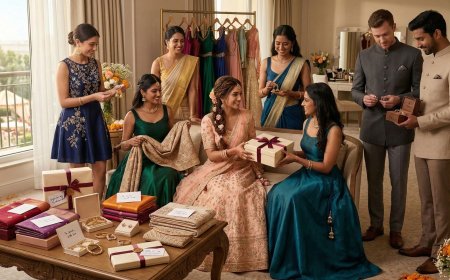
The room is fuller than it has ever been. Your mother is on the phone coordinating something with the caterer. Your bua has arrived from Ludhiana with two of your cousins and is unpacking into the adjacent room with the cheerful efficiency of a woman who has attended sixty weddings and knows exactly what is required at each stage of the preparation. Your best friend from Toronto, who has never attended a Punjabi wedding before and who has been experiencing the last three days with the wide-eyed wonder of someone encountering an entirely new civilisation, is sitting on your bed watching everything happen and asking questions that you have been answering since childhood but that feel, in this context, surprisingly difficult to articulate.
And on the table beside you, in the embroidered cloth bag that your mother brought out this morning with the specific deliberateness of someone presenting something that matters, are the kalire.
Your grandmother's kalire. The ones she wore at her own wedding. The ones your mother wore at hers. The gold has the warmth of real gold that has been worn and loved and stored across decades. The shape is the classic — the inverted umbrella form that is as old as the tradition itself, with the hanging subsidiary pieces that move and catch light when you lift the bag and the whole assembly chimes softly in a way that makes your bua look up from across the room with an expression that is not quite a smile but is related to one.
You are going to wear these. The decision was never really in question.
But you are also aware that when you look at your wedding photographs — the photographs that will exist in your life and your family's life long after every other detail of this week has softened into general impression — you want the kalire to look the way you have envisioned them looking. And the vision has evolved, over the months of planning in Toronto, to include elements that your grandmother's kalire, beautiful as they are, do not quite contain.
Which has led, gently and without any particular drama, to the conversation you had with your mother last week about whether custom additions were possible. Whether a Jalandhar designer could incorporate your grandmother's kalire into a contemporary custom design that honored the heirloom while extending it. Whether the result would look right with the lehenga. Whether it would still feel like continuity rather than change.
This conversation — about classic versus designer versus custom kalire — is one that Jalandhar brides across the NRI diaspora are having with increasing frequency and increasing sophistication. Because the kalire is not simply an accessory. It is one of the most emotionally and culturally loaded elements of the Punjabi bridal look, and the decision about which version to wear — inherited classic, contemporary designer, or bespoke custom — carries weight that extends well beyond the aesthetic.
This guide is the complete resource for that decision. It covers the history and cultural significance of the kalire, the full spectrum of what the Jalandhar market offers across all three categories, the aesthetic considerations that should inform the choice, the practical purchasing and commissioning guidance for NRI brides buying from abroad, and the specific emotional and cultural intelligence that makes this decision more than a shopping exercise.
The Cultural Significance of Kalire: What You Are Actually Wearing
Before the market assessment and the aesthetic guidance, the history — because understanding what kalire represent within Punjabi culture is the foundation of making a meaningful choice about them.
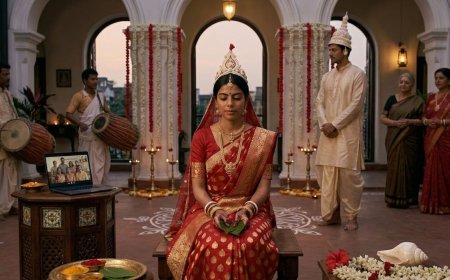
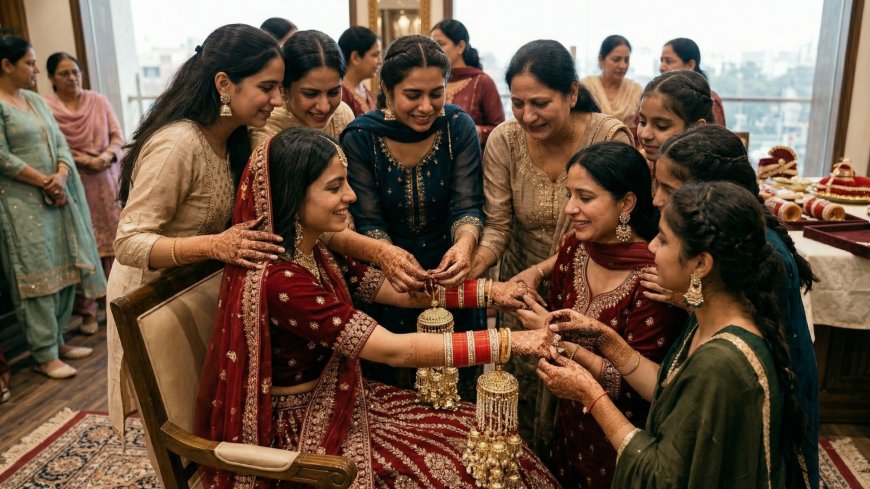
The kalire is a distinctly Punjabi bridal ornament with no precise equivalent in other regional Indian bridal traditions. Its name derives from the word for the banana flower — the kala — whose inverted, pendant form the traditional kalire echoes in its characteristic shape. The ornament is tied to the bride's wrists by her sisters and female relatives on the morning of the wedding, and the ritual of tying is as important as the ornament itself — a collective act of love and blessing performed by the women of the family around the bride.
The traditional function of the kalire was both protective and celebratory. The chiming of the hanging pieces was believed to ward off negative energy and to announce the bride's arrival as a celebratory sound. The gold — always gold in the traditional context — represented prosperity, auspiciousness, and the family's material investment in the bride's departure. And the weight of the ornament on the wrist — the physical presence of something substantial and beautiful — was part of the deliberate sensory experience of the wedding day.
The ritual of the kalire drop is one of the most joyful and most widely practiced wedding rituals in the Punjabi tradition. The bride shakes her hands over the heads of unmarried female relatives and friends, and whichever woman the falling kalire lands on is said to be the next to marry. This ritual transforms the kalire from a personal adornment into a participatory object whose significance is shared across the entire gathering — a moment of collective celebration that breaks the solemnity of the ceremony with genuine communal joy.
The kalire has also evolved in its symbolic vocabulary over generations. Where the original ornament was almost entirely auspicious and protective in its meaning, the contemporary kalire — particularly in the NRI context — carries an additional layer of identity significance. For the Jalandhar bride who has spent her adult life in Toronto or Birmingham, wearing kalire at her wedding is not only a participation in tradition. It is a deliberate act of cultural connection — a choice to wear, visibly and joyfully, one of the most distinctively Punjabi elements of the bridal vocabulary.
This cultural weight is the context within which the classic versus designer versus custom decision is made — and it is why the decision matters in a way that the selection of most other accessories does not.
The Three Categories: A Complete Understanding
Category 1 — Classic Kalire: The Weight of Tradition
The classic kalire is the original form — the inverted umbrella or banana flower shape in gold or gold-plated finish, with hanging subsidiary pieces that may include small bells, leaves, floral motifs, parrots, peacocks, or geometric elements, all chiming gently with movement. Understanding the material spectrum within the classic category is essential before any purchasing decision.
Pure gold classic kalire are the heirloom standard — the ornament made to be worn at the wedding and then stored carefully for the next generation. Pure gold kalire are produced in 18 to 22 karat gold, with 22 karat being the traditional standard for bridal gold in Punjab. The weight of a substantial pair of pure gold classic kalire ranges from 80 to 200 grams of gold content — a significant material value investment as well as an emotional one. Pure gold kalire have a warmth, a weight, a luminosity, and a movement quality that gold-plated alternatives approach but cannot fully replicate. The way pure gold catches light — with the specific softness that only genuine gold produces — is visible in wedding photographs in a way that discerning observers recognize immediately.
The investment dimension of pure gold kalire is worth acknowledging directly. At current gold prices, a substantial pair of 22-karat classic kalire represents a financial commitment of several lakh rupees. This investment is understood differently within the Punjabi bridal tradition than a standard accessory purchase — it is a lasting material asset that holds value across generations and that functions as part of the bride's overall gold jewelry portfolio rather than as a disposable adornment.
Gold-plated classic kalire are the accessible tier — classic in form, produced in a base metal alloy with gold plating that replicates the appearance of gold at a fraction of the cost. The quality range within this category is enormous and consequential. At the upper end, the plating is thick — measured in microns, typically between three and five microns for quality bridal pieces — and will retain its appearance across years of careful storage. At the lower end, the plating is a surface treatment of less than one micron that begins to show wear at pressure points within months of purchase. The critical purchasing variable for gold-plated classic kalire is the specific micron thickness of the gold layer — a specification that quality vendors will disclose and that should be confirmed in writing before purchase.
Kundan and polki classic kalire incorporate India's most revered traditional gemstone setting styles into the classic kalire form. Polki uses uncut, flat-faceted diamonds set in gold — the most precious and most traditional of the embellished options. Kundan uses glass or paste stones set in refined gold foil — an ancient technique that produces extraordinary decorative richness at a lower gemstone cost. Both traditions produce kalire that sit at the intersection of the classic and designer categories — classic in overall shape but with the decorative depth that moves them toward a more embellished aesthetic. They are the natural choice for brides whose lehenga carries heavy traditional embellishment in kundan or polki and who want the kalire to continue rather than contrast with that visual language.
The motion and sound quality of classic kalire is worth discussing specifically because it is one of the most important and least discussed aspects of the purchase decision. The chiming quality — the specific sound that the hanging elements produce with movement — varies significantly between different construction approaches. Kalire with solid hanging elements produce a heavier, lower-toned chime. Kalire with hollow hanging elements produce a lighter, higher-pitched sound. The traditional preference is for a rich, full chime that is audible without being jarring — the sound that fills the room during the kalire-tying ritual and that accompanies every movement of the bride throughout the wedding day. Always assess the chiming quality of a classic kalire in person before purchase if at all possible.
Who the classic kalire serves best:
The NRI bride for whom cultural continuity is the primary value in the kalire decision. The bride whose family has heirloom kalire that will be worn or that set the aesthetic reference point for the new purchase. The bride whose overall bridal look is rooted in traditional Punjabi aesthetic without significant contemporary elements. The bride who wants an ornament that functions as a family heirloom — something her own daughters or daughters-in-law might wear or incorporate decades hence. The bride whose wedding photographs she imagines looking as recognizably, authentically Punjabi as possible — where the kalire is immediately legible as the traditional ornament it is.
Category 2 — Designer Kalire: Contemporary Creative Vision
The designer kalire category has expanded dramatically over the last decade in response to the NRI bridal market's growing demand for aesthetic choices that honor the kalire tradition while expressing a contemporary visual language. Designer kalire maintain the essential structural identity of the kalire — the wrist mounting, the hanging elements, the movement and chiming quality — but explore materials, motifs, proportions, and color that extend significantly beyond the gold vocabulary of the classic form.
Pearl and semi-precious stone designer kalire have become one of the most consistently popular directions in the contemporary market. Pearl clusters in white, cream, and blush create kalire that are romantic, soft, and extraordinarily photogenic — the pearl's lustrous surface responds to natural light in a way that is uniquely beautiful in outdoor ceremony and portrait photography. Semi-precious stone additions — coral, turquoise, rose quartz, amethyst — bring color into the kalire vocabulary in a way that can coordinate with specific lehenga palettes or jewelry color stories. The best pearl and stone kalire from Jalandhar's designer market are genuinely refined objects whose craftsmanship reflects the city's long tradition of skilled jewelry-making applied to a new design vocabulary.
Mirror work and thread kalire represent the craft-forward direction in contemporary design — kalire that incorporate the mirror embroidery and thread work traditions of Rajasthani and Gujarati craft into the Punjabi bridal ornament form. The visual character of mirror work kalire under any light source — the fragmented, multiplied light reflection of hundreds of small mirrors integrated into a hanging structure — is unlike any other surface in the bridal look and produces photographs of extraordinary visual interest. Thread work kalire, often incorporating silk or cotton thread in the bride's specific wedding color palette, offer a level of personalization and handcraft quality that mass-produced alternatives cannot deliver. These are the kalire that wedding photographers actively request to photograph in isolation — that exist as beautiful objects in their own right before they become part of a bridal look.
Floral kalire have become one of the most discussed and most visually shared directions in the contemporary NRI bridal market. The category includes three distinct approaches whose practical and aesthetic implications differ significantly. Fresh floral kalire — constructed from real flowers, typically roses, baby's breath, jasmine, or seasonal blooms — are the most visually spectacular and the most perishable. They photograph most beautifully in the first two to three hours of wearing, before the physical movement and body heat of the wedding day begin to affect the flowers' condition. They are the right choice for brides whose primary kalire photography will happen during the morning preparation and early ceremony rather than across a full day of events. Dried floral kalire — constructed from preserved flowers, dried botanicals, and natural materials — offer the visual warmth and organic quality of the floral direction without the perishability. A well-constructed dried floral kalire maintains its appearance across the full wedding day and can be stored as a lasting keepsake. Artificial floral kalire — the most accessible price point and the most weather and movement resistant — offer the visual language of the floral direction without the material premium or the fragility concerns. Quality varies enormously, and the difference between high-quality artificial florals that read as intentional and beautiful and low-quality alternatives that read as synthetic is significant in photographs.
Acrylic, resin, and contemporary material kalire occupy the most experimental end of the designer spectrum — kalire that fully abandon the traditional material vocabulary and approach the kalire form as a contemporary design object rather than a traditional ornament. Acrylic kalire in transparent or colored panels, resin kalire with embedded botanicals or decorative elements, kalire incorporating contemporary craft materials such as macramé or woven textile — these pieces are for the bride whose wedding aesthetic is fully contemporary and who wants the kalire to participate in that aesthetic rather than contrast with it as a traditional element in a modern setting. They are divisive within Punjabi bridal culture in the honest way that genuinely new things are — appreciated most completely by couples committed to a fully contemporary bridal vision and less appreciated by family members whose kalire reference points are the traditional forms they have worn and attended across decades.
The Jalandhar designer studio landscape:
Jalandhar's designer kalire market is concentrated in the newer commercial zones of the city — the Puda Complex area, Model Town's commercial streets, and the GT Road development — rather than in the traditional jewelry market's older lanes. The studios operating in this space range from genuine creative enterprises with invested portfolio development and original design capability to workshop operations that reproduce trending designs from national bridal platforms without significant original creative input.
Identifying the former requires the portfolio assessment discipline that applies to any creative vendor. Request the full portfolio of the last twelve months rather than a curated highlight selection. Assess the aesthetic consistency — whether the portfolio shows a genuine design voice or a mechanical rotation of trend elements. Ask specifically about the NRI bridal portfolio — the international brides who returned to Jalandhar for their wedding and chose this designer — because these clients are the most reliable indicator of the studio's capability to serve the specific aesthetic requirements that NRI exposure produces.
Who the designer kalire serves best:
The NRI bride whose overall bridal look is contemporary or fusion in its aesthetic direction. The bride who has a specific color or material palette — a heavily embroidered blush lehenga, a contemporary sage green outfit, a minimalist white bridal look — and needs the kalire to participate in rather than contrast with that palette. The bride for whom the wedding photographs are a high priority and who wants the kalire to be a visually distinctive, photographically interesting element of the bridal image. The bride who has absorbed contemporary bridal aesthetics through international exposure and whose visual references sit more comfortably with the designer market's current vocabulary than with the classic gold tradition.
Category 3 — Custom Kalire: The Only One Like It in the World
The custom kalire is the highest-investment and highest-reward option in the entire category — an ornament designed and commissioned specifically for an individual bride, incorporating her specific aesthetic requirements, personal references, family heirlooms, bridal look, and personal story into a single object that exists nowhere else.
Custom kalire commissions in Jalandhar exist across a spectrum from relatively straightforward personalisation exercises to genuinely complex bespoke creative collaborations. At the simpler end, a designer's existing template is personalised — initials or a significant date are incorporated, a specific motif is added, a color or material is substituted. At the complex end, the entire design is developed from the bride's brief in collaboration with the designer, and no element is borrowed from an existing template or design archive. Both ends of this spectrum are genuinely custom — the distinction is in the degree of design originality and the corresponding investment of creative time and craft skill.
The heirloom incorporation commission is the specific type of custom work that represents the most emotionally significant opportunity available in the Jalandhar kalire market. When a family has classic heirloom kalire — a grandmother's gold, a mother's wedding ornament — and the bride wants to wear them with contemporary extensions that honor the heritage while expressing her own aesthetic, a skilled designer can create new hanging elements, additional structural pieces, or supporting accessory designs that integrate with the heirloom in a way that produces a genuinely hybrid object. The heirloom's gold is preserved at the centre. The custom additions expand around it. The result is an ornament that is simultaneously continuous with the family's history and expressive of the bride's individual vision — the most complete reconciliation of tradition and contemporary sensibility that any design direction can achieve.
The personalisation vocabulary of custom design:
Custom kalire designers in Jalandhar can incorporate an extensive range of personal references into their work. Initial and date incorporation — the couple's initials, the wedding date, a significant number — can be worked into hanging element forms or structural details. Motif personalisation — a specific flower that carries meaning for the couple, an animal or bird with family significance, a geometric form from a cultural or aesthetic reference — can replace standard hanging elements. Color personalisation — matching the kalire's thread, stone, or finish to a specific swatch from the lehenga fabric — produces a level of look integration that standard design cannot achieve. Material personalisation — incorporating a piece of the bride's mother's dupatta, a fragment of a significant textile, or a small element from the family's jewelry archive — creates an object with multiple layers of embedded meaning.
Managing the custom commission process from abroad:
The custom commission process for an NRI bride planning remotely requires specific management structures that prevent the gap between vision and execution from expanding across the distance.
The brief is the foundation. A thorough written brief — describing the design intent in clear language, including a curated visual reference collection of fifteen to twenty images that collectively communicate the aesthetic direction, specifying materials, colors, motifs, and any heirloom elements to be incorporated, and stating the budget clearly — is the document that allows a skilled designer to produce a meaningful design response. A vague brief produces a generic response. A specific, well-considered brief produces a design proposal that either hits the vision or provides a productive starting point for refinement.
Share the brief with two to three designers whose portfolio quality justifies the commission before selecting the designer. Assess the design responses — the quality, specificity, and creative intelligence of the proposal each designer submits — rather than making the selection based on the portfolio alone. The designer whose proposal most accurately translates your brief is the designer who understands your vision most completely and who is most likely to execute it faithfully.
The material confirmation stage is critical for remote commissions. Before the main design investment begins, request physical material samples — swatches of thread or fabric, samples of stones or pearls, a small piece of the metal finish — and arrange for a trusted local contact to assess them physically before confirmation. The gap between described and actual material quality is one of the most consistent sources of disappointment in remote commission processes, and physical material verification before commitment is the standard that protects against it.
Build revision cycles into the timeline and the brief. A custom commission of genuine complexity typically involves two to three rounds of refinement between the initial design proposal and the approved final design. Each revision cycle adds time — typically one to two weeks — and the commission timeline should accommodate this without creating deadline pressure that compromises the designer's execution quality.
The timeline for custom commissions:
Simple personalisation of an existing template — four to six weeks from confirmed brief to delivery. Medium complexity commission involving original design development and standard craft techniques — six to ten weeks. High complexity commission involving intricate metalwork, custom stone setting, heirloom incorporation, or multiple specialist craft inputs — ten to sixteen weeks.
Commission at the planning visit stage — eight to ten months before the wedding — to allow the full production timeline plus two to three weeks of contingency without any deadline anxiety.
Who the custom kalire serves best:
The NRI bride who has a specific vision that the existing market does not serve — a design that incorporates a family heirloom, a personal motif of significant meaning, a material or color combination that no existing designer stock captures. The bride for whom the emotional significance of the kalire is highest — for whom wearing an ornament that was designed specifically and only for her, that exists nowhere else, and that will be a permanently individual object in the family's collection of meaningful pieces, represents a quality of intentionality that the purchase of existing stock cannot match. The bride who has the planning runway — the time and the budget — to commission correctly and who is willing to invest in the process that genuinely bespoke work requires.
The Jalandhar Market: Navigating It From Abroad
The Traditional Jewelry Lanes
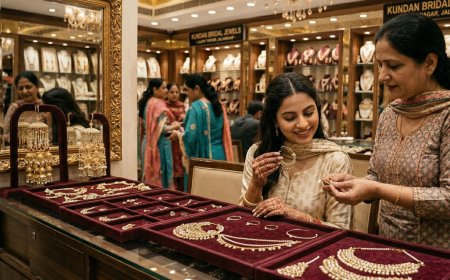
Jalandhar's traditional jewelry market — concentrated around Guru Nanak Mission Chowk and the adjacent jewelry lanes in the older commercial zones — is the primary source for classic gold and gold-plated kalire. This market operates through established family businesses whose relationships with the bridal jewelry trade span multiple generations and whose material knowledge — of gold alloys, plating standards, and traditional construction methods — is deep and reliable.
The traditional market's strength for NRI brides is its authenticity of product — these jewelers are producing the real thing, the ornament in its traditional form, with the material knowledge that tradition requires. Its limitation is its aesthetic conservatism — the established forms are served with expertise, the contemporary directions much less so. The NRI bride seeking a pearl and mirror work fusion piece will not find her answer in the traditional lanes. The NRI bride seeking a magnificent pair of 22-karat classic kalire whose construction quality is guaranteed by a family business with thirty years of reputation to protect will find exactly what she needs.
The Contemporary Bridal Studios
A growing and increasingly sophisticated community of contemporary bridal accessory studios has established itself in Jalandhar — studios that approach the kalire as a design object and that bring contemporary aesthetic intelligence alongside genuine craft skill to the bridal accessory market.
These studios are the natural home for designer and custom commissions. Finding the best of them requires going beyond the standard search — referrals from recent NRI brides who used Jalandhar-based designers, NRI wedding planning communities online, the NRIWedding.com vendor network whose curation is specifically oriented toward the NRI bridal market. The studios whose work genuinely serves the NRI bride's requirements have typically invested in their portfolio documentation, communicate comfortably in English, understand international aesthetic references, and have experience managing the remote commission process that NRI clients require.
The Online Market and Its Limitations
A significant portion of Jalandhar's kalire production is now accessible through online platforms — national bridal marketplaces, Instagram-based studio presences, and direct e-commerce operations. The accessibility advantage is genuine. The limitation is equally genuine: the weight, the finish, the movement quality, the chiming character, and the true color accuracy of a physical kalire are not fully communicable through online product photography, however professionally executed. For purchases of significant value — classic gold, quality custom commissions — online selection should always lead to physical verification before final commitment.
Aesthetic Integration: Matching Kalire to the Complete Bridal Look
The kalire does not exist as an isolated accessory decision. It is one element of a complete bridal aesthetic whose coherence — or lack of it — is visible in every wedding photograph, experienced by every observer of the bridal look, and felt by the bride herself in the confidence or the slight dissonance she carries through the wedding day.
Coordination with the lehenga:
Classic gold kalire are the most versatile in lehenga coordination — the gold spectrum is broad enough to work with red, pink, ivory, green, and most traditional lehenga palettes without creating visual conflict. Designer kalire in specific colors or materials require more deliberate coordination. A deeply pigmented stone or floral kalire needs to be assessed against the actual lehenga fabric — not against a photograph or a color description — before the choice is confirmed.
Coordination with the choora:
The relationship between the kalire and the choora — the traditional red and ivory bangles that cover the bride's wrists — is a practical coordination consideration that is best assessed in person with both elements simultaneously on the wrist. The kalire's mounting structure sits above the choora stack, and the hanging elements fall past it. The way this layering sits on the individual bride's wrist — the height of the choora stack, the width of the wrist, the positioning of the kalire mount — determines whether the combined look is elegantly layered or uncomfortably crowded.
Coordination with the full jewelry composition:
The kalire sits within a jewelry composition that extends from shoulder to fingertip — the armlet, the bangles, the hand harness or haath phool, and the rings. The most coherent bridal jewelry compositions are those that have been considered as complete compositions rather than as accumulations of individually attractive pieces. Assess the kalire in the context of the full jewelry look — ideally with every piece on simultaneously — before finalising any single element.
The weight and comfort dimension:
Classic gold kalire of substantial construction weigh between 150 and 500 grams per pair. Designer alternatives in lighter materials — thread work, dried flowers, pearls — weigh a fraction of this. The weight differential becomes meaningful across a full wedding day whose physical demands include a long ceremony, multiple photography sessions in various positions, a reception during which the bride is greeting and embracing hundreds of guests, and dancing that extends into the late evening. Be honest about your physical comfort requirements when making the weight assessment. A bride who intends to dance enthusiastically until midnight should factor this into the weight consideration alongside the aesthetic one.
Common Mistakes NRI Brides Make With the Kalire Decision
Mistake 1: Treating the Decision as Purely Aesthetic Without Considering the Cultural Dimension The kalire choice involves the family in a way that most other bridal accessory decisions do not. The heirloom question — whether existing family kalire will be worn, incorporated, or set aside — is a family conversation with emotional stakes that should be navigated before the purchase decision is made independently. Discovering after the fact that the grandmother's kalire were expected to be worn, or that the choice to wear a completely different design has caused hurt, is a situation that an earlier family conversation would have prevented.
Mistake 2: Leaving the Purchase or Commission Too Late Custom commissions require eight to sixteen weeks of production time. Quality classic gold kalire may require sourcing time if the specific design is not immediately available in the jeweler's stock. Designer studio pieces in popular designs deplete during peak wedding season. The kalire decision should be initiated at the planning visit — eight to ten months before the wedding — not in the final weeks of preparation when production timelines cannot be accommodated without quality compromise.
Mistake 3: Making the Final Decision Without Physical Assessment The weight, the movement quality, the chiming character, the finish accuracy, and the true color of a kalire are not assessable from online photographs. For any purchase of significant value, physical assessment — either personal or through a well-briefed and aesthetically reliable local proxy — is the standard that protects against the disappointment of receiving something materially different from what the image suggested.
Mistake 4: Not Briefing the Wedding Photographer Specifically on Kalire Shots The kalire is one of the most photographically significant elements of the Punjabi bridal look, and a skilled wedding photographer will know to capture it. But the specific shots that best serve the particular kalire you have chosen — the detail shots, the ritual photography during the tying, the drop moment — should be discussed with the photographer before the wedding day rather than hoped for. If your kalire has a specific design element that you want documented, brief the photographer explicitly.
Mistake 5: Choosing Weight Without Testing Comfort Duration The kalire that feels pleasantly substantial during a ten-minute store visit may feel genuinely burdensome after five hours of wear during a full wedding day. If you are considering classic gold kalire of significant weight, wear them for an extended period — ideally two to three hours — during the assessment visit to develop an honest sense of how they will feel across the full wedding day.
The Emotional Reality: What the Tying Ritual Actually Means
There is a moment in the kalire tying ritual that every bride who has experienced it describes in similar terms — a moment of stillness inside the activity, when the weight of the ornament is settled on the wrist and the women around you have stepped back slightly and the chiming has softened to silence and you understand, with complete physical and emotional clarity, that this is real.
That this day is actually happening.
That the women gathered in this room — your mother, your sisters, your aunts, your closest friends — are gathered for you, for this specific moment in your life, and that what they are doing in tying this ornament to your wrist is not a formality but an act of love that has been performed in this form across more generations than you can count.
The kalire is the object at the centre of that moment. And whether it is your grandmother's gold, a custom piece designed in a Jalandhar studio, or a contemporary designer creation that perfectly reflects your aesthetic vision — what it holds in that moment is the same. The weight of belonging. The warmth of continuity. The specific, irreplaceable feeling of being surrounded by the people who love you most, in the place where that love lives most completely.
Choose it with care. Choose it with knowledge. And then wear it with the complete, joyful confidence that it is yours — chosen from the tradition, from the market, from the conversation with your mother about what the heirloom means and what your vision requires and how both can exist together in a single beautiful, chiming object.
Complete Kalire Buying Checklist for NRI Brides
Decision Foundation
- Have the heirloom conversation with family before making any purchase decision
- Clarify the primary value — cultural continuity, aesthetic vision, or individual significance
- Confirm lehenga palette, fabric, and embellishment direction before kalire shortlisting
- Assess full jewelry composition before finalising kalire choice within it
- Be honest about weight comfort requirements for your specific wedding day duration
Classic Kalire Assessment
- Confirm gold karat specification and request assay certificate for pure gold purchases
- Confirm micron plating thickness in writing for gold-plated purchases
- Assess chiming quality in person — sound, resonance, and movement character
- Assess motion quality — the way the hanging elements move and layer during wear
- Request weight specification and wear test across extended period before purchase
Designer Kalire Assessment
- Request full twelve-month portfolio including NRI bridal work specifically
- Assess fresh versus dried versus artificial floral quality for floral direction
- Confirm mirror work backing quality and attachment security for mirror work pieces
- Assess stone setting security for pearl and semi-precious stone designs
- Evaluate weight against wedding day duration and activity level
Custom Commission Management
- Prepare comprehensive written brief with fifteen-plus visual references
- Share brief with two to three designers and assess design response quality
- Request physical material samples before commission confirmation
- Build two to three revision cycles into production timeline
- Allow minimum eight to sixteen weeks production time plus contingency
- Arrange local proxy assessment before final delivery acceptance
Practical Preparation
- Try kalire with complete bridal look including choora before wedding day
- Assess fit, weight, and comfort across extended wearing period
- Brief wedding photographer specifically on kalire photography shots required
- Confirm storage and transport plan for heirloom pieces
- Prepare small repair kit — extra hooks, thread — for wedding day contingency
The Piece That Will Always Remind You
Years from now — when the wedding photographs have been seen hundreds of times and the specific details of the planning have softened into the general memory of a week that was beautiful and exhausting and overwhelming in the best possible way — there will be a moment when you open the box where the kalire are stored.
And the smell of the fabric, the weight of the ornament in your hand, the soft chiming as you lift it — all of it will bring back the morning in a way that no photograph quite manages.
The room full of people who love you. The sound of your mother on the phone with the caterer. Your bua arriving from Ludhiana. Your best friend from Toronto sitting on the bed asking questions. The embroidered cloth bag being brought out with the specific deliberateness of someone presenting something that matters.
The moment the weight settled on your wrist and you understood, completely and physically, that this was real.
The kalire holds that moment. Whatever version you choose — classic, designer, or custom — it holds that moment.
Choose it well. And let it chime.
What's Your Reaction?
 Like
0
Like
0
 Dislike
0
Dislike
0
 Love
0
Love
0
 Funny
0
Funny
0
 Angry
0
Angry
0
 Sad
0
Sad
0
 Wow
0
Wow
0