

































































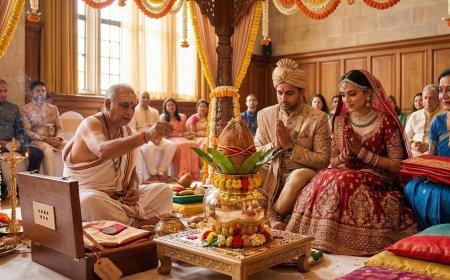

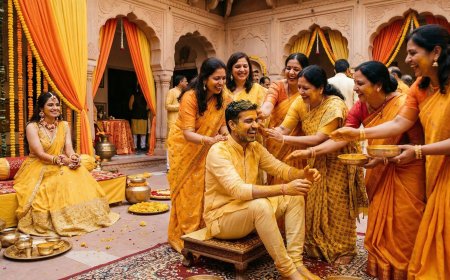
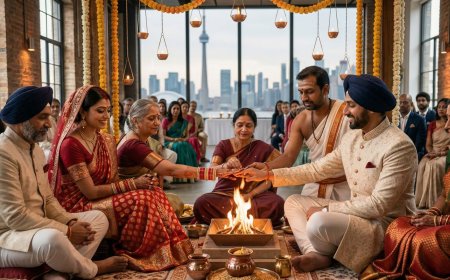



They Reach for Each Other With Flowers Because Every Love Story Deserves a Beginning Worth Remembering
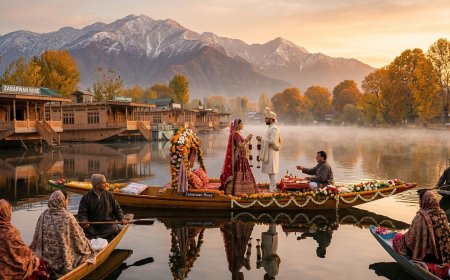
Var Mala — the joyful exchange of flower garlands between bride and groom — is the moment every Hindu wedding truly comes alive. For NRI couples planning ceremonies across London, Toronto, Dubai, Sydney, and Houston, this ancient ritual is the most photographed, most cheered, and most emotionally complete moment of the celebration. This comprehensive guide covers the spiritual origins of Var Mala, regional garland traditions across ten Indian communities, and complete practical guidance for sourcing flowers, managing venue logistics, and performing this timeless ritual authentically abroad or as a destination wedding in India.

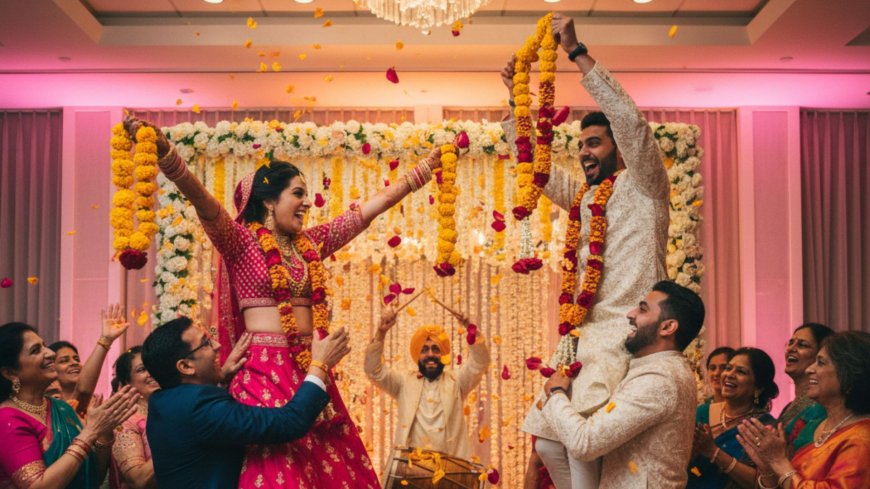
Var Mala — the exchange of flower garlands between bride and groom at the threshold of the wedding ceremony — is the moment two people choose each other in front of everyone they love. For NRI couples planning weddings across London, Toronto, Dubai, Sydney, and Houston, this ritual is often the most photographed, most cheered, and most joyfully chaotic moment of the entire celebration — the instant the solemnity of ceremony gives way to the pure, uncontainable happiness of two people saying yes to each other with flowers in their hands.
You have seen it a hundred times in films and at weddings and in the photographs your parents keep in albums on the shelf in the front room. The groom standing tall, trying to hold the garland above his head so the bride cannot reach it. The bride's brothers lifting her so she can. The crowd screaming. Someone's uncle laughing so hard he spills his drink. The garland finally placed, and then the other one, and then the moment where the two of them look at each other — really look, perhaps for the first time that day — and something settles.
You are planning your own wedding now. In Vancouver, in Birmingham, in Abu Dhabi, in Perth. And you have reached the part of the planning where you must think about this moment — about the flowers, about who stands where, about whether your groom's friends will actually lift him above his head in a rented venue with a low ceiling, about whether the garlands will survive the journey from the florist, about how to make this moment as alive and real as the ones you grew up watching.
This article is your complete guide. Every flower of it.
🌟 DID YOU KNOW?
The Var Mala ritual is referenced in ancient Indian texts including the Mahabharata and the Ramayana — Sita's placing of a garland around Rama's neck at her swayamvara [self-choice ceremony] is considered one of the earliest and most celebrated depictions of the garland exchange as an act of a woman choosing her own husband, making the ritual one of the oldest expressions of consensual marriage in recorded human history.
The flowers used in traditional Var Mala garlands carry specific meanings rooted in Vedic botanical symbolism — marigolds represent the sun's energy and auspiciousness, roses represent love and refinement, and jasmine represents purity and the promise of new beginnings. A garland combining all three was considered a complete blessing in classical Indian wedding tradition.
Among NRI Hindu couples surveyed in the UK and Canada, the Var Mala exchange consistently ranks as the moment guests describe as their favourite of the entire wedding — above the ceremony, the reception, and the first dance — because of its combination of joyful chaos, genuine emotion, and the rare sight of two people being completely, unguardedly happy at the same time.
What Is Var Mala?
Var Mala [from Sanskrit: var meaning groom or the chosen one, and mala meaning garland or flower necklace] — also known as Jaimala [from jai meaning victory and mala meaning garland, literally the garland of victory] — is the ritual exchange of flower garlands between the bride and groom at the beginning of the Hindu wedding ceremony. It is the first act the couple performs together, and it carries within it the entire logic of what follows: two people, facing each other, choosing.
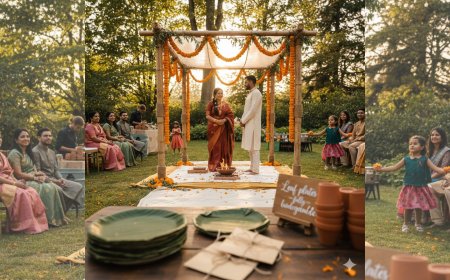
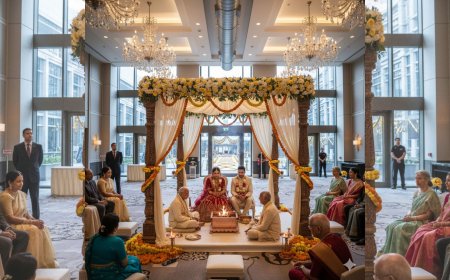
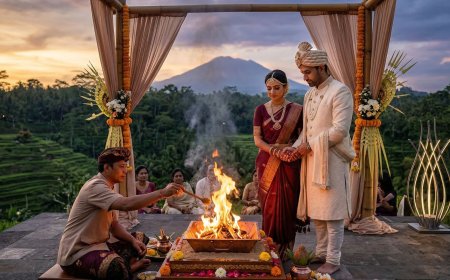
The ritual occurs immediately after the groom's formal arrival — following the Var Puja [the welcoming ceremony performed by the bride's family to receive the groom] and before the main ceremony begins. The couple stands facing each other, typically on a decorated mandap [wedding stage or canopy], surrounded by both families and the assembled guests.
The bride's garland is placed around the groom's neck first — in most regional traditions — as an act of varana[selection, the bride's formal choice of her husband]. This is the echo of the ancient swayamvara [self-choice ceremony] tradition, in which a woman of royal or noble birth would walk among assembled suitors and place her garland around the neck of the man she chose. The groom then places his garland around the bride's neck in acceptance and reciprocation.
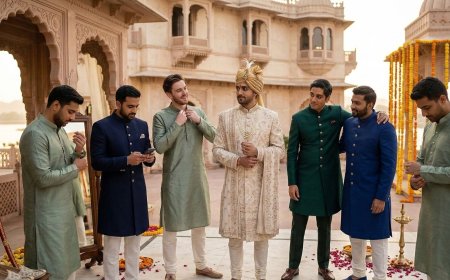
What happens between the two placements is where tradition and joy collide spectacularly. The groom's saalis [bride's sisters] and female relatives attempt to prevent him from placing his garland too easily — pulling him back, blocking his path, teasing him into proving his worth. His yaars [close male friends] and brothers retaliate by lifting him above their heads so the bride cannot reach to place her garland. This comic, energetic, completely undignified interlude — called the jaimala rasam [garland ceremony customs] in North Indian tradition — is not a deviation from the ritual. It is the ritual. It is the community's way of celebrating the couple before the solemnity begins, of filling the room with laughter and noise and the specific joy that comes from watching two people be teased by everyone who loves them.
When the garlands are finally exchanged — through whatever combination of effort, height advantage, and cheerful interference was required — the couple is formally announced to each other and to the world. They are var and vadhu[groom and bride]. The wedding has begun.
Community Comparison: Var Mala Across Indian Traditions
| Community / State | Local Name | Key Tradition | How NRIs Abroad Adapt It |
|---|---|---|---|
| Himachali | Var Mala / Mala Badal | Garlands exchanged to the sound of nagara[traditional Himachali drums]; bride's female relatives sing welcome songs during exchange | Nagara music played via speaker; female relatives sing or recordings used; garlands made from local flowers supplemented with marigolds |
| Garhwali | Jaimala / Mala Phere | Exchange accompanied by dhol and damau[traditional Garhwali drum pair]; community witnesses considered essential | Dhol player hired from South Asian community network; exchange performed in full view of all guests as community witness |
| Kumaoni | Var Mala | Garland exchange preceded by mangal geet sung by bride's female relatives; specific flower combinations used for auspiciousness | Mangal geet recordings or live singing by female family members; marigold and rose garlands sourced from Indian florists |
| Ladakhi | Adapted Var Mala | Urban Ladakhi Hindu families follow North Indian Jaimala customs; traditional Ladakhi celebrations incorporate community song and dance before exchange | Community gathering and song before exchange preserved; Ladakhi folk songs played as prelude to the garland moment |
| Kashmiri Pandit | Mala Badalna | Exchange performed with specific Kashmiri floral traditions; nadur [lotus] incorporated where available; Kashmiri Shaivite mantras recited during exchange | Lotus sourced from specialist florists where available; Kashmiri pandit recites exchange mantras; the teasing interlude is preserved enthusiastically |
| Punjabi | Jaimala / Mala Badal | Among the most energetic Jaimala traditions; groom lifted by friends to extraordinary heights; dhol plays continuously; the interlude can last thirty minutes | Dhol player essential; venue ceiling height confirmed in advance; the lifting competition is a Punjabi wedding non-negotiable regardless of country |
| Marathi | Var Mala / Antarpat Mala | Performed from behind the antarpat [silk cloth held between couple]; cloth dropped at moment of exchange; more restrained than North Indian tradition | Antarpat sourced from Marathi community stores; the cloth-dropping and exchange moment treated as single ceremonial act |
| Tamil | Maalai Maatral | Maalai Maatral [exchange of garlands] is a central Tamil wedding moment; specific flowers — particularly mullai [jasmine] — considered essential; performed to nadaswaram [traditional wind instrument] music | Jasmine garlands sourced from Tamil florists in London, Toronto, and Sydney; nadaswaram music played via high-quality speaker; Tamil Brahmin pandit oversees exchange |
| Bengali | Mala Badal | Seven exchanges of the garland between bride and groom — back and forth, seven times — while female relatives perform ululation [high-pitched welcome sound]; dhak [large drum] played | Seven exchanges preserved as central tradition; dhak player hired from Bengali community associations; ululation performed by female relatives |
| Rajasthani | Var Mala / Jaimala | Elaborate garlands featuring marigold, rose, and genda [marigold] with gold thread woven through; the interlude is highly theatrical with competitive lifting | Gold-threaded garlands commissioned from Rajasthani florists or crafted by family; the theatrical interlude considered mandatory regardless of venue |
The Meaning Behind the Ritual
The Var Mala is the moment the swayamvara tradition — one of the oldest forms of consensual marriage recorded in Indian civilisation — lives again in every Hindu wedding. In the ancient texts, a woman of high birth exercised her right to choose her husband by walking among assembled men and placing her garland around the neck of the one she selected. This was not a performative gesture. It was legally and spiritually binding. It was her voice, made visible in flowers.
Modern Hindu weddings inherit this tradition and keep its essential truth intact: the bride places her garland first. She chooses. The groom receives her choice and reciprocates. The exchange is mutual, witnessed, and joyful — and the joy is not incidental. It is theological. The Ananda [divine bliss] that the couple experiences in this moment is understood in Hindu philosophy as a direct manifestation of cosmic harmony — two souls, separated across lifetimes, recognising each other and saying yes.
The flowers themselves carry the universe's vocabulary. Marigolds speak of the sun's abundance. Jasmine speaks of purity and night-blooming hope. Roses speak of love refined through time. A garland woven from all three is a sentence: I come to you with abundance, with purity, with love that has been growing longer than either of us knows.
The laughter and the chaos of the interlude are not disrespectful of the ritual's depth. They are its expression. Only people who love you interfere. Only people who are happy for you make noise. The garland exchange happens inside a container of community joy, and that joy is itself the blessing.
For a non-Indian partner or family member: this is how we begin — not with silence and solemnity, but with flowers and laughter and the whole room cheering, because we believe that a marriage that begins in joy is already halfway blessed.
Doing Var Mala Abroad: The Practical Reality
The Var Mala is one of the most logistically manageable Hindu wedding rituals for NRI couples — it requires no fire, no complex ritual items, no specialist priest for its central act — but it does require specific planning around the flowers, the music, the physical space, and the crowd dynamics that make it what it is.
The Garlands: This is where NRI couples most often compromise unnecessarily. A Var Mala garland is not a decorative accessory — it is a ritual object, and its weight, length, and flower composition matter both spiritually and practically. A garland too light will look limp in photographs. A garland too heavy will be impossible to lift above a groom's head. The ideal Var Mala garland is substantial, fragrant, and structured — marigold as the base, roses for colour and texture, jasmine for fragrance where available. In London, Indian florists on Southall Broadway and Green Street in East Ham make Var Mala garlands to specification and are accustomed to wedding orders. In Toronto, the florists along Gerrard Street and the Dixie Road corridor have extensive experience with garland commissions. In Sydney, Harris Park in Parramatta has specialist Indian florists. In Houston, Hillcroft Avenue's Indian floral suppliers cater specifically to the South Asian wedding market. In Dubai, the flower market in Deira and the Indian florists in Bur Dubai are your best resources. Order your garlands two weeks in advance and specify the weight and length you want.
The Music: The Var Mala exchange without music is a body without a heartbeat. The dhol is the traditional instrument of choice in North Indian communities and a dhol player is bookable through gurudwara networks in London, Toronto, Houston, and Sydney. For South Indian families, a nadaswaram recording played through a high-quality speaker system achieves the same ceremonial weight. Confirm with your venue that live percussion is permitted — most venues accommodate this, but confirm in writing two weeks ahead.
The Venue Ceiling Problem: This is the one that catches NRI couples off guard. The Punjabi tradition of lifting the groom above the crowd requires ceiling height. Standard banquet hall ceilings of eight to ten feet are fine for most lifts. Marquee and tent venues are ideal. Low-ceilinged function rooms are not. Confirm your venue's ceiling height when you book and factor this into your seating and stage layout. Designate the area in front of the mandap as the lifting zone and keep it clear of furniture.
The Crowd: The Var Mala interlude requires crowd participation — guests need to be near enough to cheer, to interfere cheerfully, and to be photographed as part of the moment. Avoid stage-and-distant-seating layouts for this ritual. The best Var Mala setups have the couple on a slightly elevated mandap with guests gathered close on all sides, able to surge forward during the interlude. Brief your wedding coordinator on this in advance.
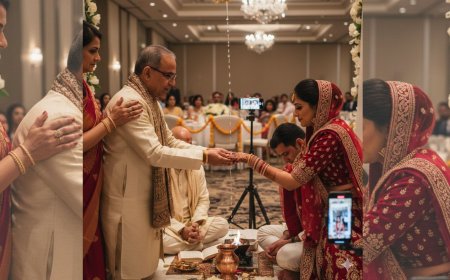
Coordinating with India: For relatives watching from India, the Var Mala is the single easiest moment to share via video call — it is loud, visual, joyful, and completely comprehensible without explanation. Position a tablet on a tripod at crowd level, angled toward the mandap. For families joining from Mumbai or Delhi, a midday Var Mala corresponds to comfortable viewing hours across all NRI time zones. Assign someone specifically to hold the device steady during the interlude — unsteady footage of the lifting competition is charming, but steady footage is treasured.
Doing Var Mala as a Destination Wedding in India
If your wedding is a destination event in India, Var Mala returns to the setting that gave it its fullest expression — surrounded by extended family, in spaces designed for ceremony, with musicians who have played this moment a thousand times.
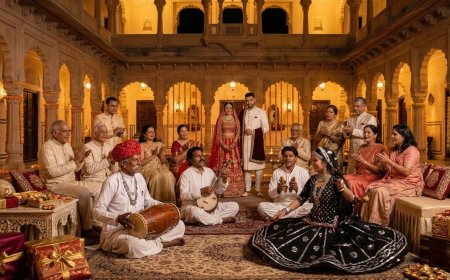
Jaipur and Udaipur offer palace and haveli mandap settings where the Var Mala is performed against backgrounds of carved sandstone and marigold-draped archways, with live dhol and shehnai players in the courtyard. The photographs from these settings are among the most extraordinary in Indian wedding photography. For Punjabi families, an Amritsar wedding with the Golden Temple as spiritual backdrop and a full dhol group for the Jaimala is an experience that cannot be replicated anywhere in the diaspora.
For South Indian families, a Maalai Maatral performed in a traditional Tamil Nadu wedding hall with live nadaswaram music and the scent of fresh jasmine in the air is the complete, unreduced original — and worth the journey.
When briefing local florists and musicians on your specific community's garland and music traditions, provide written notes on flower preferences and regional style. Experienced destination wedding coordinators across all of these cities are accustomed to NRI families arriving with specific requirements and will deliver accordingly.
What You Need: Var Mala Ritual Checklist
Ritual Items Two Var Mala garlands — one for the bride, one for the groom — commissioned from an Indian florist, made from marigold, rose, and jasmine in your preferred combination and weight; a decorated thali [brass plate] on which the garlands are brought to the mandap; fresh flower petals for scattering at the moment of exchange; and if following Marathi tradition, an antarpat cloth for the covered exchange.
People Required The pandit to oversee the ritual sequence and recite exchange mantras where applicable; the bride's brothers and female relatives for the interlude; the groom's friends and male relatives for the lifting; a dhol player or designated DJ briefed on the exact musical cue; and a photographer and videographer both specifically briefed that the Var Mala — including the interlude — is one of the most important sequences of the entire wedding day.
Preparation Steps Commission garlands two weeks before the wedding and confirm delivery timing — garlands should arrive the morning of the ceremony and be kept cool until the moment of exchange. Confirm venue ceiling height and crowd layout with your coordinator four weeks ahead. Brief the groom's friends on the lifting plan one week before. Confirm music arrangements two weeks ahead. Brief your photographer on the full sequence including the interlude — many of the best wedding photographs happen during the chaos, not after it.
NRI.Wedding's vendor network includes verified Indian florists, dhol players, and wedding coordinators across the UK, US, Canada, UAE, and Australia. Let us connect you to the right people so that your Var Mala is everything it deserves to be.
5 Questions NRI Couples Always Ask
Our venue has a low ceiling. Can the Jaimala lifting still happen safely?
Yes, with planning. The key is identifying the highest-ceilinged area of your venue — often near the entrance or in the foyer — and performing the Var Mala there rather than on the main stage. Many NRI couples actually prefer this arrangement because it brings the couple closer to the guests and creates a more intimate, immersive atmosphere. Confirm the ceiling height of every area of your venue before the wedding and designate the best space for the exchange specifically. Brief the groomsmen on the available height so the lifting is enthusiastic but controlled.
My partner is not Indian. How do we explain the interlude to their family without it seeming disrespectful?
The most effective approach is a brief explanation in your wedding programme or on a printed card — something like: the friendly chaos you are about to witness is a centuries-old tradition of the bride's family and groom's friends competing to give the couple a memorable beginning. Most non-Indian guests find the interlude completely delightful once they understand it is intentional and celebratory rather than disrupted. Your partner's family, given context, will almost certainly join the cheering.
How do we find jasmine garlands in a city like Toronto or London where fresh jasmine is not always available?
Specialist Indian florists in both cities source jasmine specifically for wedding season commissions — call ahead and ask explicitly for fresh jasmine availability on your wedding date. If fresh jasmine is unavailable, high-quality jasmine-scented silk flower additions to a fresh marigold and rose garland are a widely used and beautiful alternative. The fragrance can be supplemented with jasmine attar [natural jasmine essential oil] applied lightly to the garland. Several Indian florists in Southall and the Gerrard Street area in Toronto offer this service.
Should the Var Mala happen before or after the Ganesh Puja?
The standard Hindu wedding sequence places Ganesh Puja first — before any other ritual begins — followed by the Var Puja [welcoming of the groom] and then the Var Mala as the couple's first shared ritual. However, some regional traditions, particularly in South India, integrate the garland exchange differently within the ceremony order. Confirm the sequence with your pandit well in advance and share the confirmed running order with your wedding coordinator, photographer, and videographer so that everyone is positioned correctly for each moment.
We want to incorporate both families' traditions — the bride is Tamil and the groom is Punjabi. How do we combine Maalai Maatral and Jaimala?
This is one of the most joyful planning challenges in intercommunal NRI weddings, and the answer is: do both, sequentially. Begin with the Tamil Maalai Maatral — performed with nadaswaram music and the formal floral exchange in the South Indian style. Then transition into the Punjabi Jaimala interlude — dhol, lifting, cheerful chaos — as the community celebration of the exchange that has just occurred. The two traditions complement each other extraordinarily well: the Tamil exchange brings ceremony and beauty, the Punjabi interlude brings joy and noise. Together they give every guest in the room something to love.
The Emotional Angle
There is a moment — it lasts perhaps three seconds — that happens after the garlands have been exchanged and before the pandit begins the next mantra. The crowd is still cheering. The dhol is still playing. But the couple is looking at each other, and for just those three seconds, nobody else exists.
You have seen this moment in photographs. You have watched it happen at other people's weddings from across the room, recognising something true about it even when it was not yours. There is something in the specific quality of that look — relief and joy and the slight disbelief that this is actually happening — that no other moment in the wedding produces. Not the ceremony. Not the first dance. Not the reception speeches. This one. The one right after the garlands, when the noise is still happening around them but they have found each other inside it.
For NRI couples, this moment carries an additional dimension that is hard to articulate and impossible to overstate. These are people who have navigated two cultures, two sets of expectations, two different definitions of what a life is supposed to look like. They have made choices their parents did not always understand and carried identities that did not always fit neatly into either world they inhabited. They have arrived, somehow, here — at a mandap in a city far from where their families began, holding garlands, surrounded by the people who love them.
They look at each other. The room cheers. The flowers are real.
That is enough. That is everything.
A Moment to Smile
At a wedding in Houston two years ago, the groom's friends — four of them, all engineers, all deeply competitive — had been planning the lifting strategy for three weeks. They had discussed optimal grip positions. They had, apparently, practiced. They were ready.
What they had not accounted for was that the bride's brothers had also been planning. And had also practiced. And had recruited two cousins.
The result was the most enthusiastic and prolonged Jaimala interlude in the recent memory of the Shiva Vishnu Temple's wedding coordinator, who has seen several hundred. The groom went up. The bride went up. The groom went up again. At one point both families were lifting simultaneously and the couple were approximately at the same height, separated by three feet of air and a flower garland, laughing so hard neither of them could aim properly.
The garlands were eventually exchanged after eleven minutes. The wedding coordinator said it was a record. The photographer said it was the best eleven minutes of his career. The couple said it was the most fun they had ever had at a formal event.
The garlands, miraculously, survived.
Quotes from the Diaspora
"My husband is six foot two. My brothers are five foot nine on a good day. They lifted me anyway — both of them, one on each side — and I still could not reach. I finally got the garland over his head by throwing it from approximately three feet away. The photograph looks like I am lassoing him. We have it framed in the hallway. Guests always ask about it." — Simran Dhaliwal, Punjabi community, Toronto
"My son's bride is from a Tamil family. The Maalai Maatral was so beautiful — the jasmine, the nadaswaram, the formal grace of it. Then my son's friends started the Punjabi lifting portion and her Tamil aunties, who had never seen anything like it, started cheering louder than anyone in the room. By the end they were on their feet. Two traditions, one room, complete joy." — Manjeet Brar, Punjabi community, Slough
"I had been nervous about the whole wedding for months. Every time I thought about the ceremony I felt the anxiety arrive. And then the Jaimala started and my husband's friends lifted him and he looked so ridiculous and so happy and I started laughing and I did not stop laughing for the rest of the day. The nervousness never came back. The flowers fixed it." — Ananya Reddy, Telugu community, Melbourne
Your Roots Travel With You
Somewhere right now, a groom is being lifted above a crowd in a rented hall in Mississauga, arms outstretched, garland in hand, trying to place it over a bride who is also being lifted, also laughing, also trying. The dhol is playing. The room is screaming. The flowers are real and fragrant and slightly crushed from all the hands that have touched them.
This is what NRI.Wedding exists to make possible — not just the logistics of Indian weddings abroad, but the living, breathing, flower-scented joy of them. Our verified florists know how to make a Var Mala garland that survives an eleven-minute lifting competition. Our dhol players know exactly which beat the exchange should happen on. Our wedding photographers know to keep shooting through the chaos because that is where the best photographs live.
Let us handle everything that comes before the moment. You just show up and reach for each other.
The garland is waiting. So is everything that comes after.
What's Your Reaction?
 Like
0
Like
0
 Dislike
0
Dislike
0
 Love
0
Love
0
 Funny
0
Funny
0
 Angry
0
Angry
0
 Sad
0
Sad
0
 Wow
0
Wow
0