






































































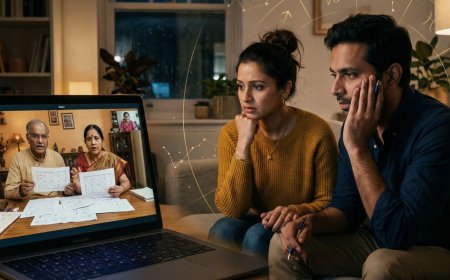

She Throws Rice Over Her Shoulder and Walks Away From Everything She Has Ever Known
Vidaai is the most emotionally intense moment of every Hindu wedding — the bride's sacred farewell from her parents' home. For NRI families across London, Toronto, Dubai, Sydney, and Houston, this ancient ritual carries a grief that is both deeply personal and universally understood. This comprehensive guide covers the spiritual origins of Vidaai, regional farewell traditions across ten Indian communities, and complete practical guidance for performing this timeless ritual authentically abroad or as a destination wedding in India.

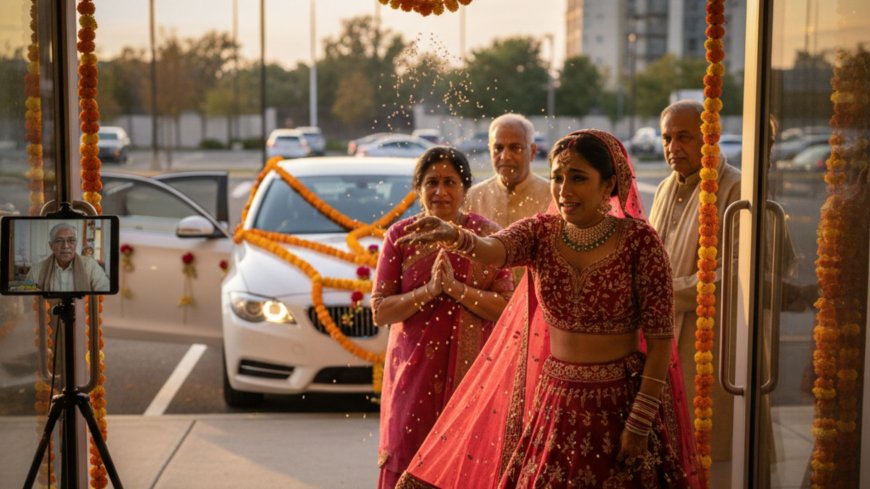
Vidaai is the moment every Indian wedding has been building toward and every Indian family has been quietly dreading — the bride's final departure from her parents' home. For NRI families spread across London, Toronto, Dubai, Sydney, and Houston, this farewell carries a particular devastation: many of these parents left their own homes decades ago and understand, in their bones, what it costs to walk away from the people you love most. This is the ritual that empties a room and fills a lifetime.
You have been to enough Indian weddings to know what happens when the music stops. The ceremony is over, the photographs are done, the food has been served, and then someone — usually an aunt, usually quietly — begins to cry. Not the decorative crying of ceremony. The real kind. The kind that starts somewhere internal and arrives on the face without permission. And you know, even before you look, what has begun.
The bride is leaving.
You are planning your own wedding now — in Mississauga, in Slough, in Dubai, in some suburb of Sydney where your parents built their life one careful year at a time — and Vidaai is the part you have not been able to think about directly. You circle it in your planning documents. You discuss the caterer, the photographer, the flowers. You do not discuss this. Because to discuss it is to make it real, and to make it real is to understand what it asks of your mother, your father, your brothers, and you. What it has always asked. What it will ask again, on the day, in front of everyone, with nowhere to hide.
This article will not let you look away. It will also tell you everything you need to know to do it right.
🌟 DID YOU KNOW?
The rice-throwing gesture of Vidaai — in which the bride tosses laja [puffed rice or raw rice] over her shoulders toward her parental home as she departs — is a ritual act described in the Grihyasutrasdating back to approximately 600 BCE, making it one of the oldest continuously performed farewell gestures in human civilisation.
In classical Sanskrit texts, the bride's departure is described as griha-tyaag [the relinquishing of home] — a term that also applies to the act of a monk leaving worldly life. The parallel is intentional: both are understood as a form of sacred renunciation, undertaken not in grief but in conscious, chosen transition.
Community research among South Asian diaspora families in Canada and the UK consistently identifies Vidaai as the single most emotionally intense moment of the entire wedding — rated above the ceremony, the first dance, and the reception — by both parents and brides. It is also the moment most frequently cited by NRI fathers as the point at which they understood, finally, why their own parents wept when they themselves left for a foreign country decades earlier.
What Is Vidaai?
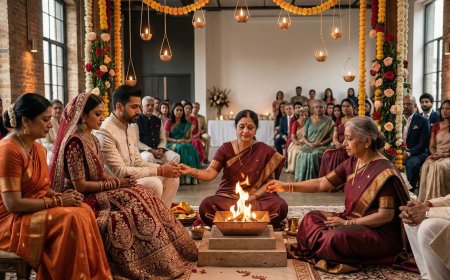
Vidaai [from Hindi/Sanskrit: vida meaning farewell, departure, permission to leave] is the ritual send-off of the bride from her parents' home at the close of the wedding celebrations. It is the final act of the Indian wedding sequence — following the saat phere [seven sacred circumambulations of the fire], the sindoor daan [application of vermillion by the groom], and the mangalsutra [sacred marriage necklace] ceremony — and it is, by near-universal agreement, the most emotionally devastating.
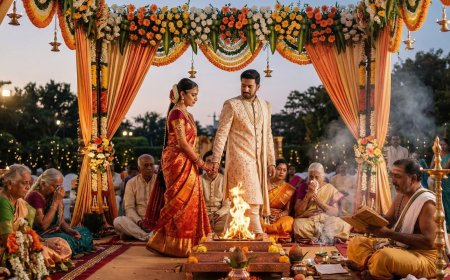
The ritual unfolds in a specific physical sequence. The bride, now dressed as a married woman and carrying her husband's name, prepares to cross the threshold of her parents' home for the last time as their daughter in the unmarried sense. Before she crosses, she performs laja homa [an offering of puffed or raw rice into the sacred fire] — a final act of giving to the home that gave her everything. She then stands at the doorway facing outward, her back to the house, and throws rice over her shoulders toward the interior. This gesture — repeated three or seven times depending on regional tradition — is her prayer: may this home always have abundance. May I leave it richer than it was before me.
She does not look back. This is not cruelty. It is the most ancient understanding of thresholds: that the crossing must be complete to be sacred.
Her mother, her sisters, her female relatives weep openly. Her brothers — in many traditions — are the ones who walk her to the vehicle, because tradition understands that a father, in this moment, may not be capable of letting go of her hand. The doli [palanquin, now represented by the wedding car] waits. The groom is inside or standing nearby. The family gathers at the door.
She goes.
The spiritual weight of Vidaai rests on a paradox that Indian culture holds without apology: that the greatest gift a family can give a daughter is a life beyond them, and that giving this gift is the hardest thing they will ever do. The ritual does not resolve this paradox. It honours it — fully, publicly, without flinching.
Community Comparison: Vidaai Traditions Across India
| Community / State | Local Name | Key Tradition | How NRIs Abroad Adapt It |
|---|---|---|---|
| Himachali | Vidaai / Doli | Bride carried in a decorated doli [palanquin] by brothers and male cousins; Pahari folk songs of farewell sung by women | Doli recreated symbolically; brothers carry a decorated chair or the groom's car is decorated; Pahari songs played via speaker |
| Garhwali | Vidaai | Bride throws rice backward three times; maternal uncle [mama] plays key role in escorting her; hulaki[farewell songs] sung by village women | Mama given ceremonial escort role; hulaki recordings sourced from family in India; rice-throwing performed at venue exit |
| Kumaoni | Bidaai | Bride weeps ritually at doorstep; mother places her hand on daughter's head in final blessing; special mangal geet sung | Mangal geet recordings played; mother's blessing preserved as central moment; photographer briefed specifically |
| Ladakhi | Adapted Vidaai | Urban Ladakhi families follow North Indian Vidaai customs; traditional Ladakhi farewells involve community gathering at village boundary | Community gathering recreated at venue exit; both Ladakhi and North Indian elements incorporated |
| Kashmiri Pandit | Vidaai / Ruksati | Bride given walwun [a traditional Kashmiri farewell song] by female relatives; specific mantras recited by pandit at the threshold | Kashmiri pandit recites threshold mantras; walwun sung by female family members or played as recording |
| Punjabi | Vidaai / Doli | Among the most elaborate and emotionally intense Vidaais; gidda [women's folk dance] transitions into farewell songs; brothers escort bride to car | Gidda performed before Vidaai begins; brothers play full escort role; dhol player hired for the procession to the car |
| Marathi | Nirop | Bride takes leave with specific Marathi farewell prayers; aukshan [waving of lit lamp] performed by mother at doorstep as final blessing | Aukshan performed by mother at venue exit; Marathi farewell songs played; the lamp gesture photographed as key moment |
| Tamil | Vidaai / Pirivu | Pirivu [separation] is marked with specific Tamil farewell songs; bride's maternal uncle plays central role in handing her to groom's family | Mama given formal handover role; Tamil farewell songs sourced and played; the handover moment treated as ceremonial |
| Bengali | Bou Baran / Bidai | Bride holds paan leaves [betel] over her face as she departs; she is not supposed to look back; shankha[conch shell] blown at departure | Paan leaves sourced from Bengali grocery suppliers; conch shell blown by family elder; the no-looking-back rule observed |
| Rajasthani | Vidaai | Bride's maher [maternal family] formally hands her to the sasural [in-laws] with specific gifts; elaborate song traditions; the farewell can last hours | Gift exchange preserved formally; Rajasthani farewell songs played; the extended ceremony condensed but not eliminated |
The Meaning Behind the Ritual
Vidaai exists because Indian culture has always understood something that modern life tries to argue away: that some transitions are irreversible, and that irreversible things deserve to be marked with full ceremony. The bride does not simply leave. She crosses a dehliz [threshold] — a concept in Indian philosophical and poetic tradition that represents not just a physical doorway but the boundary between one state of being and another. She enters the ritual as her parents' daughter. She crosses the threshold as her husband's wife. These are not the same person, and the tradition is honest enough to say so.
The rice she throws is called laja — a word that also carries connotations of honour and dignified shame. She throws it backward, toward the home, as an offering of everything the home gave her — her nourishment, her formation, her self. The gesture says: I give back to you what you gave me, transformed. I was grain. You made me bread. I leave you the abundance.
The prohibition on looking back is not coldness — it is protection. The ancient understanding is that a crossing half-made is more painful than one completed. The body must follow where the life is going. The heart will follow the body, eventually. This is not a promise the ritual makes lightly. It is the deepest form of hope the family can offer.
For a non-Indian partner or family member: this is how we say goodbye properly — not with a quick hug at the door, but with rice and fire and song, because some goodbyes deserve everything you have.
Doing Vidaai Abroad: The Practical Reality
Vidaai presents a unique logistical challenge for NRI couples because it is intrinsically tied to a physical location — the bride's home — that, in most diaspora contexts, is either a rented venue or a family house that does not carry the same ancestral weight as a home in India. The ritual must therefore be relocated and reimagined without losing its emotional core. Here is how NRI families do it well.
Recreating the Threshold: The most important physical element of Vidaai is the doorway — the crossing point. At a venue, designate the main exit as the threshold. Some NRI families bring a small decorated wooden frame — essentially a ceremonial doorway — to place at the venue exit, through which the bride passes. This works beautifully and photographs extraordinarily. At a family home, use the actual front door. The physical act of crossing matters; make sure there is something to cross.
The Rice: Raw rice or puffed rice for the laja offering is available at every Indian grocery store across diaspora cities — on Southall Broadway in London, along Gerrard Street and Dixie Road in Toronto, at Harris Park in Parramatta in Sydney, at the Indian stores along Hillcroft Avenue in Houston, and at Meena Bazaar in Dubai's Bur Dubai area. Prepare a small decorated patra [brass plate] of rice for the bride to hold. Seven handfuls is the traditional count in most North Indian communities; three is acceptable in others — confirm with your pandit.
The Doli: The traditional palanquin has been replaced in most NRI weddings by a decorated car, which carries its own beauty. Decorate the car with marigolds, rose petals, and a kalash [auspicious pot] on the bonnet if the family wishes. The brothers' role of escorting the bride to the car should be preserved — this is one of the most photographed and emotionally charged moments of the entire farewell.
Finding a Pandit for Vidaai Mantras: Not all pandits include Vidaai mantras in their standard wedding package — confirm explicitly that your pandit will stay for and perform the threshold blessing and departure prayers. In London, pandits through the Neasden and Wembley temple networks are generally experienced with full Vidaai ceremonies. In Toronto, the Brampton and Mississauga temple pandit networks are the most reliable. Confirm with your pandit four to six weeks before the wedding that they understand the Vidaai is a distinct ceremonial moment requiring its own ritual attention.
Coordinating with India: For grandparents and relatives who cannot travel, Vidaai is — alongside Kanyadaan — the moment that must be shared live. A tablet on a tripod at the exit point, managed by a designated family member, allows relatives in India to witness the rice-throwing and the crossing in real time. For families joining from India, a late afternoon Vidaai — around 5:00pm local venue time — corresponds to 10:30pm IST from the UK, 9:30pm from Dubai, and mid-afternoon from the US East Coast. Factor this into your ceremony timeline when setting the schedule with your venue coordinator.
Doing Vidaai as a Destination Wedding in India
If your wedding is a destination event in India, Vidaai returns to its natural habitat — and the experience is transformed entirely.
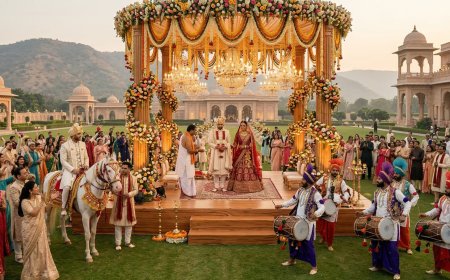
For families whose roots are in North India, a Vidaai performed at a haveli in Jaipur or Udaipur, with the bride crossing an actual ornate threshold into a waiting doli-inspired palanquin, is among the most visually and emotionally complete wedding experiences available. The Rajasthani farewell song traditions, performed live by local folk musicians, add a dimension that no diaspora city can fully replicate.
For Punjabi families, a Vidaai in Amritsar — particularly one that incorporates a brief dawn visit to the Golden Temple before the bride departs — carries spiritual weight that anchors the farewell in something larger than family alone. For Bengali families, Kolkata provides the full Bidai experience with dhak players, conch blowers, and the city itself as witness.
When briefing a local Indian pandit on your specific regional Vidaai customs, provide written notes on your gotra, your community's specific mantra tradition, and any family variations. Experienced destination wedding pandits across all of these cities are accustomed to NRI families with specific requirements. For non-Indian guests, a brief printed explanation placed on their chairs beforehand turns observers into witnesses — and witnesses into people who will carry this memory for the rest of their lives.
What You Need: Vidaai Ritual Checklist
Ritual Items A decorated brass patra [plate] filled with raw or puffed rice for the laja offering; a deepak [oil lamp] for the mother's threshold blessing; aukshan materials [lamp, flowers, rice] for Marathi families; paan leaves for Bengali Bidai; a decorated threshold frame if the venue exit lacks architectural distinction; marigold and rose petal decoration for the exit pathway; a decorated wedding car with flowers; a shankha [conch shell] if following Bengali tradition; and a small gift from the bride's family to the groom's family for communities observing the formal handover tradition.
People Required The pandit for threshold mantras and departure blessings; the bride's brothers for the escort to the car; the bride's mother for the threshold blessing; the bride's father for the final embrace; a designated family member to manage the India video call; and a photographer and videographer both specifically briefed on the Vidaai sequence and its key moments.
Preparation Steps Confirm with your pandit six weeks ahead that Vidaai mantras are included in their ceremony scope. Prepare rice on a decorated plate the morning of the wedding. Brief your brothers on their escort role one week before. Designate the exit threshold and decorate it the morning of the ceremony. Set up and test the video call connection two hours before the scheduled Vidaai time. Brief your photographer on every moment in the sequence — the rice-throwing, the mother's blessing, the brothers' escort, the crossing, and the moment the car pulls away.
NRI.Wedding's verified pandit network, vendor directory, and wedding photography specialists are available across the UK, US, Canada, UAE, and Australia. Let us handle the logistics so you can be present for every second of this.
5 Questions NRI Couples Always Ask
We are not having the wedding at my parents' home — it is at a hotel. Can Vidaai still happen properly?
Yes — and the majority of NRI Vidaais happen exactly this way. The key is designating a specific exit point as the ceremonial threshold and treating it with the full weight of the ritual. Work with your venue coordinator to ensure that the main exit is clear, decorated, and accessible for the rice-throwing and the procession to the car. Some families bring a small wooden or floral archway to mark the threshold explicitly. The emotional truth of the ritual does not depend on the architecture — it depends on the intention and the people present.
My partner's family is not Indian. How do we help them understand what they are witnessing without breaking the emotional flow?
Prepare a small printed card for non-Indian guests explaining the significance of Vidaai — what the rice means, why the bride does not look back, what the brothers' escort represents. Distribute these before the ceremony begins so that when the moment arrives, your partner's family is not confused but moved. Most non-Indian guests who witness a properly performed Vidaai describe it as one of the most profound things they have ever seen at a wedding — the ritual's emotional truth is entirely universal, even when the specific cultural forms are unfamiliar.
My father is not in good health and may not be able to walk me to the threshold. How do we adapt?
This is more common than families acknowledge, and tradition provides. A maternal uncle, an older brother, or a trusted male elder can substitute for the father in the escort role. Alternatively, and beautifully, the mother can perform the escort role alone — in many communities, the mother's farewell is considered the emotional heart of Vidaai regardless. Speak with your pandit about adjusting the mantras to reflect whoever is present. What matters is that the roles are filled with love and intention, not that they are filled by specific people.
How do we make the video call work well for elderly grandparents watching from India?
Position the device at threshold height — not overhead, not from across the room — so that grandparents watching from India can see the bride's face and hands during the rice-throwing, and can see the crossing clearly. Assign a young relative in India to manage the device and to describe quietly what is happening for any grandparents whose eyesight makes the screen difficult. WhatsApp video remains the most universally reliable platform. Test the connection two hours before the scheduled Vidaai and have a backup number ready.
Should Vidaai happen at the end of the reception, or directly after the ceremony?
This varies significantly by regional tradition and family preference. In many North Indian traditions, Vidaai happens directly after the main ceremony and before the reception — the logic being that the bride has already crossed the threshold and the reception celebrates her new status. In others, Vidaai closes the entire celebration, happening after the reception as the final act of the wedding. The latter is increasingly common among NRI families because it gives the bride more time with her family before the departure. Discuss this with your pandit and factor it into your venue timeline — whichever you choose, protect the Vidaai from being rushed.
The Emotional Angle
There is a grief that has no name in English. Indian languages have attempted it — viraha [the ache of separation from the beloved], bichhad [the state of being parted], alvida [the word for goodbye that carries within it the understanding that some goodbyes are permanent in their own way]. None of them fully cover what happens in an NRI parent at Vidaai, because the grief is layered in a way that monolingual experience cannot account for.
These are parents who left their own homes. Who know what it is to walk away from the people who made you, toward a life they could not fully imagine or follow you into. Who built entire new lives in cities that were not theirs, and made those cities home through sheer force of love and stubbornness and the occasional plate of food that smelled like somewhere else. They did all of this so their children could have more. And now their child — their daughter, their particular achievement, the person who was born in this new country and belongs to it and to the old one simultaneously — is leaving.
She throws rice over her shoulder. She does not look back. She crosses.
And her parents, standing at the threshold of everything they built, understand for the first time what their own parents felt. The circle completes. The grief is identical across generations and oceans. This is how culture survives — not in objects or language alone, but in the body's memory of what it costs to love someone enough to let them go.
A Moment to Smile
At a wedding in Mississauga two summers ago, the family had arranged for a beautifully decorated white car to serve as the modern doli — flowers on the bonnet, ribbon on the door handles, the works. What no one had arranged for was the parking attendant, who, during the forty-five minutes of Vidaai ceremony happening inside the venue, had the car towed for being in a no-stopping zone.
The discovery was made at the exact moment the bride, weeping, rice in hand, crossed the threshold and looked up to find no car.
There was a pause of approximately three seconds. Then the bride's youngest brother sprinted to retrieve the family's sensible Honda Civic from the car park, a cousin removed the flower arrangement from the towed car's bonnet using a photograph on his phone as reference, and the flowers were transferred to the Honda in under four minutes while the pandit continued the departure mantras without breaking rhythm.
The bride got into the Civic still crying, then started laughing, then cried again. The photograph of her laughing through tears in a flower-decorated Honda Civic is framed in the family home in Mississauga. She says it is more them than any of the formal photographs.
Quotes from the Diaspora
"I grew up watching Vidaai scenes in Bollywood films and thinking they were exaggerated. Then it was my turn. The rice left my hands and I understood, immediately and completely, that nothing about those films was exaggerated. I was crying before I reached the door. I cried the entire drive. I cried in the hotel room. My husband held my hand and did not say a word, which was exactly right." — Priya Malhotra, Punjabi community, Birmingham
"My son's wife is from a Gujarati family in Nairobi. Her parents had flown in specifically for the wedding. When she crossed the threshold and they understood she was leaving — really leaving, to a home that was not theirs — her father sat down on the steps of the venue and could not get up for several minutes. I went and sat next to him. We did not speak. There was nothing to say. We both knew." — Sudha Krishnamurthy, Tamil community, Toronto
"My mother had told me not to look back. She was very firm about it — it is bad luck, it is not done, you keep walking. She said this to me three times in the week before the wedding. At the moment of Vidaai, she was the one who called my name just as I crossed the threshold. I turned around. She was standing in the doorway with her hand over her mouth. I went back and held her for a long time. We decided the bad luck could wait." — Ananya Bose, Bengali community, Sydney
Your Roots Travel With You
Somewhere right now, a bride is standing at a threshold — at a hotel exit in Houston, at a rented hall doorway in Wembley, at the front door of a family house in Parramatta — with a plate of rice in her hands and everything she has ever known behind her. Her brothers are at her sides. Her mother is at the door. Her father is standing slightly apart, the way fathers do when they are trying to remain upright through something that is taking everything they have.
The rice leaves her hands. She crosses.
NRI.Wedding exists so that this moment — this specific, irreplaceable, ancient moment — happens with every element it deserves. Our pandits know the threshold mantras. Our vendors source the ritual items. Our photographers know which frame to wait for. Our planning checklists ensure nothing is missing when the moment comes.
The farewell is not the end. It is the most important beginning.
Walk forward. Your roots walk with you.
What's Your Reaction?
 Like
0
Like
0
 Dislike
0
Dislike
0
 Love
0
Love
0
 Funny
0
Funny
0
 Angry
0
Angry
0
 Sad
0
Sad
0
 Wow
0
Wow
0