





































































Why Does Your Indian Family Panic If You Drop the Wedding Ring? The Complete NRI Guide to the Superstitions Indians Carry Across Oceans
The dropped wedding ring. The cat crossing the path. The crow on the roof on the wedding morning. The lamp that goes out during the ceremony. The Indian family's relationship to wedding superstitions is not irrational — it is the sophisticated management of uncertainty, the creation of shared interpretive reality, and the honest naming of the anxiety that the most significant life transition produces. This complete guide catalogues the Indian wedding superstitions that NRI families carry across oceans — from the nazar and the muhurtham to the Manglik configuration and the kundali score — with their traditional interpretations, their regional variations, their remedial practices, and the honest psychology of why they persist in the minds of scientists, doctors, and engineers who know, at one level, that the crow is just a crow.


Why Does Your Indian Family Panic If You Drop the Wedding Ring? — The Superstitions NRIs Carry Across Oceans
The ring hit the floor at eleven forty-seven AM on a Tuesday in October, in the middle of a jewellery fitting appointment at a shop in Southall, and before it had finished rolling Meera's mother had made a sound that was not quite a word and not quite a prayer and was, in the specific vocabulary of the Indian maternal register, both simultaneously. The ring — a gold band with a small diamond that Meera and her fiancé Rohan had chosen together on a Saturday three weeks earlier — rolled approximately fourteen inches across the shop's linoleum floor before coming to rest against the base of the display case. It was retrieved in approximately three seconds. It was undamaged. Nothing had happened to it in any material sense that could be described as consequential.
What happened next was consequential. Meera's mother did not immediately pick it up. She looked at it for a moment with the specific expression that the Indian mother produces when the universe has done something that requires interpretation before it requires response. Then she said, in a voice that was carefully controlled but not entirely successful at the controlling: Who drops a wedding ring before the wedding? The jeweller — Sikh, sixty, who had been fitting wedding jewellery in Southall for thirty-one years — reached under the counter without being asked and produced a small packet of rock salt, a practice he had developed not from personal superstition but from professional experience of exactly this situation. He placed the ring on the counter. He said: The ring rolled toward the display case. That is auspicious. It is trying to find more gold. Meera's mother considered this interpretation for a moment. Then she accepted it, which was the practical wisdom of a woman who understood that the better interpretation, once available, was always preferable to the alarming one.
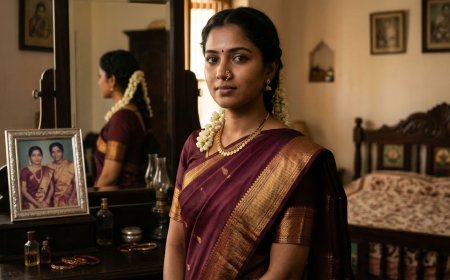
In the car afterward, Meera — who had a PhD in molecular biology and who had spent twelve years in London developing the specific relationship to magical thinking that the scientific training and the urban professional life together produce, which is to say a relationship of amused scepticism leavened by a deep respect for her mother's feelings — tried to understand what had just happened. Not the ring dropping. The response to the ring dropping. The specific quality of the fear that the dropped ring had produced in her mother, and the specific relief that the jeweller's reinterpretation had provided. The fear had not been performative. It had been genuine. And the relief had been equally genuine — the relief of someone who had been frightened and who had found, in the jeweller's improvised folk wisdom, a reason to stop being frightened.
She called Rohan from the car. She said: My mother nearly had a cardiac event because I dropped the ring. Rohan, who had grown up in Chennai and who had his own mother and his own mother's relationship to omens and signs, said: What did she say it meant? Meera said: Initially, catastrophe. Then the jeweller said the ring was looking for more gold and she was fine. Rohan said: The jeweller is a genius. Meera said: The jeweller has clearly done this before. They both laughed, and the laughter was the specific laughter of two people who find the situation both funny and genuinely interesting — who are not dismissing the superstition but who are not entirely sure what to do with it either.
This article is for Meera and Rohan — and for every NRI couple who has laughed at the superstition and then, privately, looked up whether the dropped ring meant anything, just to be sure.
The Superstitions That Crossed the Water: Why They Survived the Journey
The Indian family that emigrated to London or Toronto or Melbourne or Singapore did not pack only clothes and cooking vessels and the specific foods that the new country did not provide. They packed a complete cosmological framework — a set of beliefs, practices, and interpretive habits about the relationship between events and outcomes, between signs and their meanings, between the ordinary occurrences of daily life and the larger patterns of fortune and misfortune that the tradition had been reading for millennia. This framework — which the rational modern vocabulary calls superstition and which the tradition's own vocabulary calls shastra, the body of knowledge about auspiciousness and inauspiciousness — did not remain behind when the family crossed the water. It came with them.
The persistence of these beliefs in the diaspora context is one of the most interesting sociological phenomena of the Indian migration experience, and it is worth understanding seriously rather than dismissing as the residue of the uneducated. The Indian families that carried these beliefs to London and Toronto include, in significant numbers, the educated professional classes — engineers, doctors, academics, lawyers — for whom the scientific training and the rational framework are as genuine and as deep as the superstitious beliefs they carry simultaneously. The Indian mother who makes the sound that is not quite a word when the wedding ring drops has, in many cases, a graduate degree and a professional career and an entirely coherent relationship with the empirical world. The superstition exists alongside the rationalism rather than instead of it, in a compartmentalization that is not hypocrisy but is the specific cognitive structure that the two frameworks have arrived at in the same mind.
The wedding context is where the superstitions concentrate most intensely, because the wedding is the occasion of maximum significance and maximum anxiety — the occasion when the family most needs the interpretive framework that the tradition provides for managing uncertainty, for naming the difference between the auspicious and the inauspicious, and for finding, in the ordinary accidents of daily life, the signs and signals that the tradition has always understood as the universe's commentary on the human plans laid before it.
Why the Wedding Specifically?
The wedding is the occasion of the most significant life transition that the family manages collectively — the transition of a member from one social state to another, from the unmarried to the married, from the natal family to the conjugal family. Every culture that has ever existed has treated this transition as a moment requiring special attention, special ritual, and special interpretive care. The Indian tradition's attention to the auspicious and the inauspicious — the shubh and the ashubh — at the wedding is not an aberration but an expression of the universal human tendency to surround the most significant transitions with the most concentrated interpretive attention.
The specific content of the Indian wedding superstitions — which signs are auspicious, which inauspicious, what the various accidents and occurrences of the pre-wedding and wedding period mean — reflects the specific cosmological framework of the Indian tradition, developed over millennia of observation, interpretation, and transmission. The cat crossing the path. The sneeze at the moment of departure. The wedding ring dropped on the floor. The lamp going out at the moment of the ceremony. The coconut that cracks in a specific direction. Each of these is an event that the tradition has assigned a meaning to — a meaning that is not random but that reflects the tradition's specific understanding of the relationship between the ordinary and the significant, between the accident and the omen.
The Catalogue: The Superstitions the NRI Family Carries
The Indian wedding superstitions that the NRI family carries across the water are an extensive and internally consistent body of knowledge about the relationship between the ordinary events of the pre-wedding and wedding period and the fortune of the marriage. What follows is the most complete catalogue that can be assembled from across the Indian regional traditions — the superstitions that appear most consistently across communities, regions, and diaspora contexts, with their traditional interpretations and the specific anxieties they produce in the Indian family.
The Dropped Ring: The One That Started This Article
The dropped wedding ring is, in the Indian tradition, an omen whose specific interpretation varies by region and by community but whose occurrence is universally noted and universally interpreted rather than being allowed to pass as the ordinary accident that it physically is. The most common interpretation is negative — the ring has fallen, which is a falling, which is a decline, which is inauspicious for the marriage it represents. The specific elaborations of this basic negative interpretation vary: in some communities, the direction in which the ring rolls is significant; in others, who retrieves it; in others, the number of times it spins before coming to rest.
The jeweller's improvised reinterpretation — the ring is looking for more gold — belongs to the tradition of the auspicious reinterpretation that the Indian ritual knowledge has always provided for the inauspicious sign. The tradition does not simply catalogue the bad omens and leave the family to manage the anxiety. It provides, alongside the inauspicious interpretation, the remedial measures — the specific rituals, prayers, or reinterpretations that convert the inauspicious sign into something manageable or, in the best cases, into something auspicious by a different reading.
The Cat Crossing the Path
The cat crossing the path of the wedding party — and specifically crossing from left to right, the direction that the tradition associates with the inauspicious — is among the most widely noted and most widely feared of the Indian wedding omens. The fear of the cat crossing the path is not limited to the wedding context — it is one of the most general Indian superstitions — but its concentration at the wedding is intense, because the wedding party's departure from the house is one of the most significant movements in the entire wedding sequence, and the omen that appears at the moment of departure speaks directly to the journey being undertaken.
The NRI family in London or Toronto does not encounter the cat crossing the path in the same form that the India-based family does — the urban environments of the diaspora are not the same environments in which the cat's movement across a path has the same visual significance. But the underlying anxiety that the cat-crossing-the-path superstition addresses — the anxiety about the journey's beginning, about whether the departure is happening under auspicious conditions — survives the translation to the diaspora context in other forms. The taxi that arrives late. The traffic jam on the way to the venue. The flight that is delayed. Each of these is, in the family's interpretive framework, a potential version of the cat crossing the path — an early sign about the journey's auspiciousness that the tradition has trained the family to attend to.
The Inauspicious Days and Times
The Hindu calendar's division of time into the auspicious and the inauspicious is one of the most elaborate and most consequential bodies of knowledge in the Indian superstitious tradition, and it is the body of knowledge that the NRI family's priest and astrologer carry most explicitly into the wedding planning conversation. The muhurtham — the auspicious time for the wedding ceremony — is determined by the family's astrologer on the basis of the birth stars of the bride and the groom, the specific date of the wedding, and the complex system of the Hindu calendar that identifies which times are shubh and which are ashubh.
The inauspicious times and days within this system include the Rahu Kaal — the approximately ninety-minute period within each day that is associated with the node Rahu and that is considered inauspicious for the beginning of any significant undertaking — and the specific inauspicious days of the calendar, including certain Tuesdays, Saturdays, and the days of specific nakshatras that the tradition has identified as unfavourable for marriage. The NRI couple who schedules the wedding on a day or at a time that falls within these inauspicious windows will find that the family's astrologer and the family elders have significant concerns that the couple must either address or absorb.
The NRI couple's relationship to the muhurtham — the auspicious time — is one of the most direct expressions of their relationship to the tradition's superstitious framework, because the muhurtham is not a suggestion. It is, in the family's understanding, the time that the cosmos has designated for this specific union, and the ceremony conducted at a different time is a ceremony that has missed the cosmic appointment.
The Sneeze and the Departure
The sneeze at the moment of departure — the sneeze that occurs as the wedding party is about to leave the house, at the threshold moment of the journey to the ceremony — is another of the pan-Indian inauspicious omens whose occurrence produces the immediate response of the Indian family. The sneeze at departure is inauspicious because it is an involuntary interruption of the intended action — the body's refusal, however momentary, to proceed — and the tradition reads involuntary interruptions at significant moments as signs that the journey should be reconsidered or that additional protective measures should be taken before proceeding.
The remedial measure for the sneeze at departure varies by community — waiting a few minutes before proceeding, performing a quick prayer, drinking a glass of water — but the underlying logic is consistent: the inauspicious sign does not cancel the journey but it requires acknowledgment and response before the journey can proceed under the full auspiciousness that the occasion demands.
The Owl and the Crow
The owl and the crow — the two birds most associated with inauspiciousness in the Indian ornithological tradition — have specific meanings at the wedding that the NRI family in London has not entirely left behind. The owl's hooting at night, the crow's cawing at the moment of the departure, the crow that sits on the roof of the house on the wedding morning — these are signs that the tradition has assigned inauspicious meanings to, and the NRI family that hears the crow on the wedding morning will note it and will discuss it, even if the discussion resolves in the rational acknowledgment that the crow in London is simply a crow and not a cosmic messenger.
The crow specifically holds a complex position in the Indian cosmological tradition — it is associated with the ancestors, with the shraadh ritual that honours the dead, and with the communication between the living and the ancestral realm. A crow that appears prominently on the wedding day is, in some community traditions, the ancestor arriving to bless the occasion rather than to warn against it — a reinterpretation that converts the potentially inauspicious sign into the auspicious, in exactly the way that the Southall jeweller converted the dropped ring.
The Lamp That Goes Out
The lamp — the diya — that goes out during the wedding ceremony is one of the most anxiety-producing of the wedding omens, because it happens at the most publicly visible and most ritually significant moment of the event. The diya at the ceremony is not merely a decorative element. It is a ritual presence — the light of the divine, the Agni in its domestic form, the sacred fire that witnesses the union. The lamp that goes out is the sacred light that has been extinguished, and the tradition reads this as inauspicious in ways that are difficult to reinterpret.
The remedial measure is immediate relighting — the lamp must be relit as quickly as possible, by a specific person (typically a married woman from the family whose own marriage is considered auspicious), with a specific prayer, and with the acknowledgment that the momentary extinguishing has been addressed. The speed and the competence of the relighting are part of the remedial practice — the light returns quickly, the interruption is brief, the ceremony continues.
The Colour Black and the Evil Eye
The evil eye — nazar — is one of the most universal of the Indian superstitions and one of the most persistently maintained in the diaspora context. The belief that the concentrated envy or admiration of others can harm the object of that attention — particularly at moments of great happiness and great visibility like the wedding — is a belief that the Indian tradition shares with the Mediterranean, the Middle Eastern, and many other cultural traditions, and that the Indian family maintains through a set of protective practices that the NRI family carries with full fidelity into the diaspora context.
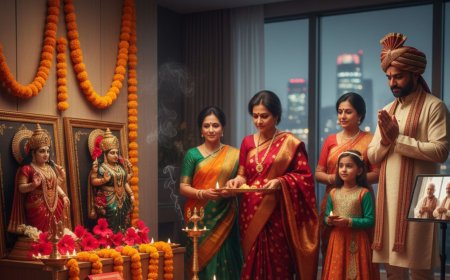
The black kajal dot on the baby's cheek. The lemon and chilli hung at the door. The specific prayer said when someone compliments the baby or the new car or the wedding couple with too much enthusiasm. The NRI mother who says nazar na lage — may the evil eye not strike — at the moment when the wedding couple looks most beautiful is not performing a superstition. She is performing a protective ritual that the tradition has maintained for millennia as the specific response to the specific vulnerability that visibility and happiness create.
The wedding couple is at maximum nazar vulnerability — visible to hundreds of people, receiving concentrated admiration and attention, at the peak of the happiness that the tradition identifies as the state most attractive to the envious attention of others. The protective measures that the family takes — the black thread on the groom's wrist, the kajal dot behind the bride's ear, the specific prayers of protection spoken by the mother — are the tradition's most direct response to this vulnerability.
The Astrology Dimension: The Kundali and the Compatibility Calculation
The astrological compatibility calculation — the kundali matching, the guna milan, the assessment of the birth charts of the prospective bride and groom for their compatibility and the fortune of their union — is the most elaborate and the most systematic of the Indian wedding superstitions, and the one that most directly affects the planning of the wedding from the earliest stages.
The kundali matching process, in its traditional form, involves the comparison of thirty-six gunas — qualities — across the birth charts of the two individuals, with a minimum score of eighteen gunas considered necessary for the match to be approved and a higher score indicating greater compatibility. The specific gunas being assessed include the compatibility of the moon signs, the relationship between the nakshatras, the specific planetary configurations that affect the health, the progeny, the financial fortune, and the longevity of the partners.
The NRI couple's relationship to the kundali matching is one of the most revealing indicators of their broader relationship to the tradition's superstitious framework. The couple who has undergone the kundali matching and received a high score will typically feel, at some level, that the match has been confirmed by a system more authoritative than their own assessment. The couple who has received a low score and has proceeded anyway — or who has not done the matching at all — will carry, in the family's interpretive framework, an additional layer of uncertainty about the union's fortune that the high-scoring match does not carry.
The Manglik question — the specific astrological configuration in which Mars occupies certain houses in the birth chart, associated in the tradition with harm to the spouse — is one of the most anxiety-producing of the astrological superstitions in the NRI wedding context. The woman or man identified as Manglik is, in the traditional interpretation, inauspicious for a non-Manglik spouse, and the remedial measures — marriage to a Manglik partner, the specific rituals that neutralise the Manglik configuration, the puja that converts the inauspicious astrological reading into something manageable — are among the most elaborate in the tradition.
The Psychology of the Superstition: What It Is Actually Doing
The most useful question to ask about the Indian wedding superstition is not whether it is true in the empirical sense — whether the dropped ring actually predicts anything about the marriage, whether the cat crossing the path actually affects the journey — but what the superstition is doing for the people who hold it. What function does the belief serve? What human need does it address? Why does it persist in the minds of educated, rational, scientifically trained people who know, at one level, that the crow is just a crow?
The Management of Uncertainty
The wedding is one of the most significant and most irreversible decisions that a person makes, and it is made under conditions of fundamental uncertainty. The person being married has made the best assessment they can of the compatibility, the commitment, and the future they are entering — but the future is genuinely unknown. The marriage's outcome is not predictable by any reliable method. The uncertainty is real and the stakes are enormous.
The superstition — the kundali matching, the muhurtham, the careful attention to the omens of the pre-wedding period — addresses this uncertainty by providing an interpretive framework that converts the random occurrences of daily life into a legible commentary on the situation. The universe is not silent about what is happening. It is speaking — in the dropped ring, the crow on the roof, the sneeze at the threshold — and the tradition provides the vocabulary for understanding what it is saying and the remedial practices for responding to what it says.
This is not a small service. The management of uncertainty is one of the fundamental human needs, and the traditions that have survived longest are, in significant measure, the traditions that have provided the most sophisticated and the most emotionally resonant frameworks for managing it. The Indian tradition's framework for the wedding — the muhurtham, the kundali, the protective rituals against the nazar — is a sophisticated system of uncertainty management that has been developed over millennia and that continues to serve the function it was designed for, even in the minds of people who know that the crow is biologically just a crow.
The Creation of Shared Reality
The superstition also serves the function of creating a shared interpretive reality for the family gathered around the wedding. When Meera's mother makes the sound at the dropped ring, she is not simply expressing a personal belief. She is invoking a shared framework — the family's collective understanding of the auspicious and the inauspicious — that creates a shared moment of attention and response. The jeweller's reinterpretation is not simply a reassurance to Meera's mother. It is a reassertion of the shared framework in a more auspicious register, a collective movement from anxiety to relief that the whole car participates in.
The superstition creates the community of interpretation — the people who read the same events through the same framework, who respond to the same signs with the same emotions, who share the anxiety and the relief and the protective rituals. In the diaspora context, where the Indian family is often isolated from the broader community of shared interpretation that the India-based family has access to, the wedding superstitions are one of the most direct expressions of the community's shared identity — the proof that despite the distance and the years, the family is still reading the world through the same framework.
The Honest Naming of Anxiety
The superstition also provides a vocabulary for naming the anxiety that the wedding produces without requiring the person to name it directly. Meera's mother's fear at the dropped ring was not, at the deepest level, about the ring. It was about the wedding — about the enormity of what her daughter was about to do, about the uncertainty of the future, about the love that makes the vulnerability of the other's happiness so acute. The dropped ring gave the anxiety a name and a form — the specific, manageable form of the wedding omen — that allowed the anxiety to be expressed, addressed, and resolved without requiring the direct acknowledgment of the deeper fear.
This is the function that the psychoanalytic tradition calls displacement — the transfer of an overwhelming anxiety onto a specific, manageable object. The dropped ring is not overwhelming. The uncertainty of the daughter's future happiness is overwhelming. The dropped ring gives the overwhelming feeling a specific, manageable form that the tradition provides a specific, manageable response to.
Common Misunderstandings About Indian Wedding Superstitions
The first misunderstanding is that the educated, rational Indian person does not actually believe the superstitions — that the performance of the protective rituals and the attention to the omens is purely social, purely a matter of maintaining family harmony and not a genuine expression of belief. This misunderstanding underestimates the sophistication of the cognitive structure that holds the rational and the superstitious frameworks simultaneously. The Indian professional who has a PhD in molecular biology and who makes the sound at the dropped ring is not being inconsistent. She is operating within two frameworks simultaneously — the empirical framework that applies in the laboratory and the interpretive framework that applies at the wedding — and the frameworks are not in contradiction because they apply to different registers of experience.
The second misunderstanding is that the superstitions are uniformly negative — that they are primarily about the bad omens, the inauspicious signs, the things that must be avoided. The tradition is equally elaborate in its cataloguing of the auspicious — the specific birds, sounds, sights, and events that signal good fortune for the wedding and the marriage. The koel's song at the wedding morning. The specific arrangement of the flowers that the decorator has achieved. The grandmother's blessing spoken with the specific words that the tradition has always used. The superstitious framework is as generous in its production of auspicious signs as it is attentive to the inauspicious.
The third misunderstanding is that the NRI family should be gently educated out of the superstitions — that the rational partner or the progressive couple does the family a service by explaining that the dropped ring is just a dropped ring and that the anxiety is unfounded. This approach misunderstands both the function of the superstition and the nature of the belief. The function of the superstition is not primarily epistemic — it is not primarily about the true or false description of the world. It is primarily psychological and social — the management of uncertainty and the creation of shared interpretive reality. Explaining that the dropped ring is just a dropped ring addresses the epistemic dimension while missing the psychological one entirely.
The fourth misunderstanding is that the superstitions are fixed and unchanging — that the tradition is a static body of beliefs that has been transmitted without modification from generation to generation. The tradition is dynamic — it evolves, adapts, and finds new forms for old concerns. The Southall jeweller's improvised reinterpretation of the dropped ring is the tradition in action — the living, adaptive, responsive body of folk wisdom that has always found the better interpretation when the worse one was available. The tradition has never simply catalogued the omens and left the family to manage the anxiety alone. It has always provided, alongside the inauspicious reading, the remedial measure, the reinterpretation, the prayer that converts the frightening into the manageable.
The fifth misunderstanding is that the NRI couple must choose between the rational framework and the superstitious one — that modernity and tradition are in irreconcilable conflict and that the educated NRI must eventually pick a side. The evidence does not support this binary. The Indian family that maintains the superstitions alongside the scientific education, the professional career, and the global cosmopolitan identity is not an anomaly or a contradiction. It is the normal condition of a culture that has always been capacious enough to hold multiple frameworks simultaneously — the tradition's specific strength and the diaspora family's specific wisdom.
The Complete Reference Table: Indian Wedding Superstitions, Their Meanings, and Their Remedies
| Superstition | The Omen | Traditional Interpretation | Regional Prevalence | Remedial Practice | NRI Diaspora Form |
|---|---|---|---|---|---|
| Dropped wedding ring | Ring falls before wedding | Inauspicious for marriage; varying interpretations by direction of roll | Pan-Indian | Priest's prayer; rock salt; auspicious reinterpretation | Jeweller reinterpretation; family prayer |
| Cat crossing the path | Cat crosses left to right at departure | Inauspicious journey; delay or difficulty ahead | Pan-Indian; stronger in North | Wait; prayer; specific mantra | Traffic jam; delayed taxi interpreted similarly |
| Sneeze at departure | Sneeze at threshold moment of departure | Inauspicious interruption of the journey | Pan-Indian | Wait a few minutes; drink water; quick prayer | Maintained fully in diaspora |
| Owl hooting at night | Owl heard near house before wedding | Death or misfortune omen; inauspicious | Pan-Indian; stronger in North | Specific protective prayer; puja | Rare in urban diaspora; fear maintained |
| Crow on roof at wedding | Crow sits on house on wedding morning | Inauspicious; ancestral warning | Pan-Indian | Ancestor prayer; offering of food | Occasionally encountered; fear maintained |
| Lamp going out | Diya extinguished during ceremony | Sacred witness withdrawn; inauspicious | Pan-Indian | Immediate relighting by auspicious married woman | Wind contingency at outdoor ceremonies |
| Evil eye — nazar | Concentrated admiration of others | Harm from envious attention | Strongly pan-Indian | Kajal dot; black thread; nazar utaarna ritual | Maintained fully; kajal dot common |
| Black colour at wedding | Wearing black at wedding occasion | Mourning colour; inauspicious for celebration | North India primarily | Avoid black at wedding; request guests do the same | Contested in diaspora; younger generation pushes back |
| Inauspicious muhurtham | Wrong time for ceremony | Cosmic misalignment; inauspicious for marriage | Pan-Indian | Astrologer consultation; muhurtham correction | Priest consulted; muhurtham maintained strongly |
| Manglik configuration | Mars in specific birth chart houses | Inauspicious for non-Manglik spouse | Pan-Indian; strong anxiety | Remedial puja; Manglik-Manglik matching | Kundali matching maintained; Manglik anxiety strong |
| Low kundali score | Below 18 gunas in compatibility | Inauspicious match; risk of marriage difficulties | Pan-Indian | Additional puja; specific remedial rituals | Kundali matching maintained; low score anxiety high |
| Scissors opened as gift | Gift of scissors to wedding couple | Cutting of relationship; inauspicious | North India primarily | Do not gift scissors; if received, return a coin | Maintained; specific gift list warnings |
| Mirror broken | Mirror breaks in pre-wedding period | Seven years of bad luck; inauspicious | Pan-Indian; influenced by Western tradition | Prayer; specific ritual disposal of broken mirror | Western and Indian versions merged |
| Coconut cracking direction | Direction coconut breaks when opened | Specific directions auspicious or inauspicious | South India primarily; some North | Priest determines auspicious direction | Maintained in South Indian NRI families |
| Broom as gift | Gifting a broom to wedding couple | Sweeping away the luck; inauspicious | Pan-Indian | Do not gift brooms; specific remedial if received | Maintained; gift list management |
| Rain on wedding day | Rain during outdoor ceremony | In some traditions auspicious; in others inauspicious | Regional variation | Auspicious reinterpretation available; umbrella | Both interpretations available in diaspora |
| Threshold crossing | Bride must not touch threshold | Threshold as liminal space; touching inauspicious | Pan-Indian | Carried over threshold; specific step protocol | Maintained in traditional families |
What Meera Did With the Information
She had not looked up the dropped ring superstition on the drive home from Southall. She had looked it up that evening, from the flat in Bethnal Green, while Rohan was cooking and the flat smelled of the dal that he made on Tuesdays because his mother had made it on Tuesdays and the habit had persisted through the Chennai-to-London translation. She had found six different interpretations, none of them consistent, two of them alarming and four of them ranging from neutral to auspicious depending on the specific direction the ring had rolled and the specific person who had retrieved it.
She had shared none of this with her mother. She had shared it with Rohan, who had listened and then said: The jeweller's interpretation is the best one. The ring was looking for more gold. We should use that one. Meera had said: You are aware that we are two scientists who are choosing our interpretation of an omen based on which one we prefer.Rohan had said: Yes. And your mother is happier and the ring is undamaged and we have a good story for the wedding speech. This seems like the correct outcome. Meera had considered this for a moment. She had said: The jeweller should get a commission.
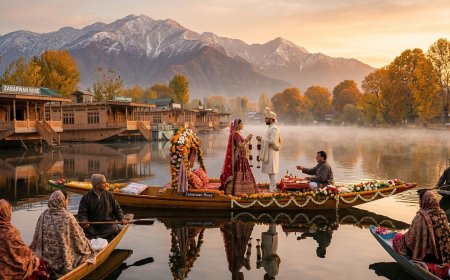
The wedding was in April. The muhurtham was at nine-seventeen in the morning, which the astrologer had determined was the specific auspicious window for this particular union on this particular date. The diya at the mandap did not go out. No crows appeared on the venue's roof that morning, or if they did no one mentioned it. The ring, now permanently on Meera's finger, did not drop again.
At the reception, Meera's mother told the story of the dropped ring to the table she was seated at — told it with the full dramatic arc that the story required, the moment of horror and the jeweller's genius and the reinterpretation that had saved the afternoon. The table laughed. Her mother laughed last and most completely, the laughter of someone who had been frightened and who was now, on the other side of the wedding, able to find the fear funny.
Take the muhurtham seriously — not because the cosmos has set a specific appointment for your wedding, but because the family elder who has given it to you has given you the thing they consider most important, and that is worth honouring. Let your mother put the kajal dot behind your ear, because the protection it offers is real in the sense that matters most — the sense that she is doing the thing she knows how to do for the person she loves most. Do not explain the crow to the grandmother. Find the better interpretation when the worse one is available.
And when the ring drops on the floor of the jewellery shop in Southall, remember that the jeweller who reaches under the counter for the rock salt is not perpetuating an irrational belief. He is doing what the tradition has always done — finding the better reading, offering the managed interpretation, converting the anxiety into the relief that the occasion requires. He is, in his small and practical way, doing exactly what the tradition was designed to do.
Published by NRIWedding.com — The Premium Global Platform for Non-Resident Indians Planning Indian Weddings From Abroad.
What's Your Reaction?
 Like
0
Like
0
 Dislike
0
Dislike
0
 Love
0
Love
0
 Funny
0
Funny
0
 Angry
0
Angry
0
 Sad
0
Sad
0
 Wow
0
Wow
0