












































































Avoiding Scams in Jalandhar’s Wedding Markets — The Specific Tactics Used on NRI Shoppers (And How to Avoid Them)
Wedding shopping in Jalandhar remains one of the most exciting experiences for NRI families returning from Canada, the UK, Australia, and the Gulf. From gold jewellery in Burlton Park to bridal lehengas in Model Town and Lajpat Nagar boutiques, the city’s wedding markets offer extraordinary variety and craftsmanship. Yet the same busy markets that welcome thousands of international visitors each year also contain specific scams designed to target NRI buyers unfamiliar with current local practices. This investigative guide explains the most common tactics used on overseas shoppers — including taxi driver commission networks directing visitors to specific shops, fake hallmark gold jewellery, inflated making charges, urgency sales pressure, product substitutions, and emotionally manipulative sales tactics exploiting diaspora trust. Through a real story of an NRI buyer discovering her 22-karat gold purchase tested at only 19-karat after returning to Canada, the article reveals how these schemes operate and why time pressure and unfamiliarity make NRI shoppers particularly vulnerable. Learn how to verify BIS hallmarks correctly, identify commission-driven shop recommendations, compare making charges across the market, avoid urgency sales traps, and ensure bridal garments and jewellery delivered overseas match what was ordered. With practical pre-shopping strategies, documentation advice, and verification methods used by experienced coordinators, this guide shows how NRI families can enjoy Jalandhar’s wedding markets confidently while avoiding the small number of vendors who exploit international visitors.

Avoiding Scams in Jalandhar's Wedding Markets — Specific Tactics Used on NRI Shoppers
The gold had tested at nineteen karats.
Sukhjit had found caout on a Tuesday morning in Surrey, six weeks after the Jalandhar trip, when she had taken the bangles to the jeweller on Kingsley Road for the insurance valuation that the home insurance policy required for the new pieces. The jeweller had tested the bangles with the acid test kit he kept behind the counter and had looked at the result with the specific expression of someone who is about to say something that the customer is not going to want to hear.
He had said: these are testing at nineteen karat, not twenty-two.
Sukhjit had said: that cannot be right. I bought them from a hallmarked shop in Jalandhar. The receipt says twenty-two karat.
He had tested again. The second test had confirmed the first.
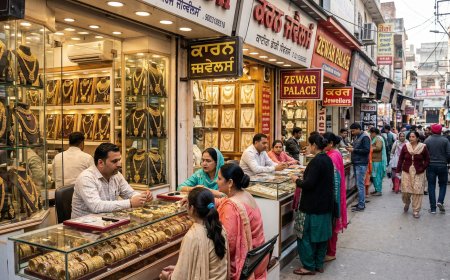
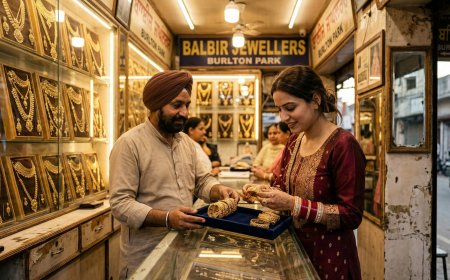
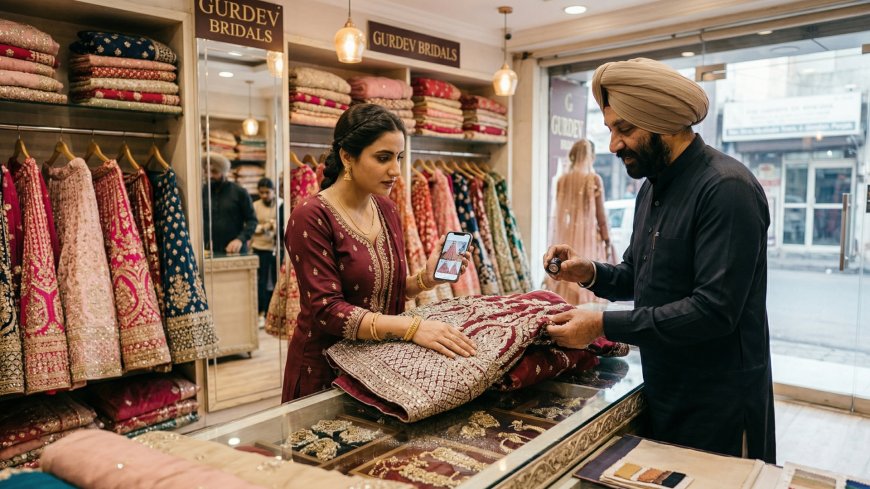
Sukhjit had looked at the bangles. They were the bangles she had bought on the second day of the Jalandhar trip from the shop on Burlton Park whose name she had been given by the taxi driver who had taken her from the hotel to the jewellery market on the first morning and who had mentioned the shop unprompted with the enthusiasm of someone who had mentioned it to many passengers before her and whose enthusiasm had a specific commercial quality that she had not registered at the time.
The receipt said twenty-two karat. The hallmark stamp on the bangles said twenty-two karat. The bangles were testing at nineteen karat.
The difference between nineteen karat gold and twenty-two karat gold at current prices, across the four bangles whose combined weight was sixty-two grams, was approximately thirty-two thousand rupees — the amount that the karat difference represented in gold value and that the retail price had been calculated as if the bangles were twenty-two karat.
She had paid for twenty-two karat gold and received nineteen karat gold with a stamp that said twenty-two karat.
The stamp had been fake.
Sukhjit had sat in the jeweller's shop on Kingsley Road and understood, in the specific and unwelcome way that understanding arrives when its practical value is retrospective, that the taxi driver's unprompted enthusiasm for the Burlton Park shop had not been the enthusiasm of a passenger who had happened to visit and found the gold excellent.
This article is the account of the specific tactics used on NRI shoppers in Jalandhar's wedding markets — not to suggest that the market is predominantly dishonest, because it is not, but because the tactics are specific, the targets are identifiable, and the prevention is entirely possible for the buyer who understands what they are being shown before the showing begins.
Why NRI Shoppers Are the Specific Target
The understanding of why NRI shoppers are the specific target of the tactics this article describes is not the understanding of victimhood. It is the understanding of the market conditions that produce the targeting, whose knowledge converts the target into the informed buyer whose profile the tactics do not fit.
The NRI shopper presents a specific combination of characteristics that the dishonest vendor's targeting logic identifies as the optimal profile for the tactics whose execution this article describes.
The first characteristic is the budget signal. The NRI who has flown from Canada or the UK to Jalandhar for wedding shopping is, by the act of the international flight alone, a person whose budget the market reads as larger than the local buyer's budget. The signal is not wrong — the NRI wedding shopping budget is typically larger than the comparable domestic budget — but its broadcasting, through the behaviour patterns that the NRI shopper exhibits without awareness, creates the targeting condition that the dishonest vendor responds to.
The second characteristic is the time pressure. The NRI shopper who has seven days or forty-six hours in Jalandhar is the shopper whose decision-making urgency the vendor can exploit — the pressure of the limited timeline creates the conditions for the rushed purchase whose careful examination the timeline does not appear to permit.
The third characteristic is the market unfamiliarity. The NRI shopper whose knowledge of the Jalandhar market was formed during childhood visits or whose knowledge is the knowledge of the diaspora community's collective impression rather than the current market's specific reality is the shopper whose unfamiliarity creates the information gap that the dishonest vendor's expertise fills with the information that serves the vendor rather than the buyer.
The fourth characteristic is the relationship vulnerability. The NRI shopper whose emotional connection to the homeland makes the Jalandhar experience a charged one — whose desire to belong, to be recognised as the family member returning rather than the foreign visitor spending — is the shopper whose relationship warmth the dishonest vendor's performance of familiarity exploits.
These four characteristics are not shameful. They are the natural characteristics of the person making a significant purchase in a market whose full complexity they do not know. The awareness of them is the first prevention — the self-knowledge that identifies the profile and whose application converts the natural vulnerability into the managed position.
Tactic One: The Taxi Driver Commission Network
The tactic that produced Sukhjit's nineteen-karat bangles begins not in the jewellery shop but in the taxi whose driver's role in the commission network is the role that the network's profitability depends on.
The taxi driver commission network — the informal arrangement between certain vendors in the Jalandhar wedding market and the taxi and auto-rickshaw drivers who service the tourist and NRI visitor population — is the city's most pervasive and most consequential specific tactic directed at the NRI wedding shopper. Its operation is simple, its execution is sophisticated, and its identification requires the specific knowledge of what it looks like from the inside of the taxi.
The arrangement works as follows. The vendor — the jeweller, the boutique owner, the phulkari seller — pays a commission to the taxi driver for every customer the driver delivers to the shop. The commission is typically five to fifteen percent of the customer's purchase value, whose size makes the driver's motivation for the delivery the motivation of a significant per-trip income supplement rather than the casual helpfulness of a local who knows the markets.
The delivery mechanism is the recommendation — the unprompted, enthusiastic, specific recommendation of the particular shop, offered with the credibility of the local who knows where the quality is and whose motivation the passenger has no reason to question. The recommendation is typically accompanied by the navigation to the shop rather than to the market generally — the taxi that takes the passenger to the specific street where the specific shop is rather than to the Burlton Park market where the passenger's own exploration would begin.
The shop whose taxi driver commission arrangement is active is not necessarily the dishonest shop — the commission arrangement exists across the quality spectrum, and some shops that pay commissions offer genuine product at genuine prices. But the commission arrangement's presence creates the financial incentive structure that favours the shops whose commission rates are highest rather than the shops whose quality and price are best, and the concentration of NRI visitor traffic at the commission-paying shops is the concentration that the shops whose commission rate is the making-charge reduction they offer visitors who have not been delivered by the taxi network charge more to compensate.
The prevention of the taxi driver commission network tactic is the prevention of the unplanned recommendation's activation. The NRI shopper who arrives in Jalandhar with the specific shop list that the coordinator's research, the family network's current knowledge, and the verification protocol's confirmation have produced is the shopper who does not need the taxi driver's recommendation. The specific shop list is the navigation instruction that removes the taxi driver's recommendation from the itinerary — the instruction is "take me to Burlton Park, I know where I am going" rather than the opening that "take me to the jewellery market" creates.
The secondary prevention is the commission question — the direct question to the taxi driver, before the recommendation has shaped the destination, of whether the driver receives commission from any shops in the area. The question is not accusatory. It is the consumer's appropriate due diligence whose asking identifies the conflict of interest before it shapes the itinerary. The driver whose answer is yes has disclosed the arrangement whose disclosure converts the recommendation from the trusted advice of the neutral party to the commercial pitch of the interested party. The driver whose answer is no has either told the truth or told a lie whose consequence — the nineteen-karat gold whose test result is the lie's exposure — is the consequence whose risk the disclosure question reduces.
Tactic Two: The Fake Hallmark and the Purity Fraud
Sukhjit's nineteen-karat bangles with the twenty-two-karat stamp are the specific product of the purity fraud whose execution has become sophisticated enough in the Jalandhar market to defeat the cursory examination and whose detection requires the specific verification that the cursory examination does not include.
The purity fraud in the Jalandhar jewellery market operates in several forms whose sophistication varies and whose detection difficulty varies with the sophistication.
The first form is the fake hallmark — the manually applied stamp whose visual appearance mimics the BIS hallmark whose genuine application requires the BIS-certified hallmarking centre's stamp and whose fake application requires only the stamp whose creation is the specific investment that the purity difference's profit justifies. The fake hallmark's visual examination by the non-specialist buyer does not distinguish it from the genuine hallmark because the visual characteristics of the hallmark stamp — the BIS logo, the purity number, the hallmarking centre code — are reproduced with sufficient accuracy to defeat the non-specialist's examination.
The second form is the genuine hallmark on the non-representative piece — the hallmarked item that is displayed as the representative of the product being sold but whose purity is not the purity of the pieces actually delivered. The buyer who examines the hallmarked display piece and is delivered different pieces whose hallmark status is different from the display piece has been shown the genuine and delivered the substitute.
The third form is the diluted alloy whose stamp accurately reflects the declared purity but whose actual purity is below the declared purity because the alloy whose composition determines the purity has been produced with the cheaper metals whose substitution reduces the gold content below the stamped standard. This form's detection requires the acid test or the XRF analysis rather than the hallmark examination alone.
The prevention of the purity fraud begins with the BIS hallmark verification whose correct performance is not the visual examination of the stamp whose fake reproduction defeats it but the specific verification of the hallmarking centre code on the stamp against the BIS database of registered hallmarking centres whose online access the BIS website provides. The genuine BIS hallmark contains the BIS logo, the purity in karat or fineness, the hallmarking centre's code, and the year of marking. The hallmarking centre code is the specific element whose database verification — the check that the code corresponds to an actual registered hallmarking centre in the geographic area where the purchase is being made — distinguishes the genuine hallmark from the fake.
The secondary prevention is the acid test at purchase — the specific request, made before the deposit is paid on the custom order or before the payment is made on the ready piece, that the seller perform the acid test in the buyer's presence. The acid test's performance in the buyer's presence is not an accusation of fraud. It is the standard quality verification that the legitimate seller performs without resistance and whose resistance — the seller who declines to perform the test in the buyer's presence, who says the test is unnecessary, who says the hallmark is sufficient — is the resistance that identifies the seller whose confidence in the test's result is not the confidence of the seller whose product is what the hallmark claims.
The tertiary prevention is the post-purchase acid test whose performance at the destination country's jeweller — as Sukhjit performed on Kingsley Road — is the verification whose result identifies the fraud at the point where the legal recourse is limited but the community warning is the consequential action. The community warning — the specific, named, evidenced account of the fraud shared in the NRI community's networks — is the consequence whose possibility the dishonest vendor's market reputation calculation should weigh and sometimes does not.
Tactic Three: The Making Charge Inflation for NRI Visitors
The making charge inflation tactic is the tactic that operates across the quality spectrum — the legitimate shop and the less legitimate shop both practice versions of it — and whose identification requires the market knowledge that the price benchmark research provides.
The making charge for gold jewellery in Jalandhar's market is the charge that varies by design complexity, by the specific work involved, and — in the shops that practice the NRI premium — by the buyer's profile. The NRI buyer who has arrived at the shop from the airport without the local knowledge that establishes the current making charge benchmark is the buyer whose making charge quote reflects the shop owner's assessment of the premium that the profile will pay.
The NRI making charge premium — the increment above the local buyer's making charge whose application the NRI buyer's profile justifies in the dishonest vendor's calculation — is typically three to eight percentage points above the making charge that the equivalent domestic buyer would be quoted for the same piece. On a three-hundred-gram gold purchase at seven thousand rupees per gram, a five percentage point making charge difference is one lakh five thousand rupees — the amount that the market knowledge whose absence the NRI buyer presents costs.
The making charge inflation is not always the fraud of the fake hallmark. It is sometimes the legal premium of the market's differential pricing — the same price variation that the tourist premium in every global market produces and whose existence is not illegal but whose magnitude the informed buyer's negotiation reduces. The distinction between the legitimate premium and the fraud is the distinction between the shop that quotes a higher making charge to the NRI buyer and the shop that quotes a higher making charge to the NRI buyer and delivers nineteen-karat gold stamped as twenty-two.
The prevention of the making charge inflation is the market knowledge that the price benchmark research provides. The making charge benchmark for the current season — the range within which the established Jalandhar jewellers quote for the standard and complex work — is the knowledge that the coordinator's current market intelligence provides, that the family network's recent purchase experience provides, and that the multiple shop visit whose comparison the orientation day produces provides. The buyer who knows that the current benchmark for standard gold bangles is nine to twelve percent is the buyer who identifies the seventeen-percent quote as the premium whose negotiation the benchmark justifies.
The negotiation of the making charge is the standard practice of the Jalandhar jewellery market and is not the offensive challenge that the NRI buyer whose consumption experience is the fixed-price retail of Canada or the UK may perceive it as. The boutique owner who quotes seventeen percent expects the negotiation to eleven or twelve. The buyer who pays seventeen percent without the negotiation has paid the opening number as the final number, which is the outcome the opening number is designed to produce.
Tactic Four: The Urgency Creation and the Disappearing Availability
The urgency creation tactic is the tactic that the NRI buyer's time pressure makes particularly effective and that the dishonest vendor applies with the specific calibration of the buyer whose departure date has been established in the first two minutes of the conversation.
The tactic works by creating the artificial scarcity or the artificial deadline that converts the buyer's considered decision into the rushed decision whose quality the consideration would have improved.
The forms of the urgency creation in the Jalandhar wedding market are specific and recognisable once named.
The disappearing piece is the form in which the seller indicates that the specific piece the buyer is examining is the last of its kind, or has been asked about by another customer who is coming back this afternoon, or is from a fabric or design run that will not be repeated — the scarcity signal whose accuracy cannot be immediately verified and whose effect is to compress the buyer's decision timeline from the considered pace that the remaining trip days permit to the immediate pace that the disappearing piece's imminent loss requires.
The seasonal price increase is the form in which the seller indicates that the current price reflects a temporary condition — the gold rate is about to increase, the fabric supplier's price goes up next week, the embroidery workshop's rates change from Monday — whose deadline the buyer can avoid by purchasing today rather than returning tomorrow for the comparison that the orientation day's protocol would produce. The deadline's accuracy cannot be verified, the gold rate's future movement is the seller's prediction rather than the established fact, and the buyer who purchases today rather than returning tomorrow has purchased at the pace that the urgency creation required.
The competing buyer is the form in which the seller introduces, or implies the existence of, another buyer whose interest in the same piece creates the competition that the buyer's hesitation will lose. The competing buyer may be real — the Jalandhar market's genuine demand during the peak season is sufficient to produce real competition for specific premium pieces — or the competing buyer may be the seller's staff member whose interest in the piece has been scripted for the buyer's observation. The competing buyer's authenticity cannot be verified at the moment of the observation, and the buyer who accelerates the decision in response to the observed competition has responded to the signal whose verification the purchase's completion prevents.
The prevention of the urgency creation tactic is the specific decision rule that the NRI buyer establishes before the shopping begins and applies without exception during it: no purchase on the first visit to any shop. The first visit is the orientation visit. The purchase happens on the return visit. The piece that is genuinely gone on the return visit was the piece that the seller's scarcity claim accurately represented, and whose loss is the cost of the protection that the no-first-visit-purchase rule provides against the urgency creation whose manufactured pressure the rule's application neutralises.
The no-first-visit-purchase rule has one exception: the piece whose quality and price the market orientation has established as exceptional and whose loss on the return visit would represent a genuine missed opportunity rather than the avoided manufactured urgency. This exception is rare in practice and is identified by the specific coincidence of the piece's quality being demonstrably above the market benchmark and the price being at or below it — the combination that the urgency creation tactic does not produce because the urgency creation is applied to the pieces whose price is above the benchmark rather than at or below it.
Tactic Five: The Substitute Delivery
The substitute delivery tactic is the tactic that the remote purchase's geographic distance makes most difficult to prevent and most consequential when it occurs — the delivery of a piece that is different from the piece approved during the purchase process, whose substitution happens between the approval and the delivery in the space that the geographic distance creates.
The substitute delivery in the Jalandhar bridal wear and jewellery market takes several specific forms.
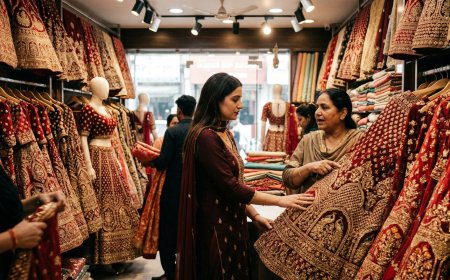
The fabric substitution is the form in which the lehenga whose fabric sample was the premium silk whose weight and drape the buyer approved is delivered in the fabric whose composition is the silk-polyester blend whose visual similarity to the premium silk the non-specialist's photograph cannot distinguish but whose hand — the specific tactile quality that the physical examination reveals — is different in the ways that the wearing experience makes consequential and the photograph does not show.
The embroidery thread substitution is the form in which the lehenga whose embroidery sample was the silk thread zardozi whose lustre and durability the buyer approved is delivered with the polyester thread zardozi whose visual similarity at photograph distance the non-specialist cannot distinguish but whose lustre in the wedding day light and whose durability across the four-day wedding wearing is different in the ways that the photograph comparison before purchase did not reveal.
The stone substitution in the jewellery context is the form in which the piece whose stones were presented as the semi-precious stones — the amethyst, the garnet, the citrine — whose quality the buyer approved is delivered with the glass stones whose visual similarity in the boutique light and in the purchase photographs the non-specialist cannot distinguish but whose assessment by the jeweller at the destination reveals.
The prevention of the substitute delivery is the prevention system that this series has described — the coordinator's collection inspection whose protocol specifically addresses the fabric, the thread, and the stone substitution whose identification the physical examination at collection enables. The coordinator who handles the delivered piece in natural light, who examines the fabric's hand and the embroidery thread's lustre and the stones' characteristics against the sample whose physical retention the purchase process has maintained, is the coordinator whose collection visit identifies the substitution before the shipping whose reversal the geographic distance makes complicated.
The specific addition to the coordinator's collection visit protocol for the substitution tactic prevention is the sample retention — the physical retention of the approved fabric swatch, the thread sample, and the stone sample whose comparison at collection the retained samples enable. The swatch sent to the coordinator before the collection visit, or the swatch retained from the original site visit, is the reference whose physical comparison with the delivered piece's material identifies the substitution that the photograph comparison alone cannot.
Tactic Six: The Emotional Manipulation of the Diaspora Connection
The emotional manipulation tactic is the tactic whose execution is the most sophisticated and whose identification is the most uncomfortable because it exploits the authentic emotional experience of the NRI shopper's return to the homeland in ways that the shopper's genuine feeling makes difficult to separate from the manipulation's performance of the same feeling.
The tactic works by establishing the emotional register of the cultural kinship — the seller who emphasises the shared Punjabi identity, the shared cultural values, the shared understanding of what the wedding means — as the framework within which the commercial transaction occurs. The framework is not dishonest in itself. The shared cultural identity is real, the shared values are genuine, and the seller's expression of them is often the expression of the authentic connection rather than the performance of it.
The manipulation enters when the emotional framework is used to disable the commercial judgment whose application the cultural kinship is invoked to make seem inappropriate — the buyer who is told, explicitly or implicitly, that the price negotiation or the hallmark verification or the purchase agreement request is the behaviour of the suspicious outsider rather than the behaviour of the family member who trusts, and whose cultural belonging is conditional on the trust that the commercial judgment suspends.
The specific phrases whose occurrence in the sales conversation identifies the emotional manipulation tactic are the phrases that frame the commercial vigilance as the cultural betrayal. "We are both Punjabi — why do you need the test?" "In our culture, the word is enough." "You are treating me like I am a stranger." "Your family has been coming here for years — you are asking me to prove myself?" These phrases are not the phrases of the seller whose product confidence is the confidence of the seller whose product is what the claim says. They are the phrases of the seller whose product confidence is insufficient and whose emotional appeal is the substitute for the commercial confidence that the product's verification would provide.
The prevention of the emotional manipulation tactic is the specific self-permission whose granting before the shopping begins is the pre-commitment that the manipulation's in-the-moment pressure cannot override. The self-permission is the permission to apply the commercial vigilance — the hallmark verification, the acid test, the purchase agreement — without the guilt that the cultural kinship framing attempts to produce. The commercial vigilance is not the suspicion of the cultural stranger. It is the self-protection of the informed buyer whose cultural belonging does not require the suspension of the judgment that protects the purchase.
The formulation that the commercial vigilance's expression takes in the Jalandhar market context is the formulation that applies the vigilance without the accusation that the vigilance's misframing produces. "I always test the gold before purchase — it is my practice for all jewellery" is the formulation that removes the accusation from the verification by making the verification the universal practice rather than the specific suspicion. "I always take a written confirmation of the agreed terms — it protects both of us" is the formulation that makes the purchase agreement the mutual protection rather than the distrust. The formulations are true and their application is consistent, which is the application that the emotional manipulation's specific targeting cannot exploit.
Tactic Seven: The Package Deal Whose Unbundling Reveals the Individual Prices
The package deal tactic is the tactic that the wedding shopping's multi-category nature makes available and whose structure — the bundled price for the multiple items whose individual prices the bundle obscures — creates the information gap that the dishonest vendor's pricing exploits.
The package deal in the Jalandhar wedding market takes the form of the offer to supply multiple categories of the wedding requirement — the jewellery and the lehenga and the phulkari from the same vendor whose one-stop convenience the NRI visitor's time pressure makes attractive — at the package price whose overall figure appears reasonable and whose individual component prices are not stated because the package price is the price.
The package price's reasonableness is the reasonableness of the average — the combination of the genuinely priced item and the overpriced item whose average produces the package price that appears to compare favourably with the sum of the individually researched prices for each category at the market's competitive level.
The prevention of the package deal tactic is the unbundling — the request, before the package price is accepted, for the individual prices of each item in the package whose sum produces the package price or reveals the components whose individual prices the market benchmark comparison identifies as the overpriced elements that the package obscures.
The unbundling request is straightforward: "I would like to understand the individual price for each item — what is the jewellery alone, what is the lehenga alone, what is the phulkari alone?" The seller whose package price is the legitimate convenience discount — the seller who offers the package at a genuine reduction from the individual prices — will provide the individual prices whose sum exceeds the package price. The seller whose package price is the obscuring mechanism — the seller whose individual prices reveal the overpriced component that the package average hides — will resist the unbundling with the argument that the package is the package and the individual prices are not how the package works.
The resistance to unbundling is the identification of the package deal tactic, and the package that resists unbundling is the package that the market benchmark research for each individual component reveals as the package whose components' individual prices the package price was designed to obscure.
The Prevention Framework: What to Do Before the Market, Not During It
The specific tactics described in this article have a common prevention structure whose application before the market visit — not during it, when the pressure of the moment makes the prevention's application the application of the rule whose prior commitment the moment's pressure would override — is the prevention that works.
The coordinator whose engagement is the engagement before the market visit is the coordinator whose market knowledge identifies the commission-network shops before the taxi driver delivers the visitor to them, whose price benchmark knowledge identifies the making charge inflation before the negotiation, and whose collection visit protocol identifies the substitute delivery before the shipping. The coordinator is the prevention infrastructure whose value is the value of the local knowledge applied in advance of the moment when the local knowledge is needed.
The price benchmark research whose completion before the shopping begins is the research that identifies the making charge inflation at the first quotation rather than at the retrospective comparison. The research is the two phone calls to the family jeweller and the family network's most recent Jalandhar purchase experience whose combined output is the current season's benchmark range for each category on the shopping list.
The specific shop list whose construction from the coordinator's research, the family network's current knowledge, and the community network's recent reviews is the list that replaces the taxi driver's recommendation with the prior research's output. The specific shop list is the navigation instruction that removes the commission network's delivery mechanism by providing the destination before the taxi's unprompted suggestion.
The commercial vigilance self-permission whose granting before the market visit is the pre-commitment that the emotional manipulation tactic's in-the-moment pressure cannot override is the internal decision whose making before the market is the decision that the market visit's emotional charge does not unmake.
What Sukhjit Did After Kingsley Road
She had sat in the jeweller's shop on Kingsley Road for twenty minutes after the second test confirmed the first result. Then she had taken out her phone.
She had photographed the bangles alongside the test result. She had photographed the receipt whose twenty-two karat declaration the test result contradicted. She had photographed the hallmark stamp whose fake reproduction the nineteen-karat test identified as the fake.
She had written a detailed account of the purchase — the taxi driver's unprompted recommendation, the shop's name and location, the purchase price, the hallmark's appearance, the test result — and posted it in three NRI community WhatsApp groups whose combined membership was approximately four hundred families.
The response had come within an hour. Two other families had purchased from the same shop. One had tested at twenty karat. One had not tested but would now.
The shop's name was in four conversations by the end of the day.
She had also filed a complaint with the National Consumer Helpline — the 1800-11-4000 number whose complaint registration is the formal record that the consumer protection framework provides and whose existence in the complaint database is the record that the accumulation of complaints against the same trader activates the enforcement response that the individual complaint alone does not produce.
The bangles had not been replaced. The thirty-two thousand rupees had not been returned. The enforcement timeline of the Consumer Disputes Redressal Commission whose jurisdiction the complaint amount determined was the timeline that the fraud's resolution would require and whose duration the geographic distance made the impractical remedy.
But four hundred families now knew the shop's name.
And the taxi driver on the Burlton Park route who had mentioned the shop unprompted to Sukhjit would not mention it again to the community whose network the mention had entered.
This is not justice. It is the available consequence whose deployment the community network enables, and whose accumulation across the NRI visitor population is the market pressure that the honest vendor's reputation protects and the dishonest vendor's reputation corrodes.
The commercial vigilance is not the cynicism of the traveller who trusts no one. It is the self-protection of the informed buyer whose trust is the trust of the verified relationship rather than the performed kinship.
Know the tactics before the market.
The market is better than the tactics suggest, and worse than the performance of welcome implies.
Know the difference before the taxi driver mentions the shop.
Published by NRIWedding.com — The Premium Global Platform for Non-Resident Indians Planning Indian Weddings From Abroad.
For the verified vendor list, coordinator referrals, and the complete NRI market safety guide for Jalandhar, visit nriwedding.com.
What's Your Reaction?
 Like
0
Like
0
 Dislike
0
Dislike
0
 Love
0
Love
0
 Funny
0
Funny
0
 Angry
0
Angry
0
 Sad
0
Sad
0
 Wow
0
Wow
0