













































































Trusted Shopping Agents in Jalandhar for NRI Brides: How to Find One, Vet One, and Use One Correctly
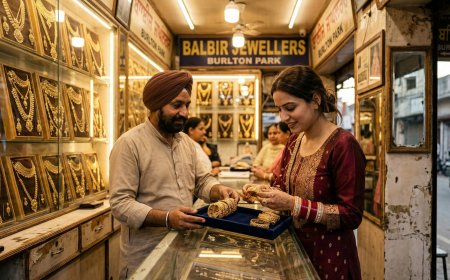
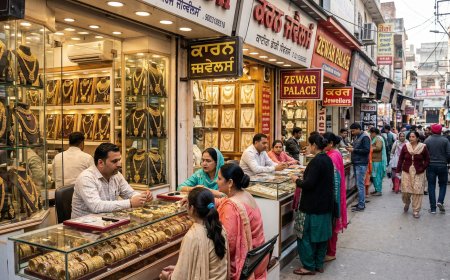
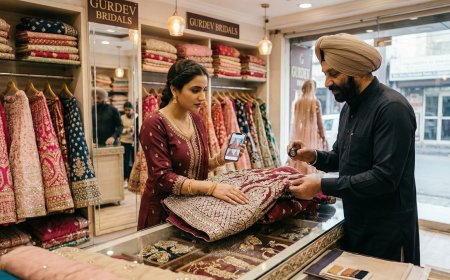
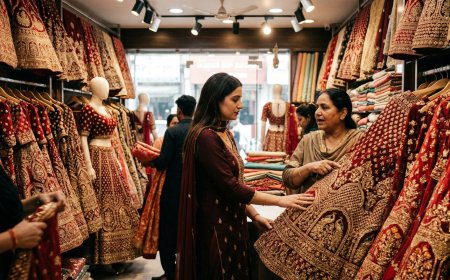
For many NRI brides planning weddings in Punjab, shopping in Jalandhar often happens from thousands of miles away. Work schedules, visa timelines, and the complexity of international travel mean that brides frequently rely on someone in India to visit boutiques, supervise production, check quality, and arrange shipping. That person is often called a trusted shopping agent. Sometimes it is a cousin, an aunt, or a family friend who lives in the city. Sometimes it is a professional wedding coordinator or a local contact recommended by a boutique. In theory, the arrangement seems simple: the bride gives instructions from abroad, and the agent executes them on the ground. In practice, the relationship can quickly become complicated. Without clear boundaries and structured communication, agents may make decisions on behalf of the bride, vendors may propose changes that are accepted informally, and small misunderstandings can become delays, incorrect embroidery, or garments that do not match the original brief. This guide explains how NRI brides can successfully use a trusted shopping agent in Jalandhar. It covers how to find reliable agents, how to vet their capability, how to structure the working relationship, and how to avoid the common mistakes that cause problems during the bridal outfit production process. For brides planning weddings from Canada, the UK, Australia, the United States, or Europe, understanding how to build a properly structured agent relationship ensures that wedding shopping in Punjab remains smooth, transparent, and stress-free.


Trusted Shopping Agents in Jalandhar for NRIs — How to Find One, Vet One and Use One
The arrangement had seemed simple when Dilnoor first proposed it. Her mother's cousin — a woman named Baljinder who had lived in Jalandhar her entire life, who knew the market, who had been shopping the boutiques of Model Town since before Dilnoor was born — would act as the shopping agent. She would visit the boutiques. She would communicate with the vendors. She would supervise the production. She would collect the garments, check the quality, arrange the shipping. Dilnoor, from her apartment in Melbourne, would provide the brief, the budget, and the instructions. Baljinder, in Jalandhar, would execute.
It had seemed simple because the relationship was already established — the family connection, the trust that the connection implied, the shared history that meant the communication was warm and natural and unburdened by the formal awkwardness of a new professional relationship. Baljinder was not a stranger. She was family. And the assumption that family was sufficient qualification for the trusted agent role was the assumption that made the arrangement seem simple and that made its eventual complications entirely predictable in retrospect.
The first complication arrived in week three of the production period, when Baljinder mentioned in a phone call — not a WhatsApp message, not a written communication, a phone call that left no record — that the boutique had suggested changing the lehenga embroidery from the antique gold specified in the brief to a brighter gold that they felt would look better. Baljinder had agreed, on Dilnoor's behalf, because she thought it would look nicer and because the boutique owner had shown her a completed sample that was, in Baljinder's assessment, very beautiful. The antique gold of the original brief was, in Baljinder's assessment, too dull.
Dilnoor discovered this change when the progress photograph arrived and the embroidery was clearly the wrong tone. The correction required the embroidery section already completed to be unpicked and redone, which added three weeks to the production timeline and created a stress in the vendor relationship that took several conversations to resolve. The garment was ultimately correct. The timeline was not. The wedding was eleven weeks away when the production restart happened and nine weeks away when Dilnoor stopped being frightened.
Baljinder had not acted badly. She had acted as a family member who wanted the best outcome for her cousin's daughter and who had exercised her own judgment in a situation where she believed her judgment was helpful. The problem was not Baljinder's intentions. The problem was the absence of a clear framework for the trusted agent role — the specific understanding of what the agent was authorised to decide, what required the bride's confirmation, and how the two parties would communicate about decisions during the production period. Baljinder had been given the role without being given the role's definition. The complications were the inevitable consequence.
This article is for Dilnoor — and for every NRI bride who is considering a trusted shopping agent arrangement for their Jalandhar wedding shopping, who needs to understand how to find the right agent, how to assess whether they are the right agent, and how to structure the relationship so that it produces the outcomes it is intended to produce rather than the complications that the absence of structure reliably generates.
What the Trusted Agent Actually Is — And What They Are Not
The trusted agent is one of the most important relationships in the NRI bride's Jalandhar wedding shopping infrastructure, and the most important clarification is what the role actually requires rather than what the family assumption of it tends to produce.
The trusted agent is not a personal shopper in the Western sense — the professional who brings aesthetic judgment to the shopping process, who has a developed relationship with the vendor community, and who is paid for the combination of market knowledge and taste that the service involves. This professional exists in the Indian wedding market in the major cities, but the NRI bride in Jalandhar is rarely accessing this professional service category. She is accessing a different model — the trusted local person whose primary qualification is her knowledge of the Jalandhar market and her physical presence in the city, and whose role is the execution of the bride's decisions rather than the making of decisions on the bride's behalf.
This distinction — execution rather than decision-making — is the foundational definition of the trusted agent role, and it is the definition that Baljinder did not have when she agreed the embroidery change with the boutique. The trusted agent executes the brief. The trusted agent communicates market information to the bride so that the bride can make informed decisions. The trusted agent escalates any proposed deviation from the brief to the bride before agreeing to it. The trusted agent does not make aesthetic judgments on the bride's behalf, does not agree changes to the brief without the bride's confirmation, and does not allow the vendor's preference or persuasion to override the documented specification.
The trusted agent is also not simply the family member who happens to live in Jalandhar. The trusted agent role requires specific capabilities that not every family member has, regardless of how much the bride trusts and loves them. The capabilities required are market knowledge — the specific understanding of the Jalandhar bridal market that allows the agent to assess quality, navigate the vendor landscape, and identify when a vendor is proposing something that deviates from the agreed standard. Communication discipline — the ability to communicate in writing, to maintain documentation, to escalate decisions through the right channels rather than resolving them informally. Logistical reliability — the ability to manage the collection, inspection, and shipping tasks within the agreed timelines without requiring management from Melbourne. And the capacity to represent the bride's interests rather than the relationship's comfort — the ability to have a direct conversation with a vendor when something is wrong, rather than avoiding conflict because the vendor is the boutique owner's colleague and confrontation is socially uncomfortable.
The Four Types of Trusted Agent in the Jalandhar Market
The trusted agent landscape in the Jalandhar market for NRI brides covers four distinct types, each with different capability profiles, different access methods, and different suitability for different briefs and budgets.
The family member agent is the most common and the most accessible — the mother, the aunt, the cousin, the family friend who lives in Jalandhar and who takes on the agent role as an extension of their relationship with the NRI bride rather than as a professional engagement. The family member agent's primary advantage is trust — the deep, established trust of a long relationship that removes the friction of a new professional engagement and that is particularly valuable in the emotional context of wedding planning. The family member agent's primary limitation is the capability gap — the specific market knowledge, communication discipline, and logistical reliability that the role requires may or may not be present in the specific family member who takes it on, and the social relationship makes it difficult to assess and communicate these gaps honestly.
The professional wedding coordinator agent is the second type — the Jalandhar-based wedding coordinator or wedding planner who includes agent services as part of their professional offering and who brings both market knowledge and professional accountability to the role. The professional coordinator agent is typically the highest-capability option for the agent role, with established vendor relationships, professional communication standards, and a commercial incentive to deliver the outcomes the bride is paying for. The trade-off is cost — the professional coordinator charges for the service, either as a standalone agent fee or as part of a broader wedding coordination package — and the NRI bride who is managing a tight overall budget may find the agent fee a significant addition to the shopping costs.
The community network agent is the third type — the NRI community connection who has themselves recently navigated the Jalandhar shopping process and who offers to assist a subsequent bride through the process based on their recent experience. This type of agent is found through the NRI wedding planning communities — the Facebook groups, the WhatsApp networks, the platforms that connect NRI brides in the planning process — and their primary value is current market knowledge: the specific vendor relationships, the current price intelligence, and the practical process knowledge that recent personal experience produces. The community network agent's limitation is that their experience is of a single shopping trip rather than professional market engagement, and the gaps in their knowledge may not be apparent until the limitations of the role are revealed by a specific challenge that their experience did not cover.
The boutique-referred agent is the fourth type — the local person recommended by the boutique itself to manage the collection, quality check, and shipping logistics for the garment after the production is complete. Some of the better Jalandhar boutiques that serve the NRI market have developed relationships with trusted local individuals who perform this function on a semi-professional basis, managing the collection and dispatch of completed garments for out-of-city and international clients. The boutique-referred agent is highly specific in their function — they are the right resource for the collection and dispatch logistics, not for the shopping or the production supervision — and they should not be conflated with the broader agent role.
How to Find a Trusted Agent — The Specific Pathways
Finding the right trusted agent for the Jalandhar shopping process requires more deliberate effort than the default family member solution provides, and the NRI bride who invests this effort before the production period begins will find the outcome significantly more reliable than the Dilnoor arrangement that was assembled from family convenience rather than capability assessment.
The NRI community platform pathway is the most structured and most reliable source of trusted agent referrals. The platforms and communities that serve the NRI wedding planning market — NRIWedding.com and the community networks it connects to, the Facebook groups specific to Punjabi and Jalandhar weddings, the WhatsApp communities of NRI brides at various stages of planning — contain the recommendations of recent NRI brides who have used agents for their Jalandhar shopping and who can provide specific assessments of the agent's capability rather than general character references. The bride who asks, in the NRIWedding.com community, for a Jalandhar agent referral and who receives three responses naming the same individual with specific positive assessments of their market knowledge and communication reliability has received a meaningful reference rather than a family endorsement.
The wedding photographer referral is a less obvious but often highly productive source. The Jalandhar wedding photographer who has shot forty or fifty NRI weddings has observed, across those weddings, how well the shopping and production process worked for each bride and has developed opinions about which agents and coordinators produced reliable outcomes. The photographer who has seen the consequences of the poorly managed agent relationship — the late garment, the wrong embroidery, the blouse that needed emergency alteration on the wedding morning — has the professional motivation to refer brides to agents whose work produces better outcomes. A specific call or WhatsApp to the wedding photographer the NRI bride has already booked, asking for a trusted agent referral, produces a recommendation from a professional source with direct relevant experience.
The boutique owner referral is the third pathway — the specific question asked of the boutique where the primary shopping is happening about whether they know a reliable local agent who manages the production supervision and collection for NRI brides. The better boutiques that serve the NRI market have relationships with local agents through the natural course of their business — they see which agents are reliable, which are communicative, which escalate problems early rather than managing them silently. The boutique's referral is the referral of a party with direct commercial knowledge of the agent's working practices.
The professional coordinator search is the fourth pathway — the direct search for a Jalandhar-based wedding coordinator who offers agent services as part of their professional portfolio. This search should be conducted through the verified vendor listings of NRI wedding platforms rather than through general internet search, because the general internet search produces visibility rather than quality and the professional coordinator's suitability for the agent role cannot be assessed from a website.
How to Vet a Trusted Agent — The Assessment Framework
The vetting of a trusted agent — the assessment of whether a specific individual has the capability the role requires — is the step that the family member default most consistently skips and that the Dilnoor arrangement most conspicuously lacked. The vetting framework covers five capability areas that the agent must demonstrate before the relationship is confirmed.
The market knowledge assessment is the first capability area. The agent who claims to know the Jalandhar market should be able to answer specific market knowledge questions — the current price range for a mid-range bridal lehenga at the Model Town boutique level, the specific areas where the phulkari workshops are concentrated, the name of at least two boutiques in the Urban Estate area that serve the contemporary NRI brief. These are not trick questions. They are the specific market knowledge questions whose answers are available to anyone with genuine current market experience and whose absence of answers reveals the gap between claimed knowledge and actual knowledge.
The communication assessment is the second capability area. The agent's communication style, responsiveness, and discipline should be assessed during the vetting process itself — before the relationship is confirmed. The agent who responds to the vetting conversation within twenty-four hours, who answers specific questions with specific information rather than general reassurance, who communicates in writing rather than only in voice notes, and who demonstrates the ability to maintain a thread of specific documented communication across multiple interactions has demonstrated the communication capability that the role requires. The agent who responds late, vaguely, and primarily through voice notes has demonstrated the communication profile that produced Baljinder's phone call about the embroidery change.
The reference assessment is the third capability area. The agent should be able to provide at least two references from NRI brides whose Jalandhar shopping they have managed in the last eighteen months. These references should be contactable — not anonymous testimonials, but specific individuals who can be contacted directly and asked the specific questions that the vetting requires: Was the agent responsive to your communications? Did they escalate decisions to you or make them independently? Did the garments arrive in the condition specified? Were there problems during the production period and how were they handled? The reference that is provided but cannot be contacted is not a reference. It is a name.
The logistical capability assessment is the fourth capability area. The agent who will be responsible for collecting garments, supervising quality checks, and managing international shipping needs to demonstrate specific logistical capability — the knowledge of the international courier services that operate from Jalandhar, the understanding of customs documentation for garment shipments, the ability to package a bridal lehenga for international transit in a way that protects the embellishment. These are specific practical capabilities that can be assessed through direct questions during the vetting process.
The boundary clarity assessment is the fifth and most important capability area. The agent who understands and articulates the distinction between execution and decision-making — who can describe, in their own words, what they would do if a vendor proposed a change to the agreed brief during production — has demonstrated the role understanding that Baljinder lacked. The agent who says "I would communicate the proposed change to you immediately and wait for your confirmation before responding to the vendor" has demonstrated the boundary clarity the role requires. The agent who says "I would assess whether the change was an improvement and decide on that basis" has demonstrated the role misunderstanding that produces embroidery tone changes agreed without the bride's knowledge.
The Table: Trusted Agent Types — Capability, Cost and Suitability
| Agent Type | Market Knowledge | Communication Discipline | Logistical Capability | Decision Boundary Clarity | Typical Cost | Best Suited For |
|---|---|---|---|---|---|---|
| Family Member Agent | Variable — depends on individual | Variable — typically informal | Variable — often unreliable | Low — family dynamic overrides role definition | Free — relationship cost only | Simple briefs, low production complexity, bride with strong remote oversight capacity |
| Professional Wedding Coordinator | High — professional market engagement | High — professional standard | High — commercial accountability | High — professional role definition | ₹15,000–₹50,000 depending on scope | Complex briefs, high-value commissions, bride with limited remote oversight capacity |
| Community Network Agent (recent NRI bride) | High for their recent experience — gaps possible | Moderate — personal rather than professional | Moderate — personal experience only | Moderate — depends on individual understanding | Variable — often goodwill or modest fee | Mid-complexity briefs, bride with good communication infrastructure |
| Boutique-Referred Agent | Limited to post-production logistics | Moderate | High for collection and dispatch | High — limited, specific role | ₹2,000–₹8,000 per dispatch | Collection, quality check and shipping only — not shopping or production supervision |
| Combined Family + Professional | High combined | High — professional leads, family supports | High — professional manages | High — professional role definition maintained | Professional fee only | All complexity levels — optimal arrangement for most NRI brides |
The Agent Brief — The Document That Defines the Relationship
The trusted agent brief is the document that converts the informal arrangement into a working relationship with clear parameters, and its absence is the specific structural gap that produced the embroidery tone change in the Dilnoor situation. The brief is not a contract in the legal sense — it is a shared understanding document that both parties have confirmed, that defines the scope of the agent's role, the limits of their authority, and the communication protocol that governs every significant decision during the production period.
The agent brief should cover six specific areas. The first is the scope of the role — the specific tasks the agent is responsible for, named explicitly. The shopping visit to the boutique shortlist. The quality assessment of completed garments. The collection of garments on the specified dates. The supervision of the shipping preparation. The management of the family coordination fabric purchase. Each task named, each task with a clear definition of what completion looks like.
The second area is the decision authority map — the specific types of decisions the agent can make independently, the decisions that require the bride's confirmation, and the decisions that require escalation regardless of urgency. The agent can independently: confirm a collection appointment, report a quality issue to the bride, transport a garment to the tailor for a specified alteration. The agent requires the bride's confirmation before: agreeing any change to the agreed brief, accepting a price above the agreed maximum, approving a delivery timeline extension, agreeing a fabric or embellishment substitution. The agent must escalate immediately regardless of the hour: any proposed deviation from the agreed specification, any quality issue that cannot be resolved within the agreed standard, any vendor communication that represents a significant change to the agreed terms.
The third area is the communication protocol — the specific frequency, format, and content of the agent's communications to the bride. The weekly progress update by WhatsApp text message. The milestone photograph at each agreed production checkpoint. The immediate escalation by WhatsApp message for any decision that requires the bride's confirmation. The final quality check report before shipping, with photographs of the completed garment against the agreed specification.
The fourth area is the quality standard reference — the specific documentation of the agreed specification for each commissioned piece, against which the agent will assess the completed garments at collection. The colour reference photograph. The embellishment description. The construction quality indicators. The agent who has the quality standard reference document can make the collection quality assessment against an objective standard. The agent without it assesses against their own judgment, which may or may not align with the bride's.
The fifth area is the logistical instructions — the specific courier service to be used for international shipping, the declared value for customs purposes, the packaging instructions for embellished garments, the insurance requirements for the shipment value. These are specific practical instructions that the agent follows rather than decisions the agent makes.
The sixth area is the escalation contacts — the names and contact details of the people the agent should contact in specific circumstances. The bride's contact for all standard communications. The bride's family member in India for any circumstance where the bride is unreachable. The boutique owner's specific contact number for production issues. The wedding coordinator's number if a professional coordinator is part of the overall planning structure.
The Working Relationship — How to Manage the Agent Through the Production Period
The agent brief defines the relationship. The working relationship — the day-to-day communication and management of the agent through the production period — is how the relationship is maintained and how problems are identified and addressed before they become crises.
The production period communication should be structured rather than reactive. The weekly update — a brief WhatsApp from the agent each Monday morning confirming the production status of each commissioned piece — is the communication heartbeat that keeps the bride informed without creating the burden of daily communication that both parties find unsustainable over a six to eight week production period. The bride who reads the weekly update and responds with a simple confirmation keeps the communication active and signals that the updates are being received and reviewed. The bride who does not respond to weekly updates until there is a problem creates the dynamic in which the agent reduces the update frequency because the communication feels one-directional.
The milestone photographs are the quality management tool that the weekly update cannot replace. The progress photograph at each agreed production checkpoint — the fabric cut, the embroidery at fifty percent, the construction complete, the final quality check — gives the bride the visual evidence that the production is proceeding correctly and the opportunity to identify deviations before they are irreversible. The bride who receives a milestone photograph and does not compare it against the agreed specification is not using the quality management tool that the photograph provides. The comparison — the colour reference held beside the photograph, the embellishment description checked against the visible embellishment — is the quality management act that the photograph enables.
The escalation response — the bride's response to the agent's escalation of a proposed deviation or a quality issue — should be prompt and specific. The bride who takes three days to respond to an escalated decision about an embroidery tone change has created a three-day production delay during which the vendor is waiting for a direction they have not received. The escalation response protocol — the commitment to respond to escalated decisions within twenty-four hours regardless of the time zone difference — is the bride's side of the communication contract that the agent brief establishes.
What to Do When the Agent Arrangement Goes Wrong
The agent arrangement that goes wrong — the Dilnoor situation — is not a rare exception. It is a common experience for the NRI bride who has entered the agent relationship without the vetting framework and the agent brief that this article describes. The question is not whether the arrangement will encounter problems — in a six to eight week production period across a time zone gap with multiple vendor relationships in play, problems are inevitable — but whether the bride has the framework and the relationship to manage problems effectively when they arise.
The first response to a discovered deviation is documentation — the specific recording of what was agreed, what was delivered, and the nature of the difference. The colour reference photograph against the progress photograph. The agreed specification document against the completed garment. The written confirmation of the agreed specification against the agent's account of what was communicated to the vendor. Documentation is the foundation of every subsequent response and it is the element most frequently unavailable when the problem arrives because the documentation was not built during the agreement stage.
The second response is the direct vendor conversation — the NRI bride's own communication with the vendor about the deviation, conducted with the documented agreement as the reference, through the written channel that creates a record of the conversation and its outcome. The bride who delegates the problem resolution to the agent is adding a communication layer that reduces the clarity of the message and reduces the directness of the commercial pressure on the vendor to correct the deviation. For significant problems — the wrong embroidery tone, the wrong fabric, the construction that does not meet the agreed standard — the bride's direct involvement in the resolution is more effective than the agent's representation.
The third response, in the event that direct vendor communication does not produce resolution, is the formal documentation of the dispute under the Indian Contract Act 1872 — the written notice to the vendor that the delivered or in-production item deviates from the agreed specification as documented, with the specific correction required and the timeline for correction. This formal step is rarely necessary when the vendor relationship has been built on documented agreements and the deviation is identified early. It is occasionally necessary when the vendor denies the deviation or resists the correction, and the documented agreement is the evidence that makes the formal notice effective.
Common Mistakes NRI Brides Make With Trusted Agent Arrangements
The first mistake is confusing family trust with role capability. The most trusted person in the NRI bride's life is not automatically the most capable person for the trusted agent role. Trust is the foundation of the relationship. Capability is the foundation of the outcome. The agent arrangement that is built on trust alone, without the capability assessment that the vetting framework provides, produces the Dilnoor situation — not because Baljinder was untrustworthy but because she was unequipped for the specific capability requirements of the role.
The second mistake is not providing a written brief. The trusted agent who operates from a verbal understanding of the brief is operating without the shared reference document that defines the scope of their role, the limit of their authority, and the quality standard against which they will assess the completed garments. The verbal brief that both parties understood differently is the source of every Baljinder-type decision — made with good intentions, against a different understanding of the brief than the bride intended. The written brief is the protection against the good intention that produces the wrong outcome.
The third mistake is not building the escalation protocol into the brief. The agent who does not know what requires escalation and what they can handle independently will make the determination based on their own judgment, which will occasionally be wrong in ways that produce significant problems. The explicit escalation protocol — the specific list of decision types that require the bride's confirmation before the agent responds — removes the judgment requirement from the agent and places it correctly with the bride. The escalation protocol is the most important single element of the agent brief.
The fourth mistake is not checking milestone photographs against the agreed specification. The milestone photograph received and acknowledged without comparison against the agreed specification is a milestone photograph that has not served its purpose. The quality management function of the milestone photograph — the early identification of deviations before they become irreversible — requires the active comparison that the photograph enables. The bride who receives the photograph and responds with "looks great!" without checking the embroidery tone against the colour reference is not managing the quality. She is creating the false impression that the quality is being managed.
The fifth mistake is choosing an agent who is too conflict-averse to represent the bride's interests directly with vendors. The agent who prioritises the comfort of the vendor relationship over the bride's specification — who agrees changes rather than escalating them because escalation creates awkwardness, who accepts a quality shortfall rather than naming it because confrontation is difficult — is the agent whose social comfort takes priority over the bride's outcome. The trusted agent role requires the ability to have direct, specific, commercially focused conversations with vendors when the delivery does not match the agreed specification. The agent who cannot do this is not the right agent regardless of their other qualities.
The Resolution
Dilnoor built the agent brief for the next commission — the reception second look, ordered three months after the embroidery crisis had been resolved — with the specific discipline that the crisis had made her understand was necessary. She used the same agent. Not a different agent — Baljinder, who had not acted badly and who had the market knowledge and the genuine investment in the outcome that the role required. But a different arrangement. The brief was written and confirmed. The decision authority map was specific. The escalation protocol was named. The milestone photograph review was built into the communication schedule.
The second commission produced no surprises. The milestone photographs arrived at each checkpoint. They were checked against the specification. One showed a lining colour that was different from the agreed ivory — the brief had specified ivory, the progress photograph showed a pale cream that was close but not the same. Dilnoor sent the comparison photograph to Baljinder — the brief's fabric swatch beside the progress photograph — and asked her to confirm with the vendor that the lining would be corrected to ivory before the final construction stage. Baljinder escalated to the vendor. The vendor corrected. The garment arrived in ivory lining.
A difference of one step in the production process. Identified because the milestone photograph was checked against the specification rather than acknowledged without review. Resolved because the escalation protocol was in place and Baljinder knew exactly what to do with the information when she had it.
Dilnoor wrote to the NRIWedding.com community about both experiences — the embroidery crisis and the lining correction — with the specific pedagogical intention of a person who has learned something expensive and wants the learning to cost less for the next person who needs it.
She wrote: the agent is not the problem. The arrangement is the problem or not the problem. The arrangement is the brief. Write the brief before anything goes wrong. Everything that goes wrong without a brief was preventable.
Choose the agent on capability, not only on trust. Vet the five capability areas — market knowledge, communication discipline, logistical reliability, decision boundary clarity, and references — before confirming the arrangement.
Write the agent brief before the production begins. Scope, decision authority map, communication protocol, quality standard reference, logistical instructions, escalation contacts. Six areas. In writing. Confirmed by both parties.
Build the escalation protocol explicitly. Name the decision types that require the bride's confirmation before the agent responds. Remove the agent's judgment requirement from the decisions that matter most.
Review every milestone photograph against the agreed specification. The photograph that is acknowledged without review has not served its quality management purpose. The comparison is the management act.
Respond to escalations within twenty-four hours regardless of time zone. The bride's side of the communication contract is the prompt response that keeps the production moving and the agent relationship functional.
Because the trusted agent arrangement that works is not the arrangement built on the warmth of the family connection alone. It is the arrangement built on the capability assessment that confirms the agent can do the role, the written brief that defines what the role is, the communication protocol that keeps the relationship functional across the time zone gap, and the quality management discipline that catches the deviations before they become the crises that the brief was designed to prevent.
Baljinder was always trustworthy. The arrangement needed to be worthy of the trust.
That is the difference. And the brief is how you build it.
Published by NRIWedding.com — The Premium Global Platform for Non-Resident Indians Planning Indian Weddings From Abroad.
What's Your Reaction?
 Like
0
Like
0
 Dislike
0
Dislike
0
 Love
0
Love
0
 Funny
0
Funny
0
 Angry
0
Angry
0
 Sad
0
Sad
0
 Wow
0
Wow
0