

















































When the Shehnai Speaks, the Gods Lean In
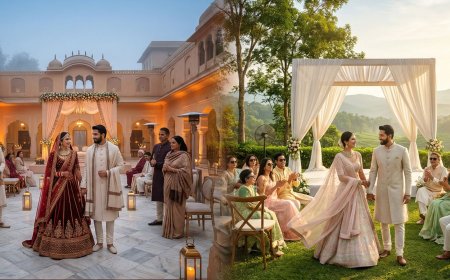
Baajantri — the ancient tradition of live ceremonial music that accompanies every sacred threshold of an Odia Hindu wedding — is not background sound. It is the ceremony itself, made audible. Rooted in the temple music traditions of the Jagannath Temple in Puri and carried across oceans by NRI Odia families in London, Toronto, Dubai, Sydney, and Houston, this living musical tradition transforms a wedding into a cosmic invitation. This complete guide covers the mahuri, dhol, tasha, and jhanj traditions, their spiritual significance, community music comparisons across Indian regions, and full practical advice for NRI Odia couples sourcing live Baajantri musicians or authentic recordings abroad.


Baajantri — the ancient tradition of live ceremonial music that accompanies every sacred threshold of an Odia Hindu wedding — is not background sound. It is the ceremony itself, made audible. For NRI Odia families in London, Toronto, Houston, Dubai, and Sydney, preserving this living musical tradition across oceans is an act of cultural devotion as profound as any ritual offering — because in the Odia understanding, where there is no music, the gods do not gather.
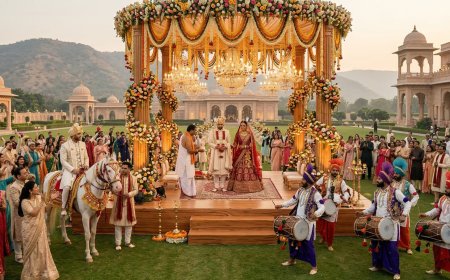
You grew up hearing it before you understood what it was. A particular combination of instruments — the sharp, reedy cry of the shehnai [oboe-like wind instrument], the deep authoritative pulse of the dhol [double-headed drum], the bright punctuation of the mahuri — that you associate not with concerts or performances but with thresholds. With doors opening. With something beginning.
You heard it at your cousin's wedding in Bhubaneswar when you were seven and visiting from Calgary, standing at the gate of the house in the early morning with the smell of marigold and incense around you, and the sound arriving before the procession did — announcing, summoning, declaring. You did not know the word Baajantri then. You just knew that when that sound began, something sacred was about to happen.
Now you are planning your own Odia wedding. In Houston. Or Slough. Or somewhere in Western Sydney where the neighbours are lovely and entirely unprepared for a shehnai at six in the morning. And you are wondering how to carry that sound — that specific, irreplaceable, announcing sound — into a celebration that is happening three thousand miles from where it belongs.
This is how.
🌟 Did You Know?
- The shehnai — the primary instrument of Baajantri tradition — is considered so auspicious in Odia Hindu culture that it is traditionally played only at weddings, temple festivals, and sacred ceremonies. Playing the shehnai in a domestic or secular context was historically considered inappropriate — it was an instrument so thoroughly consecrated to the divine and the celebratory that ordinary life was not considered a sufficient occasion for it.
- The Baajantri tradition in Odisha is directly connected to the devadasi [temple musician and dancer] system of the Jagannath Temple in Puri — one of the four sacred dhams [pilgrimage sites] of Hinduism — where specific musical compositions called Odissi sangeet were developed over centuries for use in temple ritual. Many Baajantri compositions played at Odia weddings today are direct descendants of these temple musical forms.
- Odia wedding music operates on a precise ceremonial map — different compositions are played at different ritual moments, and an experienced Baajantri ensemble knows exactly which piece belongs to which threshold. The music at the Bou Bhaat [bride's first meal as a wife] is distinctly different from the music at the Sindoor Daan [vermillion application], which is different again from the music at the groom's arrival. This is not performance. It is liturgy.
What Is Baajantri?
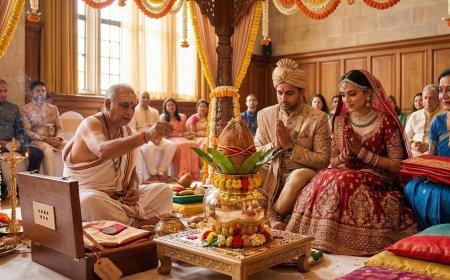
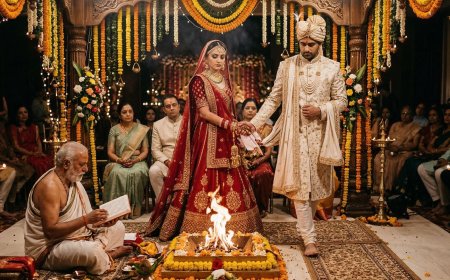
Baajantri [literally "one who plays instruments" — from baaja meaning musical instrument and antri meaning player, collectively referring to the ceremonial musician ensemble] is the tradition of live sacred music that accompanies the Odia Hindu wedding from its first pre-wedding rituals through to its final post-wedding ceremonies. The Baajantri ensemble is not hired entertainment — it is a ritual necessity, as essential to the ceremony as the purohit [priest] or the havan kund[sacred fire vessel].
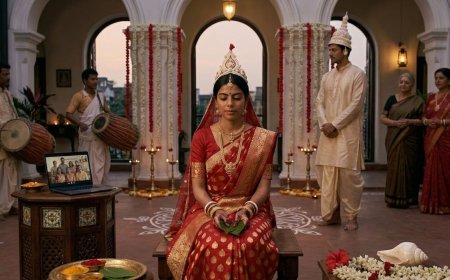
A traditional Baajantri ensemble consists of several instruments working in specific combination. The mahuri [a double-reed wind instrument similar to the shehnai, indigenous to Odisha] is the primary melodic voice — its sound is considered the most auspicious of all Baajantri instruments and is the one that carries specific ritual compositions assigned to particular ceremonial moments. The dhol [double-headed barrel drum] provides the rhythmic foundation, its specific patterns shifting to mark different ritual phases. The tasha [a shallow kettle drum struck with thin sticks] adds the bright, urgent punctuation that signals transitions and arrivals. The jhanj [large bronze cymbals] provide the sustained metallic shimmer that Odia ceremony music is particularly known for.
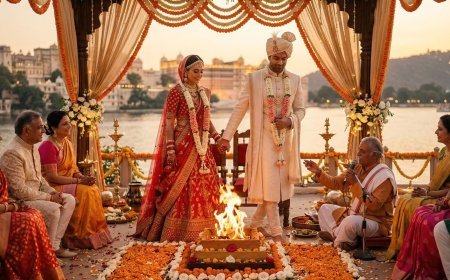
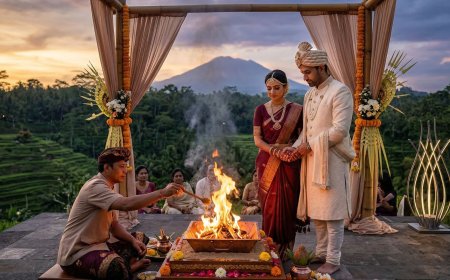
The ensemble plays continuously through certain ritual sequences and falls precisely silent at others — the silence itself is part of the musical grammar, marking the most sacred moments with the sound of pure attention. During the Vivaha Homa [wedding fire ritual], the music plays. During the moment of Sindoor Daan [vermillion application], in many Odia traditions, it stops — so that the sound of the mantras and the breath of the couple can fill the room unaccompanied.
The Baajantri musicians are typically from specific hereditary communities — families that have carried this musical knowledge across generations as a sacred professional lineage. Their knowledge is not merely musical. It is ceremonial — they know the wedding ritual sequence as thoroughly as the priest, and the best Baajantri musicians will prompt the household if a ritual moment is approaching that the family has forgotten to prepare for.
Community Comparison Table
| Community / State | Local Name | Key Instruments | Ceremonial Role | How NRIs Abroad Adapt It |
|---|---|---|---|---|
| Odia Hindu (Brahmin/Karan) | Baajantri | Mahuri, dhol, tasha, jhanj | Continuous ceremonial accompaniment from pre-wedding through post-wedding | Live Odia musicians sourced through diaspora community networks; recorded Baajantri used as backup |
| Odia Hindu (Tribal communities) | Dhol-Mahuri tradition | Dhol, mahuri, traditional flutes | Community celebration music; more participatory than Brahmin tradition | Community gatherings in diaspora cities preserve folk music traditions |
| Bengali Hindu | Dhak / Ululation | Dhak [large barrel drum], shanai, conch shell | Dhak played at key ritual moments; ululu [women's ululation] marks sacred transitions | Dhak players available through Bengali community networks in London and Toronto |
| Punjabi Hindu/Sikh | Dhol and Shehnai | Dhol, shehnai, tumbi | Baraati [groom's procession] music central; bhangra rhythms incorporated | Large Punjabi diaspora ensures live musicians available in all major diaspora cities |
| Tamil Brahmin | Nadaswaram and Tavil | Nadaswaram [large oboe], tavil [drum] | Temple-derived ceremonial music; specific compositions for each ritual | Tamil Sangams maintain nadaswaram musician networks in diaspora cities |
| Marathi | Dhol-ताशे / Warhadi music | Dhol, tasha, lezim | Procession and celebration music; community band tradition strong | Marathi community associations in Toronto and London source live musicians |
| Rajasthani | Shehnai and Nagada | Shehnai, nagada [large kettledrum pair], sarangi | Groom's procession music; specific desert musical tradition | Rajasthani folk musicians available through North Indian community networks |
| Goan Hindu (GSB) | Konkani Ceremonial Music | Shehnai, dhol, ghumat [Goan pot drum] | Specific Konkani compositions for each ritual threshold | GSB Sabha networks assist with musician sourcing; ghumat players rare abroad |
| Kashmiri Pandit | Shehnai and Dhol | Shehnai, dhol, tumbaknaer [Kashmiri drum] | Specific KP wedding compositions; distinct from North Indian tradition | KP Sabhas in London and Toronto maintain musician contacts |
| Himachali | Dhol-Naubat | Dhol, naubat [ceremonial horn], karnal | Mountain ceremonial music; outdoor procession tradition strong | Adapted for indoor venues; recorded naubat used when live unavailable |
| Gujarati | Shehnai and Dhol | Shehnai, dhol, manjira [small cymbals] | Procession and ceremony music; garba rhythms incorporated | Gujarati community infrastructure strongest in diaspora; live musicians widely available |
| Kannada Brahmin | Nadaswaram / Mangalavaadya | Nadaswaram, mridangam, harmonium | Temple-derived auspicious music; specific compositions per ritual | Kannada Sangams in diaspora cities support musician sourcing |
The Meaning Behind the Ritual
In the Odia philosophical and spiritual worldview, sound is not merely communication — it is creation. The ancient concept of Nada Brahman [the universe as sound, the divine as vibration] underlies all of Indian classical music theory, and in Odisha this concept is lived rather than merely studied. The universe, in this understanding, began with sound. It is sustained by sound. And the most important moments of human life — birth, initiation, marriage, death — are marked by specific sounds that align the human event with the cosmic rhythm.
The mahuri's cry at the gate of a wedding home is therefore not announcement in the mundane sense. It is an invocation — a calling of the divine to witness, a declaration that a sacred threshold is being crossed and that the universe is hereby invited to attend. This is why Baajantri musicians are not positioned at the back of a celebration like a hired band. They are at the front, at the gate, at the threshold — because they are the first voice that addresses the divine before the humans follow.
The specific compositions assigned to specific ritual moments carry centuries of accumulated ceremonial wisdom. The mangalacharana [auspicious opening composition] played at the beginning of wedding rituals is not chosen arbitrarily — it is the musical equivalent of a prayer, its specific ragas [melodic frameworks] and talas [rhythmic cycles] selected because they are understood to create the particular vibrational atmosphere that each ritual moment requires.
When the music stops at the most sacred moment — the Sindoor Daan, the fire vow — it stops because silence itself becomes the most powerful sound. The Baajantri tradition understands that knowing when not to play is as sacred as knowing what to play.
For a non-Indian partner or guest: "The music is not the soundtrack to the wedding. The music is the wedding calling the divine to attend — and the divine, in this tradition, always responds to the right invitation."
Performing Baajantri Abroad: The Practical Reality
This is where the love meets the logistics, and for Odia NRI families, Baajantri presents both the most distinctive challenge and the most rewarding solution of any element in the overseas wedding.
The central challenge is straightforward: mahuri and dhol players who know the Odia Baajantri tradition specifically are rare in diaspora cities. A general shehnai player from a North Indian background will not know the specific Odia ceremonial compositions. A recorded playlist, however lovingly assembled, does not carry the ritual responsiveness of a live ensemble that knows when to play and when to fall silent. The solution requires effort, but it is absolutely achievable.
In London, the Odia community concentrated around Wembley, Harrow, and Southall has grown substantially in the past decade, and through the Odia Society of UK and community WhatsApp networks, live Baajantri musicians — often brought specifically for the wedding season — can be sourced. Contact the community organisation at minimum six months before your wedding date, as musicians who know authentic Odia compositions are booked quickly for the winter wedding season. In Toronto, the Odia Association of Canada in Brampton is your primary contact, and the organisation maintains connections with musicians both within the diaspora and available for travel from India. In Houston, the Odia community in the wider Texas South Asian network has informal but effective musician referral systems. In Dubai, the significant Odia professional community in the UAE has developed strong cultural networks, and the Odia Samaj UAE can assist with musician connections.
For situations where live Baajantri musicians genuinely cannot be sourced, the most culturally respectful recorded alternative is a professionally produced Baajantri recording — not a general wedding playlist but a specific recording of Odia ceremonial music with the correct compositions for each ritual sequence. These recordings are available through Odia music archives and specialist cultural suppliers. Brief your purohit on the recording's track sequence so it can be cued at the correct ritual moments rather than played as continuous background.
Noise considerations in diaspora venues are real. A live mahuri and dhol ensemble at full ceremonial volume in a residential area or a hotel with noise restrictions requires advance planning. Speak with your venue about the music's timing — most Baajantri music is most critical at the beginning of the ceremony, during the procession, and at specific ritual transitions, not necessarily throughout. Many NRI Odia couples successfully negotiate a window of live music for the most sacred moments and transition to recorded or acoustic music for the longer ceremony sequences in between.
For sourcing instruments if your musicians travel from India, UK customs and international airline instrument policies vary — brief your musicians on carry-on versus checked instrument policies well in advance, and confirm with your airline that percussion instruments are permitted in cargo hold without damage risk.
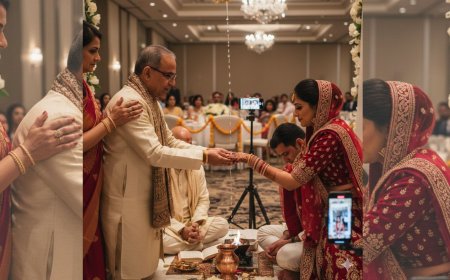
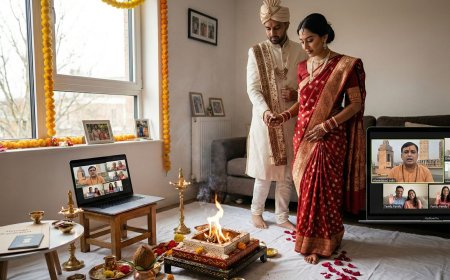
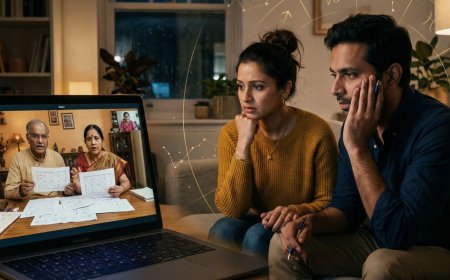
For coordinating with Odisha, IST is GMT+5:30. A 3 PM ceremony in London gives Bhubaneswar family a comfortable 8:30 PM connection. For Houston, a 6 PM ceremony means a 4:30 AM Odisha connection — difficult but for grandparents who want to hear the mahuri at their grandchild's wedding, rarely refused. Position your streaming microphone where it captures the music clearly — the sound is half the experience for relatives joining remotely.
Baajantri at a Destination Wedding in Odisha
If there is a wedding tradition that rewards returning to its place of origin more than almost any other, it is Baajantri. Bhubaneswar, Puri, and Cuttack offer a wedding music infrastructure that simply cannot be replicated abroad — hereditary Baajantri families who have been playing these compositions for twenty generations, who know exactly which piece belongs to which threshold without being told, who will arrive at your gate in the pre-dawn hours and begin the mangalacharana before the household is fully awake, because that is when it belongs.
For destination weddings in Odisha, the Ekamra Haat cultural market in Bhubaneswar and the network of Jagannath Temple-associated musicians in Puri are your best starting points for sourcing authentic hereditary Baajantri ensembles. Your local wedding coordinator — or NRI.Wedding's Odisha planning contacts — can facilitate introductions.
For non-Indian guests attending an Odisha destination wedding, the Baajantri experience is often the element they describe most vividly afterward. The sound of the mahuri in a pre-dawn courtyard, with marigold garlands on every door and the smell of incense in the air, communicates something about this civilisation that no amount of explanation can achieve. Let the music do its ancient work. It knows what it is doing.
What You Need: Ritual Checklist
For Live Baajantri: A minimum ensemble of mahuri player, dhol player, and tasha player, briefed on the specific Odia ceremonial composition sequence for your family's tradition, confirmed and contracted minimum six months before the wedding, with venue noise and timing logistics agreed in advance.
For Recorded Baajantri: A professionally produced Odia ceremonial music recording with compositions correctly sequenced for wedding ritual moments, a high-quality speaker system positioned at the ceremony entrance and mandap, a designated audio coordinator briefed on which track to play at which ritual moment, and your purohit's confirmation that the recording sequence aligns with the ceremony's ritual flow.
Ritual Items Connected to Music: The shankha [conch shell] blown at ritual transitions — sourced from Indian grocery stores or specialist suppliers in diaspora cities. Fresh flowers for the musicians' instruments, as is traditional. A designated space for musicians at or near the ceremony entrance rather than at the back of the room.
Preparation Steps: Contact Odia community organisations in your city minimum six months before for musician referrals. Confirm venue noise policy and agree music timing windows in writing. Brief musicians on ceremony sequence and specific ritual moments requiring specific compositions. Source conch shell and prepare for family member to blow at key transitions. Test recorded music system and track sequence 24 hours before if using recorded backup.
NRI.Wedding connects Odia couples with Baajantri musician networks, community cultural organisations, and ceremony coordinators across London, Toronto, Dubai, Sydney, and Houston. Visit our vendor directory to begin.
5 Questions NRI Couples Always Ask
We cannot find Odia Baajantri musicians in our city. Is a general shehnai player an acceptable substitute?
A general shehnai or North Indian ceremonial musician can provide the broad atmosphere of live ceremonial music and is far preferable to no live music at all. However, they will not know the specific Odia ceremonial compositions — the particular ragas and talas assigned to specific ritual moments — without guidance. The most effective solution is to ask a general shehnai player to work from a reference recording of authentic Odia Baajantri compositions, which gives them the melodic framework to follow even if they are improvising within it. Brief them on the most critical moments — the bride's arrival, the Sindoor Daan, the departure — and ensure those specific pieces are prepared. Imperfect live music, played with intention, carries more ritual weight than perfect recorded music.
Our venue has a strict noise policy after 9 PM. How do we structure the Baajantri around this?
Work with your purohit to identify the four or five ritual moments where Baajantri is most liturgically essential — typically the groom's arrival, the bride's entrance into the mandap, the Vivaha Homa fire ceremony, the Sindoor Daan, and the departure. Concentrate your live music budget and noise allowance on these moments and use acoustic or low-volume recorded music for the ceremony sequences in between. Many Odia NRI couples have successfully structured ceremonies this way, and experienced Baajantri musicians who work with diaspora families understand this constraint and will advise on how to prioritise their performance within it.
My partner is not Indian and finds the volume of ceremonial music overwhelming. How do we manage this?
This is worth a gentle conversation before the wedding, because the volume of live Baajantri — particularly the mahuri and dhol in combination — is genuinely intense by Western music standards, and that intensity is partly the point. Brief your partner on what to expect, explain that the volume is ceremonial rather than performative, and if there are moments in the ceremony where they find it genuinely difficult, it is entirely acceptable for them to step slightly back from the ensemble. What is not acceptable — and what would genuinely diminish the ceremony — is reducing the music's volume at the most sacred moments to accommodate unfamiliarity. The music is doing essential ritual work. Trust it.
Can female family members play instruments during the ceremony or is Baajantri exclusively male?
Historically, Baajantri was a hereditary male profession in Odisha, as in most Indian classical and ceremonial music traditions. In contemporary NRI practice, this is actively evolving. Female family members playing the jhanj [cymbals] or shankha[conch shell] at key moments is widely accepted. Some NRI Odia families are incorporating female musicians into their Baajantri ensembles with strong community approval. Discuss with your purohit and community elders, and find the form that feels most complete and most alive for your specific family.
How do we explain Baajantri to our non-Indian wedding guests without making the ceremony feel like a lecture?
A single paragraph on your wedding programme or digital invitation is sufficient — something that explains that the live music is not entertainment but ceremony, that different compositions mark different sacred moments, and that the silence, when it comes, is as intentional as the sound. Beyond that, let the music do its own explaining. There is not a human being alive who, standing at a gate while a mahuri begins its cry in the pre-dawn air, does not understand immediately that something significant is about to happen. The music has been making this clear for three thousand years. It does not need your programme notes. They are merely an introduction.
The Emotional Angle
There is a specific sound that Odia NRI families carry inside them across every ocean and every time zone. It is not a song exactly. It is more like a frequency — the mahuri's particular cry, high and reedy and utterly certain, that they first heard at someone else's wedding when they were children and have been hearing in memory ever since.
For the parents — the ones who left Bhubaneswar or Cuttack or some village outside Puri with two suitcases and a determination so fierce it looked like calm — the sound of Baajantri at their child's wedding abroad is an experience for which no word in Odia or English is quite sufficient. They spent decades building a life in a country where nobody knew what a mahuri was. They cooked Odia food and spoke Odia at home and took their children to Durga Puja and told them stories about the Jagannath Temple as if they had been there last week rather than last decade.
And now the musicians begin. In a hired hall in Mississauga or a hotel in Dubai or a community centre in Slough, the mahuri rises — that specific sound, that specific frequency — and something in the parents' chests that has been carefully held together for thirty years loosens slightly.
Not breaks. Loosens. Because it is here. The sound they carried is here. Their child is being married with the right music, the sacred music, the music that tells the gods where to gather.
They gathered here. Across every ocean. The music found them. It always does.
A Moment to Smile
At Subhashree and Tom's wedding in Sydney last February, the Baajantri ensemble — three musicians sourced through extraordinary community effort from the Odia network in Western Sydney and flown from Melbourne at family expense — arrived at the venue promptly, set up beautifully, and began the opening mangalacharana with full ceremonial authority.
Tom's family, seated in the front rows, had been briefed. They were prepared. They were culturally open and genuinely excited.
What they had not been fully prepared for was the specific volume of a mahuri and dhol ensemble in full ceremonial mode in an enclosed venue with excellent acoustics.
Tom's grandmother — eighty-one years old, from County Tipperary, wearing a magnificent purple saree that Subhashree's mother had chosen for her — sat bolt upright at the first note, clutched her handbag with both hands, looked at the musicians with an expression of profound respect, and said, very clearly, into the sudden silence of her immediate family: "Well. The Lord will certainly hear that."
The Odia aunties within earshot have been telling this story at every wedding since.
Tom's grandmother danced at the reception. Properly danced.
Quotes From the Diaspora
"I hired a Baajantri ensemble from Melbourne for our Sydney wedding. They drove eight hours. When I tried to pay them more than we had agreed because of the travel, the lead musician refused. He said playing mahuri at an Odia wedding abroad was not a job. He said it was seva. I did not know how to respond to that. I still think about it." — Priyanka Mishra, Odia Brahmin, Sydney
"My husband is from a North Indian family. He had heard shehnai before but not mahuri, not the full Odia Baajantri. When the musicians began at the gate and he heard it for the first time, he stopped walking. He just stopped. Afterward he told me he suddenly understood something about my family that he had not understood before. He could not explain what. He said the music explained it." — Anuradha Pattnaik, Odia Karan community, Toronto
"We could not find Odia musicians in London. We used a recording. I was heartbroken about it for months before the wedding. And then when the recording began — that mahuri, even recorded — my mother started crying before a single ritual had happened. She said: it sounds like home. I thought — if even a recording can do that, what are we so afraid of losing? We are not losing it. It lives in us." — Deepika Mohanty, Odia Hindu, London
Your Roots Travel With You
The mahuri has been calling the gods to Odia weddings for longer than any written record can confirm. It called them in temple courtyards in Puri. It called them in village homes in the Mahanadi delta. It called them in hired halls in Toronto and hotel ballrooms in Dubai and community centres in Sydney — and the gods, this tradition insists, always come when the right music plays.
NRI.Wedding supports Odia couples with Baajantri musician sourcing networks, Odia cultural consultants, community organisation connections across London, Toronto, Dubai, Sydney, and Houston, and photographers and videographers who understand that the sound of a mahuri at a wedding gate is not incidental — it is the ceremony beginning its first conversation with the divine.
Bring the musicians. Source the recording. Blow the conch. Make the sound that your grandparents made and their grandparents made before them, in a hall that looks nothing like the home it came from and somehow, completely, is.
When the mahuri speaks, the gods lean in. Give them something to hear.
This complete guide to Baajantri covers the role of traditional ceremonial music in Odia Hindu weddings, including the mahuri, dhol, tasha, and jhanj traditions, comparisons with Bengali, Tamil, Punjabi, and other Indian regional music traditions, and practical advice for NRI Odia families in London, Toronto, Dubai, Sydney, and Houston sourcing live musicians and preserving authentic wedding music abroad.
What's Your Reaction?
 Like
0
Like
0
 Dislike
0
Dislike
0
 Love
0
Love
0
 Funny
0
Funny
0
 Angry
0
Angry
0
 Sad
0
Sad
0
 Wow
0
Wow
0