




























































Born From Two Worlds, Belonging to One — The Goan Catholic Wedding and Its Living Traditions
The Goan Catholic wedding is a four-century fusion of Portuguese colonial ceremony, ancient Konkani custom, and coastal Catholic identity — a multi-day celebration of Roce, Nuptial Mass, mando dancing, and iconic Goan food that has survived empire, migration, and diaspora with every tradition intact. This complete guide covers the full ceremonial sequence, its cultural and spiritual significance, and practical planning guidance for Goan NRI families hosting weddings in the UK, USA, Canada, UAE, and Australia.


The Goan Catholic wedding is one of the most culturally layered celebrations in all of India — a four-century fusion of Portuguese colonial ceremony, ancient Konkani custom, and the specific coastal Catholic identity that survived the Inquisition, outlasted empire, and emerged as something entirely its own. For NRI Goan families from Toronto to Dubai to Melbourne, this wedding is not merely a religious ceremony — it is the fullest expression of who they are and where they come from.
You grew up with the smell of it — the incense in the old church, the flowers banked against the altar, the specific quality of light through Portuguese-arched windows falling on white lace and marigolds. You grew up with the music — the Konkani mandos [the slow, graceful ballads of Goan Catholic social life] that your grandmother hummed while she cooked, and the brass band outside the church that made every wedding feel like a procession through history. You grew up knowing that a Goan Catholic wedding was not just a wedding. It was a statement. We are from here. We have been here for five hundred years. We are still here.
You are in Toronto now, or in the western suburbs of Melbourne, or in Dubai, and you are planning your wedding. You want the church ceremony with the full Latin or Konkani ritual. You want the roce [the coconut milk blessing ceremony] the evening before, with your female relatives singing the old songs around you. You want the Goan fish curry and the bebinca [the layered coconut dessert that takes an entire afternoon to make properly] and the mando played by someone who knows what a mando actually is.
You can have all of it. Here is everything you need.
🌟 Did You Know?
The Goan Catholic wedding tradition as it exists today was shaped decisively by the Portuguese Padroado [the system of Catholic patronage under which Portugal administered the Church in Goa from 1510 until the mid-twentieth century] — a relationship that lasted over four centuries and embedded Portuguese liturgical customs, European-influenced wedding dress traditions, and Latin ceremonial language so deeply into Goan Catholic life that many of these elements persist in NRI Goan weddings today, long after the political connection has ended.
The mando — the slow, elegant Konkani ballad that is the signature music of Goan Catholic social and wedding culture — developed in the nineteenth century among the Goan Catholic elite as a fusion of European ballroom dance traditions and Konkani lyrical sensibility. The mando is typically performed as a couple's dance with a specific swaying step, and at Goan Catholic weddings it represents the most culturally distinct musical moment of the celebration — something that exists nowhere else in the world except in Goa and in its diaspora.
The Goan Catholic diaspora is among the oldest and most geographically dispersed South Asian Christian communities in the world — with significant populations in the United Kingdom, Canada, Australia, the UAE, Kuwait, and across East Africa, built across multiple waves of migration from the colonial period onward. NRI Goan Catholic communities in these countries have maintained wedding traditions with remarkable fidelity, with community organisations in cities from Toronto to Nairobi actively preserving the mando, the roce, and the specific Goan Catholic ceremonial sequence.
What Is a Goan Catholic Wedding?
The Goan Catholic wedding is a multi-day ceremonial sequence that moves from family blessing rituals in the home through the formal church wedding ceremony to the reception celebration — each stage carrying its own specific customs, music, food, and cultural meaning.
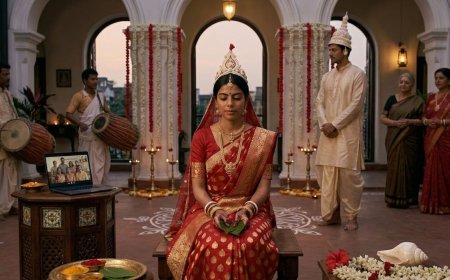
The sequence begins one to three days before the church wedding with the Roce [from the Portuguese rosca, though the ceremony itself is distinctly Goan — a pre-wedding blessing in which the bride and groom are separately anointed with coconut milk by female relatives, typically to the accompaniment of Konkani wedding songs]. The roce is the most intimately Goan moment of the entire wedding — the ritual that has no Portuguese origin, that comes from the ancient Konkani coastal culture that predates the arrival of any colonial power, and that has survived every transformation the community has undergone.
The church ceremony follows the Roman Catholic Rite of Matrimony [the formal sacramental liturgy of Catholic marriage] — in Goa and in diaspora Goan communities, often celebrated in Konkani, English, or a combination of both, sometimes with Portuguese ceremonial elements preserved in older families. The ceremony includes the exchange of vows, the blessing and exchange of rings, the Nuptial Mass [the full Catholic wedding Mass including Eucharist, which is the sacramental heart of the ceremony], and specific prayers and blessings that vary between parishes and family traditions.
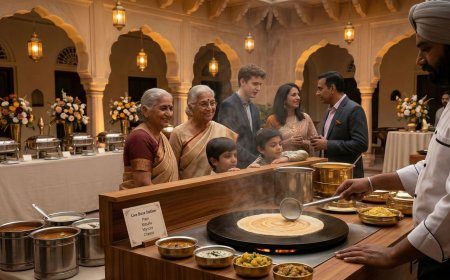
The Khatkhate [the traditional Goan vegetable stew of mixed vegetables in a coconut-tamarind broth] and the fish curry rice anchor the wedding feast, alongside sorpotel [the spiced pork offal curry that is the most distinctly Goan of all the wedding foods], xacuti [the coconut and spice curry], and the bebinca and dodol [coconut-jaggery sweet] that mark the dessert table as unmistakably Goan. The mando dancing at the reception — couples taking the floor for the slow, swaying ballads while the older generation watches with the specific satisfaction of a tradition being correctly observed — is the cultural peak of the Goan Catholic wedding celebration.
Goan Catholic Wedding Traditions Compared Across Indian Christian and Regional Communities
| Community / State | Pre-Wedding Ritual | Church Ceremony Style | Signature Wedding Music | Signature Wedding Food | How NRIs Abroad Adapt It |
|---|---|---|---|---|---|
| Goan Catholic | Roce — coconut milk blessing | Roman Catholic Nuptial Mass; Konkani or English | Mando; brass band; Konkani wedding songs | Fish curry rice; sorpotel; bebinca | Goan community church; roce at home; mando group sourced from community |
| Mangalorean Catholic | Roce [similar coconut ceremony] | Roman Catholic Nuptial Mass; Tulu or Konkani | Konkani wedding songs; brass band | Kori roti; fish curry; Mangalorean sweets | Mangalorean community networks; shared Goan-Mangalorean cultural events |
| Kerala Syrian Christian | Seemantham [blessing ceremony] | Syro-Malabar or Jacobite liturgy; Malayalam | Malayalam Christian wedding songs | Kerala sadya feast; appam and stew | Malayali Christian community churches abroad |
| Tamil Catholic | Pre-wedding church blessing | Roman Catholic Mass; Tamil | Tamil Christian wedding songs | Tamil feast; idli and curry | Tamil Catholic community networks |
| Bengali Catholic | Church blessing | Roman Catholic Mass; Bengali | Bengali Christian songs | Bengali feast | Bengali Catholic community contacts |
| Anglo-Indian | Church ceremony with colonial customs | Roman Catholic or Protestant; English | Western hymns; ballroom music | Anglo-Indian curry; mulligatawny | Anglo-Indian community associations abroad |
| Punjabi Christian | Roka / family blessing | Protestant or Catholic; Punjabi or English | Punjabi Christian worship songs | Punjabi feast; tandoor dishes | Punjabi Christian community churches |
| Northeastern Christian [Mizo/Naga] | Community church blessing | Protestant; regional language | Traditional Christian hymns in regional languages | Regional feast | Northeastern community organisations abroad |
| Chhattisgarh Catholic | Community blessing | Roman Catholic; Hindi or regional | Hindi Christian wedding songs | Regional Indian feast | Hindi-speaking Catholic community networks |
| Himachali Christian | Church blessing | Protestant or Catholic; Hindi | Hindi hymns | Himachali and North Indian feast | North Indian Christian community contacts |
The Meaning Behind the Ritual
The Goan Catholic wedding holds within it a theological understanding that marriage is a sacrament [from the Latin sacramentum — a sacred oath, a mystery] — not merely a social agreement but a divine covenant witnessed by the Church community and sealed by God. This understanding, rooted in Catholic theology and carried into the specific cultural expression of Goan community life, means that the wedding ceremony is simultaneously the most public and the most intimate act the couple will ever perform. They are making a promise in front of everyone they know, in the house of God, and the community's witness is what makes the promise real.
The roce carries a different but complementary meaning — one that is pre-Christian in its roots, rooted in the ancient coastal Konkani understanding of coconut as the fruit of abundance, blessing, and protection. To anoint someone with coconut milk before a major life transition is to surround them with the community's accumulated goodness, to soften what is about to come, to say with your hands what language cannot fully say. That this ancient ritual survived the Portuguese Inquisition, survived conversion, survived four centuries of Catholic overlay, and still sits at the centre of the Goan Catholic pre-wedding sequence — is the most eloquent possible testimony to the depth of Konkani cultural memory.
For a non-Goan partner or family member: this wedding is the ceremony of a community that held its ancient identity inside the forms of a borrowed religion and emerged, five hundred years later, with both intact.
Doing It Abroad: The Practical Reality
The Goan Catholic wedding abroad organises itself around two anchors — the church and the Goan community network — and everything else flows from these two.
The church is the first priority. A Catholic wedding requires a Catholic church, a priest, and the completion of Pre-Cana[the Catholic marriage preparation programme required by the Church before a sacramental wedding can be performed]. In most diaspora cities, Catholic churches are available and accessible, and a priest familiar with Indian Catholic wedding customs is findable within the South Asian Catholic community network. Contact your local diocese or Catholic community organisation for a priest with experience of Goan or South Asian Catholic weddings — the specific elements of the Goan ceremony, including the option to incorporate Konkani language, Goan wedding prayers, and specific blessing traditions, should be discussed with the officiant well in advance. In London, the South Asian Catholic community is served by several parishes with experience of Indian Catholic weddings. In Toronto, the Goan Catholic community of Brampton and Mississauga has established community connections with parishes experienced in Goan ceremonies. In Dubai, the Catholic churches serving the large South Asian expatriate community regularly celebrate Indian Catholic weddings.
The roce is entirely manageable abroad — it requires coconut milk, the family's female relatives, and the songs, which is to say it requires the community. The Goan Catholic community organisations in London, Toronto, Melbourne, and Dubai are your first contact for finding the women in the community who know the roce songs and will come to sing them. Do not attempt a roce without the songs — the coconut milk without the music is a beauty treatment, not a ceremony.
For Goan food — and this is not a negotiable element of a Goan Catholic wedding — you are looking for a caterer who knows the specific preparations: the fish curry made with Goan kokum [the sour fruit that gives Goan curry its specific acidity], the sorpotel prepared the day before and reheated as tradition requires, the bebinca made in layers. In London, the Goan community networks of the city and the South Asian food suppliers of Southall and Wembley carry Goan ingredients. In Toronto, the Indian grocery corridor of Brampton and Mississauga stocks kokum, Goan spice blends, and the specific coconut products the cuisine requires. In Melbourne, Harris Park and the western suburbs South Asian food community. In Dubai, the Indian grocery networks of Bur Dubai and Karama.
For the mando — find within your Goan community network a musician or group who knows the form. In London, Toronto, Melbourne, and Dubai, the Goan Catholic diaspora community organisations — the Goa Hindu Association equivalents on the Catholic side, the Konkani community groups — are your best source. A mando performed by someone who learned it from their grandmother is entirely different from a mando performed by someone who learned it from YouTube, and the room will know the difference.
For streaming to family in Goa — a wedding in London at 3:00 PM is 7:30 PM in Goa. This is a workable time for family to gather and watch. Ensure the stream is positioned to capture both the church ceremony and the reception mando dancing — these are the two moments family in Goa will most want to witness.
As a Destination Wedding in Goa
To have a Goan Catholic wedding in Goa itself is to have it in the most magnificent possible setting — the white-washed Portuguese baroque churches of Old Goa, the Basilica of Bom Jesus [where the remains of St. Francis Xavier are enshrined], the Se Cathedral, the parish churches of the coastal villages that have been celebrating Catholic weddings since the sixteenth century, surrounded by the specific quality of Goan light and the sound of the Arabian Sea.
The old churches of Goa — particularly in Velha Goa [Old Goa] and in the village parishes of Calangute, Saligao, Candolim, and the interior parishes of the Salcete taluka — are the most atmospheric settings for a destination Goan Catholic wedding. Each parish church has its own specific character, its own relationship with the surrounding community, its own particular beauty. Book the church at least eight to twelve months in advance and engage a local wedding planner specifically experienced in Goan Catholic weddings — not a general India wedding planner, but someone who knows which parishes permit specific decorations, which priests are open to incorporating specific family traditions, and how to coordinate the reception at a Goan heritage property or beach venue.
For non-Indian guests at a destination Goan Catholic wedding, Goa is among the most visitor-friendly destinations in India — the coastal climate, the food, the Portuguese architecture, the beaches, and the specific relaxed hospitality of Goan Catholic culture make it an extraordinary wedding destination for an international guest list.
What You Need: The Goan Catholic Wedding Checklist
Ritual and Ceremony Items: Coconut milk prepared fresh for the roce — family recipe quantities confirmed with senior female relatives; roce song singers confirmed from the Goan community network at least two months before; church confirmed and Pre-Cana completed at least six months before the wedding date; priest briefed on specific Goan Catholic elements to be incorporated — Konkani language prayers, specific blessing traditions, family customs; bridal gown in the Goan Catholic tradition — typically white Western-style with specific Goan lace or embroidery elements; Goan bridal jewellery including Goan gold filigree pieces if family tradition includes this; mando group or musician confirmed at least three months before; Goan caterer confirmed with tasting at least two months before; bebinca ordered or arranged at least three weeks before — it requires advance preparation.
People Required: The female relatives who know the roce songs — their presence is the ceremony; the Catholic priest for the Nuptial Mass; the mando musician or group for the reception; the Goan caterer as the food anchor; your wedding photographer briefed that the roce anointing, the church ceremony altar moment, and the first mando dance are the three visual priorities of the wedding.
Preparation Steps: Complete Pre-Cana with the church at least six months before. Book the church and priest at least six months before. Engage the Goan community network for roce singers and mando musicians at least four months before. Confirm Goan caterer at least three months before. Order bridal gown at least six months before. Arrange bebinca preparation at least three weeks before. Test video stream for family in Goa at least the day before.
NRI.Wedding connects Goan Catholic NRI families with community-network roce singers, mando musicians, Goan caterers, Catholic priests experienced in Goan ceremonies, and wedding photographers who understand the visual poetry of a white church, coconut milk, and a mando at sunset. Begin at NRI.Wedding.
5 Questions NRI Couples Always Ask
My partner is not Catholic. Can we still have a full Catholic Nuptial Mass?
This depends on the specific policies of your diocese and your priest, and it is the first conversation you must have when you begin the church booking process. In most Catholic dioceses, a marriage between a Catholic and a non-Catholic Christian can be celebrated with a full Nuptial Mass. A marriage between a Catholic and a non-baptised person is celebrated with a different form of the Rite of Matrimony that does not include the Eucharist — the Rite of Marriage Outside Mass. In both cases, the sacramental commitment is fully valid. Brief your priest on your partner's background at the very first meeting so that the appropriate form of ceremony can be planned from the beginning.
We cannot find anyone in our city who knows the roce songs. What do we do?
The roce songs are oral tradition — they live in the memory of older Goan women in the community, and the finding of them is the finding of those women. Contact the Goan Catholic community association in your city and ask specifically. Contact the Konkani community organisations. Ask the oldest Goan women in your extended network — they will either know the songs themselves or know who does. If no live singers can be found, high-quality recordings of roce songs are available through the Goan Catholic cultural preservation organisations and can be played during the ceremony while family members participate in the coconut milk application. The recording is a last resort — the live voice of women singing in your mother's kitchen is what the roce is supposed to sound like — but the recording preserves the ritual when the singers cannot be found.
How do we incorporate Portuguese ceremonial elements if we want to honour that aspect of the tradition?
Several Goan Catholic families, particularly those with deeper connections to the older Goan Catholic aristocratic traditions, incorporate specific Portuguese ceremonial elements — Portuguese language prayers or readings, specific blessing forms from the Padroado tradition, the laço [the ceremonial cord or ribbon looped around the couple during the blessing, a Portuguese wedding custom]. Discuss these elements specifically with your priest, who will advise on which can be incorporated within the current Roman Catholic liturgical framework. Many of these elements are entirely compatible with the modern Rite of Matrimony and add a beautiful historical dimension to the ceremony for families who carry this tradition.
The bebinca is essential to our family and we cannot find anyone who makes it correctly abroad. What do we do?
Bebinca — properly made, with the correct number of layers, the right proportion of coconut milk and egg yolk, baked slowly in the traditional way — is a skill that lives in specific hands, and finding those hands in the diaspora requires finding the right Goan aunty rather than the right catering company. Ask within your Goan community network specifically for bebinca — someone will know who makes it. If no local maker can be found, bebinca can be transported from Goa if the travel time is short enough, or a skilled Goan home baker in your community can be commissioned. Do not substitute. The bebinca is the dessert of the Goan Catholic wedding table and its absence is noticed by everyone who matters.
Should we do the civil registration before or after the church ceremony?
In most diaspora countries — the UK, Canada, Australia, the UAE — the Catholic church ceremony does not in itself constitute legal marriage registration, and a separate civil registration is required. The standard approach is to complete the civil registration before the church ceremony, typically a few days before, as a quiet family matter — the church ceremony is then the full celebratory and sacramental event. Some couples register civilly on the same day as the church ceremony, immediately before it. What matters is that both happen in the correct sequence for your country's legal requirements — confirm this with your priest and your local registry office well in advance.
The Emotional Angle
She did not expect the roce to be the moment.
She had thought it would be the church — the altar, the vows, the priest's blessing, the moment her husband took her hand. She had prepared herself for the church. She had tissue in her bouquet hand because she knew she would cry at the altar.
She did not cry at the altar.
She cried at the roce, the evening before, in her mother's living room in Toronto — a living room that smelled of coconut and her aunt's perfume and the specific warmth of a house that has been filled with women since morning. She cried when the oldest woman in the room — her grandmother's closest friend, eighty-one years old, who had been at her grandmother's roce in Goa in 1962 — began to sing the first song. A song so old that the younger women didn't know all the words and followed a beat behind, learning it as she sang.
She sat in the chair while her aunties poured coconut milk over her hands and her face and her hair, and she thought: my grandmother sat in this chair. Not this chair, not this room, not this country — but this exact arrangement of women, this exact song, this exact feeling of being held by something older than herself and larger than she can see.
The coconut milk ran down her wrists.
She understood, for the first time, why they do it.
A Moment to Smile
At a Goan Catholic wedding in Southall in the spring of 2022, the mando musician — a wonderfully talented Goan uncle who had been playing at community events for thirty years — arrived at the reception to discover that the venue's sound system was configured exclusively for DJ equipment and had no input for his keyboard and speaker setup.
There followed twenty-five minutes of negotiation between the uncle, the venue's sound technician, and three members of the groom's family who all had different and contradictory opinions about audio cables.
The solution was eventually achieved using an adapter sourced from the groom's younger brother, who had it in his car for reasons he could not explain.
The mando began forty minutes late.
Nobody minded. The uncle, vindicated and plugged in, played for two hours without stopping. By the second mando, the grandmother of the bride — who had been sitting in the front row with the patient expression of a woman who has seen worse — rose from her chair, found a partner, and danced.
She had not danced at a wedding, she said afterward, since 1987.
The delay was worth it. It was all worth it.
Quotes from the Diaspora
"My grandmother's roce songs came back to me the morning of my own roce in Melbourne. I had not heard them since I was twelve years old at my aunt's wedding in Margao. I did not know I remembered them until my mother's cousin began singing and I heard my own voice joining in from somewhere I hadn't known was still there. The body keeps the culture even when the mind thinks it has forgotten." — Priya Fernandes, Goan Catholic community, Melbourne, Australia
"My daughter-in-law is not Goan — she is from a Kerala Syrian Christian family. At the roce I was worried the traditions would feel foreign to her. By the end of it she was crying. She told me afterward that the songs reminded her of her own grandmother's blessings before her mother's wedding. The specific form was different. The love inside it was the same."— Maria D'Souza, Goan Catholic community, Toronto, Canada
"We had the sorpotel made by my husband's aunt who has been making it since she was sixteen years old. She made it two days before, as it should be made, and reheated it on the day, as it should be reheated. Three of my non-Goan guests asked me for the recipe. I told them the recipe is not the point. The point is who makes it and what they are thinking about while they make it. They did not fully understand this. They will, eventually." — Claudette Rodrigues, Goan Catholic community, Dubai, UAE
Your Roots Ring Out Like Church Bells
The Goan Catholic wedding has survived everything the last five hundred years could throw at it — empire, inquisition, partition, migration, diaspora — and it arrives at your wedding day intact, particular, and unmistakably itself. The roce still uses coconut milk. The mando still sways. The sorpotel still needs two days. The church bells still ring in Konkani.
NRI.Wedding exists to help you carry every element of this tradition to wherever in the world your wedding takes place — connecting Goan Catholic families with community-network roce singers, mando musicians who learned the form from their grandmothers, Goan caterers who make bebinca the right way and sorpotel two days in advance, Catholic priests experienced in the full Goan ceremonial sequence, and wedding photographers who understand that the light through a Portuguese-arched window and a grandmother rising to dance are the images that will define this day in family memory forever.
The church is wherever your community gathers. The rice is wherever your family cooks. The mando is wherever someone who loves you picks up the melody.
Your roots ring out like church bells. Let the whole neighbourhood hear them.
This article explores Goan Catholic wedding traditions — including the Roce, Nuptial Mass, mando, sorpotel, bebinca, and Portuguese ceremonial heritage — and provides complete practical guidance for Goan NRI families planning weddings in the UK, USA, Canada, UAE, and Australia.
What's Your Reaction?
 Like
0
Like
0
 Dislike
0
Dislike
0
 Love
0
Love
0
 Funny
0
Funny
0
 Angry
0
Angry
0
 Sad
0
Sad
0
 Wow
0
Wow
0