






































































Eight Verses. One Word. Every Person in the Room Says It Together — This Is What Makes a Marathi Wedding Complete
Mangalashtak — eight sacred Sanskrit shlokas recited at the climactic moment of every Marathi Hindu wedding — is the ritual that transforms a ceremony into a community blessing. When eight married women rise to recite each verse, and the entire room responds with a single word — Mangalam — every person present becomes an active participant in blessing the union. This guide explores the Mangalashtak's ancient roots, its profound communal philosophy, and complete practical guidance for Maharashtrian NRI families preserving this beloved tradition in the USA, UK, Canada, UAE, and Australia.


In the middle of a Marathi Hindu wedding — with the fire lit, the families assembled, and the sacred moment of union approaching — eight voices rise. They recite the Mangalashtak: eight sacred Sanskrit shlokas that have been chanted at Marathi weddings for over a millennium, each verse ending with the same word, spoken in unison by everyone in the room. That word is Mangalam — auspiciousness, blessing, the invocation of everything good upon what is beginning. For Maharashtrian NRI families from Pune, Nagpur, Kolhapur, and the Konkan now living in New Jersey, London, Toronto, Melbourne, and Dubai, the Mangalashtak is not simply a recitation. It is the sound of home.
You have heard it your whole life without necessarily knowing what it was called. The particular rhythm of it. The way it builds, verse by verse, toward that final word that the whole room says together. You heard it at your uncle's wedding in Pune when you were seven. You heard it at your cousin's wedding in a community hall in New Jersey when you were nineteen, chanted by a purohit with a printout in his hands because he was from a different region and had learned it specifically for this family. You heard it, thin but determined, from a phone speaker at a lockdown wedding that nobody planned to have this way.
You are planning your own wedding now — in London or in Toronto or in a suburb of Melbourne — and someone in your family has said: Mangalashtak kaun karanar? Who will do the Mangalashtak? And there is a particular urgency in the question that goes beyond logistics. Because the Mangalashtak is not background music. It is not a ritual that can be abbreviated or replaced without the ceremony feeling like something essential has been left out.
It is the eight blessings. It is the sound that makes a Marathi wedding a Marathi wedding. And your family is going to make sure it happens properly, wherever in the world they are.
🌟 DID YOU KNOW?
- The Mangalashtak is composed of eight Sanskrit shlokas — ashtak means "a group of eight" in Sanskrit — each verse invoking a different divine presence or cosmic blessing upon the couple, and each ending with the word Mangalam [auspiciousness], which is spoken or sung by all assembled guests simultaneously, making every person in the room an active participant in blessing the union rather than a passive witness.
- The most widely recited version of the Mangalashtak in Maharashtrian tradition is attributed to Jagannath Pandit, a seventeenth-century Sanskrit scholar at the Mughal court of Shah Jahan, though the tradition of reciting eight blessing-shlokas at weddings is considerably older, appearing in various forms in Grihyasutra literature dating back over two thousand years.
- In traditional Maharashtrian weddings, the Mangalashtak is recited by eight suvasini [married women whose husbands are living — considered the most auspicious category of person to deliver a blessing] — one woman per shloka — making the recitation a collective female act of blessing that encodes the community's feminine spiritual authority at the most sacred moment of the ceremony.
What Is Mangalashtak?
Mangalashtak [from mangal — auspicious, and ashtak — a set of eight] is the sacred recitation of eight Sanskrit blessing-verses at the climactic moment of a Marathi Hindu wedding ceremony — performed as the bride and groom complete their Saptapadi [seven sacred steps around the fire] or at the moment of Antarpat [the ritual lowering of the curtain that separates bride and groom just before they see each other for the first time in the ceremony]. It is simultaneously a prayer, a community blessing, a literary recitation, and a musical act — and it is one of the most distinctively Maharashtrian elements of any wedding tradition in India.
The eight shlokas of the Mangalashtak each follow a similar structure: they invoke a divine figure, natural element, or cosmic principle — Lord Vishnu, Goddess Lakshmi, the sun, the moon, the sacred rivers, the ancestors — and call upon each to bless the union being witnessed. The final word of each shloka is Mangalam — and this is the word the entire assembled gathering speaks together, in a single voice, after each verse is completed. The cumulative effect of eight such invocations, each ending in that collective utterance, builds a rhythm that many Maharashtrian families describe as the most emotionally overwhelming moment of the entire wedding.
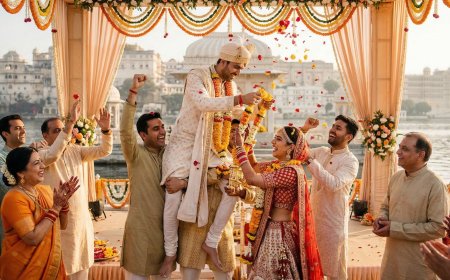
The recitation is traditionally performed by eight suvasinis [auspicious married women] — one for each shloka — who stand near the vivaha mandap [the sacred wedding canopy] and recite their designated verse. In many families, the eight suvasinis are chosen from among the closest female relatives and friends of the bride — her mother, aunts, elder sisters, family friends — so that the blessing is delivered not by strangers but by the women who know and love her best. The purohit [family priest] leads the recitation, ensuring the correct pronunciation and pace, but the voices that carry the shlokas into the air of the wedding are the voices of the community.
In contemporary Marathi weddings — including NRI ceremonies abroad — the Mangalashtak is sometimes recited collectively by all assembled guests rather than distributed among eight specific suvasinis, and in some families the purohit recites all eight shlokas himself with the gathering joining for the Mangalam at the end of each verse. Both adaptations are widely accepted. What is non-negotiable, in virtually every Maharashtrian family's understanding, is that the Mangalashtak happens — completely, audibly, and with the full participation of the room.
The Mangalashtak typically occurs at one of two specific moments: during the Antarpat sequence, as the curtain between the bride and groom is lowered and they see each other for the first time in the ceremony, or during and immediately after the Saptapadi. In many families, it occurs at both moments — a shorter recitation at the Antarpat and the full eight-shloka version at the Saptapadi. The purohit will guide the timing based on your family's tradition.
Community Comparison: How Different Indian Communities Mark the Sacred Moment of Union With Verse and Song
| Community / State | Local Name | Key Tradition | How NRIs Abroad Adapt It |
|---|---|---|---|
| Maharashtrian Hindu | Mangalashtak | Eight Sanskrit shlokas recited by eight suvasinis; collective Mangalam after each verse; at Antarpat and/or Saptapadi | Printed shloka cards distributed to guests; purohit leads; collective recitation common abroad |
| Himachali | Mangal Geet | Auspicious folk songs sung by community women during key ceremony moments | Women of Himachali diaspora community sing; recorded versions used if needed |
| Garhwali | Mangal Geet | Traditional Garhwali wedding songs at ceremony climax; community women participate | Garhwali diaspora women in UK and Canada lead; recordings supplement |
| Kumaoni | Mangal Geet | Kumaoni folk wedding songs; emphasis on community female participation | Kumaoni community members in diaspora maintain tradition |
| Kashmiri Pandit | Wanvun | Sacred Kashmiri wedding songs sung by women; deeply community-specific | Kashmiri Pandit sabhas in New Jersey, London preserve Wanvun tradition |
| Punjabi | Suhaag / Ghodi | Wedding songs sung at key moments; Suhaag for bride, Ghodi for groom | Very well-preserved in diaspora; professional singers hired in Brampton, Southall |
| Tamil Brahmin | Maalai Maathal songs | Carnatic music and Vedic chanting accompany key ceremony moments | Tamil classical musicians available in Markham, Harrow, Melbourne |
| Telugu Hindu | Mangala Harathi songs | Devotional songs at key moments; nadaswaram accompaniment | Telugu community musicians in Houston, London, Melbourne |
| Bengali | Ululation / Shankha | Women's ululation and conch shell blowing at the sacred moment of union | Bengali community preserves strongly; conch shells brought from Kolkata |
| Gujarati | Mangal Geet | Gujarati wedding songs at key ceremony moments | Maharashtra Mandal equivalent in Gujarati community supports |
| Kannada Brahmin | Mangalashtaka | Nearly identical tradition — eight Sanskrit shlokas with Mangalam refrain — reflecting shared Brahminical literary heritage | Kannada Brahmin pandits in Bay Area, London, Melbourne conduct full recitation |
| Rajasthani | Mangal Geet | Rajasthani folk wedding songs at ceremony climax | Rajasthani Samaj networks in UAE and UK coordinate singers |
The Meaning Behind the Ritual
The Mangalashtak operates on a principle that is fundamental to Vedic sacred philosophy: that language, spoken with intention in sacred space, is not merely descriptive but creative. In the Mimamsa school of Vedic thought — which has profoundly influenced Maharashtrian Brahmin intellectual tradition — the sacred Sanskrit syllable is not a symbol of divine power but a direct vehicle of it. When the Mangalashtak is recited correctly, with the right pronunciation, the right intention, and the right communal participation, it does not merely describe a blessing. It enacts one.
Each of the eight shlokas invokes a different dimension of cosmic auspiciousness. The invocations of Vishnu and Lakshmi call upon the forces of preservation and abundance. The invocations of the sun and moon call upon clarity and continuity — the solar rhythm of productive days, the lunar rhythm of emotional depth and cyclical renewal. The invocation of the sacred rivers — Ganga, Yamuna, Saraswati — calls upon the purifying and sustaining power of water. The invocation of the ancestors acknowledges that this marriage is not merely a present event but a continuation of a lineage that extends backward further than memory and forward further than imagination.
The collective utterance of Mangalam after each verse is the ritual's most radical democratic act. In most Vedic ceremonies, the sacred words belong to the purohit — he is the trained intermediary between the human and the divine, and the congregation witnesses rather than participates. The Mangalashtak breaks this structure. Every person in the room — trained or untrained, Brahmin or not, male or female, old or young — speaks the blessing word together. The bride's non-Indian colleague who has never attended an Indian wedding before is saying Mangalam alongside the family's ninety-year-old patriarch. The community does not merely witness the blessing. The community is the blessing.
For a non-Indian partner or family member: "Eight times, everyone in the room says the same word together — and that word means: may everything good come to you. Eight times, the whole community agrees."
Doing Mangalashtak Abroad: The Practical Reality
The Mangalashtak is, logistically, one of the most achievable traditions to preserve abroad — and also one of the most frequently abbreviated, which is a loss that Maharashtrian families consistently report feeling. The primary reason for abbreviation is not logistical difficulty but preparation failure: nobody has printed the shloka cards, nobody has briefed the eight suvasinis, nobody has ensured the purohit has the correct version of the text for this family's tradition. These are all solvable problems, and solving them begins months before the wedding.
The first step is confirming the version of the Mangalashtak your family uses. There are multiple versions in circulation — the most common in Maharashtrian tradition is the version attributed to Jagannath Pandit, but regional variations exist across Pune, Nagpur, Kolhapur, and Konkan communities. Ask your purohit or the eldest female relative of your family which version your community traditionally recites. Record this information and share it with your purohit at least one month before the wedding.
The second step — and the one that transforms the Mangalashtak from a purohit's solo recitation into the collective community act it is meant to be — is the shloka card. Print the Mangalashtak in Devanagari script with a Roman transliteration beneath it, and distribute it to every guest at the beginning of the ceremony. Include a brief note explaining that when the purohit or suvasini completes each verse, all guests are invited to say Mangalam together. This single logistical step turns a beautiful recitation into a genuinely moving communal experience — and it is the difference that NRI families most frequently cite between a Mangalashtak that felt real and one that felt performed.
For the eight suvasinis: selecting them requires advance thought and communication. Each suvasini should receive her designated shloka at least one week before the wedding — ideally with a voice recording of the correct pronunciation made by the purohit or a family elder. In most NRI ceremonies, the suvasinis are the bride's mother, the groom's mother, the bride's maternal and paternal aunts, close family friends, and elder sisters. If eight suvasinis cannot be identified among the assembled guests, the most common adaptation is for the purohit to lead all eight shlokas with the gathering joining for each Mangalam — this is fully accepted and widely practiced.
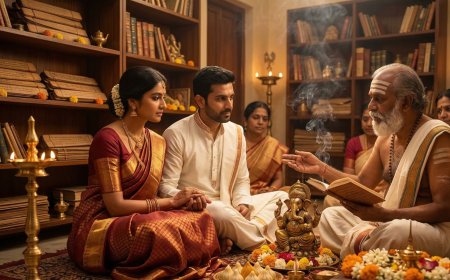
For the purohit: the Mangalashtak requires a Maharashtrian purohit who knows the tradition's specific version of the text and can lead it with the correct rhythm and pronunciation. A generalist pandit who is unfamiliar with the Mangalashtak may substitute a generic Sanskrit blessing or omit it entirely. Specify to your purohit explicitly that the Mangalashtak is a required element of your ceremony and confirm which version your family uses. NRI.Wedding's purohit directory lists Maharashtrian Brahmin priests who are experienced in the full Mangalashtak recitation.
In London, the Maharashtrian community's concentration in Harrow, Wembley, and Ilford means that experienced Maharashtrian purohits are accessible — the Maharashtra Mandal UK maintains contacts. In New Jersey, the Edison and Iselin Maharashtrian community has a strong purohit network accessed through the local Maharashtra Mandal chapter. In Toronto, the Maharashtrian community in Mississauga and Brampton maintains purohit contacts through the Maharashtra Mandal Toronto. In Melbourne, the Maharashtra Mandal Victoria is an excellent first contact. In Dubai, the large South Asian community means Maharashtrian purohits are available through temple networks in Bur Dubai.
For the musical dimension: in traditional Maharashtrian weddings, the Mangalashtak is often accompanied by shahnai[the double-reed wind instrument whose sound is inseparable from Maharashtrian wedding culture] or tabla and harmonium. Live shahnai players are rare in most diaspora cities — in London, the South Asian classical musician networks in Southall and Wembley occasionally include shahnai players; contact the bharatnatyam and classical music school networks for referrals. In New Jersey, the South Asian musician networks in Edison and surrounding areas are comprehensive. If live instrumental accompaniment cannot be sourced, a high-quality audio track of shahnai played softly beneath the recitation is a widely accepted alternative that preserves the sonic character of the ceremony.
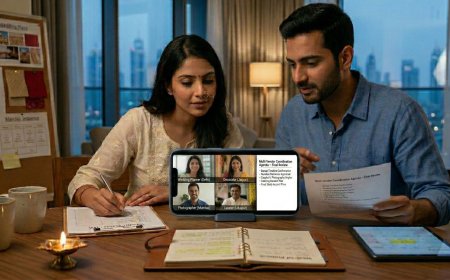
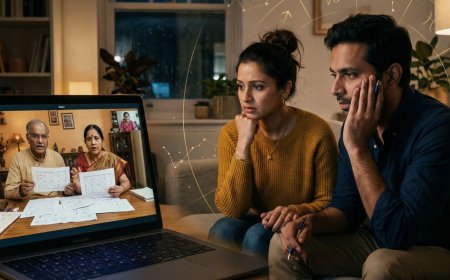
For relatives in India watching via video call: the Mangalashtak is the moment that most needs good audio on the streaming device. Position a second phone or tablet near the suvasinis or the purohit, specifically for audio capture, while the primary streaming device covers the visual of the ceremony. India relatives watching from Pune, Nagpur, or Kolhapur will want to say Mangalam along with the room — brief them in advance to have the shloka text ready so they can participate from wherever they are.
Doing Mangalashtak as a Destination Wedding in India
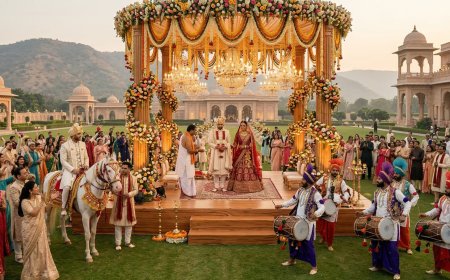
In Maharashtra — particularly in Pune, Nagpur, and the Konkan — the Mangalashtak needs no logistical planning beyond selecting the eight suvasinis. The purohit knows it. The guests know it. The shahnai player knows when to begin. The Mangalam rises from the room with the naturalness of something that has been happening in this community for a thousand years, because it has.
Pune is the heartland of the Maharashtrian Brahmin intellectual and cultural tradition, and the Mangalashtak is performed there with the fullest community participation and the deepest familiarity. Heritage wedding venues in Pune's old city — the wadas of Kasba Peth, the garden properties of Kothrud, the temple halls of Parvati Hill — provide acoustic environments where the collective Mangalam resonates in a way that no carpeted banquet hall abroad can replicate.
For NRI families returning to Maharashtra for their wedding, brief your wedding planner specifically that the Mangalashtak must be performed in its complete eight-shloka form, that eight suvasinis must be designated and prepared in advance, and that the purohit must be given the specific version your family uses. Many Pune wedding planners who work with NRI clients assume a modern abbreviated ceremony unless told otherwise — the burden of specification is on the family, and it is worth carrying.
For non-Indian guests at a destination Mangalashtak in Maharashtra, the moment the collective Mangalam first rises from the room is almost universally described as one of the most moving experiences of their lives. Brief them in advance with a printed programme, and by the third or fourth verse, they will be saying Mangalam along with everyone else — and meaning it, even without knowing why.
What You Need: Ritual Checklist
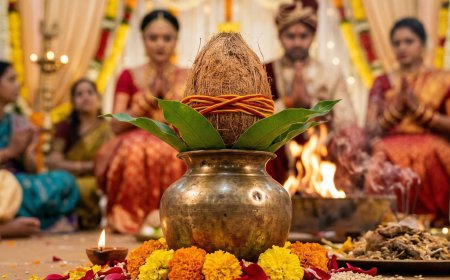
Ritual Items — printed Mangalashtak shloka cards in Devanagari and Roman transliteration for all guests; individual shloka assignment cards for each of the eight suvasinis with their designated verse highlighted; voice recording of correct pronunciation for each suvasini to practice from; shahnai audio track or live player arrangement; the vivaha mandap setup including the havan kund [sacred fire pit], samidha [ritual wood], ghee, and associated items; fresh flowers for the mandap; agarbatti [incense]; the purohit's copy of the Mangalashtak in the family's specific version.
People Required — the officiating Maharashtrian Brahmin purohit experienced in Mangalashtak recitation; eight designated suvasinis [married women with living husbands] who have received and practiced their shlokas in advance; the bride and groom; both sets of parents and assembled family; a designated sound operator for the shahnai track; the photographer and videographer briefed on the Mangalashtak sequence as the primary communal moment to document.
Preparation Steps — confirm with the purohit which version of the Mangalashtak your family uses, at least two months before. Select the eight suvasinis and assign shlokas at least three weeks before. Send each suvasini her shloka card and the pronunciation recording at least two weeks before. Print guest shloka cards with Mangalam clearly marked. Arrange shahnai accompaniment — live or recorded. Brief the photographer that the collective Mangalam moments are the primary emotional beats to capture. Prepare a brief explanation of the Mangalashtak for the ceremony programme for non-Indian guests.
NRI.Wedding connects Maharashtrian families with verified purohits experienced in complete Mangalashtak recitation, assists with suvasini preparation resources, and connects families with South Asian musicians for shahnai accompaniment. Begin at NRI.Wedding.
5 Questions NRI Couples Always Ask
What if we cannot find eight suvasinis among our guests — is the Mangalashtak still valid?
Completely valid, and this situation is extremely common at NRI weddings where the guest list is smaller or where many female relatives could not travel. The most widely accepted adaptation is for the purohit to lead all eight shlokas with the entire gathering joining for each Mangalam. Alternatively, fewer than eight suvasinis can each take responsibility for multiple shlokas. What matters most is that all eight shlokas are recited and that the collective Mangalam happens. The number of individual voices carrying each shloka is secondary to the completeness of the eight-shloka sequence.
Our guests include many non-Indian friends and family — will they feel excluded from the Mangalashtak?
The opposite is almost universally true. The Mangalashtak is the ritual most likely to include non-Indian guests naturally, because the only participation it asks of them is one word — Mangalam — spoken at a clear and obvious moment after each verse. Print the shloka cards with a brief English explanation: "When each verse ends, please say Mangalam together — it means: may all good things come to them." Non-Indian guests who say Mangalam at a Marathi wedding consistently report it as one of the most unexpectedly moving experiences of their lives. The word itself, in the mouth of someone who has never spoken Sanskrit before, carries a peculiar and beautiful weight.
Can the Mangalashtak be pre-recorded and played at the ceremony if a purohit is not available?
A recording can serve as a guide or accompaniment, but the Mangalashtak's power comes from live voices in the room — specifically, from the community's live participation in the Mangalam. A pre-recorded Mangalashtak played without live participation reduces the ceremony's most communal act to a soundtrack. If a Maharashtrian purohit is genuinely unavailable locally, the better alternative is a remote purohit guiding the ceremony via video call — chanting each shloka live, pausing for the room's Mangalam response. NRI.Wedding can connect families with Pune-based purohits experienced in remote ceremony guidance.
At what exact moment in the ceremony does the Mangalashtak occur — before or after the pheras?
In Maharashtrian tradition, the Mangalashtak most commonly occurs at two points: first at the Antarpat moment — when the curtain between the seated bride and approaching groom is lowered and they see each other for the first time — and again during or after the Saptapadi [the seven sacred steps]. Some families observe it only at the Antarpat, some only at the Saptapadi, and some at both. Your purohit will know your family's specific tradition and will time the recitation accordingly. If you are unsure, ask the eldest female relative of your family — she will remember exactly when the Mangalashtak fell at the last wedding she attended.
My partner is not Maharashtrian — how do we include their cultural background in the ceremony alongside the Mangalashtak?
The Mangalashtak's structure — eight blessings, each concluded with a collective affirmation — is actually one of the most easily framed intercultural moments in any Indian wedding. Consider having the brief English explanation of each shloka's meaning read aloud by a family member before the purohit recites the Sanskrit, so the non-Maharashtrian partner and their family understand exactly what blessing is being invoked. This transforms the recitation from an opaque ritual into a transparent, shared act of collective wishing — and the non-Indian family's Mangalam, spoken with understanding, carries the same weight as anyone else's.
The Emotional Angle
There is a particular quality to the silence just before the first shloka begins.
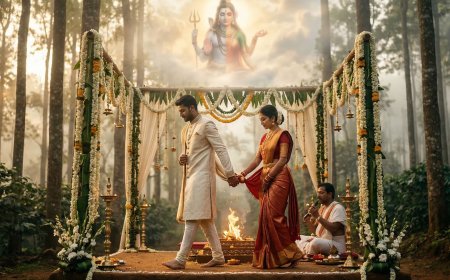
The fire is lit. The families are seated. The bride and groom are at the mandap. The purohit has settled into his ceremonial register and the room has followed him there — that particular quality of attention that a wedding ceremony achieves in its most sacred phase, where even the children stop fidgeting and the aunts stop whispering and something in the air thickens with meaning.
And then the first suvasini begins. Or the purohit begins. And the Sanskrit fills the room — not the background Sanskrit of earlier rituals, murmured between the pandit and the fire, but the Sanskrit of the Mangalashtak, which is structured to be heard, structured to build, structured to end in a word that everyone knows is coming and says together anyway with the particular joy of something anticipated and then fulfilled.
Mangalam.
For NRI Maharashtrian families, the Mangalashtak abroad carries an emotional charge that it does not always carry in Pune or Nagpur — because in those cities, the tradition is assumed, it is ambient, it is simply what happens at weddings. In a community hall in New Jersey or a hotel ballroom in Melbourne, it is chosen. It is prepared for. The suvasinis have practiced their shlokas from voice recordings for two weeks. The shloka cards have been printed and placed on every chair. The purohit has been briefed on the family's specific version. The shahnai track has been queued.
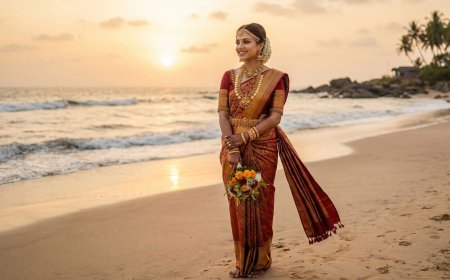
All of this preparation — all of this refusal to let the distance or the logistics or the foreign setting reduce what should be complete — arrives in the room with the first shloka. And when the first Mangalam rises from sixty people in a banquet hall in New Jersey, many of whom have never spoken Sanskrit before and some of whom do not know what they are saying but understand from the room's feeling exactly what it means — something ancient and unbroken is occurring.
The families are still, in that moment, in Maharashtra. The Maharashtra that travels. The Maharashtra that refuses to be left behind.
A Moment to Smile
At a Marathi wedding in Toronto three years ago, the Mangalashtak had been prepared with exceptional care. The eight suvasinis had been selected, assigned their shlokas, and sent voice recordings for practice. The shloka cards had been printed in Devanagari and transliteration for all guests. The purohit was experienced, the shahnai track was queued, and the bride's mother had rehearsed her shloka — the third one — for eleven days.
On the wedding day, the Antarpat moment arrived. The purohit signalled the first suvasini. She recited her shloka beautifully. The room said Mangalam with genuine feeling. The second suvasini was equally prepared and equally beautiful. The room said Mangalam again, louder this time.
The third suvasini — the bride's mother — stood up, took a breath, and began. She had rehearsed for eleven days. She knew every syllable. She recited the first three lines with perfect clarity and complete composure.
On the fourth line, she looked at her daughter standing at the mandap, and the eleventh day of practice became completely irrelevant.
She finished the shloka. It took slightly longer than it might have, with the pauses for composure, but it was finished completely and correctly. The room's Mangalam for the third shloka was the loudest of all eight.
Afterward, the bride said it was the best shloka. The purohit, who had seen everything in his thirty years of ceremonies, said this was the correct assessment.
Quotes from the Diaspora
"My mother practised the fifth shloka for three weeks. She recorded herself and sent it to the purohit for correction twice. On the wedding day she recited it without looking at the card once. When the room said Mangalam, she sat down and my aunt had to hold her hand for the next ten minutes. I will never forget the way she looked when she sat down. Finished, and completely full." — Ananya Deshpande, Maharashtrian Brahmin community, New Jersey, USA
"We printed the shloka cards with the English translation of each verse beneath the Devanagari. My husband's family is from Birmingham — they had never heard Sanskrit before. By the fifth shloka, his grandmother was saying Mangalam with her eyes closed. She told me afterward she didn't know what the word meant but that it felt like the right thing to say. That is exactly what Mangalam is." — Rujuta Kulkarni, Maharashtrian community, London, UK
"My father is not a demonstrative man. He does not cry at things. He sat through my entire wedding with the steady expression of a person who is holding everything together. But when the eight Mangalams were finished and the purohit announced that the marriage was complete, my father put his face in his hands for exactly fifteen seconds. Then he straightened up and was fine. Those fifteen seconds were the whole story." — Shruti Joshi, Maharashtrian Brahmin community, Melbourne, Australia
Your Roots Travel With You
The Mangalashtak has been recited in Maharashtrian wedding mandaps for over a thousand years. It has been recited in wadas and temple halls and garden venues and, in the years when gathering was not possible, through phone screens held up to wedding rooms that were quieter than anyone wanted. It has been recited by eight suvasinis in their best silk sarees and by a single purohit with a printout and sixty people saying one word together.
The eight shlokas have survived every distance. The Mangalam has never failed to rise.
NRI.Wedding supports Maharashtrian families across the diaspora with verified purohits experienced in complete Mangalashtak recitation, suvasini preparation resources including pronunciation recordings and shloka cards, shahnai musician connections, and ceremony photographers who understand that the eight collective Mangalams are the photographs the whole wedding has been building toward. From New Jersey to London to Toronto to Melbourne to Dubai — wherever the fire is lit, the eight shlokas can be complete.
Find your eight voices. Print the cards. Let the room say Mangalam together. This is how Maharashtra blesses a marriage.
This article explores the Mangalashtak — the eight sacred Sanskrit shlokas recited at Marathi Hindu weddings — and its practice among Maharashtrian NRI communities in the USA, UK, Canada, UAE, and Australia, including cities such as New Jersey, London, Toronto, Melbourne, and Dubai.
What's Your Reaction?
 Like
0
Like
0
 Dislike
0
Dislike
0
 Love
0
Love
0
 Funny
0
Funny
0
 Angry
0
Angry
0
 Sad
0
Sad
0
 Wow
0
Wow
0