


































































The NRI Family's Guide to Booking a Wedding Banquet Hall in Jalandhar — What No One Tells You Upfront
Booking a wedding banquet hall in Jalandhar from Brampton, Dubai, or London is one of the most consequential decisions an NRI family makes — and one of the most frequently mismanaged. This comprehensive editorial exposes the commercial customs, contractual vulnerabilities, and unspoken market realities that catch NRI families after the deposit has been paid. From in-house catering tie-ins and generator specification gaps to noise curfew clauses and decoration package ambiguities, every critical detail is examined through the specific lens of the family managing a high-stakes venue booking across time zones. Includes a full ten-category booking checklist, venue type comparisons, cancellation and force majeure guidance, and the five most costly mistakes NRI families make when booking Jalandhar banquet halls — with the correct approach for each.


The NRI Family's Guide to Booking a Wedding Banquet Hall in Jalandhar — What No One Tells You Upfront
The call had come on a Tuesday evening, which was a Wednesday morning in Jalandhar, and Harpreet had taken it in the car park outside her office in Brampton because the open plan floor she worked on was not the place for the conversation she could already tell this was going to be. Her mother was on the line. Her mother had found the hall.
The hall was called — and her mother had said this with the specific emphasis of someone presenting evidence of considerable research — Shaan-e-Punjab Banquet and Convention Centre, newly constructed, air-conditioned throughout, capacity for eight hundred guests seated, with a lawn that could accommodate the outdoor ceremony her father had been insisting upon since the engagement was announced in October. The catering was in-house. The decoration package was negotiable. The owner — her mother had already spoken to the owner, whose name was Gurpreet Singh and who had been very helpful and very reasonable — was prepared to hold the date for fifteen days without a deposit, as a personal courtesy to the family, because her mother's cousin's husband knew his brother-in-law.
Harpreet had listened to all of this from the car park in Brampton on a Tuesday evening in February, with the temperature at minus eleven and the specific quality of cold that makes every conversation feel more urgent than it is. She had asked two questions. The first was: has anyone seen the contract? Her mother had said that there would be a contract, of course there would be a contract, but that the important thing was the date and the capacity and wasn't it wonderful that they had found something so quickly.
The second question was: what exactly is included in the catering package and what does "negotiable" mean for the decoration? Her mother had said that these were details and that details could be sorted out later and that the important thing right now was to confirm the date before someone else took it because March weddings in Jalandhar were very popular and Gurpreet Singh had mentioned, helpfully, that he had two other families interested in the same weekend.
Harpreet had said she needed to see the contract before anything was confirmed. There had been a pause on the line of the specific kind that happens when a Punjabi mother in Jalandhar and her daughter in Brampton are having two different conversations about the same wedding. Her mother had said she would ask about the contract. She had said it in the tone that suggested the contract was a formality that Harpreet was elevating to an obstacle.
Three weeks later, Harpreet's family had paid a booking deposit of two lakh rupees for a hall whose contract contained eight clauses her mother had not mentioned because her mother had not read them, two of which would have changed the family's decision about the hall entirely if they had been understood before the deposit was paid.
This guide is for every NRI family whose wedding planning runs through Jalandhar — for the daughter in Brampton and the parents on the ground, for the son in Dubai whose parents have already fallen in love with a hall he has not seen, and for every family navigating the specific complexity of booking a significant venue from the other side of the world through people whose enthusiasm sometimes outpaces their contract literacy.
Why Booking a Banquet Hall in Jalandhar Is Different From Booking One Anywhere Else
The Jalandhar wedding banquet hall market operates on a set of commercial customs, informal understandings, and contractual practices that are specific enough to the city, specific enough to the Punjabi wedding culture, and specific enough to the NRI family's particular vulnerabilities that the general guidance about venue booking — which applies reasonably well in London or Toronto — applies imperfectly here and sometimes not at all.
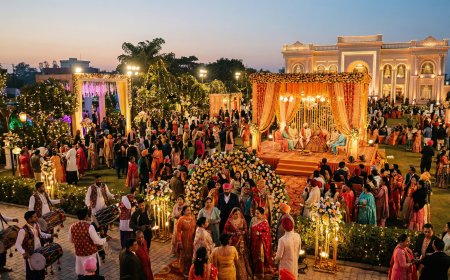
The first specificity is the scale. Jalandhar weddings are not modest events, and the banquet hall market has developed to serve a wedding culture whose guest lists begin at three hundred and routinely reach eight hundred or a thousand. The halls built for this scale are significant commercial operations whose owners understand the leverage they hold in a market where the supply of genuinely good halls with genuine eight-hundred-person capacity is limited relative to the demand concentrated in the wedding season's peak months. The family that is booking from Brampton, whose timeline is constrained by international travel schedules and whose ability to physically inspect alternatives is limited, is negotiating from a weaker position than the local family whose flexibility is greater and whose knowledge of the alternatives is current.
The second specificity is the relationship economy. Jalandhar's banquet hall market operates substantially through personal relationships and community connections — the hall owner who is someone's brother-in-law's business associate, the decorator whose family has been doing weddings in the community for three generations, the caterer whose biryani your mother has eaten at four different weddings and whose quality she therefore considers verified. These relationships are real and they carry genuine value. They also carry the specific risk that the NRI family confuses relationship warmth with contractual protection, and that the goodwill of the community connection substitutes in the family's thinking for the legal protections that only the written contract provides.
The third specificity is the NRI premium — the widely understood reality in the Jalandhar wedding market that families booking from abroad are operating with less price comparison information, less local market knowledge, and more emotional pressure to resolve the booking quickly so that the international planning can proceed. The NRI premium is not always a conscious strategy on the hall owner's part. It is sometimes simply the natural result of information asymmetry. But it is real, and its effects are visible in the prices quoted to families booking from Canada versus the prices available to families booking locally with full market knowledge.
The NRI family that books a Jalandhar banquet hall without understanding these three specificities is the family that pays more than it should, signs terms it has not fully understood, and discovers the contract's implications at a point when the deposit has been paid and the alternatives have been foreclosed.
The Jalandhar Banquet Hall Market: What You Are Actually Choosing Between
The Jalandhar banquet hall market is not homogeneous, and the categories of venue available to the NRI family cover a range of quality, capacity, service integration, and contractual practice that is wider than the Instagram photographs and the owner's description suggest.
The Standalone Banquet Hall
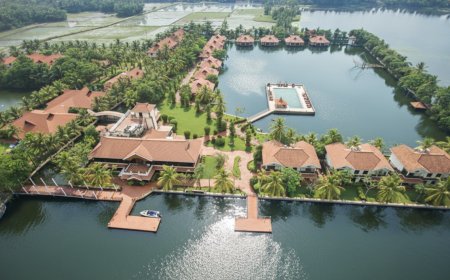
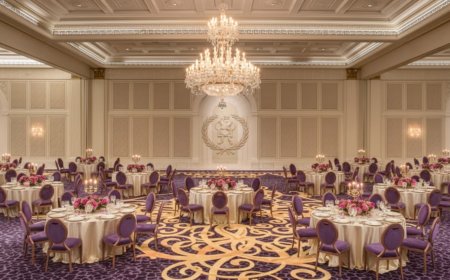
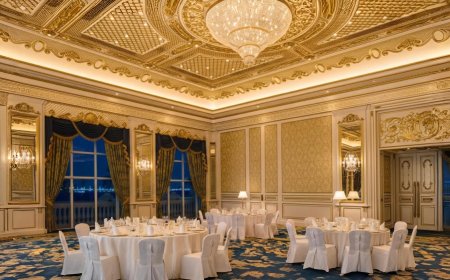
The standalone banquet hall — the purpose-built events venue whose primary business is weddings and whose infrastructure is dedicated to that purpose — is the most common category in Jalandhar and the category that the NRI family most frequently books. These halls range from the older, established venues whose reputation has been built over twenty or thirty years of consistent delivery to the newer constructions whose infrastructure is more modern but whose operational track record is shorter and less verified.
The standalone hall's primary advantage is the dedicated infrastructure — the purpose-built kitchen, the backup power systems, the parking capacity, the air conditioning designed for event use rather than residential use. Its primary risk is the in-house catering and decoration tie-in that many standalone halls require as a condition of the booking, which removes the family's ability to bring in the external caterer or decorator whose quality they have independently verified.
The Hotel Banquet Facility
The hotel banquet facility — the event space attached to one of Jalandhar's mid-range or premium hotels — offers the service integration and the quality accountability that the standalone hall's informal structure does not always provide. The hotel's brand reputation creates accountability in a way that the standalone hall's personal relationship does not. The catering quality is verifiable through the hotel's restaurant operation. The service standards are more consistent because the hotel's staff management is more professional than the standalone hall's seasonal workforce.
The hotel facility's primary limitations are capacity — most Jalandhar hotel banquet spaces top out at four to five hundred seated, which is insufficient for the large Punjabi wedding — and price, which is higher than the standalone hall and whose premium the NRI family must assess against the accountability and quality consistency it purchases.
The Farmhouse and Lawn Venue
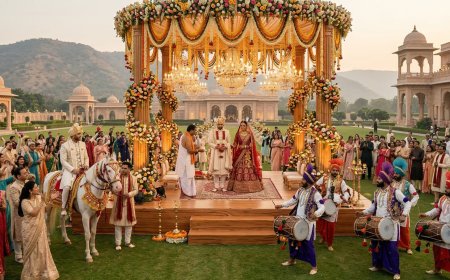
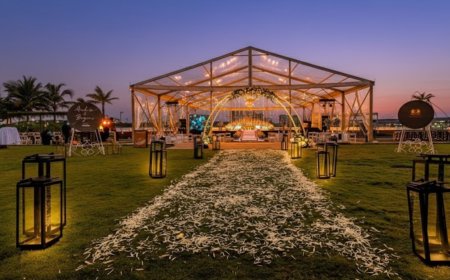
The farmhouse and lawn venue — the outdoor or semi-outdoor event space on the Jalandhar periphery whose appeal is the open-sky ceremony, the spacious grounds, and the aesthetic that the urban banquet hall cannot provide — is the category whose Instagram presence is most seductive and whose operational reality is most variable. The farmhouse venue that photographs beautifully in October may be a logistics challenge in February, whose Jalandhar winter evenings require heating infrastructure that the venue may or may not have. The lawn that accommodates eight hundred guests in a standing cocktail arrangement accommodates considerably fewer in a seated dinner, and the seated dinner capacity that the owner quotes is sometimes an optimistic assessment rather than a tested one.
The Club and Community Hall
The Punjabi cultural clubs, sports clubs, and community halls that have developed wedding facilities as a secondary business are the category that offers the most competitive pricing and the most variable quality. Some are excellent — well-maintained, professionally staffed, with catering relationships that have been refined over years of event delivery. Others are operating at the edge of their infrastructure capacity for the events they are booking, and the NRI family whose wedding pushes against those edges discovers the limits at the moment that is least convenient.
The Contract: What It Must Contain and What to Do When It Does Not
The banquet hall contract in Jalandhar is the document that the community relationship and the owner's personal warmth cannot substitute for, and it is the document that the NRI family must read, understand, and if necessary negotiate before the deposit is paid. Not after. Before.
The Date and Capacity Guarantee
The contract must specify the booking date with complete precision — not "the weekend of March fifteenth" but the specific dates and times for which the venue is exclusively reserved. The capacity guarantee must specify the maximum seated guest count that the hall is warranted to accommodate, not the maximum standing capacity or the maximum total attendance figure that the owner may quote as the hall's capacity. The difference between a hall's stated capacity and its comfortable seated dining capacity is sometimes significant, and the contract's capacity specification should match the family's actual requirement rather than the owner's optimistic figure.
The exclusivity clause — the specification that no other event will be running simultaneously in the venue or on the venue's grounds during the booking period — is the clause that the NRI family most frequently assumes is implicit and most frequently discovers is not. The Jalandhar banquet hall that has a main hall and a lawn and a garden annex may book all three simultaneously for different events, and the family that has booked the main hall may discover on the wedding day that the lawn they expected to have access to for the pre-ceremony photography is occupied by a different family's sangeet. The exclusivity clause must be explicit, specific, and attached to every space the family expects to use.
The Catering Terms
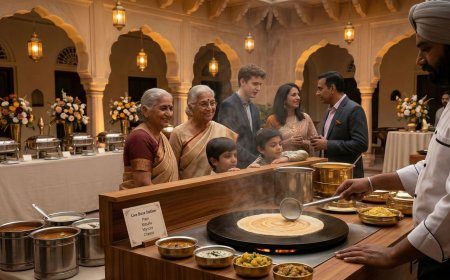
The catering terms in a Jalandhar banquet hall contract are the terms most likely to contain the clauses that the family did not understand at the time of booking and that produce the disputes that are most difficult to resolve once the wedding date has passed. The in-house catering tie-in — the requirement to use the hall's own catering service as a condition of the booking — is present in the majority of Jalandhar standalone hall contracts and is not always disclosed at the initial enquiry stage. The family that has identified an external caterer whose quality it has verified, whose menu it has planned, and whose pricing it has budgeted must establish whether the hall's contract permits external catering before any other conversation about the booking proceeds.
Where the in-house catering tie-in exists and cannot be negotiated away, the contract must specify the per-head catering rate with precision — not a range, not "subject to menu finalisation," but the specific rate for the specific menu the family has agreed. The per-head rate that is left unspecified at the contract stage is the per-head rate that increases between the booking and the wedding, when the family's leverage to negotiate has been eliminated by the deposit and the date commitment.
The minimum guaranteed guest count — the number of guests the family commits to paying for regardless of actual attendance — is a standard provision in Jalandhar catering contracts and is the provision that the NRI family whose guest count is uncertain most needs to understand before signing. A minimum guarantee of six hundred guests in a hall booked for eight hundred means that the family pays for six hundred covers regardless of whether six hundred people attend. The NRI wedding whose Punjabi family invitations produce uncertain attendance numbers — the relatives who confirm from Chandigarh and then do not come, the Canada-based family friends whose travel plans change — is particularly vulnerable to the gap between the minimum guarantee and the actual attendance.
The Cancellation and Refund Terms
The cancellation terms in a Jalandhar banquet hall contract are the terms that the NRI family reads last and needs to understand first, because the deposit that makes the booking real is the deposit that the cancellation terms govern. The standard Jalandhar banquet hall cancellation policy is significantly less generous than the cancellation policies that the NRI family may be accustomed to from venue bookings in Canada or the United Kingdom, and the difference is not a negotiating failure on the family's part — it is the market norm.
The typical cancellation structure in the Jalandhar market involves the loss of the full deposit for cancellations within six months of the event date, a partial refund for cancellations between six and twelve months, and a full refund only for cancellations made more than twelve months in advance. The NRI family whose wedding planning timeline is compressed — whose booking is made eight or nine months before the event — is booking within the partial or no-refund zone from the moment the deposit is paid.
The force majeure clause — the provision governing cancellation due to circumstances beyond either party's control — is a clause whose presence in the contract matters and whose specific terms matter more. The Covid-19 period produced the specific lesson that force majeure clauses in Jalandhar venue contracts were frequently either absent or drafted in ways that favoured the venue rather than the client, and the NRI family booking a significant event should ensure that the force majeure clause is present, balanced, and includes a full refund provision for cancellations that are genuinely outside the family's control.
The Comprehensive Jalandhar Banquet Hall Booking Checklist
| Category | What to Verify | What the Contract Must State | Red Flag |
|---|---|---|---|
| Date and Exclusivity | All spaces exclusively reserved | Specific dates, times, and spaces named | "We'll sort out the details later" |
| Capacity | Seated dining capacity tested | Maximum seated guest count guaranteed | Capacity quoted as standing or total attendance |
| Catering | External caterer permitted or in-house terms clear | Per-head rate fixed, minimum guarantee specified | Per-head rate "subject to menu finalisation" |
| Decoration | External decorator permitted or tie-in terms clear | Decoration package itemised if in-house | Package described verbally only |
| Power Backup | Generator capacity for full hall load | Backup power specification included | "We have generator" without specification |
| Parking | Capacity for expected vehicles | Parking spaces guaranteed | Parking described as "adjacent" or "nearby" |
| Cancellation | Refund structure understood before deposit | Cancellation schedule with specific percentages | No written cancellation policy |
| Force Majeure | Clause present and balanced | Full refund for qualifying circumstances | Clause absent or venue-favourable only |
| Payment Schedule | Full schedule known before commitment | All payment dates and amounts specified | "We'll discuss the balance later" |
| Noise and Timing | DJ and music cutoff time confirmed | Permitted hours specified in contract | Verbal assurance only |
The Things No One Tells You Upfront
The Generator Specification Problem
Every Jalandhar banquet hall owner will confirm, when asked, that the hall has backup power. This confirmation is accurate and also largely meaningless without the specification that the confirmation does not include. The question that produces useful information is not "do you have a generator?" but "what is the generator's KVA rating and does it cover the full hall load including the air conditioning, the sound system, the kitchen, and the lighting simultaneously?" The hall whose generator covers the lighting and the sound system but not the air conditioning is the hall that becomes uncomfortable in May's pre-monsoon heat when the main power fails during the dinner service. May weddings in Jalandhar are warm. The generator specification matters.
The Parking Reality
The parking capacity that a Jalandhar banquet hall quotes is frequently the physical capacity of its owned parking area, which is frequently insufficient for the actual guest count, particularly when the guest count reaches six or eight hundred. The overflow parking that the owner describes as "available nearby" is street parking or a neighbouring property whose availability on a Saturday evening in wedding season cannot be guaranteed by the hall's owner and is not guaranteed in any contract. The NRI family whose guests are arriving from Chandigarh, Delhi, and various points of the Punjab diaspora in a combination of private cars, hired vehicles, and taxis is the family that discovers the parking reality at eight in the evening when the main event is at its peak.
The Noise Curfew and Its Enforcement
Jalandhar's municipal noise regulations specify permitted hours for amplified music at events, and the enforcement of these regulations is neither consistent nor predictable. The hall owner who assures the family that "we manage the authorities" is making a statement that reflects the Jalandhar reality but that cannot be contractually guaranteed. The NRI family planning a wedding where the DJ is a significant element of the event — and in a Punjabi wedding, the DJ is always a significant element — should understand the noise curfew timing for the specific venue's location, should verify the hall's track record of events that have run to the family's desired timing without curfew interruption, and should have a contingency for the event timeline if the curfew is enforced on the night.
The Décor Package Itemisation
The decoration package that the Jalandhar banquet hall includes in its booking price — or offers as an add-on at a seemingly reasonable rate — is a package whose contents are described at the enquiry stage in general terms ("full floral decoration," "stage backdrop," "entrance archway") and whose specific contents are frequently less comprehensive than the general description suggests. The family that books a hall partly on the basis of an included decoration package and that then discovers at the decoration briefing that the "full floral decoration" means a fixed arrangement of artificial flowers rather than the fresh floral design whose photographs featured in the owner's presentation is the family that is either paying significantly more than the package price for the actual decoration it wants or accepting a decoration outcome it did not intend.
The decoration package must be itemised in writing — specific flowers, fresh or artificial, specific areas covered, specific quantities — before the booking is confirmed. The itemisation that exists only in the owner's verbal description is the itemisation that changes between the booking and the event.
The Staff Ratio Reality
The staffing level that a Jalandhar banquet hall deploys for an event is a staffing level that varies with the hall's commercial decisions about that event and that is not specified in most contracts. The hall that provides twenty-five service staff for a six-hundred-person dinner is the hall providing a staff ratio that produces a different service experience than the hall providing fifteen staff for the same event. The NRI family whose guests include the UK-based and Canada-based relatives whose expectations for event service are formed by a different hospitality standard is the family for whom the staffing ratio is a relevant quality variable. The contract should specify the minimum service staff deployment for the event, and the owner who is unwilling to specify this number is the owner who is preserving his flexibility to deploy staff at the level his economics prefer rather than the level the family's event requires.
Common Mistakes NRI Families Make When Booking Jalandhar Banquet Halls
The first mistake is allowing the parents on the ground to confirm a hall before the contract has been reviewed by the NRI family member whose name and resources are behind the booking. The community relationship that makes the parents comfortable — the brother-in-law's connection, the familiar family name — does not protect the family from contract terms that the relationship did not negotiate. The deposit that the parents pay as a courtesy gesture before the contract review is the deposit that converts a preliminary discussion into a legal commitment, and legal commitments made before the contract is understood are the commitments whose implications the family discovers at the worst possible time.
The second mistake is not visiting the hall in person — or sending a trusted proxy — before the deposit is paid. The Instagram photographs and the owner's video tour are marketing materials. The in-person visit reveals the actual condition of the air conditioning, the actual size of the kitchen relative to the catering requirement, the actual parking availability, and the actual quality of the infrastructure whose condition in the photographs and the video is a best-case presentation. The NRI family that cannot visit personally should send a family member or hired consultant whose brief is to assess the hall against the specific requirements rather than to confirm the decision the family has already made.
The third mistake is not getting the verbal commitments in writing before the deposit changes hands. The owner who says "of course you can bring your own caterer" and whose contract contains an in-house catering tie-in is not necessarily a dishonest person. He may be a person whose verbal assurances and written contract were drafted at different moments by people with different priorities. The verbal assurance that is not in the contract is not an assurance — it is a hope. The written contract is the only document whose contents are enforceable.
The fourth mistake is booking too close to the wedding date without understanding the leverage that timeline compression eliminates. The NRI family that books a hall eight months before the wedding is booking with some negotiating leverage — there are alternatives, the deposit has not been paid, the hall owner wants the booking. The same family that is booking four months before the wedding in a peak season month has significantly less leverage, because the alternatives have been reduced by the bookings that preceded the family's decision, and the hall owner knows it. The Jalandhar wedding hall booking should begin twelve to eighteen months before the event date for peak season months.
The fifth mistake is not establishing a single point of accountability for the booking management — one family member, clearly designated, through whom all communications with the hall pass and who is responsible for the contract review, the payment schedule, and the vendor coordination. The Jalandhar wedding whose hall booking is managed simultaneously by the father in Jalandhar, the mother's opinions via WhatsApp from a different number, the bride in Brampton, and the groom's family in a separate thread is the booking whose details fall through the gaps between the conversations. One person. One contract. One communication thread. The family that establishes this structure before the booking begins avoids the specific chaos that the distributed responsibility produces.
What Harpreet's Family's Two Lakh Rupees Taught Them
The two clauses that Harpreet's family had not read before paying the deposit were these. The first was the in-house catering tie-in, which required the family to use Shaan-e-Punjab's catering service for all food and beverage at the event, excluding only the wedding cake, which the contract specified could be sourced externally. The family had planned to bring in a caterer from Amritsar whose dal makhani was a matter of family conviction. The contract made this impossible.
The second was the noise curfew clause, which specified that amplified music must cease by eleven-thirty in the evening on account of the hall's location in a residential-adjacent zone and the municipal requirements applicable to that zone. The family had planned a wedding where the DJ ran until two in the morning. The contract made this impossible.
Gurpreet Singh, the owner, had been sympathetic. He had not been refundable. The two lakh deposit had been paid and the contract had been signed and the contract said what it said.
The family had made the best of it. The Amritsar caterer had not come. The DJ had finished at eleven-thirty. The wedding had been, by most measures, a beautiful and successful event whose guests had eaten well and danced sufficiently. But Harpreet had known, standing in the Brampton car park three months before on a minus-eleven Tuesday evening, that there was a contract she needed to read. She had been right about the contract. She had been too slow about reading it.
Read the contract before the deposit. Visit the hall or send someone whose brief is assessment, not confirmation. Get every verbal commitment in writing. Specify the catering terms, the generator capacity, the staff ratio, and the noise curfew before signing anything. Designate one family member as the single point of accountability and keep all communications in one thread.
The relationship with the owner is real and it is valuable. It is not the contract. Only the contract is the contract.
Published by NRIWedding.com — The Premium Global Platform for Non-Resident Indians Planning Indian Weddings From Abroad.
What's Your Reaction?
 Like
0
Like
0
 Dislike
0
Dislike
0
 Love
0
Love
0
 Funny
0
Funny
0
 Angry
0
Angry
0
 Sad
0
Sad
0
 Wow
0
Wow
0