


































































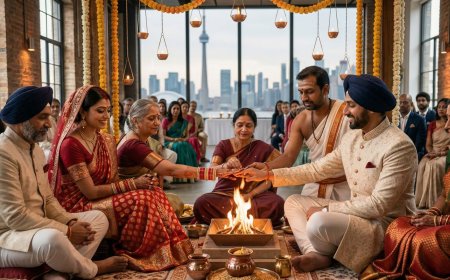



Jalandhar Banquet Halls for Intimate Weddings Under 150 Guests: Elegant, Not Overwhelming
The intimate Indian wedding under 150 guests is not a compromise on Punjabi wedding tradition — it is the fullest possible expression of what that tradition has always meant at its most personal and most generous. This comprehensive guide gives NRI couples the complete framework for planning an elegant intimate wedding in Jalandhar, covering the boutique venue landscape, proportional spatial assessment, aesthetic opportunities that intimate scale unlocks, service quality evaluation, family expectation management, and the specific planning mistakes that consistently undermine smaller celebrations. From boutique hotel ballrooms and heritage properties to boutique farmhouses and personalised decoration briefs, this is the definitive intimate wedding planning guide for NRI couples planning Jalandhar weddings from abroad.

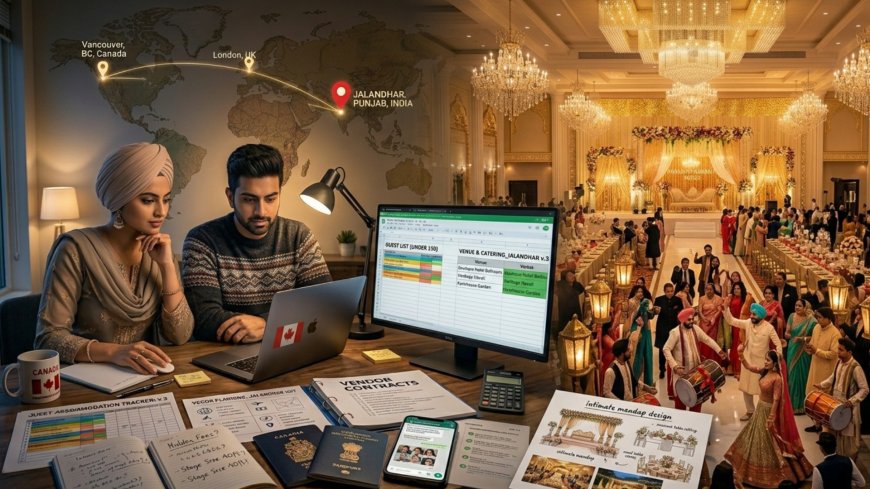
Jalandhar Banquet Halls for Intimate Weddings Under 150 Guests: Elegant, Not Overwhelming
The Wedding That Was Always Meant to Be Small
It started as a practical decision.
You were sitting in your living room in Mississauga on a Tuesday evening, working through a guest list that had begun at eighty names and was now, after three rounds of additions from both sides of the family, sitting at a number that made you put down your pen and look at your partner in the particular way that couples look at each other when they both know the conversation they are about to have.
The guest list was not the problem. The guest list was a symptom. The real question — the one underneath the guest count and the venue size and the catering budget — was what kind of wedding you actually wanted.
And when you answered that question honestly, without the filter of expectation and tradition and the assumption that a Punjabi wedding in Jalandhar necessarily means a certain scale — the answer was smaller than your mother had been assuming and more intentional than the standard Jalandhar wedding template accommodates.
You wanted a wedding where every person in the room was someone whose presence genuinely mattered. Where the dinner conversation could be heard across the table. Where the evening felt like a celebration among people who actually knew each other rather than a social obligation fulfilled across a hall of acquaintances. Where the décor could be thoughtful and layered rather than scaled to a space so large that detail gets lost at fifty meters. Where the catering team could execute with the kind of precision that five hundred covers makes impossible.
You wanted, in the language that a certain kind of NRI couple has quietly been using for the last several years to describe what they actually want as opposed to what tradition assumes they want, an intimate wedding.
And then came the conversation with your mother.
Who had been planning this wedding in her mind since you were approximately eleven years old. Whose vision of the event involved a guest count that was meaningfully higher than one-fifty. Whose reference points for what a proper Jalandhar wedding looks like were calibrated to a scale and a social visibility that an intimate celebration does not deliver in the same way.
The negotiation that followed — warm, loving, occasionally tense, and ultimately resolved in favor of a guest list under one-fifty with several important concessions on the quality of the venue, the food, and the evening's production — is a negotiation that is happening in households across the NRI diaspora with increasing frequency. Because the intimate wedding is not a trend. It is a genuine shift in how a growing number of educated, internationally-traveled NRI couples are thinking about what a wedding should be and what it should feel like.
And Jalandhar, which has spent decades building a wedding infrastructure calibrated to scale and spectacle, is beginning — quietly, unevenly, but genuinely — to develop the venues, the vendors, and the aesthetic vocabulary to serve couples who want something different.
This guide is for those couples. It is the complete resource for planning an intimate wedding under one-fifty guests in Jalandhar — covering the venue landscape, the specific qualities that make a small space work for a premium celebration, the aesthetic opportunities that intimate scale creates, the family management dimension, and the planning intelligence that allows NRI couples to build something that is genuinely, elegantly, memorably their own.
The Core Reality: What the Intimate Wedding Market in Jalandhar Actually Looks Like
The honest starting point for any NRI couple planning an intimate Jalandhar wedding is understanding what the market does and does not yet offer — because the gap between the aspiration and the available infrastructure is real, and navigating it successfully requires knowing where it exists.
The Jalandhar wedding market is calibrated to scale. The city's most established and most celebrated wedding venues — its largest banquet halls, its most prominent hotel ballrooms — are designed, staffed, and priced for events of three hundred guests and above. The per-head economics that drive their catering packages, the infrastructure investments that justify their venue costs, and the operational model their teams have spent years perfecting are all built around the assumption of significant guest volume. These venues can accommodate smaller events within their spaces, but they do so by deploying infrastructure that is sized for larger numbers and charging accordingly — which produces an intimate event in a hall that feels undersized for its contents rather than appropriately matched to them.
The intimate venue category is growing but uneven. Jalandhar's response to the growing demand for intimate wedding venues has produced a range of options that varies considerably in quality, sophistication, and genuine suitability for premium NRI intimate celebrations. At one end of the range are smaller banquet halls that are simply the city's mid-tier venues — functional, affordable, and calibrated to more modest local wedding budgets rather than to the premium intimate experience that NRI couples are seeking. At the other end are a smaller number of genuinely thoughtful boutique spaces — hotel venues with intimate ballrooms, boutique farmhouse properties with appropriate smaller-scale function spaces, and private villa-style properties that have invested in the aesthetic quality, the hospitality infrastructure, and the operational sophistication that a premium intimate celebration requires.
The aesthetic opportunity of intimate scale is largely untapped. This is perhaps the most important insight for NRI couples approaching the intimate Jalandhar wedding market. Because the wedding infrastructure has historically been calibrated to scale, the aesthetic vocabulary of the Jalandhar wedding has been calibrated to distance — to decoration that reads at fifty meters, to statement pieces that register across a hall of five hundred, to visual drama that compensates for the dilution of intimacy that large numbers inevitably produce. The intimate wedding under one-fifty guests operates at a completely different aesthetic register — one where decoration can be detailed and textural rather than monumental, where table settings can be individually considered rather than mass-deployed, where the spatial experience of the venue is felt rather than merely observed. This aesthetic register is genuinely exciting and genuinely underserved in the Jalandhar market, which means that the couple who pursues it has the opportunity to create something that feels genuinely distinctive rather than simply a scaled-down version of the standard Jalandhar wedding template.
What Makes a Venue Work for an Intimate Wedding Under 150 Guests
Before any specific venue assessment, NRI couples planning intimate Jalandhar weddings need to understand the specific qualities that make a smaller venue work for a premium celebration — because these qualities are different from the qualities that matter at scale, and evaluating venues against the wrong criteria produces wrong decisions.
Quality 1 — Proportional Spatial Relationship
The most fundamental quality of a good intimate venue is the proportional relationship between the space and the guest count. A venue that is appropriately sized for one hundred and twenty guests should feel full, warm, and inhabited at that number — not sparse and underpopulated, and not cramped and overcrowded.
The spatial proportionality problem works in both directions. A small guest count in a very large space creates an atmosphere of emptiness that no decoration scheme fully resolves. The decorators who work in large-format spaces will tell you that even the most elaborate installation cannot generate genuine warmth in a space that is meaningfully too large for the number of people in it. The intimate wedding that happens in a hall designed for five hundred guests will always feel like it is using the space reluctantly rather than inhabiting it with confidence.
The opposite problem — a space that is too small for its guest count and the event infrastructure the couple wants to deploy — creates physical discomfort and logistical constraint that compromises the guest experience in the opposite direction. The mandap that cannot be sized appropriately because the ceiling is too low, the dance floor that is too small for the guest count it is trying to serve, the buffet stations that create bottlenecks because the circulation space is insufficient — these are intimate venue problems that proportionality assessment prevents.
How to assess proportional suitability from abroad:
Request a floor plan of the venue with dimensions. Ask your local planner or proxy to assess the space specifically for your guest count with your intended event configuration — mandap dimensions, dance floor area, table layout, buffet station placement, and bar positioning. The floor plan assessment, combined with a video walkthrough that conveys the spatial scale, is a more reliable proportionality assessment than any capacity figure the venue quotes.
Quality 2 — Architectural Character and Inherent Aesthetic Quality
At intimate scale, the venue's own architecture and aesthetic character matter far more than they do at large-scale events. When a hall of five hundred guests is filled with elaborate decoration, the space's own architectural character is largely subsumed by the decoration. When one hundred and twenty guests occupy a venue with thoughtful decoration, the space's inherent character remains visible and contributes actively to the atmosphere.
This means that intimate venue selection rewards genuine aesthetic quality in the space itself — the ceiling detail, the floor material, the wall texture, the natural light quality, the architectural proportions — in a way that large-scale venue selection does not. A boutique hotel ballroom with genuine architectural character, warm lighting infrastructure, and quality finish materials will produce a more powerful intimate wedding atmosphere than a functionally adequate but aesthetically neutral smaller hall, even if the functional specifications are similar.
For NRI couples building mood boards for intimate Jalandhar weddings:
The venue's aesthetic contribution is part of your decoration design. Choose a venue whose own visual character supports and advances your wedding aesthetic — whose architecture, materials, and spatial quality speak the same visual language as your decoration brief. This design integration is what creates the cohesive, effortlessly beautiful atmosphere that distinguishes genuinely successful intimate weddings from events that are simply small.
Quality 3 — Quality of Service at Intimate Scale
Large venues are optimized for high-volume service — the choreography of feeding hundreds of guests simultaneously, the management of complex multi-station catering setups, the logistics of moving large numbers of people through a function program efficiently. These are genuine operational skills that the best large-venue catering teams have refined extensively.
Intimate weddings require a different service quality — one that is more personal, more attentive, and more individually responsive. The service at a one-hundred-twenty-guest dinner should feel like each table is being individually looked after rather than managed as part of a coordinated mass service operation. The ability to deliver this quality of personalised service is not universal among Jalandhar's catering operations, and it is worth assessing specifically for any venue being considered for an intimate celebration.
Questions to ask about service quality at intimate scale:
What is the service staff ratio for an intimate event of your specific guest count? At intimate scale, the appropriate ratio is higher than at large-scale events — one server per fifteen to twenty guests rather than one per twenty-five to thirty. Does the catering operation have experience of premium intimate events, or is their expertise primarily in high-volume large-scale service? Can they provide references from couples whose intimate weddings they have catered — and are those references from events whose guest counts and quality expectations are comparable to yours?
Quality 4 — Flexibility for Personalisation
Intimate weddings create and require more opportunities for personalisation than large-scale events — and the venue's willingness and capability to accommodate that personalisation is a meaningful selection criterion.
A well-designed intimate wedding has individually considered table settings rather than mass-deployed standard linen. It has place cards with personal notes. It has a seating arrangement that has been thought about in terms of the conversations it will create. It has food and beverage choices that reflect the couple's genuine preferences rather than the catering package's standard repertoire. It has entertainment that is curated for the specific group rather than programmed for a generic crowd.
Each of these personalisation opportunities requires a venue that does not impose restrictions on the couple's creative and logistical choices — and that has operational flexibility to accommodate elements that deviate from its standard event template.
What to assess:
What is the venue's policy on personalised place settings, individual menu cards, and bespoke table arrangements? Can the catering team incorporate specific dishes or food and beverage choices that are not on the standard menu? Is the venue willing to accommodate unusual entertainment formats — a live acoustic performance, an intimate spoken word element, a personalised audio-visual installation — that are appropriate for intimate scale but outside the standard Jalandhar wedding program?
The Venue Landscape: Categories That Work for Intimate Jalandhar Weddings
Boutique Hotel Ballrooms and Private Dining Rooms
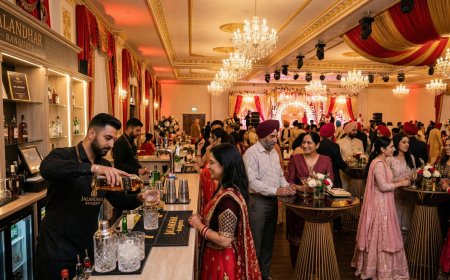
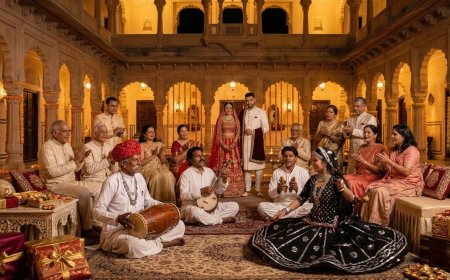
Several of Jalandhar's better hotel properties have invested in smaller function spaces — boutique ballrooms, private dining rooms, and garden terraces — that are specifically dimensioned for events of fifty to one-fifty guests. These spaces benefit from the hotel's service infrastructure, accommodation integration, and professional operational management while offering a spatial scale and an aesthetic intimacy that the hotel's main ballroom cannot provide.
The best of these boutique hotel function spaces have genuine architectural quality — considered ceiling details, quality floor finishes, ambient lighting infrastructure that is built into the space rather than requiring full event lighting deployment, and acoustic properties that allow dinner conversation to function at a human scale rather than competing with the reverberant acoustic of a large hall.
What to look for specifically:
The transition between inside and outside — boutique hotel spaces that open onto private gardens or terraces allow intimate outdoor elements to be incorporated into the event program, creating the spatial variety across the evening that makes an intimate celebration feel structured and considered rather than confined. The integration of indoor and outdoor at intimate scale is one of the most powerful design tools available and one that good boutique hotel spaces support well.
The accommodation integration — for NRI families with significant out-of-town guest populations, the ability to accommodate the wedding party and priority guests in the same property as the function space is a guest experience advantage that standalone banquet halls cannot offer. Assess the room count, room quality, and accommodation rate structure for the hotel's smallest function spaces specifically.
Heritage Properties and Converted Residences
Jalandhar and its surrounding area have a small but genuine inventory of heritage properties — older residential buildings, converted havelis, and private estate properties that have been adapted for event use. These properties offer the architectural character, the spatial intimacy, and the visual distinctiveness that purpose-built banquet halls rarely provide, and they are particularly well suited to intimate celebrations whose aesthetic ambitions are highest.
The best of these properties have invested in the operational infrastructure that transforms a beautiful building into a functional event venue — catering kitchen capacity, generator backup, washroom provision, and parking management — while preserving the architectural character that makes them visually extraordinary. They are more operationally demanding to use than purpose-built venues and typically require more active vendor coordination, but the aesthetic reward for couples who choose them and manage the operational complexity well is correspondingly greater.
What to assess at heritage properties:
Infrastructure adequacy is the primary assessment challenge at heritage properties. A building that is architecturally magnificent may have plumbing that is inadequate for event-scale washroom demand, electrical infrastructure that cannot support event lighting and sound requirements without supplementary generator provision, and catering facilities that require a fully equipped external caterer rather than a venue-based team. Assess each infrastructure element specifically against your event requirements — and if necessary, build the cost of addressing infrastructure gaps into your budget before comparing the total cost against more operationally straightforward alternatives.
Boutique Farmhouse Properties
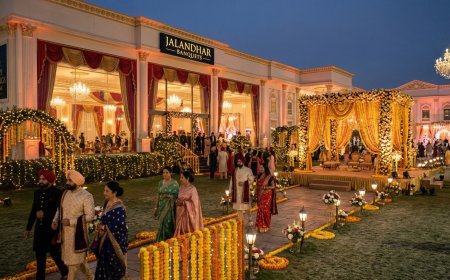
The farmhouse venue category that dominates much of the discussion about intimate Jalandhar weddings has its most compelling examples in the boutique properties — smaller farmhouses with manicured grounds, appropriate indoor-outdoor function spaces, and on-site accommodation cottages that create the residential wedding experience that NRI couples increasingly value.
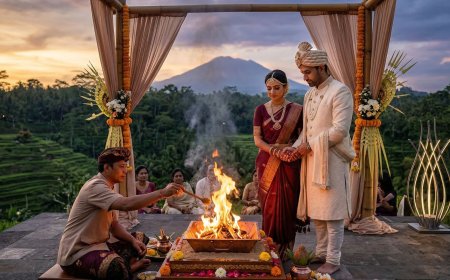
The boutique farmhouse at its best provides a setting that is impossible to replicate indoors — the open-sky evening atmosphere, the natural light during daytime functions, the spatial freedom of multiple distinct outdoor zones that allow different functions to feel genuinely separate from each other. For an intimate NRI wedding whose program spans multiple functions across multiple days, the spatial variety of a well-designed boutique farmhouse creates a multi-day experience that feels rich and layered rather than repetitive.
The seasonal constraint:
As discussed throughout this guide's broader context, Jalandhar's climate restricts the farmhouse wedding to specific months. October to November and late February to March are the genuine sweet spots. Outside these windows, the farmhouse's outdoor advantages become outdoor liabilities, and the infrastructure investment required to manage the weather — temporary enclosed structures, climate control equipment, covered walkways — adds cost and reduces the spontaneous outdoor quality that makes the farmhouse setting appealing.
For NRI couples whose date flexibility allows them to target the October to November window specifically, the boutique farmhouse for an intimate celebration under one-fifty guests is the option with the highest aesthetic ceiling and the most distinctive guest experience available in the Jalandhar market.
Smaller Purpose-Built Banquet Halls
It would be incomplete to discuss the intimate Jalandhar wedding venue landscape without acknowledging that a number of the city's smaller purpose-built banquet halls are genuinely appropriate for intimate celebrations — not as aesthetic destinations but as operationally reliable, well-priced, logistically straightforward options for couples whose primary priorities are catering quality, operational reliability, and value rather than spatial distinctiveness and visual drama.
The best of these smaller halls have invested in finish quality, ambient lighting infrastructure, and catering operations that punch above their tier — producing events that feel premium within their scale even if they do not aspire to the architectural ambition of the boutique hotel or heritage property category.
When this option makes sense:
For NRI couples whose family context requires a venue that is established, familiar, and socially legible within the Jalandhar wedding community — a venue whose name carries community recognition that a boutique farmhouse or heritage property may not — a quality smaller banquet hall delivers the social visibility alongside the intimate scale. This is not an unimportant consideration for many NRI families whose wedding is as much a community event as a personal celebration, and choosing a venue that the community recognizes and respects is a genuine value that the boutique alternatives do not always provide.
The Aesthetic Opportunity: What Intimate Scale Makes Possible
This is the dimension of intimate wedding planning that most guides underserve — the creative opportunities that smaller guest counts and more appropriately sized spaces actually unlock.
Table-level decoration detail: At one hundred and twenty guests across ten to twelve tables, each table setting can be individually designed and executed to a level of detail that is simply not viable at five hundred guests across fifty tables. Individual place cards with personal notes. Considered table arrangements that place guests in conversation groups with genuine thought. Floral centerpieces that are genuinely distinct from each other rather than uniform repetitions of a single design. This table-level detail is one of the most powerful aesthetic tools in intimate wedding design and one that large-scale events cannot access.
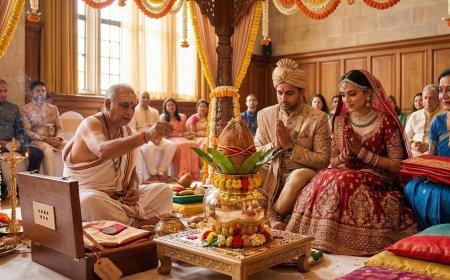
The mandap as a design focal point rather than a scale statement: In a large hall, the mandap must compete with the scale of the space for visual primacy — which drives mandap design toward the monumental and the architecturally overwhelming. In an intimate venue appropriately sized for one-fifty, the mandap can be smaller, more refined, and more beautiful — its visual power coming from quality of detail rather than scale of construction. An exquisitely designed small mandap in an intimate space is more visually powerful than an enormous statement mandap in a hall that dwarfs it.
The guest experience of genuine connection: The most frequently cited quality of intimate weddings by guests who have attended them is the experience of genuine connection — with the couple, with other guests, and with the occasion itself. In a venue of appropriate scale, conversation is audible, eye contact across the room is possible, and the couple is physically proximate to every guest throughout the evening. This experience of genuine presence — of being at a wedding rather than merely attending one — is what intimate scale makes possible and what large-scale events cannot replicate.
Photography at intimate scale: Wedding photography in an intimate, appropriately sized venue produces a qualitatively different visual record than large-scale event photography. The photographer can be close to every significant moment. The backgrounds are consistent, beautiful, and controlled. The emotional expressions of guests during genuine moments of connection are capturable because the photographer is close enough to capture them. The intimate wedding's photographic record, at its best, feels more like a document of genuine human experience than a visual record of a spectacular event.
Managing Family Expectations: The Intimate Wedding Conversation
For NRI couples committed to an intimate wedding under one-fifty guests, the most challenging planning conversation is often not with vendors or venues but with family. And it deserves honest, practical attention.
What the resistance is actually about:
When parents and extended family resist the intimate wedding proposal, the resistance is rarely purely about guest count. It is about visibility — the social statement that the scale of the event makes within the Jalandhar community. It is about relationships — the genuine obligation the family feels toward the large network of relatives and family friends whose expectation of an invitation to the wedding is a relationship currency with real social value. And it is about meaning — the deeply held belief, rooted in generations of celebration at scale, that a wedding's significance is expressed through its generosity of scale rather than the precision of its intimacy.
None of these concerns is invalid. They are genuine expressions of a cultural value system that has served the Punjabi community well across generations. They deserve to be engaged with directly and respectfully rather than dismissed as tradition operating against the couple's interests.
The frame that works:
The most effective reframe for the intimate wedding conversation within NRI Punjabi families is not "we want something smaller and different" — which positions the couple's choice as a departure from tradition. It is "we want every guest to feel genuinely celebrated" — which positions the intimate choice as an expression of the same hospitality values that have always defined Punjabi celebration, simply delivered with greater precision and greater personal attention.
A wedding of one hundred and twenty guests where every person is individually welcomed, individually seated with genuine thought, individually served with care, and individually made to feel that their presence was specifically valued is an expression of Punjabi hospitality that is more complete, not less, than an event where five hundred people are processed through a function that cannot attend to each of them at the individual level the culture's hospitality values actually demand.
This frame does not always resolve the conversation cleanly. But it moves it from an argument about tradition versus modernity to a conversation about how best to express shared values — which is a more productive and more resolvable conversation.
The quality premium as a family conversation:
The budget that would host three hundred guests at a modest per-head standard can host one hundred and twenty guests at a genuinely premium standard. Better catering. Better venue. Better decoration. Better photography. A wedding experience that reflects the family's standards and aspirations more completely at intimate scale than it could at three times the guest count and the same total budget. This economic reality — that intimate scale and premium quality are not in tension but in alignment — is worth making explicit in the family conversation.
Common Mistakes NRI Couples Make Planning Intimate Jalandhar Weddings
Mistake 1: Choosing a Venue That Is Too Large and Compensating With Decoration The temptation to book a larger venue "just in case" and then fill it with decoration to create intimacy consistently underdelivers. No decoration scheme fully compensates for a space that is too large for its guest count. Start with the right spatial scale and let the decoration enhance rather than correct.
Mistake 2: Applying Large-Scale Decoration Logic to an Intimate Space Statement pieces designed for large halls — enormous floral arches, towering centerpieces, monumental mandap structures — look wrong in intimate spaces. They crowd the space, overwhelm the guests, and create a visual dissonance that undermines the intimacy the venue was chosen to provide. Briefing your decoration team specifically on the intimate scale imperative — detail over monumentality, texture over drama, warmth over spectacle — is essential.
Mistake 3: Under-Investing in Catering Quality Because the Scale Seems to Justify It The intimate wedding's smaller guest count creates a temptation to reduce the catering investment per head on the logic that fewer guests require less cost. The opposite logic is more correct. An intimate wedding is experienced at closer range and with more individual attention than a large-scale event, which means that catering quality is more directly felt by each guest. Invest the per-head catering budget upward at intimate scale, not downward.
Mistake 4: Not Leveraging the Entertainment Opportunity of Intimate Scale Large-scale entertainment — the full DJ production, the theatrical sangeet performance program — is designed for the dynamics of large crowds. Intimate scale creates opportunities for entertainment formats that large events cannot support — a live acoustic performance at dinner, a jazz quartet for the cocktail hour, a personalised audio-visual presentation of the couple's story that works emotionally at close range in a way that it cannot in a hall of five hundred. Explore entertainment formats that are calibrated to your intimate scale rather than simply scaling down the large-format program.
Mistake 5: Not Communicating the Intimate Vision to Every Vendor The intimate wedding requires every vendor — decorator, caterer, photographer, entertainment — to understand and commit to the intimate aesthetic register. A photographer who shoots intimate weddings as scaled-down versions of large events rather than as a distinct photographic experience will produce work that misses what intimate scale makes possible. A decorator whose brief is "make it beautiful for one-twenty" rather than "create an intimate, layered, detail-rich visual experience for one-twenty" will produce work that is competent but not calibrated to the opportunity. The intimate wedding brief must be explicit and consistent across every vendor.
The Emotional and Cultural Dimension: Reclaiming Intimacy as a Punjabi Value
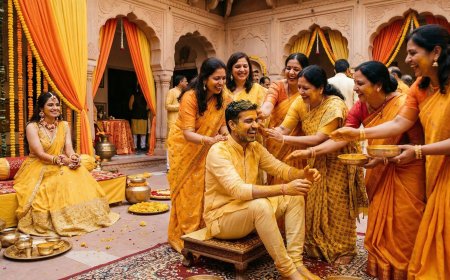
There is a historical revisionism that happens when Punjabi wedding culture is reduced entirely to its most visible, most large-scale, most spectacular expressions. Because the intimacy, warmth, and personal generosity that are at the absolute heart of Punjabi hospitality have never been exclusively expressed through scale. The mehendi of your grandmother's generation happened in the courtyard of the family home with the women who knew the bride. The morning prayers before the ceremony were intimate family moments. The moments of genuine connection — the bride's final night in her family home, the family gathering before the baraat, the quiet moments between functions — have always been intimate.
The intimate wedding under one-fifty guests does not depart from Punjabi wedding culture. It recovers something that the decades of escalating scale have partially obscured — the understanding that a celebration's meaning is not proportional to its size, and that the warmth of genuine personal hospitality is most fully expressed not when it is spread most widely but when it is concentrated most thoughtfully.
For NRI couples who carry both the deep emotional connection to Punjabi celebration and the global perspective on what makes an event genuinely memorable and genuinely meaningful, the intimate wedding is not a compromise. It is a recovery.
Intimate Wedding Planning Checklist for NRI Couples in Jalandhar
Venue Selection
- Assess proportional suitability specifically for your guest count and event configuration
- Evaluate venue's architectural character as an active contribution to decoration design
- Confirm service staff ratio appropriate for intimate scale
- Assess vendor flexibility and personalisation policy
- Request references from intimate wedding couples specifically
- Conduct video walkthrough assessing spatial scale at event light conditions
Decoration Brief
- Brief decoration team explicitly on intimate scale aesthetic register
- Specify detail and texture over monumentality and spectacle
- Design mandap for intimate visual quality rather than large-hall scale
- Plan individual table settings with genuine personal consideration
- Confirm decoration team has intimate wedding portfolio experience
Catering and Service
- Invest per-head catering budget upward for intimate scale quality premium
- Confirm menu personalisation capability beyond standard package
- Establish service staff ratio commitment in contract
- Plan place settings and menu cards as integrated design elements
- Brief catering team on dietary requirements for international guests
Entertainment
- Explore entertainment formats calibrated to intimate scale
- Brief entertainment vendors on intimate atmosphere imperative
- Plan acoustic quality specifically for intimate dinner conversation
- Consider personalised audio-visual or live performance formats
Family Management
- Frame intimate choice as expression of genuine Punjabi hospitality values
- Present quality premium argument with specific cost comparison
- Involve parents in venue selection process to build shared ownership
- Communicate personalisation opportunities that intimate scale creates
The Wedding That Felt Like Everyone Was There for You
Here is what the guests at an intimate Jalandhar wedding remember.
They remember that they could hear the conversation at their table. They remember that the couple came to their table personally during the dinner and stayed for more than a moment. They remember the detail in the decoration — the specific flower arrangement, the personal note on the place card, the individually considered menu that reflected the couple's actual taste rather than a standard catering package. They remember the food arriving hot and being genuinely extraordinary. They remember the feeling, sustained across the entire evening, that this wedding was built for them — not for five hundred people, but for them specifically and the people seated alongside them.
They do not remember the size of the hall. They do not remember the scale of the mandap. They do not count the number of tables or the number of dishes at the buffet.
They remember how it felt to be there. And at an intimate wedding done well, how it felt to be there is the feeling of being genuinely, personally, completely celebrated.
That is what the wedding under one-fifty guests in Jalandhar can deliver. Not as a compromise on the Punjabi wedding tradition. Not as a concession to budget or logistics. But as the fullest possible expression of what that tradition has always been at its best — generous, warm, personal, and completely present to the people gathered within it.
Plan it with intention. Execute it with quality. And let the intimacy do what only intimacy can.
What's Your Reaction?
 Like
0
Like
0
 Dislike
0
Dislike
0
 Love
0
Love
0
 Funny
0
Funny
0
 Angry
0
Angry
0
 Sad
0
Sad
0
 Wow
0
Wow
0