


















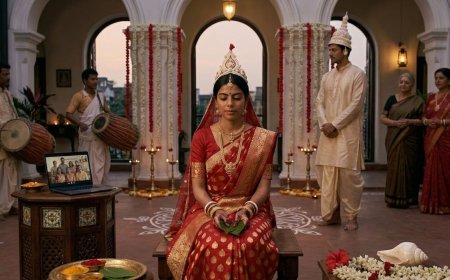



























Before the Vows, Tell the Whole Story: How NRI Couples Are Reimagining Pre-Wedding Shoots Through the Lens of Indian Regional Identity
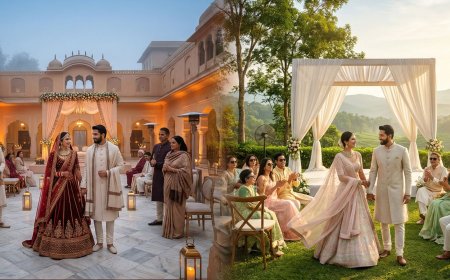
The most extraordinary pre-wedding shoots in the Indian diaspora are no longer about generic scenic backdrops — they are rooted in the specific visual language of India's regional traditions. From Phulkari-draped Punjabi sessions in Yorkshire's rapeseed fields to Kashmiri pheran portraits in Canadian maple forests, NRI couples across the UK, Canada, Australia, and UAE are reclaiming cultural identity through photography. This guide covers ten Indian communities, location strategies for shoots abroad and in India, costume sourcing, photographer briefing, and how to create images that tell the story only your family can tell.


The pre-wedding shoot has become one of the most personal creative acts in modern Indian wedding culture — and for NRI couples navigating life between two worlds, it has become something more: a declaration of cultural identity, a visual love letter to a homeland, and a way of saying, before the ceremony begins, exactly who you are and where you come from. The most extraordinary pre-wedding shoots happening right now are not taking place in generic scenic locations. They are taking place inside the specific, irreplaceable visual language of India's regional traditions.
You have seen the photographs. The couple in coordinated outfits against a European skyline, the golden hour light doing its reliable best, the expressions perfectly calibrated between candid and composed. Beautiful, yes. Technically accomplished, certainly. But when you look at them, you feel something missing — some specific gravity, some rootedness, some story that only your family could tell.
You are in Toronto or Melbourne or Abu Dhabi, and you are planning a pre-wedding shoot, and the question underneath every mood board you have built at midnight is not really about locations or outfits or lighting. It is about this: how do you make a photograph that could only ever be of you? That carries your language, your landscape, your people's particular way of being in the world?
The answer is closer than a flight to Santorini. It is in the block-printed cotton of a Rajasthani dupatta. It is in the chai glass on a Punjabi winter morning. It is in the jasmine that a Tamil bride weaves into her hair before anything else. It is in the specific way a Kumaoni mountain holds the light at four in the afternoon. Your pre-wedding shoot is not a lifestyle photoshoot. It is a portrait of a lineage. It is time it looked like one.
🌟 DID YOU KNOW?
The pre-wedding shoot as a distinct wedding photography genre emerged in India in the early 2000s, influenced by Bollywood film aesthetics, but has since evolved into one of the most culturally expressive photography traditions in the world. India now has over 15,000 professional wedding photographers, many of whom specialise exclusively in regional and heritage-inspired pre-wedding photography.
A 2023 survey by WedMeGood, India's largest wedding planning platform, found that over 62% of NRI couples now specifically request culturally themed or regionally inspired pre-wedding shoots — up from 31% in 2018 — making it the fastest-growing segment of wedding photography among the diaspora.
The most-saved pre-wedding photography content on Indian wedding Instagram accounts consistently features regional cultural elements — folk costumes, heritage architecture, traditional crafts, and natural landscapes specific to a community's homeland — outperforming generic destination shoots by an average engagement margin of 3 to 1.
What Is a Regionally Inspired Indian Pre-Wedding Shoot?
A regionally inspired pre-wedding shoot is a photographic session designed around the specific visual culture, landscape, textile heritage, and emotional geography of a couple's Indian community of origin. It is distinct from a generic "Indian aesthetic" shoot — which might involve any combination of marigolds, mehendi, and a heritage building — in that it draws deliberately and specifically from one or more regional traditions, creating images that are irreplaceable because they could not have been made anywhere else or by anyone else.
At its best, a regional pre-wedding shoot functions as a smriti chitr [memory portrait] — a visual document of identity that exists at the intersection of love story and cultural inheritance. The couple is the subject, but the community is the context. The photographs tell two stories simultaneously: this is who we are to each other, and this is who we are to our people.
The session typically involves choices across several dimensions: location, which might be a heritage site, a natural landscape, a specific neighbourhood, or a diaspora community space; costume, which draws from the regional textile and jewellery traditions of the community; props and ritual objects, which might include specific regional craft items, food, or ceremonial elements; and mood, which is shaped by the specific emotional register of the community's aesthetic — the warmth of a Rajasthani sunset, the cool green of a Kerala backwater morning, the dramatic shadow of a Himalayan ridge.
The sahitya [narrative] of the shoot — the story it tells — is constructed in pre-production through conversations between the couple, the photographer, and ideally a cultural advisor or stylist who understands the specific regional tradition being honoured.
Community Comparison: Regional Traditions That Inspire Extraordinary Pre-Wedding Shoots
| Community/State | Visual Signature | Ideal Location | Traditional Costume Element | Prop or Cultural Detail | How NRIs Recreate This Abroad |
|---|---|---|---|---|---|
| Himachali | Mountain light, pine forests, traditional Kullvi shawls, wooden architecture | Kullu Valley, Shimla's old town, Spiti Valley | Kullvi topi [cap] for groom; Himachali pattu [woollen wrap] for bride | Handwoven baskets, local wildflowers, wooden charkha | Scottish Highlands or Canadian Rockies for landscape; Himachali cultural associations for costume sourcing |
| Garhwali | Terraced fields, Himalayan panoramas, handloom fabrics in earthy tones | Auli, Chopta, Lansdowne, old Srinagar-Garhwal town | Garhwali ghaghra-choli in handloom cotton; groom in traditional dhoti and angrakha | Brass water vessels, local grain baskets, temple bells | Lake District UK or Blue Mountains Australia for terrain; Garhwali NRI associations for costume |
| Kumaoni | Apple orchards, oak forests, stone architecture, soft mountain light | Munsiyari, Binsar, Almora's old bazaar | Kumaoni Pichhora [a traditional yellow sari worn at ceremonies] for bride | Copper vessels, local stone grinder, wildflower garlands | Yorkshire Dales or Okanagan Valley orchards; Pichhora sourced from Kumaoni artisan platforms |
| Ladakhi | High altitude desert, monastery architecture, dramatic rock faces, stark beauty | Nubra Valley, Pangong Lake, Leh's old palace | Perak [elaborate turquoise headdress] for bride; traditional Goncha robe for groom | Prayer flags, butter lamps, stone mani walls | Iceland or Atacama Desert for landscape drama; Ladakhi cultural dress available through Himalayan craft NGOs |
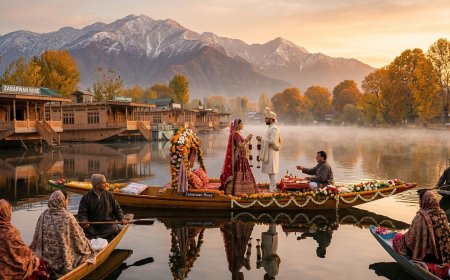
| Kashmiri Pandit | Chinar trees in autumn gold, Dal Lake, old wooden architecture, papier-mâché | Dal Lake, Nishat Bagh, Pahalgam meadows | Kashmiri Taranga [head covering] for bride; traditional Kashmiri pheran [cloak] | Samovar [tea urn], lotus flowers, Kashmiri carpet | Canadian maple forests in October for chinar colour palette; pheran available from Kashmiri artisan platforms |
| Punjabi | Mustard fields, old Havelis, golden light, vibrant colour contrasts | Wagah border area, Amritsar's old city, Punjab's mustard fields in February | Phulkari embroidered dupatta; groom in kurta with traditional jutti [footwear] | Wooden charpoy [bed frame], brass lassi glasses, sugarcane | Yellow rapeseed fields in UK or Canada in May; Phulkari dupattas available across all diaspora cities |
| Marathi | Konkan coastline, Sahyadri forts, green paddy fields, temple architecture | Raigad Fort, Konkan villages, Lavasa hills | Nauvari [nine-yard sari] for bride; traditional Pheta [turban] for groom | Kolhapuri chappals, brass puja thali, sugarcane stalks | Sydney's Royal National Park for coastal greens; Nauvari draping specialists available in Melbourne |
| Tamil | Temple gopurams [towers], banana groves, Chettinad architecture, jasmine | Madurai's Meenakshi Temple environs, Chettinad mansions, Kumbakonam | Kanjivaram silk sari; bride adorned with gajra [jasmine garland] in hair | Bronze Nataraja, kolam floor art, banana leaf | Hindu temples in UK, Canada, Australia for architectural backdrop; Kanjivaram available across diaspora |
| Bengali | River ghats, terracotta temple towns, jute fields, monsoon light | Bishnupur's terracotta temples, Shantiniketan, Hooghly riverside | Tant [handloom cotton] sari in red and white; groom in dhoti and kurta with shawl | Shola pith decoration, earthen pots, white shiuli flowers | Autumn riverside locations in UK or Canada; Tant saris available from Bengali NRI suppliers |
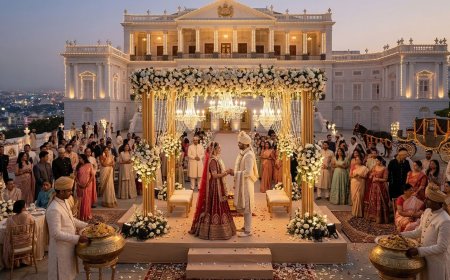
| Rajasthani | Fort architecture, desert dunes, stepwells, block-print textiles, camel silhouettes | Jaisalmer dunes, Jodhpur's blue city, Jaipur's stepwells, Udaipur's lakes | Lehenga in block-print or bandhani; groom in Rajasthani safa [turban] and achkan | Camel, vintage brass vessels, block-print fabric throws, jharokha [carved window] | Moroccan-style architecture in Dubai; block-print fabrics widely available; jharokha props from Indian décor suppliers |
The Meaning Behind the Regional Pre-Wedding Shoot
Photography, in the Indian philosophical tradition, is a form of darshan [sacred witnessing] — the act of seeing and being seen as a form of blessing. When you are photographed in the visual language of your ancestors, something more than documentation is happening. You are placing yourself inside a continuum. You are saying: I come from here. This is what my people look like when they are in love.
The regional pre-wedding shoot matters for NRI couples with a specific urgency that goes beyond aesthetics. Living abroad means living in a state of perpetual partial visibility — seen clearly in your professional context, seen partially in your social context, and seen rarely in your full cultural depth. A photograph taken in your community's textile tradition, against your community's landscape, holding your community's objects, is one of the few moments when you are entirely, unapologetically visible in all your dimensions simultaneously.
There is also a parampara [lineage tradition] dimension to this choice. The images you create before your wedding become part of your family's visual archive. They sit alongside the photographs of your parents' wedding, your grandparents' wedding. They speak the same visual language across generations. A Kumaoni bride photographed in a Pichhora on a hillside in Munsiyari is in conversation with every Kumaoni bride who wore that fabric before her — and every one who will wear it after.
For any non-Indian partner trying to understand why the specific regional details matter so much: because when your family looks at these photographs fifty years from now, they will know exactly who you were and exactly where you came from. That is not vanity. That is love.
Planning Your Regional Pre-Wedding Shoot Abroad: The Practical Reality for NRI Couples
The logistical art of a regionally inspired pre-wedding shoot outside India requires three things in alignment: the right photographer, the right location, and the right styling. All three need to speak the same cultural language — which means the briefing process is as important as the execution.
Finding the right photographer is the most critical decision. You are not looking for the most technically accomplished wedding photographer in your city. You are looking for a photographer who understands the specific visual culture you want to invoke — or who is genuinely willing to research and learn it in collaboration with you. Ask potential photographers directly: have you shot a Kumaoni or Garhwali or Tamil-inspired pre-wedding session before? If not, are you willing to do a pre-shoot research consultation with us? The photographers who answer the second question with enthusiasm are worth more than those who answer the first with a portfolio.
In London, wedding photographers in the Southall, Wembley, and East London areas have the deepest experience with Indian regional aesthetics and diaspora visual culture. In Toronto, the Mississauga and Brampton photography community includes several photographers who specialize in South Asian regional work. In Sydney, the Parramatta area has a growing cluster of Indian wedding photographers with regional specialty knowledge. In Dubai, the photography industry serving the Indian diaspora is sophisticated and well-resourced, with several studios specifically offering heritage-inspired Indian pre-wedding packages.
Location scouting is where creative geography comes into play. The principle is emotional equivalence — finding a landscape or architectural space in your current country that activates the same emotional register as your community's homeland. Kashmiri Pandit couples in Canada have shot in Quebec's maple forests in October, when the colour palette precisely mirrors the chinar tree's autumn gold. Punjabi couples in the UK have used Yorkshire's rapeseed fields in May — a yellow that is close enough to Punjab's mustard season to make the photographs feel like memory. Garhwali and Himachali couples in Australia have used the Blue Mountains and Tasmania's highland regions for their mountain-light equivalents. Rajasthani couples in Dubai have used the desert dunes of Al Marmoom and the ornate architecture of Al Fahidi Historic District. Tamil couples worldwide have used local Hindu temple exteriors — the gopuram architecture is globally consistent enough to provide genuine visual authenticity.
Styling and costume is where your diaspora community network becomes your most valuable resource. For most Indian regional traditions, the specific costume elements — the Phulkari dupatta, the Nauvari sari, the Kashmiri pheran, the Ladakhi Perak — are not available from general Indian clothing retailers. They require either family heirlooms, specialist community suppliers, or direct sourcing from artisan platforms in India. Begin this search at least four months before your shoot date. Websites connecting buyers directly with regional artisans in India — platforms such as those focused on handloom and craft economies — have transformed the accessibility of regional costume elements for diaspora communities. Alternatively, contact your regional cultural association in your city. Many maintain a community wardrobe of traditional costume items specifically for cultural events and photography.
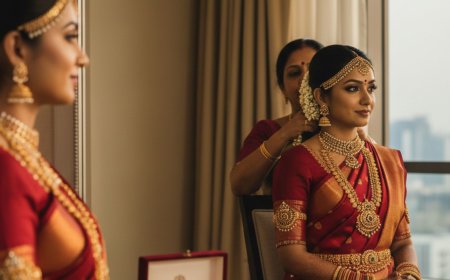
For hair and makeup, find a shringar [beauty and adornment] specialist who knows your regional tradition. A Tamilian bride's makeup and jasmine hair styling is a distinct art from a Punjabi bride's. A Kashmiri Pandit bride's adornment involves specific traditional elements — the dejhoor [earrings], the aath phoole [floral hair ornament] — that a generalist bridal makeup artist will not know. Ask specifically for a makeup artist with your community's regional experience, or brief your chosen artist with detailed reference images and be prepared to supervise the styling session.
Doing Your Pre-Wedding Shoot as Part of an India Trip or Destination Wedding
For NRI couples who are returning to India for their wedding or for a dedicated shoot trip, the regional pre-wedding shoot becomes an act of pilgrimage as much as photography. This is the opportunity to make images in the actual landscape, the actual architecture, the actual light of your people's homeland — and the results are consistently the most powerful photographs NRI couples produce.
The key to an India-based regional pre-wedding shoot is finding a photographer who is both technically accomplished and locally rooted. A photographer based in Jaipur who has grown up in Rajasthan will find locations, angles, and moments of light that no visiting photographer could access. A photographer based in Thiruvananthapuram will know the backwater's best morning hour, the temple that opens its courtyard for photography at a specific time, the jasmine seller whose stall has the most extraordinary visual context. Local knowledge is irreplaceable.
For Himalayan community shoots in Uttarakhand or Himachal Pradesh, plan your shoot trip around the season. March to May offers the rhododendron bloom and the clearest mountain light. September to November offers the harvest palette — golden fields, amber forests, brilliant sky. Winter shoots in the higher altitudes are extraordinary but require specific preparation.
For Rajasthan, October to February is the golden window — the light is warm, the air is clear, and the fort stones glow. For Kerala, the post-monsoon season from September to December offers lush green landscapes at their most vivid. For Bengal, the Durga Puja season in October offers the most culturally layered visual context — though booking photographers during this period requires very early planning.
Brief your India-based photographer with a written cultural brief: your community, your specific traditions, the visual elements most important to you, any heirloom costume items you are bringing, and the emotional story you want the photographs to tell. The best Indian photographers treat this brief as the foundation of a creative collaboration, not a constraint.
What You Need: The Regional Pre-Wedding Shoot Planning Checklist
Pre-Production Requirements Cultural brief document describing your community's visual traditions and the story you want to tell, mood board combining reference images from your regional tradition with images of the emotional quality you want, photographer briefing session at least six weeks before the shoot, location scouting visit or virtual location assessment, styling appointment with a regional specialist at least one month before.
Costume and Styling Primary outfit in your community's traditional textile and silhouette, at minimum one heirloom or artisan-sourced piece — dupatta, jewellery, or footwear — with genuine regional provenance, hair and makeup brief shared with your beauty team including reference images, groom's traditional accessory sourced from community — topi, safa, pheta, or relevant regional headwear.
On the Day Props confirmed and packed, minimum four hours allocated for a full shoot including travel, a trusted family member or friend available to assist with costume management, a shot list agreed with your photographer that includes both formal portrait moments and candid cultural moments.
NRI.Wedding's photography partner network includes regional pre-wedding shoot specialists across the UK, Canada, Australia, UAE, and India, each vetted for both technical excellence and cultural knowledge of specific Indian communities.
5 Questions NRI Couples Always Ask About Regional Pre-Wedding Shoots
We are from different Indian communities. How do we incorporate both regional traditions into one shoot without it feeling disconnected?
This is one of the most creatively exciting briefs a pre-wedding photographer can receive, and it works best when it is approached as a conversation between two visual languages rather than a compromise between them. The most successful intercommunity shoots divide the session into distinct chapters — one set of images in the visual language of one community, one set in the other, and optionally a third set that finds the visual common ground between them. A Punjabi-Tamil couple might shoot one chapter in a mustard-field landscape with Phulkari styling, another in front of a temple exterior with Kanjivaram and jasmine, and a third in a neutral location where the two aesthetics meet. The diptych structure — images from both traditions presented together — creates a narrative that honours both heritages without flattening either.
How do we find regional costume pieces abroad for a shoot that is happening in three months?
Four months is ideal, three months is workable, two months requires focus. Start with your regional Indian cultural association in your city — many maintain community wardrobes for cultural events. Then search Indian artisan platforms online, specifying your region and the specific item you need: Phulkari dupatta, Nauvari sari, Kashmiri pheran, Kullvi shawl, Ladakhi Perak. WhatsApp-based community networks are faster than formal searches for specific regional items — post in your community's diaspora group, describe what you need, and you will typically find someone within the network who has the item or knows where to get it. For jewellery, most Indian jewellers in diaspora cities carry regional styles, or can direct you to a specialist.
Our photographer is not Indian and does not know our regional tradition. Can this work?
Yes, with the right preparation on both sides. A technically excellent photographer who approaches your cultural brief with genuine curiosity and respect can create extraordinary images — sometimes with a fresh perspective that a photographer inside the tradition might not find. The key is the quality and depth of the brief you provide. Prepare a comprehensive visual reference document: images of the specific landscape, textiles, colours, and architectural elements of your community's tradition. Include historical photographs if possible. Meet with the photographer at least twice before the shoot, walk them through the brief in detail, and remain available for questions. On the shoot day, bring a family member who can serve as a cultural consultant — someone who knows what authentic looks like and can give feedback in real time.
We want to shoot at a Hindu temple abroad but we are not sure if this is permitted. How do we approach this?
Most Hindu temples outside India are community spaces that welcome respectful photography by community members, particularly for culturally significant occasions like pre-wedding shoots. The approach is simply to ask — contact the temple management committee directly, explain that you are a community member planning a culturally inspired pre-wedding shoot, and request permission for a specific date and time outside regular prayer hours. The early morning period, before the first puja session, often offers both the best light and the least foot traffic. Some temples request a donation to the temple fund in exchange for the photography session, which is a beautiful and appropriate reciprocity. Bring a letter or email confirmation of permission on the shoot day.
We live in a city with no landscape that resembles our home region. How do we create visual authenticity without the right setting?
This is where the creative intelligence of a good photographer becomes most valuable. Visual authenticity in a regional pre-wedding shoot does not require geographic exactness — it requires emotional accuracy. If you are Garhwali and you live in Houston, you cannot find Himalayan mountains. But you can find dramatic natural light, open sky, and the specific quality of warmth and space that Garhwali visual culture is built around. If you are Kashmiri and you live in Sydney, you cannot find chinar trees in autumn. But you can find harbour light in the early morning that carries a similar quality of soft gold. The strategy is to prioritise costume, cultural objects, and the emotional story over landscape specificity — a beautifully lit portrait of a couple in authentic regional dress, surrounded by heirloom cultural objects, will always feel more genuinely rooted than a geographically accurate landscape with generic styling.
The Emotional Angle
Nobody tells you, when you leave India, what you are leaving with. You know you are taking your clothes, your documents, your education, your ambition. You do not fully understand, in the moment of departure, that you are also taking a visual archive — the specific colour of the light on your grandmother's courtyard wall, the texture of the handloom cotton your mother wore on ordinary days, the way the mountains looked from the bus window on the road to the airport. These images live in you, not as nostalgia exactly, but as something more structural. They are part of how you know what beauty is.
The pre-wedding shoot, for an NRI couple who approaches it with intention, is the moment you bring that archive into focus. When a Himachali bride puts on a Kullvi shawl for the camera, she is not wearing a costume. She is putting on something she has been carrying inside her for years. When a Bengali groom holds a dhak drum and the photographer finds the angle where the light falls the way it falls in Bishnupur in October, something in him recognises it — not as a place he has been, necessarily, but as a place he is from.
These photographs will outlast the wedding. They will be shown to children who have never been to India, who will look at them and understand something about themselves that no explanation could convey. They will be shown to grandchildren who will see, in the specific textile and the specific light, the specific people they came from.
You are not just taking photographs. You are making evidence. You are saying, in the most durable form available to you: we were here, we were from there, and we were in love — all at the same time.
A Moment to Smile
At a pre-wedding shoot in Melbourne in the spring of 2022, a Marathi couple had arranged a Nauvari sari session at a coastal location in the Mornington Peninsula — the green cliffs and grey-blue sea chosen as the closest available emotional equivalent to the Konkan coastline.
The bride, resplendent in a deep green Nauvari sari, had been expertly draped by a specialist brought in from Melbourne's Maharashtrian community. The draping had taken forty-five minutes and was, by all accounts, perfect.
What no one had fully accounted for was the Mornington Peninsula wind.
The photographer later described the next twenty minutes as "the most aerodynamic pre-wedding shoot I have ever attempted." The groom spent a significant portion of his romantic beach poses holding the bride's pallu [sari end] with the focused expression of a man doing something genuinely important. The bride laughed so hard at one point that the photographer captured a sequence of images that were completely unplanned and entirely perfect — her head thrown back, the sari horizontal in the wind, her groom gripping the fabric with both hands and grinning.
Those are the photographs they framed.
The Konkan coast, it turns out, is also very windy. It felt exactly right.
Quotes From the Diaspora
"We shot in the rapeseed fields outside York in May. My dupatta was my nani's Phulkari — she had been keeping it for my wedding since I was born. The photographer didn't know what Phulkari was when we met. By the shoot day, she knew exactly how to let it carry the light. Those photographs are the most beautiful things I own." — Simranpreet Gill, Punjabi background, currently based in Leeds, UK
"We are both from Kerala. We shot at a waterway in the Yarra Valley outside Melbourne at dawn. We brought a brass lamp, a bunch of red hibiscus from our garden, and my mother's kasavu sari. People kept stopping on the path to ask what we were doing. One woman said it was the most beautiful thing she had ever seen by that river. I think she was right." — Anitha Menon-Pillai, Malayali background, currently based in Melbourne, Australia
"My husband is Kashmiri Pandit. I am Rajasthani. For our shoot in Dubai, we did two sessions — one in the desert dunes in traditional Rajasthani dress at sunset, one in the old Al Fahidi district in his family's Kashmiri pheran at sunrise. The photographs together tell our entire story. We didn't need to write anything in the caption." — Zara Tickoo-Rathore, Kashmiri-Rajasthani background, currently based in Dubai
Your Story Has a Visual Language. Speak It.
The most extraordinary pre-wedding photographs being made in the Indian diaspora right now are not the most technically complex or the most expensively produced. They are the ones that know exactly what they are saying — because the couples who commissioned them knew exactly who they were. They chose the textile their community has woven for generations. They found the landscape that carried the emotional light of their homeland. They held the objects their grandmothers held. And they let a photographer who understood find the frame.
NRI.Wedding's photography partner network connects couples across the UK, Canada, Australia, UAE, and India with photographers who have been vetted specifically for regional cultural knowledge, diaspora sensitivity, and the technical capacity to translate cultural identity into images that endure. Our styling partners include regional costume specialists, heirloom textile sourcing consultants, and bridal beauty artists trained in community-specific traditions.
Your pre-wedding shoot is not a warm-up for the wedding. It is the first chapter of the story your marriage will tell.
Make it specific. Make it yours. Make it something your grandchildren will recognise as home.
This article covers regionally inspired Indian pre-wedding shoot ideas for NRI couples across Himachali, Garhwali, Kumaoni, Ladakhi, Kashmiri Pandit, Punjabi, Marathi, Tamil, Bengali, and Rajasthani traditions, with practical planning guidance for diaspora couples in London, Toronto, Melbourne, Dubai, and those planning shoots in India.
What's Your Reaction?
 Like
0
Like
0
 Dislike
0
Dislike
0
 Love
0
Love
0
 Funny
0
Funny
0
 Angry
0
Angry
0
 Sad
0
Sad
0
 Wow
0
Wow
0