



























































Why Rajput Weddings Are Unlike Any Other — And How NRI Families Are Keeping Every Ritual Alive Abroad
Rajput weddings are among the most regal and ritually rich ceremonies in Indian matrimonial culture — a multi-day sequence of sword ceremonies, Tilak blessings, Kuldevi pujas, and royal processions rooted in centuries of warrior clan tradition. This guide explores every major Rajput wedding ritual in depth, with practical advice for NRI families from Rathore, Chauhan, Sisodia, and Shekhawat clans recreating these ceremonies in cities like Leicester, Mississauga, Houston, and Melbourne — including sword transport, clan-specific pandits, Kuldevi puja via live stream, and heritage venue selection in Rajasthan.

Rajput weddings are not simply celebrations — they are coronations. Every ritual in the Rajput matrimonial sequence carries the weight of a warrior culture that built forts, governed kingdoms, and encoded its values into ceremony with the precision of a battle strategy. For NRI families carrying Rajput heritage into wedding halls in London, Toronto, Houston, and Sydney, these rituals are not museum pieces — they are living declarations of who they are and where they come from.
You did not grow up in a fort. You grew up in Wolverhampton or Winnipeg or Western Sydney, in a house that probably looked like every other house on the street. But somewhere in that house — in a cupboard, a trunk, or hanging on a wall in your father's study — there was a sword. Nobody touched it. Nobody explained it. But everyone in your family knew it was there, and everyone knew it meant something that everyday language was not quite large enough to hold.
Now you are planning a Rajput wedding, and you are discovering that the rituals you are trying to recreate are not just customs — they are a complete philosophy of life, compressed into ceremony. The sword is not a prop. The tilak is not face paint. The regal procession is not performance. Every single element of a Rajput wedding is a sentence in a very old story about honour, courage, and the kind of love that does not apologise for taking up space.
This guide is for the families who know that story. And for the partners and guests who are about to hear it for the first time.
🌟 DID YOU KNOW?
- Rajput clans trace their lineage to the Suryavanshi (solar dynasty) and Chandravanshi (lunar dynasty) bloodlines — the same royal lineages claimed by Lord Rama and Lord Krishna respectively — making every Rajput wedding a ceremonial re-enactment of divine ancestry that stretches back to the very origin myths of Hindu civilisation.
- The Tilak ceremony in Rajput weddings historically served a dual political function — it was simultaneously a religious blessing and a formal public declaration of the alliance between two clans, witnessed by community leaders whose presence made the agreement binding in the same way a legal contract functions today.
- Rajasthan has the highest concentration of functioning heritage wedding venues in the world — over 350 palace hotels, fort properties, and royal havelis are licensed for weddings, making it the single most popular destination wedding location for the global Rajput diaspora, with bookings from NRI families in the UK, US, Canada, and Australia increasing by over 40% since 2019.
What Are Rajput Wedding Rituals?
Rajput wedding ceremonies form one of the most elaborate and codified matrimonial traditions in the Indian subcontinent — a sequence of rituals that spans multiple days and draws equally from Hindu Vedic practice, warrior clan custom, and the specific cultural DNA of whichever Rajput clan — Rathore, Chauhan, Sisodia, Shekhawat, Kachwaha, or others — is celebrating.
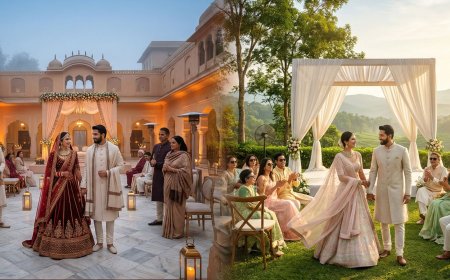
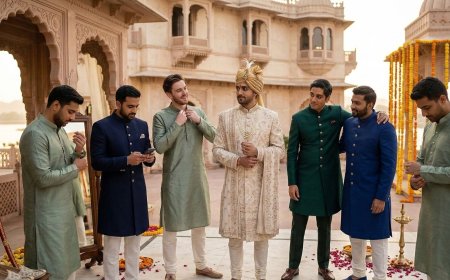
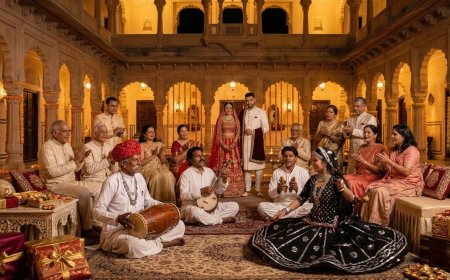
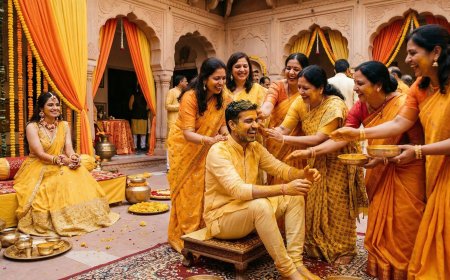
The rituals begin long before the wedding day itself. The Tilak ceremony — the formal acceptance of the groom by the bride's family — initiates the official wedding sequence. This is followed by a series of preparatory ceremonies including the Haldi (turmeric application), the Teen Paag turban ceremony, and the Pehravni gifting of garments. On the wedding day, the Baraat procession — the groom arriving on a decorated horse, sword at his side — is among the most visually arresting entrances in all of Indian wedding culture.
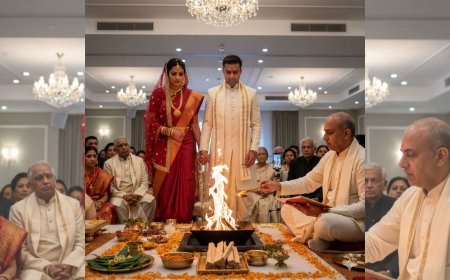
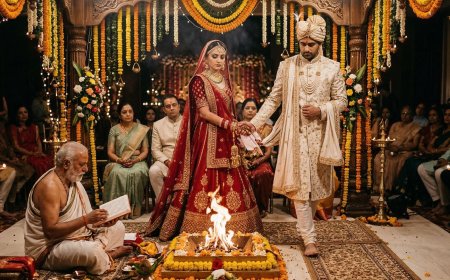
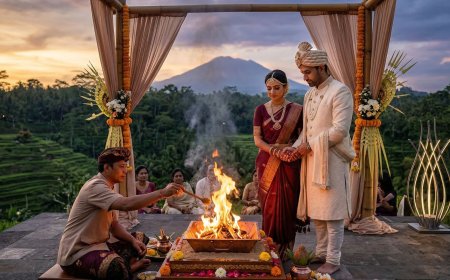
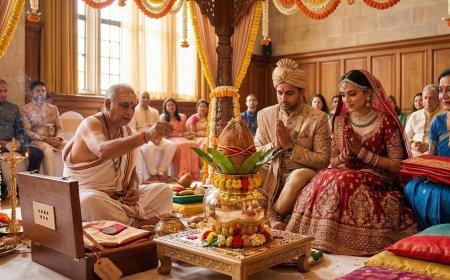
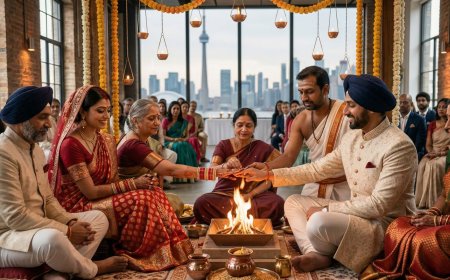
At the ceremony itself, the Kanyadaan (the father's gift of his daughter) is conducted with Vedic fire rites, followed by the Saat Phere (seven circumambulations of the sacred fire) and the Sindoor application. What distinguishes Rajput ceremonies from other Hindu weddings is not the Vedic framework — which is broadly shared — but the warrior-culture overlay: the sword, the specific clan blessings, the kuldevi (clan goddess) invocations, the vanshavali (ancestral lineage recitation), and the regal aesthetic that treats the groom as a sovereign and the ceremony as a state occasion.
Community Comparison Table
| Community / State | Local Name / Equivalent | Key Tradition | How NRIs Abroad Adapt It |
|---|---|---|---|
| Rajasthani (Rajput — Rathore) | Tilak, Sword Ceremony, Baraat | Groom carries ancestral sword; Tilak applied by bride's brother; full royal baraat with horse | Sword brought from India in checked luggage; Tilak ceremony held at hotel; horse hired locally |
| Rajasthani (Rajput — Sisodia) | Tilak and Kuldevi Puja | Kuldevi goddess invocation central to all ceremonies; specific clan colours in turban and clothing | Kuldevi puja conducted via video link with home temple priest in Udaipur; clan pandit sourced via community |
| Rajasthani (Rajput — Chauhan) | Hathlevana and Tilak | Bride and groom's hands tied together with sacred thread during main ceremony; specific Chauhan clan blessings | Thread ceremony preserved fully; clan-specific blessings written out and given to available pandit |
| Rajasthani (Rajput — Shekhawat) | Tilak and Sehra Bandi | Elaborate sehra (floral face veil) tradition; Shekhawati-specific folk songs during baraat | Sehra made by family using fresh flowers or silk; folk songs played via speaker if live musicians unavailable |
| Himachali | Shagun and Sword tradition | Groom from certain hill Rajput families also carries sword; simpler procession with community blessing | Sword carried as ceremonial item; community blessing held at gurdwara or community hall |
| Garhwali | Tilak Ceremony | Similar Tilak structure; accompanied by Garhwali dhol-damau and folk blessings from elders | Elder-led blessing preserved; Garhwali community in Toronto or London gathers for combined ceremony |
| Kumaoni | Tilak and Bhaat | Tilak followed by Bhaat gifting from maternal family; community witnessing important | Both ceremonies combined into single afternoon event; maternal family gifts presented formally |
| Kashmiri Pandit | Livun and Tilak equivalent | Purification ceremony precedes formal acceptance; saffron and walnut featured in ritual items | Kashmiri pandit sourced through community associations; saffron brought from Kashmir by travelling relatives |
| Punjabi (Hindu) | Tilak / Sagan | Groom's forehead marked with tilak by bride's brother; followed by gift exchange and sweets | Ceremony held at family home or community hall; combined with ring ceremony for NRI practicality |
| Marathi | Sakhar Puda and Tilak | Engagement-level Tilak followed by formal wedding Tilak; both carry distinct significance | Both Tilak moments preserved; Marathi pandit sourced via community networks in Melbourne or Leicester |
| Tamil | Nichayathartham | Formal betrothal ceremony with exchange of garlands and family declarations; equivalent to Tilak in function | Conducted at temple or community hall; Tamil priests available in Markham, Harrow, and Parramatta |
| Bengali | Aashirbaad | Elder family members apply sandal paste and give blessings; more intimate than formal Tilak | Preserved as family gathering; video call for elders in Kolkata integrated naturally |
The Meaning Behind the Rituals
The Rajput wedding ritual sequence is built on a single foundational belief: that marriage is not a private arrangement between two individuals — it is a covenant between two clans, witnessed by ancestors, sanctified by the clan goddess, and recorded in the cosmic ledger of dharma (righteous duty).
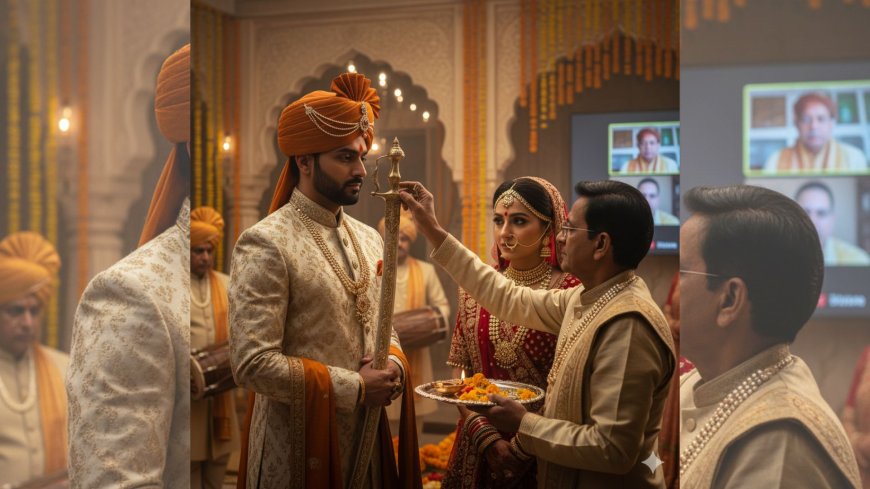
The sword that the Rajput groom carries is not decorative. In the Rajput worldview, a man who cannot protect is a man who cannot love — because protection is the original language of Rajput love. The sword says: I bring strength into this union. I will guard what we build together with everything I am.
The Tilak — the mark applied to the groom's forehead — is simultaneously a welcome, a blessing, and a public declaration. The forehead in Hindu thought is the seat of the ajna chakra (the third eye centre), the place of wisdom and higher consciousness. To mark it is to acknowledge the man's worthiness. The bride's family, in applying the Tilak, is saying: we have looked at you clearly, with all our discernment, and we recognise your value.
The Kuldevi puja — the invocation of the clan goddess — grounds the entire ceremony in the understanding that this marriage is not happening in isolation. It is happening in the presence of every ancestor who carried the clan name before, and every descendant who will carry it after. The couple being married is a link in a chain, not the beginning or the end of one.
For a non-Indian guest or partner: Rajput wedding rituals are a civilisation's love letter to the idea that how you begin something determines everything that follows. Begin with honour, with beauty, with the full weight of who you are — and everything built on that foundation will last.
Doing Rajput Wedding Rituals Abroad: The Practical Reality
The Rajput wedding's greatest practical challenge abroad is not any single ceremony — it is the cumulative complexity of a multi-day ritual sequence that requires specific people, specific items, and a pandit with genuinely specialised knowledge of clan-specific customs.
The sword is your first logistical consideration and, handled correctly, entirely manageable. Ceremonial swords travel as checked baggage on most international airlines when declared correctly and packed in a hard case — contact your airline at least four weeks before travel to confirm their specific requirements, as policies vary. UK customs allows ceremonial swords as checked items. Canadian and Australian customs require declaration but generally permit them. In the US, a ceremonial sword in checked luggage is legal federally, though individual state laws vary — confirm for your specific state. If transporting the family sword is not possible, high-quality ceremonial replicas can be commissioned from Rajasthani sword-makers in Jodhpur who ship internationally, or sourced through Indian cultural goods retailers in Wembley and Leicester in the UK.
The Tilak ceremony requires specific items that are available in most major diaspora cities. Kumkum, akshat (unbroken rice), sandalwood paste, and a decorated thali are available at Indian grocery stores on Southall Broadway and Wembley High Road in London, Gerrard Street East and Peel Region in Toronto, Hillcroft Avenue in Houston, and Parramatta Road in Sydney. The chandan (sandalwood paste) used in Rajput Tilak is ideally fresh-ground — small sandalwood grinding stones are available from the same suppliers.
The pandit problem is most acute for Rajput families. Clan-specific vanshavali recitation — the formal chanting of the groom's ancestral lineage — requires a pandit who knows your specific clan's genealogy and the associated Vedic formulations. These pandits exist in diaspora cities but must be sought specifically. NRI.Wedding's pandit directory includes priests who specialise in Rajput clan traditions. Rajput community associations in Leicester, Wolverhampton, Mississauga, and Calgary maintain lists of visiting pandits from Rajasthan who travel during peak wedding season — contact them six to eight months ahead for summer and autumn weddings.
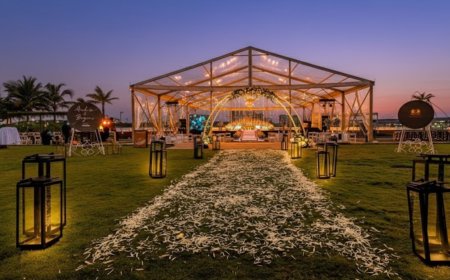
Fire restrictions at UK and Australian venues affect the havan (sacred fire ceremony) that forms the core of the main wedding rites. Many venues now offer designated outdoor fire ceremony spaces or permit contained fire in specific areas — ask explicitly when booking. Several NRI wedding coordinators have established relationships with venues that are experienced with Indian fire ceremonies and have the necessary insurance provisions in place. This information is available through NRI.Wedding's venue partner network.
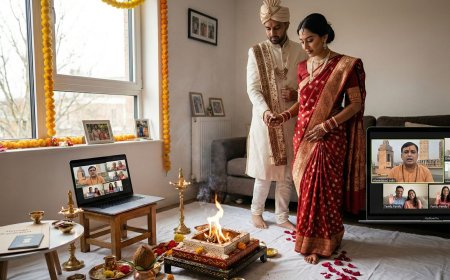
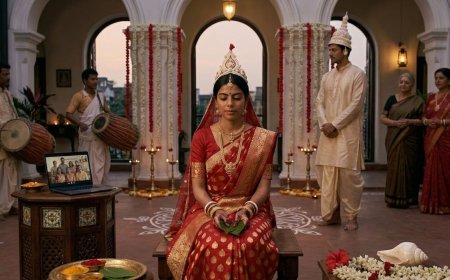
For India-based relatives joining via video call, the Tilak ceremony and the sword ceremony are the two moments families most want to witness live. Both are relatively contained and still — ideal for streaming. If your family is in Rajasthan, a morning Tilak ceremony in London (10:00 AM GMT) falls at 3:30 PM IST — a comfortable afternoon for relatives at home. Use a large monitor or smart TV rather than a handheld phone, and assign a dedicated family member to manage the connection throughout.
Doing Rajput Wedding Rituals as a Destination Wedding in India
Rajasthan is the only place on earth where a Rajput wedding feels entirely, naturally at home — and the state's heritage wedding infrastructure exists precisely for this purpose.
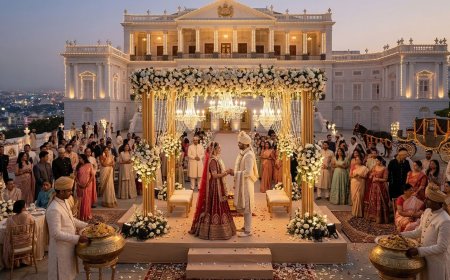
Jodhpur is the ancestral seat of the Rathore clan and offers venues of unmatched symbolic power — Umaid Bhawan Palace, Mehrangarh Fort, and the surrounding heritage havelis provide settings where the sword ceremony and royal baraat feel not like recreations but like continuations. Udaipur is the spiritual home of the Sisodia clan, and its lake palaces offer a romanticism that is entirely specific to this part of Rajasthan. Jaipur — the Kachwaha clan's historic capital — offers the widest range of heritage venues and the best infrastructure for large international guest groups. Chittorgarh carries the deepest historical resonance for families whose identity is rooted in the Rajput martyrdom and sacrifice traditions.
Brief your local pandit comprehensively and in writing — a one-page document covering your clan name, gotra (lineage group), specific Kuldevi, the sequence of ceremonies your family observes, and any particular blessings or vanshavali sections that must be included. Hand this to the pandit at your first meeting, not on the wedding morning.
For international guests, consider hiring an English-speaking cultural host for the full wedding duration — someone who can narrate each ceremony as it unfolds, answer questions with warmth and accuracy, and ensure that your non-Indian guests leave understanding not just what happened but why it mattered.
What You Need: Ritual Checklist
Ritual Items Ceremonial sword — ancestral if possible, commissioned replica if not. Decorated thali for Tilak ceremony containing kumkum, akshat, chandan paste, and a lit diya. Fresh marigold garlands for groom and senior male guests at Tilak. Saffron-coloured turban fabric for Teen Paag if conducted same day. Kuldevi puja items as specified by your clan's tradition — consult your pandit for the specific list. Havan samagri (sacred fire offering materials) for the main ceremony. Sehra of fresh flowers or silk for the groom. Shagun envelopes for key ceremony participants.
People Required The bride's brother — or nearest male equivalent — to apply the Tilak. The groom's father and mama for Teen Paag if conducted in sequence. A Rajput-clan-experienced pandit for vanshavali recitation and Kuldevi puja. A sword bearer — trusted male relative — to carry and present the sword during baraat. A designated photographer and videographer; Rajput wedding ceremonies are visually extraordinary and deserve documentation at every stage.
Preparation Steps Identify and book clan-specific pandit six to eight months ahead. Confirm sword transport logistics or commission replica four months ahead. Source all ritual items eight to twelve weeks before. Conduct a full ceremony sequence briefing with the pandit one month before. Prepare written vanshavali information for the pandit two weeks before. Set up India video call infrastructure and test it the week before. Brief all key participants on their individual roles one week before the wedding.
NRI.Wedding connects Rajput families with clan-experienced pandits, verified ceremonial vendors, heritage venue partners in Rajasthan, and photographers who understand the visual language of regal tradition — find everything you need in our vendor directory.
5 Questions NRI Couples Always Ask
Can we carry the ancestral family sword on an international flight?
Yes, with proper preparation. Ceremonial swords must travel as checked baggage, declared at check-in, and packed in a rigid protective case. Contact your airline directly at least four weeks before travel — most major carriers have specific policies for ceremonial blades and will accommodate them with advance notice. UK, Canadian, and Australian customs generally permit ceremonial swords with declaration. Always carry documentation confirming the item's ceremonial and cultural nature. If transporting the family sword is not feasible, a commissioned replica from a Jodhpur sword-maker is a fully legitimate and respected alternative.
My partner is not Indian and finds the sword ceremony intimidating. How do we frame it for them?
Reframe it before the wedding day, not during. Share the meaning with your partner in a quiet conversation — explain that in Rajput culture, a sword represents the promise of protection, not aggression. It is a man saying: I will guard this marriage with everything I have. Many non-Indian partners, once they understand this, become deeply moved by the sword ceremony rather than unsettled by it. A short explanation in the wedding programme helps international guests arrive at the ceremony already oriented toward its meaning.
How do I find a pandit who can recite our specific clan's vanshavali?
The vanshavali is the most specialised requirement in a Rajput wedding and the detail most often compromised by NRI families who book a general Hindu pandit too late. Clan-specific vanshavali knowledge is held by pandits who have served specific Rajput families — often across generations. NRI.Wedding's pandit directory includes priests with documented Rajput clan experience. Rajput Mahasabha associations in the UK and Canada are also reliable sources. When you contact a pandit, ask specifically: which Rajput clans have you served, and can you recite the vanshavali for our gotra? The answer to that question will tell you everything you need to know.
How do we coordinate the Kuldevi puja when the family's ancestral temple is in Rajasthan and we are in Canada?
Many NRI Rajput families conduct a dual ceremony — a live puja at the ancestral temple in Rajasthan, performed by the family's hereditary temple priest, streamed live to the wedding venue abroad. This requires advance coordination with the temple priest, a reliable internet connection at the temple, and a large screen at your venue. The streams are then edited together in the wedding video so that the ceremony exists as a single unified record. This adaptation is widely practised and carries full spiritual validity — the goddess is not restricted by geography.
Does the order of Rajput wedding ceremonies matter if we are combining several into one day?
The broad sequence — Tilak before baraat, baraat before main ceremony, main ceremony containing Kanyadaan and Saat Phere — should be preserved as it carries spiritual logic. Within that framework, preparatory ceremonies like Teen Paag and Haldi can be adjusted for timing without compromising meaning. Consult your pandit on the specific sequence your clan tradition observes — some clans have fixed orderings for certain rites that are non-negotiable. A detailed ceremony timeline prepared with your pandit one month before the wedding prevents last-minute confusion and ensures every ritual receives the time and attention it deserves.
The Emotional Angle
There is something specific that happens to Rajput NRI parents at their children's weddings abroad. It is not grief — though grief is present. It is not pride — though pride is overwhelming. It is something more precise than either: the feeling of watching a culture you carried alone for decades suddenly become visible to a room full of people who have never seen it before.
They raised their children in cities where nobody knew what a Kuldevi was. Where the sword in the study required explanation at every dinner party. Where the turban had to be justified and the baraat had to be permitted and the fire ceremony had to be negotiated with a venue manager who had very reasonable concerns about the smoke alarm.
And yet here, in this moment — the groom standing with his sword, the Tilak on his forehead, the dhol audible from the car park — all of that effort collapses into something simple and enormous. The culture survived. Not despite the distance but through it, carried by people who refused to let it become merely historical.
Rajput wedding rituals are not preserved because they are beautiful, though they are. They are preserved because they are true. Because they say something about human beings — about courage and honour and the kind of love that stands up straight — that still needs to be said, in every generation, in every city on earth.
A Moment to Smile
At a Rajput wedding in Houston three summers ago, the sword ceremony was proceeding magnificently until the groom's younger cousin — aged seven, extremely enthusiastic, and dressed in a miniature sherwani — decided that the ceremonial sword looked like something that needed to be held by him, specifically, immediately.
The resulting negotiation between the seven-year-old and four adults lasted approximately four minutes and was conducted in a mixture of English, Hindi, and urgent whispered Rajasthani. The compromise reached was that the cousin would be photographed holding the sword — supervised, stationary, very carefully — for exactly thirty seconds before returning it.
The photograph of this child, standing approximately three feet tall, holding a sword approximately two thirds his height, with the expression of a man who has achieved everything he set out to achieve, has been printed and framed in three separate family homes. The groom's mother says it is her favourite image from the entire wedding. The cousin, now ten, refers to it as his origin story.
Quotes from the Diaspora
"I grew up embarrassed by how much my father cared about being Rajput. It felt like something from another century. Then I watched him recite our vanshavali at my wedding — our ancestors' names going back twelve generations — and I understood for the first time that he wasn't living in the past. He was making sure the past lived in me." — Ranvijay Singh Rathore, Rajput community, Leicester
"We did the full Rajput ceremony in Mississauga in February. Minus five degrees outside. My son rode the horse for exactly six minutes before we brought everyone inside. But those six minutes — the dhol, the sword, the safa, the cold breath in the air — I will see them until the day I die. We did not compromise. Not one thing." — Savitri Chauhan, Rajput community, Mississauga
"My husband is from Yorkshire. He had never held a sword in his life. When my father placed the ceremonial sword in his hands during the baraat and showed him how to carry it, something changed in his face. He told me afterwards he finally understood what it meant to marry into this family. Not burden. Belonging." — Priya Kachwaha, Rajput-British family, Leeds
Your Roots Travel With You
Rajput wedding rituals are among the most complete expressions of cultural identity that exist in the Indian matrimonial tradition — a full civilisation's values, compressed into ceremony, carried across centuries and now across oceans by families who understand that some things are worth the effort of doing with complete and uncompromising integrity.
NRI.Wedding is honoured to serve Rajput families at this most significant of occasions. From clan-experienced pandits who can recite your vanshavali and conduct your Kuldevi puja, to ceremonial sword sourcing, heritage venue partners across Rajasthan, baraat coordinators in London, Toronto, Houston, and Melbourne, and photographers who know the difference between documenting a wedding and bearing witness to a dynasty — we are here for every ritual, every ceremony, and every moment of this extraordinary tradition.
Your roots travel with you. Carry them like a sword — with honour, with intention, and without apology.
What's Your Reaction?
 Like
0
Like
0
 Dislike
0
Dislike
0
 Love
0
Love
0
 Funny
0
Funny
0
 Angry
0
Angry
0
 Sad
0
Sad
0
 Wow
0
Wow
0