











































































Before the Church, There Is the Coconut: Inside Goa's Sacred Roce Ceremony
The Roce Ceremony is the heart of every Goan Catholic wedding — a deeply intimate pre-wedding anointing ritual in which the bride and groom are separately blessed with fresh coconut milk and turmeric by their families in strict seniority order. Rooted in ancient Konkani tradition and preserved through centuries of Portuguese-Goan Catholic culture, the Roce survives powerfully across the global Goan diaspora in the UK, UAE, Canada, and Australia. This complete guide covers the ceremony's origins, meaning, practical planning for NRI families, and how to do it right — wherever in the world you call home.


The Roce Ceremony — in which a Goan Catholic bride and groom are anointed with coconut milk and turmeric by their families in separate, deeply intimate pre-wedding rituals — is one of the most emotionally layered traditions in all of Indian Christian culture. Rooted in the Portuguese-Goan synthesis of Catholic faith and ancient Konkani custom, it survives and thrives in the Goan diaspora from Muscat to Melbourne as an act of familial protection, cultural memory, and love that language cannot hold. For NRI Goan families who have carried this ritual across oceans and decades, the Roce is not a ceremony they perform — it is a ceremony that performs them, surfacing everything they know about home, about family, and about what it means to send someone you love into a new life.
You grew up watching it at cousins' weddings — the kitchen smelling of coconut and turmeric, the aunties gathered in a circle, someone's grandmother pressing her palms to a young woman's face with a tenderness that stopped the room. You were too young to understand exactly what was happening. But you understood it was serious. You understood that the women in that circle were doing something the priest's words at the altar the next day would not quite reach.
You're in Mississauga now, or Doha, or East London, and your Roce is three weeks away and you're trying to figure out where to find fresh coconut milk that isn't from a tin, whether your hotel will allow turmeric near the carpet, and whether your father's sister — the one who knows the exact anointing sequence — can fly in from Dubai in time. You know this ceremony by feel. You need it by instruction.
This is the Roce. One of the last things your family does to you before you belong to the world. Let's make sure it happens exactly as it should — wherever in the world that happens to be.
🌟 Did You Know?
- The Roce Ceremony predates Portuguese colonisation of Goa and is believed to have origins in pre-Christian Konkani Hindu rituals involving turmeric and oil as purifying substances. When Goa's population converted to Catholicism, the ritual was absorbed into the Catholic wedding sequence rather than abandoned — making it one of the most remarkable examples of religious syncretism in South Asian Christian culture.
- The name "Roce" comes from the Konkani word ros, meaning juice or sap — specifically the fresh milk of the coconut palm. The coconut is revered in Goan folk tradition as the Kalpavriksha (the wish-fulfilling tree), a tree whose every part sustains life: water, milk, oil, fronds, and timber. To anoint a bride or groom with coconut milk is to bless them with the complete abundance of the land they come from.
- In the Goan diaspora — which spans the UAE, UK, Portugal, Canada, Australia, and East Africa, with over one million people of Goan origin living outside India — the Roce has become one of the most actively preserved pre-wedding traditions, with NRI families regularly flying relatives across continents just to ensure the most senior female family member performs the first anointing.
What Is the Roce Ceremony?
Roce (pronounced ROH-say, from the Konkani ros meaning juice or sap, specifically referring to coconut milk) is the pre-wedding anointing ceremony of Goan Catholic weddings. It takes place separately for the bride and groom — each at their own family home — typically on the evening before the wedding day, though some family traditions hold it on the wedding morning itself. It is a ceremony of the natal home, and it marks the last night the bride or groom spends as a fully unmarried member of their family.
The ceremony centres on a ritual mixture prepared specifically for the occasion. Fresh coconut milk — extracted that morning from whole coconuts that have been blessed — is combined with oliv [coconut oil or olive oil, depending on family tradition]. Many families also incorporate halad [turmeric] either mixed directly into the ros or applied in a separate sequence immediately preceding or following it. Whether turmeric is part of the Roce mixture or its own distinct moment is a question of family tradition, and worth confirming with the elder who will lead your ceremony before you plan anything.
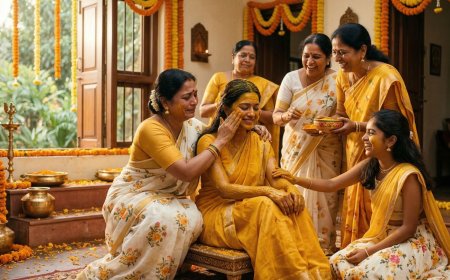
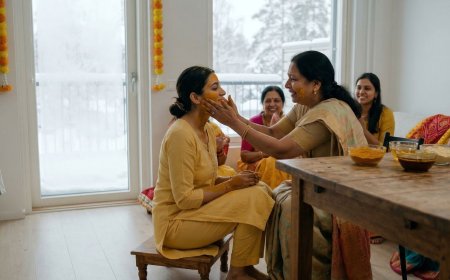
The anointing sequence follows a specific order of seniority. The madrinha [godmother] or the most senior female relative of the family applies the ros first — pressing it with her hands or with a fresh coconut frond to the forehead, cheeks, hands, and sometimes the feet of the person being anointed. Each family member follows in seniority order, each application accompanied by a blessing, a whispered prayer, or simply the weight of a loved one's hands on a beloved face. The person being anointed sits on a decorated wooden paat [low ceremonial seat] dressed in yellow — the colour of turmeric and auspiciousness — and does not move until every family member has completed their blessing.
The Roce is not public. No priest presides. There are no vows, no liturgy, no formal structure beyond the ordering of love by seniority. Its power comes entirely from its intimacy — the family, the coconut milk, and the hands of the people who have known this person their entire life, pressing something of the earth into their skin before they cross the threshold into everything that comes next.
The Anointing Tradition Across Indian Communities
The Roce is Goa's expression of a near-universal instinct in Indian wedding traditions — the ritual purification and blessing of the bride and groom with sacred substances before marriage. Every major Indian community has its version. Here is how the tradition manifests across the subcontinent and how NRI families carry it abroad.
| Community / State | Local Name | Key Tradition | How NRIs Abroad Adapt It |
|---|---|---|---|
| Goan Catholic | Roce / Ros | Coconut milk and oil anointing in strict seniority order; separate ceremonies for bride and groom; turmeric often included | Fresh coconuts sourced from Asian grocers; hotel suites used; senior relative flown in to lead |
| Goan Hindu (Konkani) | Haldi / Urtho | Turmeric paste and coconut oil; female relatives lead; held at home the day before the wedding | Merged with Roce-style gathering for diaspora timelines; community elder confirms sequence |
| Punjabi | Vatna / Haldi | Turmeric and mustard oil paste applied across multiple sessions; women sing folk songs throughout | Haldi event vendors well-established in UK and Canada Punjabi communities; full celebrations preserved |
| Maharashtrian | Haldi Ceremony | Turmeric paste applied separately to bride and groom; coconut water sometimes used; precedes the Kelvan feast | Ceremony held in hotel suite or family home; photographer briefed on sequence |
| Bengali | Gaye Holud | Elaborate turmeric ceremony with music, dancing, and exchange of turmeric between both families | Full Gaye Holud preserved in diaspora; large community gatherings maintained in London, Toronto, New York |
| Tamil | Nalagu | Turmeric and sesame oil applied by maternal aunts at bride's natal home; specific folk songs sung; banana leaf used | Banana leaves from Asian stores; Tamil community elders lead; songs preserved through family recordings |
| Telugu | Pellikoduku / Haldi | Turmeric applied to groom; separate ladies' ceremony; auspicious songs specific to Telugu tradition | Telugu community associations help source items; sequence guided by elder |
| Rajasthani | Pithi Ceremony | Chickpea flour, turmeric, and sandalwood paste; community gathering across two to three days; specific folk songs | Ingredients from Indian grocers; ceremony condensed for diaspora timeline; elder family member leads |
| Kashmiri Pandit | Livun / Maenziraat | Mustard oil and walnut paste purification; Wanwun [Kashmiri ceremonial songs] sung throughout; highly community-specific | Kashmiri Pandit associations in UK and Canada preserve sequence; Wanwun songs from family audio |
| Himachali | Tel Baan / Haldi | Oil and turmeric applied by community elder; held at village home; part of multi-day pre-wedding sequence | Ceremony condensed but preserved; regional community contacts sourced through diaspora networks |
The Meaning Behind the Ritual
To understand the Roce philosophically, you need to hold two things at once: the Catholic faith of the Goan community that frames it, and the much older Konkani coastal tradition that gave it its substance. The Catholic blessing asks God's protection over the person about to be married. The coconut milk asks something older — it asks the earth itself, the palm groves and the tidal rivers and the red laterite soil of Goa, to recognise this person and shelter them.
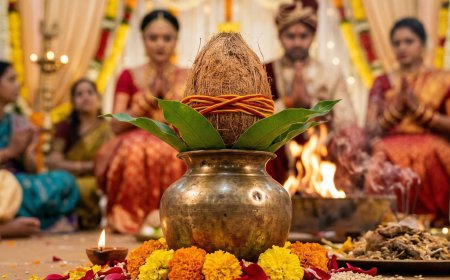
The coconut in Goan cosmology is poornaphala [the complete fruit] — the fruit that withholds nothing. Its water quenches. Its milk nourishes. Its oil illuminates. Its fibre builds. Its shell burns for warmth. To anoint a person with coconut milk before their wedding is to say: may you be held by completeness. May nothing be lacking in your new life. May the world treat you as generously as this tree treats ours.
The turmeric carries its own ancient message. Antibacterial in practice, it is solar in meaning — the colour of the sun, the colour the sacred wears, the colour evil cannot cross. To press turmeric into the skin of someone you love before they leave your protection is to mark them with your family's light. You carry the warmth of where you came from. You are not leaving unguarded.
For a non-Indian partner or family member seeking the simplest truth: this is the family anointing the person they love with the most sacred substances of their land, asking everything they believe in — God, earth, and ancestry combined — to protect them in their new life.
Doing the Roce Abroad: The Practical Reality
The Roce abroad presents one logistical challenge that organises everything else around it: the ceremony requires fresh coconut milk. Not tinned. Not carton. The ros must be extracted from whole coconuts on the morning of the ceremony, because fresh coconut milk begins to turn within hours and the Roce mixture must be made the day of.
In London, fresh coconuts are available year-round at the South Asian grocers of Southall Broadway and the Afro-Caribbean markets of Brixton and Dalston. The more reliable option for guaranteed quantity is to contact an Indian catering supplier in Wembley or Tooting a week in advance and ask them to prepare fresh coconut milk to order — most will do this without hesitation if you explain what it is for. In Toronto and Mississauga, the Indian grocers of Gerrard Street East and the South Asian strip of Brampton carry fresh coconuts reliably. The Goan Overseas Association of Toronto is an invaluable contact for both fresh coconut supplies and locating community elders who know the correct Roce sequence.
In Houston, the Indian and South Asian grocers along Hillcroft Avenue and Harwin Drive carry fresh coconuts and can often prepare milk to order. In Dubai, where the Goan diaspora is one of the largest outside India, fresh coconut is entirely accessible and the community network is strong enough that finding a family elder who knows the ceremony is rarely a problem. In Melbourne and Sydney, the Indian grocers of Harris Park in Parramatta and the South Asian stores of Dandenong carry fresh coconuts, and both cities have active Goan community associations that can connect NRI families with Roce-experienced elders.
The venue question for the Roce is the most delicate of any NRI pre-wedding ceremony. The ritual needs to feel like a home — because the natal home's spirit is central to its meaning — but in the diaspora, a hotel suite, a family member's living room, or a private room at the wedding venue becomes the natal home for the day. If using a hotel, book a ground-floor room or one with hard flooring where possible: coconut milk and turmeric will stain soft furnishings and carpet permanently. Bring a large canvas tarpaulin or plastic sheeting to protect the floor before the ceremony begins. Alert your venue coordinator in advance — most Indian wedding hotels have seen the Roce before and can accommodate it with enough notice.
The Roce does not require a priest. It is led by the senior female family elder — the madrinha [godmother] if present, or the grandmother or eldest aunt if not. If the family wants a blessing prayer said over the ros before the anointing begins, a Konkani-speaking Catholic deacon or lay minister can provide this in most diaspora cities with Goan Catholic parishes. A quick call to the local Goan Catholic parish will almost always connect you to the right person.
For streaming to family in India — and with Goan families spread across Panaji, Mumbai, Muscat, and Mozambique, this is near-certain — position your device where it shows both the anointing and the face of the person receiving it. The Goa-side family watching from their living room in Margao or Aldona will know the Roce exactly as it should look. Their faces responding to each application, visible on your screen, make the diaspora ceremony feel witnessed in the way it was always meant to be witnessed.
Doing the Roce as a Destination Wedding in Goa
To receive the Roce in Goa — in the old family house in Aldona or Moira or Saligão, with the kitchen smelling of coconut since morning and the cousins gathering in the courtyard and the coconuts coming from the property's own palms — is to receive it in the landscape that invented it.
For a destination Roce in Goa, the heritage houses and boutique properties of the North Goan interior offer the most authentic settings for families whose own houses are no longer available or accessible. The beautiful old Portuguese-Goan mansions of Loutolim, Chandor, and Quepem, many now operating as private event venues, provide exactly the architectural and atmospheric context the ceremony requires: terracotta floors that can be cleaned, wide verandahs, and the specific quality of afternoon light that enters old Goan houses and makes every object inside them look like it was placed there by someone who understood beauty.
Brief whoever is leading your Roce — the family elder or the madrinha — on your family's specific sequence well before the wedding day. Roce customs differ meaningfully between North Goan and South Goan families, between the traditions of Bardez and Salcete, and between different caste and village communities within the Goan Catholic world. Do not assume your family's sequence is universal. Confirm every detail with an elder before arriving, and if your family elder is not available to travel, arrange a video call with them the evening before to walk through the order together.
For non-Goan guests witnessing the Roce in Goa, brief them beforehand on the coconut symbolism and the meaning of the anointing order. What they will see needs no translation in its feeling — hands pressing something golden and fragrant to the face of someone loved is universally understood as an act of protection. What the briefing gives them is the why beneath the what, and that transforms witness into participation.
What You Need: The Roce Ceremony Checklist
Ritual Items: Fresh whole coconuts for extracting ros (plan for one large coconut per four to five family members, plus two in reserve); coconut oil or olive oil for mixing into the ros; fresh turmeric root if your family tradition applies halad separately; turmeric powder as backup; a clean clay pot or brass vessel for preparing and holding the mixture; a fresh coconut frond or a small bunch of fresh flowers for the anointing application if your family does not use bare hands; a low wooden paat or decorated chair for the person being anointed; fresh flower garlands and mango leaf toran for decorating the chair; yellow outfit for the bride or groom; a small puja lamp and agarbatti for the opening blessing; a clean white cloth to lay on the ceremony floor.
People Required: The madrinha or most senior female family member to lead the anointing; all immediate female family members present in seniority order; the father and male relatives (whose role in the anointing varies by family tradition — confirm this with your elder in advance); one designated family member to manage any video stream to relatives in India or abroad; your wedding photographer, briefed specifically on the Roce as the priority documentary sequence of the entire pre-wedding period.
Preparation Steps: Source fresh coconuts at least two days before the ceremony and confirm you have enough. Extract and prepare the ros on the morning of the ceremony — do not prepare it the night before. Set up the ceremony space the evening before: lay the white cloth, decorate the chair, set up the puja lamp. Brief the madrinha or senior elder on the timing and sequence at least the day before. Test the video call setup thirty minutes before the ceremony begins. Brief your photographer on the anointing order so they are positioned correctly for the first application, which is the most important image of the sequence.
NRI.Wedding connects Goan NRI couples with Roce-experienced community elders, fresh ingredient sourcing contacts, Konkani-speaking Catholic pastoral contacts, and wedding photographers who understand that the first hand on a forehead is the photograph that will matter most in thirty years. Begin planning at NRI.Wedding.
5 Questions NRI Couples Always Ask
My hotel has cream carpet everywhere. How do we do the Roce without destroying the room?
This is the most practically urgent question in any diaspora Roce, and it has a direct answer. Bring a large canvas drop cloth — the kind used by painters, available at any hardware store — and lay it across the entire ceremony area before setting up your paat and white cloth. Canvas absorbs turmeric and coconut milk without letting it soak through to the carpet beneath. Bring two cloths to be safe. Alert your venue coordinator the week before so they are not alarmed on the day, and frame it exactly as it is: a traditional anointing ceremony that requires brief floor protection. Most Indian wedding hotel coordinators have encountered this request before. The ones who haven't will accommodate it if asked warmly and specifically.
My partner is not Goan or Catholic. How do we include them in the Roce meaningfully without it feeling performed or forced?
The most natural approach is not to include your partner in the Roce itself — which is a ceremony of your natal family and its love for you specifically — but to invite them to witness it in full from a respectful position just outside the family circle. The Roce needs no explanation to be felt by anyone watching it with attention. After the ceremony, many NRI couples create a brief reciprocal moment where the non-Goan partner's family offers their own gesture of welcome — a letter, a family object, a blessing in their own tradition — to the Goan partner. This creates a beautiful symmetry without asking either tradition to become something it is not.
The Roce at my family's home back in Goa was always led by my great-aunt, but she passed away two years ago. How do we determine the new seniority order?
This is a deeply human question and it comes up in almost every Goan NRI family planning a Roce, because Goan families are old, spread out, and always losing their most irreplaceable people. The answer is: gather the female elders of your family — ideally on a video call if they are in different countries — and have the conversation explicitly. Ask who the community or the family would recognise as the natural next in line. This is usually obvious once the question is asked directly. In the absence of consensus, the senior maternal relative takes precedence in most Goan family traditions, but your family elder's guidance should override any general rule.
We want to livestream the Roce to my grandmother in Goa who cannot travel. What time should we hold the ceremony in London to make this work?
A morning Roce in London at 9:00 or 10:00 AM puts your grandmother in Goa at 2:30 or 3:30 PM — a comfortable afternoon hour for an elderly person. This is the most considerate timing window. Set up the video call at least thirty minutes early, test the audio (the ceremony can be quiet and the microphone placement matters), and designate one family member in London whose only job during the ceremony is managing the stream. Give your grandmother the first view of the ros being prepared and the space being set up before the family gathers — this context makes the ceremony legible from a distance in a way that watching only the anointing itself does not.
Our civil wedding is three weeks before the Goan ceremony. Does that change the spiritual meaning of the Roce — are we doing it after we're already legally married?
For most Goan Catholic families, the answer is no, it does not diminish the Roce's meaning, and here is why: the civil marriage is a legal act. The Roce, the church wedding, and the reception together constitute the sacred and social event that the family recognises as the real marriage. The Roce prepares you for the church ceremony, not for the registry office. Most Goan families who do civil ceremonies first simply hold the Roce the evening before the church wedding as they always would, treating the civil registration as an administrative prerequisite and the Roce as part of the true beginning. Discuss this framing with your family elder and the madrinha so everyone is aligned on what the Roce is marking.
The Emotional Angle
Nobody tells the mother how hard the coconut preparation will be.
She has been practical about all of it. The venue hunt and the catering negotiations and the cousin requiring a vegetarian menu and the uncle who needs airport pickup — she managed every one of these things with the efficiency of a woman who has been managing things her whole life. Managing things is how she does not come apart.
And then it is seven in the morning on the day of the Roce. The hotel room in Mississauga or Southall or the family home in the outer suburb that smells nothing like their house in Margao. She is alone in the small kitchen space, cracking open coconuts she sourced from three different shops because the first shop only had four and she needed eight, and extracting the milk by hand into the brass pot she carried in her checked luggage wrapped in three layers of her own clothing.
The smell hits her first. It is her mother's kitchen. It is every Roce she has ever attended. It is the morning of her own Roce, thirty-one years ago, in a house that no longer exists in the form she knew it, held by hands that are no longer in the world.
She stands in a hotel kitchenette in a foreign city, extracting coconut milk at seven in the morning, and understands completely why she is doing this.
She is not recreating a ceremony. She is keeping something alive that would die if she didn't keep it alive. She is being the link. She is being the hands.
She finishes the ros. She covers the brass pot. She goes to dress her daughter for the most important morning of her life.
A Moment to Smile
At a Goan Catholic wedding in Southall in the spring of 2023, the Roce was proceeding beautifully in the function room of a family friend's house — white cloth on the floor, the paat decorated with marigolds, ten aunties arranged in seniority order with admirable precision — when the bride's eleven-year-old brother, who had been assigned the very specific job of holding the brass pot of ros steady during the ceremony, sneezed.
Not a polite sneeze. A spectacular, full-body, completely uncontrollable sneeze.
The pot tilted. A quantity of fresh coconut milk that can only be described as significant transferred itself from the brass pot to the bride's yellow outfit, her left shoulder, and the nearest auntie's pristine white saree.
The room went silent for approximately two full seconds.
Then the auntie looked down at her saree, looked at the boy, and said, in the driest Konkani, "Extra blessing for me, then."
The room dissolved. The bride laughed until she cried. The boy was forgiven before he finished apologising. The photos from that moment — the bride laughing with coconut milk on her shoulder, the auntie gesturing at her saree with theatrical resignation — are the family's favourite photographs from the entire wedding weekend.
Coconut milk, it turns out, is also a blessing when it lands somewhere it wasn't supposed to.
Quotes from the Diaspora
"My madrinha flew from Toronto to Melbourne just to do the first anointing. She is eighty-one years old and she has a bad hip and she sat on a flight for seventeen hours. She said: I did not come here to watch someone else do the first application. I am your godmother. This is mine to do. I have never loved anyone more than I loved her in that moment."— Alicia Fernandes, Goan Catholic community, Melbourne, Australia
"My son's bride is not Goan. She is from Chennai. Her family did not have a Roce tradition. But when she sat on that paat in her yellow outfit and my husband's mother — she is eighty-four — pressed the ros to her forehead with both hands, something in the room shifted. The Tamil family watching understood immediately what they were seeing. Afterwards, the bride's mother said to me: we didn't have this ceremony, but I wish we had. I want to do this for every woman in my family from now on." — Perpetua D'Souza, Goan Catholic community, mother of the groom, Toronto, Canada
"I did not expect to cry at the Roce. I expected to cry at the church, at the Vidaai — I had all my crying scheduled. But when my grandmother sat down in front of me and took my face in her hands and looked at me for a long moment before she even touched the ros to my skin — just looked at me like she was memorising me — I understood that this was the real goodbye. Not the church. This." — Natasha Rodrigues, Goan Catholic community, Dubai, UAE
Your Roots Travel With You
Your mother carried the brass pot in her checked luggage, wrapped in three of her own saris to keep it safe. She sourced the coconuts from two different shops because one shop didn't have enough. She extracted the ros herself, by hand, in a hotel kitchen at seven in the morning, because the ros had to be fresh and it had to be hers.
She did all of this because she is keeping something alive. Because she knows that the ceremonies we perform in foreign cities, in hotel rooms, in function halls that smell nothing like home, are the thread that connects you to everything you come from. And she is not letting that thread break. Not on her watch.
NRI.Wedding is here for every part of that keeping — from connecting you with Goan community elders who can lead your Roce correctly to sourcing fresh coconut contacts in your city, from briefing your photographer on the anointing sequence to planning your full Goan Catholic wedding timeline wherever in the world it falls.
The coconut cracks open. The ros is ready. Your family is gathering. The world is about to change — and your roots are holding you steady.
This article explores the Roce Ceremony, the sacred coconut milk and turmeric anointing ritual at the heart of Goan Catholic pre-wedding traditions, its origins in Konkani folk culture, its survival in the Goan diaspora across the UK, Canada, UAE, and Australia, and complete practical guidance for NRI Goan couples planning the ceremony abroad or as a destination wedding in Goa.
What's Your Reaction?
 Like
0
Like
0
 Dislike
0
Dislike
0
 Love
0
Love
0
 Funny
0
Funny
0
 Angry
0
Angry
0
 Sad
0
Sad
0
 Wow
0
Wow
0