






















































What NRI Brides Always Wish They'd Bought in Jalandhar — and Always Regret Not Buying
For many NRI brides planning weddings in Punjab, the Jalandhar planning visit becomes a whirlwind of vendor meetings, family gatherings, and last-minute decisions. The days move quickly, schedules become crowded, and the shopping that seemed easy to fit into the itinerary gradually slips to the margins. And months later, after the wedding is finished and the photographs begin arriving, the realization appears. There were things in Jalandhar that were unique to the city, affordable only in that market, and deeply connected to Punjabi family traditions — items that were seen in a shop window, discussed briefly with a parent or aunt, and then postponed for “tomorrow”. Tomorrow never arrived. Across NRI communities in Canada, the UK, Australia, and the United States, brides consistently describe the same categories of purchases they wish they had made while they were still in Jalandhar — from handloom phulkari dupattas and Punjabi juttis to suit fabrics, ceremonial items, and heirloom commissions that could only have been created in Punjab. This guide gathers those experiences into a practical resource. It explains what NRI brides most often regret not buying in Jalandhar, why those items are uniquely available in the city, and how brides planning their wedding visit can structure a dedicated shopping day to ensure those opportunities are not missed. For brides planning weddings from abroad, understanding what should be prioritised in Jalandhar's markets helps transform the planning trip from a rushed series of errands into a meaningful opportunity to bring a piece of Punjab home.


What NRI Brides Always Wish They'd Bought in Jalandhar — and Always Regret Not Buying
The Package That Arrived Six Weeks Too Late
It is a Wednesday evening in Mississauga.
Your wedding was five weeks ago. The photographs arrived last week — two thousand four hundred images in a shared folder that you have been opening and closing with the specific emotional rhythm of someone who knows the folder contains something precious and is not yet ready to receive it all at once.
The wedding was beautiful. You know this. You were there. You felt it in the way that you feel things that happen once and never again — with the specific, acute awareness of someone who knows in the moment that the moment is passing.
And the photographs confirm it. The venue. The light. The people. The ceremony. The reception. The dancing at one in the morning when the formal structure of the evening had dissolved into the particular joy of a Punjabi wedding at its best.
But there is one photograph that you keep returning to. Not because it is the most beautiful — it is not the most technically accomplished image in the collection, not the most dramatically composed. It is a candid. Your mother, standing near the entrance to the reception, wearing the silk dupatta that was always her favourite. The dupatta that she has worn to three family weddings in the last decade. The dupatta that she has had since before you were born and that carries in its fabric the specific warmth of a garment that has been loved long enough to become part of someone.
And beside her, at the edge of the frame, is your future sister-in-law. Wearing a dupatta from a Ludhiana boutique that cost seven times what your mother's would have cost in Jalandhar's old textile market and that does not carry one tenth of the character.
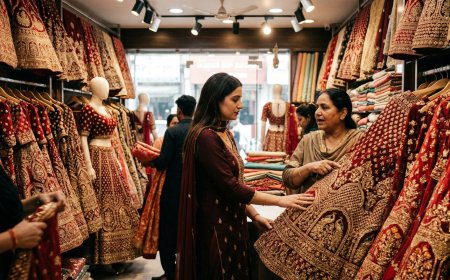
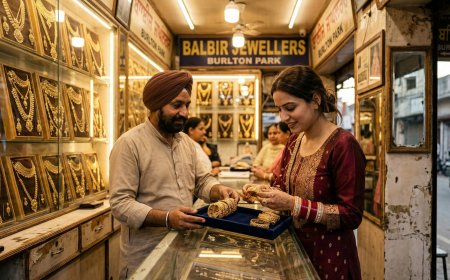
You were in that market. On the Tuesday afternoon of your planning visit, six weeks before the wedding. You walked through it with your mother, who pointed at a specific shop — the one with the handloom silk pieces in the window, the one whose owner her cousin knew — and you said you would come back the next day because you were running behind schedule and the vendor meeting at four was not something you could push.
You did not come back the next day.
The next day was the caterer, then the decorator, then the in-laws for dinner. And then the planning visit was over and you were on the flight back to Mississauga and the handloom silk shop in the old textile market was something you thought about on the plane and then, gradually, less often, until the wedding itself absorbed everything and the shop became the memory of a decision deferred and then never made.
The dupatta your mother is wearing in the photograph — the one that carries thirty years of love in its fabric — cost four hundred rupees in 1994.
You know, with the specific precision of a regret that has had five weeks to develop its edges, that the piece you would have found in that shop would have been something similar. Not identical — nothing is identical to thirty years of love — but similar in the quality of the thing. The handwoven texture. The specific warmth of genuine silk against skin. The character of a piece made with attention rather than speed.
You did not buy it.
This is the story that every NRI bride has a version of. The specific item — different for every bride, located in a different shop, discovered at a different point in the planning visit — that did not make it into the suitcase. Not because it was too expensive or too heavy or too complicated to purchase. But because the planning visit's relentless forward momentum left no room for the sideways step that the purchase required, and the item that was available in Jalandhar for a fraction of what it would cost anywhere else became the thing that was not bought.
This guide is the comprehensive record of those items. The specific categories of purchase that NRI brides consistently wish they had made in Jalandhar — and consistently regret not making — gathered from the experiences of the women who have been there, bought some things, missed others, and returned to their lives abroad with a clarity about what was worth prioritising that only comes from having learned it the hard way.
Why Jalandhar Specifically — And Why the Regret Is Specific to This City
Before the list, the context — because the regret is not generic. It is specific to Jalandhar, and understanding why requires understanding what the city holds that other markets do not.
Jalandhar sits at the intersection of several distinct craft and commercial traditions that combine to make it one of the most extraordinary shopping cities in India for the specific categories of goods that matter to a Punjabi NRI bride's wedding and family preparation.
The handloom textile tradition is deep and geographically close — the weaving traditions of the greater Punjab region, including the phulkari embroidery tradition, the handloom silk production of adjacent districts, and the block printing traditions that have developed here across generations, are all accessible in Jalandhar's markets at prices that reflect the proximity to production rather than the markup of a retail market catering to tourists or distant buyers.
The craft jewelry tradition — the jutti makers, the kundan and polki jewelers, the nath specialists — is concentrated here in a way that does not exist in most Indian cities, because the Punjabi bridal market has historically been served by craftspeople who understood its specific requirements from the inside rather than as an outsider's assessment of what Punjabi brides might need.
The wholesale market access — the proximity to manufacturing zones in Ludhiana, to the agricultural abundance of the surrounding Punjab farmland, to the commercial infrastructure of a city that has been a trading center for centuries — means that goods available in Jalandhar are available closer to their source than almost anywhere else in the retail market. The price differential between Jalandhar and a London or Toronto retailer selling comparable goods is not simply a cost of doing business adjustment. It is the entire retail supply chain removed — the importer, the wholesaler, the distributor, the retailer — leaving the buyer one step from the maker.
And then there is the specific factor that makes Jalandhar irreplaceable for NRI brides in a way that even the other great Indian shopping cities cannot match: it is where your family is. The shop that your mother knows. The market that your aunt navigated before her daughter's wedding. The jeweler whose family has sold to your family across three generations. The trust that exists in these relationships — the quality guarantee that a personal relationship provides rather than a brand or a rating — is not transferable to any other market.
The regret of not buying in Jalandhar is the regret of not using what you had access to while you had access to it.
The List: What NRI Brides Always Wish They Had Bought
1. Handloom Phulkari Dupattas — The One That Should Have Been Non-Negotiable
If there is a single item that appears most consistently in the collected regrets of NRI brides who visited Jalandhar and left without completing their purchase list, it is the handloom phulkari dupatta.
Phulkari — literally flower work — is the embroidery tradition that is as native to Punjab as the wheat fields and the mustard flowers and the specific quality of October light that makes the agricultural landscape look like it was designed rather than grown. The tradition involves silk thread embroidery worked from the reverse side of a fabric base — typically khaddar cotton — creating a pattern on the front whose density and visual richness increase from the everyday phulkari to the bagh, where the embroidery covers the entire fabric surface.
The phulkari dupatta occupies a specific and irreplaceable place in the Punjabi bridal and family textile vocabulary. It is worn at weddings, at religious ceremonies, at births and deaths and the significant transitions of family life. It is gifted to daughters as part of their trousseau. It is passed from mothers to daughters across generations. It is, in the most literal sense, a piece of Punjab that can be carried across the world.
In Jalandhar's markets, a genuine handloom phulkari dupatta — worked by hand by an artisan in the traditional technique — costs between eight hundred and eight thousand rupees depending on the density of the embroidery, the quality of the base fabric, and the complexity of the pattern. In London or Toronto or Melbourne, a comparable piece — if it can be found at all outside specialist South Asian textile importers — costs between fifty and two hundred pounds or the dollar equivalent.
The NRI bride who visits Jalandhar for her wedding planning and leaves without phulkari dupattas — for herself, for her mother, for her bridesmaids, for the family members who would receive them as gifts — is the bride who will spend the next several years trying to source them from abroad at ten times the price and never quite finding what the Jalandhar market had available.
What to buy: A minimum of three to five dupattas across different densities — a fully embroidered bagh piece for formal occasions, two to three medium-density pieces for regular wearing and gifting, and at least one in the traditional odhni format for the older female family members who still wear the traditional drape. If budget allows, buying for the entire female family — mother, sisters, aunts, bridesmaids — while in the market is the purchase that NRI brides most consistently wish they had made more completely.
Where to find them: The old city textile market, specifically the lanes around the Gur Mandi and Guru Gobind Singh Stadium area, has the highest concentration of genuine handloom phulkari. The best pieces are not in the shops with the largest frontages — they are in the smaller, older establishments whose inventory is sourced directly from the artisan communities producing the work. Your mother or your mother's friends will know these shops. Ask them specifically rather than navigating the market independently.
2. Handwoven Silk and Banarasi Pieces — The Fabric Investment That Never Depreciates
The second category of consistent regret involves handwoven textiles more broadly — the silk sarees, the Banarasi weaves, the handloom dress fabrics that are available in Jalandhar's wholesale-adjacent textile market at prices that reflect their proximity to the weaving centres of northern India.
NRI brides who visit Jalandhar for wedding planning are typically focused on the wedding outfit itself — the lehenga or the saree or the salwar for the specific functions on the specific days. What they consistently fail to capitalise on is the availability, at the same proximity, of the wider textile vocabulary that a Punjabi family's wardrobe requires.
The mother of the bride's reception saree. The grandmother's silk for the ceremony. The fabric for the bride's post-wedding wardrobe of salwar suits for the functions and events that follow the wedding across the first year of marriage. The Banarasi silk that will become a saree or a lehenga blouse in the future. The handloom cotton that is the most comfortable and most durable of all Indian dress fabrics and that is available in Jalandhar's Cloth Market at prices that make the equivalent online import look extortionate.
The specific investment case for Banarasi:
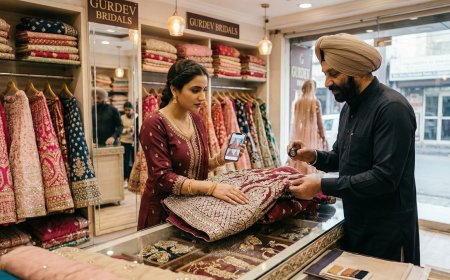
Genuine Banarasi silk — woven in the weaving traditions of Varanasi, with real gold and silver zari thread incorporated into the weave — is available through the better fabric dealers of Jalandhar's wholesale market at prices significantly below the retail markup of boutiques in India's larger metros. A genuine Banarasi silk that would cost twelve thousand rupees in a Delhi boutique may be available at seven or eight thousand rupees through a Jalandhar fabric dealer with direct sourcing relationships.
More importantly for NRI brides, the fabric is not available outside India in any format that preserves both its quality and its authenticity. The "Banarasi" pieces sold on international South Asian fashion websites are frequently machine-woven imitations whose resemblance to genuine handloom Banarasi is approximate at best. The real thing is in Jalandhar's market.
What to buy: Beyond the immediate wedding requirements, every significant wedding in the Punjabi family calendar — and the Punjabi family calendar has more significant occasions than most calendars can comfortably hold — will benefit from having genuine handwoven textile available. Buy for at least three years of occasions while you have access to the source market.
3. Punjabi Juttis for the Entire Family — The Purchase That Was Always "Tomorrow"
The jutti — as documented extensively in this guide series — is one of Jalandhar's signature craft products and one of the most consistently under-purchased items in the NRI wedding planning visit.
Brides who purchase their own bridal juttis consistently report wishing they had bought more — for bridesmaids who received insufficient consideration in the jutti budget, for family members who asked after the fact whether juttis could be sent, for the children in the family whose feet were growing fast enough that the perfect small juttis in the market would fit for exactly this season and never again.
The specific pattern of jutti regret is this: the bride buys her own pair, perhaps a matching pair for the maid of honour, and then runs out of time and focus and purchasing energy. The aunts who would have loved a pair do not get one. The cousins who visited from Canada and saw the bride's juttis and asked where they came from are given an explanation rather than a gift. The flower girls who would have been enchanted by a small embroidered pair are given alternatives from a UK South Asian boutique at twice the price and half the character.
What to buy: Juttis for every female family member attending the wedding, across every age group from the youngest child to the oldest grandmother. The cost per pair in Jalandhar's market is low enough that a comprehensive purchase — ten to fifteen pairs across the family — represents a manageable total investment and an immeasurable gift investment in terms of the pleasure the pieces will produce.
Also: juttis for the family members who could not attend. The diaspora NRI family has members who could not make the wedding journey — relatives in other cities, elderly family members who were unable to travel, close friends whose circumstances prevented attendance. A pair of Jalandhar juttis sent from the wedding location to someone who could not be there is a gift that carries the city and the occasion to the recipient in a way that few other wedding gifts can.
4. Handmade Paranda — The Hair Accessory That Cannot Be Found Anywhere Else
The paranda is the traditional Punjabi hair extension — a braid of silk or cotton threads interwoven with a base of twisted thread or cord, designed to be plaited into the bride's own hair to extend and embellish the braid. It is adorned with embellishment — thread tassels, small gold or silver discs, decorative knots, mirror work, and in the most elaborate versions, a full embroidered body.
It is also one of the most completely irreplaceable Punjabi craft items — produced in the Punjab region by specialist makers whose craft is not practised to any meaningful standard outside the region, sold in Jalandhar's markets at prices that range from one hundred and fifty rupees for a simple cotton piece to eight thousand rupees for a fully embellished silk bridal paranda.
NRI brides who do not buy their paranda in Jalandhar face a genuine sourcing problem. The online market for genuine handmade paranda outside India is thin and unreliable. The few vendors who ship internationally frequently produce machine-made or low-quality pieces that bear a superficial resemblance to the genuine article without the craft quality or the material authenticity. The paranda available in Jalandhar for three hundred rupees would cost thirty pounds in a specialist UK South Asian accessories shop — if it could be found at all.
What to buy: The bridal paranda — the embellished silk piece that will be worn for the wedding ceremony and the sangeet — deserves the most investment. Additionally, buy simple cotton or silk parandas for the bridesmaids, for female family members who still wear the traditional braid, and as gifts for the older women in the family for whom the paranda is a daily accessory rather than an occasional one.
5. Punjabi Spices, Dried Herbs, and Food Products — The Suitcase Items That Transformed Kitchens
This category surprises some NRI brides when it first appears on any recommendation list. Spices seem like a practical rather than a sentimental purchase. They do not photograph. They are not worn. They do not appear in the wedding photographs as beautiful objects.
But they are, in the collected testimony of NRI brides who visit Jalandhar for wedding planning and subsequently reflect on what they wish they had bought more of, one of the most consistently mentioned categories of regret.
Because the spices that come from the market in Jalandhar — the dried chillies, the cumin, the coriander, the turmeric, the garam masala blends that have been mixed by the same family according to the same proportions for decades — are not the same spices that come from the South Asian grocery in Mississauga or Birmingham. They are fresher. They are more aromatic. They have not been sitting in a warehouse or a shipping container for three months before they reach the retail shelf. And they produce, in the NRI kitchen, a quality of cooking that the diaspora grocery market simply cannot replicate.
The specific items that NRI brides consistently report wishing they had bought more of: dried whole spices in quantity — cumin, coriander seeds, dried red chillies of specific varieties that are not available in the diaspora grocery market. Kesar — the saffron of the Punjab region, purchased directly from a known supplier rather than from an anonymous international brand. Dried amchur — the mango powder whose quality varies enormously between source and imported versions. Ajwain — the carom seeds that are the foundation of specific Punjabi dishes and whose fresh version has a pungency that the stored import cannot match.
Also in this category: the home-made achaar from a trusted family recipe, the specific murabba from a Jalandhar sweet shop whose quality has no equivalent in the diaspora market, and the dried saag that represents the specific flavor of the Punjab agricultural landscape in its most concentrated form.
What to buy: The checked baggage allowance exists for reasons that include this. Fill it.
6. Punjabi Craft Textile Home Items — The Pieces That Made Every Room Better
The phulkari cushion covers. The handloom cotton bed runners. The block-printed table linen. The hand-embroidered wall hangings. The brass-accented wooden serving trays from the old city craft market.
These are the items that NRI brides who visit Jalandhar discover in the market, admire, take photographs of, decide to come back for, and then do not come back for. And then spend the subsequent year and a half trying to find equivalent versions online at six times the price and with none of the character.
The home textile market in Jalandhar — the shops selling phulkari-embellished household items, the craft stalls with handmade textile pieces, the sellers of handloom cotton goods in the wholesale market area — is one of the most underexplored shopping environments for NRI brides whose attention is necessarily focused on the wedding itself.
But the wedding is also a homecoming. The new home that the married couple will build — wherever in the world it is located — will benefit from pieces that carry the craft tradition of the place they came from. A phulkari cushion cover on a sofa in a Mississauga apartment. A handloom cotton runner on a table in a Birmingham terraced house. A block-printed wall hanging in a Melbourne home study. These pieces are not decorative in the superficial sense — they are presences. They carry a culture into spaces that would otherwise be without it.
What to buy: A minimum of ten to fifteen textile home pieces — cushion covers, bed runners, table linen, wall hangings — in the phulkari, handloom, and block print traditions. Buy more than you think you need. The pieces that seem like too many on the purchasing day will seem like exactly enough when you are distributing them among wedding gifts, family presents, and your own home a year later.
7. Children's Occasion Wear — The Category That Is Impossible to Source Abroad
The small lehenga for the flower girl. The little kurta pajama for the ring bearer. The salwar kameez for the niece who is coming from Vancouver. The embroidered children's sherwani for the nephew who is the groom's closest family.
NRI brides who source children's occasion wear for the wedding from Jalandhar consistently express the wish that they had bought more of it — not just for the wedding itself but for the subsequent years of family occasions that will require similar pieces for the growing children of the family.
The children's occasion wear market in Jalandhar is extraordinary. The quality of the embroidery on children's pieces — the attention given to garments that will be worn by children who will destroy them with the cheerful thoroughness that children apply to good clothing — is genuinely impressive, and the price is a fraction of what equivalent pieces cost from UK or Canadian South Asian children's clothing retailers.
The specific regret pattern: Brides who buy for the immediate wedding children typically wish they had bought two additional sizes — one to fit immediately and one for two years hence, because children grow and family occasions recur and the Jalandhar market will not be accessible again at the same convenience and at the same price.
What to buy: Children's salwar kameez and lehenga choli sets for every female child in the family across two size ranges. Boys' kurta pajama and sherwani sets in the same multi-size approach. The total investment is modest and the benefit extends across multiple years of family celebrations.
8. Traditional Punjabi Games and Ceremonial Items — The Things That Cannot Be Bought Online
The gidda accessories — the traditional props and accessories for the women's folk dance that is a staple of the sangeet program. The suhagan items for the various wedding rituals — the specific small objects that the ceremony requires and that are most authentically sourced from the local market rather than improvised from diaspora alternatives. The traditional brass and copper items — the lota, the thali, the karahi — that are used in religious ceremonies and family rituals.
These are items that NRI brides often do not think to purchase until they are mid-ceremony and the absence of the authentic version becomes apparent. The brass lota that should be used for the ritual is replaced by a glass of water. The traditional thali for the aarti is improvised from what is available. The correct items — available in any of Jalandhar's religious goods shops for a few hundred rupees — were simply not on the purchase list.
What to buy: A comprehensive set of brass and copper ceremonial items — lota, thali, puja bell, diya holders — in quality that will serve the family across decades of religious and ceremonial occasions. The initial purchase cost is modest. The value in terms of having the correct, authentic items available for every ceremony across the family's life is immeasurable.
9. Unstitched Suit Fabrics — The Gift That Keeps Giving
The unstitched suit fabric — the fabric sold by the metre in the coordinated sets of kameez, salwar, and dupatta fabric that constitute the traditional Punjabi suit material — is one of the most practical, most appreciated, and most consistently under-purchased gifts available in Jalandhar's market.
Its appeal as a gift lies in its personalisation potential — the recipient chooses their own tailor, their own cut, their own silhouette — combined with the quality of the fabric itself, which in the better Jalandhar fabric houses reflects the regional textile tradition in ways that imported alternatives do not.
NRI brides who buy suit fabrics in Jalandhar for wedding gifts consistently report that the pieces were the most appreciated gifts they distributed — more than purchased garments, more than jewelry, more than cash gifts — because they combined the thoughtfulness of a considered fabric selection with the practicality of a piece that could be made into exactly the garment the recipient wanted.
What to buy: A minimum of fifteen to twenty suit lengths for the family members, bridesmaids, and close friends who will be part of the wedding and for whom a personalised textile gift is appropriate. Include a range of fabric weights and formalities — lighter fabrics for summer occasions, heavier embellished fabrics for formal events — so that the gift serves across the full range of the recipient's social calendar.
10. The Family Heirloom Investment — The Piece That Should Have Been Custom Made
This is the category that produces the most profound and most lasting regret. Not the missed practical purchase, not the under-bought textile quantity, not the gift that could have been sourced but was not. But the specific investment piece — the custom gold jewelry, the commissioned phulkari, the bespoke embroidered item — that was available in Jalandhar at a price and a quality that the diaspora market cannot replicate, and that was not commissioned because the planning visit's timeline was already stretched.
The NRI bride who was in Jalandhar with access to the craftspeople and the materials and the family knowledge of quality that could have produced a lasting heirloom — and who instead purchased a commercially produced alternative or nothing at all — is the bride who ten years later is looking at the piece that was not made and understanding that the opportunity has passed.
The specific items in this category:
A custom phulkari — a fully embroidered bagh dupatta commissioned from a known artisan in the bride's specific color palette, with motifs that carry personal or family significance, produced to the highest standard of the traditional technique. This is not a commodity purchase. It is a commission that produces an object that will be in the family for generations.
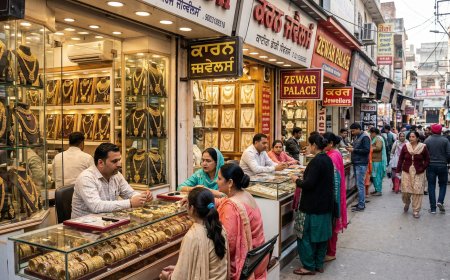
A custom gold piece — not the standard market inventory but a piece designed and made to a specific brief by a skilled Jalandhar goldsmith, incorporating the family's aesthetic preferences and the bride's individual vision. The goldsmithing tradition in Jalandhar is deep and the craftspeople are accessible to families who have relationships in the market. A custom piece made here costs significantly less than equivalent custom work in London or Toronto and is produced by craftspeople whose relationship to the tradition is generational rather than commercial.
A family portrait in embroidery — this sounds unusual until you understand the tradition. The Punjabi embroidery tradition has always included figurative and narrative work alongside geometric and floral patterns. A phulkari or cross-stitch embroidery incorporating family imagery — a house, a landscape, a symbolic scene — commissioned from a skilled embroiderer is the kind of heirloom that appears in family collections across generations.
What to commission: Whatever piece requires the craft knowledge and the material proximity that Jalandhar uniquely offers. Commission it at the planning visit. Allow the full production timeline. Collect it on the wedding trip. Carry it home.
The Pattern Behind All of It: Why the Regret Happens
Having documented what NRI brides consistently wish they had bought, it is worth understanding why they consistently did not buy it — because the reason is systemic rather than individual and understanding it allows future brides to plan around it deliberately.
The planning visit is structured around the wedding's immediate requirements. Every item on the agenda — the venue meeting, the caterer tasting, the decorator brief, the family dinners — is connected to the specific day of the wedding. The items that are not immediately connected to the wedding day but that are available and affordable and irreplaceable — the phulkari, the suit fabrics, the custom commission, the spices — exist at the margins of the agenda and are consistently displaced by the items at its centre.
The solution is structural rather than motivational. The NRI bride who adds one additional day to her planning visit specifically designated as a shopping day — no vendor meetings, no family obligations that cannot be deferred, simply a full day in the market with a specific list and a specific budget — will not leave Jalandhar with the same regrets as the bride who tries to fit the shopping into the margins of an already full agenda.
The additional day costs a flight change fee or an extra night's accommodation. It returns, in the form of what is purchased and not subsequently regretted, multiples of its cost.
The Shopping Day: How to Structure It
For NRI brides who take the advice of the previous section and allocate a dedicated day to the non-wedding shopping agenda, a structured approach to that day maximises its productivity.
Morning session — old city textile and craft market:
Begin with the phulkari and handloom textile purchase — the pieces that are most specific to this market and least available elsewhere. Allow two to three hours for the old city textile area. Bring your mother or the family member with the deepest market knowledge. Do not negotiate for individual items — negotiate for the full purchase at the end of the session.
Midday — the fabric and suit length purchase:
The fabric market — the area selling unstitched suit fabrics, dress fabrics, and specialty textiles — can be efficiently visited in one to two hours with a clear brief. Purchase suit lengths for gifts and for personal use. Make decisions quickly on this category — the decision fatigue that fabric shopping produces if allowed to extend across a full afternoon is real and counterproductive.
Afternoon — the craft and specialty purchases:
The paranda specialists, the ceremonial items, the children's occasion wear, the home textile pieces. This session benefits from a list rather than a browse — know what you are looking for before entering the market and prioritise accordingly.
Late afternoon — the heirloom commission:
If a custom commission is on the agenda — the phulkari, the gold piece, the embroidered item — save this for the end of the day when the other purchases are complete and the full attention that a custom brief deserves is available. Commission conversations should not be rushed, and a tired shopper is not the optimal commissioner of a piece that will last generations.
The Gifts That Were Never Bought: A Specific Note
Beyond the personal purchases, the category of regret that NRI brides report most consistently after the personal items is the gifts that were not bought.
The phulkari that would have been perfect for the best friend who could not attend the wedding. The jutti that would have meant the world to the aunt in Wolverhampton who grew up in Jalandhar and has not been back in twenty years. The handloom silk length that would have made an extraordinary gift for the mother-in-law whose taste runs to exactly this kind of piece. The paranda for the cousin who has been wearing her hair in a braid since childhood and who would have treasured the authentic Jalandhar version.
These gifts were available. They were affordable. They were thoughtful in the specific way that gifts from a place mean more than gifts from a store. And they were not bought because the planning visit's agenda left no room for the purchase and because thinking about gifts for others is genuinely difficult when every available cognitive resource is focused on the logistics of the wedding itself.
The solution: Make a gift list before the planning visit. Not a vague intention to bring gifts — a specific list of people, a specific item for each person, and a budget per item. Bring this list to the dedicated shopping day and treat it as a purchase requirement rather than a nice-to-have. The people on the list will receive gifts from a place that carries meaning. The bride will not spend the subsequent year saying she wishes she had bought something for them when she was there.
Common Planning Mistakes That Create the Regrets
Mistake 1: Not Allocating a Dedicated Shopping Day Trying to fit non-wedding shopping into the margins of a vendor-meeting-heavy planning visit consistently produces incomplete shopping and significant regret. The dedicated day is non-negotiable for brides who want to minimise post-visit regret.
Mistake 2: Not Bringing the Right Person The old city textile market navigated with your mother, who knows which shop has the genuine handloom pieces, is a completely different experience from the same market navigated independently. The family member with the market knowledge is the most valuable resource available for the shopping day. Bring them.
Mistake 3: Deciding to Come Back Tomorrow Tomorrow, in the context of a Jalandhar planning visit, is a concept that does not reliably exist. The agenda that was going to create the tomorrow time will be disrupted by a vendor meeting that ran long, a family obligation that could not be deferred, or the simple accumulation of exhaustion that a full planning visit produces. If you see the piece and want it, buy it on the day you see it.
Mistake 4: Under-Budgeting the Non-Wedding Shopping The planning visit budget that accounts for vendor deposits, accommodation, and flights but allocates no specific budget for the non-wedding purchases will produce the planning visit whose shopping opportunities are not fully taken because the financial planning did not anticipate them. Budget explicitly and specifically for the purchasing categories in this guide before arriving in Jalandhar.
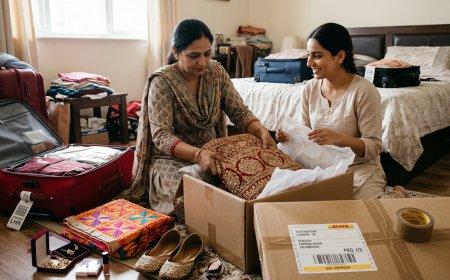
Mistake 5: Not Thinking About Luggage Until It Is Too Late The bride who buys everything she should buy in Jalandhar and then cannot transport it because she did not account for the weight and volume in her return luggage is the bride who makes heartbreaking decisions at the airport about what to leave behind. Book additional checked baggage allowance before the planning visit. Bring an additional empty bag for the return journey. Ship items back through a reliable courier service if the luggage capacity is genuinely insufficient.
The Checklist: What to Buy, Where, and How Much
Phulkari and handloom textiles What: Bagh dupattas, medium phulkari, handloom silk, Banarasi fabric Where: Old city textile market, Guru Nanak Mission Chowk lanes Budget: Five thousand to thirty thousand rupees depending on quantity and quality Quantity guidance: Minimum five to eight pieces for personal use and gifting
Juttis What: Bridal, bridesmaid, family across all ages, gift pairs Where: Old city jutti market, specialist bridal boutiques in Model Town Budget: Five hundred to five thousand rupees per pair Quantity guidance: All female family members attending plus gift pairs
Paranda What: Bridal embellished silk, simple cotton or silk for family and bridesmaids Where: Old city accessories market, paranda specialists near textile area Budget: One hundred fifty to eight thousand rupees per piece Quantity guidance: One bridal, minimum five to ten for family and gifts
Suit fabrics What: Unstitched suit lengths for gifts and personal use Where: Cloth market, fabric houses in Model Town commercial area Budget: Eight hundred to five thousand rupees per suit length Quantity guidance: Fifteen to twenty lengths for comprehensive gift coverage
Spices and food products What: Whole spices, saffron, amchur, ajwain, dried saag, achaar, murabba Where: Old city spice market, known family suppliers Budget: Two thousand to eight thousand rupees for comprehensive purchase Quantity guidance: Maximum allowed by return journey luggage and customs regulations
Children's occasion wear What: Lehenga choli, salwar kameez, kurta pajama, sherwani across two size ranges Where: Children's clothing market, specialist occasion wear boutiques Budget: Eight hundred to four thousand rupees per piece Quantity guidance: All children in the family across two size progressions
Home textiles What: Phulkari cushion covers, handloom runners, block print table linen, wall hangings Where: Old city craft market, home textile shops in wholesale area Budget: Three hundred to three thousand rupees per piece Quantity guidance: Minimum ten to fifteen pieces for personal use and gifting
Ceremonial and brass items What: Lota, thali, puja bell, diya holders, serving items Where: Religious goods market in old city, brass and copper specialists Budget: Five hundred to five thousand rupees per item Quantity guidance: Complete ceremonial set plus gift pieces
Custom commission What: Phulkari commission, custom gold piece, embroidered heirloom Where: Known artisan through family connection or specialist studio Budget: Ten thousand to two lakh rupees depending on scope Timeline: Commission at planning visit, collect at wedding
The Thing About Regret
The NRI bride who returns from her planning visit to Mississauga with a suitcase containing everything on this list and a custom phulkari commissioned and paid for and scheduled for collection at the wedding — that bride does not have this regret. She has other regrets, because everyone has regrets, and weddings in particular produce the specific regret of occasions that were so full and so fast that everything worth remembering was not fully held in the moment it was happening.
But she does not have the regret of the handloom silk shop on the Tuesday afternoon. She does not have the regret of the phulkari that was almost bought. She does not have the regret of the parandas that would have been perfect for the cousins, or the spices that would have transformed her kitchen for six months, or the children's salwar kameez that would have fit perfectly for two more years and that are no longer available in the right size.
She bought the things while the things were available to be bought. In the city where they were made or sourced or sold at the price that their proximity to production allows. In the place where her family's relationships gave her access to quality that no online market and no diaspora retailer can replicate.
She bought them because she understood, before the planning visit rather than after it, that the access she had in Jalandhar was specific, temporary, and not reproducible from Mississauga.
That understanding is what this guide gives you.
The items are in the market.
Go buy them.
What's Your Reaction?
 Like
0
Like
0
 Dislike
0
Dislike
0
 Love
0
Love
0
 Funny
0
Funny
0
 Angry
0
Angry
0
 Sad
0
Sad
0
 Wow
0
Wow
0