

























































Pathankot Road Corridor for Wedding Shopping — Fabric Shops, Tailors and Hidden Gems
The Pathankot Road corridor in Jalandhar is the wedding shopping destination that no standard guide documents — the stretch of fabric vendors, neighbourhood tailors, and specialist shops whose value is the value of the supply-chain adjacent, the low-overhead, and the not-yet-discovered. For the NRI bride who has exhausted the GT Road and Guru Nanak Mission Chowk guides and wants the corridor where the driver sends people, this guide covers the three-zone geography, the fabric inquiry framework, the middle zone tailor assessment protocol, the northern zone's hidden phulkari and dupatta specialists, the referral chain methodology, and the pricing advantage that the corridor's informal character produces.


Pathankot Road Corridor for Wedding Shopping — Fabric Shops, Tailors and Hidden Gems
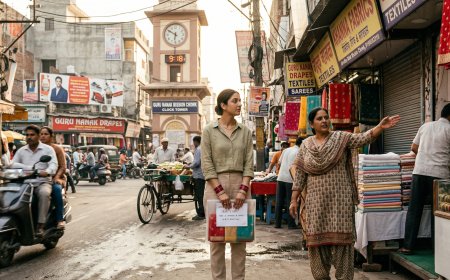
The recommendation had come from the unlikeliest source — not from a family member, not from a wedding planning forum, not from the Instagram account of a Jalandhar-based bridal stylist with forty thousand followers and a highlight reel of coordinated flat-lays. It had come from the driver.
Manveer had hired the car for the week — the standard arrangement for the NRI visitor whose Jalandhar trip involves enough moving between markets, venues, tailors, and relatives that the auto-rickshaw by the day becomes less efficient than the dedicated vehicle. The driver's name was Gurdev, and Gurdev had been driving visitors around Jalandhar for eleven years with the specific, accumulated knowledge of the city that eleven years of driving produces — the knowledge of the shortcuts and the traffic patterns and the markets that open early and the vendors who close on Tuesdays and the specific lanes whose existence the main road does not suggest.
On the third morning of the trip, Gurdev had asked — with the particular directness of the Punjabi driver who has decided, after two days of observation, that the passenger can be trusted with useful information — where they were going for fabric. Manveer had said: Mangaldas area, probably. Or the Guru Nanak Mission Chowk section.
Gurdev had been quiet for a moment. Then he had said: those are good. But have you been on the Pathankot Road?
Manveer had said: for shopping?
Gurdev had said: there is a stretch. Before the Nakodar turnoff, on the left side going north. Four, five shops in a row — fabric mostly, but one of them has a tailor who I have been sending people to for eight years. He is not in any directory. He does not have a phone number on Google. But he has made three lehnga sets for my boss's daughter and she has worn them to weddings in Canada and England and every time someone asks her where they came from.
Manveer had asked: what is the shop called.
Gurdev had said: it doesn't have a sign. You will know it by the green door. Tell him Gurdev sent you.
The green door had been the beginning of a different understanding of the Pathankot Road corridor — an understanding that the standard Jalandhar shopping guide does not produce because the standard guide covers the markets that are visible and the Pathankot Road's wedding shopping infrastructure is, in significant part, the infrastructure that is not visible until someone who knows it tells you where to look.
This guide is for the NRI visitor who is ready to look beyond the visible — the complete account of the Pathankot Road corridor's fabric shops, tailors, and hidden gems, written with the specific knowledge that the driver's recommendation and the subsequent three days of exploration produced.
Understanding the Pathankot Road Corridor's Position in Jalandhar's Wedding Shopping Landscape
The Pathankot Road is one of Jalandhar's principal arterial roads — the highway that extends north from the city toward Pathankot, passing through the semi-urban commercial corridor that has developed along its length over the past three decades as the city's northern expansion has pushed development out along the road's axis. It is not a market in the sense that the Guru Nanak Mission Chowk is a market or the GT Road's wedding corridor is a market — it is a road with a commercial character that has developed organically rather than as a planned retail destination, and whose shopping value for the NRI bride is the value of the organic, the accumulated, and the not-yet-discovered rather than the value of the organised and the famous.
This distinction is the corridor's defining characteristic and the source of both its greatest advantage and its greatest challenge. The advantage is the absence of the tourist premium — the pricing uplift that the famous market applies to the buyer whose arrival from abroad signals the willingness to pay that the local buyer's familiarity with the market prevents. The Pathankot Road vendor whose primary customer is the Jalandhar resident from the surrounding residential areas, the local tailor whose client base is the neighbourhood's families rather than the visiting NRI, operates at the price point that the local market sustains rather than the price point that the destination market's overhead and reputation command.
The challenge is the navigation — the absence of the signage, the directory, the Instagram presence, and the social proof that the famous market's accessibility provides. The Pathankot Road corridor requires the local knowledge that Gurdev represented — the knowledge of which green door, which tailor, which fabric vendor in which specific stretch of a road that extends for several kilometres without the visual organisation that makes the destination market navigable on first encounter.
This guide is designed to provide the approximation of that local knowledge — not the eleven years of Gurdev's accumulated understanding, but the distilled framework that makes the corridor accessible to the NRI visitor who is arriving without a driver who has been sending clients to the green door for eight years.
The Corridor's Geography: A North-to-South Account
The Pathankot Road corridor's wedding shopping value is distributed along a specific stretch of the road rather than uniformly across its entire length. The stretch that is relevant to the NRI bridal brief begins approximately two kilometres north of the Urban Estate Phase 2 junction and extends for roughly three kilometres toward the Nakodar Road intersection that marks the northern boundary of the concentrated commercial activity.
Within this stretch, the commercial character changes across three distinct zones whose understanding allows the NRI visitor to allocate the day's time efficiently rather than walking the full corridor's length in the hope that the relevant shops will declare themselves.
The Southern Zone: Fabric and Raw Material
The southern portion of the relevant stretch — the two kilometres immediately north of the Urban Estate junction — contains the highest concentration of fabric vendors in the corridor, specifically the vendors whose stock is oriented toward the occasion-wear and wedding fabric categories rather than the everyday cotton and synthetic that dominates the residential neighbourhood market further south.
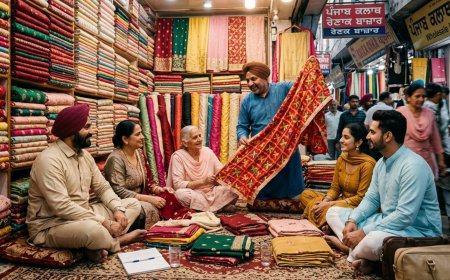
The fabric character of this zone is the fabric character of the supply-adjacent market — the vendors who are close to the wholesale supply chain without being wholesale themselves, whose pricing reflects this proximity in a way that the GT Road retail shop's pricing does not. The raw silk, the Chanderi, the embroidered georgette in the occasion-wear weight that the bridal function wardrobe requires — these are available in the southern zone at prices that typically sit fifteen to twenty-five percent below the comparable GT Road retail price for the same fabric quality.
The southern zone's fabric vendors are not uniformly oriented toward the bridal market — the corridor serves the full range of residential occasion-wear demand, which means that the same stretch includes the everyday cotton vendor alongside the specialist occasion-wear fabric shop. The NRI visitor navigating this zone must distinguish between the two, which requires either the local knowledge or the specific inquiry — asking directly, at each vendor, whether they carry the fabric for lehengas and bridal suits rather than for everyday wear.
The specific fabric categories to look for in the southern zone: the heavy georgette in the colour families relevant to the Punjabi bridal palette — the deep reds, the navy, the forest green, the rust and mustard — whose quality at this price point is the quality of the production-adjacent supply chain rather than the quality of the retail mark-up. The organza in the lighter weights for dupattas. The raw silk in the Banarasi-adjacent quality whose provenance is not Banaras but whose surface quality is close enough for the function-wear brief that does not require the authenticated origin.
The Middle Zone: Tailors and Production Workshops
The middle zone of the relevant stretch — the kilometre that sits between the southern fabric concentration and the northern specialist shops — is the zone whose value is the least visible from the road and the most significant for the NRI bride whose brief includes custom construction rather than readymade purchase.
This is the tailor zone — the stretch where the independent tailors, the small production workshops, and the embroidery artisans whose client base is the local residential market have established their operations in the buildings that set back from the road's edge. The setback is literal and metaphorical — these are businesses that are not oriented toward the passing traffic in the way that the fabric vendors' open-fronted shops are, and finding them requires the knowledge of their existence rather than the visual survey that the open-fronted shop allows.
The tailors of the Pathankot Road middle zone have a specific competence profile that the GT Road and Model Town tailors do not share. They are tailors whose decades of work have been for the local Punjabi occasion-wear customer — the families whose weddings produce the annual demand for Patiala suits, lehengas, salwar kameez sets, and the occasional more elaborate bridal commission. This experience base produces a craft knowledge of the Punjabi garment tradition that is specific and deep rather than general and broad, and it is precisely the craft knowledge that the NRI bride whose brief is specifically Punjabi in its aesthetic is looking for.
The quality range within the middle zone's tailoring community is substantial — from the excellent to the merely adequate — and the selection of the right tailor requires the assessment that the guide below provides. But within the quality range, the excellent tailors of the Pathankot Road middle zone represent a value proposition that the GT Road and Model Town tailors cannot match at comparable price points, because the middle zone's overhead structure is the overhead structure of the neighbourhood workshop rather than the boutique tailor's premium location.
The Northern Zone: Specialist Shops and the Hidden Gems
The northern zone of the relevant stretch — the kilometre approaching the Nakodar Road intersection — contains the specific establishments that the corridor's informed visitors know and that the standard Jalandhar wedding shopping guide does not document. These are the hidden gems of the title — the shops whose existence is known to the family network, the driver's accumulated knowledge, the word-of-mouth recommendation that travels through the NRI community's India visit conversations but does not appear in the search engine results.
The character of the northern zone's specialist shops is the character of the established, low-profile, quality-over-visibility business — the shop that has been in the same location for twenty years, whose sign is modest or absent, whose interior is stocked rather than displayed, and whose customer is the repeat buyer rather than the first-time visitor. These are the businesses whose confidence is the confidence of the established quality rather than the confidence of the prominent marketing, and whose prices reflect this orientation in the specific way that the non-marketing overhead produces.
The Fabric Shops: What to Look For and What to Ask
The fabric shopping on the Pathankot Road corridor requires a different approach from the Mangaldas or GT Road fabric shopping because the corridor's vendor landscape is less organised and less clearly differentiated between the relevant and the irrelevant. The disciplined fabric shopping on the Pathankot Road requires the specific inquiry framework that converts the corridor's undifferentiated commercial character into the productive sourcing visit.
The Inquiry Framework for Corridor Fabric Shopping
The first question at every fabric vendor on the Pathankot Road is the occasion question: do you carry fabric for wedding and bridal outfits, specifically lehenga and salwar kameez weight fabrics in the occasion-wear quality. This question immediately distinguishes the vendors relevant to the bridal brief from the everyday cotton and synthetic vendors whose stock is not relevant. The vendors who answer yes and who pull the relevant stock without hesitation are the vendors worth spending time with. The vendors who answer yes and then show fabrics whose quality and weight are clearly not occasion-wear are the vendors whose yes was the hospitality of the market rather than the confirmation of the relevant inventory.
The second question is the provenance question: where does this fabric come from and who is your supplier. The Pathankot Road vendor whose fabric comes from the Ludhiana wholesale market, the Amritsar fabric trader, or the direct relationship with a specific production region has a supply chain story that the knowledgeable buyer can assess. The vendor whose answer to the provenance question is vague or deflecting is the vendor whose supply chain is the generic wholesale channel whose quality consistency is the consistency of the undifferentiated market.
The third question is the price comparison question, which the buyer asks internally rather than of the vendor: how does this fabric's price compare to the equivalent quality at the GT Road or Model Town retail price that the pre-visit research established. The Pathankot Road fabric whose price is not meaningfully lower than the GT Road equivalent for comparable quality is not the Pathankot Road advantage — it is the corridor's pricing applied to a fabric whose sourcing proximity has not produced the price benefit that the proximity should deliver.
The Specific Fabric Strengths of the Corridor
The Pathankot Road corridor's fabric strengths are concentrated in the categories whose supply chain has a natural connection to the corridor's geographic position — the fabrics that come to Jalandhar from the north and west of the city, from the production centres in Amritsar and Ludhiana and the Punjabi textile tradition, rather than from the eastern and southern production centres whose Jalandhar distribution is through the GT Road and Mangaldas channels.
The cotton fabrics of the Punjabi occasion-wear tradition — the block-printed cotton whose production is in the Rajasthani tradition but whose Jalandhar distribution comes through the Amritsar wholesale channel, the traditional Punjabi cotton of the salwar kameez and the functional dupatta, the heavier cotton whose weight serves the Patiala suit's construction requirements — are available in the Pathankot Road corridor at prices whose comparison to the Guru Nanak Mission Chowk fabric section is the comparison of the same supply chain at a slightly different point in its distribution.
The embroidered fabric — the fabric with the machine-embroidery already applied before construction, whose availability in specific colour and embroidery combinations is the variable that the fabric shopping is designed to navigate — is available in the Pathankot Road southern zone at a range that reflects the corridor's orientation toward the local production workshop customer. The embroidered fabric vendor on the Pathankot Road is, in several cases, selling to the local tailors whose workshops are in the middle zone, and the price at which the fabric is available reflects the tailor-customer relationship rather than the retail relationship.
The Tailors: Finding the Right One in an Unmarked Zone
The tailor selection on the Pathankot Road requires a more specific methodology than the tailor selection in the GT Road or Model Town context, because the corridor's tailors are not organised into the visible, signposted cluster that the established bridal tailoring districts provide. They are distributed through the middle zone's residential and commercial buildings with the irregularity of the organic rather than the order of the planned.
The Assessment Framework for the Corridor Tailor
The assessment of a Pathankot Road tailor for the NRI bridal commission requires the same five-point evaluation that the custom commission guide describes — the portfolio assessment, the fabric handling assessment, the test seam protocol, the brief communication assessment, and the timeline confirmation — applied in the specific context of the corridor's informal, neighbourhood-workshop setting.
The portfolio assessment for the Pathankot Road tailor should focus specifically on the Punjabi occasion-wear category — the Patiala suits, the bridal salwar kameez sets, the lehenga skirts in the Punjabi construction tradition — because this is the tailor's primary competence domain and the domain whose quality is most relevant to the NRI bride of Punjabi heritage. The tailor whose portfolio shows excellent work in the Punjabi garment categories but limited experience with the contemporary fusion aesthetic is the tailor for the traditional brief and potentially the wrong tailor for the brief that requires the contemporary silhouette.
The fabric handling assessment is the assessment that reveals the most about the Pathankot Road tailor's competence level, because the handling of a fabric — the assessment of its weight, drape, and construction requirements by touch — is the skill that separates the experienced craftsperson from the adequate one. The corridor tailor who picks up the occasion-wear fabric and handles it with the specific attention of someone who is registering its construction requirements is the tailor whose hands have done this for long enough to read the fabric directly. The tailor who handles the fabric without the specific assessment is the tailor whose experience may be in a different fabric category.
The Green Door: What the Driver's Recommendation Represented
The green door that Gurdev had described was not a unique phenomenon — it was a representative example of the Pathankot Road middle zone's specific category of the established, low-profile, quality-driven workshop whose client base is the referral network rather than the passing trade. These workshops exist throughout the middle zone, and the one that Gurdev had been sending clients to for eight years was one of several whose quality the corridor's local knowledge network identifies and whose existence the standard guide does not document.
The characteristics that define the green door category of corridor workshop: the absence of prominent signage, reflecting the established client base that does not require the sign to find the workshop; the interior organisation of the productive workshop rather than the display organisation of the retail tailor, reflecting the orientation toward making rather than showing; the owner's willingness to discuss the specific requirements of the brief in detail rather than moving quickly to the price conversation, reflecting the craft confidence of the experienced maker; and the portfolio whose work is in photographs from actual client occasions rather than in the staged presentation of the boutique tailor's marketing.
Finding the green door equivalent in the middle zone without Gurdev's specific direction requires the referral methodology — asking specifically among the Jalandhar family network and the NRI community's India-visit conversation for the specific workshop that the reliable referral points to, rather than relying on the directory or the search engine whose coverage of the informal corridor workshop is minimal.
The Hidden Gems: What the Northern Zone Contains
The northern zone's specialist shops — the establishments that the corridor's informed visitors know and that the standard guide does not document — fall into three categories whose understanding helps the NRI visitor identify what she is looking for in a zone whose external appearance does not distinguish the excellent from the ordinary.
The Phulkari Specialist
The northern zone contains at least one, and in some configurations of the corridor's commercial activity, two or three, phulkari specialists whose stock is the artisanal production of the traditional phulkari embroidery rather than the commercial production that the Guru Nanak Mission Chowk and GT Road carry. The distinction is the distinction between the phulkari produced by the artisan — the individual or family workshop whose embroidery technique is the traditional flame-stitch applied by hand with the patience that the traditional piece requires — and the phulkari produced by the commercial workshop whose efficiency requires the adaptation of technique that produces the approximation rather than the original.
The artisanal phulkari of the northern zone is available at a price range that reflects the production reality — higher than the commercial phulkari of the main markets but substantially lower than the designer-label phulkari of the premium boutique — because the northern zone's overhead structure does not add the retail margin that the boutique's location requires. The NRI bride who has been quoted a significant premium for the artisanal phulkari from a Bandra boutique or a Model Town specialist will find the same quality at a meaningfully different price in the northern zone of the Pathankot Road corridor, if the right shop is found.
The identification of the phulkari specialist within the northern zone requires the inquiry that the phulkari fabric examination allows — the request to see the dupatta or the fabric length's reverse side, where the traditional flame-stitch's characteristic construction is visible in the thread's consistency and the stitch's density. The artisanal piece's reverse is as clean as the face. The commercial piece's reverse shows the shortcuts that the production efficiency requires.
The Dupatta Specialist
The northern zone contains specialist dupatta vendors whose stock is the specific, standalone dupatta for the bride who has sourced her lehenga separately and who needs the dupatta that completes the outfit rather than the dupatta that came with the set. This is a specific market gap that the mainstream Jalandhar bridal market does not address well — the bridal lehenga sets carry dupattas that are designed for the set rather than designed as the standalone statement, and the bride whose brief requires the dupatta that stands alone requires a specialist whose stock is organised around the standalone dupatta rather than the set component.
The dupatta specialists of the northern zone carry: the heavily embroidered dupatta whose embellishment is the outfit's principal visual element; the sheer dupatta whose lightness is the contrast to the heavy lehenga whose fabric is its own statement; the phulkari dupatta in the artisanal quality; and the embellished organza dupatta whose photographic quality is the quality of a fabric and embellishment combination designed for the camera's record rather than the eye's passing glance.
The price range for the northern zone's standalone dupatta specialists: from eight thousand to thirty-five thousand rupees for the range from the simply embellished to the heavily worked artisanal piece. This range is the range of the specialist whose overhead is the neighbourhood corridor's overhead rather than the boutique district's overhead, and its comparison to the Model Town dupatta boutique's equivalent pricing is the comparison of the same quality at a different margin structure.
The Accessories and Finishing Workshop
The third category of the northern zone's specialist establishments is the accessories and finishing workshop — the small operation whose offering is the specific finishing elements that the bridal outfit requires but that the mainstream market supplies inadequately: the lace edge application, the mirror work addition to the existing garment, the tassels and the fringing, the specific embellishment that the bride wants added to a purchased garment to make it more specific to her brief.
This is the workshop category whose existence most directly addresses the NRI bride's specific challenge of the readymade purchase that is almost right and needs the specific addition to become completely right. The mainstream market's answer to this challenge is the tailor whose remit is the structural alteration. The northern zone's finishing workshop is the answer to the question that the structural alteration cannot address — the surface addition, the embellishment, the finishing detail that changes a good readymade into the specific garment the brief described.
The Pathankot Road and the Grand Legacy Resort: A Logistical Note
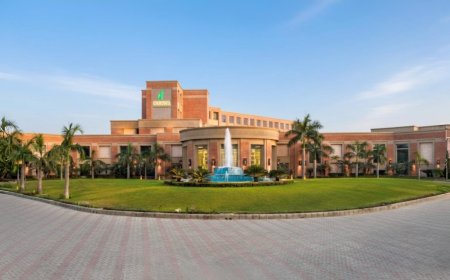
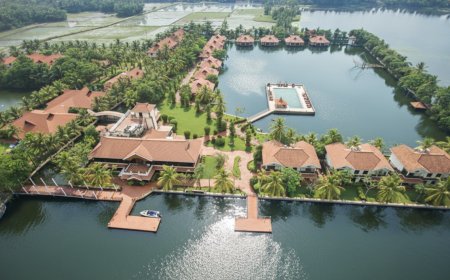
The Pathankot Road corridor is the road on which the Grand Legacy Resort — one of the five Jalandhar wedding venues assessed in the NRIWedding.com venue comparison guide — is located. The NRI bride who has booked the Grand Legacy as her wedding venue has a specific logistical relationship with the Pathankot Road corridor that the non-Grand Legacy bride does not have: the fabric shops, the tailors, and the specialist shops of the corridor are in the same logistical zone as her wedding venue, which means the fabric sourcing trip and the venue inspection can be combined into a single Pathankot Road day rather than treated as separate logistical events.
This logistical efficiency is worth noting because the NRI bride's Jalandhar trip is typically time-compressed in the way that all business conducted at a distance produces time compression, and the combination of two logistical objectives into a single day's geography is the efficiency that the careful planning of the Jalandhar visit captures.
The Practical Day Plan: Making the Most of the Corridor
The optimal day plan for the Pathankot Road corridor visit allocates the morning to the southern zone's fabric shopping, the late morning to the middle zone's tailor assessment, and the afternoon to the northern zone's specialist shops. This sequence follows the logical order of the bridal shopping process — the fabric sourced before the tailor is briefed, the tailor assessed before the commission is placed — while using the corridor's north-to-south geography efficiently.
The morning fabric session in the southern zone should begin at nine-thirty when the vendors are fully open and before the late-morning traffic on the Pathankot Road makes the movement between shops more time-consuming. The session should cover every fabric vendor in the southern zone whose open frontage suggests the occasion-wear orientation, using the inquiry framework described above to distinguish the relevant from the irrelevant quickly. The session should produce a fabric shortlist rather than a purchase decision — the fabric that passes the quality and price assessment is shortlisted but not purchased until the tailor who will use it has been assessed and has confirmed the fabric's suitability for the specific construction.
The late morning tailor assessment in the middle zone requires the referral knowledge to initiate — the specific workshop whose door to knock on is the knowledge that the family network, the driver's recommendation, or the northern zone specialist's referral provides. Without this knowledge, the middle zone assessment requires the cold-approach methodology: walking the zone, observing which buildings have the indicators of the active tailoring workshop — the sound of the sewing machine, the fabric visible through the open doorway, the finished garments hanging in the interior — and entering the workshops that present these indicators for the assessment conversation.
The afternoon specialist shop visit in the northern zone is the reward of the day's earlier discipline — the zone whose shops are most likely to produce the discovery of the unexpected, the piece or the specialist that was not in the pre-visit research and that the corridor's exploration has revealed. This is the session that requires the exploratory approach rather than the brief-driven approach — the willingness to enter the shop whose exterior does not declare its relevance and whose interior may produce the discovery that the pre-defined brief would have prevented.
The Pricing Reality: What the Corridor Advantage Actually Produces
The Pathankot Road corridor's pricing advantage over the GT Road and Model Town bridal markets is real but variable — real in the categories where the corridor's supply-chain proximity and lower overhead produce a genuine price differential, and variable in the sense that the advantage is not uniform across all categories or all vendors.
The categories where the pricing advantage is most consistent: the cotton and cotton-blend fabrics of the Punjabi occasion-wear tradition, where the corridor's proximity to the supply chain produces a ten to twenty-five percent differential; the tailoring services for the Punjabi garment categories, where the neighbourhood workshop's overhead structure produces a thirty to forty percent differential for comparable quality; and the standalone dupatta in the artisanal quality, where the corridor's specialist's overhead advantage over the boutique is the most significant of the three categories.
The categories where the pricing advantage is less consistent: the embroidered fabric, where the quality variable interacts with the price variable in a way that makes the comparison more complex; the accessories and finishing, where the specific piece's uniqueness makes the comparison difficult; and the readymade occasion-wear, where the corridor does not carry a sufficient range to offer the comparison shopping that would reveal the pricing advantage clearly.
Common Mistakes NRI Visitors Make on the Pathankot Road Corridor
The first mistake is approaching the corridor with the expectation of the organised market. The Pathankot Road is not the Guru Nanak Mission Chowk or the GT Road. It does not have the visual organisation, the signage, or the navigational infrastructure that the organised market provides. The visitor who arrives expecting the organised market will be disoriented by the corridor's informal character and will miss the value that the informality contains. The correct expectation is the exploration — the productive uncertainty of the unorganised market whose rewards are available to the visitor who is comfortable with the methodology of the unknown.
The second mistake is not securing a referral before the middle zone tailor assessment. The cold approach to the middle zone is possible but inefficient — the active tailoring workshops are not always visible from the road and the assessment of multiple workshops without prior knowledge of their quality level is the assessment of the unknown. The referral — from the family network, from the driver, from the northern zone specialist whose relationship with the middle zone tailors is the relationship of the adjacent trade — converts the unknown into the known and saves the time that the cold-approach methodology requires.
The third mistake is purchasing fabric before the tailor assessment. The Pathankot Road fabric and the Pathankot Road tailor are most efficiently purchased together — the fabric selected with the tailor's input on its construction suitability, the tailor assessed with the fabric in hand rather than in the abstract. The NRI visitor who purchases the fabric in the morning and then discovers in the tailor assessment that the fabric is not appropriate for the specific construction has purchased a fabric that the tailor cannot use effectively, which is a purchase that must either be accepted as a constraint on the construction or accepted as a waste.
The fourth mistake is not allocating enough time for the northern zone's exploration. The northern zone's hidden gems are the corridor's most distinctive offering, and they are the offering that the time-compressed visit is most likely to sacrifice when the morning's fabric and tailor sessions have consumed the available time. The day plan that builds the northern zone exploration into the schedule as a fixed allocation rather than the residual of the day's other activities is the day plan that captures the corridor's full value.
The fifth mistake is not asking for the referral chain that the corridor produces. The fabric vendor who knows the tailor who knows the phulkari specialist who knows the dupatta vendor — this referral chain is the corridor's internal knowledge network, and it is accessible to the NRI visitor who asks for it explicitly at each stage. The vendor who is asked directly — do you know a tailor in the middle zone who works well with this fabric — has the knowledge to answer the question and the motivation to share it, because the referral is the currency of the neighbourhood market's social economy. The visitor who does not ask does not receive the referral. The visitor who asks converts the single shop visit into the beginning of the corridor's internal network.
What Manveer Found Behind the Green Door
The green door had been exactly where Gurdev had said it would be — on the left side of the road, in the middle zone, set back from the road's edge by the width of a modest forecourt whose ground was the compressed earth of a space that has been used as a parking area and a workspace simultaneously for a long time.
The tailor's name was Harpal Singh, and he had been in this workshop since 1998 — twenty-six years in the same room, behind the same green door, with the same Singer sewing machine that he had bought secondhand in 2001 and maintained with the attention of someone who understands that the tool's consistency is the output's consistency. The walls of the workshop had the photographs that Gurdev had described — the clients at their weddings, the outfits that had been worn in Canada and England, the specific visual record of the work that had left this room and traveled.
Harpal Singh had looked at the reference photographs that Manveer had brought — the specific silhouette of the bridal salwar kameez she wanted, the embroidery reference from the designer lookbook, the fabric swatch that the southern zone's best vendor had cut for her that morning. He had handled the fabric for thirty seconds. He had said: the kameez will need the interfacing at the chest. This fabric does not have enough body without it. The standard stitching will give you the right shape at the fitting but it will lose it after an hour of wear.
He had said this the way someone says something they have known for a long time — not as a demonstration of expertise, but as the ordinary communication of a competence that does not require the performance of itself.
She had said: can you do the full set?
He had said: I can do it in twelve days. If you come back on the tenth day for the fitting, I will have the kameez ready and the salwar in the final stage. The dupatta needs to come from the northern zone. I will tell you which shop.
He had told her which shop. She had gone the following afternoon. The dupatta shop had no sign. It had been identified by the description that Harpal Singh had given: blue shutters, second building after the temple, ask for Balwinder.
Balwinder had shown her seven dupattas. The third one had been the one — a sheer organza with a phulkari-adjacent embroidery border in the specific rust and gold that the kameez's embroidery referenced. She had bought it for nine thousand rupees. The GT Road equivalent, if it existed, would have been closer to sixteen.
The complete outfit had cost thirty-one thousand rupees, including Harpal Singh's construction fee and Balwinder's dupatta. The GT Road equivalent of a comparable quality — semi-custom construction, equivalent fabric, equivalent dupatta — would have been between fifty and sixty-five thousand.
The difference was the green door and the blue shutters and the driver who had been paying attention for eleven years.
Ask the driver where he sends people. Ask every fabric vendor which tailor they know. Ask every tailor which specialist shop they refer to. Follow the referral chain that the corridor's internal network contains. Build enough time into the day for the northern zone's exploration — the zone whose shops are most likely to produce the discovery that the brief did not anticipate. And arrive on the Pathankot Road with the expectation of the productive exploration rather than the expectation of the organised market.
The corridor's value is real. It is available to the visitor who arrives prepared to find it rather than waiting for it to declare itself.
Published by NRIWedding.com — The Premium Global Platform for Non-Resident Indians Planning Indian Weddings From Abroad.
What's Your Reaction?
 Like
0
Like
0
 Dislike
0
Dislike
0
 Love
0
Love
0
 Funny
0
Funny
0
 Angry
0
Angry
0
 Sad
0
Sad
0
 Wow
0
Wow
0