























































GT Road Wedding Shops in Jalandhar — Big Showrooms, Big Selection, Big Decisions
GT Road in Jalandhar is the most comprehensive wedding shopping corridor in the city — three-floor showrooms, fifteen-person sales teams, and a selection scale that rewards the prepared buyer and overwhelms the unprepared one. For the NRI bride navigating the corridor's multi-category showrooms, specialist bridal shops, jewellery destinations, and groom's menswear options, this guide covers the full showroom landscape, the two-day visit structure, the shortlisting protocol, the negotiation dynamic, and the GT Road and Model Town relationship that makes both markets work together rather than against each other.

GT Road Wedding Shops in Jalandhar — Big Showrooms, Big Selection, Big Decisions
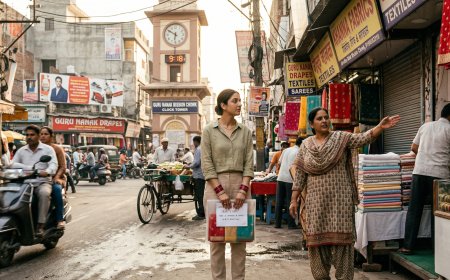
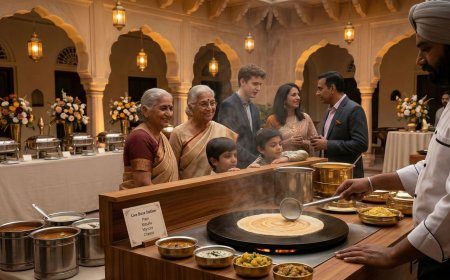
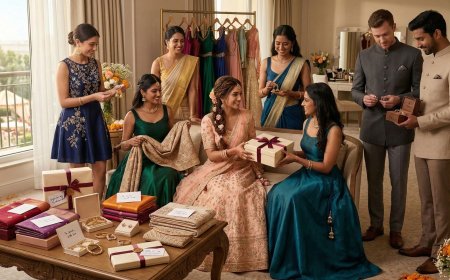
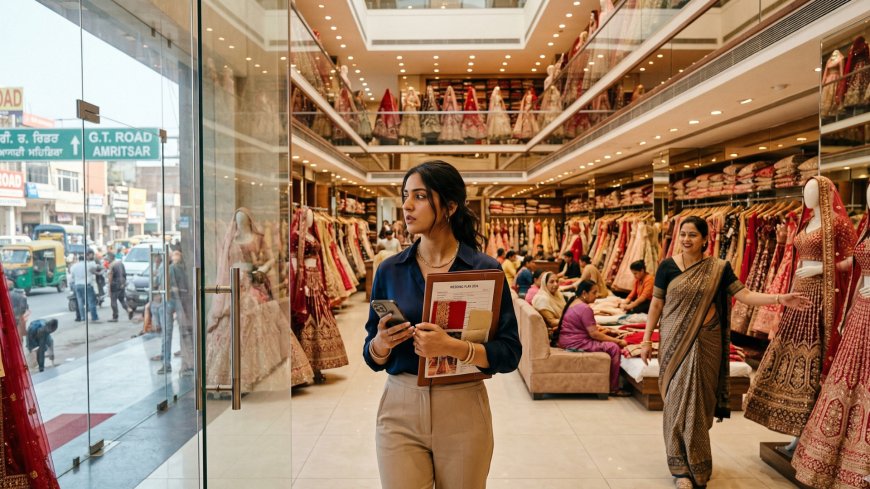
The first thing Simran noticed when she walked into the showroom on GT Road on the second morning of her Jalandhar visit was the size of it. She had been expecting something closer to the boutique scale she knew from the Leicester wedding shops her mother occasionally visited — the intimate, curated, one-room operations where the owner knew the stock personally and the selection was manageable. What she walked into was something categorically different: a three-floor showroom with a frontage that occupied the width of three adjacent properties, floor-to-ceiling mirrors on every surface, display rails that extended further than she could see from the entrance, and a sales team of approximately fifteen people who moved across the floor with the coordinated efficiency of an operation that had been processing large numbers of customers for a long time.
She was from Toronto. She had been planning this wedding for thirteen months. She had a list — the list that had become, over those thirteen months, the most important document in her life — and the list had on it approximately twenty-two items that she had identified as GT Road purchases. Not boutique purchases, not wholesale market purchases, but the specific category of mid-to-upper-mid-market ready-to-wear and near-custom purchases that the GT Road showroom infrastructure was designed to serve.
She stood in the entrance of the showroom and understood, for the first time, what the phrase big selection actually meant in the Jalandhar context. It meant more than she had expected. It meant more, she thought, than she was immediately equipped to navigate.
The sales team member who approached her was professional and warm and asked, in the specific tone of someone who has asked the same opening question many thousands of times and who has learned to ask it in a way that does not feel like a script: are you the bride?
Simran said: yes.
The sales team member said: welcome. What are we looking for today?
Simran looked at her list. She looked at the three floors of the showroom. She said: I'm not sure where to start.
The sales team member said: that's alright. Let's start at the beginning.
What followed was three hours in a single showroom — three hours that produced two confirmed purchases, four shortlisted pieces that required comparison with other showrooms, and a clearer understanding of how the GT Road market worked than Simran had arrived with. The three hours also produced a realisation that she had not anticipated: that the GT Road showroom experience, in its scale and its variety and its specific commercial dynamics, was a genuinely different shopping environment from anything she had navigated before, and that navigating it well required a specific understanding of how to use the scale rather than being overwhelmed by it.
This guide is for Simran, and for every NRI bride who arrives on GT Road for the first time and faces the specific challenge of the big showroom — the scale that is simultaneously the market's greatest strength and its most demanding characteristic — and who needs the framework for making the big decisions that the big selection makes possible.
The GT Road Market: A Character Study
GT Road — the Grand Trunk Road, one of the oldest and longest roads in Asia, the highway that connects Peshawar to Kolkata and that passes through the commercial heart of Jalandhar — is not a market that evolved to serve the wedding customer specifically. It evolved as the primary commercial spine of a major regional city, and the wedding market developed within it because the road's commercial density, its transport accessibility, and its position as the city's most visible commercial thoroughfare made it the natural location for the large-format retail operations that the wedding market's scale requires.
The GT Road wedding market's character is shaped by four qualities that distinguish it from both the Model Town boutique market and the Paragpur wholesale market. The first is scale — the showrooms are large, the selection is extensive, the inventory depth is greater than any other retail environment in Jalandhar. The second is accessibility — the road's position in the city's commercial geography and its transport infrastructure make it the most easily reached shopping destination from any point in Jalandhar. The third is competitive density — the concentration of showrooms in a single corridor means that adjacent shops are in direct competition with each other, which produces price competition and quality competition that the buyer can exploit. The fourth is transactional efficiency — the showrooms are built for volume, and their infrastructure is designed to move buyers through the decision and purchase process with the efficiency that high-volume retail requires.
These four qualities are the market's strengths and, in specific circumstances, its limitations. The scale that provides the selection also makes the navigation demanding. The competitive density that produces price advantages also produces the aggressive sales approach that characterises high-competition retail. The transactional efficiency that serves the buyer who has a clear brief can underserve the buyer who needs time and space to develop one.
Understanding the character of the GT Road market before arriving is the preparation that converts the scale from an obstacle into an advantage.
The Showroom Landscape: What Exists on GT Road
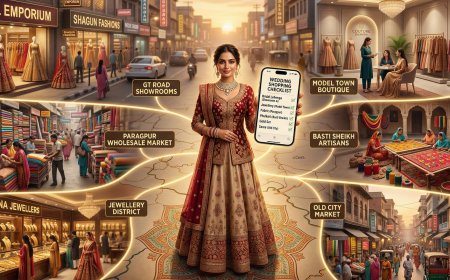
The GT Road wedding shopping corridor spans approximately three kilometres from the Nakodar Chowk intersection at the southern end to the bus stand area at the northern end. Within this corridor, the showrooms relevant to the NRI bridal brief are distributed across four categories of establishment: the large multi-category showrooms, the specialist bridal garment shops, the jewellery showrooms, and the specialist category shops that serve specific elements of the bridal brief.
The Large Multi-Category Showrooms
The large multi-category showrooms are the defining commercial establishments of the GT Road corridor — the three and four-floor operations that carry garments, jewellery, accessories, and in some cases footwear under a single roof, and that represent the most comprehensive single-destination shopping experience available in the Jalandhar wedding market.
Frontier Raas is the most significant of these establishments for the NRI bridal brief. The showroom carries the most extensive bridal lehenga range on GT Road — spanning the traditional heavily embroidered Punjabi vocabulary through the contemporary fusion aesthetic that the NRI buyer's globally-influenced brief requires — alongside a significant bridal suit range, a family saree section, and a menswear floor. The price range extends from ₹35,000 for the entry-level bridal pieces to ₹3,00,000 and above for the most elaborate custom-adjacent pieces. The NRI infrastructure is the most developed of any GT Road multi-category showroom: the staff are accustomed to the NRI client's timeline requirements, the documentation practices are thorough, and the remote follow-up capability — for the NRI buyer who needs to confirm a shortlisted piece after the visit — is established and functional.
The specific strength of Frontier Raas within the multi-category format is the garment range — the depth of the lehenga and the bridal suit selections is genuinely greater here than at any comparable establishment on the corridor. The weakness, as with all multi-category showrooms, is the accessory and jewellery categories, which are present but are served more effectively by the specialist shops.
Patiala House occupies a different position in the multi-category landscape — one that is specifically oriented toward the traditional Punjabi bridal aesthetic rather than the contemporary fusion vocabulary. The showroom carries the definitive commercial version of the bridal Patiala suit alongside a significant lehenga range, and its pricing is consistently in the mid-market tier — ₹20,000 to ₹1,20,000 for the primary garment range — which makes it the most appropriate GT Road destination for the bride whose brief is traditional and whose budget is mid-market rather than premium.
The Patiala suit range at Patiala House is specifically worth noting: the construction of the Patiala suit — the gathering, the pleating, the specific volume of the silhouette — requires craft knowledge that the generalist showroom does not always possess, and Patiala House's specific depth in this category produces pieces that are better constructed than the equivalent pieces at the general multi-category showrooms.
Anarkali Boutique on GT Road carries the Anarkali and bridal suit range at the mid-market tier alongside a significant ready-to-wear lehenga section. The showroom's specific strength is its range of embellished dupattas — a category that is better served here than at most other GT Road establishments — and its mid-market price positioning makes it the most appropriate destination for the bride who needs a complete bridal outfit at an accessible total cost.
The Specialist Bridal Garment Shops
The specialist bridal garment shops on GT Road are smaller than the multi-category showrooms and more focused in their offering — typically carrying either lehengas or bridal suits, not both, and in a quality range that is more defined and more consistently maintained than the multi-category showroom's broader range.
Studio by Shilpa on GT Road has built its reputation specifically on the NRI bridal client — the bride whose aesthetic is more contemporary, whose silhouette preference is the Anarkali or the straight suit rather than the conventional lehenga, and whose embellishment preference is precise and restrained rather than maximalist. The pieces here are in the ₹35,000 to ₹1,80,000 range and are specifically designed for the NRI timeline: the ready-to-wear pieces are available with alteration turnaround of three to four days, and the semi-custom pieces can be completed within seven to ten days for clients with confirmed visit windows.
Ranbir Bridal on GT Road carries lehengas specifically, at a price range of ₹45,000 to ₹2,50,000, with a specific strength in the heavy embroidery vocabulary — the pieces with the most elaborate zardozi and sequin work, the most visually dramatic in the showroom's inventory. For the bride whose brief is the maximalist Punjabi bridal lehenga — the piece with the most embellishment, the heaviest fabric, the most visual impact — Ranbir Bridal is the correct GT Road destination.
Bebe-di-Hatti occupies a unique position on GT Road as the shop that most authentically represents the traditional Punjabi textile and embroidery heritage — the phulkari pieces, the chikankari dupattas, the traditional embroidery vocabulary in both garments and accessories. This is not a conventional bridal showroom in the multi-category format. It is a specialist in the traditional craft, and its presence on GT Road is the accessible version of the craft authenticity that Basti Sheikh provides at the source. For the bride who wants the traditional Punjabi embroidery vocabulary in a retail rather than a craft cluster context, Bebe-di-Hatti is the GT Road starting point.
The Jewellery Showrooms
The jewellery showrooms on GT Road carry the accessible tier of the Jalandhar bridal jewellery market — real gold pieces with BIS hallmark certification at the retail price point, and artificial bridal jewellery at the mid-market standard. They are not the specialist destination for either the premium artificial jewellery (which is Model Town's domain) or the family jeweller quality real gold (which is the jewellery district's domain), but they serve the mid-market brief with consistency and the documentation infrastructure that the NRI buyer requires.
PC Jeweller on GT Road is the chain jeweller most relevant to the NRI buyer for the combination of hallmark certification, documented purchase receipts, and the customer service infrastructure that facilitates international transit documentation. The real gold pieces here are priced at the standard retail rate for the purity and weight, and the making charges are transparent. For the NRI bride who wants certified real gold without the family jeweller relationship required to access the jewellery district's best vendors, PC Jeweller on GT Road is the reliable alternative.
Jewel Craft on GT Road carries the mid-market artificial bridal jewellery range at the accessible quality tier — pieces plated at fifteen to eighteen microns, adequate for wedding photography under warm lighting conditions, and available at price points from ₹3,500 to ₹18,000 for complete bridal sets. For the NRI bride whose artificial jewellery brief is mid-market rather than premium, Jewel Craft is the GT Road destination.
Golden Touch on GT Road is the borla and traditional maang tikka specialist — the destination for the bride who has identified the borla as the appropriate style for her face shape and who wants the most comprehensive borla selection available in the corridor's retail market.
Rani Jewellers on GT Road carries the kaleere and chooda companion pieces in artificial at a range that is the most comprehensive on the corridor. For the bride who is building an artificial jewellery set and who needs the wrist jewellery to complete it, Rani Jewellers is the GT Road destination.
The Specialist Category Shops
The specialist category shops on GT Road serve specific elements of the bridal brief that the multi-category showrooms address inadequately.
Manyavar on GT Road is the definitive groom's destination in the accessible retail market — the most comprehensive ready-to-wear sherwani and bandhgala range in the city at price points from ₹15,000 to ₹1,50,000, with the alteration infrastructure and the documentation practices that the NRI groom's compressed visit requires. For the groom whose sherwani brief is standard — a well-made ready-to-wear piece in the conventional Punjabi groom aesthetic — Manyavar on GT Road resolves the groom's shopping in a single visit.
Phulkari Palace on GT Road carries the commercially produced phulkari dupatta range at the accessible market tier — pieces that carry the phulkari aesthetic without the hand-embroidery investment of the Basti Sheikh or Rang de Dupatta pieces. For the bride whose dupatta brief is the phulkari aesthetic at an accessible price, Phulkari Palace is the GT Road destination.
Sparkling Gems on GT Road carries the artificial jewellery with the photographic quality brief — a shop whose owner has specifically curated the inventory for photographic performance rather than for general aesthetic appeal. For the bride who is shopping for artificial jewellery with the wedding photography standard in mind and who cannot access the Model Town specialists, Sparkling Gems is the GT Road alternative.
The footwear market on GT Road is distributed across several shops rather than concentrated in a single specialist destination. The stretch of GT Road between the Nakodar Chowk end and the midpoint of the corridor carries the highest concentration of footwear retail relevant to the bridal brief — the embroidered juttis, the kolhapuri chappals, the embellished sandals — at price points that are consistently lower than the Model Town equivalents for comparable quality.
How the GT Road Showroom Experience Actually Works
The GT Road showroom experience has a specific dynamic that the NRI buyer who has not previously shopped in this format will need to understand to navigate it effectively. This dynamic is neither good nor bad — it is the characteristic of high-volume bridal retail in a competitive corridor, and understanding it is the prerequisite for using it advantageously.
The Sales Team Dynamic
Every large GT Road showroom has a sales team that is trained, numerous, and motivated by commission structures that reward sales volume. The sales team member who accompanies the buyer through the showroom is not a neutral guide — they have a specific interest in the sale, and their presentation of the showroom's inventory will be shaped by that interest. This does not make them untrustworthy. It makes them advocates for the sale rather than advisors to the buyer.
The NRI buyer who understands this dynamic can use the sales team's advocacy productively — asking the sales team member to show specific categories, to compare specific pieces, to explain the quality differentials between pieces at different price points — while maintaining the independence of judgment that the commission dynamic makes necessary. The sales team member who is asked specific questions will provide specific answers. The buyer who asks the open-ended question what would you recommend surrenders the brief to the salesperson's commercial judgment.
The Price Negotiation Dynamic
Price negotiation is standard practice on GT Road, and the buyer who pays the quoted price without negotiating is paying more than necessary. The standard negotiable margin in the large GT Road showrooms is ten to twenty percent for the standard retail buyer and up to twenty-five percent for the buyer who is purchasing multiple pieces in a single transaction.
The negotiation dynamic on GT Road is direct but not adversarial — it is a commercial conversation between two parties who both understand that the initial price is not the final price. The approach that works is to identify the pieces you want, to express genuine interest in purchasing them, and to ask directly for the best price you can offer for this combination. The showroom sales team will respond with a counter, and the negotiation proceeds from there.
The NRI buyer whose discomfort with direct price negotiation leads her to pay the quoted price is the buyer who consistently overpays in the GT Road market. The skill can be learned, and the specific negotiation phrase that works in the Jalandhar context — what is your best price for this piece? — is available to any buyer willing to say it.
The Comparison Shopping Imperative
The competitive density of the GT Road corridor — the fact that fifteen to twenty relevant showrooms occupy a three-kilometre corridor — is the market characteristic that most powerfully serves the informed buyer. The pieces that a buyer shortlists in the first showroom she visits will, in most cases, have equivalents in two or three adjacent showrooms at different price points or different quality levels. The buyer who shortlists rather than purchases in the first showroom, compares across two or three adjacent showrooms, and then returns to purchase has exercised the market's competitive structure to her advantage.
This comparison shopping discipline requires the willingness to leave a showroom without purchasing even when the sales team is applying the subtle pressure that the high-volume retail dynamic produces. The techniques used — the limited availability suggestion, the today-only pricing, the implication that the piece will not be available if you leave — are the standard toolkit of retail sales pressure and should be received with the equanimity of a buyer who understands the dynamic and who knows that the piece will almost certainly be available if she returns.
The genuine limited availability situation — the piece that exists in a single unit, in the specific size and colour required, that is unlikely to be replicated — is the exception rather than the rule in the large GT Road showrooms, and it is identifiable by asking directly how many units of this specific piece are in stock. The honest answer reveals whether the limited availability pressure is genuine.
The Big Decisions: Managing the Selection Scale
The big selection that GT Road provides is the market's defining characteristic and its most demanding challenge. The NRI buyer who has come from a retail environment where the selection is curated — where the boutique's inventory is a considered editorial statement rather than a comprehensive inventory — will find the GT Road showroom's scale initially disorienting and potentially fatiguing.
The framework for managing the big selection is the brief. A specific, written brief — the aesthetic category, the price range, the colour palette, the silhouette requirement — is the filter that converts the big selection from an overwhelming inventory into a navigable set of options. The buyer who arrives with a specific brief and who communicates that brief to the sales team from the beginning of the visit will see the relevant portion of the inventory. The buyer who arrives without a specific brief will see all of it, which is too much.
The Shortlisting Protocol
The shortlisting protocol for the GT Road showroom visit works in three stages. The first stage is the overview — a rapid survey of the relevant section of the showroom, identifying the aesthetic categories that are present and developing an initial sense of what is available. This stage should not involve trying anything on. It is a visual survey that takes fifteen to twenty minutes and that produces a mental shortlist.
The second stage is the active shortlist — the selection of five to seven pieces from the overview survey that most closely match the brief, for closer assessment. These pieces are examined physically — the fabric handled, the embellishment assessed, the construction examined — without trying on. The physical assessment reduces the active shortlist to three to four pieces that pass the quality and brief assessment.
The third stage is the fitting — the physical trial of the three to four shortlisted pieces on the body, in the showroom's fitting room, with the dupatta draped and the approximate footwear height considered. The fitting stage produces the confirmation of the purchase decision or the identification that none of the shortlisted pieces is the correct choice, which means the process repeats in the next showroom.
This three-stage protocol takes ninety minutes to two hours per showroom and produces a decision quality that the unstructured browsing approach does not achieve. It also protects the buyer from the fatigue that results from trying on too many pieces too quickly — the state of analysis paralysis that the big selection can produce when the shortlisting discipline is not applied.
The Photography Documentation Protocol
Every piece that passes the first or second stage of the shortlisting protocol should be photographed — the full piece under natural light if possible, close-up detail shots of the embellishment and the fabric, and photographs of any reference pieces in the showroom that are relevant to the brief. This photographic record serves two purposes.
The first is the comparison function — the ability to compare shortlisted pieces across multiple showrooms without relying on the memory that the sequential showroom visits confuse. The GT Road buyer who has visited three showrooms and shortlisted pieces in each will find, at the end of the day, that her memory of the specific pieces from the first showroom is significantly less clear than her memory of the pieces from the third. The photographic record preserves the first showroom's shortlist with the same clarity as the third.
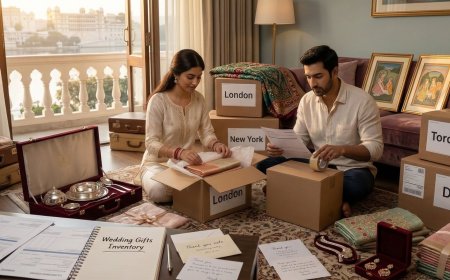
The second is the remote sharing function — the ability to share the shortlisted pieces with family members who are not present for the visit, for their input before the final purchase decision. The GT Road visit is the most important day in the NRI bride's Jalandhar shopping timeline, and the decisions made on that day are consequential enough to warrant the second opinion that the photographic record makes possible.
The GT Road Schedule: How to Structure the Visit Days
The optimal GT Road shopping schedule for the NRI bride allocates two full days to the corridor, with the first day oriented toward reconnaissance and shortlisting and the second day oriented toward purchasing and confirmation.
Day one on GT Road should begin at the northern end of the relevant corridor and work systematically south — or the reverse, from Nakodar Chowk north — visiting every showroom that the brief identifies as relevant, shortlisting pieces in each, and photographing the shortlist. Day one should not produce any purchases. It should produce a shortlist from which the day two decisions will be made.
The first-day reconnaissance serves a specific purpose beyond the shortlist production: it develops the comparison base that makes the day two decisions rational rather than impulsive. The buyer who has seen the full range of what GT Road offers at her price point and in her aesthetic category can assess any individual piece against that range. The buyer who has seen only the first showroom she walked into cannot.
Day two on GT Road should return to the shortlisted pieces, in the order that the day one reconnaissance identified as most promising, and make the purchase decisions with the confidence that the comparison base provides. Day two should also include the negotiation conversations that the purchase decisions require and the alteration appointments that the confirmed purchases generate.
The specific showrooms to visit on each day depend on the specific brief, but the general structure — major multi-category showrooms on the first day, specialist shops on the second — is applicable to most NRI bridal briefs. The multi-category showrooms provide the breadth assessment. The specialist shops provide the depth that the specific brief categories require.
Common Mistakes NRI Brides Make on GT Road
The most consequential mistake on GT Road is buying on the first day, in the first showroom, under the time pressure that the compressed visit creates. The first showroom the NRI bride enters on GT Road will almost certainly have beautiful pieces. It will also have competitors within walking distance whose pieces are equivalently beautiful at better prices or whose quality is superior at equivalent prices. The discipline of not buying until the second day — until the full corridor has been surveyed and the comparison base established — is the discipline that produces the best purchase decisions the market can offer.
The second mistake is not having a written brief before entering the first showroom. The GT Road showroom's big selection will expand to fill the space that an undefined brief creates — the sales team will show more, the buyer will consider more, the shortlist will become unmanageable, and the decision will be made on the basis of the last thing tried on rather than the best thing available. The written brief is the tool that keeps the GT Road experience navigable.
The third mistake is not negotiating. The NRI buyer whose cultural context does not include direct price negotiation — who has spent her adult life in the UK or Canada in retail environments where the price is fixed — will find the GT Road negotiation dynamic uncomfortable. That discomfort is real and should be acknowledged. But the financial consequence of not negotiating in the GT Road market is a consistent overpayment of ten to twenty percent across the purchases that the corridor produces. The discomfort of asking is smaller than the financial consequence of not asking.
The fourth mistake is visiting the GT Road corridor without a local contact or guide for the first visit. The first GT Road visit is the most information-intensive shopping experience in the Jalandhar wedding shopping schedule, and the local contact who knows the corridor — who knows which showrooms are reliable for which categories, which sales teams are honest about quality differentials, which price points are genuinely competitive and which are inflated — is the knowledge advantage that converts the first visit from a learning experience into a productive one.
The fifth mistake is not building the comparison day into the schedule. The NRI bride who allocates a single day to GT Road — treating the big showroom visit as a one-day task rather than a two-day process — will make her purchase decisions without the comparison base that makes those decisions rational. The comparison day is not optional in the GT Road context. It is the investment that produces the return.
The GT Road and Model Town Relationship: Using Both Correctly
The GT Road and Model Town markets are not alternatives to each other. They are complementary layers of the Jalandhar wedding shopping landscape that serve different elements of the bridal brief most effectively. The NRI bride who understands the relationship between the two areas will use each for what it specifically offers rather than defaulting to one at the expense of the other.
GT Road serves the ready-to-wear garment brief at the mid-to-upper-mid market tier, the accessible jewellery categories, the footwear brief, the groom's menswear, and the family purchases that require breadth of selection rather than specialist depth. Model Town serves the custom and semi-custom primary garment brief, the premium artificial jewellery, the specialist standalone dupatta, and the headpiece specialist.
The NRI bride who concentrates all her shopping in Model Town will find the premium boutique experience but will miss the variety and the competitive pricing of the GT Road market for the categories where the GT Road quality is equivalent and the GT Road price is meaningfully lower. The NRI bride who concentrates all her shopping on GT Road will find the breadth and the competitive pricing but will miss the custom capability, the NRI process infrastructure, and the specialist quality of the Model Town boutiques for the categories they serve best.
The correct allocation — two days on GT Road for the broad survey and the mid-market purchases, two days in Model Town for the boutique consultations and the specialist purchases — produces a shopping schedule that uses both markets' specific strengths and avoids both markets' specific limitations.
The Resolution
Simran spent two days on GT Road. The first day she did not buy anything. She walked into seven showrooms, shortlisted pieces in four of them, photographed thirty-eight pieces she wanted to compare, and arrived at the end of the day with a very clear picture of the corridor's range at her price tier and aesthetic category.
On the second day she returned to three of the seven showrooms and purchased four pieces — the family sarees that she had found at Frontier Raas at a price that her comparison survey had confirmed was the corridor's best for the specific quality, the groom's sherwani from Manyavar that her fiancé had approved via the photographs she had sent the previous evening, the artificial jewellery set from Sparkling Gems that the photographic quality test had confirmed was the most credible option at its price point, and the bridal juttis from a footwear shop midway along the corridor that she had found by walking rather than by any prior research.
The four purchases took three hours on the second day, including two negotiation conversations that produced discounts totalling approximately ₹18,000 from the combined quoted prices. This was not money she had expected to save. It was money she had been told to claim by the guide she had read before arriving.
She sent a message to her cousin in Mississauga — who had given her the framework before the visit — that said simply: GT Road works if you know how it works.
Her cousin replied: that's the whole secret. The market is generous to the prepared buyer. To everyone else, it is just big.
Simran looked at that message and thought about the first morning — standing in the entrance of the first showroom, facing the three floors and the fifteen-person sales team and the mirrors and the rails that extended further than she could see — and understood that her cousin was exactly right.
The market was generous to the prepared buyer. She had been prepared. It had been generous.
Do not buy on the first GT Road day — use it entirely for reconnaissance, shortlisting, and the comparison base that the second day's decisions require.
Write the brief before entering the first showroom — the big selection expands to fill an undefined brief in ways that are not useful.
Negotiate every price in every showroom — the standard negotiable margin is ten to twenty percent, and not asking costs that margin on every purchase.
Photograph every shortlisted piece for the comparison record and the remote sharing function — the memory of the first showroom does not survive three subsequent showroom visits.
Come with a local contact for the first GT Road visit — the knowledge of which showrooms are reliable for which categories is the advantage that converts the learning visit into a productive one.
GT Road is the most comprehensive wedding shopping destination in Jalandhar — in scale, in variety, in competitive pricing, and in the specific dynamic of a market that has been serving the Punjabi wedding customer for generations. Its generosity is real and its rewards are significant. They are available to the buyer who arrives prepared to use the market rather than to be used by it.
Published by NRIWedding.com — The Premium Global Platform for Non-Resident Indians Planning Indian Weddings From Abroad.
What's Your Reaction?
 Like
0
Like
0
 Dislike
0
Dislike
0
 Love
0
Love
0
 Funny
0
Funny
0
 Angry
0
Angry
0
 Sad
0
Sad
0
 Wow
0
Wow
0