








































































One-Day Wedding Shopping Route in Jalandhar — The Optimised Itinerary for NRIs with Limited Time
For the NRI bride or groom arriving in Jalandhar with a full wedding shopping list and a single day to work through it, the difference between a productive trip and an exhausted, incomplete one comes down entirely to structure. This guide builds the complete one-day shopping route — four zones sequenced by decision complexity and geographic logic, from the boutique strip in the morning through Model Town's mid-range market, into the Bus Stand area's wholesale lanes, and finally the targeted closures of the evening. It covers the preparation week that makes the day possible, the time allocation that keeps it on track, the support structure that keeps it focused, and the contingency logic that keeps it resilient when — not if — something does not go to plan. Built specifically for the NRI with limited India visit time and a wedding that cannot wait.

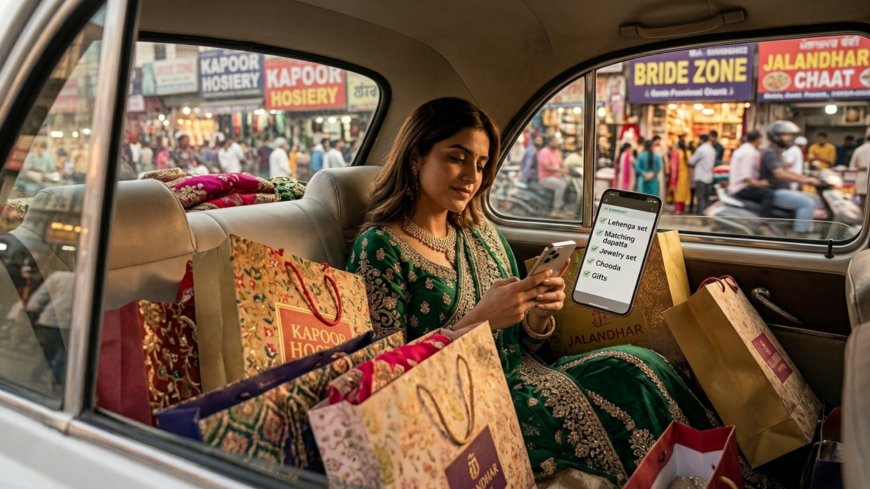
One-Day Wedding Shopping Route in Jalandhar — The Optimised Itinerary for NRIs with Limited Time
The itinerary arrived in Kavya's inbox on a Thursday evening at six fifty-eight, London time. She had asked for it three weeks earlier — a message to her younger brother Arjun in Jalandhar, written at one in the morning after a particularly demoralising session of trying to price-compare lehengas across four different Instagram boutique accounts that all used the same three photographs and none of which had replied to her DMs with anything resembling a coherent answer. She had typed: Arjun, I need you to figure out where exactly I should shop when I come. I have one day. One full day. Tell me where to go and in what order.
Arjun had, to his credit, taken the request seriously. He had driven around Jalandhar over two weekends, walked streets he had lived near for twenty years without properly entering, asked questions in shops with the specific curiosity of someone conducting research rather than browsing, and produced a voice note — eleven minutes and forty seconds — that Kavya had listened to three times on the Overground between Highbury and Islington and Whitechapel, her eyes closed, building a map in her head of a city she had last visited four years ago and was returning to in six weeks to plan a wedding in five months.
The voice note was good. Arjun was thorough. But it was also, in the way of all voice notes from well-meaning younger brothers, slightly chaotic — the order of the recommendations shifting mid-sentence, the prices quoted without context, the distances between locations described in terms of Jalandhar driving logic that assumed familiarity with roads she no longer remembered. She listened to it a third time and then typed back: This is great. Now help me turn it into an actual plan.
What she needed — what every NRI visiting Jalandhar for a short, time-compressed wedding shopping trip needs — was not a list of good places to shop. She knew about the Bus Stand area. She had read about Model Town. She had a cousin who swore by a specific fabric shop in Lajpat Nagar whose owner had known her grandmother. What she did not have was the logic that connected these places — the sequence that made geographical and categorical sense, that moved her through the city in a way that built on itself rather than zigzagged, that allocated time in proportion to the decision complexity of each stop rather than treating a wholesale fabric run and a bridal lehenga appointment as equivalent activities requiring equivalent time.
She had one day. Eleven hours if she started at nine and finished at eight. The wedding was five months away but the India visit was six weeks away and the visit after that was uncertain and possibly not until three weeks before the wedding, which was too late for anything that required alteration or customization. This trip was the trip. This day was the day. The plan had to work.
She opened a new document on her laptop. She titled it: Jalandhar. One Day. Non-Negotiable.
And she started building.
This guide is for Kavya, and for every NRI who lands in Jalandhar with a full wedding shopping list and a single day to make meaningful progress on it — the optimised route, the time allocations, the sequencing logic, and the specific preparation that makes the difference between a productive day and an exhausted, incomplete one.
Why One Day in Jalandhar Is Both Harder and More Achievable Than It Sounds
The NRI visiting Jalandhar for wedding shopping faces a compression problem that the domestic couple does not. The domestic couple plans their wedding over months of casual visits — a Sunday afternoon in Model Town here, a Saturday morning at the Bus Stand there, the slow accumulation of purchases made without urgency and revisited when necessary. The NRI has a window. Sometimes it is three days. Sometimes it is one. The window is determined not by the wedding timeline but by the annual leave balance, the return flight date, and the number of other obligations — family visits, venue meetings, catering tastings, government paperwork — that have been compressed into the same trip.
One full day of focused shopping in Jalandhar can accomplish a great deal if the day is structured correctly. It can accomplish very little if it is not. The difference between the two outcomes is almost entirely a function of preparation — what the NRI has done before the day begins, not what they do during it.
The preparation has three components. The shopping list must be complete, specific, and prioritised — not a general sense of what needs to be bought but a document that specifies category, quantity, quality level, colour, and budget ceiling for every item, ranked in order of decision complexity from most complex to least. The route must be logical — sequenced by geography and by category in a way that minimises travel time and ensures that the most cognitively demanding decisions are made while energy is highest. And the support structure must be in place — the person accompanying you, the car and driver arranged in advance, the vendor appointments confirmed, the cash withdrawn, the phone charged.
None of this can be improvised on the morning of the shopping day. All of it must be done in the week before.
The Preparation Week: What Must Happen Before the Day Begins
The shopping day is the execution. The preparation week is where the shopping day is actually won or lost, and NRI couples who skip or abbreviate it consistently report the same outcomes: wrong turns, time lost, decisions deferred, and the quiet devastation of landing back at the family home at nine in the evening with a fraction of the list completed.
The first task of the preparation week is finalising the master shopping list. This list must be specific enough to be actionable in a market environment. Not "look at lehengas for the bridesmaids" but "four lehengas for bridesmaids, colour palette dusty rose or blush, budget per piece between four thousand and seven thousand rupees, ready-made preferred, size range between thirty-four and thirty-eight." Not "dupatta for sangeet" but "dupatta for sangeet outfit, existing outfit is mustard yellow, need a contrasting or complementary dupatta, budget up to one thousand five hundred rupees, phulkari or mirror work preferred." The specificity is what allows decision-making to happen quickly in the market, which is where you need it to happen quickly.
The second task is geographic research — understanding where in Jalandhar each category of item is most likely to be found, and building a route that clusters geographically adjacent stops rather than zigzagging across the city. Jalandhar is not an enormous city, but traffic in the central areas and around the major markets is genuinely congested, particularly on weekdays when the wholesale trade is active, and the difference between a well-routed day and a poorly routed one can be two hours of sitting in traffic between stops that could have been sequenced consecutively.
The third task is vendor pre-qualification. For the higher-value, higher-complexity purchases — the bridal lehenga, the groom's sherwani, the premium fabric for the mother-of-the-bride outfit — it is worth making contact with specific vendors or boutiques before the visit, describing what you are looking for, and establishing whether they carry it and at what approximate price point. This is not booking an appointment in the formal sense; most Jalandhar vendors do not operate that way. But it is the difference between arriving at a shop that has pulled three relevant pieces to show you and arriving cold to browse stock that may or may not include anything suitable.
The fourth task is practical logistics. A car and driver, booked in advance for the full day, is not a luxury — it is a necessity. Public transport or auto-rickshaws between multiple shopping zones in Jalandhar, carrying bags and making time-sensitive decisions, is a recipe for exhaustion before noon. The car provides storage, rest between stops, and the flexibility to extend time at a productive stop without the anxiety of flagging down transport. The driver who knows the city well — who can find parking near the Bus Stand, who knows the back route to Model Town when the main road is blocked — is an additional asset. Ask family members for a recommendation. Book the day before, not the morning of.
The Optimised One-Day Route: Zone by Zone
The route below is structured around four zones visited in a specific sequence, with time allocations that reflect both the geographic logic of Jalandhar's commercial layout and the decision complexity of the shopping that happens in each zone. The sequence is not arbitrary. It is built on the principle that the most cognitively demanding decisions — the highest-value, highest-consequence purchases — should be made in the morning when mental clarity is highest, and the more mechanical, volume-oriented purchasing should happen in the middle of the day when energy is still adequate but the sharp decision-making edge has softened. The end of the day is reserved for the tasks that require least decision-making — follow-up purchases, accessory collection, and the items that had clear specifications from the outset.
Zone One: The Boutique Strip — Bridal and Semi-Bridal Wear (9:00 AM to 12:30 PM)
Start here. Not at the Bus Stand. Not at the wholesale markets. At the boutiques — the premium or semi-premium occasion wear stores in the areas of Jalandhar that carry curated, consistent-quality stock for the wedding market. The specific concentration in the Lajpat Nagar new market area and the better-appointed shops in certain Model Town lanes handles the category of purchase that is highest-stakes and requires the most considered decision-making: the bridal lehenga, the groom's sherwani, the mother-of-the-bride outfit, the reception saree.
Three and a half hours sounds like a long time for boutique shopping. It is not. A single bridal lehenga decision, done properly, can take ninety minutes — the browsing of available pieces, the narrowing to three or four candidates, the trying on, the assessment in natural and indoor light, the negotiation, and the finalisation of any customisation or alteration arrangement. If the bride and groom are both shopping in this zone — bridal lehenga and sherwani — the morning session can comfortably accommodate two or three boutique visits and two finalised purchases, which is the realistic and productive outcome.
The critical discipline in Zone One is to resist the temptation to also look at supporting items — the jewellery, the accessories, the bridesmaid pieces. The boutiques in this zone will often carry these items, and they will be well-presented and appealing, and they will be priced at boutique rates rather than wholesale rates. Look, note, and do not buy. These items will be acquired at better prices later in the day. The morning is for the pieces that only the boutique can correctly provide.
Zone Two: Model Town Market — Mid-Range and Volume Clothing (12:30 PM to 2:30 PM)
The transition from Zone One to Zone Two includes lunch — a non-negotiable thirty-minute stop, taken in the car or at a restaurant near Model Town, that is not a luxury but a physiological requirement. The NRI who skips lunch to maximise shopping time reliably reports diminished decision quality in the afternoon. Eat. Rest for twenty minutes. Review the morning's purchases and update the list accordingly before entering Zone Two.
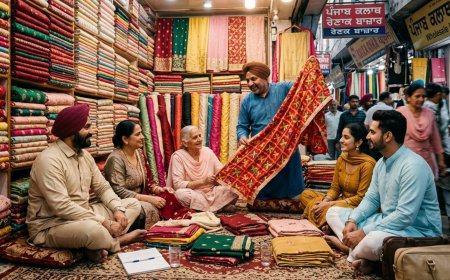
Model Town market is the middle register of Jalandhar wedding shopping — more organised and less overwhelming than the Bus Stand area, more affordable and more varied than the boutique strip. This is where the bridesmaid outfits at the mid-price point are found, where the family members' occasion wear — the aunts, the cousins, the groom's sisters — can be sourced at prices that are reasonable without being wholesale. It is also a productive zone for men's occasion wear at the non-sherwani level — the kurta-pyjama sets, the Indo-Western pieces for younger male family members, the boys' outfits for the children in the wedding party.
Two hours in Model Town is sufficient if the list is specific. Move with purpose. The market is large enough to be overwhelming if you are browsing without direction, and focused enough to be productive if you know your categories. The goal in this zone is to complete the volume clothing purchases — the pieces where the decision is not primarily aesthetic but functional, where the requirement is that the item is the right colour, the right approximate size, and the right approximate quality for the purpose it serves.
Zone Three: Bus Stand Area — Wholesale Accessories and Components (2:30 PM to 5:30 PM)
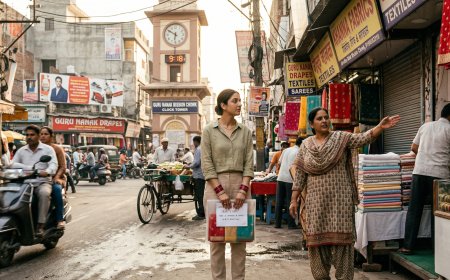
The Bus Stand area is Zone Three, not Zone One, for a specific reason. By early afternoon, the sharpest decision-making is done. The high-consequence purchases are made. What remains on the list — the artificial jewellery sets, the dupattas, the embroidery accessories, the decorative items, the high-volume low-unit-cost purchasing — is better suited to the energy level and the decision mode of the mid-afternoon than the early morning, because these decisions are primarily about price verification and quantity rather than aesthetic judgment.
Arrive at the Bus Stand area no earlier than two-thirty and no later than three, to give three full hours before the market begins to wind down and the crowd peaks into the late-afternoon density that makes navigation genuinely difficult. Enter with the remaining list — the items not yet purchased, broken down by category — and move systematically through the relevant lanes rather than through the market as a whole.
The Bus Stand area visit in the context of a one-day route has a specific character that distinguishes it from a dedicated Bus Stand shopping trip. There is no time for the extended reconnaissance — the lane-by-lane exploration, the three-shop comparison before committing. Move faster. Use the price references established in the preparation week. Make decisions at the first shop that meets the specification and the price threshold, rather than shopping for the marginal improvement that a longer visit might find. The goal in this zone is completion — clearing as many remaining list items as possible at acceptable prices, not optimising every purchase to its theoretical best outcome.
Zone Four: Targeted Returns and Accessory Consolidation (5:30 PM to 7:30 PM)
The final zone is not a geographic zone but a functional one — the two hours at the end of the day reserved for returns to specific vendors identified earlier, collection of items left for minor adjustment, and the targeted purchasing of any list items not yet acquired. This zone also handles the category of purchase that does not fit neatly into the earlier zones: the specific tailor visit to leave items for alteration, the jeweller appointment for the fine jewellery that was not part of the wholesale buying, the visit to the specific fabric shop recommended by the grandmother's friend.
The discipline of Zone Four is ruthlessness about the list. At five-thirty in the evening, after eight and a half hours of shopping, the temptation is to browse — to re-enter shops seen earlier, to revisit decisions already made, to add items to the list that were not on it in the morning. Resist this entirely. Zone Four exists to close open items, not to open new ones. Every unplanned purchase made in Zone Four is a purchase made at low energy, without adequate comparison, and with a decision-making capacity that has been substantially depleted by the day's earlier and more legitimate demands.
The Time Allocation Table: A Complete One-Day Shopping Schedule
| Time | Zone / Activity | Location | Primary Purpose | Energy Required |
|---|---|---|---|---|
| 8:00 – 9:00 AM | Preparation — cash, list review, car confirmation | Family home | Final brief, logistics check | Low |
| 9:00 – 12:30 PM | Zone One: Boutique Strip | Lajpat Nagar / Model Town premium lanes | Bridal lehenga, sherwani, premium pieces | Highest |
| 12:30 – 1:00 PM | Lunch and list review | Near Model Town | Rest, update list, plan Zone Two | Recovery |
| 1:00 – 3:00 PM | Zone Two: Model Town Market | Model Town main market | Bridesmaid wear, family occasion wear, men's kurtas | Moderate-High |
| 3:00 – 6:00 PM | Zone Three: Bus Stand Area | Bus Stand lanes | Jewellery, dupattas, accessories, wholesale components | Moderate |
| 6:00 – 6:30 PM | Transit and rest | Car | Regroup, review remaining list | Low |
| 6:30 – 8:00 PM | Zone Four: Targeted returns and closures | Specific vendors as identified | Alterations drop-off, outstanding list items | Low-Moderate |
| 8:00 PM | End of shopping day | Return home | — | — |
The Support Structure: Who Comes With You and Why It Matters
The NRI shopping alone in Jalandhar for a full day is not optimising. The NRI shopping with the right person — one person, not four — is. The support structure for a one-day shopping route has a specific character that is different from the casual accompaniment of a family outing.
The ideal companion for the shopping day is someone who knows Jalandhar's commercial geography, who can navigate to the next stop while you are in the current one, who can conduct preliminary negotiation in Punjabi while you are assessing a second option in the same shop, and who has the emotional steadiness to say, clearly and without drama, "we need to move, we have forty minutes before the next stop" when the conversation with the vendor has extended beyond its productive life.
This person is almost never the mother. This observation is not unkind — it is logistical. The mother comes to the boutique in the morning, for the bridal lehenga, where her eye and her opinion genuinely matter. She does not come to the Bus Stand at three in the afternoon, where her presence will slow the negotiation, extend every decision, and produce the specific dynamic of a mother finding seventeen additional things to buy that were not on the list and cannot be refused in real time.
One companion. Logistically capable. Linguistically equipped. Emotionally aligned with the mission. This is the support structure the day requires.
Common Mistakes NRI Couples Make With One-Day Jalandhar Shopping
The first mistake is starting at the wrong zone. The NRI who begins at the Bus Stand because it is exciting and the prices are dramatic and the energy of a wholesale market is stimulating has spent their highest-quality decision-making hours on artificial jewellery purchases that did not require them. The bridal lehenga decision made at four in the afternoon, after six hours of overwhelming market shopping, is not the same decision made at nine-thirty in the morning with a clear head and a specific brief. Sequence the day by decision complexity, not by excitement level.
The second mistake is not building in the list review at lunch. The midday pause — the thirty minutes of food and quiet before Zone Two — is not simply a break. It is the recalibration point. The morning's purchases change what the afternoon needs to accomplish. The lehenga found at the boutique changes the colour brief for the dupatta. The sherwani confirmed in Zone One changes the brief for the accessories. Without the midday list review, the afternoon shopping operates on a brief that is already out of date.
The third mistake is treating the alteration question as a post-purchase problem. Every purchase that requires alteration creates a logistics chain — tailor identified, brief communicated, timing confirmed, collection arranged. The NRI who buys three items requiring alteration on a one-day shopping trip and does not address the alteration question before leaving the shop is creating a problem that will require additional time, additional visits, and potentially additional stress in the days following the shopping day. Ask about alteration at the point of purchase. Confirm the tailor before you leave the zone.
The fourth mistake is carrying too much cash at once. The full day's shopping budget, taken out in cash at the beginning of the day and carried in a single place, is both a security risk and a psychological one — the knowledge that you have the money makes it easier to spend it without adequate deliberation. Draw cash in stages: the morning's boutique budget before Zone One, the afternoon's wholesale budget at a ATM near Model Town before Zone Three. Keep the amounts appropriate to the zone you are entering.
The fifth mistake is allowing the list to grow during the day. Every market visited will present items that were not on the list and that represent genuine value. This is the nature of markets. The discipline of a one-day route is that the list is fixed before the day begins and additions are made only for items that directly replace something already on the list — the same category, the same function, the same budget allocation. New categories, new ideas, new inspirations encountered during the day go on a separate note for the next visit. They do not enter the purchasing logic of this one.
What to Do When the Day Does Not Go to Plan
It will not go entirely to plan. This is not pessimism — it is the honest acknowledgment that markets are unpredictable, traffic is variable, vendors are human, and the bridal lehenga that was available last week may have been purchased yesterday by someone else. The NRI planning a one-day shopping route needs a contingency logic as well as a primary route.
The contingency logic is simple. Every item on the list should have a fallback option — a second vendor, a second market zone, a second category if the specific item is unavailable. The bridal lehenga not found in Zone One can be sourced, at higher effort and possibly slightly higher price, from a Phagwara Road outlet or from a vendor in Chandigarh that can be visited on a subsequent day. The artificial jewellery set not found in the Bus Stand area can be ordered online through an Indian platform with reliable shipping. The dupatta not found at the right price in Zone Three can be a WhatsApp order placed with a contact identified during the day's shopping.
The one-day route is a plan, not a guarantee. The preparation that goes into it is what makes it a good plan. The contingency logic is what makes it a resilient one.
What Happened to Kavya
She landed in Jalandhar on a Thursday evening in September. By Saturday morning, she was in the car with Arjun at eight fifty-five, the shopping list on her phone, the cash divided into two envelopes, the car's navigation set for the Lajpat Nagar area. Her mother had been delivered to the first boutique stop by prior arrangement and was already inside, having been briefed with the precision of a woman who had learned, across the previous three weeks of preparation calls, exactly what her role was and what it was not.
The bridal lehenga took two hours and twenty minutes and two boutiques. It was not the colour she had originally planned — deep burgundy rather than the forest green she had imagined — but it was the piece that made her stand in the changing room in a boutique on a Saturday morning in Jalandhar and know with the specific certainty that requires no deliberation. The sherwani took forty-five minutes at the second boutique and was the third one Arjun suggested. Lunch was dosas at a restaurant near Model Town that Arjun had been to enough times to order without the menu.
The Bus Stand, in the afternoon, was everything she had prepared for — loud, overwhelming, productive. Four artificial jewellery sets, eleven dupattas in three colours, embroidery border trim for the blouses, matching clutches for the bridesmaids. The vendor in the third lane spoke to Arjun in Punjabi and quoted a price that was twenty percent lower than the first lane's equivalent. She said yes before he could change his mind.
By seven forty-five she was back at the family home. The list had seventeen items on it in the morning. Twelve were purchased. Three were deferred to a WhatsApp order she placed that evening with a vendor whose number she had collected during the day. Two had been found unnecessary once the other purchases had been made — the colour combinations had resolved the problem the items were meant to solve.
She sat on the veranda with a cup of chai and looked at the bags arranged around her feet and felt the specific satisfaction of a plan that had held. Not perfectly. Closely enough.
Finalise your list the week before, not the morning of. Sequence your day by decision complexity, not by geography or excitement. Start at the boutiques when your mind is sharpest. Eat lunch. Review the list before Zone Two. Bring one companion who can navigate, not four who will deliberate. Keep the list fixed once the day begins.
The day is finite. The market is enormous. The preparation is what makes one adequate for the other.
Published by NRIWedding.com — The Premium Global Platform for Non-Resident Indians Planning Indian Weddings From Abroad.
What's Your Reaction?
 Like
0
Like
0
 Dislike
0
Dislike
0
 Love
0
Love
0
 Funny
0
Funny
0
 Angry
0
Angry
0
 Sad
0
Sad
0
 Wow
0
Wow
0