





































































Guru Nanak Mission Chowk Area for Bridal Shopping — A Local's Guide for NRI Visitors
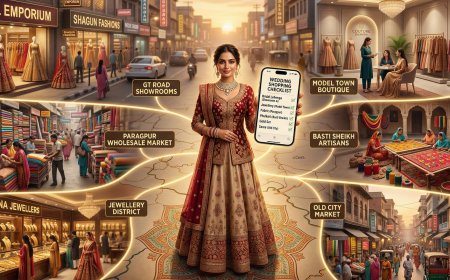
The Guru Nanak Mission Chowk area in Jalandhar is where the city's genuine bridal shopping infrastructure lives — the chooda lane, the fabric section, the lehenga market, the jewellery wholesale corridor, and the embroidery artisan lane that no Instagram account documents. For the NRI visitor arriving without a local guide, understanding the market's section geography, arrival timing, navigation reality, cash-first payment culture, and negotiation framework is the difference between a productive day and an expensive disorientation. This guide covers every section, every practical consideration, and the specific brief the Chowk area serves best.

Guru Nanak Mission Chowk Area for Bridal Shopping — A Local's Guide for NRI Visitors
The directions had made perfect sense in Jalandhar and no sense at all in Melbourne.
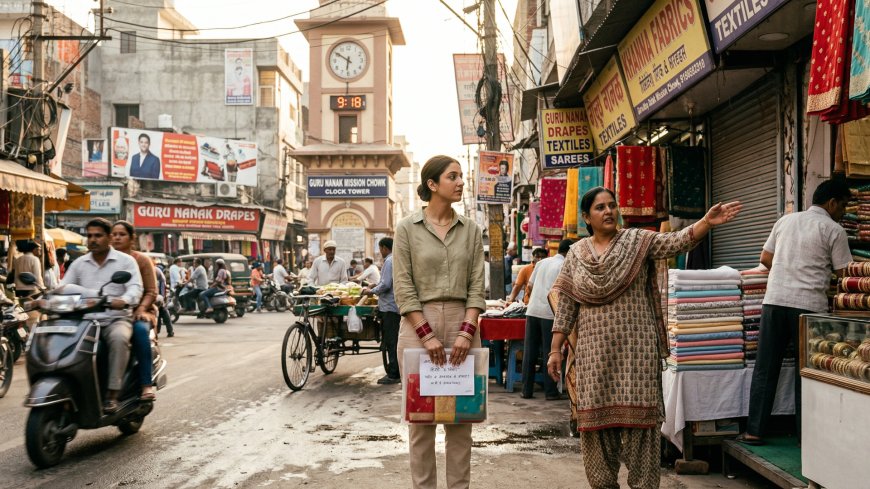
Kirandeep's cousin Harjinder had sent them via WhatsApp on the Wednesday before the trip — a voice note, four minutes and twenty seconds, recorded while walking through the market itself so that the ambient sound of the Chowk was audible in the background, the specific density of the bazaar's noise that is simultaneously the sound of commerce and the sound of community. Harjinder had said, in the Punjab-inflected Hindi that the Jalandhar market produces naturally: come out of the auto at the Guru Nanak Mission Chowk signal. Face the clock tower. Walk toward it. The first lane on your left after the clock tower is where the chooda vendors are — the serious ones, not the footpath sellers. Stay in that lane until you see the shop with the green sign that has been there since before I was born. Turn right there. That right turn takes you into the fabric section whose cotton vendors are the ones your mother used when she bought fabric for your brother's wedding. Walk through the fabric section — it is not deep, maybe forty shops — and at the end you will find yourself facing a junction. At the junction, the left goes to the lehenga market. The right goes to the jewellery wholesale. Straight ahead is the lane that the old embroidery artisans use for their morning business, and if you are there before ten you will find the work being done in the doorways.
Kirandeep had listened to the voice note twice in Melbourne. She had then listened to it a third time while looking at Google Maps, which showed the Guru Nanak Mission Chowk as a dense, undifferentiated block of commercial buildings with no lane names visible and no green sign with forty years of history marked on it. She had said to her husband Manpreet: I am going to get completely lost.
Manpreet had said: that is fine. Harjinder will meet you there.
She had said: Harjinder is coming to the market?
Manpreet had said: Harjinder grew up two streets from that market. She knows every shop in it by the owner's name. She is not going to send you a voice note and leave you to navigate alone.
The meeting had happened at the signal, as arranged, at nine forty-five on a Thursday morning. Harjinder had been waiting on the pavement with the specific patience of someone who is in her element and who has all the time the market requires. She had looked at Kirandeep's expression — the expression of someone who has done online research and arrived in person to discover that online research and the Guru Nanak Mission Chowk are two separate realities — and she had said, simply: forget everything you read. I will show you.
She had shown her. The day had lasted until four in the afternoon. By the end of it, Kirandeep had found the chooda vendor, the lehenga shop, the embroidery artisan whose customisation work she had commissioned, and the fabric section whose cotton dealer had the specific block-printed cotton she needed for the mehendi function outfit. She had also found two shops that had not been on any list she had researched, discovered by Harjinder's knowledge of the market's less visible interior lanes, whose stock was better than anything she had seen on the Instagram accounts she had been following for three months.
This guide is written for the NRI visitor who does not have a Harjinder — or who has a Harjinder but wants to arrive prepared enough that the day produces the maximum of what the Guru Nanak Mission Chowk area has to offer.
What the Guru Nanak Mission Chowk Area Actually Is
The Guru Nanak Mission Chowk is not a single market or a single shopping destination in the sense that the mall or the boutique district is a single destination. It is a commercial neighbourhood — a dense, layered, historically accumulated concentration of retail and wholesale trade that has been developing in this specific part of Jalandhar for several generations and that has produced, through this accumulation, a market whose range, depth, and specific expertise is the product of the decades rather than the product of any planned development.
The Chowk itself — the intersection that gives the area its name — is the geographical anchor from which the market's various sections radiate outward into the lanes and sub-lanes that the neighbourhood's organic development has produced. Each of these radiating sections has developed a specific commercial character over time — the chooda lane, the fabric section, the lehenga market, the jewellery wholesale corridor — and the knowledge of which section is where, and which specific part of each section carries the quality tier the bride is looking for, is the local knowledge that the Harjinder model provides and that this guide is designed to approximate.
The market's physical character is the physical character of the established North Indian bazaar — narrow lanes whose width allows two people to walk abreast with negotiation, shop frontages that open directly onto the lane with no setback, the overhead density of signs and wires and the occasional canopy that makes the lane's light the specific filtered light of the bazaar rather than the open sky's direct light. The sensory experience of the Guru Nanak Mission Chowk is the sensory experience of the Indian market in its full, unreduced form — the noise, the density, the specific smell of the fabric and the spice and the street food and the crush of people conducting the business of the day.
For the NRI visitor who has grown up in Melbourne or Vancouver or Birmingham and whose shopping experience is the shopping experience of those cities' retail environments, the Guru Nanak Mission Chowk's sensory intensity requires a period of adjustment that the prepared visitor manages better than the unprepared one. The preparation is not about the shopping — it is about arriving with the mental framework that allows the market's intensity to be experienced as the environment in which the shopping happens rather than as the obstacle to the shopping.
Why the Chowk Area Matters for the Jalandhar Bride
The Guru Nanak Mission Chowk area's specific importance for the Jalandhar bridal shopping visit is its combination of range and authenticity — the combination that the newer, more accessible commercial formats cannot replicate. The mall boutique has the air conditioning and the organised display and the price tag that is already visible, but it does not have the range of the Chowk's accumulated vendors or the depth of the specific expertise that the vendors who have been doing this for thirty years have developed. The GT Road commercial strip has the visibility and the signage, but it does not have the wholesale-facing pricing of the Chowk's fabric and jewellery sections whose primary customer is still, in many cases, the retailer rather than the individual buyer.
The Chowk area is where the Jalandhar bride's mother has been shopping for her daughter's wedding since the daughter was born. It is where the knowledge of what is available, at what quality, at what genuine price, is the knowledge of the family network rather than the knowledge of the search engine. For the NRI visitor who wants to access Jalandhar's genuine bridal shopping infrastructure rather than its tourist-facing surface, the Guru Nanak Mission Chowk area is the access point.
The Market's Sections: A Navigation Guide
The Chooda Lane
The chooda lane — the concentration of bangle and chooda vendors whose production and display makes this the correct starting point for the NRI bride whose chooda shopping is part of the visit's brief — is accessible from the Chowk's main signal through the first left turn after the clock tower, as Harjinder's voice note described. The lane is not named on any map or signposted at its entrance — its identity is the identity that decades of established trade have given it, which is known to everyone in Jalandhar who has ever needed a chooda and unknown to everyone who has not.
The chooda vendors in this lane range from the established shops whose fixed premises have been in the same location for multiple generations to the smaller operations whose frontage is a single glass case and whose stock is the narrower selection of the specialised vendor. The full-range chooda vendor — the one whose stock includes the traditional red-and-ivory handmade sets, the coloured chooda in the contemporary range, and the custom production capability whose lead time the previous guide describes — is the established shop rather than the smaller operation, and the established shops are identifiable by the depth of their interior stock rather than by their frontage, which is often deceptively modest.
The chooda lane's pricing is the wholesale-adjacent pricing of the Chowk area rather than the retail pricing of the GT Road boutiques, and the NRI visitor who arrives with a knowledge of the GT Road's chooda prices will find the Chowk lane's prices meaningfully lower for comparable quality. The negotiation is standard practice in the lane and expected rather than exceptional — the vendor's opening price is the opening of a conversation rather than the fixed price of a boutique tag.
The specific quality assessment for the chooda lane is the material assessment — the bone versus plastic distinction whose importance the previous guide established — and the assessment must be made by handling rather than by asking, because the vendor's description of the material is not always the same as the material itself. The bone chooda has a weight and a slight translucence that the plastic equivalent does not replicate, and the hand that has held both can distinguish them without the vendor's assistance.
The Fabric Section
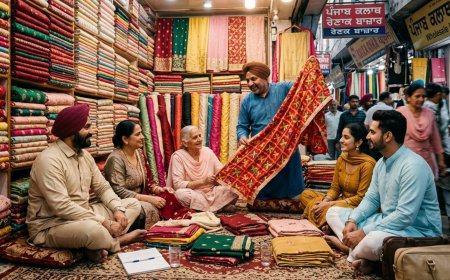
The fabric section of the Guru Nanak Mission Chowk area is the section whose depth and range most surprises the NRI visitor who has been shopping for Indian fabrics in the international markets where the Indian fabric diaspora reaches — the London South Asian fabric shops, the Scarborough Toronto fabric market, the Melbourne Harris Street retailers. What surprises is not simply the price — though the price is consistently lower than the international equivalent — but the range. The Chowk fabric section carries fabrics that the international diaspora market does not carry because the international market stocks to the demand of its specific customer base, which is not the same as the full range of the Punjab textile tradition.
The cotton fabrics of the Chowk's fabric section — the block-printed cottons of the Rajasthani tradition, the plain cotton voiles in the colours that the mehendi function requires, the heavy cotton of the traditional Punjabi women's wear — are available at prices that the wholesale adjacency of the Chowk produces: between one hundred and fifty and eight hundred rupees per metre for the range that the bridal function wear requires. These prices are not available at the GT Road boutique and are not available in Melbourne.
The silk and silk-blend section of the fabric market, which is smaller than the cotton section, carries the Banarasi silk and the silk-cotton blends that the more formal function outfits require, at prices whose comparison to the Mangaldas equivalent in Mumbai requires the acknowledgment that the Jalandhar fabric market is a retail-adjacent rather than wholesale market and that the Mumbai wholesale equivalent's pricing is lower. For the bride who is shopping primarily in Jalandhar and for whom the Mumbai trip is not in the plan, the Chowk fabric section is the best available sourcing for the fabric-and-tailor path at the Jalandhar price level.
The Lehenga Market
The lehenga market section of the Chowk area — accessible from the fabric section through the junction that Harjinder's voice note described, turning left — is the section whose stock is the ready-to-wear and semi-stitched lehenga sets that the Jalandhar bridal market produces for the wedding season's demand. This is not the premium boutique lehenga market of the GT Road — the designer names and the curated collections are not here. This is the production lehenga market whose stock is the direct output of the Jalandhar region's embroidery and garment production workshops, available at the prices that the production-to-retail proximity produces rather than the prices that the boutique's overhead and margin structure adds.
The lehenga stock in the Chowk market is oriented primarily toward the Punjabi bridal aesthetic — the heavily embroidered, richly coloured sets whose design vocabulary is the Punjabi wedding's visual language rather than the pan-Indian bridal market's more generic production. For the NRI bride of Punjabi heritage whose lehenga brief is rooted in this specific tradition, the Chowk lehenga market is the market that carries the aesthetic she is looking for at the prices that the sourcing proximity produces.
The price range in the Chowk lehenga market: the budget tier of fifteen to forty thousand rupees for the readymade sets whose embroidery is machine-applied and whose fabric is the production-grade silk blend; the mid-range of forty to eighty thousand for the sets whose embroidery has a hand-applied component and whose fabric is a genuine silk or silk-cotton blend; and the upper range of eighty thousand to one lakh fifty thousand for the sets that are the production-quality equivalent of the boutique's offering without the boutique's margin. The upper range requires the knowledge to identify it within the market's undifferentiated display, which is the local knowledge that the Harjinder model provides and that the quality assessment framework provides for the buyer without a Harjinder.
The Jewellery Wholesale Corridor
The right turn at the fabric section's junction leads to the jewellery wholesale corridor — the section of the Chowk area whose primary customer is the Jalandhar jewellery retailer buying stock for the boutique rather than the individual bride buying for herself. This distinction is important because the wholesale corridor's orientation toward the trade buyer rather than the retail buyer means that the display is not the curated, lit, aspirational display of the jewellery boutique. It is the working display of the wholesale operation — the trays, the bulk stock, the pieces assessed for their metal and stone content rather than their presentation.
The NRI bride who enters the jewellery wholesale corridor with the expectation of the boutique experience will be disoriented and may conclude that the corridor is not relevant to her. This conclusion is wrong. The wholesale corridor contains the same jewellery that the Jalandhar boutiques sell, often from the same production, at prices that reflect the wholesale margin rather than the retail margin. The individual buyer who approaches the wholesale corridor with the knowledge that it is wholesale-oriented and with the patience to ask for the specific piece rather than to browse the curated display will find the corridor a significantly more economical source for the bridal jewellery than the GT Road boutique.
The specific jewellery categories in the Chowk wholesale corridor that are most relevant to the NRI bridal buyer are the gold-finished fashion jewellery sets — the kundan, the polki imitation, the meenakari — whose price differential between the wholesale corridor and the GT Road boutique is the most significant. The pure gold jewellery of the corridor is less relevant to the NRI buyer who is buying the main gold sets from a trusted family jeweller rather than from the market, but the fashion jewellery for the function outfits — the mehendi jewellery, the sangeet set, the pieces that are not the principal bridal jewellery but that must be coordinated with it — is available in the corridor at prices that the boutique's fashion jewellery section cannot match.
The Embroidery Artisan Lane
The straight-ahead option at the fabric section's junction — the lane that Harjinder's voice note described as the embroidery artisans' morning territory — is the section of the Chowk area that the standard bridal shopping guide does not mention and that the Harjinder model reveals as one of the area's most useful resources for the NRI bride whose brief includes customisation or repair.
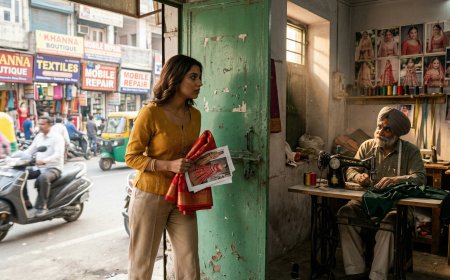
The embroidery artisans who work in the doorways and small workshops of this lane are the kalaigars and zardozi specialists whose skill is the hand embroidery work that the production workshops do at scale and that these individual artisans do at the level of the single commission. The artisan who is working in the doorway at nine in the morning is the artisan who will take the commission for the initial on the dupatta, the repair of the embroidery damage on the vintage piece, the extension of the border embroidery on the lehenga whose coverage the bride wants to increase.
These are not the large embroidery commissions — the complete lehenga's full embellishment — that the production workshops handle. They are the small, precise, once-only additions that the individual artisan's skill serves and that the production workshop is not set up to accommodate. The NRI bride whose chooda, dupatta, or lehenga needs the personalised touch that the Mangaldas market guide describes as embroidery customisation will find the equivalent capability in the Chowk's artisan lane at the price that the Jalandhar market's cost structure produces rather than the Mumbai market's equivalent price.
The Practical Guide: How to Make the Most of the Day
Arrival Timing
The optimal arrival time at the Guru Nanak Mission Chowk area for the NRI visitor is nine to nine-thirty in the morning. The market opens gradually from eight, with the early morning's activity being the wholesale and artisan business whose customers are the trade buyers rather than the individual shoppers. By nine-thirty, the retail operations are fully open, the vendors are in their shop rather than in transit, and the market has the activity that makes the comparison shopping possible without the density of the peak-hour crowds whose late-morning arrival compresses the lanes and slows the movement between sections.
The market's peak hours — eleven to two in the afternoon — are the hours whose crowd density the NRI visitor who is doing serious shopping should avoid or manage by having completed the most decision-intensive shopping before the peak arrives. The afternoon from two onward sees the crowd thinning, the vendors more available for the extended conversation that genuine buying requires, and the natural light in the lanes improving as the afternoon sun's angle changes the quality of light available in the sections that have outdoor exposure.
The market closes progressively from six in the evening, with the fabric and lehenga sections typically closing before the jewellery sections and the artisan lane closing earliest of all. The NRI visitor who plans a full day at the Chowk should plan the artisan lane visit for the morning, the fabric and lehenga sections for the mid-morning, and the jewellery wholesale corridor for the afternoon when the light is better and the crowd is thinner.
The Navigation Reality
The Guru Nanak Mission Chowk area does not have the navigational infrastructure — the signage, the numbered stalls, the directory at the entrance — that the planned market provides. Navigation is by the landmarks that the locals know and the NRI visitor must learn: the clock tower at the Chowk signal, the green sign that marks the chooda lane's entrance, the specific temple at the fabric section's midpoint that functions as the left-turn reference for the lehenga market.
The Google Maps navigation inside the Chowk area is unreliable because the lane structure is too narrow and too frequently modified by the street-level commercial activity to be accurately mapped at the granularity the navigation requires. The NRI visitor who attempts to navigate by phone inside the Chowk lanes will spend more time looking at the phone than at the shops.
The correct navigation approach is the local guide — either the Harjinder model of the family member who knows the market, or the rickshaw driver whose fare to the Chowk should include the offer of a tip for a brief orientation walk through the main sections before the shopping begins. The latter option is less reliable than the former but is available to the visitor who does not have a Harjinder and who arrives at the Chowk without a companion who knows the area.
What to Carry
The NRI visitor to the Guru Nanak Mission Chowk for bridal shopping should carry: the fabric swatches of any garments against which jewellery or accessories are being matched, in the physical form rather than the phone photograph; the measurements document whose contents the previous guides in this series describe, with the chooda measurement, the blouse measurements, and any other construction-relevant measurements already taken; sufficient cash for the market's transactions, because the Chowk's smaller vendors — particularly in the artisan lane and the fabric section — do not uniformly accept UPI or card payments and the negotiated purchase that begins in cash is the negotiated purchase that concludes most efficiently in cash; and a specific brief document rather than a general intention, because the market's range produces the decision paralysis that the focused brief prevents.
The NRI visitor should not carry: the expensive camera equipment whose visibility in the market makes the visitor a target for the markup that the tourist-identifying signal produces; the assumptions about what the market should look like that the boutique shopping experience has established, because the Chowk is a different environment whose value is accessible only to the visitor who approaches it on its own terms; or the expectation of a quick visit, because the Chowk's shopping requires the time that the bazaar's pace produces and the NRI visitor who has a fixed departure time before the market's pace allows the shopping to conclude will leave with less than the market was able to provide.
The Negotiation Framework
The Guru Nanak Mission Chowk is a negotiating market — a market where the vendor's opening price is the beginning of a price conversation whose conclusion is the price at which the transaction happens, and where the NRI buyer who pays the opening price without negotiation is paying more than the transaction requires. This is not the boutique with the fixed price tag. The negotiation is expected, it is practised without hostility, and it is the market's standard commercial language.
The effective negotiation in the Chowk market is the negotiation that is informed by prior research — the knowledge of what the comparable piece costs elsewhere in the market and what the genuine value of the specific piece is — and conducted with the specific combination of seriousness and lightness that the market's social register produces. The negotiation that is too aggressive closes the conversation. The negotiation that is too deferential produces the tourist premium. The negotiation that is grounded in market knowledge and conducted with the social ease of someone who is comfortable in the market's environment produces the price that the local buyer pays.
The NRI visitor who does not know the market's prices can acquire the knowledge through the comparison shopping that the market's lane structure facilitates — visiting the same product category in multiple shops before the purchase conversation reaches its conclusion in any single shop, so that the price range across the market's vendors is known before the negotiation's final stage.
The Specific Bridal Shopping Brief for the Chowk Area
The NRI bride who is planning a Guru Nanak Mission Chowk visit for bridal shopping should build the visit's brief around the specific categories whose sourcing the Chowk area serves best — the categories where the market's price structure, range, and expertise create the genuine advantage over the alternative sourcing options.
The categories the Chowk area serves best are: the chooda, for which the Chowk lane is the correct primary source; the function wear fabric, for which the fabric section's range and price is the correct source; the fashion and occasion jewellery for the non-principal functions, for which the jewellery wholesale corridor is the correct source; and the embroidery customisation, for which the artisan lane is the correct and often only source for the specific, small-scale work.
The categories the Chowk area does not serve as well: the principal bridal lehenga at the premium tier, for which the GT Road boutiques and the designer studios are better sources; the principal gold jewellery, for which the trusted family jeweller or the established GT Road gold showroom is the correct source; and the international fabric categories, for which the Chowk has limited range.
Common Mistakes NRI Visitors Make at the Guru Nanak Mission Chowk
The first mistake is arriving without a local guide for the first visit. The Chowk area's navigation, vendor quality assessment, and negotiation are all significantly more efficient with a local guide than without one. The NRI visitor who insists on navigating independently on the first visit will spend a significant portion of the day's available time reorienting after the inevitable wrong turns and managing the vendor interactions whose social register the local guide navigates naturally. The local guide for the first visit is not an admission of helplessness — it is the efficient use of available knowledge.
The second mistake is visiting during the peak hours without a plan for managing the crowd density. The eleven-to-two peak at the Chowk is genuinely difficult for the visitor who needs the quiet space and the vendor's attention that serious shopping requires. The visit that begins at nine and completes the decision-intensive shopping before eleven is the visit that uses the market's time structure correctly.
The third mistake is bringing only a phone for payment. The Chowk's smaller vendors — the artisan lane, the fabric section's individual stalls, the chooda lane's established but old-school shops — are cash-first operations whose UPI acceptance is inconsistent and whose card acceptance is uncommon. The NRI visitor who arrives with only a card and a phone will find specific vendors inaccessible and will lose the negotiation flexibility that the cash payment provides in a market where the cash transaction's immediacy is part of the negotiation dynamic.
The fourth mistake is not building the time for the artisan lane into the visit's schedule. The artisan lane's morning window — the period before ten when the artisans are working in the doorways and are accessible for the commission conversation — is the specific time window that the broader market visit must be designed around if the artisan lane is in the brief. The NRI visitor who arrives at the artisan lane at two in the afternoon finds a different scene from the morning's working doorways, and the commission conversation that the morning's accessibility produces is not available in the same way in the afternoon.
The fifth mistake is treating the Chowk as a single-visit destination when the brief requires multiple sections. The NRI bride whose brief covers the chooda, the fabric, the fashion jewellery, and the embroidery customisation commission is the bride whose brief covers four sections of the Chowk market, each of which deserves its own focussed time. The attempt to cover all four in a single compressed visit produces the partial attention in each section that the partial attention in each produces — the chooda chosen too quickly, the fabric comparison incomplete, the artisan commission brief inadequately communicated. Two visits to the Chowk — the first for the chooda and the artisan commission, the second for the fabric and the jewellery wholesale corridor — is a better use of the market's range than the single rushed visit to all four.
What Kirandeep Found That Was Not on Any List
Harjinder had turned right at a point in the fabric section that was not the junction Kirandeep had been expecting — a gap between two shops that did not read as a lane from the main section's perspective but that opened, when entered, into a small courtyard whose four sides were occupied by four shops whose stock was unlike anything in the main lanes.
The shops in the courtyard were the shops of the artisan-retailers — the makers who were also the sellers, the embroiderers and the fabric workers who produced their own specific textile work and sold it from the same small space where they made it. One of the four was a phulkari specialist — a woman of approximately sixty whose work was displayed on the courtyard's far wall in the form of six dupattas whose embroidery was the fine, dense, traditional phulkari flame-stitch that the production market approximates and that the single artisan produces at a different level of patience and precision.
Kirandeep had stood in front of the wall for a full two minutes without speaking. The dupattas were not the dupattas that the Chowk's main lehenga market had been showing — the production phulkari whose embroidery was adequate and whose price was the production price. These were the hand-work of someone who had been doing this for decades, whose stitch count was the stitch count of the traditional piece rather than the approximation, and whose colour combinations were the colour combinations of the regional tradition rather than the market's current season.
She had turned to Harjinder. She had said: why is this not on any list.
Harjinder had said: because she does not have an Instagram. She does not have a phone number that she gives to people she does not know. She has been in this courtyard for thirty years and her customers are the customers who found the courtyard.
Kirandeep had bought two of the six dupattas. One for herself and one for her mother, who had been looking for a traditional phulkari dupatta of this quality for eight years and who had been unable to find one that met the standard she remembered from her own wedding.
Arrive at nine, not eleven. Carry cash and your measurement document. Bring a brief, not a general intention. Go to the artisan lane first, before ten. Find a local guide for the first visit — the family member who grew up two streets from the market and whose knowledge is the knowledge of the thirty years. And leave enough time to follow the unexpected right turn into the courtyard that is not on any list.
The Guru Nanak Mission Chowk area does not give up everything at once. It gives up what the time and the attention and the right company allow it to give. Plan accordingly.
Published by NRIWedding.com — The Premium Global Platform for Non-Resident Indians Planning Indian Weddings From Abroad.
What's Your Reaction?
 Like
0
Like
0
 Dislike
0
Dislike
0
 Love
0
Love
0
 Funny
0
Funny
0
 Angry
0
Angry
0
 Sad
0
Sad
0
 Wow
0
Wow
0