






































































Navigating Jalandhar’s Wedding Markets Without a Local Contact — The NRI Survival Guide
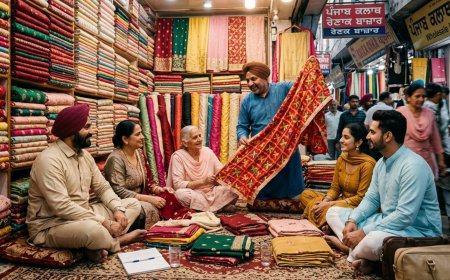
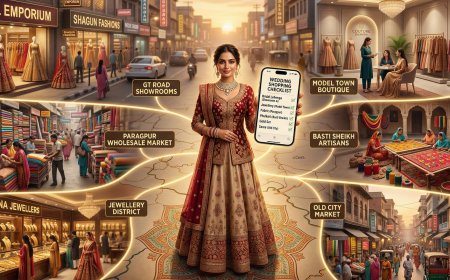
For many NRI families planning a wedding in Punjab, Jalandhar becomes the central shopping destination for everything from bridal lehengas and jewellery to embroidered fabrics, gifts, and accessories. The city’s markets — Rainak Bazar, the Bus Stand wholesale zone, Model Town boutiques, and Urban Estate designers — collectively form one of the most concentrated wedding shopping ecosystems in the region. Yet many NRI families arrive assuming that the process will be straightforward. They have watched videos, read blog posts, saved boutique names, and created detailed shopping lists. What they often underestimate is how much of Jalandhar’s wedding shopping infrastructure still operates through local knowledge. Markets shift. Vendors move. Lanes reorganize. Prices vary depending on familiarity with the market’s rhythms. And without a local contact — a relative, a trusted driver, or someone who understands the city’s commercial geography — navigating these markets can quickly become inefficient, confusing, and expensive. This guide explains how NRI families can successfully navigate Jalandhar’s wedding shopping markets even without a local contact. By understanding how each market works, how information circulates, and how to build temporary local knowledge networks, families can transform what might feel overwhelming into a structured and productive shopping experience. For NRIs planning a limited trip to India, these strategies ensure that every day spent in Jalandhar’s wedding markets is used efficiently.


Navigating Jalandhar's Wedding Markets Without a Local Contact — The NRI Survival Guide
The family from Vancouver had done everything correctly, by the standards of people who have never done this before.
They had booked the flights four months in advance. They had allocated six days in Jalandhar specifically for wedding shopping, which seemed, from a kitchen table in British Columbia with a spreadsheet open and a list of forty-three items to acquire, like a generous amount of time. They had read the articles. They had watched the YouTube videos of other NRI families walking through Rainak Bazar with phones held aloft, narrating prices and vendor names into the camera with the authority of people who had figured something out.
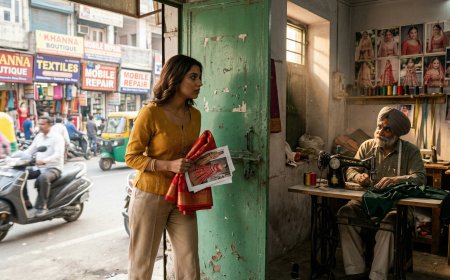
What they had not done — what it had not occurred to them to do, because it had not occurred to them that it was necessary — was establish a local contact in Jalandhar before they arrived. A cousin, an aunt, a family friend, a neighbour of their parents who still lived in the city and knew which wholesale lane had moved since last year and which boutique in Urban Estate had recently changed hands and was no longer worth the visit. Someone with a phone number who could answer a message at nine in the morning saying: we are starting at the Bus Stand today, which entrance do we use and where does the driver wait.
They did not have this person. They arrived in Jalandhar on a Tuesday in November with their forty-three item list and their six days and their good intentions and discovered, within approximately four hours of entering Rainak Bazar for the first time, that the gap between reading about a place and navigating it is not a small gap. It is the distance between a map and the territory the map describes.
This guide is for that family. It is for every NRI who arrives in Jalandhar for wedding shopping without a local contact and needs to understand, specifically and practically, what that absence costs and how to compensate for it.
What a Local Contact Actually Provides
Before addressing the absence of a local contact, it is worth being precise about what a local contact provides. The list is longer than most NRI families appreciate until they are standing in a market lane without one.
A local contact provides current information. The guide published eighteen months ago on a wedding planning website describes a market that existed eighteen months ago. Vendors move. Lanes get reconfigured. The boutique that was the consensus recommendation for bridal lehenga among every NRI family in 2022 may have changed ownership, raised prices beyond reason, or declined in quality in ways that the internet has not yet documented. A local contact was in that boutique three months ago. They know.
A local contact provides navigation knowledge that no map application replicates. Google Maps will route the driver to the correct general area. It will not tell the driver which entrance to the Bus Stand market is closest to the artificial jewellery section, which lane near Model Town floods briefly after rain and becomes impassable for a hired car, or where to park near Novelty Chowk during the afternoon peak without spending forty minutes in a situation that a local would have avoided by arriving from a different direction. This knowledge is granular and local and accumulated over years of moving through the city. It exists in people, not in applications.
A local contact provides social context that affects price. The vendor in Rainak Bazar who opens negotiations at a figure inflated for an NRI who arrived alone will not open at the same figure for an NRI who arrives with a Jalandhar resident beside them, or who mentions a specific local family name that establishes their connection to the city. This is not a negotiating trick. It is the social infrastructure of a market that operates on relationships, and the NRI without a local contact is operating outside that infrastructure.
A local contact provides time. Every logistical problem that a local contact solves in a two-minute phone call is a problem that the unaccompanied NRI solves in twenty minutes of trial and error, or does not solve at all and simply pays the cost of having failed to solve it — the wrong vendor, the missed zone, the parking situation that consumed an hour of a finite day.
The local contact is not a luxury. For the NRI doing serious wedding shopping in Jalandhar, the local contact is infrastructure. And arriving without that infrastructure is the single most expensive mistake the NRI family consistently makes.
Why NRI Families Arrive Without One
The reasons are consistent across families and worth naming, because naming them is the first step toward avoiding them.
The first reason is the assumption that the family network will provide. Many NRI families have relatives in or near Jalandhar — a maasi, a chacha, a family friend whose parents still live in Model Town. The assumption is that these relatives will naturally assist with the shopping, that their involvement is implicit, that it does not require a specific conversation in advance. This assumption fails reliably. The maasi in Jalandhar has her own family's demands and did not know she was expected to be available for six days of market navigation. The family friend's mother is happy to help but needed to be asked. The chacha who knows the Bus Stand wholesale zone well is available, but nobody told him the dates until four days before arrival. The family network exists but it requires activation, and activation requires advance communication that the NRI family, managing the logistics of travel and the demands of a wedding planning process from abroad, frequently fails to execute.
The second reason is overconfidence in available information. The volume of content about Jalandhar wedding shopping — the YouTube videos, the blog posts, the Instagram reels, the Reddit threads on NRI wedding planning subreddits — creates an impression of sufficient information. The family that has watched twelve videos about Rainak Bazar feels, reasonably, that they understand Rainak Bazar. What the videos do not convey is the tactile, navigational, current knowledge that local presence provides. Watching a video of someone walking through a market is not the same as knowing where to stand when a vendor quotes a price, which adjacent lane has better selection for a specific item, and what the current price range for a Class A bridal lehenga actually is at this moment, in this season, from these specific vendors.
The third reason is the assumption that a good driver substitutes for a local contact. It does not. A driver with commercial area knowledge is valuable — this guide and others on this platform have made that argument at length — but a driver's knowledge is logistical. It concerns routes, parking, waiting lanes, and the geography of movement through the city. It does not extend to which boutique in Urban Estate is currently doing the best work on custom design, which vendor in the artificial jewellery section of the Bus Stand has expanded their stock this season, or what a fair price for embroidered fabric currently is. The driver gets the family to the right place. The local contact ensures the right place is actually right.
The Specific Markets and What the Absence Costs in Each
Rainak Bazar
Rainak Bazar is Jalandhar's oldest and densest wedding shopping zone — the wholesale fabric market, the artificial jewellery lanes, the embroidery vendors, the suit material shops, the accumulated commercial energy of decades of wedding buying compressed into an area that rewards familiarity and punishes confusion.
The cost of navigating Rainak Bazar without a local contact is primarily paid in price and in selection. Price, because the market's vendor relationships are social as well as commercial, and the NRI who arrives without local connection is correctly identified as someone who does not know the range and will be quoted accordingly. Selection, because the best stock in Rainak Bazar is not always on display. The vendor with the glass case of embroidered fabric on the counter has more fabric behind the counter, and more again in the storage room, and the selection that gets retrieved depends on what the vendor understands about the buyer's seriousness, budget range, and social connection to the market. The local contact who walks in with the NRI family, greets the vendor by name, and establishes the social context of the visit changes what gets shown.
Without a local contact in Rainak Bazar, the correct compensating strategy is time and repetition. Visit the same vendors twice. On the first visit, look. Establish that you are serious and that you know enough to evaluate what you are seeing. Return on the second visit to buy. The vendor who assessed you as a passing NRI on the first visit will reassess on the second. This strategy costs time — a full additional visit to a zone that the local contact would have unlocked on the first visit — but it partially compensates for the absence of social context.
The Bus Stand Wholesale Zone
The Bus Stand area is where the structural absence of a local contact is most operationally expensive. The zone is large, internally complex, and changes faster than any published guide can track. Vendors in specific lanes specialise in specific product categories, and those specialisations shift. The lane that was the consensus recommendation for artificial jewellery two years ago has been partially displaced by a new concentration of vendors two lanes west. The NRI who has read the two-year-old guide goes to the old lane and finds it diminished. The NRI with a local contact goes directly to where the market currently is.
The Bus Stand zone also presents the most significant navigation challenge of any Jalandhar shopping area for someone unfamiliar with its internal geography. The entrance from the main gate is not the entrance that leads most efficiently to most of what the wedding shopping family needs. The correct entry point depends on the specific items being sought, and the correct entry point is the kind of knowledge that exists in people who use the market regularly rather than in any published form.
Without a local contact for the Bus Stand zone, the compensating strategy is to allocate significantly more time than any itinerary suggests — add ninety minutes to the Bus Stand allocation on the first visit — and to treat the first visit as orientation rather than purchasing. Walk the zone. Note the vendor concentrations. Return the following day with specific destinations established from the first visit's reconnaissance.
Model Town
Model Town's wedding shopping is spread across a broader area than the wholesale zones and involves a mix of retail shops, boutiques, and a smaller number of wholesale options. The navigation challenge here is lower than in Rainak Bazar or the Bus Stand zone, and the absence of a local contact is less operationally expensive in terms of finding things.
Where the local contact matters in Model Town is in boutique selection. The Model Town boutique market has a large number of options across a wide quality range, and distinguishing between them from the outside is difficult. The boutique with the well-produced Instagram account is not always the boutique with the best work. The boutique that a local family has used for two weddings in the past three years and found reliable is a different and more useful recommendation than anything available from a static published source.
Without a local contact for Model Town, the correct approach is to use Google reviews with specific attention to reviews from the past six months, to look for reviews that describe the custom design process rather than only the finished product, and to visit two or three boutiques before committing to any of them. The first visit to any Model Town boutique is an assessment visit. The purchase decision comes after comparison.
Urban Estate
Urban Estate's boutique zone is the most navigable of Jalandhar's wedding shopping areas for the NRI without a local contact, because the boutiques in Urban Estate are operating in a format — appointment-based, design-consultation-led, WhatsApp-responsive — that is more legible to the NRI than the wholesale market format. Many Urban Estate boutiques have websites, active social media presences, and the kind of customer communication infrastructure that allows remote research and advance contact before arrival.
The absence of a local contact in Urban Estate is least expensive of any Jalandhar zone, and the compensating strategy is most accessible: do the research online before arriving in India, make contact with two or three boutiques via Instagram or WhatsApp before the trip, and arrive with appointments rather than arriving without them and hoping for availability.
Building a Substitute Local Contact Network From Abroad
The local contact that the NRI family lacks can be partially constructed before departure, through channels that most families have access to but underutilise.
The family network audit. Before concluding that there is no local contact available, conduct a specific audit of the family network. Not a general awareness that there are relatives in Punjab, but a specific accounting: who, exactly, lives in or near Jalandhar; who among those people has recently bought or helped someone buy wedding items in the city; who has the local market knowledge that is needed; and who can be asked specifically and in advance, with enough lead time that the request is manageable rather than last-minute. This audit, conducted four to six weeks before departure, frequently produces a contact that the family had not thought to activate.
NRI community WhatsApp groups and forums. The NRI wedding planning community is, on certain platforms, genuinely useful. Facebook groups for NRI wedding planning, WhatsApp communities organised around specific diaspora cities, and subreddits for South Asian wedding planning all contain people who have recently navigated Jalandhar's markets and who are, as a category, remarkably willing to share specific and current information. A post asking for current recommendations for Rainak Bazar vendors, Urban Estate boutiques, and a reliable driver with Bus Stand knowledge will, typically, produce multiple substantive responses within twenty-four hours. This is not a substitute for a personal local contact, but it provides the current vendor-level knowledge that static guides cannot.
The hired driver as advance contact. Once a driver has been booked — and the driver should be booked in advance, not arranged on arrival — the driver can function as an advance local contact for logistical questions. A message to the driver two weeks before arrival asking for current recommendations for driver waiting areas near each zone, the best current entry point for the Bus Stand wholesale section, and any recent changes to the market geography they are aware of will produce information that is current, local, and operationally useful. A driver who has been doing wedding shopping runs for the past several months knows the market better than any guide published six months ago.
Boutique WhatsApp contact. For the boutique zones — Urban Estate, the better Model Town boutiques, the Lajpat Nagar premium area — advance WhatsApp contact with specific boutiques before departure serves multiple functions. It establishes that the NRI family is a serious prospective client. It generates responses that reveal something about the boutique's communication style, responsiveness, and professionalism. It creates an appointment structure for the shopping day that removes the uncertainty of arrival without prior contact. And it produces a WhatsApp thread with a specific individual at the boutique who becomes, in a limited but real sense, a local contact for that zone.
The Day-Of Compensations: When You Arrive Without Preparation
For the family that is reading this having already arrived in Jalandhar without the preparation outlined above, the situation is recoverable. It requires accepting a different operational posture for the shopping days, but it does not require abandoning the shopping agenda.
Slow down the first day. The family without a local contact should treat the first shopping day as reconnaissance, not purchasing. Visit the zones. Identify the vendors. Establish what exists and where. Resist the urgency to buy on the first visit to each zone. The information gathered on day one will make day two significantly more efficient. The family that tries to purchase on day one, without the orientation that local knowledge provides, will make expensive mistakes that the reconnaissance posture prevents.
Ask the vendors. This sounds obvious and is consistently underused. The vendors in Jalandhar's wholesale markets, when approached with genuine curiosity rather than purchasing pressure, are often willing to provide orientation — which lane for which category, where the good artificial jewellery is currently concentrated, which adjacent vendor is worth visiting. The vendor is not a neutral source and is not providing this information without commercial interest, but the information itself is often accurate and practically useful.
Use the hotel's concierge or front desk. The hotels that NRI families use in Jalandhar — the better-regarded establishments near Model Town and in the commercial areas — have front desk staff who have sent hundreds of similar families into the same markets. Ask them. Ask specifically: which driver they recommend who knows the Bus Stand and Rainak Bazar wholesale zones, which boutique in Urban Estate or Model Town a family like yours has used recently and found reliable, which days and times are worst for congestion at each market. This information is free, current, and specific. It is being left on the table by every NRI family that checks in, goes straight to their room, and navigates the following day without it.
Find the community. In any significant Jalandhar market on any day during wedding shopping season, there are other NRI families doing exactly what you are doing. The accents give them away. So does the expression — the combination of focused purpose and mild bewilderment that characterises every NRI in a wholesale market they are navigating for the first time. Talk to them. Share what you have found. Ask where they are going next. The informal knowledge-sharing that happens between NRI families in Jalandhar's markets is one of the most underutilised resources in the entire shopping day.
What the Vancouver Family Did
On the second evening of their six days, having spent the first day in Rainak Bazar with the outcome that comes from navigating without orientation, the family sat in their hotel room and did something they should have done in Vancouver four weeks earlier.
They posted in two NRI wedding planning Facebook groups asking for specific current recommendations. They messaged their driver — booked through the hotel — and asked him for the current entry point to the Bus Stand wholesale section and his recommendation for a boutique in Urban Estate for the bride's reception outfit. They sent a WhatsApp message to a cousin in Wolverhampton who had done Jalandhar shopping the previous year and asked for whatever she knew.
By nine the following morning they had three boutique recommendations with WhatsApp numbers, a specific vendor name in the artificial jewellery section of the Bus Stand zone, a revised entry strategy for Rainak Bazar, and the driver's confirmation that he had done three wedding shopping runs in the past month and knew exactly where to wait near each zone.
They used four of the six days well. The first day was the cost of arriving without preparation. The remaining days were what the trip was supposed to be.
The lesson the family took home to Vancouver, and which the mother messaged to her sister in Toronto whose daughter's wedding was eighteen months away, was not about any specific vendor or zone or price. It was simpler than that.
Do the preparation from abroad. Activate the family network before you land. Find the contacts before you need them. The market is navigable. The knowledge exists. It just needs to be acquired before you are standing in the middle of Rainak Bazar at eleven in the morning with a forty-three item list and nobody to call.
Published by NRIWedding.com — The Premium Global Platform for Non-Resident Indians Planning Indian Weddings From Abroad.
What's Your Reaction?
 Like
0
Like
0
 Dislike
0
Dislike
0
 Love
0
Love
0
 Funny
0
Funny
0
 Angry
0
Angry
0
 Sad
0
Sad
0
 Wow
0
Wow
0