




















































Jalandhar Wholesale Cloth Market Guide for NRI Families — Where to Go, Prices & Insider Tips
A comprehensive guide for NRI families exploring Jalandhar’s wholesale cloth markets. Learn where to shop, how wholesale pricing works, what fabrics to buy, and how to avoid common mistakes. From Rainak Bazar to Sadar Bazar, this insider guide covers pricing, quality checks, logistics, and smart buying strategies to help diaspora shoppers maximise value while accessing Punjab’s rich textile ecosystem.

Jalandhar's Wholesale Cloth Market — How the NRI Family Can Access It and What to Expect
A Complete Insider's Guide for the Diaspora Shopper
Introduction: The Pull of the Kapda Market
Every NRI family that returns to Jalandhar carries a list. It might be written in a notebook, saved on a phone, or simply held in memory — a running inventory of what needs to be bought, gifted, or replenished before the trip back to Canada, the UK, or Australia. And near the top of almost every list is kapda: cloth, fabric, suits, dress material. Things that cost five times more abroad, that come in half the variety, and that carry none of the texture, weight, and craftsmanship of what you can find right here, in the markets of a city that has been trading in textiles for generations.
Jalandhar is not merely a textile city. It is arguably one of the most textile-literate cities in northern India — a place where ordinary shoppers can distinguish between Korean net and French net, where the average family knows whether a suit fabric is Surat-sourced or Amritsar-woven, and where the wholesale cloth market is not a specialist destination for traders but a living, breathing part of how the city dresses itself and its families.
Punjab is one of the states of north India which has so many various ranges of clothes and fabrics for the retailers, merchants, and traders. The Punjabi suits, Punjabi dresses, and the very best Patialas are the identity of Punjab. Jalandhar is one of the cities of Punjab where you find lots of textile markets that offer you best kind of materials.
For the NRI family arriving from abroad, accessing this market is one of the richest — and sometimes most bewildering — shopping experiences the city offers. This guide explains, in full, how it works: what the wholesale cloth market actually is, where it lives in the city, how it differs from retail shopping, and what an NRI family can realistically expect to find, spend, and take home.
Part One: Understanding What "Wholesale" Means in the Jalandhar Context
The Wholesale-Retail Divide — and Why It's Not What You Think
In most Western markets, the distinction between wholesale and retail is absolute. Wholesale is for businesses. Retail is for individuals. The two rarely overlap. If you walk into a wholesale warehouse as a private customer, you are likely to be turned away at the door.
Jalandhar does not work this way.
The wholesale cloth markets of Jalandhar occupy a fascinating middle ground. Formally, they supply retailers — shop owners from smaller Punjab towns, boutique owners, tailors, dress manufacturers — who buy in bulk to resell at a profit. But in practice, the markets have always welcomed individual shoppers, families, and serious buyers who are purchasing for personal use rather than commercial resale. The key differentiator is not your identity or business registration — it is the quantity you are willing to buy.
Jalandhar cloth market wholesale is known to deliver various high quality textile products to the buyers. You can get a diverse range of textiles from Jalandhar cloth wholesale market. The minimum quantities required to access genuine wholesale pricing vary by vendor — some will deal in single pieces, others require a minimum of five or ten suits, and fabric-by-the-metre stalls often set minimums of three to five metres per colour. But these thresholds are negotiable, particularly for buyers who are purchasing multiple items or building a relationship with a vendor.
The NRI family, arriving with a genuine desire to shop in volume — suits for the whole extended family, dress material for cousins back in Birmingham, fabric for the wedding season ahead — is often exactly the kind of customer these markets are designed to serve. The challenge lies in knowing how to enter these markets, how to behave in them, and how to get the genuine wholesale price rather than the "tourist" price that any market vendor will instinctively quote to an outsider.
The Commercial Logic of Jalandhar's Textile Trade
The unique feature of this market is that the attractive and seemingly blazing products are offered at economic and inexpensive rates. The suppliers and the supply stores stock the traditional wear as well as the branded garments which are either manufactured in the city or are manufactured in cities Delhi or Chandigarh.
Understanding the supply chain helps the NRI shopper navigate price expectations. Jalandhar sits at the end of a textile supply chain that begins in manufacturing cities — Surat (for synthetics, georgettes, chiffons, and printed fabrics), Amritsar (for phulkari, woollens, and raw cotton goods), Varanasi (for Banarasi silk and brocade), and Ludhiana (for hosiery and knitwear). Wholesale dealers in Jalandhar buy from these source cities in large volumes, store their stock in the market, and sell on to local retailers, boutique owners, and direct buyers.
The garments with traditional Phulkari are cherry-picked items amongst those who visit Jalandhar, and the wholesale markets carry phulkari-work fabric in large variety precisely because demand from both local buyers and visiting NRI families is consistently high.
This supply chain structure means that prices in Jalandhar's wholesale markets are typically thirty to fifty percent below what you would pay for the same fabric at a boutique or retail shop in the city — and sixty to eighty percent below what comparable fabric would cost from a South Asian clothing shop in London, Toronto, or Sydney.
Part Two: The Markets — Where to Go and What Each Offers
The Jalandhar Textile Market Ecosystem
The famous shopping places in Jalandhar are Sadar Bazaar, Rainak Bazaar and Manbro supermarket. These are the places where maximum people choose for the purchase of apparels and garments, hosiery and even home textiles.
But the wholesale cloth market is not a single, defined location. It is a distributed network of interconnected market zones, each with its own specialisation, price tier, and character. Understanding the key zones is the first step toward using them effectively.
Rainak Bazar: The Original Wholesale Pulse
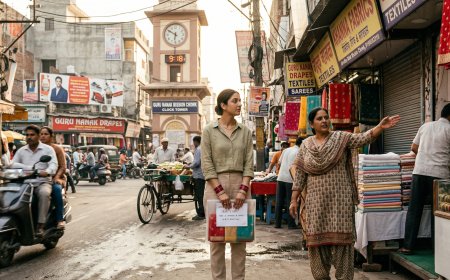
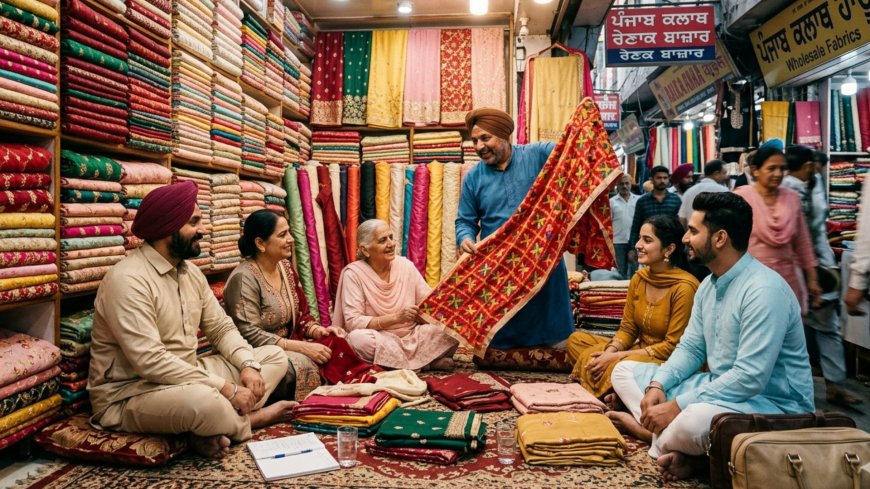
Rainak Bazar, located in Ali Mohalla in the older part of the city, is arguably the closest thing Jalandhar has to a dedicated wholesale cloth market in the traditional sense. Rainak Bazaar is known for its vibrant atmosphere and is a hotspot for shoppers looking for a wide range of products, from textiles to household items. You will find everything here from normal clothes to party wear kurtis, sherwanis, sarees, salwar kameez, lehengas, and chic party wear. This market is particularly famous for its traditional Punjabi wear and accessories.
The bazar operates primarily from early morning through late evening, with the wholesale activity most concentrated in the morning hours — before ten o'clock — when retailer buyers arrive to stock up. For the NRI family, arriving between ten in the morning and noon strikes the right balance: the wholesale buyers have mostly conducted their business, the lanes are slightly less congested, and vendors have more time to engage with individual buyers.
Rainak Bazar's strength is in its density of dress material — unstitched suit fabric sold by the set (typically three pieces: kameez fabric, salwar fabric, and dupatta) or by the metre. The variety here is unmatched anywhere else in the city. Women's wear includes sarees, dress materials, kurtis, Punjabi dresses, patialas, lehenga which are also famous in Punjab, and western wear collection. Men's wear contains kurtas, sherwani, dhotis, shirting and suiting, and the fabric from the paghdis (turban) made.
Sadar Bazar, Jalandhar Cantt: The Organised Alternative
Sadar Bazaar, one of Jalandhar's oldest markets, invites visitors into its historic heart with its vibrant array of colours and sounds as you peruse clothing, shoes and bangles showcasing various hues and styles; an ode to Punjabi culture!
Sadar Bazar in the Cantonment area offers a different quality of wholesale access — more structured, with better-organised shops and a slightly more comfortable shopping environment. While it is not a pure wholesale zone in the way Rainak Bazar is, many of the larger cloth and suit shops in Sadar Bazar operate on a wholesale-retail hybrid model, offering genuine wholesale prices on bulk purchases while also maintaining retail stock for individual buyers.
Located in the heart of Jalandhar Cantt, Sadar Bazar Market is a one-stop destination for all your wholesale shopping needs, offering a diverse range of products from clothing and accessories to household items and stationery. Timings run from 9:30 AM to 8:30 PM.
For NRI families who find Rainak Bazar's density overwhelming, Sadar Bazar often provides a more navigable entry point into the wholesale cloth experience.
PPR Market: The Bulk Buyer's Destination
PPR Market is the place to go if you're looking for bulk purchasing at wholesale prices. One of Jalandhar's oldest marketplaces, it is renowned for offering a wide range of apparel, accessories, and shoes at reasonable prices. Bring patience and a keen eye to identify the greatest offers that are available.
PPR Market, while not exclusively a cloth market, is a significant destination for families buying in volume — an entire set of suits for a large family gathering, for instance, or fabric for multiple wedding outfits.
Guru Nanak Dev Market: Fashion for the Younger Shopper
Guru Nanak Dev Market is known for its textile and garment shops and offers a wide range of fabrics, sarees, dress materials, and ready-made garments. It is a hub for fashion enthusiasts and retailers, with timings from 10:00 AM to 8:00 PM.
This market tends to stock more contemporary and trend-forward fabrics alongside traditional options — making it particularly useful for NRI family members who want to buy Indian clothing that feels current rather than traditional.
Basti Sheikh and Surrounding Areas: The Trade Wholesale Zone
The areas around Basti Sheikh Road represent the deeper wholesale end of the Jalandhar textile market — where professional buyers, manufacturers, and large-volume retailers source their stock. Individual access is possible here but requires more confidence and negotiation skill, as vendors are primarily accustomed to dealing with trade buyers rather than private shoppers.
Part Three: What the Markets Stock — The Full Range
Fabric Categories Available
Fabric wholesale market in Jalandhar is known to provide various high quality fabrics to the buyers such as cotton, silk, linen, rayon etc. You can get all types of natural, semi-synthetic and synthetic fibres in Jalandhar with ease from cloth market in Jalandhar.
The wholesale cloth market of Jalandhar carries an extraordinary range. For the NRI family accustomed to South Asian clothing shops abroad — typically small retail operations with a limited, curated selection at high prices — the sheer volume of what is available here can be initially disorienting.
The range broadly divides into three categories:
Dress Material and Suit Fabric is the core business of Jalandhar's wholesale cloth markets. The women's wear collection includes sarees, dress materials, kurtis, Punjabi dresses, patialas, and lehengas. Unstitched suit sets in cotton, lawn, georgette, chiffon, net, silk, and blended fabrics are the most popular purchase for families. They are sold as three-piece sets — kameez fabric, salwar fabric, and dupatta — and can then be taken to a tailor to be stitched to individual measurements. This is the NRI family's single greatest advantage over buying readymade clothing abroad: fabric bought wholesale in Jalandhar, stitched to specification by a good tailor, fits perfectly and costs a fraction of what a comparable readymade outfit would in any Western market.
Ready-Made Garments form the second major category. Jalandhar wholesale market for garments offers top quality apparel and garments in various styles, colours and designs for men, women and kids for the buyers to shop. Ready-made salwar suits, anarkali sets, straight suits, and Patiala suit sets are available in large variety, particularly in the mid-market price range. These are suitable for family members who do not have time for tailoring, or for purchases intended as gifts for relatives abroad.
Specialty Fabrics and Traditional Textiles represent the category that most excites NRI visitors. At present, favored for the classic and western wear, the real face of Jalandhar textile market is the handloom products and the traditional handicraft. The rich and flamboyant coloured kurtis, the classic Patiala salwar, and the voguish lehenga are all available in textile market of Jalandhar.
Within specialty textiles, phulkari occupies a category of its own. Phulkari (meaning "art of flowers") refers to the folk embroidery of the Punjab region. The main characteristics of phulkari embroidery are use of darn stitch on the wrong side of coarse cotton cloth with coloured silken thread. Some modern fashion designers are incorporating this embroidery into their designs, and its use has spread beyond traditional salwar kameez and dupatta to accessories like jackets, handbags, cushion covers, table-mats, shoes, slippers, juttis, and children's clothes. For NRI families with relatives abroad who crave authentically Punjabi pieces, phulkari dupattas and suits from Jalandhar's wholesale market represent an extraordinary value — and a connection to heritage that cannot be replicated anywhere outside of Punjab.
The NRI Shopper's Guide to Jalandhar's Wholesale Cloth Markets
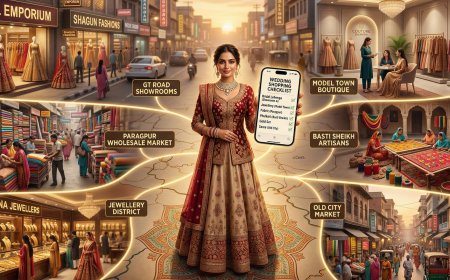
The table below provides a comprehensive reference for navigating the major wholesale cloth market zones in Jalandhar. It is designed to help NRI families match their specific shopping priorities to the right market zone.
| Market Zone | Primary Specialisation | Best For NRI Families | Price Tier | Minimum Buy | Operating Hours | Navigation Difficulty | English/Hindi Comfort |
|---|---|---|---|---|---|---|---|
| Rainak Bazar | Dress material, suit fabric, traditional wear | Volume dress material, phulkari, salwar suit sets | Low–Mid | Flexible (1 set+) | 8:00 AM – 10:00 PM | High (dense lanes) | Moderate |
| Sadar Bazar (Cantt) | Mixed cloth, jewellery, accessories | First-time wholesale visitors, mixed trousseau | Mid | Flexible | 9:30 AM – 8:30 PM | Low–Moderate | Good |
| PPR Market | Bulk apparel, accessories | Large family purchases, volume gifting | Low–Mid | Higher (bulk) | 10:00 AM – 7:00 PM | Moderate | Moderate |
| Guru Nanak Dev Market | Contemporary garments, electronics, mixed | Younger family members, trend-forward fabric | Mid | Low (retail-friendly) | 10:00 AM – 8:00 PM | Low–Moderate | Good |
| Model Town Market | Bridal wear, boutique fabric, traditional attire | Bridal shopping, phulkari, Patiala suits | Mid–High | Low (boutique model) | 9:00 AM – 11:00 PM | Moderate | Good |
| Basti Sheikh / Trade Zones | Deep wholesale, trade-volume fabric | Professional-volume buyers, large-batch gifts | Very Low | High (dozens of pieces) | 9:00 AM – 6:00 PM | Very High | Limited |
| Handloom Emporium | State-run handloom, traditional crafts | Authentic handloom, fixed-price shopping | Mid–High | None (retail) | 10:00 AM – 6:00 PM | Very Low | Very Good |
Part Four: The NRI Family — Why Jalandhar's Market Is Built for You
The City's Diaspora DNA
Punjab also has a large diaspora that is mostly settled in the United Kingdom, the United States, and Canada, numbering about 3 million, and sends back billions of USD in remittances to the state, playing a major role in its economy.
Jalandhar sits at the heart of the Doaba region — the area between the Beas and Sutlej rivers — which has historically been the most prolific source of Punjabi emigration to the West. Villages within thirty kilometres of the city have sent entire generations to the UK, Canada, Australia, and the United States. This is not background context. It is the commercial reality that shapes how Jalandhar's wholesale markets operate.
The markets here have been receiving NRI shoppers for decades. Vendors in Rainak Bazar and Sadar Bazar are accustomed to families who speak a mix of Punjabi, English, and Hinglish. They are accustomed to buyers who want to make large purchases in a compressed timeframe. They are accustomed to the specific requests that come from abroad — "dupatta with matching colour thread for the suit," "something that won't crease on a long flight," "fabric that's easy to get stitched in England." This institutional understanding is a genuine advantage for the NRI family, and it separates Jalandhar from smaller Punjab cities where vendor familiarity with diaspora shopping patterns is less developed.
The NRI Price Reality
The price differential between buying fabric in Jalandhar's wholesale market and buying comparable clothing from a South Asian retailer in the diaspora is dramatic. A three-piece salwar suit set in embroidered georgette — the kind sold in Indian clothing shops in Southall, Brampton, or Parramatta for £60–£90, CAD $120–$180, or AUD $160–$220 — can be sourced at Jalandhar's wholesale market in unstitched form for ₹500–₹1,500, which translates to roughly £5–£15, CAD $9–$27, or AUD $10–$30 at current exchange rates.
The NRI family buying twenty such suits for extended family members is realising a saving that, in a single shopping trip, can offset a significant portion of their India travel costs. This arithmetic is not lost on families who plan their India visits with shopping lists that fill entire suitcases — and who check airline baggage allowances as carefully as their exchange rate apps.
What NRIs Specifically Come to Buy
Through patterns visible across the wholesale markets, several categories emerge as the most consistently popular among NRI shoppers:
Phulkari: The single most requested item from NRI visitors across all price points. Jalandhar is a paradise retreat for all shopaholics who love to splurge on traditional items. You will find yourself in every narrow lane scouting for hidden gems that are a treasure trove for all things quirky and traditional about the intrinsic culture of Punjab such as juttis, phulkaris, and beautiful salwar kameez with pretty embroideries. Phulkari dupattas and suits carry emotional weight for the diaspora — they are a piece of Punjab that can be worn at cultural events in Birmingham or Brampton in a way that no mass-produced Western garment replicates. The wholesale market carries phulkari at every price tier, from machine-embroidered duplicates at a few hundred rupees to genuine hand-embroidered pieces at several thousand.
Dress Material in Bulk: NRI families typically buy not just for themselves but for extended family members who cannot make the trip, for friends in the UK who have given them a list, for the aunty in Canada who wants "something nice, not too expensive." Buying dress material by the set in the wholesale market is the most efficient way to address multiple requests in a single morning.
Lawn and Cotton Suits for Abroad: Fine lawn cotton — the breathable, lightweight fabric originally developed in Pakistan and hugely popular across the diaspora — is available in large variety in Jalandhar's wholesale market at prices that are dramatically below import prices in the UK or Canada. NRI families, particularly those in regions with warmer summers, stock up heavily on lawn suit sets for the warmer months.
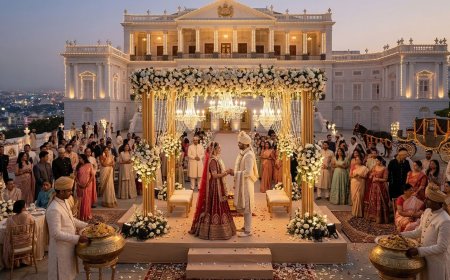
Bridal and Occasion Fabric: NRI families planning weddings — whether in India or abroad — often use a Jalandhar wholesale market visit to source fabric for multiple wedding outfits. This fabric is then taken abroad and stitched by local tailors who have experience with Indian wedding wear, or it is stitched in Jalandhar itself before departure.
Men's Shirting and Suiting: Men's wear in Jalandhar's textile market contains kurtas, sherwani, dhotis, shirting and suiting, and the fabric from the paghdis (turban) made. Quality shirting and formal suiting fabric, which is expensive in UK menswear tailoring, is abundantly available at wholesale prices in Jalandhar's cloth market.
Part Five: How to Actually Shop the Wholesale Market
The Three Phases of a Successful Wholesale Market Visit
A successful NRI family's wholesale cloth market visit divides naturally into three phases: preparation, navigation, and transaction. Understanding each phase in advance makes the difference between a productive, enjoyable day and an exhausting, overpriced one.
Phase One: Preparation (Before You Arrive in the Market)
The most important preparation is knowing what you need before you enter the market. This sounds obvious but is frequently overlooked. In a market with thousands of shops and an almost infinite variety of fabric, the family that arrives without a shopping brief will spend hours browsing unproductively and make impulsive purchases that do not align with actual needs.
Before arriving, compile a consolidated list from everyone in the family — including family members back abroad who have requested items. Categorise by fabric type, occasion, colour preference, and approximate budget per item. Translate this into a prioritised shopping brief. The brief need not be rigid — the pleasure of the wholesale market is partly in discovering things you had not planned to buy — but it provides a navigation anchor that prevents the day from dissolving into overwhelm.
Know your sizes and measurements. If you are buying unstitched dress material, you need to know how much fabric each recipient requires. A standard three-piece salwar suit typically requires 2.5 to 3 metres for the kameez, 2 to 2.5 metres for the salwar, and 2 to 2.5 metres for the dupatta. If you are buying ready-made garments, come with accurate measurements — bust, waist, hip, shoulder — for each family member, as Indian sizing varies significantly from Western standardisation.
Bring cash. While digital payments have become increasingly available across Jalandhar's markets, including UPI and card payments in some of the larger shops, the deepest wholesale pricing is almost always reserved for cash transactions. Carry more than you think you will need — the wholesale market has a way of expanding the budget with its extraordinary value proposition.
Phase Two: Navigation (Entering and Moving Through the Market)
The wholesale cloth markets of Jalandhar — particularly Rainak Bazar — are not designed for casual browsing. They are working commercial zones built for professional buyers who know what they want, know who sells it, and can navigate the dense lane structure efficiently.
The NRI family's best navigation strategy is a local contact. A resident relative, a trusted friend of the family, or even a recommended local guide who knows the market is invaluable. This contact can lead you directly to the right vendors, broker introductions that unlock genuine wholesale pricing, and protect you from the "NRI markup" that any vendor will instinctively attempt with buyers who appear to be from abroad.
Jalandhar's wholesale markets are a treasure trove for shoppers, providing a wide range of products at competitive prices. But accessing those competitive prices requires market literacy, which is most efficiently borrowed from someone who already has it.
If no local contact is available, the alternative strategy is to enter the market not as a buyer but as an observer first. Walk one full lane without buying anything, taking mental notes of which shops carry what and at what approximate price level. Only after completing this reconnaissance should you begin the purchasing phase.
Phase Three: Transaction (Negotiating and Buying)
PPR Market is renowned for offering a wide range of apparel, accessories, and shoes at reasonable prices. Bring patience and a keen eye to identify the greatest offers that are available. This advice applies across all of Jalandhar's wholesale markets.
The first price quoted in any wholesale market transaction is the starting point of a negotiation, not the endpoint. The extent to which prices are negotiable varies by vendor type and product category: fabric-by-the-metre from a large wholesale house has less elasticity than ready-made suit sets from a smaller stall. But in all cases, buying multiple items from the same vendor — demonstrating that your family is a serious, volume buyer — is the most reliable way to access better pricing.
The specific techniques that unlock wholesale pricing for the NRI family:
Quote a volume upfront. Rather than selecting one suit and asking the price, tell the vendor you need ten or fifteen suit sets and ask for the wholesale rate. Many vendors will open at a meaningfully lower price when they understand the order size.
Compare before committing. Visit at least three vendors for any significant purchase before committing. Even a superficially similar suit set can vary dramatically in fabric quality — density of weave, quality of dye, durability of embroidery — and comparing across vendors is the only reliable way to calibrate this.
Ask to see the back of the fabric. The wrong side of any fabric reveals its true quality more accurately than the finished face. A well-woven fabric should look nearly as clean and even on the reverse as on the face. Embroidery that is properly executed should be tightly finished on the back, not loose and knotted.
Now I have comprehensive research. Let me write the full 5,000-word article.
Jalandhar's Wholesale Cloth Market — How the NRI Family Can Access It and What to Expect
A Complete Insider's Guide for the Diaspora Shopper
Introduction: The Pull of the Kapda Market
Every NRI family that returns to Jalandhar carries a list. It might be written in a notebook, saved on a phone, or simply held in memory — a running inventory of what needs to be bought, gifted, or replenished before the trip back to Canada, the UK, or Australia. And near the top of almost every list is kapda: cloth, fabric, suits, dress material. Things that cost five times more abroad, that come in half the variety, and that carry none of the texture, weight, and craftsmanship of what you can find right here, in the markets of a city that has been trading in textiles for generations.
Jalandhar is not merely a textile city. It is arguably one of the most textile-literate cities in northern India — a place where ordinary shoppers can distinguish between Korean net and French net, where the average family knows whether a suit fabric is Surat-sourced or Amritsar-woven, and where the wholesale cloth market is not a specialist destination for traders but a living, breathing part of how the city dresses itself and its families.
Punjab is one of the states of north India which has so many various ranges of clothes and fabrics for the retailers, merchants, and traders. The Punjabi suits, Punjabi dresses, and the very best Patialas are the identity of Punjab. Jalandhar is one of the cities of Punjab where you find lots of textile markets that offer you best kind of materials.
For the NRI family arriving from abroad, accessing this market is one of the richest — and sometimes most bewildering — shopping experiences the city offers. This guide explains, in full, how it works: what the wholesale cloth market actually is, where it lives in the city, how it differs from retail shopping, and what an NRI family can realistically expect to find, spend, and take home.
Part One: Understanding What "Wholesale" Means in the Jalandhar Context
The Wholesale-Retail Divide — and Why It's Not What You Think
In most Western markets, the distinction between wholesale and retail is absolute. Wholesale is for businesses. Retail is for individuals. The two rarely overlap. If you walk into a wholesale warehouse as a private customer, you are likely to be turned away at the door.
Jalandhar does not work this way.
The wholesale cloth markets of Jalandhar occupy a fascinating middle ground. Formally, they supply retailers — shop owners from smaller Punjab towns, boutique owners, tailors, dress manufacturers — who buy in bulk to resell at a profit. But in practice, the markets have always welcomed individual shoppers, families, and serious buyers who are purchasing for personal use rather than commercial resale. The key differentiator is not your identity or business registration — it is the quantity you are willing to buy.
Jalandhar cloth market wholesale is known to deliver various high quality textile products to the buyers. You can get a diverse range of textiles from Jalandhar cloth wholesale market. The minimum quantities required to access genuine wholesale pricing vary by vendor — some will deal in single pieces, others require a minimum of five or ten suits, and fabric-by-the-metre stalls often set minimums of three to five metres per colour. But these thresholds are negotiable, particularly for buyers who are purchasing multiple items or building a relationship with a vendor.
The NRI family, arriving with a genuine desire to shop in volume — suits for the whole extended family, dress material for cousins back in Birmingham, fabric for the wedding season ahead — is often exactly the kind of customer these markets are designed to serve. The challenge lies in knowing how to enter these markets, how to behave in them, and how to get the genuine wholesale price rather than the "tourist" price that any market vendor will instinctively quote to an outsider.
The Commercial Logic of Jalandhar's Textile Trade
The unique feature of this market is that the attractive and seemingly blazing products are offered at economic and inexpensive rates. The suppliers and the supply stores stock the traditional wear as well as the branded garments which are either manufactured in the city or are manufactured in cities Delhi or Chandigarh.
Understanding the supply chain helps the NRI shopper navigate price expectations. Jalandhar sits at the end of a textile supply chain that begins in manufacturing cities — Surat (for synthetics, georgettes, chiffons, and printed fabrics), Amritsar (for phulkari, woollens, and raw cotton goods), Varanasi (for Banarasi silk and brocade), and Ludhiana (for hosiery and knitwear). Wholesale dealers in Jalandhar buy from these source cities in large volumes, store their stock in the market, and sell on to local retailers, boutique owners, and direct buyers.
The garments with traditional Phulkari are cherry-picked items amongst those who visit Jalandhar, and the wholesale markets carry phulkari-work fabric in large variety precisely because demand from both local buyers and visiting NRI families is consistently high.
This supply chain structure means that prices in Jalandhar's wholesale markets are typically thirty to fifty percent below what you would pay for the same fabric at a boutique or retail shop in the city — and sixty to eighty percent below what comparable fabric would cost from a South Asian clothing shop in London, Toronto, or Sydney.
Part Two: The Markets — Where to Go and What Each Offers
The Jalandhar Textile Market Ecosystem
The famous shopping places in Jalandhar are Sadar Bazaar, Rainak Bazaar and Manbro supermarket. These are the places where maximum people choose for the purchase of apparels and garments, hosiery and even home textiles.
But the wholesale cloth market is not a single, defined location. It is a distributed network of interconnected market zones, each with its own specialisation, price tier, and character. Understanding the key zones is the first step toward using them effectively.
Rainak Bazar: The Original Wholesale Pulse
Rainak Bazar, located in Ali Mohalla in the older part of the city, is arguably the closest thing Jalandhar has to a dedicated wholesale cloth market in the traditional sense. Rainak Bazaar is known for its vibrant atmosphere and is a hotspot for shoppers looking for a wide range of products, from textiles to household items. You will find everything here from normal clothes to party wear kurtis, sherwanis, sarees, salwar kameez, lehengas, and chic party wear. This market is particularly famous for its traditional Punjabi wear and accessories.
The bazar operates primarily from early morning through late evening, with the wholesale activity most concentrated in the morning hours — before ten o'clock — when retailer buyers arrive to stock up. For the NRI family, arriving between ten in the morning and noon strikes the right balance: the wholesale buyers have mostly conducted their business, the lanes are slightly less congested, and vendors have more time to engage with individual buyers.
Rainak Bazar's strength is in its density of dress material — unstitched suit fabric sold by the set (typically three pieces: kameez fabric, salwar fabric, and dupatta) or by the metre. The variety here is unmatched anywhere else in the city. Women's wear includes sarees, dress materials, kurtis, Punjabi dresses, patialas, lehenga which are also famous in Punjab, and western wear collection. Men's wear contains kurtas, sherwani, dhotis, shirting and suiting, and the fabric from the paghdis (turban) made.
Sadar Bazar, Jalandhar Cantt: The Organised Alternative
Sadar Bazaar, one of Jalandhar's oldest markets, invites visitors into its historic heart with its vibrant array of colours and sounds as you peruse clothing, shoes and bangles showcasing various hues and styles; an ode to Punjabi culture!
Sadar Bazar in the Cantonment area offers a different quality of wholesale access — more structured, with better-organised shops and a slightly more comfortable shopping environment. While it is not a pure wholesale zone in the way Rainak Bazar is, many of the larger cloth and suit shops in Sadar Bazar operate on a wholesale-retail hybrid model, offering genuine wholesale prices on bulk purchases while also maintaining retail stock for individual buyers.
Located in the heart of Jalandhar Cantt, Sadar Bazar Market is a one-stop destination for all your wholesale shopping needs, offering a diverse range of products from clothing and accessories to household items and stationery. Timings run from 9:30 AM to 8:30 PM.
For NRI families who find Rainak Bazar's density overwhelming, Sadar Bazar often provides a more navigable entry point into the wholesale cloth experience.
PPR Market: The Bulk Buyer's Destination
PPR Market is the place to go if you're looking for bulk purchasing at wholesale prices. One of Jalandhar's oldest marketplaces, it is renowned for offering a wide range of apparel, accessories, and shoes at reasonable prices. Bring patience and a keen eye to identify the greatest offers that are available.
PPR Market, while not exclusively a cloth market, is a significant destination for families buying in volume — an entire set of suits for a large family gathering, for instance, or fabric for multiple wedding outfits.
Guru Nanak Dev Market: Fashion for the Younger Shopper
Guru Nanak Dev Market is known for its textile and garment shops and offers a wide range of fabrics, sarees, dress materials, and ready-made garments. It is a hub for fashion enthusiasts and retailers, with timings from 10:00 AM to 8:00 PM.
This market tends to stock more contemporary and trend-forward fabrics alongside traditional options — making it particularly useful for NRI family members who want to buy Indian clothing that feels current rather than traditional.
Basti Sheikh and Surrounding Areas: The Trade Wholesale Zone
The areas around Basti Sheikh Road represent the deeper wholesale end of the Jalandhar textile market — where professional buyers, manufacturers, and large-volume retailers source their stock. Individual access is possible here but requires more confidence and negotiation skill, as vendors are primarily accustomed to dealing with trade buyers rather than private shoppers.
Part Three: What the Markets Stock — The Full Range
Fabric Categories Available
Fabric wholesale market in Jalandhar is known to provide various high quality fabrics to the buyers such as cotton, silk, linen, rayon etc. You can get all types of natural, semi-synthetic and synthetic fibres in Jalandhar with ease from cloth market in Jalandhar.
The wholesale cloth market of Jalandhar carries an extraordinary range. For the NRI family accustomed to South Asian clothing shops abroad — typically small retail operations with a limited, curated selection at high prices — the sheer volume of what is available here can be initially disorienting.
The range broadly divides into three categories:
Dress Material and Suit Fabric is the core business of Jalandhar's wholesale cloth markets. The women's wear collection includes sarees, dress materials, kurtis, Punjabi dresses, patialas, and lehengas. Unstitched suit sets in cotton, lawn, georgette, chiffon, net, silk, and blended fabrics are the most popular purchase for families. They are sold as three-piece sets — kameez fabric, salwar fabric, and dupatta — and can then be taken to a tailor to be stitched to individual measurements. This is the NRI family's single greatest advantage over buying readymade clothing abroad: fabric bought wholesale in Jalandhar, stitched to specification by a good tailor, fits perfectly and costs a fraction of what a comparable readymade outfit would in any Western market.
Ready-Made Garments form the second major category. Jalandhar wholesale market for garments offers top quality apparel and garments in various styles, colours and designs for men, women and kids for the buyers to shop. Ready-made salwar suits, anarkali sets, straight suits, and Patiala suit sets are available in large variety, particularly in the mid-market price range. These are suitable for family members who do not have time for tailoring, or for purchases intended as gifts for relatives abroad.
Specialty Fabrics and Traditional Textiles represent the category that most excites NRI visitors. At present, favored for the classic and western wear, the real face of Jalandhar textile market is the handloom products and the traditional handicraft. The rich and flamboyant coloured kurtis, the classic Patiala salwar, and the voguish lehenga are all available in textile market of Jalandhar.
Within specialty textiles, phulkari occupies a category of its own. Phulkari (meaning "art of flowers") refers to the folk embroidery of the Punjab region. The main characteristics of phulkari embroidery are use of darn stitch on the wrong side of coarse cotton cloth with coloured silken thread. Some modern fashion designers are incorporating this embroidery into their designs, and its use has spread beyond traditional salwar kameez and dupatta to accessories like jackets, handbags, cushion covers, table-mats, shoes, slippers, juttis, and children's clothes. For NRI families with relatives abroad who crave authentically Punjabi pieces, phulkari dupattas and suits from Jalandhar's wholesale market represent an extraordinary value — and a connection to heritage that cannot be replicated anywhere outside of Punjab.
The NRI Shopper's Guide to Jalandhar's Wholesale Cloth Markets
The table below provides a comprehensive reference for navigating the major wholesale cloth market zones in Jalandhar. It is designed to help NRI families match their specific shopping priorities to the right market zone.
| Market Zone | Primary Specialisation | Best For NRI Families | Price Tier | Minimum Buy | Operating Hours | Navigation Difficulty | English/Hindi Comfort |
|---|---|---|---|---|---|---|---|
| Rainak Bazar | Dress material, suit fabric, traditional wear | Volume dress material, phulkari, salwar suit sets | Low–Mid | Flexible (1 set+) | 8:00 AM – 10:00 PM | High (dense lanes) | Moderate |
| Sadar Bazar (Cantt) | Mixed cloth, jewellery, accessories | First-time wholesale visitors, mixed trousseau | Mid | Flexible | 9:30 AM – 8:30 PM | Low–Moderate | Good |
| PPR Market | Bulk apparel, accessories | Large family purchases, volume gifting | Low–Mid | Higher (bulk) | 10:00 AM – 7:00 PM | Moderate | Moderate |
| Guru Nanak Dev Market | Contemporary garments, electronics, mixed | Younger family members, trend-forward fabric | Mid | Low (retail-friendly) | 10:00 AM – 8:00 PM | Low–Moderate | Good |
| Model Town Market | Bridal wear, boutique fabric, traditional attire | Bridal shopping, phulkari, Patiala suits | Mid–High | Low (boutique model) | 9:00 AM – 11:00 PM | Moderate | Good |
| Basti Sheikh / Trade Zones | Deep wholesale, trade-volume fabric | Professional-volume buyers, large-batch gifts | Very Low | High (dozens of pieces) | 9:00 AM – 6:00 PM | Very High | Limited |
| Handloom Emporium | State-run handloom, traditional crafts | Authentic handloom, fixed-price shopping | Mid–High | None (retail) | 10:00 AM – 6:00 PM | Very Low | Very Good |
Part Four: The NRI Family — Why Jalandhar's Market Is Built for You
The City's Diaspora DNA
Punjab also has a large diaspora that is mostly settled in the United Kingdom, the United States, and Canada, numbering about 3 million, and sends back billions of USD in remittances to the state, playing a major role in its economy.
Jalandhar sits at the heart of the Doaba region — the area between the Beas and Sutlej rivers — which has historically been the most prolific source of Punjabi emigration to the West. Villages within thirty kilometres of the city have sent entire generations to the UK, Canada, Australia, and the United States. This is not background context. It is the commercial reality that shapes how Jalandhar's wholesale markets operate.
The markets here have been receiving NRI shoppers for decades. Vendors in Rainak Bazar and Sadar Bazar are accustomed to families who speak a mix of Punjabi, English, and Hinglish. They are accustomed to buyers who want to make large purchases in a compressed timeframe. They are accustomed to the specific requests that come from abroad — "dupatta with matching colour thread for the suit," "something that won't crease on a long flight," "fabric that's easy to get stitched in England." This institutional understanding is a genuine advantage for the NRI family, and it separates Jalandhar from smaller Punjab cities where vendor familiarity with diaspora shopping patterns is less developed.
The NRI Price Reality
The price differential between buying fabric in Jalandhar's wholesale market and buying comparable clothing from a South Asian retailer in the diaspora is dramatic. A three-piece salwar suit set in embroidered georgette — the kind sold in Indian clothing shops in Southall, Brampton, or Parramatta for £60–£90, CAD $120–$180, or AUD $160–$220 — can be sourced at Jalandhar's wholesale market in unstitched form for ₹500–₹1,500, which translates to roughly £5–£15, CAD $9–$27, or AUD $10–$30 at current exchange rates.
The NRI family buying twenty such suits for extended family members is realising a saving that, in a single shopping trip, can offset a significant portion of their India travel costs. This arithmetic is not lost on families who plan their India visits with shopping lists that fill entire suitcases — and who check airline baggage allowances as carefully as their exchange rate apps.
What NRIs Specifically Come to Buy
Through patterns visible across the wholesale markets, several categories emerge as the most consistently popular among NRI shoppers:
Phulkari: The single most requested item from NRI visitors across all price points. Jalandhar is a paradise retreat for all shopaholics who love to splurge on traditional items. You will find yourself in every narrow lane scouting for hidden gems that are a treasure trove for all things quirky and traditional about the intrinsic culture of Punjab such as juttis, phulkaris, and beautiful salwar kameez with pretty embroideries. Phulkari dupattas and suits carry emotional weight for the diaspora — they are a piece of Punjab that can be worn at cultural events in Birmingham or Brampton in a way that no mass-produced Western garment replicates. The wholesale market carries phulkari at every price tier, from machine-embroidered duplicates at a few hundred rupees to genuine hand-embroidered pieces at several thousand.
Dress Material in Bulk: NRI families typically buy not just for themselves but for extended family members who cannot make the trip, for friends in the UK who have given them a list, for the aunty in Canada who wants "something nice, not too expensive." Buying dress material by the set in the wholesale market is the most efficient way to address multiple requests in a single morning.
Lawn and Cotton Suits for Abroad: Fine lawn cotton — the breathable, lightweight fabric originally developed in Pakistan and hugely popular across the diaspora — is available in large variety in Jalandhar's wholesale market at prices that are dramatically below import prices in the UK or Canada. NRI families, particularly those in regions with warmer summers, stock up heavily on lawn suit sets for the warmer months.
Bridal and Occasion Fabric: NRI families planning weddings — whether in India or abroad — often use a Jalandhar wholesale market visit to source fabric for multiple wedding outfits. This fabric is then taken abroad and stitched by local tailors who have experience with Indian wedding wear, or it is stitched in Jalandhar itself before departure.
Men's Shirting and Suiting: Men's wear in Jalandhar's textile market contains kurtas, sherwani, dhotis, shirting and suiting, and the fabric from the paghdis (turban) made. Quality shirting and formal suiting fabric, which is expensive in UK menswear tailoring, is abundantly available at wholesale prices in Jalandhar's cloth market.
Part Five: How to Actually Shop the Wholesale Market
The Three Phases of a Successful Wholesale Market Visit
A successful NRI family's wholesale cloth market visit divides naturally into three phases: preparation, navigation, and transaction. Understanding each phase in advance makes the difference between a productive, enjoyable day and an exhausting, overpriced one.
Phase One: Preparation (Before You Arrive in the Market)
The most important preparation is knowing what you need before you enter the market. This sounds obvious but is frequently overlooked. In a market with thousands of shops and an almost infinite variety of fabric, the family that arrives without a shopping brief will spend hours browsing unproductively and make impulsive purchases that do not align with actual needs.
Before arriving, compile a consolidated list from everyone in the family — including family members back abroad who have requested items. Categorise by fabric type, occasion, colour preference, and approximate budget per item. Translate this into a prioritised shopping brief. The brief need not be rigid — the pleasure of the wholesale market is partly in discovering things you had not planned to buy — but it provides a navigation anchor that prevents the day from dissolving into overwhelm.
Know your sizes and measurements. If you are buying unstitched dress material, you need to know how much fabric each recipient requires. A standard three-piece salwar suit typically requires 2.5 to 3 metres for the kameez, 2 to 2.5 metres for the salwar, and 2 to 2.5 metres for the dupatta. If you are buying ready-made garments, come with accurate measurements — bust, waist, hip, shoulder — for each family member, as Indian sizing varies significantly from Western standardisation.
Bring cash. While digital payments have become increasingly available across Jalandhar's markets, including UPI and card payments in some of the larger shops, the deepest wholesale pricing is almost always reserved for cash transactions. Carry more than you think you will need — the wholesale market has a way of expanding the budget with its extraordinary value proposition.
Phase Two: Navigation (Entering and Moving Through the Market)
The wholesale cloth markets of Jalandhar — particularly Rainak Bazar — are not designed for casual browsing. They are working commercial zones built for professional buyers who know what they want, know who sells it, and can navigate the dense lane structure efficiently.
The NRI family's best navigation strategy is a local contact. A resident relative, a trusted friend of the family, or even a recommended local guide who knows the market is invaluable. This contact can lead you directly to the right vendors, broker introductions that unlock genuine wholesale pricing, and protect you from the "NRI markup" that any vendor will instinctively attempt with buyers who appear to be from abroad.
Jalandhar's wholesale markets are a treasure trove for shoppers, providing a wide range of products at competitive prices. But accessing those competitive prices requires market literacy, which is most efficiently borrowed from someone who already has it.
If no local contact is available, the alternative strategy is to enter the market not as a buyer but as an observer first. Walk one full lane without buying anything, taking mental notes of which shops carry what and at what approximate price level. Only after completing this reconnaissance should you begin the purchasing phase.
Phase Three: Transaction (Negotiating and Buying)
PPR Market is renowned for offering a wide range of apparel, accessories, and shoes at reasonable prices. Bring patience and a keen eye to identify the greatest offers that are available. This advice applies across all of Jalandhar's wholesale markets.
The first price quoted in any wholesale market transaction is the starting point of a negotiation, not the endpoint. The extent to which prices are negotiable varies by vendor type and product category: fabric-by-the-metre from a large wholesale house has less elasticity than ready-made suit sets from a smaller stall. But in all cases, buying multiple items from the same vendor — demonstrating that your family is a serious, volume buyer — is the most reliable way to access better pricing.
The specific techniques that unlock wholesale pricing for the NRI family:
Quote a volume upfront. Rather than selecting one suit and asking the price, tell the vendor you need ten or fifteen suit sets and ask for the wholesale rate. Many vendors will open at a meaningfully lower price when they understand the order size.
Compare before committing. Visit at least three vendors for any significant purchase before committing. Even a superficially similar suit set can vary dramatically in fabric quality — density of weave, quality of dye, durability of embroidery — and comparing across vendors is the only reliable way to calibrate this.
Ask to see the back of the fabric. The wrong side of any fabric reveals its true quality more accurately than the finished face. A well-woven fabric should look nearly as clean and even on the reverse as on the face. Embroidery that is properly executed should be tightly finished on the back, not loose and knotted.
Part Six: The Quality Conversation — What to Look For
Reading Fabric Quality in a Wholesale Market
Jalandhar cloth market wholesale is known to deliver various high quality textile products to the buyers. But "high quality" spans a wide range in any wholesale market, and understanding how to distinguish between quality tiers is essential for the NRI buyer who is accustomed to the relative simplicity of retail shopping.
Cotton and Lawn: Quality cotton should feel cool and slightly crisp to the touch, not limp or papery. Hold it up to the light — a quality cotton weave should be even and dense, with no thin patches or irregular warp and weft. Lawn should be fine and smooth; low-quality lawn has a rough texture and pills quickly.
Georgette and Chiffon: These lightweight synthetics are some of the most commonly purchased fabrics in the market. Quality georgette has a slight resistance to the touch — it should not feel slippery or plasticised. Hold it between two hands and let it fall; quality georgette drapes smoothly without crumpling aggressively.
Embroidered Fabric: The embroidery question is the most important quality assessment in any dress material purchase. Machine embroidery — produced on computerised looms in large quantities — is significantly cheaper than hand embroidery but also less durable and less distinctive. The key visual tells: machine embroidery has perfect regularity and slightly mechanical pattern repetition; hand embroidery has organic variation in the stitch placement and thread tension that creates a living texture machine work cannot replicate. Ask the vendor directly whether the embroidery is hand-done (haath ka kaam) or machine-done (machine ka kaam). A reputable vendor will answer honestly.
Phulkari Authenticity: The phulkari question is particularly important given how much NRI families invest in this category. Traditionally, phulkari embroidery was done by women without using stencils, and the craft has undergone changes over the centuries. Genuine hand-embroidered phulkari — where each stitch is placed by hand — is distinguishable from machine-produced phulkari by the depth and dimension of the thread work. Hand phulkari has a slight raised quality to the silk thread; machine phulkari looks flat, even from a distance. Prices range from ₹300–₹600 for machine phulkari dupattas to ₹2,000–₹8,000 and above for genuinely hand-embroidered pieces.
Part Seven: The Practical Logistics
Carrying, Packing, and Shipping
The most significant practical challenge for the NRI family shopping in Jalandhar's wholesale markets is not finding or buying — it is getting the purchases home.
Fabric and unstitched suit material is, by its nature, heavy and bulky. A family that buys thirty suit sets — entirely reasonable given the prices and the opportunity — is looking at significant luggage weight. The practical options:
Suitcase strategy: The classic approach. Bring an additional empty suitcase specifically for shopping, pack it tightly with folded fabric, and pay the overweight baggage fee if necessary. Given the price differential between India and abroad, the overweight fee is almost always worth paying.
Shipping: Several courier services operating from Jalandhar — including DHL, FedEx, and domestic services like DTDC — can ship fabric and clothing internationally. This is particularly practical for large-volume purchases. Shipping costs are non-trivial but add a fraction to the total cost compared to the price advantage already realised.
Stitching before departure: For suit material that has already been purchased, having at least the basic stitching done before leaving India eliminates the bulkiest element of the package. A skilled local tailor can complete basic salwar suit stitching in two to four days. For NRI families with longer visits, this is the recommended approach — stitched clothing packs more efficiently than raw fabric.
WhatsApp ordering for the next visit: For vendors with whom the NRI family builds a relationship during their visit, WhatsApp has become the standard communication channel for future orders. Many wholesale vendors in Jalandhar are now comfortable photographing new stock and sharing it via WhatsApp, accepting payment through international transfer, and shipping small orders. This approach does not work for first-time buying — you need to have already established the relationship, assessed the vendor's quality standards in person, and built mutual trust — but for repeat purchases, it can eliminate the need for a physical visit.
Getting There
Jalandhar is accessible from:
Amritsar International Airport (Sri Guru Ram Dass Jee Airport), approximately 80 kilometres from the city centre. This is the most used entry point for NRI families arriving from the UK, Canada, and the Gulf. Taxi services to Jalandhar take approximately ninety minutes on the Amritsar-Jalandhar highway.
Delhi's Indira Gandhi International Airport, approximately 380 kilometres away, connected to Jalandhar by both direct trains (the Shatabdi and several overnight expresses) and road. Many NRI families arriving from Australia or continental Europe route through Delhi.
Chandigarh Airport, approximately 100 kilometres from Jalandhar, connected by road in roughly ninety minutes.
Within Jalandhar, autos, Ola, and Uber are all functional for getting to the market zones. For a full family shopping day, hiring a private vehicle for the day — available through most hotels and easily arranged via local contacts — provides the most flexibility and reduces transit friction between market zones.
Part Eight: Common Mistakes and How to Avoid Them
What Goes Wrong — and the Fix
The NRI family's wholesale market experience goes wrong in predictable ways. Understanding the common mistakes in advance allows them to be avoided entirely.
Arriving without a local contact. The NRI markup is real. Vendors in Rainak Bazar and other wholesale zones have decades of experience in reading buyers, and an NRI family — distinguished by accents, clothing choices, and a slightly uncertain market navigation — will be quoted higher starting prices than a local retailer. The fix is not to pretend to be someone you are not, but to arrive with a local resident who can vouch for you as a serious buyer and broker introductions.
Buying in the first shop you enter. The instinct to settle the moment something appealing is found is understandable after the effort of travel. Resist it. The quality and price range across Jalandhar's wholesale cloth market is wide enough that buying without comparison almost always means overpaying or missing better options.
Ignoring the fabric quality conversation. In the excitement of variety and low prices, many NRI families buy on colour and surface appearance alone, without properly assessing fabric quality. Embroidered suit material that looks identical at first glance can vary dramatically in fabric grade, dye quality, and embroidery durability. Use the quality-assessment techniques outlined in the previous section, and do not be embarrassed to take time at each stall — a vendor who respects your business will respect your discernment.
Shopping without a tailoring plan. Unstitched fabric requires a tailor. If you are taking fabric abroad to be stitched, identify and brief your tailor before you buy. A tailor who primarily works with Western fabrics may not be comfortable with a Patiala suit pattern; confirm capability before purchase. If you are having the fabric stitched in Jalandhar before departure, identify and brief your tailor on the first day of your visit, not the last.
Overlooking the handloom emporium. Shopping at the Handloom Emporium allows customers to both assist local craftsmen and keep Punjab's traditional crafts alive. The state-run Handloom Emporium, with its fixed prices and certified authentic stock, is the most reliable place to buy genuine handloom textiles without any quality risk. It is not wholesale — prices are retail — but the quality guarantee and authenticity certification make it an important stop for families who want to be certain they are getting genuine handwoven and hand-embroidered pieces rather than machine-produced alternatives.
Part Nine: What the Market Looks Like in 2025
Digital Shifts and the Post-Pandemic Market
Jalandhar's wholesale cloth market has changed meaningfully since the pandemic, and NRI families arriving with assumptions built on visits from five or more years ago may find the landscape somewhat different.
Online shopping of textiles in Jalandhar allows the buyers to get top deals on textiles of their choice. Textile Infomedia and similar online platforms allow buyers to connect with Jalandhar wholesale sellers and shop for all types of textiles online. Several established wholesale vendors in Rainak Bazar and Sadar Bazar have developed their own digital presence — Instagram pages, WhatsApp business accounts, and in some cases independent websites — that allow buyers to preview stock before visiting.
This development is particularly valuable for NRI families who can research vendors online before their India visit, shortlist suppliers whose stock appeals to them, and arrive already briefed rather than starting from scratch. The vendors who have invested in this digital infrastructure are also, in general, more comfortable dealing with diaspora customers — they have already made the adjustment required to serve buyers who need to communicate remotely.
UPI payments are now widely accepted in most parts of the wholesale market. Card machines are available at the larger, more established shops in Sadar Bazar and Guru Nanak Dev Market. Cash remains king for the deepest wholesale pricing in Rainak Bazar and the trade-wholesale zones, but the era of exclusively cash-only dealing is largely over.
The range of fabrics available has expanded to reflect current fashion trends more rapidly than in the past. The wholesale market now stocks the pastel and neutral palettes — dusty rose, sage, ivory, terracotta — that have become popular for both casual and occasion wear across the diaspora, alongside the traditional brights and jewel tones that have always been the market's foundation.
Part Ten: The Honest Assessment
Is It Worth the Effort?
For the NRI family, the wholesale cloth market of Jalandhar is one of the most rewarding shopping experiences available during an India visit — but only when approached correctly.
Approached incorrectly — without a local contact, without a shopping brief, without quality-assessment knowledge, and without realistic time allocation — it can be overwhelming, exhausting, and ultimately unsatisfying. The family that wanders into Rainak Bazar on a Saturday afternoon without preparation will leave with a fraction of what they could have bought, at prices higher than necessary, carrying items that may not survive their first wash.
Approached correctly — with preparation, a trusted local guide, a consolidated shopping list, quality assessment skills, and a willingness to invest a full day — the wholesale cloth market of Jalandhar represents something genuinely extraordinary: direct access to the source of Punjab's textile culture at prices that make diaspora South Asian clothing retail seem almost absurd in comparison.
The textile market in Jalandhar is the epitome of tradition. The tradition served in the modish manner is what the Jalandhar textile market offers. At present favoured for the classic and western wear, the real face of Jalandhar textile market is the handloom products and the traditional handicraft.
That real face — the phulkari, the hand-embroidered Patiala suit, the Banarasi fabric sold by the metre to be stitched into something that will be worn at a gurdwara in Surrey or a wedding in Mississauga — is what makes this market irreplaceable. No amount of digital availability, no diaspora boutique in Birmingham or Brampton, has yet managed to replicate what you find in a single morning in Rainak Bazar.
The effort is worth it. The market is built, in significant part, for exactly the kind of buyer the NRI family is. Go prepared. Go with family. Go with cash. And go ready to be reminded that Punjab's textile culture, at its source, is something the diaspora has never quite managed to export in full.
Practical note for NRI visitors: Plan a minimum of one full day for the wholesale cloth market. Begin no later than 10:00 AM. Bring a trusted local contact if at all possible. Prioritise Rainak Bazar for volume dress material and phulkari, Sadar Bazar for a more navigable first-time experience, and the Handloom Emporium for certified authentic handloom pieces. Settle your tailoring arrangements before you buy unstitched fabric. And leave room in your suitcase — you will use it.
Jalandhar cloth market wholesale is known to deliver various high quality textile products to the buyers. But "high quality" spans a wide range in any wholesale market, and understanding how to distinguish between quality tiers is essential for the NRI buyer who is accustomed to the relative simplicity of retail shopping.
Cotton and Lawn: Quality cotton should feel cool and slightly crisp to the touch, not limp or papery. Hold it up to the light — a quality cotton weave should be even and dense, with no thin patches or irregular warp and weft. Lawn should be fine and smooth; low-quality lawn has a rough texture and pills quickly.
Georgette and Chiffon: These lightweight synthetics are some of the most commonly purchased fabrics in the market. Quality georgette has a slight resistance to the touch — it should not feel slippery or plasticised. Hold it between two hands and let it fall; quality georgette drapes smoothly without crumpling aggressively.
Embroidered Fabric: The embroidery question is the most important quality assessment in any dress material purchase. Machine embroidery — produced on computerised looms in large quantities — is significantly cheaper than hand embroidery but also less durable and less distinctive. The key visual tells: machine embroidery has perfect regularity and slightly mechanical pattern repetition; hand embroidery has organic variation in the stitch placement and thread tension that creates a living texture machine work cannot replicate. Ask the vendor directly whether the embroidery is hand-done (haath ka kaam) or machine-done (machine ka kaam). A reputable vendor will answer honestly.
Phulkari Authenticity: The phulkari question is particularly important given how much NRI families invest in this category. Traditionally, phulkari embroidery was done by women without using stencils, and the craft has undergone changes over the centuries. Genuine hand-embroidered phulkari — where each stitch is placed by hand — is distinguishable from machine-produced phulkari by the depth and dimension of the thread work. Hand phulkari has a slight raised quality to the silk thread; machine phulkari looks flat, even from a distance. Prices range from ₹300–₹600 for machine phulkari dupattas to ₹2,000–₹8,000 and above for genuinely hand-embroidered pieces.
Part Seven: The Practical Logistics
Carrying, Packing, and Shipping
The most significant practical challenge for the NRI family shopping in Jalandhar's wholesale markets is not finding or buying — it is getting the purchases home.
Fabric and unstitched suit material is, by its nature, heavy and bulky. A family that buys thirty suit sets — entirely reasonable given the prices and the opportunity — is looking at significant luggage weight. The practical options:
Suitcase strategy: The classic approach. Bring an additional empty suitcase specifically for shopping, pack it tightly with folded fabric, and pay the overweight baggage fee if necessary. Given the price differential between India and abroad, the overweight fee is almost always worth paying.
Shipping: Several courier services operating from Jalandhar — including DHL, FedEx, and domestic services like DTDC — can ship fabric and clothing internationally. This is particularly practical for large-volume purchases. Shipping costs are non-trivial but add a fraction to the total cost compared to the price advantage already realised.
Stitching before departure: For suit material that has already been purchased, having at least the basic stitching done before leaving India eliminates the bulkiest element of the package. A skilled local tailor can complete basic salwar suit stitching in two to four days. For NRI families with longer visits, this is the recommended approach — stitched clothing packs more efficiently than raw fabric.
WhatsApp ordering for the next visit: For vendors with whom the NRI family builds a relationship during their visit, WhatsApp has become the standard communication channel for future orders. Many wholesale vendors in Jalandhar are now comfortable photographing new stock and sharing it via WhatsApp, accepting payment through international transfer, and shipping small orders. This approach does not work for first-time buying — you need to have already established the relationship, assessed the vendor's quality standards in person, and built mutual trust — but for repeat purchases, it can eliminate the need for a physical visit.
Getting There
Jalandhar is accessible from:
Amritsar International Airport (Sri Guru Ram Dass Jee Airport), approximately 80 kilometres from the city centre. This is the most used entry point for NRI families arriving from the UK, Canada, and the Gulf. Taxi services to Jalandhar take approximately ninety minutes on the Amritsar-Jalandhar highway.
Delhi's Indira Gandhi International Airport, approximately 380 kilometres away, connected to Jalandhar by both direct trains (the Shatabdi and several overnight expresses) and road. Many NRI families arriving from Australia or continental Europe route through Delhi.
Chandigarh Airport, approximately 100 kilometres from Jalandhar, connected by road in roughly ninety minutes.
Within Jalandhar, autos, Ola, and Uber are all functional for getting to the market zones. For a full family shopping day, hiring a private vehicle for the day — available through most hotels and easily arranged via local contacts — provides the most flexibility and reduces transit friction between market zones.
Part Eight: Common Mistakes and How to Avoid Them
What Goes Wrong — and the Fix
The NRI family's wholesale market experience goes wrong in predictable ways. Understanding the common mistakes in advance allows them to be avoided entirely.
Arriving without a local contact. The NRI markup is real. Vendors in Rainak Bazar and other wholesale zones have decades of experience in reading buyers, and an NRI family — distinguished by accents, clothing choices, and a slightly uncertain market navigation — will be quoted higher starting prices than a local retailer. The fix is not to pretend to be someone you are not, but to arrive with a local resident who can vouch for you as a serious buyer and broker introductions.
Buying in the first shop you enter. The instinct to settle the moment something appealing is found is understandable after the effort of travel. Resist it. The quality and price range across Jalandhar's wholesale cloth market is wide enough that buying without comparison almost always means overpaying or missing better options.
Ignoring the fabric quality conversation. In the excitement of variety and low prices, many NRI families buy on colour and surface appearance alone, without properly assessing fabric quality. Embroidered suit material that looks identical at first glance can vary dramatically in fabric grade, dye quality, and embroidery durability. Use the quality-assessment techniques outlined in the previous section, and do not be embarrassed to take time at each stall — a vendor who respects your business will respect your discernment.
Shopping without a tailoring plan. Unstitched fabric requires a tailor. If you are taking fabric abroad to be stitched, identify and brief your tailor before you buy. A tailor who primarily works with Western fabrics may not be comfortable with a Patiala suit pattern; confirm capability before purchase. If you are having the fabric stitched in Jalandhar before departure, identify and brief your tailor on the first day of your visit, not the last.
Overlooking the handloom emporium. Shopping at the Handloom Emporium allows customers to both assist local craftsmen and keep Punjab's traditional crafts alive. The state-run Handloom Emporium, with its fixed prices and certified authentic stock, is the most reliable place to buy genuine handloom textiles without any quality risk. It is not wholesale — prices are retail — but the quality guarantee and authenticity certification make it an important stop for families who want to be certain they are getting genuine handwoven and hand-embroidered pieces rather than machine-produced alternatives.
Part Nine: What the Market Looks Like in 2025
Digital Shifts and the Post-Pandemic Market
Jalandhar's wholesale cloth market has changed meaningfully since the pandemic, and NRI families arriving with assumptions built on visits from five or more years ago may find the landscape somewhat different.
Online shopping of textiles in Jalandhar allows the buyers to get top deals on textiles of their choice. Textile Infomedia and similar online platforms allow buyers to connect with Jalandhar wholesale sellers and shop for all types of textiles online. Several established wholesale vendors in Rainak Bazar and Sadar Bazar have developed their own digital presence — Instagram pages, WhatsApp business accounts, and in some cases independent websites — that allow buyers to preview stock before visiting.
This development is particularly valuable for NRI families who can research vendors online before their India visit, shortlist suppliers whose stock appeals to them, and arrive already briefed rather than starting from scratch. The vendors who have invested in this digital infrastructure are also, in general, more comfortable dealing with diaspora customers — they have already made the adjustment required to serve buyers who need to communicate remotely.
UPI payments are now widely accepted in most parts of the wholesale market. Card machines are available at the larger, more established shops in Sadar Bazar and Guru Nanak Dev Market. Cash remains king for the deepest wholesale pricing in Rainak Bazar and the trade-wholesale zones, but the era of exclusively cash-only dealing is largely over.
The range of fabrics available has expanded to reflect current fashion trends more rapidly than in the past. The wholesale market now stocks the pastel and neutral palettes — dusty rose, sage, ivory, terracotta — that have become popular for both casual and occasion wear across the diaspora, alongside the traditional brights and jewel tones that have always been the market's foundation.
Part Ten: The Honest Assessment
Is It Worth the Effort?
For the NRI family, the wholesale cloth market of Jalandhar is one of the most rewarding shopping experiences available during an India visit — but only when approached correctly.
Approached incorrectly — without a local contact, without a shopping brief, without quality-assessment knowledge, and without realistic time allocation — it can be overwhelming, exhausting, and ultimately unsatisfying. The family that wanders into Rainak Bazar on a Saturday afternoon without preparation will leave with a fraction of what they could have bought, at prices higher than necessary, carrying items that may not survive their first wash.
Approached correctly — with preparation, a trusted local guide, a consolidated shopping list, quality assessment skills, and a willingness to invest a full day — the wholesale cloth market of Jalandhar represents something genuinely extraordinary: direct access to the source of Punjab's textile culture at prices that make diaspora South Asian clothing retail seem almost absurd in comparison.
The textile market in Jalandhar is the epitome of tradition. The tradition served in the modish manner is what the Jalandhar textile market offers. At present favoured for the classic and western wear, the real face of Jalandhar textile market is the handloom products and the traditional handicraft.
That real face — the phulkari, the hand-embroidered Patiala suit, the Banarasi fabric sold by the metre to be stitched into something that will be worn at a gurdwara in Surrey or a wedding in Mississauga — is what makes this market irreplaceable. No amount of digital availability, no diaspora boutique in Birmingham or Brampton, has yet managed to replicate what you find in a single morning in Rainak Bazar.
The effort is worth it. The market is built, in significant part, for exactly the kind of buyer the NRI family is. Go prepared. Go with family. Go with cash. And go ready to be reminded that Punjab's textile culture, at its source, is something the diaspora has never quite managed to export in full.
Practical note for NRI visitors: Plan a minimum of one full day for the wholesale cloth market. Begin no later than 10:00 AM. Bring a trusted local contact if at all possible. Prioritise Rainak Bazar for volume dress material and phulkari, Sadar Bazar for a more navigable first-time experience, and the Handloom Emporium for certified authentic handloom pieces. Settle your tailoring arrangements before you buy unstitched fabric. And leave room in your suitcase — you will use it.
What's Your Reaction?
 Like
0
Like
0
 Dislike
0
Dislike
0
 Love
0
Love
0
 Funny
0
Funny
0
 Angry
0
Angry
0
 Sad
0
Sad
0
 Wow
0
Wow
0