








































































Giving Beyond the Gift: The NRI Couple's Complete Guide to Requesting Charitable Donations Instead of Wedding Gifts
The donation request that landed beautifully with international guests and created unexpected friction with Indian family members who understood the cash gift as a relational act rather than a financial transaction. Charitable donation requests at NRI weddings require specific handling that acknowledges the genuine cultural difference between the Indian gift's reciprocity function and the Western gift's celebratory function. This guide delivers a complete framework covering the three strategic approaches from fully optional supplement to segmented request, the language that works and the language that does not, the wedding website section, dedicated campaign pages, choosing and presenting the right organization, the specific approach for Indian family guests, the thank-you for donations, and how the charitable cause becomes a meaningful part of the wedding's own story.


Charitable Donations Instead of Gifts: How to Request
The NRI couple's complete guide to replacing or supplementing the wedding gift convention with charitable giving — communicating the preference graciously across Indian and Western cultural contexts without awkwardness, without obligation, and without the specific social friction that poorly handled donation requests produce
The Request That Landed Wrong
The couple had thought carefully about it. They were both in their mid-thirties, both professionally established, both living in a home that already had everything it needed. The idea of receiving forty-seven kitchen appliances and decorative objects that would need to find space on shelves that were already full felt — they were honest with themselves about this — more burden than blessing.
The charitable donation request had seemed like the obvious solution. They chose three organizations they genuinely cared about, wrote a note for their wedding website explaining their reasoning, and included a brief mention in the invitation suite that in lieu of gifts they would appreciate donations to the listed causes.
The response from their international guests — the friends from London, from Toronto, from Sydney — was warm and immediately understood. Several donated generously. Several sent personal notes about why they had chosen the specific organization they had contributed to. The exchange felt exactly like what the couple had hoped for.
The response from a portion of the Indian family guest list was different.
Not hostile. Not explicitly critical. But in the specific quality of a few conversations at the reception, in the specific questions asked about whether the couple was "sure" they did not want anything, and in the subsequent family conversation that the bride's mother reported several weeks later, there was a specific discomfort that the couple had not anticipated.
The discomfort was not about the charities. The organizations were well-regarded and the cause was not controversial. The discomfort was about the specific social function that the cash gift serves in Indian family culture — the reciprocity ledger, the formal acknowledgment of relationship significance, the specific act of contributing to the couple's household that constitutes the Indian wedding gift's meaning — and the charitable donation request's implicit replacement of this function with something that, however admirable, did not fulfill the same relational role.
The uncle who had been planning to give a specific sum that reflected his specific relationship to the family — a sum that would be noted and reciprocated at the appropriate future occasion — was being asked to redirect that sum to an organization he had not chosen. The act of giving had been redirected but the act of relationship acknowledgment had not been preserved.
This is the specific tension that the charitable donation request creates in the context of an NRI wedding with Indian family guests — and understanding it is the beginning of handling the request in a way that serves the couple's genuine preferences while respecting the relational reality of the Indian wedding gift.
Understanding the Cultural Landscape Before Making the Request
The Indian Gift's Relational Function
The Indian wedding cash gift is not, at its deepest level, about the money. It is about the relationship — the specific acknowledgment of significance between families, the entry in the reciprocity ledger that runs between households across generations, the specific act of participating in the couple's household establishment in a direct and meaningful way.
A charitable donation, however generous and however meaningful to the couple, does not fulfill this relational function for the Indian guest. The donation goes to an organization the couple has chosen. It does not go to the couple's household. It does not create a reciprocity obligation. It does not appear in the family ledger in the same way. It is a generous act, but it is a different act — and for Indian guests for whom the specific act of contributing to the couple's household is the meaning of the gift, the request to redirect that contribution is a request to perform a different act rather than to perform the same act more generously.
This does not mean that charitable donation requests are inappropriate at NRI weddings with Indian family guests. It means they require specific handling that acknowledges this cultural reality — that does not simply assume the Indian guest will understand and welcome the redirection in the same way the Western guest does.
The Western Gift's Individualist Function
The Western wedding gift — whether physical or cash — is primarily an individual act of generosity rather than a relational transaction. The Western guest gives because they want to celebrate the couple and contribute to their happiness, not because of a specific reciprocity obligation that runs between families.
For the Western guest, the charitable donation request is therefore a relatively simple redirection: instead of giving the couple something, give something in their name to a cause they care about. The relational function is fulfilled through the act of giving rather than through what the gift consists of. The donation is an entirely natural way to fulfill this function.
Understanding this distinction — the relational, reciprocity-based function of the Indian gift versus the individual, celebratory function of the Western gift — is the foundation of a charitable donation request strategy that works for the full NRI wedding guest list.
The Strategic Framework: Three Approaches
Approach One: The Fully Optional Supplement
The charitable donation option is offered as a supplement to the existing gift options — not as a replacement, and not as the stated preference. Indian guests who want to give the traditional cash gift can do so. Western guests who want to give a physical registry gift can do so. Guests of any background who are inspired by the cause can donate to the organizations the couple has chosen.
This approach makes no ask. It makes an offer — we have chosen organizations we care about, and if you are looking for a way to celebrate with us, this is something we would find meaningful. The absence of a stated preference means the absence of a request that creates the relational friction described above.
The fully optional supplement is the most appropriate approach for NRI couples whose guest list includes a significant proportion of Indian family guests for whom the cash gift convention is deeply embedded in the relational fabric of the family community.
Approach Two: The Stated Preference With Full Alternative
The couple states a preference for charitable donations while explicitly preserving all alternative gift options without hierarchy or implicit judgment. The language of the stated preference is warm and personal rather than prescriptive — it explains why the cause matters to the couple without suggesting that other gift choices are less meaningful.
This approach acknowledges the couple's genuine preference while removing the pressure of a specific request that might create discomfort for guests whose cultural gift convention is different from the one being expressed.
The language that works:
"We are so fortunate to already have a home full of everything we need. The most meaningful gift you could give us would be a donation to [organization], whose work we have followed for years and which we believe in deeply. Of course, your presence and your blessing are the most precious gifts of all, and please do not feel any obligation to give in any particular form."
The final sentence is essential — it creates the explicit opt-out that allows guests whose convention is different to choose differently without feeling that they have done something wrong.
Approach Three: The Segmented Request
The couple makes different gift requests to different guest segments — the charitable donation request in the communications that go specifically to international Western guests, and the traditional gift convention preserved without comment for Indian family guests.
This approach acknowledges that the guest list has genuinely different cultural conventions that are best served by genuinely different communication rather than a single communication that tries to serve everyone and partially fails with each group.
The segmented request is operationally more complex — it requires different versions of the wedding website communication, the welcome booklet section, and any specific gift guidance — but it produces the most culturally appropriate communication for each guest group.
For NRI couples who are using the welcome booklet specifically for international guests — as described in the welcome booklet guide elsewhere in this series — the charitable donation request can be included in the international guest welcome booklet without appearing in any communication that reaches Indian family guests.
The Communication: How to Make the Request Graciously
The Language That Works
The charitable donation request that lands well — that is received as the genuine expression of the couple's values rather than as a social inconvenience — is written in language that is personal, warm, specific about the cause, and explicit about the optional nature of the request.
The personal element: the request should explain why this specific organization or cause matters to this specific couple. Not a generic statement about the importance of giving back, but the specific connection — the personal experience that brought the couple to this cause, the specific aspect of the organization's work that they believe in, the reason this matters to them in particular. The personal explanation transforms the request from an administrative instruction into an invitation to participate in something the couple genuinely cares about.
The warm element: the language should feel like a conversation with a trusted friend rather than a policy statement. The legalistic "in lieu of gifts, please donate to" communicates very differently from "if you are looking for a way to celebrate with us, we would be so moved if you considered contributing to."
The specific element: the cause should be named specifically, the organization described briefly, and the website or donation link provided clearly. The vague request to donate to a good cause puts the burden of selection on the guest. The specific request with a direct link removes that burden.
The optional element: the request must be explicitly optional. The language that implies obligation — that positions the charitable donation as the only acceptable gift option — is the language that creates the specific friction with guests whose cultural gift convention is different. The explicit opt-out — "of course, your presence is the most meaningful gift" — allows all guests to choose how to respond without feeling that their choice will be judged.
The Language That Does Not Work
The policy statement: "We have everything we need and do not wish to receive gifts. Please donate to [organization] instead." This language is prescriptive rather than inviting, removes the guest's agency, and communicates a specific rejection of the gift convention that feels like criticism of guests who do not share the same position.
The implicit judgment: "Rather than adding to the world's material excess, we invite you to contribute to..." This language positions the physical gift as morally inferior to the donation, which is a specific form of judgment that guests who were planning physical gifts will experience as criticism.
The vague request: "We would appreciate donations to charity instead of gifts." Which charity? How? Through what channel? The vague request leaves the guest uncertain and puts the burden of action on them rather than the couple.
The buried request: A donation request that appears in small text at the bottom of the wedding website, after the registry information, after the accommodation details, after the dress code guidance — a request that is easy to miss and that suggests the couple is uncertain about making it. If the donation request is the couple's genuine preference, it deserves to be communicated clearly rather than hidden apologetically.
The Wedding Website Section
The wedding website is the primary location for the charitable donation communication — the place where the couple's explanation of their preference can be fully expressed, the donation link can be provided directly, and the guest's donation can be recorded.
The wedding website section on gifts and donations should contain: the couple's personal explanation of why this cause matters to them, a brief description of the organization and its work, a direct link to the organization's donation page or to a specific campaign page if one has been created, and the explicit statement that all forms of celebrating the couple are welcome.
The section should be well-designed — with the same visual quality as the rest of the wedding website, not as an afterthought appended to the accommodation and registry sections. The care with which the donation section is presented communicates the depth of the couple's commitment to the cause.
The Direct Link and the Dedicated Campaign
Many charitable organizations allow donors to create dedicated campaign pages — specific fundraising pages associated with a specific occasion, through which all donations can be tracked and acknowledged together. The wedding donation campaign page is a specific tool that simplifies the donation process, provides the couple with a record of contributions, and creates a collective fundraising experience rather than a series of individual transactions.
The couple who creates a dedicated campaign page at their chosen organization — which takes fifteen to thirty minutes at most organizations with online donation platforms — can share a single link with all guests, track the total raised, and receive a record of each donation for the thank-you process.
For NRI couples who are donating to organizations based in India — the organizations whose work addresses the specific issues that are part of the couple's Indian heritage — the dedicated campaign page also creates a visible record of the collective generosity that the couple can share with the organization as a form of community engagement rather than simply as a transaction.
The Specific Organizations: How to Choose and Present
The Connection to the Couple's Story
The charitable organization chosen for the wedding donation request is most powerful when it connects to the couple's specific story — the cause that has personal significance for them, the organization that one of them has volunteered with, the issue that is connected to their family's history or their professional work or their shared values.
The connection makes the request personal rather than generic — and the personal request is more likely to inspire genuine engagement from guests than a request to donate to a generically worthy cause that the couple has chosen without specific connection.
The questions that identify the right organization:
Is there an organization whose work one or both of us has personally experienced or participated in? Is there a cause that is specifically connected to the communities or the geography of our wedding — an organization working in the specific city or region where the wedding is taking place? Is there a cause that is specifically relevant to the NRI experience — an organization that bridges the community connections that our wedding is itself bridging? Is there a cause that both families, across their cultural differences, can recognize as genuinely important?
The Number of Organizations
The couple who presents three or four organizations of genuinely equal importance creates a decision burden for guests — which one to choose, how to split the contribution, whether the choice of organization communicates something about the relationship.
The couple who presents one organization with a clear, personal explanation creates a simpler and more powerful ask. If the couple genuinely cares equally about multiple causes, two organizations — each with a personal explanation — is the practical maximum for a donation request that is easy to act on.
The India-Based Organization
For NRI couples whose wedding takes place in India and whose guest list includes international Western guests who are encountering India for the first time through the wedding, the India-based charitable organization has a specific additional resonance: it connects the guest's experience of India as an extraordinary place with the specific work being done to address the challenges that exist alongside the extraordinary.
The international guest who donates to an organization working in the wedding city — whose work they learn about through the couple's personal explanation at the wedding — has made a specific connection between the place they have visited and the cause they have contributed to. This connection gives the donation a specificity and a geographic rootedness that a generic international charity does not have.
The Indian Family Guest: The Specific Approach
The Conversation Rather Than the Communication
For Indian family guests — particularly the senior family members for whom the cash gift convention is deeply embedded in the relational fabric of the family community — the charitable donation request is most effectively communicated through personal conversation rather than through the written communication that serves international guests well.
The conversation allows the couple or their parents to explain the specific request in the context of the specific relationship — to acknowledge the relational function of the gift, to express genuine gratitude for the intention behind it, and to explain why the redirection to a charitable cause would be meaningful for them — in a way that written communication cannot.
The specific context that makes the conversation different from the written request: the spoken word allows the explanation to be calibrated to the specific person, allows questions to be answered in the moment, and allows the relationship acknowledgment that the cash gift convention is about to be made explicitly in the conversation itself rather than only implicitly in the written communication.
The Preservation of the Relational Function
For Indian family guests for whom the relational function of the gift is most important, a specific accommodation is worth considering: the invitation to the guest to give in whatever form they feel most comfortable giving in, with the charitable donation mentioned as an option rather than a preference.
The family elder who wants to give the specific sum that represents their specific position in the family's reciprocity ledger should be able to do so — and should be thanked in exactly the same warm, personal terms as the guest who donates to the charitable cause. The couple's stated preference for charitable donations should not create a two-tier response system where the donation is received more warmly than the cash gift.
The consistent warmth across all gift forms is the specific signal that the charitable donation request is genuinely optional and not a judgment of guests who choose differently.
The Thank-You for Charitable Donations
The thank-you for a charitable donation is in some ways easier and in some ways more demanding than the thank-you for a cash gift.
It is easier because the cause itself provides the content — the couple can share something specific about the organization, an update on the campaign total, or a specific piece of news about the work the donations are supporting.
It is more demanding because the thank-you for a charitable donation must do the same relational work as the thank-you for a cash gift — acknowledging the specific person, the specific relationship, and the specific act of generosity — while also being specific about the cause in a way that confirms the couple's genuine engagement with it.
The thank-you that works:
"Your donation to [organization] meant so much to us — not only for the work it will support but because it tells us something about who you are and how you celebrate the people you love. We are so grateful you chose to mark this occasion in this way, and we will be thinking of you and of [organization]'s work for a long time."
This language is: personal, warm, specific about the cause, and relational in its acknowledgment of the specific act rather than only the financial contribution.
The thank-you timeline:
Donation thank-yous should be sent within the same four to six week window as gift thank-yous — not delayed because the donation was to an organization rather than directly to the couple. The couple who can track individual donations through a campaign page has the specific information needed to send personal thank-yous promptly.
The Hybrid Approach: Donation and Gift Together
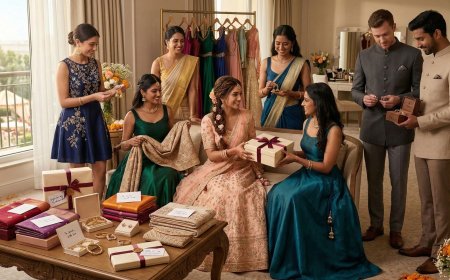
Some couples find that the most authentic expression of their values is a hybrid approach — charitable donation as the primary preference with a small curated gift list for guests who specifically want to give something physical.
The hybrid approach serves the guest who experiences genuine personal satisfaction from selecting and giving a specific object — who finds the charitable donation feels impersonal even when the cause is meaningful — while also serving the couple's preference for generosity directed toward causes rather than household accumulation.
The curated gift list for the hybrid approach should be intentionally short — five to ten items rather than the fifty-item physical registry — and should consist of items that are either specifically meaningful or specifically useful rather than generic registry staples.
The Cause as Part of the Wedding's Story
The charitable donation request, when it is handled well — when it is personal, warm, specific, and genuinely optional — does something that the physical gift registry cannot do: it makes the couple's values a visible part of the wedding's story.
The guest who learns about the organization the couple cares about, who makes a contribution to that organization in the couple's honor, who carries something of the cause home with them alongside their memory of the wedding — this guest has been given something in addition to the experience of the wedding itself. They have been given a specific piece of the couple's inner life — the specific thing that matters to them, that they believe in, that they want to be part of how their wedding is remembered.
The wedding that raises a hundred thousand rupees for an organization working in the wedding city. The wedding that funds a specific project at an organization one of the couple has volunteered with. The wedding whose guest community discovers a cause it would not otherwise have encountered and that some of those guests continue to support long after the wedding.
These are not small things. They are the specific ways in which a wedding can be both a celebration of the couple and a contribution to something beyond the couple — which is, for the couples who choose this path, the most meaningful gift of all.
NRIWedding.com — Expert guidance for Indian weddings planned across borders.
What's Your Reaction?
 Like
0
Like
0
 Dislike
0
Dislike
0
 Love
0
Love
0
 Funny
0
Funny
0
 Angry
0
Angry
0
 Sad
0
Sad
0
 Wow
0
Wow
0