







































Traditional Folk Performances by Region: The Complete NRI Wedding Planning Guide
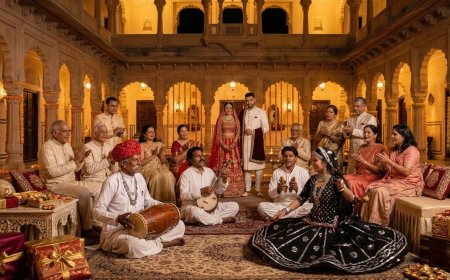
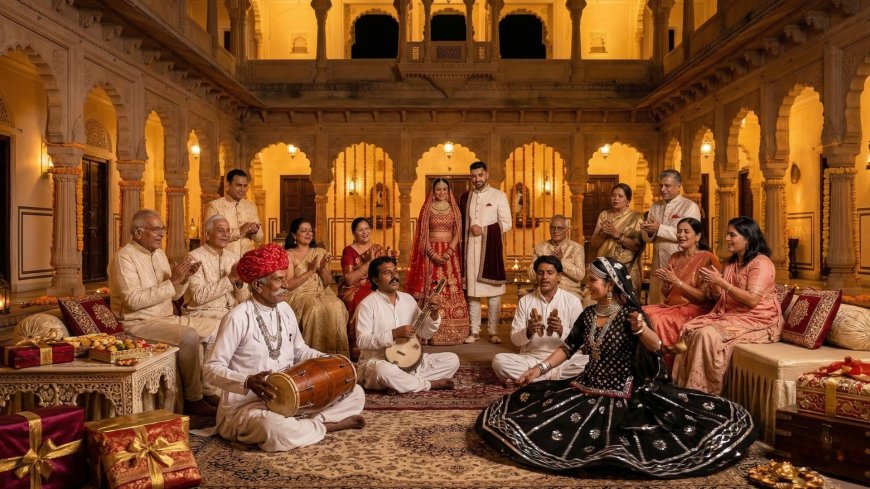
The wedding planner had suggested it three times. Three times the couple had smiled politely and returned to the conversation about the DJ and the lighting rig and the Bollywood medley. Then the groom's maternal uncle from a village outside Udaipur — who had been watching the DJ set with the patient incomprehension of someone attending a celebration in a language they do not speak — stood up at ten forty-five, found a dholak from the mehndi ceremony that had not been put away, sat at a table near the edge of the room, and began to play. The cousins began to sing. Within four minutes the professional DJ had lowered his volume. Within six minutes a semicircle of guests had formed. Within ten minutes the grandmother who had been sitting quietly for three hours was on her feet singing the words she had known since childhood, tears running down her face in the specific way of a person returned unexpectedly to something they thought they had left behind. The unplanned folk performance became the moment every guest mentioned when describing the wedding in the weeks that followed. This complete guide gives NRI couples the full framework for planning what that uncle did instinctively — covering why traditional folk performances deliver something no other entertainment form can including cultural authenticity, intergenerational recognition and genuine cross-cultural discovery, the regional principle that distinguishes meaningful from merely decorative performance, and comprehensive regional guides including Rajasthan with the Manganiyar and Langa hereditary musician traditions, Kalbelia dance recognised by UNESCO as Intangible Cultural Heritage, and authentic Ghoomar, Punjab with authentic bhangra and the participatory giddha women's tradition and the dhol as social engine, Gujarat with authentic garba in its devotional form and Tippani folk dance and Rabari community music, Tamil Nadu and South India with Bharatanatyam, Villupattu bow song tradition, Kolattam and Kerala's Kathakali and Theyyam, Bengal with the UNESCO-recognised Baul tradition and Rabindra Sangeet, Maharashtra with Lavani and Powada, Odisha with Odissi and the spectacular masked Chhau dance, sourcing authentic practitioners through state folk arts academies and cultural organisations rather than commercial wedding circuit performers, integration principles for placement, contextualisation and the participation invitation, and the five common mistakes including booking commercial folk-influenced performers rather than authentic tradition practitioners and honouring one regional tradition while overlooking another at a wedding representing multiple communities.

Traditional Folk Performances by Region: The Complete Guide for NRI Wedding Couples
The Performance Nobody Planned and Nobody Forgot
The wedding planner had suggested it three times.
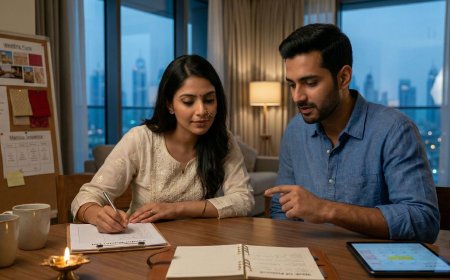
Three times the couple had smiled politely and returned to the conversation about the DJ and the lighting rig and the Bollywood medley that the live band had been asked to prepare. The folk performance suggestion had the specific quality of a recommendation that is heard and not absorbed — the way that the genuinely good advice sometimes lands when the person receiving it is too focused on what they already want to hear.
The folk performance happened anyway — not as a planned element of the sangeet programme but as the specific consequence of the groom's maternal uncle, a man from a village outside Udaipur who had been watching the DJ set with the patient incomprehension of someone attending a celebration in a language they do not speak, deciding at ten forty-five that he had been quiet long enough.
He stood up. He spoke briefly to the two cousins who had traveled with him from Rajasthan. He found, somewhere in the recesses of the wedding venue, a dholak that had been used for the mehndi ceremony two days earlier and had not been put away. He sat down at a table near the edge of the room. He began to play.
The cousins began to sing.
The song they sang was a traditional Rajasthani folk song — a vivah geet, one of the specific songs that have been sung at weddings in that region for generations, whose words describe the emotions of the wedding occasion in the specific, direct language of the oral tradition. Neither the bride nor the groom knew the song. The international guests did not understand the words. The older Rajasthani family members knew every line.
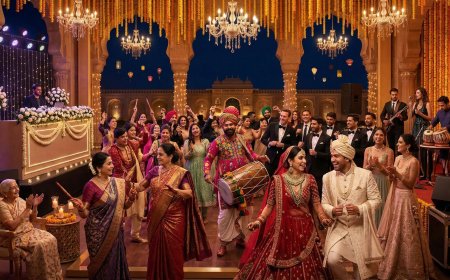
Within four minutes, the professional DJ had lowered his volume. Within six minutes, a semicircle of guests had formed around the uncle and the cousins. Within ten minutes, the grandmother who had been sitting quietly at her table for three hours was on her feet, singing the words she had known since childhood, tears running down her face in the specific way of a person who has been returned, unexpectedly, to something they thought they had left behind.
The professional DJ did not play again that night.
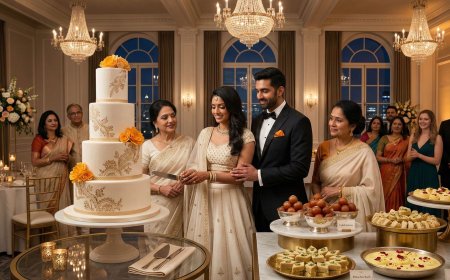
The unplanned folk performance that the wedding planner had suggested three times and the couple had gently declined became the moment that every guest mentioned when they described the wedding in the weeks that followed. Not the lighting rig. Not the Bollywood medley. The uncle from Udaipur, the cousins, the dholak found in a back room, and the song that the grandmother had known since she was seven years old.
This guide is about planning what that uncle did instinctively — building the traditional folk performance into the wedding programme with the intentionality that transforms a beautiful spontaneous moment into a beautiful designed one.
Why Traditional Folk Performances Belong at NRI Weddings
The Specific Value
The traditional folk performance at an NRI wedding delivers something that no other entertainment form delivers — not the celebrity Bollywood performer, not the professional DJ, not the choreographed sangeet dance. It delivers the specific cultural authenticity of the tradition itself: the music and movement that emerged from the specific community, the specific landscape, the specific human experiences of the region that the family calls home.
For the NRI couple — whose relationship to their regional heritage is often both deep and complicated, whose children may be growing up in London or Toronto or Sydney with limited access to the living culture of their grandparents' villages — the traditional folk performance is the specific moment when the heritage is not described or explained but experienced. Not presented as a museum exhibit but performed by practitioners whose relationship to the tradition is living rather than archival.
For the India-based guests from the relevant region, the folk performance is the moment of deepest recognition — the songs and movements they know from childhood, from family occasions, from the specific cultural landscape that shaped them. The grandmother who knows every word of the vivah geet is not an observer of this performance. She is a participant in a tradition she has carried her whole life.
For the international guests — the British colleagues, the Canadian friends, the Australian university classmates who have come to India for the first time — the folk performance is the most genuine cultural encounter the wedding offers. Not the Bollywood songs they have heard approximations of before, but the specific, regional, living tradition that is not available anywhere else and that no Spotify playlist has prepared them for.
For the couple — particularly the NRI couple navigating the specific tension between the tradition they came from and the culture they live in — the folk performance is the declaration that these things are not in tension. That the heritage and the contemporary identity can share the same stage, the same evening, the same celebration.
The Regional Principle
The folk performance at an NRI wedding should be specifically connected to the couple's regional heritage — not a generic "Indian folk performance" that could come from anywhere, but the specific tradition of the specific region that the family calls home.
The Rajasthani family's wedding should feature Rajasthani folk performance. The Punjabi family's wedding should have the Punjabi folk tradition represented. The Tamil family should hear the music of their specific regional tradition. The Gujarati family should experience the garba and dandiya in their authentic folk form rather than their Bollywood-influenced commercial version.
This specificity is not a constraint — it is the entire point. The generic Indian folk performance is decorative. The specific regional performance is meaningful. The difference is the difference between a postcard of India and a photograph of your grandmother's village.
The Regional Traditions: A Comprehensive Guide
Rajasthan: The Desert's Living Music
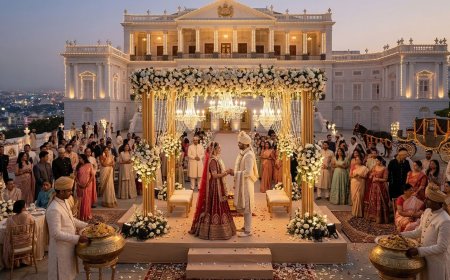
Rajasthan is one of the richest folk music traditions in India — and one of the most internationally known, partly because its specific sonic character and its visual drama have made it the subject of significant documentation and global interest. For NRI couples with Rajasthani heritage, and for destination weddings in Rajasthan's great wedding cities — Jaipur, Udaipur, Jodhpur, Jaisalmer — the folk performance tradition is both deeply personal and spectacularly appropriate to the context.
The Manganiyar and Langa traditions:
The Manganiyars and Langas are the hereditary musician communities of Rajasthan — families whose profession, passed from generation to generation, is the performance of the region's folk music at weddings, celebrations, and community occasions. Their instruments — the kamaicha (a bowed string instrument whose sound is unlike anything in the Western musical vocabulary), the morchang (a jaw harp), the khartal (wooden clappers), the dholak, the sarangi — produce the specific sonic landscape of Rajasthani folk music that is instantly recognisable as the sound of a place.
The Manganiyars and Langas perform the specific vivah geet — the wedding songs whose texts celebrate the specific emotions and rituals of the marriage occasion. These are not generic songs performed at a wedding — they are songs specifically composed for and about the wedding, whose words speak directly to the occasion in which they are being performed.
Sourcing: Manganiyar and Langa musicians are available in Jaipur, Jodhpur, Jaisalmer, and Barmer. The wedding planner in Rajasthan will have established relationships with specific groups. The organisations that document and support the tradition — the Rupayan Sansthan in Jodhpur, the various folk arts organisations in Jaipur — can provide referrals to reputable groups with performance experience at weddings.
The Kalbelia tradition:
The Kalbelia are a nomadic community of Rajasthan whose women perform a specific, spectacular dance — the Kalbelia dance — that UNESCO has recognised as an Intangible Cultural Heritage of Humanity. The Kalbelia dancer's costume — the black swirling skirt, the embroidered blouse, the silver jewellery — and the specific fluid, spinning movement of the dance, which mimics the movement of the serpent that the community has traditionally worked with, produce a visual performance that is among the most striking in Indian folk tradition.
The Kalbelia performance at a wedding is not background music — it is a centrepiece performance that demands and holds the full attention of the room. A group of three to five Kalbelia dancers with accompanying musicians performs for twenty to thirty minutes and produces a visual and sonic experience that no other entertainment form at the wedding will replicate.
Sourcing: Kalbelia groups are concentrated in the Jodhpur and Jaisalmer regions of Rajasthan. They are in significant demand for the destination wedding circuit and should be booked well in advance of the wedding — three to four months for peak season.
The Ghoomar dance:
Ghoomar — the traditional women's folk dance of Rajasthan, performed in a long swirling ghagra with a specific sequence of turning movements that causes the skirt to fan out in the characteristic silhouette — is the folk performance most associated with Rajasthani weddings in the popular imagination, partly due to its prominent placement in Bollywood films. The authentic ghoomar, performed by practitioners of the tradition rather than Bollywood-influenced commercial dancers, is a distinctly different and distinctly more beautiful experience than its commercial representation suggests.
Punjab: The Living Traditions of Bhangra and Giddha
Punjab's folk performance traditions — bhangra for men, giddha for women — are the most globally recognised Indian folk forms, partly because the Punjabi diaspora has carried them to every country in which it has settled and partly because bhangra's specific rhythmic energy has been absorbed into global music production in ways that have given it a presence far beyond its regional origin.
Bhangra in its authentic form:
The bhangra that appears at commercial Indian weddings — high-energy, dhol-driven, associated with party energy — is the commercial evolution of a tradition whose original form was a harvest celebration: men dancing in the fields at Baisakhi to celebrate the reaping of the crop. The authentic bhangra performance — with its specific sequence of movements, its specific costumes of colourful lungis and turbans, its specific dhol patterns — is both the ancestor of the commercial form and a distinctly more rooted experience.
The authentic bhangra group — a group of eight to twelve male dancers with a live dhol player — performs a sequence of traditional bhangra that moves through the specific movements of the tradition: the jhummar, the luddi, the julli, the kikli. The performance is participatory rather than merely spectacular — the tradition invites the audience to join, and the wedding bhangra performance that invites the guests onto the floor in the final section is the performance that produces the evening's most energetic collective moment.
Giddha — the women's tradition:
Giddha is the women's complement to bhangra — a circle dance performed to the accompaniment of boliyaan, the specific sung couplets that are the oral tradition's commentary on the social and emotional dimensions of women's lives. The boliyaan are often witty, sometimes sharp, always specific — they speak to the wedding occasion, to the relationships between the women present, to the emotions of the bride.
The giddha performance at a sangeet or a ladies' mehndi is not a professional performance in the same sense as a Manganiyar concert or a Kalbelia dance — it is a communal tradition that has always been performed by the women of the community rather than by specialists. The most authentic giddha moment at an NRI wedding is the one in which the older women of the Punjabi family begin the circle and the younger women join — not a hired performance but the living tradition performing itself.
The dhol as performance anchor:
The live dhol — the specific large double-headed drum that is the heartbeat of the Punjabi folk tradition — is the single folk performance element that most consistently transforms an NRI wedding's energy regardless of the other entertainment choices. A skilled dhol player entering the sangeet or reception floor produces an immediate, physical response in the guests — the specific combination of the drum's resonance and its cultural association with celebration that overrides the hesitation of even the most reluctant dancer.
The dhol player who circulates through the guests — moving to specific tables, playing personally for specific guests, creating one-on-one moments of musical connection — is not background entertainment. They are the specific social engine that produces the floor energy that the DJ set has to work hard to achieve.
Gujarat: The Ancient Devotional Forms
Gujarat's folk performance tradition is rooted in the devotional culture of the region — the garba, the dandiya raas, and the less commercially known forms that are the living expression of a tradition that predates Bollywood by many centuries.
Garba in its authentic form:
The garba that appears at commercial Indian weddings — and increasingly at global events that have encountered the tradition through the NRI diaspora — is the contemporary, Bollywood-influenced version of a tradition whose original form was a devotional circle dance performed around a clay pot containing a lamp, the garbo, that represented the divine feminine. The authentic garba — performed in the specific circular formation, with the specific hand movements and footwork of the regional tradition, to the specific folk melodies rather than the Bollywood remixes — is a profoundly different experience from its commercial descendant.
For the Gujarati NRI couple whose wedding includes a garba evening, the choice between the authentic folk form and the commercial Bollywood-influenced version is a specific decision about the character of the occasion. The authentic form, led by practitioners who know the specific songs and the specific movements of the tradition, produces a more intimate and more culturally resonant experience — and is more accessible to guests who are new to the tradition because its slower, more regular movement is easier to follow than the energetic commercial form.
Tippani folk dance:
Less internationally known than garba but specific to the Saurashtra region of Gujarat, the Tippani dance — in which women perform a sequence of movements involving decorated sticks struck against the ground — is a visually distinctive performance that most guests at an NRI wedding, including Gujarati guests from other regions, will be encountering for the first time. Its visual drama and its specific regional authenticity make it a memorable performance addition to the garba evening.
The folk music of the Rabari community:
The Rabari are a pastoral community of Gujarat whose folk music tradition — performed on the specific instruments of the community, with the specific melodic language of the Gujarati folk tradition — is distinct from the garba tradition and provides a different sonic register for the wedding programme. A Rabari folk music performance during the welcome phase of the reception or the mehndi ceremony creates a specific atmosphere of regional authenticity that the commercial DJ set cannot replicate.
Tamil Nadu and South India: Classical Roots and Folk Forms
South India's performance traditions span one of the world's most sophisticated classical arts — Bharatanatyam, Carnatic music, Kuchipudi — and a rich folk tradition that exists alongside and distinct from the classical forms. For the South Indian NRI couple, the performance choice is between the classical and the folk, each of which carries its own specific meaning and its own specific suitability for different moments of the wedding programme.
Bharatanatyam:
Bharatanatyam — the classical dance form of Tamil Nadu, one of India's eight classical dance forms — is not a folk performance in the sense of the other traditions in this guide. It is a classical art form requiring years of formal training and a sophisticated vocabulary of abhinaya (expressive mime), nritta (pure dance), and nritya (expressive dance). Its inclusion in an NRI wedding programme is a specific choice to represent the highest expression of the South Indian classical tradition rather than the folk tradition.
A Bharatanatyam performance at an NRI wedding — performed by a trained dancer, ideally with live Carnatic music accompaniment — is one of the most visually and emotionally sophisticated performance experiences available. Its appropriate placement is as a centrepiece performance during the reception or sangeet, presented with enough context — a brief introduction to what the audience will watch — for the non-South Indian and international guests to engage with it meaningfully.
Villupattu — the bow song tradition:
Villupattu is one of Tamil Nadu's most distinctive folk forms — a musical storytelling tradition in which performers use a large musical bow as both instrument and visual element, singing narrative songs whose subjects include mythological stories, social commentary, and — in the wedding context — songs specific to the marriage occasion. The villupattu performance is simultaneously musical, theatrical, and participatory — the performers engage the audience directly, invite responses, and create the specific atmosphere of the oral storytelling tradition.
Kolattam:
Kolattam — the Tamil and Telugu folk dance in which performers move in circles and formations while striking decorated sticks together — is the South Indian equivalent of dandiya raas and shares its visual dynamism and its participatory potential. The kolattam performance that invites guests to join the formation in the final section produces the same cross-cultural, intergenerational participation moment that the best folk performances consistently generate.
Kerala: Kathakali and Theyyam:
Kerala's folk performance traditions include two of India's most visually spectacular forms. Kathakali — the classical dance-drama of Kerala, with its elaborate costume and makeup — is technically a classical rather than folk form but is so deeply associated with the cultural identity of Kerala that it belongs in any discussion of regional performance for Kerala NRI couples. Theyyam — the ritual performance tradition of northern Kerala, in which performers embody specific deities through costume, movement, and trance — is not appropriate for all wedding contexts but for the Kerala NRI family that wishes to honour the most specific expression of their regional tradition, a modified performance inspired by the Theyyam aesthetic is among the most powerful cultural statements available.
Bengal: The Baul Tradition
The Baul musicians of Bengal and Bangladesh are among India's most distinctive folk performers — wandering mystic musicians whose songs express a philosophy of love, spiritual seeking, and the rejection of institutional religion in favour of direct experience. The Baul tradition has been recognised by UNESCO as an Intangible Cultural Heritage, and the Baul performers — with their distinctive ektara (one-stringed instrument), their dotara (a stringed instrument), and their characteristic flowing robes — perform a music that is unlike any other regional tradition in India.
The Baul performance at a Bengali NRI wedding is the specific expression of the Bengali cultural tradition's deepest philosophical and musical layer — the tradition that Rabindranath Tagore drew from in developing his own music, that has influenced Bengali art and literature for centuries. Its appropriate placement is as an intimate performance during the welcome or the quiet lounge segment of the reception — its meditative quality is not designed for the dance floor but for the specific, attentive listening that its depth rewards.
Rabindra Sangeet:
For Bengali NRI families, a live performance of Rabindra Sangeet — the songs composed by Rabindranath Tagore, which occupy a specific and central place in Bengali cultural identity — is the folk-adjacent performance choice that most directly addresses the cultural dimension of the occasion. A vocalist performing Rabindra Sangeet with minimal accompaniment during the welcome phase of the reception or the mehndi ceremony produces the specific emotional atmosphere that only the Bengali cultural tradition creates.
Maharashtra: Lavani and Powada
Maharashtra's folk performance tradition centres on two distinct forms — the Lavani, a dance and song tradition associated with celebration, romance, and the specific energy of the Tamasha theatre tradition, and the Powada, a ballad tradition whose subjects are historically the heroic deeds of Maratha warriors and which has been adapted to celebrate community occasions.
Lavani:
The Lavani — performed by dancers in the specific nine-yard Nauvari saree of the Maharashtra tradition, to the accompaniment of the dholki drum and harmonium — is one of Maharashtra's most distinctive and energetic folk forms. Its performance at a Maharashtrian NRI wedding is the specific celebration of the regional identity in its most vivid expression — colourful, energetic, emotionally direct, and deeply rooted in the specific performance tradition of the state.
The Lavani's association with the sensual and the celebratory makes it the most appropriate folk performance for the sangeet or reception evening — its energy is aligned with the celebratory context in a way that some of the more meditative folk traditions are not.
Odisha: The Odissi Tradition and Chhau Dance
Odisha's performance heritage includes Odissi — one of India's classical dance forms, distinguished by its specific tribhanga posture and its lyrical, sculptural quality — and the Chhau dance tradition, which exists in three regional variants (Seraikella, Purulia, and Mayurbhanj) and represents one of India's most spectacular martial and folk performance forms.
Chhau dance:
The Purulia Chhau — performed in elaborate masks representing deities, demons, animals, and mythological characters — is among India's most visually dramatic folk performances. Its subjects are drawn from the Ramayana, the Mahabharata, and regional mythology, and its combination of martial movement, acrobatic technique, and spectacular costume produces a performance that the majority of wedding guests, including India-based guests from other regions, will be encountering for the first time.
For the Odia NRI couple — and for any NRI wedding seeking a folk performance of exceptional visual impact — the Chhau dance is the option that consistently produces the most sustained audience attention and the most spontaneous post-performance conversation.
Practical Guidance: Booking and Integrating Folk Performances
Finding Authentic Performers
The sourcing of authentic folk performers — as opposed to the commercial performers who offer a folk-influenced show designed for the wedding circuit — requires specific channels that are different from the standard wedding vendor discovery process.
State folk arts academies:
Every Indian state has a government-supported folk arts academy or cultural organisation that documents, supports, and can connect to practitioners of the state's folk traditions. These organisations — the Rajasthan Sangeet Natak Akademi, the Sangeet Natak Akademi in Delhi with regional chapters, the various state cultural departments — are the most reliable source of referrals to authentic practitioners rather than commercial performers.
Cultural organisations and NGOs:
The organisations that work specifically to preserve and support specific folk traditions — the Rupayan Sansthan for Rajasthani folk music, the various Baul support organisations in Bengal, the Kalbelia community organisations in Rajasthan — have direct relationships with the practitioners and can facilitate bookings that go directly to the performers rather than through commercial intermediaries.
Wedding planners with regional expertise:
The wedding planner who specialises in destination weddings in a specific region — Rajasthan, Kerala, Goa — will have established relationships with the folk performers of that region and will know which groups are authentic practitioners and which are commercial performers using folk aesthetics without folk substance.
The Integration Principles
Placement in the programme:
The folk performance should be placed in the programme at the moment when its specific quality most serves the evening's needs — not dropped in as an interlude between DJ sets but designed as a specific chapter of the evening with its own introduction, its own duration, and its own transition into what follows.
The meditative traditions — Baul music, Carnatic classical, Rabindra Sangeet — belong in the welcome phase or the quiet lounge, where their specific quality of attentive listening is possible. The energetic traditions — Kalbelia dance, bhangra, Lavani — belong in the peak phase, where their energy contributes to and amplifies the evening's highest point. The participatory traditions — giddha, kolattam, garba in authentic form — belong at the moment when the guests are ready to move from observation to participation.
The context introduction:
Every folk performance at an NRI wedding — particularly at a wedding with significant international guest representation — should be introduced with a brief, warm contextualisation that tells the audience what they are about to watch and why it is significant. Not a lecture — thirty to sixty seconds — that provides the specific information that transforms watching into understanding.
The introduction should be delivered by someone who knows the tradition personally — the family member whose childhood was accompanied by this music, the couple whose heritage this performance represents. The personal introduction is more powerful than the professional MC's scripted one.
The participation invitation:
The best folk performances at NRI weddings are the ones that end with a specific invitation to the guests to join — to enter the garba circle, to try the dhol, to clap along to the kolattam. The performance that ends with applause and resumes the DJ set has been entertainment. The performance that ends with the grandmother teaching the British colleague the ghoomar step has been an experience.
Common Mistakes NRI Couples Make With Folk Performance Booking
The first mistake is booking commercial folk-influenced performers rather than authentic tradition practitioners. The wedding circuit has produced a category of performer who offers a "folk performance" that uses the costumes and some of the movements of the tradition without the musical and cultural depth that makes the authentic performance meaningful. The distinction between authentic and commercial is not visible in promotional photographs but is immediately apparent in performance. Ask for references from weddings where the couple attended the performance — not watched a video of it — before booking.
The second mistake is placing the folk performance as an interlude between DJ sets without contextualising it. The folk performance that appears without introduction between two DJ sets, in the middle of the peak phase, without the transition that allows the audience to shift registers, is a performance that the audience does not know how to receive. The programme design should create the specific conditions — the introduction, the transition from high-energy entertainment, the permission to be still and attentive — that the folk performance needs to land with its full impact.
The third mistake is underestimating the technical requirements. Folk performers have specific performance requirements — space, acoustic environment, stage or floor configuration — that differ from the DJ's requirements and that the venue must be able to accommodate. The Kalbelia dancer needs a clear circular floor space. The Manganiyar ensemble needs an acoustic environment that does not swallow their instruments in amplified sound. The dhol player needs mobility through the crowd. These requirements should be confirmed with the venue and the performer before booking.
The fourth mistake is not including family members in the folk performance moment. The uncle from Udaipur who knew the vivah geet, the grandmother from Chennai who remembered every word of the Tamil wedding song — these family members are not an audience for the folk performance. They are the living tradition itself. The programme that specifically creates space for the family members who carry this knowledge to participate — to join the circle, to add their voice, to teach the younger generation in public — produces the most powerful folk performance moment that the evening can contain.
The fifth mistake is booking one folk tradition for a wedding that represents multiple regional communities. The Rajasthani folk performance at a wedding where the bride's family is from Tamil Nadu and the groom's family is from Rajasthan honours one tradition and overlooks the other. The wedding that finds a way to represent both — even briefly, even simply — is the wedding that communicates to both families that their heritage is equally present in the celebration.
The Song That Was Always There
The uncle from Udaipur did not plan his performance. He did not have a technical rider or a contract or a performance fee. He had a dholak and two cousins and a song that his community had been singing at weddings for longer than anyone in the room could calculate.
What he gave the wedding was not an entertainment addition. It was a reminder — the specific, embodied reminder that the celebration that was happening in the hotel's grand ballroom, with its lighting rig and its professional DJ and its carefully choreographed programme, was also a wedding in the oldest sense: the gathering of a community around two people it loves, marked with the specific songs that the community has always used to mark such occasions.
The traditional folk performance at an NRI wedding does not compete with the contemporary entertainment programme. It completes it. It provides the layer that the DJ set cannot — the specific depth of the tradition, the specific recognition in the grandmother's face, the specific discovery in the international guest's expression, the specific moment when the living heritage performs itself in the room where the future is being made.
Find the tradition that is yours. Book the practitioners who carry it with their whole lives rather than their performance schedules. Place it in the programme with the intention it deserves. Introduce it with the personal knowledge that only your family has.
And make space for the uncle who knows the song.
He has been waiting his whole life to sing it at your wedding.
Published by NRIWedding.com — The Premium Global Platform for Non-Resident Indians Planning Indian Weddings From Abroad.
What's Your Reaction?
 Like
0
Like
0
 Dislike
0
Dislike
0
 Love
0
Love
0
 Funny
0
Funny
0
 Angry
0
Angry
0
 Sad
0
Sad
0
 Wow
0
Wow
0