






















































Destination Wedding in Gulmarg: A Snow Wedding in the Meadow of Flowers — Kashmir's Complete NRI Planning Guide
Planning a snow wedding in Gulmarg, Kashmir from abroad? This complete NRI guide covers everything the globally-located Indian couple needs — from the historic Nedous Hotel and open-air snow meadow ceremonies to Uttarakhand Forest Department protocols, altitude acclimatization planning, Srinagar guest transportation logistics, and the weather contingency framework that every Gulmarg winter wedding demands. Learn how to integrate the Wazwan feast, Kashmiri Sufiana Kalam music, and Aari embroidery decor into your wedding programme, manage J&K administrative requirements from overseas, and design two complete parallel wedding programmes for maximum weather resilience. This is the specific, expert, non-generic guidance that a Gulmarg destination wedding requires.


Destination Wedding in Gulmarg, Jammu & Kashmir — A Snow Wedding in the Meadow of Flowers: Kashmir's Complete NRI Planning Guide
The message arrived at two-seventeen in the afternoon on a Friday in November, London time, which meant it was six-forty-seven in the evening in Srinagar, and Aisha's mother had clearly been sitting with her phone for some time before she sent it.
It was not a venue link. It was not a shortlist. It was a single photograph, taken on a phone camera with the slightly overexposed quality of a picture taken in snow, of a meadow so wide and so white and so absolutely still that it looked less like a place that existed on earth than like a place that existed in the particular quality of silence that comes just after heavy snowfall, when the world has been remade and has not yet been disturbed.
In the foreground of the photograph, someone — Aisha's mother, she suspected, from the angle — had placed a single red rose in the snow. Just the one. No context, no explanation. The stem was pushed into the white at a slight angle and the flower was very red against all that white and the sky above it was the specific shade of pale grey that Kashmir produces in winter, the colour of old silk, and the mountains behind the meadow were there in the middle distance like a thought you couldn't quite finish.
Aisha looked at the photograph for a long time. She was sitting at her desk in the Canary Wharf office where she had been working for six years, and the glass walls around her showed the Thames going grey in the November afternoon, and the contrast between what was outside her window and what was on her phone was so absolute that she felt something in her chest that she did not immediately have a word for.
She forwarded it to Kabir in Vancouver. He was in a meeting. He texted back eleven minutes later, a single line: Where is this.
She typed back: Gulmarg. Kashmir. 2,650 metres. It snows from December through February. There is a gondola. There are no cars on the meadow. Just horses and snow and those mountains.
A longer pause this time. She could see the three dots appearing and disappearing twice before his message came through.
My grandmother is from Sopore, he wrote. She has not been back in thirty years. She said once that the thing she missed most was the snow. That nowhere else had snow like that.
Aisha looked at the photograph again. The red rose. The white meadow. The mountains that looked like a thought you couldn't finish.
Then we go back, she typed. We go back for her.
What neither of them understood in that moment — what the photograph did not and could not show — was that Gulmarg is not merely a beautiful location. It is one of the most logistically specific, most operationally demanding, most politically and geographically particular destination wedding locations available to the NRI couple anywhere in India. The beauty is real. It is also the beginning of a planning challenge that requires more specific preparation, more honest assessment, and more contingency thinking than almost any other destination on the subcontinent.
The snow is real. The mountains are real. The gondola, the horses, the particular quality of Kashmiri winter light — all of it is real, and all of it is exactly as extraordinary as it looks.
But getting eighty guests to a snow meadow at twenty-six hundred metres, in a region with specific security protocols, specific infrastructure constraints, and weather that answers to no wedding coordinator's schedule — that requires a different kind of planning than the photograph suggests.
This guide is for that couple — the ones who saw the snow and decided to go back, and who now need to understand, completely and without omission, what going back actually requires.
Why Gulmarg Is Categorically Different From Every Other Indian Wedding Destination
There is a version of the destination wedding conversation in which Gulmarg is described as "the Kashmir option" — a scenic, snow-covered alternative to the hill station weddings of Uttarakhand or Himachal Pradesh, different in geography but broadly similar in planning complexity. This version of the conversation is not merely incomplete. It is misleading in ways that produce specific, avoidable planning failures for the NRI couples who accept it.
Gulmarg is different from every other Indian destination wedding location in five ways that are not aesthetic but structural, and understanding those five differences is the first act of serious preparation.
The first difference is altitude. At 2,650 metres above sea level, Gulmarg sits significantly higher than Mussoorie, higher than Shimla, higher than Coorg or Ooty. This altitude produces genuine physiological effects in guests arriving from sea-level cities — headaches, fatigue, breathlessness, disturbed sleep — that must be accounted for in the programme design. The wedding that schedules a four-hour baraat procession through snow on the first day of guest arrival, before anyone has had twenty-four hours to acclimatize, is designing toward exhaustion and illness rather than celebration.
The second difference is the security and administrative context. Jammu and Kashmir's status as a Union Territory, administered directly by the central government since August 2019, means that the administrative, security, and permitting framework governing events in Gulmarg is different from that of any other Indian state. This is not a reason to avoid Gulmarg. It is a reason to plan with specific awareness of the protocols involved — the documentation requirements for group travel, the coordination with local administration that large events require, and the security presence that is a feature of the landscape rather than an anomaly within it.
The third difference is weather unpredictability at an order of magnitude beyond what other hill station destinations produce. Gulmarg's winter weather — the primary wedding season — is genuinely, operationally unpredictable in ways that are categorically different from the morning mist of Mussoorie or the occasional shower of a Coorg monsoon shoulder. A snowstorm in Gulmarg can close the road from Tangmarg, the nearest town at lower altitude, for six to thirty-six hours. A heavy snowfall the night before an outdoor ceremony can transform the event space in ways that require complete replanning by dawn. The weather contingency at Gulmarg is not a backup option. It is the primary planning framework, and the outdoor ceremony is the contingency.
The fourth difference is infrastructure scarcity. Gulmarg has one significant hotel, the historic Nedous Hotel, and a small number of smaller properties whose room inventory, when totalled, produces a guest accommodation capacity that is fixed, limited, and fully committed on peak winter dates months in advance. The NRI couple who decides on a Gulmarg wedding after their preferred dates are already sold out is not in a position to negotiate — they are in a position to either change their dates or change their destination.
The fifth difference is the cultural and emotional weight of Kashmir for the NRI community specifically. For many NRI families — Kashmiri Pandit families whose ancestors left during the migrations of the 1990s, Muslim families from the valley who carry the landscape in their personal histories, Punjabi families for whom Kashmir is the place of honeymoons and holidays now complicated by decades of distance — a Gulmarg wedding is not merely a scenic choice. It is a return, a reclamation, an act of personal and familial significance that goes beyond the logistics of any single event. This weight is beautiful and real, and it deserves to be planned for with the same seriousness as the altitude, the weather, and the accommodation.
The Venue Landscape — What Gulmarg Actually Offers
The Nedous Hotel — The Historic Anchor
The Nedous Hotel is the single most important venue consideration for any Gulmarg destination wedding, and it must be understood both for what it is and for what it is not. Established in the colonial era and operating continuously through the decades of Gulmarg's transformation from British hill resort to Indian ski destination, Nedous is a genuine heritage property with the kind of institutional presence that cannot be manufactured by a new resort regardless of its investment in aesthetics.
What Nedous offers the wedding couple is atmospheric authenticity, a central location on the Gulmarg meadow, and the operational experience of a property that has been managing events in this specific environment for generations. What it cannot offer is scale — the property's room inventory and event capacity are limited in ways that define the maximum guest count for a Nedous-centred wedding programme. The couple who needs four hundred guests in residence needs a different solution. The couple who can genuinely design a wedding for one hundred to one hundred and twenty guests, with accommodation in the property and nearby lodge overflow, will find Nedous to be an extraordinary venue.
The Ski Resort Properties
A second tier of accommodation exists in the form of the ski resort hotels that have been developed in Gulmarg over the last two decades to service the winter sports tourism that the destination's altitude and snowfall attract. These properties are modern, operationally capable, and able to accommodate larger groups. They are not heritage in the Nedous sense, and they are not specifically designed for the kind of intimate, atmospheric wedding that the Gulmarg landscape most naturally produces. They are, however, the practical solution for couples whose guest count exceeds what the meadow's boutique properties can accommodate.
The Meadow Ceremony — The Gulmarg Wedding's Defining Possibility
The ceremony that no other Indian destination can offer — the one that makes Gulmarg genuinely unique — is the open-air snow meadow ceremony. The Gulmarg bowl, the wide high-altitude meadow that gives the destination its Urdu name meaning Meadow of Flowers, is covered in two to four feet of snow from December through February, and a ceremony staged on this meadow — with the Apharwat range rising above, the pine forest bordering the white expanse, and the specific luminous quality of snow light in Kashmiri winter — is a visual and emotional experience without parallel in the Indian wedding landscape.
Staging this ceremony requires preparation that goes significantly beyond what an indoor or hotel-lawn ceremony requires. The snow must be compacted and levelled for the ceremony area. The mandap structure must be engineered to stand in snow and wind. The heating arrangements for guests — standing in snow at altitude for sixty to ninety minutes — must be designed rather than assumed. The photographer and cinematographer must be specifically experienced in snow conditions, because the light reflecting off snow is flattering in a specific way that overexposes against an unprepared camera setting. And the weather on the morning of the ceremony must cooperate, which it may not, and for which there must be a complete, fully designed alternative.
The snow ceremony is worth every complexity it requires. It is also the element of the Gulmarg wedding that demands the most contingency planning of any single element of any Indian destination wedding.
The Seasonal Framework — When Gulmarg Works and When It Does Not
December to February: The Snow Season
The winter window from December through February is the primary Gulmarg wedding season for the obvious reason that it is the period of guaranteed snow — the visual identity of the Gulmarg wedding depends on the white meadow, the snow-laden pines, and the Himalayan backdrop that winter produces. December brings the first serious snowfall and the beginning of the ski season. January is the peak of winter — the coldest, the snowiest, the most atmospheric, and the most logistically demanding. February begins the gradual warming, with snow still present but the worst of the cold beginning to ease.
The temperatures in this period range from minus twelve to plus four degrees Celsius, with significant variation between the warmth of a sunny midday and the genuine cold of early morning and evening. Guest attire planning is not a peripheral consideration at a Gulmarg winter wedding — it is a programme element in its own right. Guests in wedding finery standing in snow at minus six degrees Celsius without adequate thermal layering will be cold, uncomfortable, and focused on their discomfort rather than the ceremony. The couple must provide guidance — specific, detailed, non-optional guidance — about what guests should wear, and should arrange for additional shawls, kangris, and warmth provisions to be available at every outdoor function.
April to June: The Spring Alternative
The spring season from April through June offers a genuinely different Gulmarg — the meadow covered not in snow but in the wildflowers that give it its name, the temperature warm and clear, the landscape lush and green. This is the Gulmarg of the Bollywood films, the green meadow with the mountain backdrop, and it is beautiful in a way that is entirely different from the winter experience. A spring Gulmarg wedding lacks the snow, which for many NRI couples is the specific defining element they want. But it offers accessibility, milder conditions, easier logistics, and the wildflower meadow, which is itself an extraordinary backdrop.
The Monsoon Closure
July and August bring the monsoon even to this altitude, with cloud cover, rain, and reduced visibility that render both the outdoor wedding programme and the mountain views problematic. September is the transition month. Neither July nor August is a practical Gulmarg wedding season.
NRI-Specific Logistics — Planning Kashmir From Abroad
Documentation and Administrative Preparation
The NRI couple planning a Gulmarg wedding must understand that the administrative requirements for a large group event in Jammu and Kashmir are more involved than for events in other Indian states, and must begin the administrative preparation earlier than they would for any comparable destination.
Group travel to Gulmarg requires coordination with local administration for events above a certain size, and the specific requirements — which vary based on the nature of the event, the number of guests, and the timing — should be researched and confirmed with a Gulmarg-experienced coordinator before any venue bookings are made. The coordinator's existing relationship with local administration is not merely convenient. It is functionally necessary for the smooth operation of a wedding programme at this destination.
The security presence in Gulmarg — the CRPF posts, the army installations visible on the approach roads, the checkpoints on the Srinagar-Gulmarg highway — is a feature of the landscape that guests should be briefed about in advance. For many NRI guests, particularly those in the second or third generation who have no direct experience of Kashmir, the visible security infrastructure can be disorienting without prior context. A simple, honest briefing note — part of the guest welcome materials — that explains what guests will see, what it means, and how to interact with checkpoint personnel appropriately will prevent the disorientation from becoming anxiety.
The Srinagar Gateway
All travel to Gulmarg passes through Srinagar, which is served by Srinagar International Airport with direct connections from Delhi, Mumbai, and several other major Indian cities. The road from Srinagar to Gulmarg via Tangmarg is approximately fifty-two kilometres, a journey of approximately ninety minutes to two hours depending on conditions — a distance that is entirely straightforward in clear weather and significantly more complex in heavy snowfall.
For NRI guests arriving on international flights, the journey is: international connection to Delhi or Mumbai, domestic connection to Srinagar, road transfer to Tangmarg, and then the final ascent to Gulmarg — a total journey time from any European or North American city of twenty-four to thirty-six hours. This journey must be designed for, not merely noted. Guests arriving after a thirty-hour journey and immediately ascending to twenty-six hundred metres in cold weather are not in a condition to attend a function that evening. The first day after arrival must be programmed as a rest and acclimatization day, and the wedding programme must be designed with this reality as its structural foundation.
Managing the Weather Variable — The Only Honest Approach
The Gulmarg weather is the planning element that no NRI couple based abroad can control and that every NRI couple must plan for with complete honesty. The approach that works — the only approach that produces a Gulmarg wedding that functions regardless of what the weather decides to do — is to design two complete, fully produced wedding programmes simultaneously: the outdoor snow programme, which is the first choice, and the indoor heritage programme, which is not a backup but a parallel production of equal quality and equal ambition.
The indoor alternative at Gulmarg, staged within the Nedous ballroom or within a purpose-configured tent structure with appropriate heating and lighting, can be extraordinarily beautiful. The Kashmiri textile tradition — the pashmina, the sozni embroidery, the kani weave — offers a decor language of extraordinary richness that works powerfully in an intimate indoor setting. The indoor Gulmarg wedding that has been designed with full intention, rather than assembled under pressure when the weather changes, can be as memorable as the snow ceremony — different, but not lesser.
The couple who arrives at Gulmarg with two complete programmes, both fully produced, both fully budgeted, is the couple whose wedding will be extraordinary regardless of what the sky decides to do.
The NRI Wedding Planning Master Reference Table
| Planning Parameter | Gulmarg-Specific Detail | NRI Action Required | Recommended Timeline |
|---|---|---|---|
| Venue Categories | Nedous Hotel heritage property (80–120 guests), ski resort hotels (150–250 guests), meadow ceremony with lodge accommodation | Confirm venue's event permissions and administrative clearances; finalize guest count before venue shortlisting | 16–20 months before wedding |
| Best Wedding Season | December to February (snow season, primary); April to June (spring meadow, secondary); avoid July–August (monsoon) | Book peak winter dates 18–20 months ahead; confirm snow conditions and road access protocols with venue | 18–20 months for peak dates |
| Administrative Requirements | Jammu and Kashmir Union Territory protocols; group event coordination with local administration required above certain guest count | Hire coordinator with active J&K administrative relationships; begin permit and NOC process minimum 10 months before wedding | 10–12 months before wedding |
| Altitude Management | 2,650 metres; genuine acclimatization required; guests from sea-level cities need 24–48 hours before strenuous programme | Design Day 1 as rest and acclimatization; brief guests on altitude sickness symptoms; have medical support available | Built into programme design |
| Snow Ceremony Requirements | Meadow ceremony requires compacted snow platform, wind-engineered mandap, guest heating provisions, snow-experienced photographer | Commission structural engineer assessment of snow ceremony setup; brief photographer on snow light conditions; design full indoor alternative simultaneously | 8–10 months before wedding |
| Weather Contingency | Snowstorm can close Tangmarg road 6–36 hours; heavy overnight snowfall transforms event space by dawn | Design two complete parallel programmes: outdoor snow ceremony and indoor heritage ceremony, both fully budgeted and produced | Built into initial planning |
| Guest Attire Brief | Temperatures minus 12 to plus 4 degrees; guests in wedding finery need thermal layering; outdoor evening functions require serious warmth provision | Prepare detailed attire guidance for all guests; arrange additional shawls, kangris, and warmth provisions at every outdoor function | 4–6 months before wedding |
| Guest Transportation | All travel via Srinagar; Srinagar-Gulmarg road 52 km, 90–120 minutes; no large coaches on upper Gulmarg approach | Coordinate Srinagar airport pickups; arrange convoy of smaller vehicles; brief guests on checkpoint protocols | 6–8 months before wedding |
| Accommodation Scarcity | Limited total room inventory in Gulmarg; Nedous plus ski resort overflow essential; fully committed on peak dates months in advance | Block accommodation at venue and overflow properties immediately upon venue confirmation; do not delay | 14–16 months before wedding |
| Primary Vendor Base | Specialist wedding vendors from Srinagar; photography from Delhi for higher quality ceiling; Kashmiri artisan vendors for decor and textiles | Source Srinagar-based coordinator with Gulmarg event experience; use Kashmiri textile and craft vendors for authentic decor language | 10–12 months before wedding |
| Kashmiri Cultural Integration | Wazwan feast, Kashmiri music (Sufiana Kalam, Chakri), Kashmiri Pandit or Muslim ceremony traditions, Aari embroidery decor | Incorporate Wazwan as primary wedding feast; engage Sufiana Kalam ensemble for mehendi or pre-wedding music; source Kashmiri craft elements | 8–10 months before wedding |
| Photography Conditions | Snow light overexposes against unprepared settings; gondola ride offers extraordinary shoot opportunity; blue hour on white meadow exceptional | Brief photographer specifically on snow exposure and Kashmiri winter light; schedule gondola shoot as programme element; book gondola access in advance | 6–8 months before wedding |
| Legal and Payments | Indian Contract Act 1872; FEMA 1999 for NRI payments; J&K-specific property and event regulations may apply | Use NRO/NRE account; require full scope and cancellation clauses in all contracts; verify vendor GST registration | Before first vendor payment |
| Security Briefing for Guests | Visible security infrastructure on approach roads and in Gulmarg; checkpoints standard; guests need advance context | Include honest, calm security briefing in guest welcome materials; advise guests on checkpoint interaction protocol | 4–6 months before wedding |
| Communication Protocol | IST gap: UK +4.5 hrs, US East +9.5 hrs, Australia East −5.5 hrs; Gulmarg cellular connectivity variable in heavy snow | Schedule fixed weekly coordinator call; test property connectivity on reconnaissance visit; establish backup communication plan | From first vendor engagement |
Common Mistakes NRI Couples Make With Gulmarg Destination Weddings
The first and most consequential mistake is treating the outdoor snow ceremony as the plan rather than as the preferred option within a fully designed contingency framework. Gulmarg's weather in peak wedding season is not merely variable — it is operationally decisive in ways that no coordinator, no venue, and no production budget can override. The couple who has invested their entire decor vision, their entire programme structure, and their entire emotional anticipation in the outdoor snow ceremony without building an indoor alternative of equal quality is not planning a Gulmarg wedding. They are planning a gamble. The weather wins that gamble more often than the couple does, and the wedding that is forced indoors at the last moment into a space that has not been designed, lit, or decorated with intention will feel like a failure even if it is logistically functional. The indoor programme must be designed first, before it is needed, by a team that treats it as a first-choice option rather than a fallback.
The second mistake is underestimating the cumulative physical toll that the altitude, the cold, and the journey place on guests — particularly older guests — and programming accordingly. The NRI wedding guest list almost always includes family members in their sixties, seventies, and eighties for whom a thirty-hour journey followed by an ascent to twenty-six hundred metres in sub-zero temperatures is a genuine physical challenge. The couple who programmes a full function on the first evening of arrival, before any guest has acclimatized, will find that the energy in the room is flat, that older guests are visibly exhausted, and that the atmosphere they have worked months to create is undermined by the simple biology of altitude and fatigue. The first day must be a rest day. This is not a scheduling preference. It is a medical recommendation.
The third mistake is choosing a Gulmarg wedding primarily for its visual impact — the photographs, the video, the Instagram moment — without genuinely reckoning with whether the location's specific conditions are right for their guest profile and their family dynamics. A Gulmarg winter wedding is extraordinary for the guests who are physically capable of it, emotionally open to it, and genuinely prepared for the cold, the altitude, and the remoteness. It is a different experience for the elderly grandmother with respiratory difficulty, the guest with a mobility limitation that makes snow navigation hazardous, and the family member who finds the security infrastructure distressing rather than contextual. The couple must know their guest list — really know it — before committing to a location whose demands are as specific as Gulmarg's.
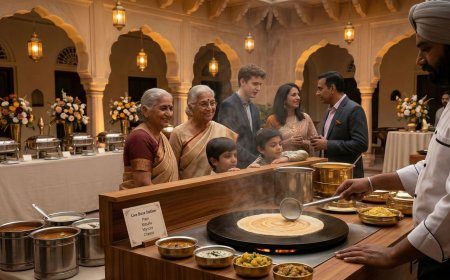
The fourth mistake is neglecting the Kashmiri cultural and culinary dimension of the wedding in favour of a generic North Indian wedding programme. The Wazwan — the traditional Kashmiri multi-course feast, with its rogan josh, rista, gushtaba, and tabak maaz, served in the specific ceremonial manner of Kashmiri hospitality — is one of the great culinary traditions of the subcontinent, and a Gulmarg wedding that serves a standard North Indian wedding menu when it could be serving a Wazwan is a Gulmarg wedding that has failed to understand where it is. The Sufiana Kalam musical tradition, the Chakri folk form, the Kashmiri artisan crafts that can be woven into decor and gifting — all of these represent a cultural richness that belongs specifically to this place and that no other destination can offer. Using them is not a token gesture toward authenticity. It is the decision to let the wedding belong to where it is.
The fifth mistake is inadequate guest communication about the security and administrative context of the destination. For NRI guests arriving from the United Kingdom, Canada, the United States, and Australia — many of whom have been raised in contexts where the visible presence of military and paramilitary security forces is unusual or alarming — the checkpoints on the Srinagar-Gulmarg road and the security installations visible from the highway can be genuinely disorienting if they arrive without context. A wedding welcome letter that addresses this directly, honestly, and calmly — explaining what guests will see, why it is there, and what the current ground reality is — is not an admission of a problem. It is an act of hospitality, and it is one of the specific, non-generic pieces of preparation that distinguishes an NRI couple who has thought carefully about their destination from one who has simply booked it.
The Aesthetic Language of a Gulmarg Wedding
The visual vocabulary of a Gulmarg wedding begins with snow and the specific quality of light that snow produces — the luminosity, the way colour carries against white, the way the landscape becomes a monochrome canvas on which every intentional element of colour becomes an act of deliberate contrast.
Against this canvas, the colours of Kashmiri craft tradition carry with extraordinary force. The deep crimson and forest green of the sozni-embroidered shawl. The burnt orange and indigo of the kani weave. The saffron that is Kashmir's own — not the generic marigold saffron of North Indian wedding decor but the specific, precious, geographically denominated saffron of the Pampore fields that has been woven into Kashmiri culture for centuries. The couple whose colour palette draws from these specific references — whose decor language is Kashmiri rather than generically Indian — is making a wedding that knows exactly where it is and is proud of that knowledge.
The Aari embroidery of the Kashmir Valley, traditionally used for ceremonial textiles and table coverings, offers a design motif — the chinar leaf, the paisley derived from it, the specific floral forms of Kashmiri garden iconography — that can be used across invitation design, mandap decoration, gifting, and table design to create a visual coherence that is simultaneously deeply traditional and genuinely distinctive. No other Indian destination offers this specific design language, and the NRI couple who uses it is doing something that cannot be replicated at any other location.
The gondola. The gondola must be mentioned, because it is the element that distinguishes Gulmarg from every other winter wedding destination on earth. The Gulmarg Gondola — one of the highest cable cars in the world, ascending from Gulmarg to Kongdori and then to Apharwat Peak at approximately 4,200 metres — offers a pre-wedding shoot opportunity that is simply without equivalent. The couple photographed at altitude, with the Himalayan panorama extending in every direction, in wedding attire that catches the wind and the light simultaneously — this is not a standard wedding photograph. It is a document of something that happened at the edge of the possible, and it will be the photograph that people look at for the rest of their lives.
Resolution
They were married on a Saturday in January, in the late morning, when the storm that had come the night before had passed and left the meadow three inches deeper in fresh snow and the sky had gone the specific blue that Kashmiri winter produces after a storm — not the soft blue of a clear summer sky but a hard, saturated, almost metallic blue, the colour of something that has been tested and has come through.
The outdoor ceremony happened. The coordinator had been on the phone at five-thirty in the morning to confirm the road was clear and the snow was compacted and the mandap had survived the storm with only minor adjustments required and yes, the mountains were visible, all of them, from the Apharwat ridge to the far white distances of the greater Himalaya.
Kabir's grandmother had not been back to Kashmir in thirty-one years. She had come from her home in Amritsar with a specific, private intention that she had not shared with anyone in the family: she wanted to see the snow again before she was too old to travel. She had said this to no one because she had not wanted the weight of her longing to become someone else's obligation.
She sat at the front of the ceremony, wrapped in a pashmina that Aisha had sourced from a weaver in Srinagar, and she watched her grandson be married in the snow, with the mountains behind him and the sky that specific hard blue above, and at some point in the middle of the ceremony — Aisha saw it from across the mandap — she reached out and placed one hand flat in the snow beside her chair, the way you touch something to confirm it is real.
The snow was real. The mountains were real. The thirty-one years were real too, but they were behind her now, and the meadow was white and new and the ceremony was beginning.
Book earlier than you think you need to — Gulmarg's accommodation fills before any other Indian destination. Design the indoor programme with the same intention as the outdoor one. Brief your guests honestly about the cold, the altitude, and the administrative context. Let the Wazwan be the feast. Take the gondola.
There is nowhere else in India where a wedding can happen at the edge of the world, in the snow, with the Himalayas watching. Plan with the precision the place demands, and it will give you something that no other location on earth can match.
Published by NRIWedding.com — The Premium Global Platform for Non-Resident Indians Planning Indian Weddings From Abroad.
What's Your Reaction?
 Like
0
Like
0
 Dislike
0
Dislike
0
 Love
0
Love
0
 Funny
0
Funny
0
 Angry
0
Angry
0
 Sad
0
Sad
0
 Wow
0
Wow
0