



































































Interfaith Weddings in India: The Complete Legal Guide Every NRI Couple Needs Before They Start Planning
For NRI couples planning an interfaith wedding in India, the legal framework is more complex and more time-sensitive than most couples realise. This complete guide covers everything — from why India's personal law system requires interfaith couples to use the Special Marriage Act, to the mandatory 30-day notice requirement, the full documentation checklist for OCI card holders and foreign nationals, the step-by-step registration process, how to integrate religious ceremonies alongside the civil registration, and how to get the marriage recognised in the UK, USA, Canada, Australia, and UAE. Essential reading for every NRI interfaith couple planning a wedding in India.


The Wedding That Exists Between Two Worlds
You knew, from the beginning, that this was not going to be straightforward.
Not because of the two of you — between the two of you, it has always been straightforward. You found each other in the ordinary way that people find each other in international cities: through work, through friends, through the particular alchemy of two people discovering that the world makes more sense in each other's company than it does alone. The fact that one of you comes from a Hindu family in Pune and the other from a Muslim family in Hyderabad, or that one of you is Sikh and the other is Catholic, or that one of you holds Indian heritage and the other holds none at all — none of that has ever been the complicated part.
The complicated part is everything around you.
The families who love you and who are genuinely trying to find a way to support this, even as they navigate their own feelings about what it means. The extended family members whose opinions arrive unsolicited and with significant force. The community expectations that operate as a kind of ambient pressure even when nobody is saying anything directly. The well-meaning relatives who keep suggesting that one of you could simply convert — as if identity were a garment you could swap out for the occasion.
And then there is the legal dimension. Which, it turns out, is its own category of complexity entirely.
Because in India, marriage law is not a single unified system. It is a collection of personal laws — religious laws that govern the marriages of Hindus, Muslims, Christians, Parsis, and Jews separately — and a single secular alternative, the Special Marriage Act, that exists precisely for situations like yours.
Understanding which legal framework applies to your wedding, what it requires, how the registration process works, and how the resulting marriage certificate is recognised in your country of residence is not a bureaucratic exercise. It is the foundation upon which the legal reality of your marriage is built.
For NRI couples planning an interfaith wedding in India from abroad, the legal dimension carries additional layers — the documentation requirements for OCI card holders, the apostille and international recognition process, and the specific scenarios that arise when one or both parties are foreign nationals or OCI holders rather than Indian citizens.
This article is the complete guide to the legal requirements for interfaith weddings in India. It covers the full legal framework, the Special Marriage Act in detail, the documentation requirements, the registration process, the specific complexities that NRI and OCI holder couples face, and the post-registration steps required for international recognition.
Read it before you begin planning. The legal timeline for an interfaith wedding in India is longer than most couples realise — and discovering this late has consequences that careful advance planning makes entirely avoidable.
The Core Reality: Why Interfaith Marriage Law in India Is Different
To understand why interfaith weddings in India require a specific legal framework, it helps to understand the structure of Indian marriage law as a whole.
The Personal Law System
India does not have a uniform civil code governing marriage for all citizens. Instead, marriage is governed by a system of personal laws — religious laws that apply to members of specific faith communities.
The Hindu Marriage Act, 1955 applies to Hindus, Buddhists, Jains, and Sikhs. The Muslim Personal Law (Shariat) Application Act governs Muslim marriages. The Indian Christian Marriage Act, 1872 governs Christian marriages. The Parsi Marriage and Divorce Act, 1936 governs Parsi marriages. The Special Marriage Act, 1954 provides a secular alternative available to all persons regardless of religion.
Each personal law contains its own validity requirements — including, in most cases, a requirement that both parties belong to the relevant religion. This is the source of the interfaith marriage legal challenge: where two parties belong to different religions, neither personal law can accommodate the marriage, because neither can be satisfied by both parties simultaneously.
A Hindu woman and a Muslim man cannot marry under the Hindu Marriage Act — it requires both parties to be Hindu. They cannot marry under Muslim personal law in a standard civil registration — that framework applies differently to Muslim marriages. They can, however, marry under the Special Marriage Act, which has no religious requirements whatsoever.
This is why the Special Marriage Act is the primary — and in most cases the only — viable legal framework for interfaith marriages in India.
The Special Marriage Act, 1954: The Complete Framework
The Special Marriage Act is India's secular marriage law — a framework that was specifically designed to provide a path to legal marriage for couples whose backgrounds, religions, or nationalities placed them outside the scope of any single personal law.
What the Special Marriage Act Provides
The Act provides a complete legal framework for civil marriage in India, administered by Marriage Officers appointed by the state government. It applies to all persons in India regardless of religion, caste, or nationality. A marriage solemnised under the Special Marriage Act is a civil marriage — not a religious ceremony — and carries full legal validity throughout India and, upon proper authentication, internationally.
A couple who marries under the Special Marriage Act may additionally choose to have a religious ceremony — a Hindu wedding, a Nikah, a church ceremony — but the legal marriage is the civil registration, not the religious ceremony. The religious ceremony, however meaningful personally and culturally, does not create the legal marriage. The Special Marriage Act registration does.
Eligibility Requirements
For a marriage to be valid under the Special Marriage Act, both parties must meet the following requirements:
Neither party must have a living spouse at the time of the marriage. Both parties must be of sound mind and capable of giving valid consent. The male party must be at least 21 years of age and the female party at least 18. The parties must not be within the degrees of prohibited relationship as defined in the Act — broadly, close blood relatives — unless the custom or usage governing at least one of the parties permits such a marriage.
These requirements apply regardless of the religious backgrounds of the parties and regardless of whether either or both are OCI card holders or foreign nationals.
The 30-Day Notice Requirement: The Most Significant Planning Implication
The most practically significant feature of the Special Marriage Act — the one that most directly affects the wedding planning timeline for NRI couples — is the mandatory 30-day notice requirement.
Before a marriage can be solemnised under the Special Marriage Act, either party must give a Notice of Intended Marriage to the Marriage Officer of the district in which at least one of the parties has resided for a period of not less than 30 days immediately preceding the date of notice.
The Marriage Officer then causes the notice to be published — affixed at the office and, in some cases, published more broadly — for a period of 30 days. During this 30-day period, any person may file an objection to the marriage. If no valid objection is received, the marriage may proceed after the 30 days have elapsed.
This 30-day notice period is a hard legal requirement. It cannot be shortened, waived, or circumvented in standard circumstances. This means that the marriage cannot legally take place until at least 30 days after the notice has been filed — and the notice can only be filed after at least one party has been resident in the district for 30 days.
For NRI couples planning their wedding around specific muhurat dates, a specific venue booking, or a compressed visit to India, this 30-day requirement creates a planning constraint that is non-negotiable. It must be factored into the planning timeline from the very beginning.
The practical implication: At least one party — ideally both — must be physically present in the district where the wedding will take place at least 60 days before the wedding date. Thirty days to establish the residency requirement for filing the notice, followed by the 30-day notice period itself. The notice filing and the wedding date must be separated by a minimum of 30 days.
For couples whose planning visits to India are limited, this requirement means that either a separate advance trip is required to file the notice, or the notice filing must be integrated into an earlier planning visit with the specific timing planned accordingly.
Documentation Requirements for Interfaith NRI Weddings
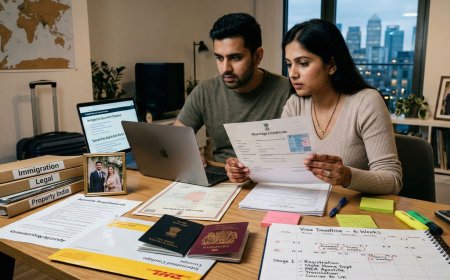
The documentation required for a Special Marriage Act registration involves both standard requirements applicable to all parties and specific requirements for OCI card holders and foreign nationals.
Standard Documentation for Both Parties
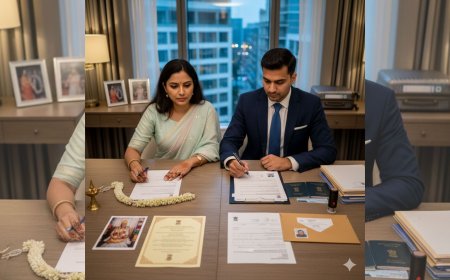
Notice of Intended Marriage: The formal notice filed with the Marriage Officer, in the prescribed form, signed by both parties or one party on behalf of both, accompanied by the required documents.
Proof of Date of Birth: Birth certificate, passport, or matriculation certificate. The Marriage Officer will verify that both parties meet the minimum age requirements.
Proof of Residence: Evidence that at least one party has been resident in the district for at least 30 days prior to the notice filing. This can include a rental agreement, hotel records, a declaration supported by a local resident, or other evidence acceptable to the Marriage Officer.
For NRI couples who will be staying in a hotel or with family during their pre-wedding period in India, hotel booking confirmations or family declarations of residence are typically acceptable. Confirm the specific acceptable forms of residence proof with the Marriage Officer's office in advance.
Passport-Size Photographs: Both parties, typically three to four photographs each.
Affidavit of Single Status: A sworn affidavit by both parties declaring that neither is currently married. For OCI card holders, this affidavit is typically executed before a notary in the country of residence and apostilled before travel to India.
Divorce Decree or Death Certificate: If either party has been previously married, documentation of the termination of that marriage — divorce decree or death certificate of the former spouse — must be provided. Foreign divorce decrees require apostille.
Additional Documentation for OCI Card Holders
Foreign Passport: The primary identity document for OCI card holders is their foreign passport — not an Indian passport. The OCI card is presented alongside the foreign passport.
OCI Card: The physical OCI booklet, confirming OCI status. Names and details must be consistent with the foreign passport.
No Objection Certificate: Many Marriage Officers require OCI card holders to present a No Objection Certificate from the embassy or high commission of their country of citizenship, confirming that there is no legal impediment to the marriage under the laws of their country. The requirement varies by state and by individual Marriage Officer. Confirm whether this is required in your specific district and, if so, begin the process of obtaining it well in advance — allow four to six weeks minimum.
Additional Documentation for Foreign Nationals Without OCI Status
Where one party is a foreign national without Indian origin — holding a foreign passport without OCI status, visiting India on a tourist or other visa — the documentation requirements are similar to those for OCI card holders, with the addition of:
Proof of Valid Visa: The foreign national party must be in India on a valid visa that permits their stay for the duration of the notice period and the wedding.
NOC from Their Country's Embassy: A No Objection Certificate from the embassy of the foreign national's country in India is typically required, confirming that the person is free to marry.
The embassy NOC process for different nationalities varies. Some embassies have straightforward processes. Others require appointments, additional documentation, and processing times of several weeks. Research the specific requirements of the relevant embassy well in advance.
The Registration Process: Step by Step for Interfaith Couples
Establish Residence in the Districtep
At least one party must be resident in the district where the Marriage Officer's office is located for a minimum of 30 days before the notice can be filed. For NRI couples, this means one partner arriving in India at least 30 days before the intended notice filing date.
In practical terms, for a wedding happening in October, if you want to file the notice in August, one party needs to have been resident in the wedding city's district since at least late July.
If the 30-day residence requirement creates an impractical travel burden for both parties, some districts accept a declaration of intended residence by a local family member combined with a shortened personal presence. The specific flexibility varies significantly by district and Marriage Officer. Do not assume this flexibility exists — confirm it.
File the Notice of Intended Marriage
Both parties, or one party acting for both, attend the Marriage Officer's office to file the Notice of Intended Marriage. The notice is filed in the prescribed form — Form I under the Special Marriage Act — and accompanied by all required documentation.
The Marriage Officer will review the documentation, register the notice, and cause it to be displayed publicly. The 30-day clock begins from the date of filing.
Attend this appointment with complete documentation. An incomplete documentation set will result in the notice not being accepted, restarting the timeline.
The 30-Day Notice Period
During the 30 days following the notice filing, the notice is displayed at the Marriage Officer's office. Any person claiming to have a reason why the marriage should not take place may file a written objection with the Marriage Officer.
In the vast majority of cases, no objection is filed and the notice period passes without incident. If an objection is filed, the Marriage Officer investigates and determines whether the objection constitutes a valid legal impediment. If no valid impediment is found, the marriage proceeds.
For NRI couples, the 30-day notice period is a window during which the couple need not be continuously present in India — one party having established residence and filed the notice is sufficient. The couple returns for the wedding and registration after the 30 days have elapsed.
The Marriage Ceremony and Registration
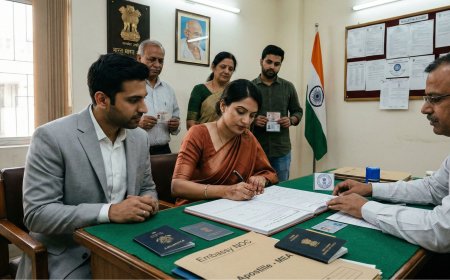
After the 30-day notice period has elapsed without valid objection, the marriage may be solemnised. The marriage ceremony under the Special Marriage Act takes place at the Marriage Officer's office — or, in some circumstances, at another location with the Marriage Officer's agreement — in the presence of the Marriage Officer and three witnesses.
Both parties declare, in the presence of the Marriage Officer and witnesses, that they take each other as lawfully wedded spouses. The declaration is made in the form prescribed by the Act. The Marriage Officer then certifies the marriage.
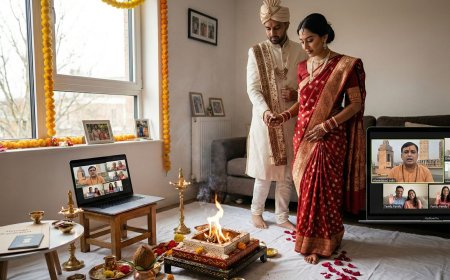
If the couple has separately conducted a religious ceremony — which many interfaith couples do, for cultural and family significance — the civil registration is a separate, distinct event. The religious ceremony and the civil registration do not need to happen on the same day. Many interfaith couples choose to have the civil registration before or after the religious ceremonies, treating them as legally and ceremonially distinct events.
Obtain the Marriage Certificate
Following the marriage ceremony at the Marriage Officer's office, the marriage is entered in the Marriage Certificate Book and a certificate is issued. Both parties sign the certificate. The witnesses sign the certificate. The Marriage Officer signs and seals it.
This certificate is the primary legal document of the marriage. Obtain multiple certified copies — at least five to eight — at the time of registration.
Religious Ceremonies Alongside the Civil Registration
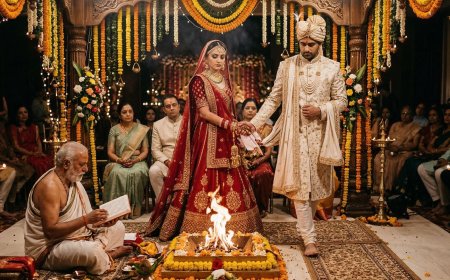
A civil registration under the Special Marriage Act does not preclude religious ceremonies. Many interfaith couples choose to have both — the civil registration that creates the legal marriage, and one or more religious ceremonies that honour the respective cultural and spiritual traditions of both families.
Sequencing the Civil and Religious Ceremonies
The sequencing of the civil registration relative to the religious ceremonies is a decision that each couple makes based on their specific circumstances and family preferences.
Some couples complete the civil registration first — weeks or months before the wedding — to satisfy the legal requirement without the time pressure of the wedding itself, and then have the religious ceremonies as the cultural celebration. This approach treats the legal and the ceremonial as entirely separate events.
Other couples prefer to have the religious ceremonies first and the civil registration as part of the wedding week. This requires that the 30-day notice has been filed and the notice period has elapsed before the wedding week arrives.
Others integrate the civil registration into the wedding week itself, scheduling the Marriage Officer's ceremony on one of the wedding days as a distinct event.
There is no universally correct approach. The right sequencing is the one that works for your specific family context, your India visit schedule, and your personal preferences about how the legal and ceremonial dimensions of the wedding relate to each other.
Conducting Meaningful Ceremonies From Both Traditions
For interfaith couples, the wedding ceremonies represent an opportunity to honour both cultural and spiritual traditions in a way that is authentic, inclusive, and genuinely meaningful.
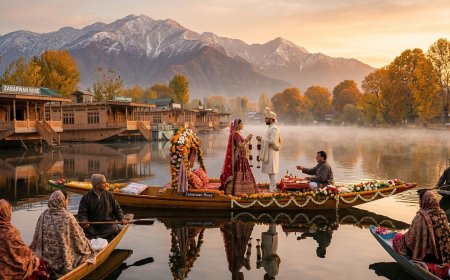
Many interfaith NRI couples design wedding ceremonies that incorporate elements from both traditions — a Ganesh puja and a Christian blessing, a mehendi followed by a civil Nikah, a Sikh Anand Karaj and a secular reception ceremony. The legal framework — the Special Marriage Act — accommodates any combination of cultural and religious expression, because the legal marriage is civil rather than religious.
Work with a wedding planner experienced in interfaith weddings — and, if religious ceremonies are planned, with officiants from both traditions who are comfortable with the interfaith context — to design a ceremony framework that honours both families and both partners authentically.
Post-Registration: Getting Your Marriage Recognised Abroad
As with any Indian marriage, the final step in the legal process for interfaith NRI couples is ensuring that the Indian marriage certificate is recognised in the country of residence.
The MEA Apostille
The Indian marriage certificate — issued under the Special Marriage Act — needs to be apostilled by the Ministry of External Affairs before it can be used for international recognition purposes. The apostille authenticates the document for use in countries that are signatories to the Hague Convention.
Submit the original marriage certificate or certified copies to the MEA authentication office with the applicable fee. Processing typically takes four to six weeks. Express processing is sometimes available at higher cost.
Country-Specific Recognition
After apostille, the recognition process in your country of residence follows the same framework described in the OCI card holders guide — country-specific requirements for the UK, USA, Canada, Australia, and UAE differ and need to be researched specifically.
For interfaith couples, one additional consideration applies: some country-specific recognition processes involve questions about the religious law under which the marriage was conducted. A marriage registered under the Special Marriage Act — a civil marriage — is typically the most straightforwardly recognised internationally precisely because it is secular. The absence of religious law questions is one of the practical advantages of the Special Marriage Act framework for interfaith couples.
Common Legal Mistakes Interfaith NRI Couples Make
Attempting to Register Under a Religious Personal Law
Some interfaith couples attempt to register their marriage under a personal law applicable to one of the parties — believing, or being advised, that this is simpler than the Special Marriage Act process. This approach is legally problematic and in many cases invalid.
The Hindu Marriage Act requires both parties to be Hindu. A marriage between a Hindu and a Muslim cannot be registered under the Hindu Marriage Act. Attempting to do so — including through any informal misrepresentation of one party's religion — creates a legally defective marriage that may not withstand subsequent scrutiny.
Use the Special Marriage Act. It exists precisely for this purpose.
Not Accounting for the 30-Day Notice in the Planning Timeline
This is the most common and most impactful planning mistake for interfaith NRI couples. The 30-day notice requirement is a hard legal constraint that cannot be managed around. If the notice has not been filed and the 30-day period has not elapsed before your wedding date, the marriage cannot legally be registered under the Special Marriage Act on that date.
Build the 30-day notice timeline into your planning from the earliest stages. It is not a documentation detail to be handled close to the wedding — it is a structural timeline constraint that shapes the entire planning schedule.
Not Obtaining the NOC in Time
Where a No Objection Certificate from an embassy is required, the process of obtaining it takes weeks. Couples who discover this requirement at the point of filing the notice — when the NOC should already be in hand — face a delay that pushes the entire registration timeline back.
Confirm the NOC requirement at the beginning of the documentation planning process and initiate the application immediately if it is required.
Treating the Religious Ceremony as the Legal Marriage
Many interfaith couples — and their families — have a cultural expectation that the religious ceremony is the marriage. In legal terms, under the Special Marriage Act, it is not. The civil registration is the legal marriage. A religious ceremony conducted without a subsequent civil registration creates a marriage that may have significant social and personal meaning but limited legal standing.
Complete the civil registration. Do not allow the cultural weight of the religious ceremony to create an assumption that the legal process is a formality that can be addressed later.
The Emotional and Cultural Layer: What the Legal Framework Cannot Capture
The legal requirements for an interfaith wedding in India are manageable and navigable. What the legal framework cannot capture is the human dimension of what an interfaith wedding actually involves.
Two families from different traditions, different communities, different histories — coming together in a space that neither tradition fully owns, finding a way to honour both without diminishing either. The complexity of that is real and it is not resolved by the Special Marriage Act's elegant secular framework, however practically useful that framework is.
For NRI interfaith couples, this complexity is often amplified by the distance from home, by the particularly intense visibility of the wedding in family and community contexts, and by the pressure to produce a celebration that feels authentic to two traditions simultaneously.
The most graceful interfaith weddings — the ones that families remember as genuinely moving rather than as diplomatic exercises — are those where both traditions were honoured with equal intentionality. Not blended into a compromise that satisfies neither, but held side by side with genuine respect for what each represents.
The legal framework gives you the civil foundation. What you build on that foundation — the ceremonies, the rituals, the moments of cross-cultural recognition that make an interfaith wedding genuinely beautiful — is yours to design with the care and creativity that the occasion deserves.
Your Interfaith Wedding Legal Checklist
Six Months Before:
- Confirm Special Marriage Act as the applicable legal framework
- Research district-specific requirements for the Marriage Officer in your wedding city
- Determine NOC requirements for OCI card holders and foreign nationals
- Begin NOC application process if required
- Prepare and apostille affidavit of single status
- Apostille any foreign divorce decrees if applicable
Three to Four Months Before:
- Confirm one party's travel to India for residency establishment and notice filing
- Book accommodation in the wedding city district for the residency period
- Prepare complete documentation set for notice filing
- Research and confirm witness documentation requirements
At 30 Days Before Wedding Date:
- File Notice of Intended Marriage with complete documentation
- Confirm 30-day notice period clock has started
- Confirm no objection period management with Marriage Officer's office
One to Two Weeks Before Wedding:
- Confirm notice period has elapsed without valid objection
- Confirm Marriage Officer appointment for the ceremony
- Brief all three witnesses on attendance and documentation requirements
At Registration:
- Both parties present with complete documentation
- Three witnesses present with their documentation
- Obtain marriage certificate and minimum five to eight certified copies
Post-Wedding:
- Submit marriage certificate for MEA apostille
- Complete country-specific recognition process
- Use apostilled certificate for all administrative purposes in country of residence
The Legal Foundation Is an Act of Respect for What You Are Building
An interfaith marriage is, in many ways, one of the most courageous things two people can choose. It requires navigating not just the ordinary complexities of building a life together but the additional complexity of doing so across traditions, communities, and histories that may not have imagined each other.
The Special Marriage Act exists because India has always had interfaith couples — people who found each other across the lines that communities draw and who needed a legal framework that recognised their choice. It is a secular, dignified, straightforward mechanism for two people of any background to be legally married in India. It is not a compromise. It is an affirmation.
Understand it fully. Use it correctly. Complete the process with the same intentionality you bring to every other dimension of your wedding.
The legal foundation you build through this process is not separate from the marriage you are creating. It is part of it — the civic expression of a commitment that your families, your communities, and your own hearts have already recognised.
Give it the care it deserves. Everything you are building together stands on it.
What's Your Reaction?
 Like
0
Like
0
 Dislike
0
Dislike
0
 Love
0
Love
0
 Funny
0
Funny
0
 Angry
0
Angry
0
 Sad
0
Sad
0
 Wow
0
Wow
0