





































































Candid vs Traditional Wedding Photography in India: How NRI Couples Can Successfully Balance Both Styles
Choosing between candid and traditional photography at an Indian wedding is a false choice — and NRI couples who treat it as binary end up with albums that are either emotionally alive but formally incomplete, or comprehensively documented but visually lifeless. This guide builds the complete framework for balancing both styles across every event of a multi-day Indian wedding programme, from mehendi and haldi through baraat, pheras, family portraits, and reception. Covers event-by-event coverage mapping, second shooter planning, family expectation management, formal shot list briefing, portrait window scheduling, photographer evaluation techniques, and post-production consistency. The most thorough candid versus traditional wedding photography guide written specifically for NRI couples worldwide.


Candid vs. Traditional Photography: Balancing Both Styles
There is a photograph in your parents' wedding album that you have looked at so many times you could describe it from memory. The couple sits — your mother, your father — in formal profile, facing each other across a ceremonial arrangement, their expressions composed and correct. The lighting is even. The framing is precise. There is a stillness to it that communicates something true about the gravity of the occasion, even if it communicates relatively little about who these two people actually were at that moment in their lives.
And then there is another photograph — probably taken by a guest, probably slightly blurred, probably not in the album at all but loose in a box somewhere — where your father is laughing at something your mother has just said, and your mother's hand is on his arm, and neither of them knows the camera is there. In that photograph, you can see your parents.
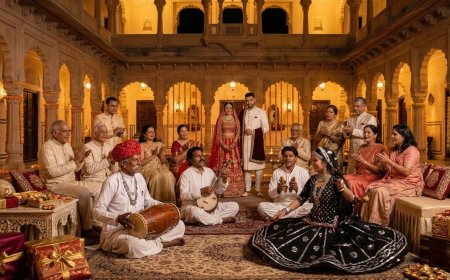
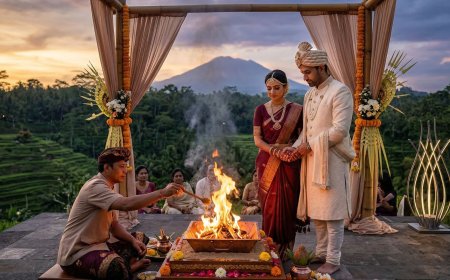
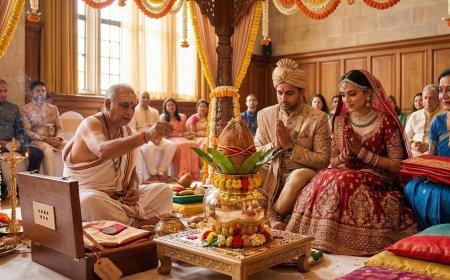
This is the essential tension of Indian wedding photography: the formal image that honours the occasion, and the candid image that captures the people. Both matter. Both serve a function that the other cannot. And the couples who understand this — who plan their coverage to contain both rather than defaulting entirely to one or the other based on trend or parental expectation — are the ones whose wedding albums remain alive rather than merely accurate decades later.
For NRI couples navigating this decision from abroad, the candid versus traditional photography question is complicated by a specific dynamic: your aesthetic sensibility, shaped by years of exposure to contemporary wedding photography in London or Toronto or Sydney, may sit at one end of the spectrum, while your parents' expectations — formed by decades of Indian wedding albums that look a particular way — sit firmly at the other. The photography brief you build has to serve both realities simultaneously, and doing that requires a genuine understanding of what each style involves, what it produces, and how the two can be combined without either being compromised.
Defining the Styles: What Each One Actually Means
Traditional Indian Wedding Photography
Traditional photography — sometimes called formal, classic, or posed photography — is the foundational visual language of the Indian wedding album. Its defining characteristics are deliberate and specific.
The photographer controls the frame. In traditional photography, the photographer directs — the couple, the family, the group — into specific positions, against specific backgrounds, in specific light. The subjects know they are being photographed and compose themselves accordingly. The result is an image where everything visible in the frame is there by intention.
Subjects face the camera. Traditional Indian wedding photographs are typically oriented toward the lens. Eye contact with the camera is the norm rather than the exception. The viewer is acknowledged rather than being a fly on the wall.
The primary currency is completeness. Traditional coverage ensures that every key family combination is documented, that every ritual moment has a clear photographic record, that nobody who matters to the family is missing from the album. The emphasis is on inclusion and documentation rather than on narrative or emotional revelation.
Lighting is controlled or at least understood. Traditional photographers work within the available light or with supplementary flash to ensure that faces are correctly exposed and clearly visible. The aesthetic is not necessarily flat or uninspiring — skilled traditional photographers work with light beautifully — but the priority is clarity rather than mood.
The images work independently. A traditional photograph of the bride with her parents does not need context to be understood or valued. It is a complete document in itself — this person, with these people, on this occasion. The narrative function is carried by the subject matter rather than by the photographic storytelling.
Candid Wedding Photography
Candid photography — also called documentary, reportage, or photojournalistic wedding photography — operates on almost opposite principles.
The photographer observes rather than directs. The candid photographer is a witness who moves through the wedding looking for moments that reveal truth — emotional, relational, human — without intervening in those moments to create them. The subjects may or may not know the camera is present. The best candid images are typically captured when the subject is engaged in something else entirely.
The frame contains the unexpected. Because the candid photographer is responding to reality rather than constructing it, the frame contains what is actually there — the slightly askew dupatta, the uncle laughing so hard he's bent double, the flower girl who has fallen asleep in a corner of the mandap. These details are not mistakes. They are the texture of a real event, and they are what make candid images feel alive in ways that posed images often don't.
The primary currency is emotional truth. Candid photography is not concerned with ensuring every family member is formally documented. It is concerned with capturing what the wedding felt like — the joy, the emotion, the human connections, the moments of vulnerability and laughter and quiet reflection that happen at the edges of the formal programme.
Light is worked with rather than controlled. Candid photographers work in whatever light exists — the harsh midday sun, the warm tungsten of a sangeet stage, the deep shadow of a mandap, the backlight of a golden hour courtyard. The challenge is finding the beauty in that light rather than replacing it with something more controllable.
The images are relational. A candid photograph of a grandmother watching the bride descend the stairs means something specific and different from a formal portrait of the same grandmother. It requires context — you need to know who she is and what she's watching — but when you have that context, the image carries an emotional weight that the formal portrait cannot.
Why the Choice Is Not Binary
The most important thing to understand about candid versus traditional photography is that the choice between them is not a binary one — and treating it as such is one of the most common and consequential mistakes NRI couples make when briefing their photographer.
A wedding covered entirely in the candid documentary style will be visually alive and emotionally resonant, and it will be missing formal family combinations that your parents will ask for for the rest of their lives. The photograph of the bride with both sets of grandparents. The formal portrait of the couple in their ceremony outfits against the haveli courtyard. The four-parent image that everyone wants framed on their wall. These images don't happen by themselves. They require a photographer who is willing to direct.
A wedding covered entirely in the traditional formal style will have every family combination documented and every ritual moment clearly recorded, and it will feel, to a contemporary eye, like a visual record rather than a visual story. The images will be complete. They will be correct. And many of them will fail to convey what your wedding actually felt like to be present at.
The answer — always, for an NRI wedding — is both. The question is how to balance them across your specific programme, your specific family dynamics, and your specific aesthetic priorities.
The Balance Framework: Event by Event
Different events within a multi-day Indian wedding programme lend themselves naturally to different photographic approaches, and understanding this event-level mapping is the foundation of a sensible coverage brief.
| Event | Primary Approach | Secondary Approach | Reasoning |
|---|---|---|---|
| Mehendi ceremony | Candid documentary | Detail and close-up work | Intimate, slow-paced event where emotion and connection emerge naturally; formal posing disrupts the atmosphere |
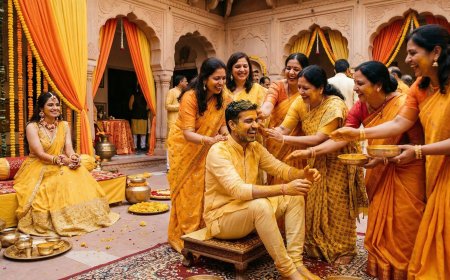
| Haldi ceremony | Candid documentary | Wide establishing shots | Chaotic, joyful, and visually rich; the mess and laughter are the story — formal posing is incongruous |
| Sangeet | Candid documentary | Performance coverage | High-energy, spontaneous; the best images are unposed reactions and dance floor moments |
| Baraat procession | Candid documentary | Groom portrait before departure | Movement and crowd energy are best captured observationally; one formal groom portrait before the chaos begins |
| Wedding ceremony (pheras) | Mixed — ritual moments formal, ambient candid | Close family candid reactions | Ritual moments need clear documentation; family reactions during ceremony are best captured candidly |
| Post-ceremony portraits | Traditional formal | Creative couple portraits | The dedicated portrait session is where formal coverage earns its place — this is the moment for intentional, directed images |
| Family group photographs | Traditional formal | None — this is entirely formal | Family combinations must be directed to exist at all; candid approach does not serve this function |
| Reception | Candid documentary | Couple entrance formal | The social event is best captured observationally; the couple's entrance benefits from directed coverage |
| Vidaai | Candid documentary | None — never interrupt this | The most emotionally charged moment of the wedding programme; any intrusion destroys it |
This framework is a starting point, not a fixed prescription. Your specific ceremonies, family composition, and venue will all affect how the balance should be adjusted. Use it as the basis for a conversation with your photographer rather than as a rigid instruction.
What Your Photographer Needs to Execute Both Styles
Asking a photographer to cover your wedding in both candid and traditional styles is not a simple request. It requires specific capabilities that not all photographers possess equally — and understanding these requirements helps you evaluate whether a given photographer can genuinely deliver both.
The Switching Skill
The most technically demanding aspect of mixed-style coverage is the ability to move fluidly between modes — from active observation and candid capture to calm, structured direction of family groups — without losing momentum in either. This requires a specific kind of professional versatility that comes from experience with Indian family weddings specifically.
A photographer who is primarily a documentary artist may find the family portrait management aspect of traditional coverage uncomfortable or technically outside their strongest skills. A photographer who is primarily a traditional formal photographer may produce flat, uninspired work when asked to document the organic moments of a haldi or a vidaai. Before you book, look specifically for evidence of both approaches in a photographer's portfolio — not just their best candid images or their best formal portraits, but both, from the same wedding.
Second Shooter Considerations
For large Indian weddings — anything above 150 guests across multiple simultaneous events — a single photographer cannot cover both candid and traditional requirements without gaps. A second shooter allows simultaneous coverage: one photographer managing the formal family portrait sequence while the other remains available to capture candid moments that are happening at the same time. For a multi-day NRI wedding with multiple events often running simultaneously, second shooter coverage is not a luxury — it is a necessary condition for comprehensive mixed-style coverage.
Discuss this specifically with your photographer. Ask how they handle simultaneous events. Ask whether their second shooter is experienced in both candid and traditional approaches or whether one specialises in one mode.
Equipment for Both Styles
Traditional and candid photography have different optimal equipment profiles. Traditional formal photography is typically executed with standard to moderate telephoto lenses (50mm to 85mm equivalent) that provide natural-looking perspective for portrait work, often with supplementary lighting for controlled results. Candid documentary photography favours wide-angle to moderate telephoto lenses (24mm to 85mm equivalent) that allow the photographer to work at varying distances from their subject, often in available light without flash.
A photographer who has a versatile lens kit and a genuine understanding of when to use each focal length in each mode — and who can manage the transition between flash-assisted formal work and available-light documentary work within the same event — is demonstrating a level of technical sophistication that is worth asking about explicitly.
Managing Family Expectations: The Conversation You Need to Have
For most NRI couples, the candid versus traditional balance is not just an aesthetic decision between the two of you. It is a negotiation that involves at least two sets of parents with specific expectations about what an Indian wedding album should look like — and those expectations were formed in a photographic era when candid wedding photography essentially did not exist.
What Your Parents Actually Want
Your parents want certainty. They want to know that the photograph of your mother with her sisters — the one where everyone is dressed and present and nobody is blinking — actually exists in the album. They want the formal couple portrait. They want the four-parent group shot. They want the ceremony ritual moments clearly documented. These are not unreasonable desires. They reflect a legitimate understanding of what wedding photography is for — the creation of a family record that future generations will inherit.
The most productive framing for this conversation is not "we're going for a candid style" — which sounds, to many Indian parents, like "we're not going to have proper photographs." It is: "We're making sure we have all the formal family photographs you want, and we're also making sure someone is capturing the moments in between." That framing is accurate, it's reassuring, and it describes exactly what a good mixed-style coverage brief actually achieves.
The Formal List as a Gift to Your Parents
One of the most effective ways to manage parental expectations around photography is to invite them to contribute to the formal family shot list. Ask each set of parents to give you a list of the specific family combinations they most want formally documented. Compile these lists, add your own requirements, and give the result to your photographer as the formal coverage brief.
This process achieves several things simultaneously. It ensures the formal coverage actually reflects the families' priorities rather than a generic template. It gives parents a sense of agency in the photographic process. And it produces a specific, comprehensive list that your photographer can work from, rather than a vague instruction to "get the family photographs."
The Timing Architecture of Mixed Coverage
The practical challenge of delivering both candid and traditional coverage is largely a timing problem — and solving it requires deliberate scheduling within your programme.
The Portrait Window
The formal portrait session — for the couple and for family group combinations — should be scheduled as a dedicated, protected window within your programme, separate from the ceremonies and events where candid coverage will dominate. The post-ceremony period before the reception is the most common and most effective timing: everyone is dressed, the ceremony emotion is still present, and the structured photography doesn't interrupt any event.
A realistic time allocation for a comprehensive formal portrait session at an NRI wedding is sixty to ninety minutes — enough time for the couple's portraits in multiple locations, the immediate family portraits, and the extended family group combinations on the formal list. If you're working from a twenty-combination family list, you need a family coordinator moving groups into position while the photographer is finishing the previous combination.
Protect this window in the programme explicitly. The most common failure mode in mixed-style coverage is the formal portrait session being consumed by the post-ceremony chaos of a large Indian family event — guests wanting informal photographs, family members being pulled in different directions, the timing running over from the ceremony itself. Build buffer into the programme around this window and brief your planner and family coordinator to guard it.
The Documentary Windows
The events where candid coverage should dominate — mehendi, haldi, sangeet, baraat, vidaai — need their own kind of temporal protection: freedom from the formal photography agenda. Your photographer should not be trying to manage family group combinations during the haldi or asking the bride to pause during the vidaai for a formal portrait. Brief your photographer explicitly that certain events are documentary-only, and that the formal coverage agenda will be addressed in its dedicated window.
This clarity allows the documentary coverage to be genuinely observational — the photographer can be fully present as a witness rather than managing a dual agenda of formal and candid coverage simultaneously.
Evaluating Photographers for Mixed-Style Capability
When you're evaluating photographers from abroad — through portfolios, video calls, and reference conversations — here is what to look for specifically in the context of mixed-style capability.
What to Look for in the Portfolio
Ask to see a full gallery from a single wedding, not a curated cross-wedding portfolio. A full gallery from one wedding reveals both styles in the context in which they were delivered together. Look for:
The quality and naturalness of the formal portraits — are the directed images beautifully composed and genuinely flattering, or do they feel stiff and formulaic? The variety and emotional range of the candid coverage — does the documentary work reveal real moments, or is it a collection of technically competent but emotionally thin images? The transition between modes — does the photographer seem equally fluent in both approaches, or does one style clearly dominate? The coverage of quiet and peripheral moments — the grandmother in the second row, the siblings at the edge of the baraat — which reveals the documentary instinct even within a mixed-coverage brief.
What to Ask on the Call
Ask the photographer directly: "How do you typically balance formal and candid coverage across a multi-day Indian wedding?" Their answer will reveal their natural inclination, their experience with the specific balance an Indian family wedding requires, and their understanding of why both matter.
Ask specifically about the formal portrait management process — how do they handle family group photography at large weddings, do they work with a family coordinator, how many combinations can they realistically cover in sixty minutes? An experienced photographer will have a clear, specific answer. A less experienced one will be vague.
Ask for a reference from a previous NRI client specifically — couples who have navigated the same candid-versus-traditional balance between their own aesthetic and their families' expectations will give you the most relevant feedback on how the photographer handled that dynamic.
Post-Production and Style Consistency
One consideration that NRI couples in the candid-versus-traditional debate often overlook is post-production consistency — how the editing style applied to a portfolio of mixed candid and traditional images creates (or fails to create) a coherent visual whole.
Candid documentary images and formal traditional portraits shot in different lighting conditions and different visual contexts can look jarringly inconsistent if the editing style is not applied with coherence. A photographer who applies a warm, film-inspired colour grade to candid moments but delivers formal portraits with a cooler, more neutral edit has created a portfolio that reads as two separate shooting sessions rather than a unified visual document of a single wedding.
Ask your photographer how they approach the editing consistency of a mixed-style portfolio. Look for this specifically in full wedding galleries you evaluate during the booking process — do the candid images and the formal portraits feel like they belong to the same event, photographed by the same eye, processed with the same aesthetic intelligence?
Common Mistakes NRI Couples Make with Candid and Traditional Coverage
Briefing entirely for candid coverage because it looks better on Instagram, then discovering the formal family photographs don't exist. Your parents will ask for those photographs. Brief for both.
Briefing entirely for traditional formal coverage because it's what the family expects, then receiving an album that looks correct but feels lifeless. The candid moments are what you'll return to in twenty years. Brief for both.
Not protecting the formal portrait window in the programme. A formal portrait session without dedicated, protected time is not a formal portrait session — it is a chaotic scramble between events that produces incomplete coverage and stressed participants.
Assuming your photographer can manage family group combinations without a family coordinator. A photographer who is simultaneously holding a camera, managing light, and trying to assemble the bride's maternal extended family from a crowd of 300 people is failing at all three. Designate a coordinator.
Booking a photographer whose natural style is entirely candid and assuming they'll also deliver strong formal coverage. Look for evidence of both in the portfolio before you book. Not every candid photographer is a skilled portrait director, and the reverse is equally true.
Not inviting parents to contribute to the formal shot list. Parents who have been consulted about the formal coverage are parents who are satisfied with the result. Parents who haven't been consulted will find something missing regardless of how comprehensive the coverage is.
Not discussing the candid-traditional balance explicitly with the photographer during the booking process. An assumption that the photographer will instinctively know the right balance is not a brief. Make it explicit, make it specific, and put it in writing.
Treating the portrait session as an obligation rather than an opportunity. The formal portrait session, done well, produces some of the most enduring images of the wedding — the images that get framed and live on walls for decades. It deserves to be approached with the same creative investment as the candid coverage, not as a bureaucratic necessity to be completed as quickly as possible.
The photograph on your parents' wall was probably posed. The one you go back to when you miss someone who is no longer here was probably not.
Both of those photographs matter. Both of them are doing something the other cannot. And the wedding album that contains both — that has the formal record your family will inherit alongside the candid truth of what the day actually felt like — is the album that remains alive across generations rather than becoming a beautiful object that nobody opens.
Your photographer cannot give you both without a brief that asks for both. Your programme cannot deliver both without the scheduling that makes room for both. Your family cannot have both without a conversation that acknowledges both sets of needs as equally legitimate.
Have that conversation. Build that brief. Give that day the full visual record it deserves — not the posed version alone, and not the documentary version alone, but the complete and honest portrait of what it was to be there: directed and unguarded, formal and alive, a record and a story simultaneously.
That is the album worth making. That is the album worth keeping.
What's Your Reaction?
 Like
0
Like
0
 Dislike
0
Dislike
0
 Love
0
Love
0
 Funny
0
Funny
0
 Angry
0
Angry
0
 Sad
0
Sad
0
 Wow
0
Wow
0