





































Destination Wedding in Jodhpur — The Blue City Palace Wedding Guide for NRI Couples
The photographer had been to Jodhpur eleven times. Not eleven casual visits — eleven professional engagements, eleven weddings, eleven three-to-five-day immersions in the specific, blue, fort-shadowed, desert-edged, only-in-Jodhpur quality of the city that the Blue City designation most accurately but insufficiently describes. Insufficiently because the blue is not the simple fact of the blue-painted houses. The blue is also the light. The specific, Jodhpur, Thar Desert, Rajasthan, northwest-India, elevated-plateau, dry-air, clear-sky light whose quality is the light of the place where the desert meets the old city and the old city is beneath the fort and the fort is the largest of its kind in India. He had tried to explain it to the couples before the first visit. Said: the light in Jodhpur is different from the light in Udaipur and different from the light in Jaisalmer and different from the Goa light and the Mumbai light and every other Indian destination's light. It is the desert light — the specific, clear, dust-and-dry-air, northwest-Rajasthan, elevated-plateau, morning-gold-and-evening-amber quality of the light whose photographs are the photographs you cannot make anywhere else. The couples had not fully understood until the first morning. Then they had understood. He had had eleven mornings in Jodhpur. He had understood eleven times. This complete guide covers the entire Jodhpur destination wedding landscape for NRI couples — the Umaid Bhawan Palace for the grand royal vision at ₹4.50 crore to ₹9.50 crore, the RAAS Jodhpur for the intimate fort-directly-above boutique wedding at ₹2.37 crore to ₹4.97 crore, the Bal Samand Lake Palace for the historic 1159 AD lake estate at ₹2.14 crore to ₹4.48 crore, the Mehrangarh Fort courtyard event option, the three essential photography locations and the sunrise timing imperative, the Manganiyar and Kalbelia folk performance, the Dal Baati Churma feast, the Bishnoi village wildlife programme, the complete guest logistics from Jodhpur Airport to palace convoy, and the five mistakes that cost couples the Blue City wedding's full extraordinary light.


Destination Wedding in Jodhpur — The Blue City Palace Wedding Guide for NRI Couples
The Blue
The photographer had been to Jodhpur eleven times.
Not eleven casual visits — eleven professional engagements, eleven weddings, eleven three-to-five-day immersions in the specific, blue, fort-shadowed, desert-edged, only-in-Jodhpur quality of the city that the Blue City designation most accurately but insufficiently describes.
Insufficiently because the blue is not the simple fact of the blue-painted houses whose indigo-and-cobalt and specific, accumulated, neighbourhood-after-neighbourhood, old-city-medieval-street quality is the quality that the Google Image search most immediately produces and that the arriving guest most immediately confirms.
The blue is also the light.
The specific, Jodhpur, Thar Desert, Rajasthan, northwest-India, elevated-plateau, dry-air, clear-sky light whose quality — the quality of the light in the place where the desert meets the old city and the old city is beneath the fort and the fort is the largest of its kind in India and the air is the air that has come from the desert rather than the sea — is the light that the photographer had been returning to eleven times.
He had tried to explain it to the couples before the first visit.
He had said: the light in Jodhpur is different from the light in Udaipur and different from the light in Jaisalmer and different from the Goa light and the Mumbai light and every other Indian destination's light. It is the desert light — the specific, clear, dust-and-dry-air, northwest-Rajasthan, elevated-plateau, morning-gold-and-evening-amber quality of the light whose photographs are the photographs you cannot make anywhere else.
The couples had not fully understood until the first morning.
Then they had understood.
He had had eleven mornings in Jodhpur.
He had understood eleven times.
The photographer had been right about the light.
And the NRI couple planning the Jodhpur destination wedding — the couple whose venue shortlist includes the Umaid Bhawan Palace and the RAAS Jodhpur and the Bal Samand Lake Palace and the specific, multiple, varied, only-in-Jodhpur palace-and-heritage-property options whose accumulated quality the Blue City most specifically enables — needs the guide that goes beyond the individual property and addresses the city itself.
The Blue City.
The light.
The eleven-time photographer's accumulated knowledge of what the Jodhpur destination wedding most specifically requires.
This guide is the Blue City as a whole — the city whose specific properties, wedding venues, guest programme, seasonal calendar, and logistics the complete NRI destination wedding planning most specifically needs to understand before the individual venue is chosen and the planning begins.
The City: Jodhpur and Why It Is What It Is
The Rathore Kingdom and the Mehrangarh Foundation
Jodhpur — the specific, 1459-founded, Rathore-Rajput, Rao Jodha-established, Thar-Desert-edge, northwest-Rajasthan city whose founding was the founding of the Marwar kingdom's capital and whose specific, only-in-Jodhpur, fort-and-old-city, blue-and-desert quality is the quality of the city that has been the Rathore dynasty's capital for five hundred and sixty years — is the city whose founding most directly produced the Mehrangarh Fort whose shadow falls on the Blue City below.
Rao Jodha: the specific, fifteenth-century, Rathore chief whose establishment of the Jodhpur city on the rocky outcrop above the Thar Desert's edge was the establishment of the fort-city in the specific, defensively chosen, strategically positioned, desert-plateau-elevation site whose choice the Mehrangarh's subsequent construction most directly validated — is the historical figure whose founding decision most directly produced the specific, only-in-Jodhpur, fort-above-blue-city-below, desert-on-all-sides quality that the NRI wedding destination most specifically inherits.
The Mehrangarh Fort: the Mehrangarh — the specific, fifteenth-century-founded, three-hundred-and-sixty-metre-elevation, thirty-six-metre-wall, largest-fort-in-India-by-area, Rathore-dynasty-built, Jodhpur-skyline-defining, only-at-this-elevation, blue-city-below-and-desert-beyond fort — is the Jodhpur destination wedding's defining ambient presence and the visual context whose specific, fort-above-everything quality most powerfully frames every outdoor ceremony setting in the city below.
The blue city below the fort: the old city of Jodhpur — the specific, Brahmin-neighbourhood-painted-blue, indigo-and-cobalt, medieval-street, old-city-grid, Mehrangarh-shadowed, only-in-the-Brahmin-neighbourhood-traditionally-blue, neighbourhood-after-neighbourhood blue whose specific, accumulated, old-city-and-fort quality gives the Blue City its specific, visual, photographic, internationally recognised credential — is the specific, ambient, geographical, historical context that the Jodhpur destination wedding's every outdoor photograph most directly inherits.
The Blue: What It Actually Is
The blue of Jodhpur — the specific, indigo-painted, Brahmin-neighbourhood-tradition, historically-termite-repellent-and-cool-interior, accumulated-generations-of-maintenance, neighbourhood-after-neighbourhood blue of the old city's houses — is the blue that the Google Image search produces and that the photographer had been explaining to the couples before the first visit.
The tradition: the blue-painted houses of Jodhpur's old city — the specific, historical, Brahmin-caste, indigo-paint, termite-repellent, temperature-regulating, only-in-the-Brahmin-neighbourhood-originally, now-spread-across-the-old-city tradition whose specific, accumulated, generations-of-maintenance quality gives the Blue City its specific, neighbourhood-wide, only-this-city visual identity — is the tradition whose specific, cultural, historical, visual, accumulated quality the destination wedding most directly inherits as the ambient backdrop.
The photographer's light: the specific, Jodhpur, desert, dry-air, elevated-plateau, northwest-Rajasthan light whose quality the photographer had been explaining and returning to eleven times — the morning gold, the evening amber, the specific, only-in-the-desert-light, clear-air, dust-and-dry, blue-city-below-and-fort-above quality of the light that finds the blue walls at the specific angles that most powerfully reveal the blue — is the light that most directly produces the photographs that the eleven-time photographer had been returning to produce.
The Thar Desert Edge
Jodhpur's specific, Thar Desert-edge position — the city on the eastern edge of the Thar Desert whose specific, desert-adjacent, sand-and-scrub, camel-and-dry-air, desert-light quality gives the city the specific, only-in-Jodhpur, where-the-city-meets-the-desert character — is the geographical character whose ambient quality the destination wedding most directly inherits as the landscape context.
The desert at sunset: the Thar Desert at the Jodhpur sunset — the specific, northwest-Rajasthan, dry-air, amber-light, desert-horizon, camel-silhouette, only-at-this-elevation, desert-and-fort quality of the Jodhpur evening at the hour when the Mehrangarh is illuminated and the blue city below catches the last amber light and the desert begins at the city's edge — is the visual quality that the photographer had been returning to eleven times and that most completely explains why.
The Properties: The Jodhpur Wedding Venue Guide
Umaid Bhawan Palace — The Palace Wedding
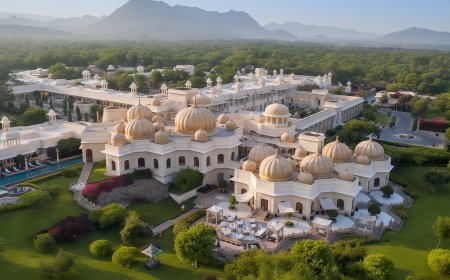
The Umaid Bhawan Palace — described in the guide series' earliest articles as the largest private residence in the world, the 1943 Art Deco-Edwardian hybrid, the Jodhpur royal family's home, the Taj Hotels-managed palace property — is the Jodhpur destination wedding's primary, most internationally recognised, most photographically celebrated, most specifically royal credential.
The scale and the credential: the Umaid Bhawan's three-hundred-and-forty-seven-room, 26-acre-grounds, 105,000-square-foot palace scale and the Taj Hotels' institutional management and the Jodhpur royal family's ongoing residence give it the specific, royal, only-at-this-palace, living-heritage, Art-Deco-grandeur credential of the most specifically, monumentally, royally Jodhpur wedding.
The Umaid Bhawan couple: the NRI couple whose wedding vision is the grand, the royal, the Art-Deco-palace, the Jodhpur royalty's home, the Taj's finest, the most internationally photographed — this is the Umaid Bhawan couple. The budget: ₹4.50 crore to ₹9.50 crore for the two hundred to three hundred guest, three-day programme.
The planning timeline: twenty to twenty-four months. The most competed-for dates in Jodhpur.
RAAS Jodhpur — The Haveli Wedding
The RAAS Jodhpur — the fifteenth-century haveli in the old city whose specific, one-hundred-and-twenty-metre-direct-Mehrangarh-view, rooftop-sangeet-with-the-fort-illuminated-above, Toorji-step-well-photography, boutique-forty-to-fifty-room, full-buyout property — is the Jodhpur destination wedding's most specifically, intimately, old-city-embedded, fort-proximate, boutique-heritage credential.
The RAAS distinction: the RAAS Jodhpur's specific, old-city, Mehrangarh-directly-above, fifteen-century-haveli, thirty-metre-fort-wall-visible-from-the-rooftop quality gives it the specific, most-intimate, most-fort-proximate, most-old-city-embedded Jodhpur wedding setting of any property in the city. The fort is not in the background. The fort is above.
The RAAS couple: the NRI couple whose wedding vision is the intimate, the boutique full-buyout, the fort-directly-above, the old-city-embedded, the rooftop-sangeet-with-the-illuminated-Mehrangarh quality — this is the RAAS couple. The budget: ₹2.37 crore to ₹4.97 crore for the sixty to one hundred guest, three-day programme.
The planning timeline: fifteen to eighteen months.
Bal Samand Lake Palace — The Lake Palace Wedding
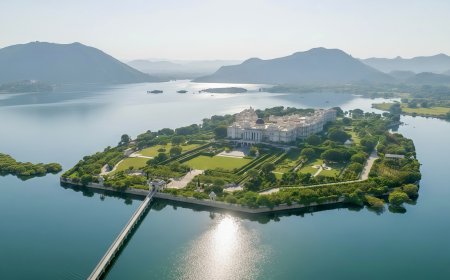
The Bal Samand Lake Palace — described in the guide series as the oldest artificial lake in Rajasthan, the 1159 AD lake, the 1936 Indo-Saracenic palace, the one-hundred-acre estate, the RAAS group management — is the Jodhpur destination wedding's most specifically, romantically, historically extraordinary lake-and-palace credential outside the city's urban core.
The Bal Samand distinction: the specific, 1159-AD-lake, 1936-palace, one-hundred-acre-estate, Indo-Saracenic-architecture, RAAS-managed, Jodhpur-heritage-outside-the-city quality — the palace on the oldest artificial lake in Rajasthan — gives it the specific, only-at-Bal-Samand, historic-lake-and-heritage-palace quality of the Jodhpur property that is the city's most historically rooted lake setting.
The Bal Samand couple: the NRI couple whose wedding vision is the historic lake, the Indo-Saracenic palace, the one-hundred-acre estate, the dawn-lake-photography, the winter-migratory-birds, the RAAS management quality without the old-city-embedded RAAS Jodhpur's urban character — this is the Bal Samand couple. The budget: ₹2.14 crore to ₹4.48 crore for the eighty to one hundred and fifty guest, three-day programme.
The planning timeline: twelve to fifteen months.
Other Jodhpur Properties
The Ajit Bhawan: the specific, heritage, palace-hotel, family-run, Jodhpur-royal-family-related, garden-and-cottages, only-in-Jodhpur, oldest-heritage-hotel-in-Jodhpur character — the mid-budget, characterful, garden-and-palace, family-heritage alternative whose specific, only-in-Jodhpur, long-established quality gives it the specific, intimate, family-run, garden-and-heritage credential of the Jodhpur property that has been doing this since before the boutique-hotel-in-India category existed.
The Raas Haveli: the smaller, more accessible, boutique-heritage, old-city-adjacent properties whose specific, Jodhpur, haveli-architecture, blue-city-embedded, moderate-budget quality gives the NRI couple whose budget is the mid-range the specific, Jodhpur, heritage, blue-city wedding without the Umaid Bhawan's premium or the RAAS's full-buyout requirement.
The Mehrangarh Fort itself: the Mehrangarh Fort's specific, fort-courtyard, cultural-programme, only-inside-the-fort event option — the sangeet or the cocktail reception or the cultural evening inside the Mehrangarh's specific, fort-courtyard, three-hundred-and-sixty-metre-elevation, blue-city-below, desert-beyond quality — is the event venue whose engagement gives the Jodhpur wedding the specific, only-inside-the-fort, Mehrangarh-courtyard quality whose Fort Trust management most specifically enables.
The Guest Programme: The Blue City's Wedding Journey
The Mehrangarh Fort
The Mehrangarh Fort — the specific, fifteenth-century, Rathore, thirty-six-metre-wall, three-hundred-and-sixty-metre-elevation, largest-fort-in-India-by-area, only-at-this-elevation, blue-city-below, desert-beyond, Jodhpur-defining monument — is the guest programme's primary, most essential, most specifically, irreducibly only-in-Jodhpur heritage destination.
The fort at sunrise: the Mehrangarh at sunrise — the specific, fort-walls-in-the-morning-gold, blue-city-below-in-the-early-light, desert-horizon-in-the-distance, only-at-the-fort-sunrise quality of the Jodhpur morning — is the heritage programme element whose engagement gives the international guest the Jodhpur experience at its most specifically, photographically, historically extraordinary hour.
The fort museum: the Mehrangarh Fort Museum — the specific, Rathore-dynasty, palanquin-and-miniature-painting-and-armour-and-howdah, only-in-the-Mehrangarh, institutional-collection, palace-museum quality of the museum that the Mehrangarh Trust has assembled within the fort — is the heritage programme element whose guided engagement gives the international guest the most directly, specifically, Rathore-dynastic, Jodhpur-historical understanding of the fort's five-hundred-and-sixty-year institutional heritage.
The Old City Blue Walk
The old city blue walk — the guided walk through the specific, Brahmin-neighbourhood, indigo-and-cobalt, medieval-street, fort-above, blue-city-below, old-city-Jodhpur character of the neighbourhood whose blue houses most directly produce the Blue City's internationally recognised visual identity — is the guest programme element that most directly gives the international guest the blue from the inside rather than the photograph.
The Toorji Ka Jhalra step well: the Toorji step well — the specific, eighteenth-century, ornately-carved, only-in-Jodhpur, step-well-and-artisan-market-adjacent, old-city-character step well whose specific, only-at-Toorji, photographic and architectural quality gives it the status of the RAAS Jodhpur article's most celebrated single photography destination — is the old city walk's primary architectural heritage stop and the wedding photography's most specifically, irreducibly, only-in-old-Jodhpur photographic element.
The Bishnoi Village Experience
The Bishnoi villages — the specific, Jodhpur-area, Bishnoi-community, wildlife-protecting, traditional-lifestyle, environmentally-conscious, blackbuck-and-peacock-and-chinkara-habitat, thirty-kilometre-from-Jodhpur, village-and-wildlife, only-in-Rajasthan-Bishnoi-community experience — are the guest programme element that most directly gives the international guest the Jodhpur hinterland's specific, only-in-this-region, Bishnoi-community, wildlife-and-village quality that the fort and the blue city alone do not provide.
The Bishnoi conservation heritage: the Bishnoi community's specific, five-hundred-year, wildlife-conservation, blackbuck-and-tree-protecting, Rajasthan-desert-ecology, pre-modern-environmentalism, only-in-the-Bishnoi-community heritage — the community that has been protecting the wildlife and the trees of the Jodhpur area since the fifteenth century — is the cultural heritage whose combination of the ecological and the social and the specifically, only-in-Bishnoi-community quality gives the international guest the Rajasthan experience that the palace and the fort alone most naturally omit.
The Rajasthani Cuisine and the Jodhpur Food
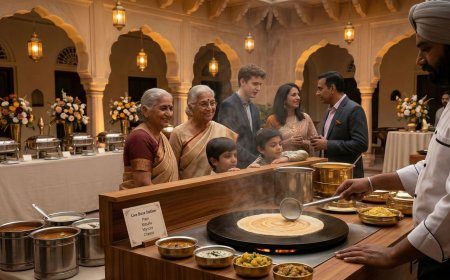
The Jodhpur culinary tradition — the Mirchi Bada, the Makhaniya Lassi, the Dal Baati Churma, the specific, Rajasthani, desert-adapted, ghee-and-lentil-and-spice, Marwari culinary tradition whose quality in Jodhpur is the quality of the source — is the guest programme's culinary heritage dimension whose street-food and whose traditional Rajasthani feast engagement most directly gives the international guest the Blue City's specific, Marwari, desert-adapted, only-in-this-kitchen culinary tradition.
The Mirchi Bada: the Jodhpur Mirchi Bada — the specific, large-green-chilli, batter-fried, Jodhpur-street-food, only-in-this-recipe, Jodhpur-culinary-institution quality of the fried chilli whose specific, only-in-Jodhpur, street-corner, morning-and-evening, local-institution character gives it the specific, irreplaceable, only-here-in-this-form culinary credential of the Jodhpur street food tradition — is the guest programme's primary culinary heritage element whose engagement with the international guest gives the Jodhpur wedding its most specifically, only-in-the-Blue-City culinary dimension.
The Camel Safari
The Jodhpur-area camel safari — the specific, Thar Desert-edge, camel-and-desert-landscape, only-in-Rajasthan, desert-access, sunset-on-the-Thar quality of the camel safari at the city's desert edge — is the guest programme's adventure and natural heritage element whose engagement gives the international guest the desert experience that the fort and the blue city and the step well most naturally complement.
The Jodhpur Wedding Photography: What the Eleven-Time Photographer Knows
The Three Essential Locations
The photographer had identified three essential Jodhpur photography locations across eleven weddings — the three whose specific, only-in-Jodhpur, light-and-location, photography-quality combination most directly produces the photographs that no other Indian destination most naturally replicates.
The Mehrangarh Fort at sunrise: the fort walls in the morning gold, the blue city below, the desert beyond — the photograph that the photographer had described as the photograph you cannot make anywhere else in India.
The Toorji step well in the afternoon: the step well's specific, geometric, stone-and-water, afternoon-light quality whose specific, ornate-carved, only-at-Toorji, old-city-adjacent, afternoon-angle photography is the photography that the eleven-time photographer most specifically prizes as the Jodhpur session's most architecturally extraordinary single setting.
The rooftop at dusk: the Jodhpur rooftop at the specific, dusk, Mehrangarh-illuminated, blue-city-below, desert-amber quality of the evening — the rooftop, the fort illuminated, the blue city in the last light, the desert's horizon — is the photograph whose specific, only-in-Jodhpur, dusk-and-fort-and-blue quality most completely expresses the Blue City destination wedding's defining visual credential.
The Morning Light
The Jodhpur morning light — the specific, desert, clear-air, elevated-plateau, northwest-Rajasthan, gold-quality morning light whose specific, low-angle, wall-finding, blue-revealing, fort-illuminating quality is the quality that the photographer had been returning to eleven times — is the photography's primary asset and the session whose timing most directly determines the photograph's quality.
The sunrise imperative: the photographer whose Jodhpur session begins at sunrise has the morning. The photographer whose session begins at ten AM has the flat light. Confirm the sunrise session for every Jodhpur pre-wedding photography programme. The Blue City in the morning gold is the Blue City at its most specifically extraordinary. The ten AM Blue City is the tourist-hour Blue City whose light is the light of the adequate rather than the extraordinary.
The Season: The Jodhpur Wedding Calendar
The Optimal Window
The Jodhpur destination wedding's optimal season — the specific, October-through-February, post-monsoon, dry-season, relatively-cool, clear-sky, desert-light-at-its-finest, outdoor-ceremony-most-comfortable window — is the season that the photographer had been shooting in across eleven visits and that the Jodhpur wedding market's peak season most directly reflects.
October and November: the post-monsoon, early-dry-season Jodhpur — the specific, freshly-washed, most-intensely-blue, post-monsoon blue city whose specific, rain-cleaned, indigo-freshened, post-monsoon quality gives the blue the specific, most-vivid, most-recently-maintained, freshly-blue character that the dry season's accumulated dust most gradually softens. The October and November Jodhpur blue is the most vivid blue.
December and January: the peak Jodhpur wedding season — the specific, coolest, clearest, most-comfortable-outdoor-ceremony, most-desert-light-extraordinary Jodhpur winter whose morning gold and whose evening amber are the photographer's most prized.
February and March: the late season — warming toward the spring, the light still extraordinary, the outdoor evening comfortable, the blue city still the blue city.
April through June: the Jodhpur summer — the specific, Thar Desert, hot, forty-five-degree, only-for-the-most-heat-tolerant wedding, outdoor programme impossible at the midday, indoor venue essential. The Jodhpur summer wedding requires the comprehensive indoor infrastructure and the specific, heat-management, dawn-and-dusk-only outdoor programme planning.
The Jodhpur NRI Wedding: The Complete Framework
The Guest Logistics
The Jodhpur destination wedding's guest logistics — the specific, Jodhpur, Rajasthan, domestic-flight-or-train, Delhi-connection, Jodhpur-Airport, wedding-convoy, guest-transport infrastructure — is the logistics whose management most directly determines the large NRI wedding's practical success.
The Jodhpur Airport: the Jodhpur Airport — the specific, domestic, Delhi-connection, Mumbai-connection, multiple-daily-flights, Jodhpur-accessible airport whose connectivity gives the large NRI wedding the international-via-domestic-connection access — is the airport whose specific, limited-international, domestic-hub quality requires the specific, Delhi-connection, international-guests-via-Delhi, arrival-management planning.
The Delhi connection: the international guests arriving from London, Toronto, Dubai, and Singapore at the Indira Gandhi International Airport and connecting to the Jodhpur domestic flight — the specific, two-to-three-hour total, international-to-domestic, Delhi-to-Jodhpur connection — is the arrival sequence whose management the NRI wedding's guest transport most specifically addresses.
The Jodhpur convoy: the specific, wedding-convoy, airport-to-venue, multiple-vehicle, guest-transport management whose coordination gives the large NRI wedding's multiple-origin, multiple-flight, multiple-family arrival the specific, managed, professionally coordinated airport-to-venue transfer — is the transport infrastructure whose planning begins at six months and whose execution on the arrival days most directly determines the first impression.
The Accommodation Distribution
The large Jodhpur destination wedding — whose guest count exceeds the primary venue's room capacity — requires the specific, accommodation-distribution, overflow-property, shuttle-managed, Jodhpur-hotel-network management whose planning most directly addresses the destination wedding's specific, single-venue-insufficient accommodation challenge.
The primary venue: the primary venue's room count — the Umaid Bhawan's approximately seventy rooms, the RAAS Jodhpur's forty to fifty rooms, the Bal Samand's specific room count — is the accommodation whose allocation begins with the wedding couple, the immediate families, the VIP guests, and the key family members whose primary venue accommodation most directly serves the wedding programme's proximity requirement.
The overflow properties: the Ajit Bhawan, the Raas Haveli, the specific, Jodhpur, heritage-hotel, overflow-property network whose management gives the larger guest count the specific, Jodhpur-heritage, characterful, shuttle-accessible overflow whose quality maintains the destination wedding's specific, only-in-Jodhpur, heritage-and-blue-city ambient character without the primary venue's premium.
The Complete Jodhpur Wedding Budget Framework
The Budget Across the Jodhpur Properties
| Property | Guest Scale | Optimal For | Total Budget Range | Timeline |
|---|---|---|---|---|
| Umaid Bhawan Palace | 200–350 guests | Grand royal, Art Deco, Taj standard | ₹4.50 Cr – ₹9.50 Cr | 20–24 months |
| RAAS Jodhpur | 60–100 guests | Intimate, fort-directly-above, boutique | ₹2.37 Cr – ₹4.97 Cr | 15–18 months |
| Bal Samand Lake Palace | 80–150 guests | Historic lake, estate, RAAS managed | ₹2.14 Cr – ₹4.48 Cr | 12–15 months |
| Ajit Bhawan | 60–120 guests | Mid-budget, family-run heritage | ₹1.20 Cr – ₹2.80 Cr | 10–12 months |
| Multi-property programme | 200–500 guests | Fort event + palace wedding | ₹5.00 Cr – ₹12.00 Cr | 20–24 months |
The Jodhpur Destination Wedding Cost Framework
| Category | Detail | Approx. Cost (INR) | Approx. Cost (USD) | Notes |
|---|---|---|---|---|
| VENUE AND EVENTS | ||||
| Primary venue hire | 3 days, all functions | ₹60,00,000 – ₹1,50,00,000 | $72,000 – $1,80,000 | Property dependent |
| Mehrangarh Fort event | Sangeet or cultural evening | ₹15,00,000 – ₹40,00,000 | $18,000 – $48,000 | Fort Trust managed |
| GUEST PROGRAMME | ||||
| Mehrangarh Fort visit | Heritage tour, guided | ₹1,00,000 – ₹3,00,000 | $1,200 – $3,600 | Essential, all guests |
| Bishnoi village safari | Wildlife and village | ₹1,50,000 – ₹4,00,000 | $1,800 – $4,800 | Desert ecology |
| Camel safari | Thar Desert, sunset | ₹1,00,000 – ₹3,00,000 | $1,200 – $3,600 | Desert experience |
| Old city blue walk | Toorji, step well, blue | ₹80,000 – ₹2,50,000 | $960 – $3,000 | Blue city immersion |
| Jodhpur food walk | Mirchi bada, street food | ₹50,000 – ₹1,50,000 | $600 – $1,800 | Culinary heritage |
| PHOTOGRAPHY | ||||
| Pre-wedding session | Fort sunrise, Toorji, rooftop | ₹3,00,000 – ₹8,00,000 | $3,600 – $9,600 | Three locations essential |
| Full wedding photography | 3-day, Jodhpur specialist | ₹14,00,000 – ₹30,00,000 | $16,800 – $36,000 | Desert light specialist |
| CATERING | ||||
| Dal Baati Churma feast | Rajasthani traditional | ₹2,500 – ₹5,000 per head | $30 – $60 per head | Primary cultural meal |
| Buffet dinner | Rajasthani, continental | ₹6,000 – ₹10,000 per head | $72 – $120 per head | Venue dependent |
| Seated formal dinner | Full service, palace | ₹10,000 – ₹18,000 per head | $120 – $216 per head | Palace property |
| ACCOMMODATION | ||||
| Primary venue rooms | Umaid/RAAS/Bal Samand | ₹18,000 – ₹1,60,000 per night | $216 – $1,920 | Property dependent |
| Overflow heritage hotel | Ajit Bhawan, others | ₹8,000 – ₹30,000 per night | $96 – $360 | Heritage character |
| Budget Jodhpur hotels | Economy, adequate | ₹3,000 – ₹8,000 per night | $36 – $96 | Budget overflow |
| DECORATION | ||||
| Full decoration programme | Rajasthani, palace scale | ₹25,00,000 – ₹60,00,000 | $30,000 – $72,000 | Jodhpur market |
| ENTERTAINMENT | ||||
| Rajasthani folk performance | Kalbelia, Langas, Manganiyar | ₹1,50,000 – ₹5,00,000 | $1,800 – $6,000 | Essential, all properties |
| Celebrity performer | Bollywood, Delhi market | ₹25,00,000 – ₹80,00,000 | $30,000 – $96,000 | Delhi accessible |
| TRANSPORT | ||||
| Jodhpur Airport transfers | All guests, convoy | ₹5,00,000 – ₹15,00,000 | $6,000 – $18,000 | Multi-vehicle managed |
| Venue shuttle | Overflow to primary | ₹2,00,000 – ₹6,00,000 | $2,400 – $7,200 | If overflow required |
| PLANNING TIMELINE | ||||
| Umaid Bhawan inquiry | Earliest: 24 months | 24 months | 24 months before | Most competed |
| RAAS Jodhpur inquiry | 15–18 months | 15–18 months | 15–18 months before | Boutique, limited |
| Bal Samand inquiry | 12–15 months | 12–15 months | 12–15 months before | Estate, manageable |
| Fort event application | Mehrangarh Trust | 10–12 months | 10–12 months before | Trust approval req |
| Destination planner | Jodhpur specialist | 12–15 months | 12–15 months before | Blue city expertise |
| Photography session | Sunrise, Toorji, rooftop | Before ceremony | Pre-wedding day | Three locations |
| Guest programme design | Complete by 6 months | 6 months before | 6 months before | All programme |
| Dal Baati Churma feast | Cultural feast confirmed | 8 months | 8 months before | Rajasthani tradition |
The Jodhpur Wedding Planner: What to Look For
The Blue City Specialist
The Jodhpur destination wedding requires the Jodhpur-specialist planner — the specific, Blue-City-experienced, Mehrangarh-Fort-Trust-relationship-holding, Bishnoi-village-programme-knowing, desert-light-photography-brief-understanding, old-city-vendor-network-having, palace-property-relationship-possessing planner whose specific, only-Jodhpur, accumulated, professional-relationship-and-experience quality most directly determines the wedding's quality.
The Fort Trust relationship: the Mehrangarh Fort Trust — the specific, institutional, heritage-management body whose permission is required for the event inside the fort — is the relationship whose prior, professionally established, Jodhpur-planner-mediated management most directly enables the Mehrangarh fort-courtyard sangeet that the NRI couple whose wedding vision includes the fort's interior most specifically requires. The planner without the Fort Trust relationship cannot deliver the fort event. The planner with the Fort Trust relationship delivers the sangeet inside the fort above the blue city.
The Rajasthani folk music specialist: the Manganiyar musician, the Kalbelia dancer, the Langa performer — the specific, Rajasthani, folk-music-and-dance, only-in-this-tradition, professional-performance quality of the Rajasthani performing arts whose Jodhpur engagement most directly gives the destination wedding its specific, cultural, only-in-Rajasthan, folk-performance dimension — is the entertainment element whose booking the Jodhpur-specialist planner most directly facilitates.
Common Mistakes NRI Couples Make When Planning the Jodhpur Destination Wedding
The first mistake is not including the Mehrangarh Fort visit as a formal, guided, heritage-programme element for every guest on the day before the wedding. The Mehrangarh Fort — the specific, fifteen-century, thirty-six-metre-wall, largest-fort-in-India, Rathore-dynasty, only-at-this-elevation, blue-city-below, desert-beyond monument whose five-hundred-and-sixty-year heritage is the heritage context for the entire Jodhpur destination wedding — is the heritage visit whose prior engagement by every guest most directly gives the ceremony the specific, informed, culturally understanding quality of the gathering that knows where it is and why. The guest who has stood at the Mehrangarh's ramparts at the sunrise before the wedding day has seen the blue city from the fort's perspective — the specific, three-hundred-and-sixty-metre-elevation, blue-below, desert-beyond quality of the view that most completely communicates the Jodhpur destination wedding's specific, only-this-city, fort-and-blue-city-and-desert credential. Make the Mehrangarh visit the formal, all-guests, guided heritage programme element the day before the ceremony.
The second mistake is not scheduling the pre-wedding photography session at the sunrise for the Mehrangarh, the Toorji step well, and the rooftop. The photographer who had been to Jodhpur eleven times had said: the light is different here. He had said it before the first visit and been right. The couples had understood at the first morning. The session at ten AM has the Blue City in the tourist-hour flat light. The session at six AM has the Blue City in the morning gold. The three-location, sunrise-timed, morning-gold, eleven-time-photographer's-knowledge session at the Mehrangarh and the Toorji and the rooftop is the session that produces the photographs that the photographer had been returning to Jodhpur eleven times to produce. Confirm the sunrise session time before the pre-wedding photography session is booked.
The third mistake is not including the Dal Baati Churma feast as the primary cultural meal. The Dal Baati Churma — the specific, Rajasthani, baked-wheat-ball-and-lentil-and-sweetened-wheat-flour-crumble, traditional, only-in-Rajasthan, desert-adapted, ghee-and-fire, Marwari culinary tradition whose quality in Jodhpur is the quality of the source — is the wedding meal whose engagement most directly gives the international guest the Jodhpur culinary identity that the palace dinner's continental menu cannot provide. Include the Dal Baati Churma feast as the welcome lunch or the informal day programme's primary cultural meal. The Jodhpur culinary tradition served in the Jodhpur palace grounds gives the destination wedding's guest the specific, only-in-this-city, cultural, culinary identity that the generic Rajasthani buffet most naturally omits.
The fourth mistake is not booking the Rajasthani folk performance — the Manganiyar musicians, the Kalbelia dancers, the Langa singers — as the sangeet's primary cultural performance rather than the supplementary entertainment addition. The Manganiyar musicians — the specific, hereditary, Muslim, desert-folk, only-in-Rajasthan, century-of-accumulated-musical-tradition musicians whose specific, raw, emotional, desert-musical quality is the quality of the tradition that the Jodhpur desert produced and that no Bollywood DJ set most naturally replicates — are the sangeet entertainment whose engagement at the Jodhpur destination wedding most completely expresses the specific, cultural, only-in-the-desert, Rajasthani folk tradition's quality. The sangeet in the palace courtyard with the Mehrangarh illuminated above and the Manganiyar musicians performing the traditional Rajasthani folk music whose specific, hereditary, only-this-tradition quality is the quality of the desert's own music — this is the sangeet that the Blue City destination wedding most specifically deserves.
The fifth mistake is not engaging the Bishnoi village programme as the day-two guest programme element that most directly gives the international guest the Jodhpur hinterland's specific, only-this-region, wildlife-and-conservation, cultural-and-ecological quality. The Bishnoi villages — thirty kilometres from the city, forty minutes by vehicle — are the guest programme destination whose combination of the five-hundred-year wildlife conservation heritage, the blackbuck and the peacock and the chinkara in their natural habitat, and the specific, Bishnoi-community, desert-ecology, only-in-this-community cultural tradition gives the international guest the Jodhpur experience that the fort and the blue city and the palace most naturally omit. The Bishnoi community's specific, only-in-this-tradition, pre-modern-environmentalism heritage — the community that began protecting the wildlife of the Jodhpur area in the fifteenth century — is the cultural heritage whose combination of the ecological and the historical and the specifically, irreducibly only-in-Bishnoi-community quality gives the wedding's second day the most specifically extraordinary programme depth.
Eleven Mornings
The photographer had been to Jodhpur eleven times.
He had tried to explain the light before the first visit.
He had said: the light is different here.
The couples had not fully understood until the first morning.
Then they had understood.
He had had eleven mornings in Jodhpur.
Eleven mornings of the desert gold finding the blue walls at the specific, low-angle, morning quality that most completely reveals the blue.
Eleven mornings of the Mehrangarh in the specific, fort-walls-catching-the-first-light quality whose only-in-Jodhpur, only-at-this-elevation, only-in-the-morning quality is the quality that the ten-AM tourist does not see.
Eleven mornings of the understanding.
The Jodhpur destination wedding is the wedding in the light. Not only in the palace or the fort or the blue city or the desert edge — though all of these are the context. In the specific, only-this-city, desert-dry-air, elevated-plateau, northwest-Rajasthan, morning-gold-and-evening-amber light whose quality the photographer had been returning to eleven times and that the NRI couple's wedding most specifically inherits.
The Umaid Bhawan is the grand royal light — the Art-Deco palace in the Jodhpur morning gold.
The RAAS is the intimate fort light — the haveli with the Mehrangarh one hundred and twenty metres directly above.
The Bal Samand is the historic lake light — the 1159 AD lake in the early morning's mirror-flat reflection.
All three are the Jodhpur light.
The same desert-dry-air, elevated-plateau, morning-gold, evening-amber, fort-above-blue-city-below, only-in-this-city light.
Choose the venue that matches the vision.
Plan the photography session at the sunrise.
Include the Mehrangarh on the day before.
Include the Manganiyar musicians at the sangeet.
Include the Dal Baati Churma at the feast.
Include the Bishnoi villages on day two.
Include the Toorji at the afternoon.
Include the rooftop at the dusk.
And on the first morning — the first Jodhpur morning, the specific, desert-light, morning-gold, blue-city-below-and-fort-above, only-in-this-city morning — look at the light.
The photographer had been right.
It is different here.
You will understand at the first morning.
The Blue City.
The light.
The wedding.
Published by NRIWedding.com — The Premium Global Platform for Non-Resident Indians Planning Indian Weddings From Abroad.
What's Your Reaction?
 Like
0
Like
0
 Dislike
0
Dislike
0
 Love
0
Love
0
 Funny
0
Funny
0
 Angry
0
Angry
0
 Sad
0
Sad
0
 Wow
0
Wow
0