


























































Destination Wedding in Kovalam: Clifftop Ceremonies Above Kerala's Lighthouse Beach — The Complete NRI Planning Guide
Planning a destination wedding in Kovalam, Kerala from abroad? This complete NRI guide covers everything the globally-located Indian couple needs — from clifftop heritage hotels and beachfront resort ceremonies to CRZ coastal regulation permissions, Arabian Sea wind management, Thiruvananthapuram vendor logistics, and the seasonal planning windows that define Kerala's lighthouse coast. Learn how to incorporate the traditional Keralan sadya feast, Thiruvathira dance, kasavu textile aesthetics, and Sopana Sangeetham music into your wedding programme, manage coastal zone legal frameworks from overseas, and design a clifftop ceremony that works with the Arabian Sea light rather than against it. This is the specific, expert, non-generic guidance that a Kovalam destination wedding demands.


Destination Wedding in Kovalam, Kerala — Clifftop Ceremonies Above Kerala's Lighthouse Beach: The Complete NRI Planning Guide
The email came on a Sunday morning in March, at eight-fifty-four, which was the kind of hour that Deepa had learned to associate with her mother having been awake for some time already, thinking.
It was not long. Her mother was not a long-email person. It said, in its entirety: I found something. Look at the last photograph. Don't look at the others first. Just scroll to the last one.
Deepa was in her flat in Amsterdam, in the particular Sunday quiet of a Dutch morning — the light coming in at that low, watery angle that the Netherlands produces in early spring, the canal outside going still and grey, the city not yet fully awake. She had a coffee. She had, on the kitchen table beside the coffee, the spreadsheet she had been building for four months — venues, dates, capacities, caterers, approximate costs — which had grown to thirty-one rows and eight columns and which had begun to feel less like a planning tool and more like a document of everything she did not yet know.
She scrolled to the last photograph.
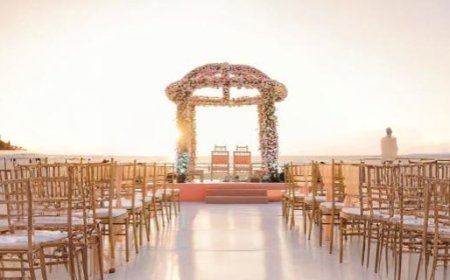
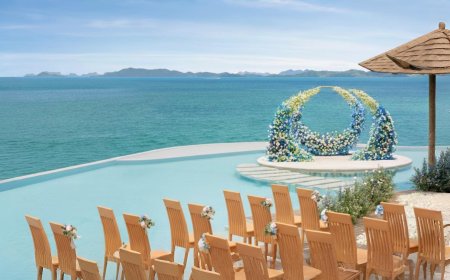
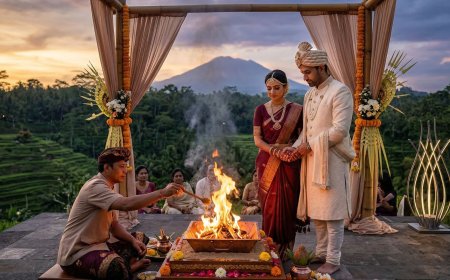
It had been taken from above — from a clifftop, she understood immediately, looking down at a crescent of pale sand and the Arabian Sea beyond it, the water going from shallow turquoise at the shore to deep blue at the horizon in the specific, gradated way that the Kerala coast produces in the late afternoon. On the cliff edge itself, someone had arranged a mandap — simple, open-sided, draped in white with a single line of marigolds along its base — and the light falling through the fabric was the gold of late afternoon, and below the cliff the sea was doing what the sea does, completely indifferent to the ceremony above it, and the combination of the indifference and the beauty was so precise that Deepa felt something shift behind her sternum.
She scrolled back and looked at the other photographs. A lighthouse, white and red, rising above a rocky headland. The beach below in the morning, empty and pale. A hotel terrace with bougainvillea growing over the railing and the sea beyond it. A fishing boat going out in the blue hour, its light small and specific against all that dark water.
She called her mother.
"Where is this," she said, without saying hello.
"Kovalam. Outside Thiruvananthapuram. There are three beaches — Lighthouse Beach, Hawa Beach, Samudra Beach. The clifftop is between Lighthouse Beach and Hawa Beach. Some hotels sit on the cliff itself." Her mother paused. "Your father and I went there in 1987. It was the first trip we took after the wedding. I did not expect to think of it when I was looking for your venue."
Deepa looked at the mandap on the clifftop. The white fabric. The marigolds. The sea going blue and indifferent below.
"Did you love it?" she asked.
"I have never loved anywhere like that," her mother said. "It is the kind of place that stays in your body."
Her fiancé Arjun was in Singapore. She sent him the photograph — just the one, the last one, the clifftop mandap and the Arabian Sea — with no message, no context.
He replied in four minutes: Kerala. Yes. When.
What neither of them understood — what the photograph showed without showing — was that Kovalam is one of the most logistically layered destination wedding locations on the Kerala coast, and that its specific combination of clifftop geography, beach access regulation, monsoon intensity, and vendor ecosystem requires a planning approach that is substantially more specific than the beauty of the location suggests. The beach is real. The cliff is real. The light is real. The planning complexity is equally real, and the NRI couple who approaches Kovalam with only the photograph in mind will encounter the complexity at exactly the wrong moment — not during preparation, but during execution.
This guide is for that couple — the ones for whom Kovalam is already decided in the body, and who now need to understand, with complete precision, what the decision actually requires.
Why Kovalam Demands a Different Planning Framework for NRI Couples
Kerala as a wedding destination has a vocabulary — backwaters, ayurveda, kathakali, coconut palms, Keralan sadya — that is well-established in the Indian destination wedding conversation and that has produced a market of wedding coordinators, resort venues, and event photographers who are broadly competent at delivering the Kerala destination wedding experience in its most general form.
Kovalam is not the general form.
Kovalam is a specific place with a specific geography, a specific cultural history, and a specific set of operational characteristics that distinguish it from the backwater resorts of Alleppey, the hill properties of Munnar, and the heritage venues of Fort Kochi that constitute the rest of Kerala's destination wedding landscape. Understanding what makes Kovalam specifically Kovalam — and what that specificity means for an NRI couple planning from Amsterdam or Auckland or Atlanta — is the first act of intelligent preparation.
The geography is the beginning. Kovalam is not a flat beach resort destination in the manner of Goa or Pondicherry. It is a coastline of bays, headlands, and cliffs, with the three beaches — Lighthouse, Hawa, and Samudra — separated by rocky promontories and connected by paths that are pleasant for the individual traveller and operationally significant for the wedding coordinator trying to move two hundred guests between functions. The clifftop that makes Kovalam's wedding photographs extraordinary is also the terrain that makes guest movement, vendor access, and equipment delivery more complex than at any flat beach resort.
The lighthouse is the second defining characteristic. The Vizhinjam Lighthouse, which rises above Lighthouse Beach with the straightforward authority of a structure that exists to be seen and to guide, is the visual anchor of every Kovalam wedding photograph and the landmark that gives the destination its most recognizable identity. It is not available for private event hire. Its presence is a gift of geography, not a venue element, and the wedding that positions itself in relation to it — that uses the lighthouse as backdrop and horizon marker rather than attempting to possess it — is the wedding that understands how Kovalam works.
The third characteristic is the specific quality of Kovalam's light. The Arabian Sea coast of Kerala receives the evening sun directly, which means that the golden hour at Kovalam is among the most photographically extraordinary of any Indian coastal destination — the light coming horizontally across the water, hitting the white buildings on the clifftop, turning the limestone a warm amber, catching the waves below. The NRI couple who has briefed their photographer about Kovalam's golden hour is in a fundamentally different position than the couple who discovers it by accident at five-thirty on the evening before the wedding.
The fourth characteristic, and the one most consistently underweighted by couples who have found Kovalam through its beauty rather than its logistics, is the monsoon. Kerala receives the southwest monsoon earlier, more intensely, and more reliably than almost any other Indian destination wedding location. The monsoon arrives at Kovalam in the first week of June and does not fully withdraw until mid-October. It is not a gentle monsoon. It is the full, structural, multi-month rainfall of the subcontinent's most rain-intensive coast, with daily precipitation that renders outdoor event planning not merely risky but genuinely impractical for four to five months of the year. This is not a caveat. It is a calendar fact that determines the entire seasonal planning framework.
The Venue Landscape — Kovalam's Clifftop and Beachfront Properties
The Clifftop Heritage Hotels
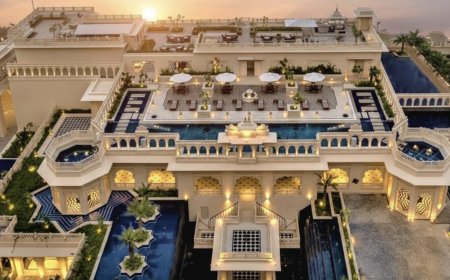
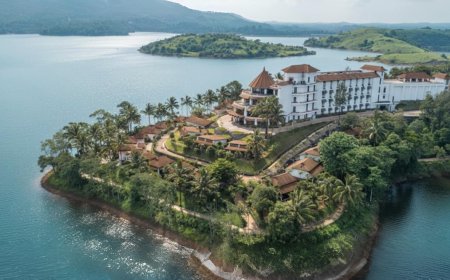
The most distinctive wedding venues at Kovalam sit on the headland between Lighthouse Beach and Hawa Beach, on the clifftop that the most memorable wedding photographs use as their setting. These properties — built into the cliff face in several cases, with terraces and lawns that extend to the cliff edge above the sea — offer a ceremony setting that is genuinely without equivalent anywhere on the Indian coast.
The clifftop hotels vary significantly in their event infrastructure, their accommodation capacity, and their operational sophistication. The largest among them can accommodate wedding functions of one hundred and fifty to two hundred guests on their terraces and lawns, with indoor backup spaces that are functional rather than atmospheric. The smaller boutique properties — some with as few as fifteen to twenty rooms — offer an intimacy and a specific architectural beauty that the larger properties cannot replicate but a guest capacity that requires the NRI couple to have made the difficult guest list decisions before the venue shortlisting begins.
What every clifftop property shares, and what every NRI couple must understand before booking, is the wind. The Arabian Sea generates consistent, sometimes strong coastal winds that arrive at the Kovalam clifftop with nothing to break them between the horizon and the ceremony space. These winds are beautiful in the photographs — they move the fabric, they animate the flowers, they give the images a life that still-air photographs do not have. They are also operationally significant: candle arrangements must be enclosed or replaced, lightweight decor elements require anchoring, and the mandap must be engineered for wind load rather than assembled as it would be at an inland venue. The florist and decorator who has worked Kovalam's clifftop before knows these requirements instinctively. The one who has not will learn them on the day, which is the wrong time.
The Beachfront Resorts
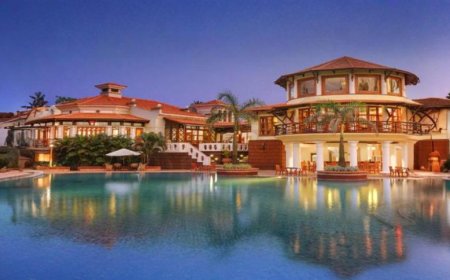
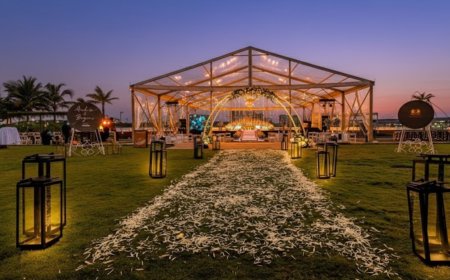
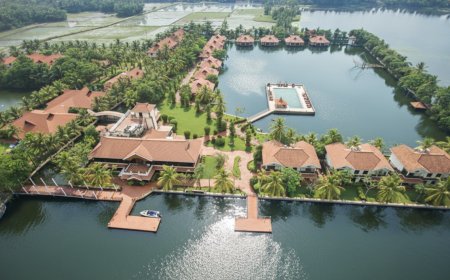
A second category of Kovalam wedding venue exists in the beachfront resorts that line the back of Lighthouse Beach and the approaches to Samudra Beach. These properties offer larger event capacities, more conventional resort infrastructure, and the operational sophistication to manage multi-day wedding programmes with less bespoke coordination than the clifftop boutique properties require.
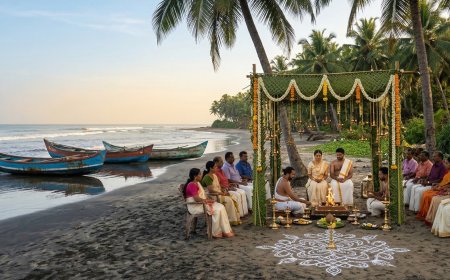
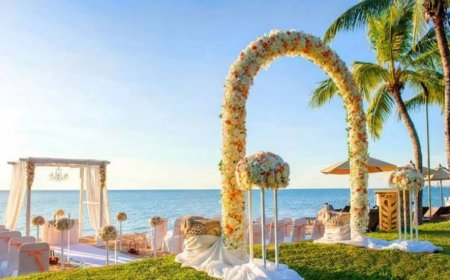
The beach itself — Lighthouse Beach, with its pale sand and its fishing boats and its lighthouse backdrop — is one of the most visually extraordinary ceremony settings in South India. Beach ceremonies at Kovalam are subject to Coastal Regulation Zone regulations under the CRZ Notification, 2019, administered by the Kerala Coastal Zone Management Authority, and the specific permissions required for wedding functions on the beach — the distance from the high tide line, the restrictions on permanent structures and amplified sound — must be researched and confirmed with a Kovalam-experienced coordinator before any beach ceremony is planned.
The Private Villa Buyout
The third category, which has grown significantly in the last five years as Kovalam's villa rental market has matured, is the private villa buyout — a clifftop or beachfront villa, typically with four to eight bedrooms, booked in its entirety for the wedding party. These villas offer the most intimate Kovalam wedding experience, the most direct access to the clifftop and the sea view, and the most complete sense of the destination as a private, personal space rather than a commercial venue. They require the most independent vendor sourcing and the most operationally sophisticated coordination, and they are the highest-reward, highest-complexity option for the NRI couple who is willing to do the additional planning work they require.
The Seasonal Framework — When Kovalam Works and When It Does Not
November to February: The Primary Season
The post-monsoon winter season from November through February is Kovalam's primary wedding window, and the reasons are multiple and specific. The monsoon has withdrawn, the sea is calm enough for the coastal aesthetics that define the destination's visual identity, the humidity is lower than at any other time of year, and the temperatures — twenty-four to thirty-two degrees Celsius — are warm without being oppressive. The light in this period is exceptional: clear, directional, the kind of light that photographers and cinematographers refer to simply as the good light, the light that requires no filtration and no post-processing to produce images of the quality that the Kovalam clifftop makes possible.
December and January are the peak months — the highest demand, the most competitive venue availability, the vendors most fully committed. The NRI couple targeting a December or January Kovalam wedding should begin venue outreach sixteen to eighteen months before the intended date and should treat the first conversation with the venue as the beginning of a booking process, not a preliminary enquiry.
March to May: The Secondary Window
March and April offer a workable secondary window, with the light still good, the sea still calm, and the temperature beginning to rise toward the summer heat that arrives properly in May. The photography in this period is somewhat more challenging — the haze that builds over the Arabian Sea in late spring softens the horizon in ways that affect the clarity of wide-angle sea views — but the clifftop ceremonies remain beautiful and the logistical conditions remain manageable.
May is transitional: hot, humid, and increasingly unpredictable as the pre-monsoon atmospheric conditions begin to build. A May Kovalam wedding is possible but requires a coordinator who has specific experience of the shoulder season and its specific operational character.
The Monsoon Prohibition
June through mid-October is not a Kovalam wedding season, and that statement should be treated as definitive. The southwest monsoon at Kovalam is not the gentle, romantic monsoon of popular imagination — it is structural, sustained, and operationally decisive in ways that affect every element of a coastal event. The waves during monsoon at Kovalam are significant enough that the beaches are closed to swimming and the coastal access paths are affected. The wind that the monsoon brings is not the pleasant clifftop breeze of winter but a force that no tent structure or outdoor decor arrangement can reliably withstand. The NRI couple who considers a monsoon Kovalam wedding for cost reasons is accepting a risk profile that is incompatible with the outdoor coastal wedding that defines the destination's entire appeal.
NRI-Specific Logistics — Managing Kerala From Abroad
The Thiruvananthapuram Gateway
Kovalam sits sixteen kilometres south of Thiruvananthapuram, the capital of Kerala, which is served by Trivandrum International Airport with direct international connections to the Gulf region and connecting flights from all major Indian cities. The airport's international connectivity makes Kovalam genuinely more accessible for NRI guests arriving from the Middle East — Dubai, Abu Dhabi, Muscat, Doha — than almost any other Indian destination wedding location, and this accessibility is a significant logistical advantage for the substantial proportion of the NRI community for whom the Gulf is the primary diaspora hub.
For guests arriving from Europe, North America, and Australia, the journey routes through Delhi or Mumbai, with a connecting flight to Thiruvananthapuram of approximately two to three hours. The total journey time from London or Toronto is twenty to twenty-four hours, which is manageable and which makes Kovalam genuinely practical for a four to five day wedding programme rather than requiring the extended stay that more remote destinations demand.
The road from Thiruvananthapuram to Kovalam is straightforward — the NH 66 corridor, approximately forty-five minutes to an hour in normal traffic, longer during peak tourist season and during the evening rush hours that affect the Thiruvananthapuram city approach. Guest arrival briefings should include the airport pickup coordination detail that every Kovalam wedding coordinator handles as a standard service, and the transfer timing should account for the traffic variables on the Thiruvananthapuram approach.
The Vendor Ecosystem — Thiruvananthapuram and Beyond
The professional wedding vendor market for Kovalam events is concentrated in Thiruvananthapuram, with a secondary supplier base in Kochi that provides the higher-end specialist vendors — cinematographers with international portfolios, floral designers working in contemporary idioms, bespoke catering operations — that the Thiruvananthapuram market does not fully cover. For the NRI couple with specific vendor aesthetic requirements, the Kochi vendor market is the relevant reference point, and the additional cost of bringing Kochi-based vendors to Kovalam — three to four hours by road — is a consideration that must be built into the budget from the initial planning stage.
The specific vendor categories that require Kovalam experience rather than generic Kerala experience are: the florist who understands clifftop wind conditions, the catering team that has managed the logistical complexity of multi-course Keralan sadya service for large groups on a cliff terrace, the photographer who knows the specific angles and timing windows that the Kovalam light and geography produce, and the sound engineer who understands the acoustic behaviour of an open coastal space and can manage the CRZ sound restrictions that apply to beach and clifftop events.
The coordinator must have specific Kovalam experience — not general Kerala experience, not coastal experience, but Kovalam. The clifftop's specific conditions, the CRZ regulatory framework, the vendor relationships in Thiruvananthapuram, and the beach access protocols are all location-specific knowledge that cannot be substituted by broader competence.
Payments, Contracts, and the Consumer Protection Framework
The legal framework governing vendor contracts for a Kovalam wedding is the Indian Contract Act, 1872, supplemented for consumer disputes by the Consumer Protection Act, 2019 — the latter of which provides NRI clients with the right to file complaints before the District Consumer Disputes Redressal Commission for deficiency of service, a right that is meaningfully applicable to wedding vendor disputes and that provides a level of consumer protection that many NRI couples do not realize they have.
The specific contractual requirement that applies to Kovalam beach and clifftop events, beyond the standard scope, milestone, and cancellation provisions, is the force majeure clause as it applies to weather events. A well-drafted Kovalam wedding contract will specify the conditions under which weather-related programme changes constitute force majeure, the obligations of the vendor under those conditions, and the financial treatment of expenses already incurred when a weather event requires programme modification. Couples who have not addressed this in their contracts before the monsoon arrives early or the pre-monsoon wind disrupts the clifftop setup will discover its importance at significant financial and emotional cost.
The NRI Wedding Planning Master Reference Table
| Planning Parameter | Kovalam-Specific Detail | NRI Action Required | Recommended Timeline |
|---|---|---|---|
| Venue Categories | Clifftop heritage hotels (80–200 guests), beachfront resorts (150–300 guests), private villa buyout (30–60 guests) | Finalize guest count before venue shortlisting; confirm CRZ compliance and event permissions with every venue | 14–18 months before wedding |
| Best Wedding Season | November to February (primary); March to April (secondary); avoid June to mid-October (monsoon) | Book peak December–January dates 16–18 months ahead; confirm venue's monsoon contingency infrastructure | 16–18 months for peak dates |
| CRZ Regulations | CRZ Notification 2019 governs beach ceremonies; distance from high tide line, structure, and sound restrictions apply | Hire coordinator with Kerala Coastal Zone Management Authority permit experience; confirm beach ceremony permissions before booking | 10–12 months before wedding |
| Clifftop Wind Management | Arabian Sea wind consistent and sometimes strong on headland; affects candles, lightweight decor, mandap stability | Brief decorator on Kovalam wind conditions; require wind-engineered mandap design; use enclosed candle holders throughout | 6–8 months before wedding |
| Guest Transportation | Thiruvananthapuram airport 16 km from Kovalam; NH 66 approach 45–60 minutes; traffic variable on city approach | Coordinate airport pickups; stagger arrival transfers to manage traffic; provide guests with detailed arrival brief | 6–8 months before wedding |
| Primary Vendor Base | Thiruvananthapuram for operational vendors; Kochi for specialist photography, decor, contemporary catering | Budget for Kochi vendor travel and accommodation; confirm vendor Kovalam experience specifically; conduct video workspace visits | 10–12 months before wedding |
| Golden Hour Photography | Arabian Sea golden hour exceptional at Kovalam clifftop; horizontal evening light hits white buildings at 5:15–6:30 PM window | Brief photographer specifically on Kovalam golden hour timing and clifftop angles; schedule ceremony to allow golden hour couple shoot | 6–8 months before wedding |
| Keralan Sadya Integration | Traditional Keralan banana-leaf feast is wedding feast centrepiece; requires experienced Thiruvananthapuram caterer | Conduct sadya tasting at follow-up visit; confirm caterer's large-format clifftop service experience; plan banana leaf logistics | 6–8 months before wedding |
| Accommodation | Limited clifftop boutique rooms; beachfront resort overflow available; Thiruvananthapuram city hotels for large overflow | Block venue rooms and overflow properties immediately upon venue confirmation; send accommodation map to guests early | 12–14 months before wedding |
| Beach Access Regulation | Lighthouse Beach public access cannot be blocked; private beach ceremony requires resort's private beach section or CRZ permit | Confirm venue's private beach access; do not assume public beach availability for ceremony use | 10–12 months before wedding |
| Keralan Cultural Elements | Thiruvathira dance, Sopana Sangeetham music, Kathakali performance, Keralan temple jewelry, kasavu saree aesthetic | Engage Thiruvathira ensemble for mehendi; consider Kathakali performance as post-dinner programme element; source kasavu textile decor | 8–10 months before wedding |
| Legal and Payments | Indian Contract Act 1872; Consumer Protection Act 2019; FEMA 1999 for NRI payments; CRZ force majeure clause essential | Use NRO/NRE account for INR payments; require weather/CRZ force majeure clause in all outdoor event contracts | Before first vendor payment |
| Pre-Wedding Shoots | Lighthouse backdrop, clifftop dawn shoot, Vizhinjam harbour fishing boats, Padmanabhapuram Palace excursion | Brief photographer on all Kovalam shoot locations; schedule lighthouse clifftop shoot for golden hour; book Padmanabhapuram visit as programme element | 6–8 months before wedding |
| Sound and Acoustics | Open coastal space produces acoustic challenges; CRZ sound restrictions apply; wind affects amplification | Brief sound engineer on Kovalam acoustic conditions; design sound system for coastal wind interference; confirm decibel compliance with CRZ norms | 6–8 months before wedding |
| Communication Protocol | IST gap: UK +4.5 hrs, US East +9.5 hrs, Australia East −5.5 hrs | Schedule weekly coordinator call; use WhatsApp for vendor communication; maintain shared planning document as single source of truth | From first vendor engagement |
Common Mistakes NRI Couples Make With Kovalam Destination Weddings
The first mistake is treating the CRZ regulations as an administrative formality rather than as the structural legal framework within which the entire beach ceremony must be designed. The Coastal Regulation Zone notification is not a bureaucratic inconvenience — it is a specific, enforceable legal instrument that restricts the use of coastal land within defined distances of the high tide line, regulates the construction of temporary structures on the beach, and imposes sound level limits on amplified events in the coastal zone. Couples who plan a beach ceremony and assume that the venue will handle the permits, or that the permits are a routine matter that will resolve itself, occasionally discover on the morning of the ceremony that a specific permission has not been obtained or that the planned setup violates a CRZ condition and must be modified. The solution is to require documentary evidence of CRZ compliance from the venue and the coordinator before any outdoor beach or clifftop event is confirmed, and to have this documentation reviewed by a Kerala advocate familiar with coastal zone regulations before the booking deposit is paid.
The second mistake is underestimating the monsoon's arrival timing and booking a late May or early June wedding without a fully designed indoor contingency. The Kerala monsoon is the most punctual of India's regional monsoon arrivals — it reaches Thiruvananthapuram and the Kovalam coast in the first week of June with a reliability that the Indian Meteorological Department forecasts to within two to three days in most years. The couple whose outdoor ceremony is planned for the first weekend of June is planning it on the edge of a meteorological deadline that has been observed with near-perfect consistency for decades. This is not a risk worth accepting for the marginal cost savings of a shoulder-season booking, and the indoor programme must be designed to the same standard as the outdoor one regardless of how confident the couple feels about the weather.
The third mistake is neglecting the specific acoustic and wind challenges of the Kovalam clifftop in the sound and decor brief. The open coastal position of the clifftop venues generates wind conditions that behave differently from those at inland venues — more consistent, more directional, more likely to affect amplified sound by creating interference at the microphone and carrying speaker output away from the audience rather than toward them. The sound engineer who has not worked Kovalam specifically will set up a system appropriate for an indoor ballroom and discover on the evening of the function that the system is fighting the wind rather than working with it. The brief to the sound engineer must include the specific wind conditions of the venue, and the system design must account for them.
The fourth mistake is failing to incorporate the specific Keralan cultural tradition into the wedding programme in favour of a generic North Indian wedding format that has no relationship to the place. A Kovalam wedding served by a North Indian menu, accompanied by Bollywood DJ music, decorated with Rajasthani mirror-work, and structured according to a programme that could have been held anywhere from Gurgaon to Goa is a wedding that happens to be located at Kovalam rather than a wedding that belongs there. The Keralan sadya — the traditional banana-leaf feast of twenty to twenty-eight dishes served in the specific ceremonial sequence of Keralan hospitality — is the greatest wedding feast in India and it is available here, at this location, prepared by families who have been making it for generations. The Thiruvathira dance, the Sopana Sangeetham music, the kasavu saree aesthetic, the specific gold of Keralan temple jewellery — all of these represent a cultural richness that is specific to this place and that no other destination can offer. Using them is the decision to let the wedding know where it is.
The fifth mistake is insufficient attention to the physical complexity of guest movement across Kovalam's clifftop and beach terrain for elderly and mobility-limited guests. The Kovalam clifftop is not flat. The paths between properties, between the ceremony space and the dining terrace, between the terrace and the beach — they are beautiful paths, stone-paved and bougainvillea-bordered, but they involve gradients, steps, and surfaces that are not uniformly accessible. The couple with elderly grandparents or guests with mobility limitations must walk every route with their coordinator on the reconnaissance visit and design the programme so that vehicle access is available at every transition point for guests who need it. This is not a peripheral concern. It is a programme design requirement, and it is the kind of specific, physical knowledge of the venue that no amount of remote planning can substitute for.
The Aesthetic Language of a Kovalam Wedding
The visual vocabulary of a Kovalam wedding begins with the light — the specific, horizontal, amber evening light of the Arabian Sea coast that falls on white buildings and pale sand and dark water simultaneously and produces a colour palette that no decorator can manufacture but that any photographer who knows it can use as the foundation of every image.
Against this light, the aesthetic language of the Kerala tradition carries with extraordinary force. The kasavu saree — cream cotton with its wide gold border — is the Keralan bridal textile, and its simplicity against the coastal backdrop is more powerful than any heavily embellished alternative. The specific gold of Keralan jewellery, the Palakka mala and the Manga mala, the temple-form earrings and the multi-strand necklaces — this is a jewellery tradition whose weight and warmth against the coastal light produces a visual result that is specific to this coast, to this tradition, to this exact intersection of culture and geography.
The flowers of a Kovalam wedding are the flowers of Kerala — not the roses and orchids of the generic Indian wedding floral market but the jasmine and the marigold and the banana flower and the lotus, arranged not in the densely packed spherical forms of North Indian wedding floristry but in the garland and the floor rangoli and the threshold decoration forms that are native to Kerala's ceremonial aesthetic. The mandap decorated in Kerala's own floral language, on a clifftop above the Arabian Sea, in the gold light of late afternoon — this is a visual statement that belongs to its place completely, and the belonging is the thing that makes it extraordinary.
The sea itself is the final element — not as backdrop, not as context, but as participant. The sound of the waves below the clifftop during the ceremony, the salt in the air, the way the light moves on the water throughout the day, changing from silver in the morning to gold in the afternoon to deep blue in the evening — the couple who designs their programme to be in relationship with these rhythms rather than indifferent to them will produce a wedding that their guests feel in their bodies as well as remember in their minds.
Resolution
The ceremony was at five in the afternoon, which was the time the coordinator had recommended and which had seemed, in the planning documents exchanged across the Amsterdam-Thiruvananthapuram time gap over eight months, like a logistical preference. Standing on the clifftop in the actual light of that actual afternoon, Deepa understood that it was not a preference. It was the specific, non-negotiable hour at which the Arabian Sea does what it does to the light, and the coordinator had known it, and had planned around it, and had been right.
Arjun was waiting at the mandap in a cream sherwani that his mother had had made in Kochi in the kasavu tradition — cream and gold, the Kerala colours — and the light was doing something to the fabric that made it look like it was made of the same material as the afternoon itself.
Deepa's mother stood at the edge of the clifftop terrace after the ceremony, not with the other guests but slightly apart, looking at the sea going dark in the evening. She had a glass of something she was not drinking. She had the specific stillness of a person revisiting a place in which they left something of themselves, and finding it still there.
Deepa came and stood beside her.
"It is the same," her mother said, without turning. "Thirty-eight years and it is exactly the same. The sea does not change."
Below them, the fishing boats were going out for the night, their lights small and specific against the dark water, indifferent to the wedding that had just happened on the cliff above them, indifferent to the thirty-eight years between one woman's honeymoon and her daughter's wedding, indifferent to everything except the sea and the night and the work of going out and coming back.
It was the same. The light was the same. The sea was the same. The cliff was the same.
The wedding had come home.
Book the clifftop before the season fills. Confirm your CRZ permissions in writing before any outdoor event is finalized. Brief your decorator and sound engineer on the coastal wind specifically. Let the sadya be the feast. Watch the golden hour — it will be the best thirty minutes of the entire week.
Kovalam gives you the most photographically extraordinary coastal ceremony setting in South India and a cultural tradition rich enough to anchor the entire programme. Plan with the precision the place and the coast demand, and it will give you something that lives in the body long after the photographs have been looked at and put away.
Published by NRIWedding.com — The Premium Global Platform for Non-Resident Indians Planning Indian Weddings From Abroad.
What's Your Reaction?
 Like
0
Like
0
 Dislike
0
Dislike
0
 Love
0
Love
0
 Funny
0
Funny
0
 Angry
0
Angry
0
 Sad
0
Sad
0
 Wow
0
Wow
0