


































































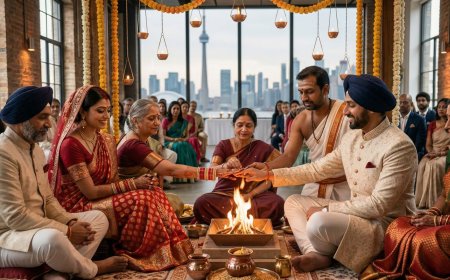



The Chair That Was Not Empty: The NRI Couple's Complete Guide to Honoring Deceased Parents at Your Wedding
The groom's father who had died fourteen months before the wedding, who had met the bride and said he was glad, and whose absence was felt not only in the large obvious moments of the planning but in the small ones — the suit fitting, the food tasting, the rehearsal where the groom stood at the mandap for the first time and felt the specific shape of the person who was not there. Honoring a deceased parent at the wedding is not about performing grief for the guests' acknowledgment or papering over the absence with sentiment — it is the living's genuine need to acknowledge that someone was real and loved and is part of the story the wedding is telling even from their absence. This guide delivers a complete framework covering the memorial candle and diya, the reserved seat, the ceremony acknowledgment through the Pandit's words and the programme, the photograph and memory table placement, the ritual inclusion in the Indian ceremony, the reception toast and photo slideshow, the private rituals from the morning visit to the carried object, the kanyadaan modified in the deceased parent's memory, the family photograph that includes the person through their image, and the permission to feel both grief and joy on the same day.


How to Honor Deceased Parents at Your Wedding
The NRI couple's thoughtful guide to holding the people who are not there — the specific, meaningful ways to acknowledge the absence that is also a presence, and how to design the honoring that is genuine rather than performed
The Chair That Was Not Empty
The groom's father had died fourteen months before the wedding.
The death had not been sudden — it had been the specific kind of death that arrives after illness, that is both a shock and not a shock, that leaves the living with the complicated grief of the loss that was expected and whose arrival still undoes everything. The father had known about the engagement. He had met the bride. He had said, in one of the last conversations that was fully lucid, that he was glad — that he was glad his son had found this person, that he was glad to know the marriage was coming even if he would not be there for it.
He was not there for it.
The groom had spent more of the planning period than he had expected thinking about his father. Not always in the ways he had anticipated — not only in the large, obvious moments of the planning where the father's absence was the most visible, but in the small ones. The suit fitting where the tailor had asked about the family's preferences and there was one family member whose preferences could no longer be consulted. The food tasting where a dish his father had loved had been on the menu and he had eaten it and not been able to say anything for a moment. The rehearsal where the groom stood at the mandap for the first time and felt, with a specificity that surprised him, the specific shape of the person who was not there.
The wedding would be the first significant family occasion without his father. It would also be the occasion where his father's absence was most visible — the photographs, the programme, the specific moments of the Indian ceremony that are designed around the presence of the parents.
What the groom needed was not consolation. He had had fourteen months of consolation and had found it necessary and insufficient in equal measure. What he needed was a way to include his father in the occasion — not to pretend he was present, not to paper over the absence with sentiment, but to genuinely acknowledge that this person had been real and had been loved and was part of the story that the wedding was telling even from his absence.
This guide is the attempt to provide that.
Understanding What the Honoring Is For
The Honoring Is for the Living
The first thing to understand about honoring a deceased parent at the wedding is that the honoring is for the living — for the child who is getting married, for the family members who share the grief, for the guests who knew and loved the person who died.
The deceased parent does not experience the honor. They are not made more at peace by the memorial candle or more present by the photograph. The honoring is the living's act — the specific human need to acknowledge that someone was real, was significant, and is missed at the occasions where their presence is most felt.
Understanding this does not make the honoring less important. It clarifies its purpose: the honoring that is designed for the living — that addresses the grief honestly, that gives the grieving person something genuine to do with the absence on the day — is more useful than the honoring that is designed to perform a completeness that the occasion does not have.
The Grief Has Its Own Timeline
The death of a parent before the wedding occurs at every point in the grief timeline — the wedding planned in the acute grief of the immediate loss, the wedding planned two years after when the grief is more integrated but still deeply present, the wedding planned ten years after when the grief has become a different, quieter thing.
The honoring that is appropriate for the acute grief is not the same as the honoring that is appropriate for the integrated grief. The couple who lost a parent six weeks before the wedding is in a different relationship to the honoring than the couple who lost a parent six years before.
The planning should be calibrated to the actual grief rather than to the generic expectation of what grief looks like. The couple in acute grief may need the honoring to be simple and private — a small acknowledgment that does not require them to publicly perform their grief during an occasion that is also supposed to be joyful. The couple whose grief is more integrated may want a more elaborate and more public acknowledgment whose emotional weight they can carry on the day without being overwhelmed by it.
The Other Parent's Experience
The surviving parent — the parent whose spouse has died before the wedding — has their own specific relationship to the honoring. They are grieving their partner at the same occasion where their child is getting married. They are navigating the specific complexity of the joy that is real and the grief that is equally real and that inhabits the same day simultaneously.
The honoring that is designed without reference to the surviving parent's experience — that focuses entirely on the deceased parent's memory without considering how the surviving parent will experience the day's specific combination of emotions — has not seen the full picture.
The conversation with the surviving parent about what they need from the honoring, what form of acknowledgment they can hold on the day, and what would be too much — this conversation is the planning act whose importance is second only to the couple's own clarity about what they want.
The Forms of Honoring: What Is Available
The Memorial Candle or Flame
The memorial candle — a specific candle lit in the name of the deceased parent, burning through the ceremony and the reception as a visible symbol of presence — is one of the most common forms of honoring and one whose simplicity makes it available at almost any ceremony.
The Indian ceremony adaptation:
The diya — the oil lamp of the Indian tradition — is the specific form the memorial flame takes in the Indian wedding context, more culturally resonant than the Western-style candle and carrying the specific symbolic vocabulary of the Indian tradition's relationship to light and remembrance.
The memorial diya placed at the ceremony space — at the mandap, at a specific table, at the spot that would have been the parent's place — is a form of honoring whose cultural grammar is specific to the tradition and whose simplicity allows it to be present without demanding the occasion's full attention.
The practical consideration:
The outdoor ceremony in which the diya or candle will be extinguished by wind is the outdoor ceremony that needs a practical solution — the protected lantern, the specific placement that shields the flame, the acceptance that the flame's persistence is not the honoring's success condition.
The Reserved Seat or Space
The reserved seat — a chair with a flower, a corsage, a photograph — that acknowledges the deceased parent's absence in a specific, visible way is the honoring that makes the absence itself part of the ceremony's visible acknowledgment.
The considerations:
The reserved seat is a visible, public acknowledgment — every guest who sees it knows what it means. The couple who chooses the reserved seat is choosing to make the grief publicly visible in a specific, sustained way throughout the ceremony and potentially the reception.
For some couples this is exactly right — the public visibility of the grief is the honest acknowledgment they want, the specific statement that this person is missed and that their absence is being named rather than managed around.
For other couples the sustained public visibility of the grief is more than they want the occasion to hold — more than they can carry comfortably on the day, more exposure of their private grief than feels right.
The reserved seat should be chosen by the couple whose grief is of the kind that can be made public without the public acknowledgment becoming overwhelming. The couple who is uncertain should consider whether the more private forms of honoring — the photograph in a specific place, the mention in the ceremony, the private ritual — serve them better.
The Ceremony Acknowledgment
The ceremony acknowledgment — the specific mention of the deceased parent in the ceremony's words — is the honoring that is most directly integrated into the occasion itself.
The forms:
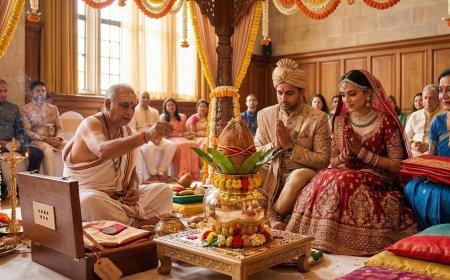
The Pandit's acknowledgment — the specific mention in the ceremony's words of the family member who is not present but who is held in the family's love and memory. Not every Pandit will include this naturally — the couple should discuss the specific acknowledgment with the Pandit and ask for it to be incorporated rather than assuming it will be.
The wedding officiant's words — for the ceremony that includes a non-Pandit officiant, the humanist celebrant, or the combined ceremony — a specific paragraph that acknowledges the deceased parent by name, that says something true about them and about their relationship to the occasion.
The couple's own words — the specific mention by one or both partners in the ceremony's personal vows or in a specific statement made at the ceremony. This is the most personal form of the ceremony acknowledgment and the form that requires the most emotional capability on the day — the person who is speaking publicly about their deceased parent at their wedding ceremony is doing something that is genuinely difficult and that requires specific preparation and specific self-knowledge about whether they can do it in the moment.
The written word in the ceremony programme:
The ceremony programme — the printed guide to the ceremony — can include a specific page or section that acknowledges the deceased parent. The photograph, the name, the brief, true words about who they were and what they meant — placed in the programme that every guest holds throughout the ceremony, that is kept afterward as a record of the day.
The programme acknowledgment is the honoring that is personal and permanent without requiring the couple to speak aloud in the ceremony moment.
The Photograph and the Visual Memorial
The photograph of the deceased parent — displayed at the wedding in a specific, honored position — is the honoring that makes the person visually present at the occasion.
The placement:
The memory table — a specifically designed table with the photograph, a candle or diya, and perhaps a specific object that represents the person — is the memorial installation that creates a specific place for the honoring rather than distributing it across the broader décor.
The photograph in the welcome area — where every guest sees it on arrival — is the placement that makes the acknowledgment universal rather than specific to the guests who seek it out.
The photograph at the couple's table — present throughout the ceremony and the reception as a constant, private acknowledgment — is the placement that is most personal and most continuously present for the couple themselves.
The photograph's content:
The photograph should be one that represents the person — not the formal portrait that does not look like the person as they were known but the photograph that captures something true about them. The photograph where they are laughing. The photograph from a specific occasion that the family remembers. The photograph taken with the grandchild who is being married.
The floral acknowledgment:
The corsage or boutonnière placed on the memorial seat or at the memory table — the flowers that would have been worn by the parent who is not there — is the specific floral acknowledgment whose particular quality is that it treats the absent person as a present member of the wedding party rather than a remembered one.
The Ritual Inclusion
The specific ritual inclusion — the ceremony moment that incorporates the deceased parent's presence in a way that is specific to the ceremony's tradition — is the honoring that is most deeply integrated into the ceremony's meaning.
In the Indian ceremony:
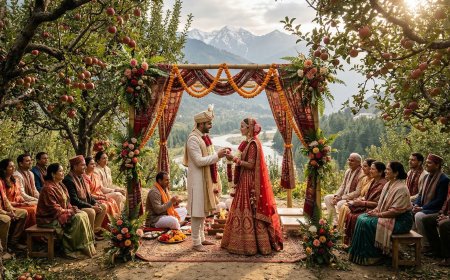
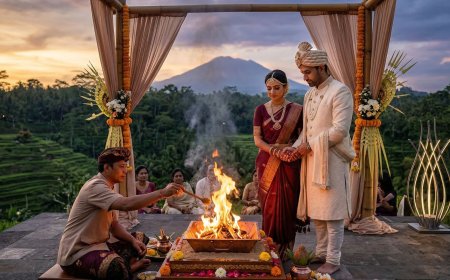
The ritual moment where the deceased parent's photograph is placed at the mandap during a specific part of the ceremony — the acknowledgment that this person is being called into the ceremony's sacred space even from their absence.
The specific prayer or mantra offered by the Pandit for the deceased parent — the ritual acknowledgment within the ceremony's religious framework that this person is present in the tradition's understanding of the ancestors and the family line.
The inclusion of the deceased parent in the ceremony's invocation — the calling of the ancestors and the family's deceased members who are held in the ceremony's sacred space — is the specific form that many Hindu ceremonies can accommodate naturally.
The modified ritual:
The ceremony ritual that is conventionally performed by the deceased parent — the kanyadaan, the specific blessing, the specific role — can be modified to include the acknowledgment that the ritual is being performed in the deceased parent's memory as well as by the person who is performing it.
The father who is not present but in whose spirit and memory the uncle performs the kanyadaan — acknowledged explicitly, by name, in the ceremony moment — is the father who is included in the ritual rather than replaced in it.
The Reception Honoring
The reception provides specific opportunities for the honoring that the ceremony's ritual structure does not always accommodate.
The toast:
The toast that specifically acknowledges the deceased parent — the speech moment where someone who knew them speaks specifically and truly about who they were, what they meant to the family, and how they would have felt on this day — is the honoring that gives the guests who also knew the person the specific gift of their memory being publicly honored.
The toast to the deceased parent should be: spoken by the person who knew them most specifically and who can speak about them most truly. Brief enough that it is the acknowledgment of a person rather than the occasion's redirection into grief. Specific rather than generic — the true detail about who the person was rather than the general sentiment about loss.
The photo slideshow:
The reception slideshow that includes the deceased parent — whose photographs appear in the sequence of the family's history that the slideshow tells — is the honoring that is woven into the occasion's visual narrative rather than separated from it.
The slideshow that handles the deceased parent's photographs with the same warmth and the same celebration as the living family members' photographs is making a specific statement: this person is part of the story, not a chapter that has ended.
The memory table at the reception:
The memory table at the reception — where the photograph and the specific objects that represent the person are placed, where guests can leave a note or a flower, where the person's presence in the occasion is acknowledged in a specific physical space — is the honoring that gives guests who want to acknowledge the grief a specific place to do so without the acknowledgment being the occasion's primary atmosphere.
The Private Ritual
The private ritual — the honoring that the couple or the family performs privately, not as part of the public ceremony — is the form of honoring that is available regardless of the ceremony's structure and that is sometimes the most meaningful precisely because it is not public.
The morning visit:
The visit to the deceased parent's grave or memorial on the morning of the wedding — the specific, private time before the day's occasion begins, where the child who is getting married has a moment of direct, private acknowledgment with the person who is not there.
The private letter:
The letter written to the deceased parent — not read aloud, not shared with anyone, but written in private and kept — is the honoring that gives the grieving child a specific act of communication with the person they are missing on the day. Some people burn the letter. Some keep it. The specific practice is less important than the specific intention of the writing.
The carried object:
The specific object from the deceased parent — worn, carried, or incorporated into the wedding day in a way that is personal and private — is the honoring that is most continuously present for the person who is carrying it.
The bride who carries her deceased mother's handkerchief. The groom who wears his deceased father's watch. The specific object whose presence is known only to the person carrying it — and whose presence is the private acknowledgment that the person is held, specifically, in the middle of everything.
The Indian Ceremony's Specific Considerations
The Parental Roles
The Indian ceremony's ritual structure assigns specific roles to the parents — the kanyadaan, the welcoming of the families, the specific ceremony positions — whose conventional form assumes the presence of both parents.
The ceremony that is being planned without a parent requires the Pandit to understand the specific situation and to work with the couple on how the ceremony acknowledges the absence — whether through the modified ritual, the specific prayer, the photograph at the mandap, or the specific mention in the ceremony's words.
The Pandit who has not been told about the deceased parent — who discovers the situation during the ceremony — is the Pandit who cannot provide the specific acknowledgment that the couple needs and who may handle the moment less skillfully than the Pandit who has been briefed.
Tell the Pandit. Tell them early. Ask them specifically how the ceremony can include the acknowledgment that serves the family.
The Family Photograph
The family photograph — the formal documentation of the wedding's family configuration — is the photograph that most visibly marks the deceased parent's absence.
The photograph that includes the deceased parent through their image — the printed photograph held by the surviving parent or by the child who is getting married, incorporated into the family portrait — is the photographic honoring that has become more common and that gives the family the record of the occasion that includes the person who was part of the family even from their absence.
The decision to include the photograph in the family portrait should be made by the immediate family — the surviving parent and the couple — rather than by anyone else. It is their grief and their honoring.
The Day Itself: How to Hold the Grief and the Joy
The Permission to Feel Both
The wedding day is the day on which the grief and the joy are most simultaneously present — and the couple who has been told that they must be happy on their wedding day has been given an instruction that is both well-meaning and insufficient.
The grief on the wedding day is real and legitimate. The moment during the ceremony when the absence is most felt. The photograph session where the missing person's place is visible. The toast that mentions them by name and that produces the specific feeling of the loss at the moment of the celebration.
The couple who has given themselves permission to feel both — who has not required the day to be only joyful, who has acknowledged in advance that the grief will arrive at specific moments and that its arrival is not the failure of the day — is the couple who can receive the grief when it comes without being undone by it.
The Trusted Person
The couple navigating the grief of the deceased parent at their wedding should have a specific, trusted person — not the partner, whose own grief may be present, but a third person — whose specific awareness of the grief allows them to be specifically present at the moments when the grief is most acute.
The friend who knows. The family member who is watching. The specific person who can find the grieving partner in the crowd at the moment when being found is most needed and who can offer the specific, wordless presence that the moment requires.
The Partner's Presence
The partner who has not lost a parent — or who has lost a parent but not the parent who is being honored today — has a specific role in the day's navigation that they should understand and prepare for.
The role is not to manage the grief or to prevent it. It is to be present to the partner who is grieving — to notice the moments when the grief arrives, to be close enough to hold a hand or to offer a specific word, to make the day's navigation a shared experience rather than something the grieving partner is doing alone.
The Honoring That Is Genuine
The groom's father was honored at the wedding in three specific ways.
His photograph was at the mandap — the specific photograph from the engagement celebration where he had met the bride and had looked, in the way of a man who is very happy and very tired, at his son with the expression that the groom's mother had said was the expression of someone who has everything he hoped for.
The Pandit spoke his name during the ceremony — a specific mention, in the ritual's language, of the family member who was present in spirit and in the family's love.
And the groom wore his father's watch. Nobody at the wedding knew this except the bride, who had helped him put it on that morning and who had held his hand for a moment before they went down to the ceremony.
The watch was the honoring that was most present throughout the day — the weight of it on his wrist during the ceremony, during the photographs, during the reception, during the moments when the absence was most felt.
Afterward, he said that the watch had made him feel accompanied.
That is the honoring that is genuine. Not the performance of grief for the guests' acknowledgment. Not the elaborate memorial installation that makes the absence the occasion's centre. The specific, true, personal thing that makes the person feel accompanied by the one who is not there.
The planning's job is to create the space for that thing to exist — whatever form it takes for the specific person, the specific grief, the specific relationship.
The rest is love.
And love does not require a programme.
NRIWedding.com — Expert guidance for Indian weddings planned across borders.
What's Your Reaction?
 Like
0
Like
0
 Dislike
0
Dislike
0
 Love
0
Love
0
 Funny
0
Funny
0
 Angry
0
Angry
0
 Sad
0
Sad
0
 Wow
0
Wow
0