





































How to Evaluate Venue Photos: What Indian Wedding Venues Don't Show You — and How to Find Out
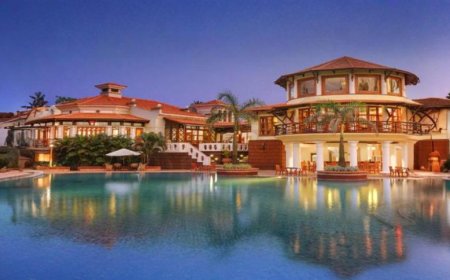
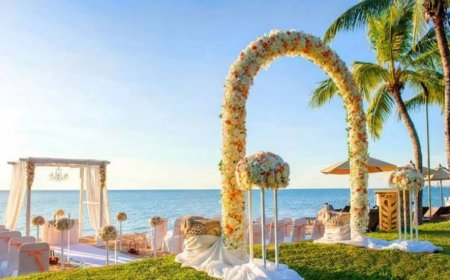
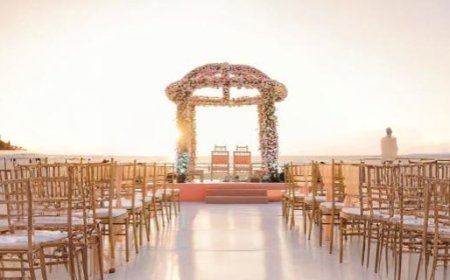
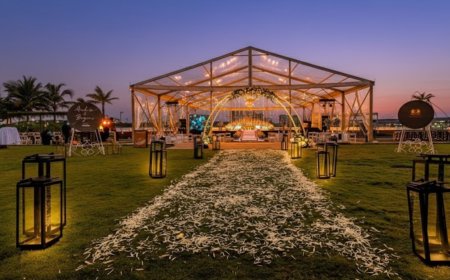
Every Indian wedding venue portfolio shows the same thing — the space at its most beautiful, most elaborately decorated, most professionally lit, and most carefully composed. What it does not show is what NRI couples actually need to know before committing a significant deposit from thousands of miles away. This complete guide reveals exactly what Indian wedding venue photographs systematically exclude — from standard lighting reality and seasonal variation to adjacent environments, transition spaces, and the décor-versus-venue distinction — and gives NRI couples the specific tools, questions, and evaluation framework to see through the portfolio to the venue that actually exists. Essential reading for every NRI couple shortlisting Indian wedding venues remotely.


The Gap Between the Portfolio and the Reality
The photographs are extraordinary.
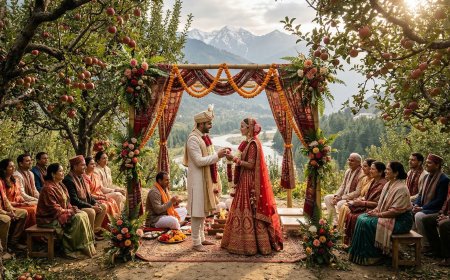
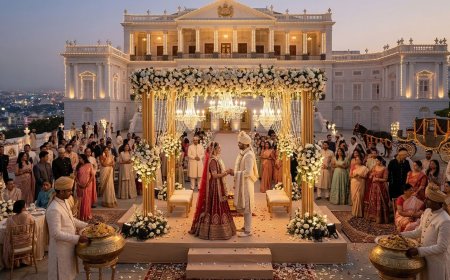
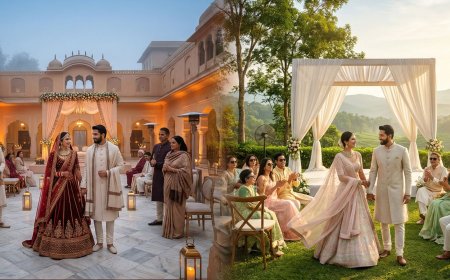
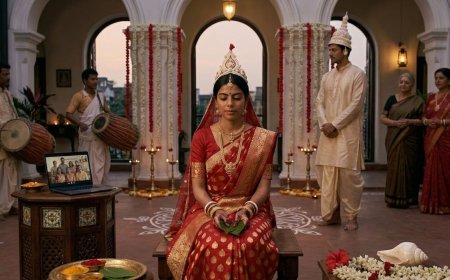
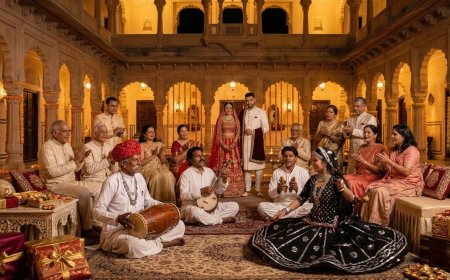
A heritage haveli bathed in golden light, its archways draped in cascading marigolds, a grand staircase descending into a courtyard where two hundred guests are arranged in perfect symmetry. The bride is positioned at the precise point where three beams of natural light converge. The groom waits at the bottom of the stairs with an expression that communicates everything the photograph needs to communicate. The flowers are perfect. The lighting is perfect. The composition is perfect.
You save the photograph to your inspiration folder. You share it with your partner. You contact the venue.
And then, several months later, you arrive at the venue for the first time — either on a planning visit or, in the worst version of this story, on your wedding day — and you encounter the gap.
The gap between what the portfolio showed you and what the venue actually is.
The courtyard that looked expansive in the photographs is smaller than you imagined — the wide-angle lens compressed the surrounding walls and expanded the sense of space in ways that the naked eye immediately corrects. The archways that seemed to glow with warm natural light look different in the evening under the venue's standard lighting package — a cooler, flatter light that the photographs never showed. The staircase, upon which you imagined your grand entrance, is narrower than it appeared — two people descending side by side is more of a squeeze than the photography suggested. The garden area that appeared lush and manicured in the October photographs is, in your February wedding, somewhat less verdant — the seasonal variation that the portfolio, compiled from the best images across multiple events, does not reveal.
None of this is deception in the legal sense. The venue did not lie to you. The photographs they showed you were real photographs of their real venue. They were simply photographs taken under the best possible conditions, with the best possible equipment, by professionals whose job is to make the venue look as beautiful as possible.
That is the job of a venue portfolio. To make the venue look its most beautiful. Not to provide an accurate, comprehensive, unfiltered documentary record of the space in all conditions and configurations.
Understanding this — and understanding specifically what Indian wedding venue portfolios systematically exclude, minimise, or present in the most favourable possible light — is one of the most practically important skills an NRI couple can develop. Because the venue decision is made primarily on the basis of photography, and photography is a controlled, curated, optimised medium that has specific and consistent blind spots.
This article identifies those blind spots. It tells you exactly what Indian wedding venue photographs do not show you, how to recognise the photographic techniques that inflate perceptions of space and atmosphere, what to ask for that the portfolio does not provide, and how to evaluate venue photography with the specific, informed scepticism of someone who understands what is being left out.
The Core Reality: How Professional Venue Photography Works
To understand what venue photographs do not show, you first need to understand how they are produced.
The Selection Effect
A venue portfolio is not a representative sample of wedding photographs taken at that venue. It is the best photographs from the best events, curated over multiple years, presenting the venue at its absolute finest.
The selection is relentless - Hundreds of photographs from each wedding are reduced to the dozen or so that most powerfully represent the venue. The dozen chosen are those where the lighting was exceptional, the décor was at its most elaborate, the styling was at its most careful, and the composition was at its most flattering.
What this means for you: the portfolio shows you the venue at its peak, not its average. The question you need to answer is not whether the venue can look like the portfolio under ideal conditions — it clearly can. The question is what the venue looks like under the conditions of your specific wedding, with your specific décor budget, in your specific season, at the time of day your functions will actually occur.
The Equipment Effect
Professional wedding photographers use equipment specifically chosen to make spaces look their best.
Wide-angle lenses compress perspective and expand apparent space. A room photographed with a 16mm or 24mm wide-angle lens appears substantially larger than it does to the human eye. The same room photographed with a 50mm lens — which most closely approximates human visual perception — looks smaller, more confined, and more accurately representative of the actual spatial experience.
High dynamic range processing balances the exposure between bright windows and dark interiors in ways that the human eye handles naturally but that real-time visual experience — without the processing — presents differently. A hall that appears evenly lit in the portfolio photograph may have challenging contrast between bright daylight areas and darker interior zones that the processing has corrected.
Professional lighting setups are frequently used for portfolio shoots — additional lights, reflectors, and lighting modifiers that are not part of the venue's standard lighting package. The beautiful warm light filling the ceremony space in the portfolio photograph may have been produced by the photographer's own lighting equipment, not by the venue's ambient lighting.
Post-processing adjusts colour temperature, contrast, saturation, and sharpness in ways that present the venue in its warmest, most visually appealing light. The actual colour rendering of the space — under the venue's standard lighting — may be cooler, flatter, or less saturated than the portfolio suggests.
The Styling Effect
Portfolio photographs are taken at fully styled wedding events — events where professional décor teams have spent 12 to 24 hours transforming the space with elaborate floral installations, lighting setups, furniture arrangements, and decorative elements.
The venue in the portfolio is not the venue as it exists. It is the venue transformed by professional décor work. The question you need to answer when evaluating a portfolio is: how much of what I am seeing is the venue and how much is the décor?
A heritage haveli with beautiful bones can look extraordinary with exceptional décor work and mediocre with minimal décor. A modern hotel ballroom can look stunning with the right lighting and floral design and feel cold and corporate with a basic setup.
When you look at a venue portfolio, consciously attempt to separate the venue from the décor. Look at the walls, the floors, the architectural features, the ceiling. These are the venue. The flowers, the draping, the furniture, the lighting installations — these are the décor. You are evaluating the venue, not the décor that happened to be there on the day the photographs were taken.
What Venue Photographs Systematically Do Not Show
The Space at a Different Scale Than Photographed
This is the most consequential gap between portfolio photography and physical reality.
What the photographs show: Carefully composed shots taken from specific positions, with specific lenses, that maximise the apparent size and grandeur of each space.
What the photographs do not show: How the space feels at your specific guest count, in the specific function configuration you are planning, with the specific décor setup you are budgeting for.
A ceremony lawn that looks expansive in a portfolio photograph — taken from a low angle with a wide-angle lens, showing a couple in the foreground and the space extending dramatically behind them — may comfortably seat 150 guests but feel uncomfortably compressed with your 300-person guest count.
What to ask for: Request photographs or video of the space set up for a wedding at a similar guest count to yours. Ask the venue coordinator to provide photographs from multiple events at different capacities. Ask specifically: "What is the maximum comfortable seated capacity for the ceremony lawn and can you show me photographs of an event at or near that capacity?"
The Standard Lighting Package
Portfolio photographs are taken under optimal lighting conditions — typically during the golden hour for outdoor spaces, and with professional photographic lighting or the venue's premium lighting package for indoor spaces.
What the photographs do not show: What the venue looks like under the standard lighting package included in your contract — the lighting that will actually illuminate your event if you do not purchase a premium lighting upgrade.
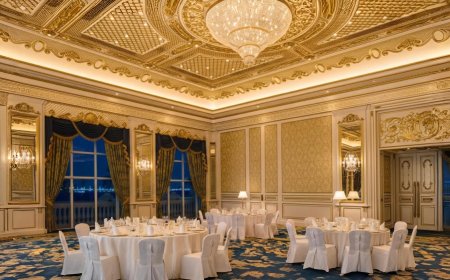
For many Indian venues — particularly hotel banquet halls and older heritage properties — the standard lighting is functional rather than beautiful. Overhead fluorescent or cool-white LED panels that provide adequate illumination but none of the warmth, drama, or visual interest shown in the portfolio photography.
The beautiful warm lighting that defines the atmosphere of the portfolio photographs may be the product of: the venue's premium lighting upgrade at additional cost, professional lighting provided by the décor team, the photographer's own lighting equipment, or the specific weather conditions of a particular evening.
What to ask for: Ask the venue coordinator to show you photographs or video of the space under standard lighting — without additional décor lighting, without professional photography lighting, without golden hour natural light. Ask: "What does the main hall look like on a standard evening before the event begins, with only the venue's standard lighting?"
The Spaces Between the Hero Spaces
Every venue has hero spaces — the dramatic courtyard, the grand ballroom, the manicured garden — and supporting spaces — the corridors, the bathrooms, the parking area, the service entrance, the areas guests move through to get from one location to another.
What the photographs show: The hero spaces, professionally lit, beautifully decorated, presented at their absolute best.
What the photographs do not show: The transition spaces, the support infrastructure, the areas guests will experience that are not the primary photographed locations.
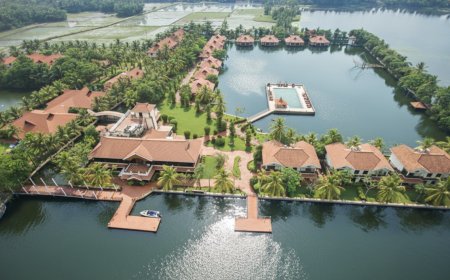
A stunning heritage haveli with a beautiful central courtyard may have narrow, dimly lit corridors leading to the bathrooms. A picturesque lakeside resort may have a parking area that requires a ten-minute walk to reach the event space. A premium hotel ballroom may be adjacent to a service area that is visible and audible from the cocktail space.
These transition and support spaces are part of the guest experience. A guest who spent forty-five minutes travelling to your wedding and is navigating dim corridors to find the bathroom has an experience that the portfolio photographs do not document.
What to ask for: Request a comprehensive video walkthrough that specifically includes all transition and support spaces — corridors, bathrooms, parking, the approach from the main entrance to each event space. Ask: "Can you show me the complete guest journey from arriving at the venue entrance to being seated at the ceremony?"
The Seasonal Reality
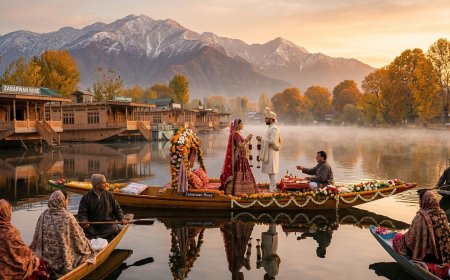
Indian wedding venue portfolios are compiled from events across multiple years. The portfolio photograph of a lush green garden may have been taken in October after the monsoon. Your February wedding will take place in a different seasonal condition — potentially less verdant, potentially with different flower availability.
What the photographs do not show: The venue in the specific month of your wedding, in the specific weather conditions that characterise that month in that city.
A rooftop venue in Jaipur in December looks different at noon in direct sunlight — potentially harsh and uncomfortable for a daytime function — than in the portfolio photograph taken during the golden hour of a cooler November evening.
What to ask for: Ask specifically for photographs from events held in the same month as your wedding. Ask the venue coordinator: "Do you have photographs from events held in [your month]? Can you show me how the outdoor spaces look during the day in [your month]?"
Also research the typical weather conditions in your venue city during your wedding month. Jaipur in January evenings can be genuinely cold. Mumbai in June is monsoon season. Goa in March is still in the comfortable season but the heat builds quickly. Understanding the seasonal reality allows you to evaluate whether the venue works for your planned function times and configurations.
The Adjacent Environment
Portfolio photographs are framed to show the venue. They are not framed to show what is adjacent to the venue.
What the photographs do not show: The main road visible from the ceremony lawn. The construction site adjacent to the garden. The neighbouring event space whose music is audible during your function. The less picturesque view from the other side of the property that guests will see when they turn away from the photography backdrop.
For heritage properties in urban Indian cities — havelis and palaces that have been converted to event venues within dense urban environments — the juxtaposition of the beautiful heritage architecture and the surrounding urban reality can be significant.
What to do: Use Google Maps satellite view and Street View to understand the venue's physical surroundings. Look at the venue from above — what is adjacent on each side? Look at the street view from the main road approach — what does the neighbourhood look like? These publicly available tools provide context that the portfolio photography systematically excludes.
Also ask your wedding planner — or the venue coordinator — directly: "What is visible from the ceremony space in each direction? Is there anything adjacent to the property that guests will be able to see or hear?"
The Catering Reality
For venues with in-house catering — a significant proportion of Indian hotel and resort venues — the portfolio photographs show beautiful food presentations, elaborate buffet setups, and artistically plated courses.
What the photographs do not show: How the food actually tastes.
Photography can make mediocre food look extraordinary. The visual presentation of food is a different dimension from its flavour, its freshness, and its appropriateness for your guest profile.
What to do: Never commit to a venue with in-house catering — or a venue with a mandatory catering partner — without a comprehensive tasting. For NRI couples who cannot visit before the booking decision, build a tasting into the first planning visit and structure the contract to allow a meaningful review of the catering quality before the final payment is made.
The Bathroom Reality
This is the most consistently avoided topic in venue photography — and one of the most consistently discussed topics in post-wedding guest feedback.
What the photographs never show: The bathrooms.
For Indian wedding venues — particularly heritage properties, farmhouses, and older hotel properties — the bathroom situation is a genuine variable. The number of bathrooms relative to the guest count, the maintenance standards, the proximity to the event spaces, and the overall quality are all factors that significantly affect the guest experience and that are entirely absent from the portfolio photography.
What to ask: Ask directly about the bathroom provision — the number of facilities, their proximity to each event space, and their condition. Request that your planner specifically inspect the bathrooms during their site visit and report back honestly.
Reading Specific Types of Indian Venue Photography
Different types of Indian wedding venues use photography in characteristic ways. Understanding the conventions of each type helps you read the photography more accurately.
Heritage Properties: Havelis, Palaces, and Historic Estates
Heritage properties are photographed to emphasise architectural grandeur — the carved sandstone archways, the painted ceilings, the ornate columns, the geometric jali screens. The photography is specifically designed to convey historical significance and aesthetic richness.
What to look beyond: The architectural photography often shows the heritage elements at their most dramatic, shot from angles that emphasise height and grandeur. Look carefully at the condition of the heritage elements — are the painted surfaces well maintained or showing deterioration? Are the stone floors intact and even, or do they have cracks and repairs? Heritage maintenance is expensive and not all heritage venues invest adequately in it.
Specific gap to investigate: Acoustics. Heritage properties with stone floors, high ceilings, and hard walls have acoustic characteristics that are very different from modern ballrooms. Speech, music, and ambient sound behave differently in these spaces. The portfolio photographs tell you nothing about the acoustic environment. Ask specifically about how music and speeches are managed in the space, and what audio-visual equipment the venue uses to address the acoustic challenges of the heritage architecture.
Hotel Ballrooms and Banquet Halls
Hotel venue photography emphasises the transformation of the space — before-and-after imagery showing the blank ballroom canvas and the beautifully decorated event.
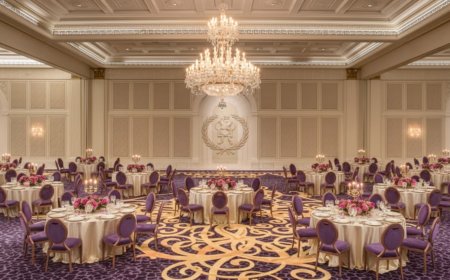
What to look beyond: The before photograph — the blank ballroom before décor — is often more revealing than the after. Look at the ceiling height, the wall finish, the floor, the columns, the natural light sources (or absence thereof). This is the actual space you are booking. The beautiful after photograph is the space plus someone else's décor budget.
Specific gap to investigate: The neighbouring spaces. Hotel ballrooms are typically part of a larger hotel events floor that may have multiple simultaneous events. Ask whether other events will be occurring during your functions, whether there is sound separation between event spaces, and what the hotel's policy is on managing sound levels when multiple events are happening simultaneously.
Farmhouses and Garden Venues
Farmhouse and garden venue photography is typically taken in daylight or golden hour and emphasises the outdoor landscaping — the lawns, the gardens, the trees, the views.
What to look beyond: Weather contingency. What happens if it rains? What happens if it is significantly hotter or colder than expected? The portfolio photographs show the outdoor spaces in ideal conditions. Ask specifically about the weather contingency infrastructure — covered areas, tent options, heating or cooling provision — and what the policy is if weather conditions make the outdoor spaces unusable.
Specific gap to investigate: The indoor backup. Most farmhouses and garden venues have an indoor space that serves as the weather contingency. Ask to see photographs of the indoor space at your guest count — not just the outdoor spaces that feature prominently in the portfolio.
Destination Venues: Hill Stations, Beaches, and Resort Properties
Destination venue photography is typically the most aspirational of all venue photography categories — sweeping landscape shots, dramatic natural settings, photographs that sell a destination as much as a venue.
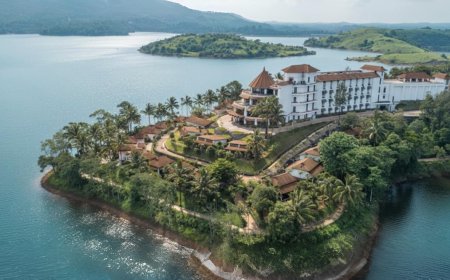
What to look beyond: The logistics. Destination venues — however beautiful — require your guests to travel to them, stay near them, and be transported between them and any off-site events. The portfolio photographs tell you nothing about the accessibility of the venue, the quality of nearby accommodation, or the transportation infrastructure.
Specific gap to investigate: The real journey from the nearest airport or major city. Ask the venue coordinator for the realistic travel time from the nearest airport in actual traffic conditions, not the distance in kilometres. Ask about the quality of the road — some hill station venues involve genuinely challenging mountain road access that affects your guests' arrival experience.
The Photograph Types to Request That Venues Rarely Provide
Beyond evaluating what venues typically show, there are specific categories of photography and imagery that you should actively request — photographs that most venues do not include in their standard portfolio but that provide significantly more accurate information.
Photographs From the Same Month as Your Wedding
Ask for a specific portfolio from events held in the same calendar month as your planned wedding. The seasonal variation in India is significant — a venue looks different in November, February, and May. The portfolio typically cherry-picks the best-looking events regardless of month. Month-specific photographs give you a more accurate seasonal reference.
Photographs at Your Guest Count
Ask for photographs from events where the guest count was close to yours. A venue that photographs beautifully with 150 seated guests may look and feel very different at 400.
Daytime Photographs of Interior Spaces
Interior venue portfolios are dominated by evening photography — when the space is most dramatically lit and most beautifully presented. If any of your functions are daytime events — a mehendi, a haldi, a daytime reception — ask specifically for daytime photographs of the relevant spaces under natural light.
Undecorated Space Photography
Ask for photographs of the main event spaces without décor — the blank canvas. This is the space you are booking. Understanding what it looks like before the décor team transforms it gives you an accurate baseline for your décor planning and a realistic sense of the space's inherent quality.
Photographs of the Full Guest Journey
From the arrival gate to the parking area, from the entrance through the corridors, from the transition areas between spaces — ask for a complete photographic record of the full guest journey through the property, including all the spaces that don't typically make the portfolio.
Building Your Own Evaluation Framework
With the above understanding of what venue photography does and does not show, here is a practical framework for evaluating any Indian wedding venue portfolio.
The Décor Separation Test
For every hero photograph in the portfolio, consciously identify and mentally remove the décor. The flowers, the draping, the furniture, the lighting installations, the table settings — remove them all. What remains? Is the underlying space beautiful, interesting, and full of character? Or is the beauty entirely in the decoration?
A venue that is beautiful without décor — that has genuine architectural interest, quality materials, attractive proportions — is a venue that will look good across a range of décor budgets. A venue whose beauty is entirely dependent on elaborate décor work requires that décor investment to look its best. Know which you are evaluating.
The Lens Compensation Test
For every wide-angle interior shot, mentally add approximately 30 to 40 percent more visual compression than you are experiencing. The room is smaller than it appears. Ask for the dimensions in metres or feet so you can verify the actual scale independently.
The Standard Lighting Test
Look at the shadows and the colour temperature in each photograph. Warm, golden, directional light with dramatic shadows is the hallmark of either golden hour photography or professional lighting setups — neither of which represents the venue's standard evening lighting. Cool, even, shadowless light is closer to the standard overhead lighting reality. Ask what the space looks like under standard lighting.
The Adjacent Context Test
Before finalising any venue on your shortlist, spend 15 minutes on Google Maps examining the venue's surroundings at satellite level and street view level. What is immediately adjacent? What is the approach like? What will guests see and hear from the event spaces? This five-minute exercise provides contextual information that no portfolio photograph includes.
The Photography Is the Beginning of the Evaluation, Not the End
Venue photography is a powerful and necessary tool for the initial evaluation of Indian wedding venues, particularly for NRI couples who cannot easily conduct physical site visits. It tells you important things — the architectural character of the space, the quality of events it has hosted, the general aesthetic of the venue and its team.
What it does not tell you — systematically, structurally, and by design — is equally important. The scale at your guest count. The standard lighting reality. The adjacent environment. The seasonal variation. The transition spaces. The bathroom provision. The acoustic environment. The catering quality.
The photograph is the invitation to investigate further It is the beginning of the evaluation, not the end.
The NRI couples who make the best venue decisions are not those who respond most enthusiastically to the most beautiful portfolio photographs. They are those who use the portfolio as a starting point — a hypothesis to be tested — and then systematically pursue the specific information that the portfolio does not provide.
Ask for the unsexy photographs Request the month-specific portfolio. Demand the walkthrough of transition spaces. Ask the dimensions. Commission your planner's physical assessment. Use Google Maps. Request the standard lighting video.
And then, when you have the full picture — not just the portfolio's version of the venue but the complete, unfiltered, fully contextualised reality — make your decision.
That decision will be well-made Because it will be based on what the venue actually is, not just on what it looks like when a professional photographer positions themselves at exactly the right angle, at exactly the right time of day, at exactly the best-decorated event the venue has ever hosted.
The venue that is genuinely right for your wedding will remain right when you see it in full. The portfolio just has to get you to the point of looking.
What's Your Reaction?
 Like
0
Like
0
 Dislike
0
Dislike
0
 Love
0
Love
0
 Funny
0
Funny
0
 Angry
0
Angry
0
 Sad
0
Sad
0
 Wow
0
Wow
0