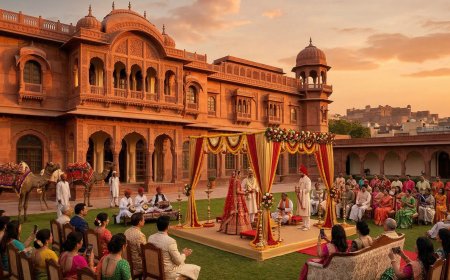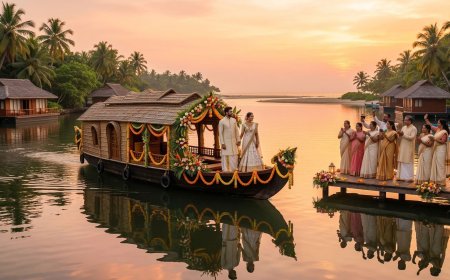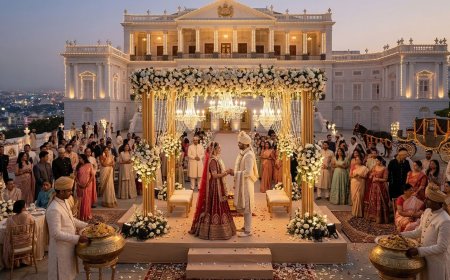


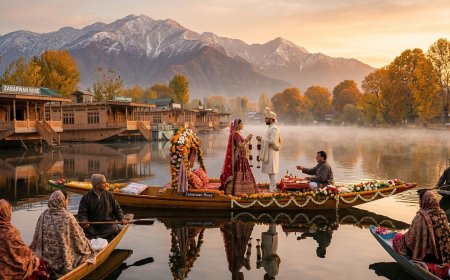
















































How to Incorporate Your Personal Style into Traditional Indian Wedding Decor — The Complete NRI Guide
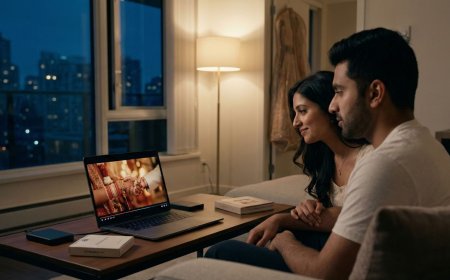
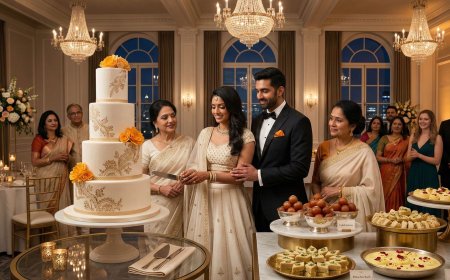
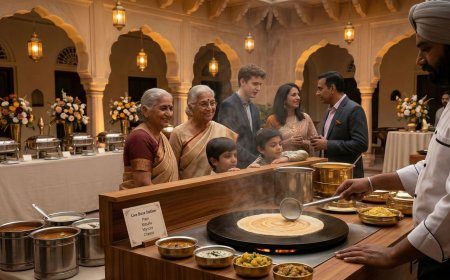
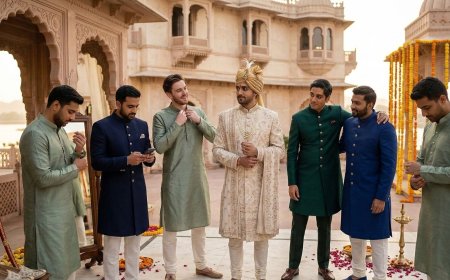
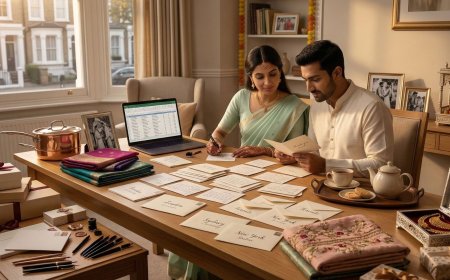
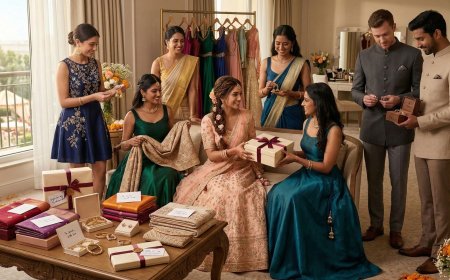
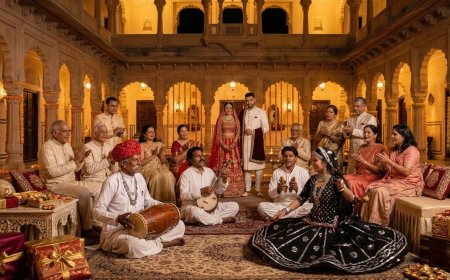
Every NRI couple wants a wedding that feels genuinely theirs — not a repeat of every other Indian wedding they have attended, but a celebration that carries their specific aesthetic sensibility alongside the cultural traditions that matter to them. This complete guide gives NRI couples the strategies to incorporate personal style into traditional Indian wedding decor — from distinguishing genuine tradition from repeatable trend, developing a clear aesthetic language before approaching vendors, identifying a signature element, working event by event, integrating personal objects and regional heritage, briefing decorators from abroad, and holding the personal vision through the family pressure that consistently pulls couples toward the conventional aesthetic they never wanted.


The Decoration That Felt Like Somebody Else's Wedding
You have attended enough Indian weddings to know exactly what you do not want.
Not because those weddings were not beautiful. Many of them were. The marigold garlands strung from every surface. The red and gold that saturated every visual field. The mandap that looked identical to the mandap at the wedding before it and the wedding before that. The decor that announced — loudly, consistently, with enormous floral investment — that this was an Indian wedding, as though the two hundred people assembled in traditional attire performing ancient rituals needed the reminder.
You know what you do not want. What you are less certain about is how to articulate what you do want — and how to get it in a market where vendors have refined the delivery of a specific aesthetic to an impressive efficiency and are not always naturally oriented toward helping couples deviate from it.
You want something that feels like you.
Not like an Instagram mood board assembled from other people's weddings. Not like the default Indian wedding aesthetic that vendors can execute in their sleep. Not like a Western wedding with some Indian elements awkwardly incorporated, or an Indian wedding with some Western elements awkwardly inserted.
Something that is genuinely, specifically yours. That carries your aesthetic sensibility alongside the cultural traditions that matter to you. That your guests — the ones who know you well enough to recognise you in what you have created — walk into and immediately think: this is them.
That is not a small ambition. And it is not an easy one to execute — particularly from abroad, particularly in a market that is oriented toward efficiency and volume, particularly when family expectations and cultural traditions create a framework within which personal expression must find its space.
But it is entirely achievable. Thousands of NRI couples have achieved it — couples who understood the traditions deeply enough to work within them, who understood their own aesthetic clearly enough to articulate it to vendors, and who understood the specific strategies that allow personal style to coexist with cultural integrity rather than competing with it.
This guide gives you those strategies.
The Core Reality: Why Personal Style in Indian Wedding Decor Is Harder Than It Looks
The Vendor Efficiency Problem
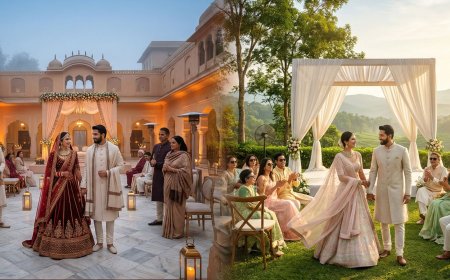
Indian wedding decorators — particularly in the Tier 1 cities where most NRI weddings take place — have built their businesses around the efficient delivery of a finite number of proven aesthetic frameworks. The grand Bollywood aesthetic. The rustic garden aesthetic. The minimalist white-and-green aesthetic. The heritage royal aesthetic.
These frameworks exist because they work — they photograph well, they impress guests, they can be executed with reliable quality, and they are what most clients ask for when they walk into a decorator's studio and point at the portfolio on the wall.
The decorator who is asked to create something genuinely distinctive — something that reflects a specific couple's specific aesthetic sensibility rather than a portfolio framework — is being asked to do something fundamentally different from what their business is optimised for. Some decorators relish this challenge. Many do not.
For NRI couples planning from abroad — who cannot sit across a table from the decorator and communicate the nuance of what they want through conversation and physical reference — the gap between the personal style they are trying to express and the aesthetic the vendor delivers is wider than for couples managing the relationship in person.
The Family Expectation Framework
Indian weddings are not solely the couple's event. They are family events — celebrations that carry the expectations, preferences, and social requirements of two families whose opinions about what a wedding should look like are both strongly held and not always aligned with the couple's personal vision.
The mother who has been imagining her child's wedding for thirty years has a specific image in mind — and that image was formed by the weddings she attended, the aesthetic traditions of her community, and the cultural framework within which she understands what a wedding celebration should express.
The tension between personal style and family expectation is one of the most consistently challenging dimensions of Indian wedding decor planning — and one that NRI couples, navigating planning from abroad with less opportunity for the gradual alignment of expectations that in-person planning enables, feel particularly acutely.
The Tradition Framework
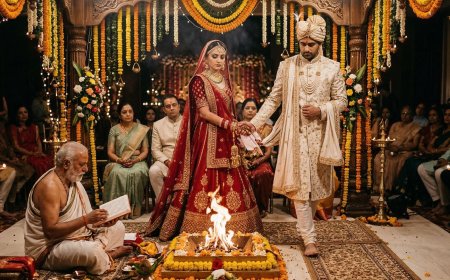
Certain elements of Indian wedding decor are not aesthetic choices — they are cultural and religious requirements. The sacred fire. The mandap. The specific flowers associated with specific ceremonies in specific regional traditions. The colours that carry auspicious meaning. The ritual objects that must be present in specific configurations.
Personal style operates within this framework — not instead of it. Understanding which elements are genuinely culturally determined and which are aesthetic conventions that can be personalised is the foundation of incorporating personal style without compromising cultural integrity.
The Strategic Framework: How to Incorporate Personal Style
Strategy 1 — Know the Difference Between Tradition and Trend
The most important strategic distinction in personalising Indian wedding decor is understanding which elements are genuinely traditional — with cultural, religious, or community significance that makes personalisation inappropriate — and which elements are trends that have been normalised into the appearance of tradition through repetition.
Genuinely traditional elements — personalise with care:
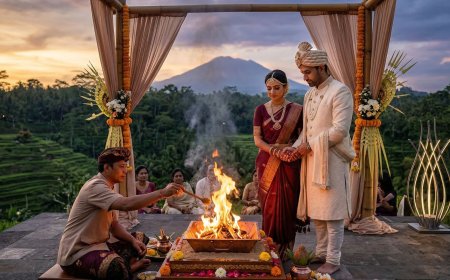
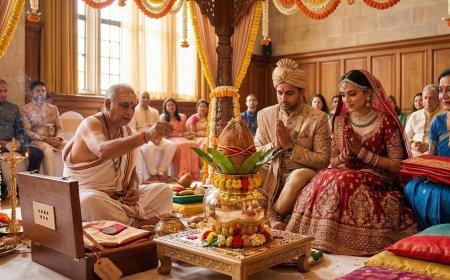
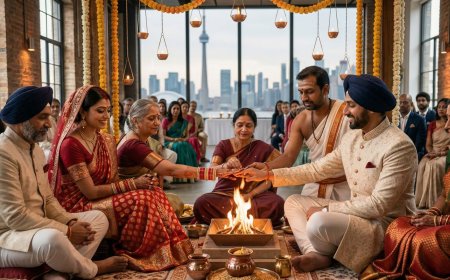
• The mandap structure and sacred fire: The mandap is the ritual space of the Hindu wedding ceremony. Its basic form — a canopied structure sheltering the sacred fire — has cultural and religious significance. The materials, the decorative treatment, the surrounding florals can all be personalised. The structure itself carries meaning that arbitrary reimagination disrespects.
• Auspicious colours in specific contexts: Red, orange, yellow, and gold carry auspicious meaning in Hindu wedding ceremonies. Their presence — particularly in the ceremony space and in the bride's attire — is culturally significant rather than merely conventional.
• Specific ritual flowers: Marigolds, jasmine, tuberose — these flowers appear in Indian wedding decor not because of aesthetic convention but because of their ritual and religious associations. Their presence at specific ceremony elements is culturally meaningful.
Aesthetic conventions that can be freely personalised:
• The colour palette of the reception and pre-wedding events: The red-and-gold palette of Indian weddings is an aesthetic convention, not a religious requirement. The sangeet, the cocktail dinner, the reception — these events can carry any colour palette the couple chooses.
• The décor style of non-ceremony spaces: The entrance installation, the photo booth, the dinner table settings, the lounge areas — these spaces have no culturally determined aesthetic requirements.
• The florals beyond the ritual contexts: The flowers at the entrance, the centrepieces, the hanging installations, the bridal suite florals — all of these are aesthetic choices without cultural determination.
• The lighting concept: The warmth or coolness of the lighting, the use of candles versus LED versus lanterns — lighting is an aesthetic choice throughout the venue.
The practical implication: Personalise generously in the non-ceremony spaces. Personalise thoughtfully in the ceremony space — preserving the ritual elements while expressing your aesthetic sensibility in the surrounding treatment.
Strategy 2 — Develop a Clear Aesthetic Language Before Approaching Vendors
The NRI couple who arrives at a decorator with the instruction "we want it to feel personal" has given the decorator nothing to work with. Personal to whom? Personal in what direction? What visual references anchor the aesthetic they are describing?
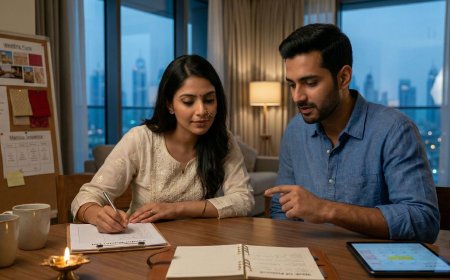
Developing a clear aesthetic language — a specific, visual, referenceable articulation of the style you are trying to create — is the work that must happen before any vendor conversation begins.
How to develop your aesthetic language:
Start with non-wedding references: The mistake most couples make when building a decor mood board is filling it exclusively with other Indian wedding photographs. The result is a mood board that expresses variations on the existing Indian wedding aesthetic rather than something genuinely personal.
Start instead with the visual world you actually inhabit:
• The interior design aesthetic of the home you have built together — or the home you aspire to
• The travel experiences that have shaped your visual sensibility — the specific places, buildings, landscapes that have made you feel aesthetically at home
• The fashion aesthetic that most resonates — the designers, the silhouettes, the colour relationships in the clothes you love wearing
• The art and photography you have chosen to live with — the prints on your walls, the photographers whose work you follow
• The restaurants and hotels that have felt most like your aesthetic environment — not the grandest, but the ones that felt most specifically right
This non-wedding visual world contains the authentic expression of your aesthetic sensibility in a way that wedding photographs from other people's celebrations cannot.
Translate the aesthetic language into specific decor vocabulary:
From the mood board, extract the specific visual elements that can translate into decor decisions:
• Colour palette: What colours appear consistently in the references you have gathered? What is the relationship between them — saturated or muted, warm or cool, contrasting or harmonious?
• Texture vocabulary: Do the references tend toward smooth and refined surfaces, or organic and textured ones? Velvet and silk, or linen and rattan?
• Scale and proportion: Do the references favour large, dramatic statements or accumulated small details? Architectural scale or intimate scale?
• Light quality: Do the references tend toward warm, candlelit atmospheres or cool, airy brightness?
• Nature reference: Do organic, botanical elements feature strongly? Or is the aesthetic more architectural and geometric?
This specific vocabulary is what you bring to the decorator — not "I want it to feel personal" but "I want a palette of dusty rose, sage, and warm ivory with a textural emphasis on natural linen, dried botanicals, and unpolished brass, in a scale that favours intimate detail over architectural grandeur."
The decorator who receives that briefing has something to work with.
Strategy 3 — Identify Your Signature Element
Every wedding that successfully incorporates personal style has at least one signature element — a specific, distinctive choice that is unmistakably the couple's own and that anchors the personal aesthetic throughout the event.
The signature element is not the entire decor concept. It is the specific, repeated motif or visual statement that guests encounter at multiple points throughout the wedding — in the invitation, in the entrance installation, in the ceremony space, in the reception florals — that communicates: this was chosen specifically.
Examples of signature elements that work:
• A specific botanical: One couple's deep connection to a specific flower — not a conventional wedding flower but one with personal meaning, perhaps the flower that grew in the grandmother's garden, or the flower of the city where the couple met — carried through every event in the wedding. Guests who knew the story understood its meaning. Guests who did not knew only that something specific had been chosen.
• A specific colour relationship: A couple whose shared aesthetic was anchored in the particular combination of deep terracotta and sage green — colours that appeared in the home they had built together — carried that colour relationship through every event. The invitation, the welcome signage, the floral palette, the table linen, the candle colours.
• A specific textile: A couple whose cultural heritage included a specific regional weaving tradition incorporated that textile — as table runners, as a decorative element in the mandap, as the material for the welcome bags — throughout the wedding. It was personal because it was specific.
• A specific motif: A motif drawn from the architecture of the city where the couple met, or from a pattern in the grandmother's saree collection, or from the embroidery tradition of the family's regional culture — repeated subtly throughout the stationery, the signage, and the decor.
How to identify your signature element:
Ask: what is the one specific visual element that is most authentically ours — that comes from our actual lives, our actual aesthetic, our actual story — that could anchor the visual identity of this wedding?
The answer is almost never the first thing that comes to mind. It usually requires a conversation — between the couple, about the visual memories and aesthetic experiences that have actually shaped them.
Strategy 4 — Work Event by Event, Not Venue-Wide
One of the most effective strategies for incorporating personal style into an Indian wedding is to treat each event as a separate aesthetic space — rather than attempting to apply a single unified concept across all three or four days of celebrations.
The multi-event structure of an Indian wedding is an opportunity, not a constraint. Each event has its own emotional character, its own guest profile, and its own cultural purpose — which means each event can carry a different aesthetic expression of the couple's personal style.
A worked example:
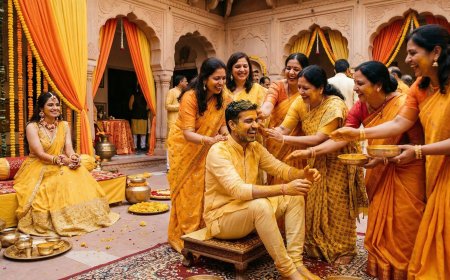
Mehendi: The mehendi is the most relaxed, most personal event of the wedding calendar. It is typically a family and close friends gathering — informal, warm, intimate. This is the event where the most distinctive, most personal aesthetic can be expressed with the least cultural constraint.
Aesthetic opportunity: A couple whose shared aesthetic is anchored in maximalist botanicals and warm earth tones could create a mehendi space that is entirely their own — low seating, abundant greenery, warm lantern lighting, regional textile draping, abundant fresh fruit, a palette of terracotta and forest green. No red and gold. No standard Indian wedding conventions. Just the couple's actual aesthetic, expressed without compromise.
Sangeet: The sangeet is the celebration event — music, dance, joy. Its aesthetic should serve the energy of the event rather than making a specific aesthetic statement.
Aesthetic opportunity: Use the sangeet to introduce a colour or texture vocabulary that bridges the personal and the traditional — a palette of deep jewel tones that is personally chosen but culturally resonant, with lighting that creates the specific atmosphere the couple loves.
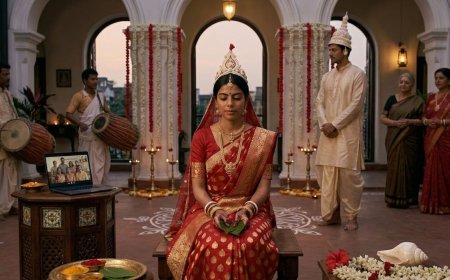
Wedding ceremony: The ceremony carries the greatest cultural weight and the most specific ritual requirements. Personal style here operates through refinement rather than transformation — the quality of the florals, the specific flowers chosen, the colour treatment of the mandap surround, the textile choices.
Reception: The reception is typically the most socially flexible event — less culturally determined than the ceremony, less intimate than the mehendi. This is the event where personal aesthetic can be most fully expressed in the main visual space.
Aesthetic opportunity: The reception is where the signature element should be most fully deployed — where the colour palette, the texture vocabulary, and the specific motif that the couple has identified anchor the entire space.
Strategy 5 — The Personal Object Integration
One of the most emotionally resonant and most underused strategies for incorporating personal style into Indian wedding decor is the deliberate integration of personal objects — meaningful possessions, family heirlooms, photographs, and objects that carry the couple's specific story — into the decor concept.
What personal object integration looks like in practice:
• Family photographs displayed as a formal installation — not as a casual afterthought but as a designed element. The photographs are curated, printed consistently, framed deliberately, and integrated into the decor concept. Guests encounter the family history as an aesthetic experience.
• Grandmother's saree used as a table runner, a mandap drape, or a backdrop element. The garment carries its own beauty and its own meaning. Its integration into the decor is simultaneously personal and cultural.
• Books from the couple's shared reading life used as decor elements — stacked as centrepiece bases, displayed as part of a lounge installation, or used as the surface on which name cards are placed. The titles communicate something about who the couple is.
• Objects from the places that matter — a vessel from a trip that was significant to the couple, a stone from a garden that both partners love, a print from the first art exhibition they attended together — integrated as elements of the table decor or the lounge styling.
The principle behind personal object integration:
These objects do not need to be expensive or visually striking. They need to be authentic. The decor that contains objects from a real life is fundamentally different from the decor that contains only flowers and candles and hired props — and guests who know the couple feel that difference immediately.
Strategy 6 — The Heritage Personalisation
For NRI couples whose personal style is rooted in a specific regional Indian heritage — Rajasthani, Chettinad, Bengali, Kashmiri, Marathi, Punjabi — incorporating that specific heritage aesthetic is one of the most powerful forms of personalisation available.
Why regional heritage personalisation works:
It is simultaneously personal and cultural. It expresses something specific about who the couple is and where they come from — without departing from Indian tradition. And it creates an aesthetic that is genuinely distinctive in a wedding market where generic pan-Indian aesthetics have largely replaced regional specificity.
What regional heritage personalisation looks like:
• A Rajasthani couple incorporating the specific blue pottery of Jaipur, the block-print textiles of Bagru, and the mirror work of Shekhawati into the decor concept — not as tourist references but as authentic expressions of a specific regional aesthetic heritage.
• A Tamil Brahmin couple incorporating the specific bronze vessel forms of the Kaveri delta, the Kanjivaram silk colour palette, and the kolam pattern tradition into the stationery, the textile choices, and the floral arrangements.
• A Gujarati couple incorporating the specific bandhani tie-dye pattern, the kite motif of Uttarayan, and the stepwell geometry of the region's architectural heritage into the visual identity of the wedding.
This is not pastiche. It is not tourist India aesthetic applied to an Indian wedding. It is the authentic expression of a specific cultural heritage — which is, for NRI couples whose personal identity is rooted in that heritage, the most genuinely personal form of decor personalisation available.
Working With Vendors: Getting Your Vision Executed
Briefing the Decorator
The quality of the outcome depends directly on the quality of the brief. The brief that produces a personalised, distinctive result is specific, visual, and honest about what the couple does not want as much as what they do.
The effective decorator brief contains:
• The mood board — curated from non-wedding references as described above, translated into specific visual vocabulary
• The signature element — clearly identified and explained
• The non-negotiables — the specific elements that must be present: the cultural requirements, the family expectations that must be honoured
• The specific rejections — the elements that are explicitly not wanted: "no red and gold in the reception", "no synthetic flowers anywhere in the venue", "no chandeliers"
• The reference images — not as prescriptions but as calibration: "this photograph captures the quality of light we are looking for", "this table setting has the texture vocabulary we want"
What to ask the decorator:
• Show me a wedding you have done that departed significantly from the standard aesthetic — what was the client brief and how did you develop it?
• What do you consider your own aesthetic signature — what do you bring to a brief beyond technical execution?
• How do you manage client briefs that conflict with what you would personally choose?
• What is your process for briefing your team on a concept that is outside your standard portfolio?
Managing the Process From Abroad
For NRI couples managing the decor process remotely, the specific communication strategies that produce the best outcomes include:
Regular video calls with visual references: Do not rely on written descriptions of aesthetic preferences. Share images, share your mood board, share specific reference photographs during video calls rather than sending them as attachments to be reviewed asynchronously.
Stage approvals with physical samples: Request physical samples — fabric swatches, flower samples, colour references — to be photographed against neutral backgrounds and shared via video call. The specific colour relationships and texture qualities that matter to personal style are not accurately communicated through digital photography alone.
A trusted on-ground aesthetic eye: Identify a person in India — a friend, a family member, a coordinator — whose aesthetic sensibility you trust and who can be physically present at the venue during setup to assess whether the execution matches the brief. This person is not managing the vendors — they are assessing the visual outcome and communicating concerns before the event begins.
Common Mistakes NRI Couples Make With Personalised Decor
Confusing Personalisation With Westernisation
Some NRI couples equate personal style with Western aesthetic elements — importing white flowers, minimalist table settings, and European design sensibility into what is otherwise a traditional Indian wedding. The result is a wedding that feels like it is apologising for being Indian.
Correction: Personal style is not the same as Western style. The most distinctive, most personal Indian weddings are the ones that are deeply rooted in Indian aesthetic traditions — specific regional traditions, family heritage traditions, the specific visual world of Indian art and architecture — expressed with the couple's own specific sensibility.
Applying Personal Style to Everything Simultaneously
Attempting to personalise every element of every event simultaneously — the florals, the lighting, the furniture, the linen, the stationery, the signage, the entertainment — produces visual incoherence rather than personal expression. Everything is different and therefore nothing is distinctive.
Correction: Identify two or three specific elements that will carry the personal aesthetic most effectively. Execute those elements with exceptional quality and consistency. Allow the surrounding elements to be simpler and more conventional — the distinctive elements will define the aesthetic without requiring everything to compete for attention.
Not Communicating the Personal Style to Family in Advance
Families who are surprised by an unconventional aesthetic on the wedding day — who expected red and gold and encountered sage and ivory — can respond with visible disappointment that affects the couple's experience of their own wedding.
Correction: Share the aesthetic vision with key family members — particularly both sets of parents — well in advance of the wedding. Not to seek approval necessarily, but to prepare them. Show them the mood board. Explain the thinking. Give them time to adjust their expectations and, ideally, to develop genuine enthusiasm for what is being created.
Choosing a Decorator Who Cannot Execute the Vision
Not every decorator can execute every aesthetic. A decorator whose portfolio is entirely grand Bollywood weddings does not automatically have the aesthetic vocabulary, the vendor relationships, or the execution capability to deliver a delicate, botanical, low-key aesthetic — however genuine their willingness to try.
Correction: Choose a decorator whose portfolio demonstrates actual experience with the aesthetic direction you are pursuing — not a decorator who says they can do it but whose work shows no evidence of having done it.
Abandoning the Personal Vision Under Family Pressure
The most common and most regrettable outcome of the personal style conversation is the couple who begins with a clear, distinctive vision and progressively abandons it — one compromise at a time, under family pressure, in the direction of the conventional aesthetic that felt wrong from the beginning.
Correction: Identify before planning begins which elements of the personal vision are genuinely non-negotiable. Communicate those clearly and early. On the elements that are genuinely negotiable, compromise generously. On the elements that define the vision, hold with warmth and firmness.
The wedding that is half what you wanted and half what the family wanted often satisfies neither — and is remembered by the couple as a missed opportunity rather than a successful compromise.
The Emotional and Cultural Layer: The Decor That Says Who You Are
A wedding is many things simultaneously.
It is a ritual — carrying the weight of a tradition that has bound families and communities together for generations. It is a family event — a gathering of people whose love for the couple is expressed through their presence, their gifts, and their participation in a celebration that matters to them. It is a social event — a public expression of the family's warmth and generosity toward their community.
And it is personal. Genuinely, specifically, irreplaceably personal — the one moment in the social calendar that is explicitly about these two people, their specific love, their specific story, their specific vision of what a beautiful beginning looks like.
The decor that honours all of these dimensions simultaneously — that is traditional enough to carry the ritual weight, generous enough to honour the family, and personal enough to be unmistakably this couple — is the hardest decor to achieve and the most rewarding to experience.
NRI couples have a specific advantage here. Their lives at the intersection of cultures have given them a visual vocabulary that is genuinely richer than any single tradition provides — the aesthetic experiences of international cities alongside the specific beauty of Indian regional traditions, the contemporary sensibility of their professional world alongside the ancient sensibility of their cultural inheritance.
The wedding that expresses that full aesthetic inheritance — not choosing between its Indian and its international dimensions, but holding both with confidence and skill — is the wedding that nobody else could have created. Because nobody else has lived exactly this life, in exactly these places, with exactly this combination of influences.
That is what makes it personal. Not the specific flowers chosen or the specific colour palette developed — but the fact that behind every choice is a life that informed it.
Bring that life to the decor. Let the wedding look like you.
Personalised Decor Planning Checklist
Three to Six Months Before the Wedding
• Gather non-wedding visual references — interiors, travel, fashion, art
• Extract specific aesthetic vocabulary — palette, texture, scale, light quality
• Identify the signature element that will anchor the personal aesthetic
• Develop the event-by-event aesthetic framework — different expression for each event
• Identify personal objects for integration into the decor concept
• Research decorators with portfolio evidence of the aesthetic direction required
When Briefing the Decorator
• Share the complete mood board — visual references, not just descriptions
• Specify the signature element and how it should be carried through events
• State the non-negotiables — cultural requirements and family expectations
• State the specific rejections — elements explicitly not wanted
• Ask for evidence of comparable executions in their portfolio
• Request a concept presentation before any deposit is paid
During the Planning Process
• Request physical samples — fabric, flower, colour — for visual assessment
• Schedule regular video calls with visual review rather than email updates
• Identify trusted on-ground aesthetic eye for setup day assessment
• Share aesthetic vision with family — mood board presentation before wedding
• Maintain non-negotiable personal vision elements through family pressure
At the Venue Setup
• Brief the on-ground representative on the specific elements to assess • Review setup photographs in real time — before the event begins • Address any significant deviations from the brief immediately — not after the event • Document the final setup for reference and for vendor feedback
The Wedding That Could Only Have Been Yours
The photograph you will look at in twenty years will not be the entrance installation or the centrepieces or the mandap surround.
It will be the two of you. The people around you. The specific quality of the light in that specific space on that specific evening. The expression on your face at the moment captured.
But the space in which that moment happened — the space that held the ceremony and the celebration and the beginning of everything that followed — that space will be present in every photograph. Its quality, its character, its specific aesthetic will be the backdrop against which the most important moments of your life are recorded.
Make it yours. Not perfectly yours — no wedding is. The compromises are real, the family expectations are real, the budget constraints are real. But as fully yours as the planning process allows.
Because in twenty years, when you look at the photographs — and you will look at them, more than you currently expect to — you will be glad that the space behind you said something true about who you were and what you valued on the day you began.
The decor that feels like nobody else's wedding is the decor that feels like yours.
That is worth planning for.
Published by NRIWedding.com — The Premium Global Platform for Non-Resident Indians Planning Indian Weddings From Abroad.
What's Your Reaction?
 Like
0
Like
0
 Dislike
0
Dislike
0
 Love
0
Love
0
 Funny
0
Funny
0
 Angry
0
Angry
0
 Sad
0
Sad
0
 Wow
0
Wow
0