



















































Which Indian Wedding Expenses Are Actually Worth It? An Honest ROI Analysis for NRI Couples
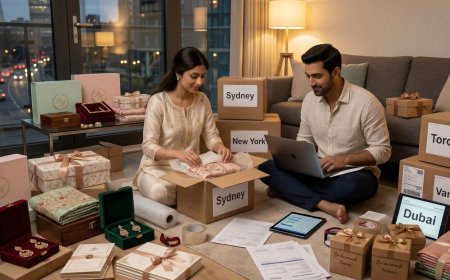
Every NRI couple planning an Indian wedding faces the same question — which expenses are genuinely worth it and which are driven by industry expectation and social pressure? This honest, category-by-category ROI analysis breaks down every major Indian wedding expense — photography, catering, venue, decor, music, outfits, invitations, favours, and the wedding planner — giving NRI couples a clear framework for spending disproportionately on what delivers lasting value and confidently reducing spend on what consistently underdelivers, so the wedding budget serves the celebration and the marriage that follows it.


The Morning After the Budget Meeting
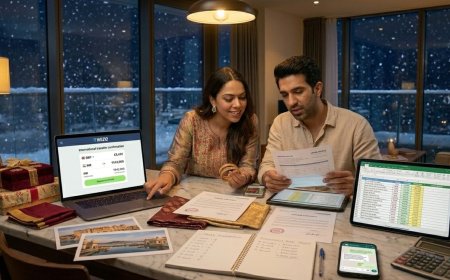
You are three months into planning.
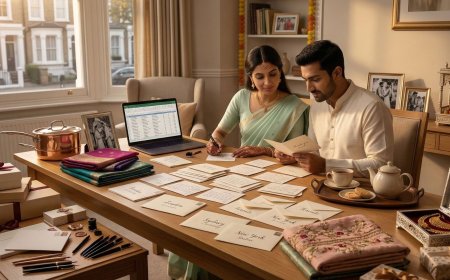
The spreadsheet is open. The vendor quotes are arriving. The numbers are assembling themselves into a total that is larger than you expected — not dramatically, not in the way that produces a crisis, but in the quiet, persistent way that wedding budgets always seem to grow. Each individual line item feels justifiable. Each vendor makes a compelling case for why their particular service is essential. Each family member has a strong opinion about which elements cannot be compromised.
And somewhere in the middle of all of this, a question surfaces that nobody in the wedding industry particularly wants you to ask.
Is this worth it?
Not the wedding itself. Not the celebration, not the ceremony, not the coming together of two families and two lives in a moment that will be remembered for decades. That question has an obvious answer.
But this line item. This specific expense. The upgraded floral package that costs ₹4 lakhs more than the standard version. The premium photographer whose quote is ₹6 lakhs above the very good photographer whose work you also loved. The live band for the sangeet that costs three times the DJ option. The five-star venue that is ₹12 lakhs more than the four-star venue that looked, honestly, almost as beautiful.
Is this specific thing worth what it costs?
This is the question that Indian wedding planning culture is not designed to help you answer. The industry — vendors, planners, magazines, social media — is structurally oriented toward spending more, not toward spending wisely. Every upgrade is presented as an investment in your memories, in your family's experience, in the quality of the most important day of your life. The implicit message is that questioning the value of any wedding expense is somehow a failure of commitment to the occasion.
This guide refuses that framing entirely.
It approaches wedding expenses the way any intelligent financial decision should be approached — with a genuine, honest analysis of what each expense actually delivers, what it costs in both rupees and real-life financial terms, and whether the value it produces is proportionate to its price. Not whether it is possible to spend this money. Whether it is worth spending it.
For NRI couples specifically — who are funding this wedding from abroad, who have competing financial goals, who are beginning a married life that has real financial dimensions beyond the wedding day — this question is not unromantic. It is responsible. It is the question that separates couples who begin their marriage with financial clarity from couples who begin it with a beautiful Instagram archive and a depleted savings account.
This guide is a genuine ROI analysis of wedding expenses. Not every category will produce the same verdict. Some expenses deliver value that significantly exceeds their cost. Some deliver modest value at modest cost. And some — the ones this guide is most valuable for identifying — deliver negligible value at significant cost, funded primarily by industry marketing and social pressure rather than genuine benefit to the couple or their guests.
By the time you finish reading this, you will know which category each major wedding expense falls into — and you will have the framework to make every budget decision with the clarity and confidence that the beginning of a marriage genuinely deserves.
The Core Reality: How NRIs Should Think About Wedding ROI
Redefining Return on Investment for a Wedding
In traditional financial contexts, ROI is straightforward. You invest money. You measure the return. You assess whether the return justifies the investment.
Wedding ROI does not work with numbers alone — but it does work with honest assessment. The return on a wedding expense is not financial. It is experiential, relational, and memorial. It is the quality of the guest experience. The emotional resonance of a specific moment. The longevity of a memory. The degree to which a specific expense contributed to the celebration in a way that was felt, noticed, and meaningful.
Assessed through this lens, wedding ROI analysis becomes genuinely useful. Some expenses produce returns — in experience, memory, and guest impact — that are clearly proportionate to their cost. Others produce returns that are largely invisible to guests, minimally felt by the couple, and primarily serving the function of meeting an expectation rather than creating genuine value.
The honest application of this framework to every line item in your wedding budget is one of the most valuable exercises you can do as an NRI couple planning a significant Indian wedding.
The Four Categories of Wedding Expense Value
Every wedding expense falls into one of four categories — and identifying which category each expense belongs to is the foundation of intelligent wedding budget allocation.
1.High Value, High Cost - Expenses that are expensive and deliver genuine, significant value that guests feel and couples remember. These deserve full investment and should be protected from budget pressure.
2.High Value, Low to Moderate Cost - The best value in your entire wedding budget. Expenses that deliver disproportionate impact relative to their cost. These should always be funded generously.
3.Low Value, Low Cost - Expenses that do not contribute significantly but cost relatively little. Fine to include for completeness, but not worth upgrading or expanding.
4.Low Value, High Cost - The most important category to identify and resist. Expenses that cost significantly but deliver marginal guest experience or couple memory value. These are where budgets are most wastefully spent — almost always driven by industry expectation or social pressure rather than genuine value assessment.
Photography and Videography — High Value, High Cost
The verdict: Worth every rupee of appropriate investment
Of every expense in the Indian wedding budget, photography and videography deliver the highest long-term ROI. This is the only wedding expense that continues delivering value every single day after the wedding — every time you look at a photograph, every anniversary you watch the film, every decade you show your children and grandchildren what that day looked like.
The flowers are gone. The food has been digested. The decor has been dismantled. The music has faded. What remains — concretely, tangibly, forever — is the photographic and video record of the day.
Where the ROI analysis gets specific:
The difference between a mediocre photographer and an exceptional one is not a difference of degree — it is a difference of kind. A mediocre photographer documents the events of the day. An exceptional photographer captures the emotional truth of them. The glance between you and your partner during the pheras. Your mother's expression at the moment of the vidaai. Your father trying not to cry and failing. These moments happen once. They are either captured or they are not.
Budget guidance for maximum ROI:
Invest in the best photographer your budget can sustain — even at the expense of other categories. For NRI couples, where the wedding in India may be the one time the extended family is all together, this investment is non-negotiable.
• Spend: ₹4–12 lakhs for quality wedding photography across events
• Do not compromise for: Decor upgrades, entertainment additions, invitation upgrades
• Non-negotiable minimum: GIA-quality photographer whose full galleries — not highlight reels — you have reviewed
Food and Catering — High Value, High Cost
The verdict: The expense guests will remember most if it is wrong
In Indian wedding culture, food is not a background element. It is a central experience — often the element guests discuss most in the days and weeks after the wedding. The quality, variety, freshness, and service of the food at an Indian wedding is felt by every single guest, for several hours, at multiple points during the event.
A wedding with magnificent decor and mediocre food will be remembered, primarily, for the mediocre food. A wedding with modest decor and exceptional food will be remembered, primarily, for the exceptional food. This is not cynicism about Indian guest priorities. It is an honest assessment of what creates lasting guest experience at an Indian wedding.
Where to invest within the catering budget:
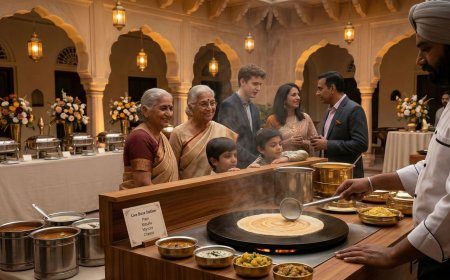
• Live counters — chaat, dosa, pani puri, regional specialties — deliver disproportionate guest experience relative to their cost. They create interaction, excitement, and the kind of specific food memories that guests reference for years.
• Quality of core dishes matters more than quantity of dishes. Fewer, better dishes consistently outperform more, average dishes.
• Service quality — the ratio of attentive, well-trained servers to guests — affects the entire food experience. Do not sacrifice service quality for menu complexity.
Where catering ROI diminishes:
• Extremely premium per-plate upgrades at the top end of the market deliver diminishing experiential returns. The jump from ₹1,800 per plate to ₷2,500 per plate is significant in quality. The jump from ₹3,500 per plate to ₹5,000 per plate is significantly less so.
• Elaborate dessert stations that look beautiful in photographs but are rarely eaten fully by guests already satisfied by the main course.
Venue — Depending on Choices Made
The verdict: Highly variable — the most important budget decision to get right
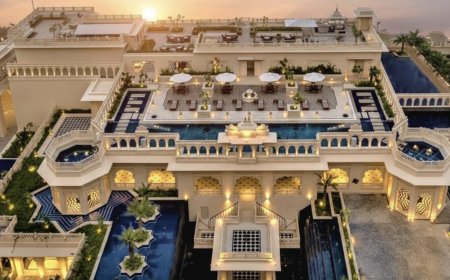
Venue is the single largest expense in most Indian wedding budgets — and it is the expense where ROI varies most dramatically based on specific choices made.
Where venue investment delivers genuine ROI:
• Location convenience for guests — a venue that is accessible, well-located, and comfortable for elderly and outstation guests delivers real value. Guests who struggle to reach the venue or find parking arrive stressed. That stress affects their experience of everything that follows.
• Natural beauty that reduces decor dependency — a venue with inherent aesthetic quality requires less decor spending to look beautiful. A heritage property in Jaipur or a well-designed modern venue in Bangalore can look stunning with modest floral arrangements. A generic banquet hall requires significant decor investment to approach the same visual result.
• Infrastructure quality — reliable air conditioning, clean facilities, adequate space, good acoustics. These are not glamorous investments. They are foundational to guest comfort and they are felt by every single person at the event.
Where venue ROI drops sharply:
• The premium between a genuinely beautiful, well-located venue and the most prestigious possible venue in the same city. The difference between a ₹8 lakh venue and a ₹20 lakh venue is rarely a difference that guests experience as ₹12 lakhs of additional value. It is often a difference in brand name and social signalling rather than genuine experiential quality.
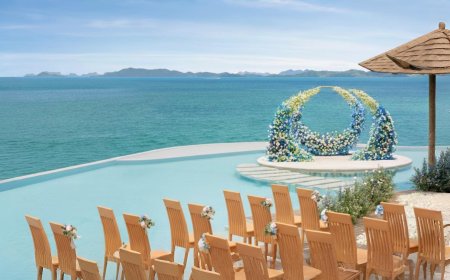
• Destination venues that are visually spectacular but logistically complicated for guests — requiring significant travel, accommodation costs, and schedule disruption. The visual return on a destination wedding is real. The guest experience return is more complicated.
Budget guidance:
Choose the best venue your budget allows within your target city. Do not choose a venue primarily for its brand name or its prestige. Choose it for how your guests will feel inside it for four hours.
Decor and Florals — at Premium Levels
The verdict: Significant diminishing returns above a moderate investment threshold
This is perhaps the most counterintuitive finding of any honest wedding ROI analysis — and the one most at odds with the direction the Indian wedding industry pushes couples toward.
Decor and florals are the most visually prominent element of Indian wedding imagery. They dominate wedding photographs. They are the primary subject of wedding Instagram content. They are discussed extensively during the planning process and admired at the event itself.
And yet — in honest ROI terms — premium decor delivers some of the weakest guest experience returns of any major wedding expense category.
Why decor ROI is lower than it appears:
Guests at an Indian wedding spend the vast majority of their time talking to each other, eating food, participating in ceremonies, and being present with family. They do not spend four hours examining floral arrangements. They are aware of the decor in the way you are aware of the wallpaper in a nice restaurant — it contributes to the ambient feeling of quality, but it is not the source of the experience.
The difference between a ₹6 lakh decor package and a ₹15 lakh decor package is visually significant in photographs. It is functionally invisible to most guests during the event itself. Guests who are having a wonderful time at your wedding — because the food is excellent, the ceremony is meaningful, the music is right, and the people they love are around them — will remember it as beautiful regardless of whether the florals were imported Dutch roses or locally sourced marigolds.
Where decor investment does deliver ROI:
• The overall ambiance threshold — enough decor investment to create a genuinely beautiful, cohesive atmosphere. This threshold is typically reached at moderate spend levels, not at premium ones.
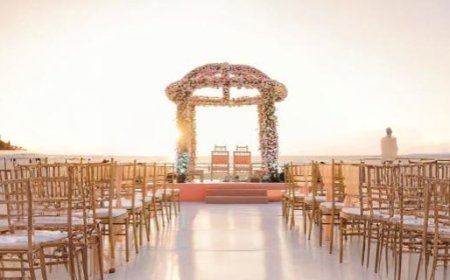
• Specific photographic moments — a beautifully designed mandap, an entrance installation, a backdrop for the couple's portraits — that appear repeatedly in the photographs that will be viewed for decades.
• Personal, meaningful design elements — decor that tells your specific story, incorporates family significance, or creates moments of personal recognition for guests.
Where decor spending consistently underdelivers:
• Elaborate floral installations in areas of the venue that guests do not occupy for extended periods
• Premium imported flowers that cost significantly more than equivalent-looking local alternatives
• Decor for outdoor areas that guests pass through briefly rather than inhabit
• Highly Instagrammable installations that photograph beautifully but contribute minimally to the live experience
Budget guidance:
Invest enough in decor to achieve a beautiful, cohesive atmosphere — and then resist the pressure to upgrade further. The additional rupees spent beyond the quality threshold are almost always better allocated to food, photography, or guest experience.
Music and Entertainment — High Value, Moderate Cost
The verdict: Underinvested by most NRI couples, overinvested in the wrong elements
Music is the emotional architecture of an Indian wedding. It determines the energy of every event. It is what guests dance to, cry to, and remember as the feeling of the night. And yet NRI couples consistently underinvest in music quality while overinvesting in music spectacle.
Where music investment delivers exceptional ROI:
• A skilled DJ who reads the room — who understands the generational mix of an Indian wedding, who can move seamlessly between Bollywood, bhangra, regional music, and contemporary tracks, and who keeps the dance floor alive from the first song to the last — delivers more guest experience per rupee than almost any other entertainment investment. A great DJ transforms a sangeet. A mediocre DJ drains it.
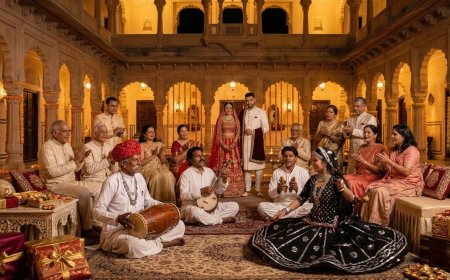
• Live instruments at specific ceremony moments — a shehnai player during the baraat, live tabla during the pheras, a classical vocalist for the jai mala — create moments of genuine emotional resonance that recorded music cannot replicate. These do not need to be elaborate or expensive. They need to be real.
Where music ROI drops:
• Celebrity or near-celebrity performer bookings for sangeet events. The cost-to-experience ratio of paying ₹15–50 lakhs for a performer who will appear for thirty to sixty minutes is almost always poor. The excitement of the announcement fades. The performance is brief. The cost is permanent.
• Elaborate sound and lighting production setups that serve the spectacle more than the experience. Guests want to dance and celebrate, not watch a production.
Budget guidance:
Invest seriously in a great DJ. Consider live instruments at specific ceremonial moments. Resist the temptation of celebrity bookings unless your budget has no other pressure points.
Wedding Outfits — High Personal Value, Variable Guest Impact
The verdict: Worth significant investment for the couple — with important nuances
Wedding outfits occupy a unique ROI position because their primary value is personal rather than guest-facing. The bridal lehenga, the groom's sherwani — these garments carry personal and family significance that is not reducible to guest experience analysis.
Where outfit investment delivers clear ROI:
• The primary wedding day outfit — the bridal lehenga and groom's sherwani for the main ceremony — deserves full investment within your budget. This outfit appears in every photograph from the most significant event of the day. It is what you will look at in those photographs for the rest of your life. It should be something you love without reservation.
• Quality of construction and fit matters more than designer name. A beautifully constructed lehenga from a skilled but non-celebrity designer will photograph and wear better than a poorly fitted garment from a prestigious label.
Where outfit ROI diminishes:
• The premium between a beautiful non-celebrity designer outfit and a couture celebrity designer outfit. The gap between ₹1.5 lakhs and ₹8 lakhs in bridal lehenga pricing does not produce a proportionate gap in how beautiful you look or how meaningful the garment is.
• Multiple outfit changes across events. Each additional outfit change adds cost — the outfit, the jewellery, the hair and makeup adjustment — while delivering diminishing marginal returns on guest experience. Guests notice and appreciate the primary outfit. The fourth outfit of the weekend is noticed by significantly fewer people.
Wedding Invitations and Stationery — Category 3 to 4
The verdict: The expense most consistently driven by social pressure rather than genuine value
Wedding invitations are experienced by guests for approximately sixty to ninety seconds before being set aside. They communicate the essential information — date, time, location, dress code — and establish a first impression of the wedding's aesthetic register.
Beyond these functions, the ROI on premium invitation spend is extremely low.
The honest calculation:
A premium boxed invitation suite — ₹500–₹1,500 per set for 200 guests — costs ₹1–3 lakhs. That same budget invested in photography, food, or music produces returns that guests experience for hours and remember for years. The invitation produces a return that lasts ninety seconds and is then placed in a drawer or recycled.
Where invitation investment makes sense:
• Meeting the aesthetic threshold that communicates the wedding's quality register — an invitation that feels commensurate with the event it is inviting people to. • Personalised or handwritten elements for close family members — a small subset of invitations that carry personal warmth for the people it matters most to.
Where invitation spending consistently underdelivers:
• Elaborate boxed invitations with multiple inserts, wax seals, custom ribbons, and premium packaging for the full guest list
• Physical invitations sent to guests who will receive a digital follow-up anyway
• Premium paper stocks and printing techniques that cost significantly more than standard quality with no guest-perceptible difference
Budget guidance:
Set a per-invitation cost ceiling of ₹200–₹350 for standard guests. Reserve premium presentation for close family only. Allocate the saved budget to food or photography.
Wedding Favours and Guest Gifts — Category 3 to 4
The verdict: Consistently poor ROI across almost every implementation
Wedding favours are perhaps the clearest example of an expense that exists primarily because it is expected — not because it delivers meaningful value to guests or meaningful memory to the couple.
The honest reality: most wedding favours are forgotten within hours. Candles, chocolates, custom keychains, potted plants, branded items — regardless of how thoughtfully chosen, the overwhelming majority of wedding favours end up in a drawer, regifted, or discarded within weeks.
Where gift ROI exists:
• Practical, consumable items — premium mithai boxes, artisanal food products, quality teas or preserves — that guests actually use and enjoy. These deliver more value per rupee than decorative items.
• Regionally meaningful gifts — local crafts, traditional sweets specific to the wedding's location — that carry genuine cultural meaning and serve as authentic souvenirs of the event.
• Charitable donations made in guests' honour — an increasingly appreciated alternative among NRI wedding guests who already have everything and value the gesture of giving on their behalf.
Budget guidance:
Either eliminate favours entirely — few guests will notice or mind — or choose a single consumable or meaningful item at a modest per-head cost. Do not spend more than ₹200–₹400 per guest on favours.
Wedding Planner — Category 1 for NRI Couples Specifically
The verdict: The highest ROI expense in the NRI wedding budget — consistently undervalued
For a local couple planning a wedding in their own city, a wedding planner is a convenience. For an NRI couple planning a complex Indian wedding from abroad, a skilled wedding planner is infrastructure.
The ROI of a good NRI wedding planner is not calculated in the quality of the decor they source or the vendors they recommend. It is calculated in the crises that never become crises. The vendor dispute that is resolved before you hear about it. The timeline that holds because someone is physically present to enforce it. The day-of experience of a couple who arrives at their own wedding with nothing to manage — because someone else has managed everything.
The specific NRI ROI calculation:
A skilled NRI wedding planner typically costs ₹5–15 lakhs for full-service planning. The alternative — managing a complex multi-event Indian wedding remotely, without professional on-ground infrastructure — consistently produces vendor issues, coordination failures, and day-of stress that costs both money and experience. The planning fee, assessed against what it prevents, is almost always worth it.
Budget guidance:
Do not cut the wedding planner to fund decor or favours. Cut decor and favours to fund the wedding planner. The sequence of priority is unambiguous for NRI couples.
The Honeymoon — Category 2: Often Deprioritised, Deserves More
The verdict: The most underfunded high-ROI expense in most NRI wedding budgets
After months of planning a wedding for two hundred other people, the honeymoon is the first experience that is entirely for the two of you. It is the transition from the public celebration of your marriage to the private beginning of it. And yet NRI couples — exhausted and financially stretched by the wedding — consistently deprioritise honeymoon investment in favour of wedding day expenses.
The ROI on a meaningful honeymoon is genuinely high. Not in the Instagram sense — in the foundational sense of having an extended, uninterrupted period together at the beginning of your marriage, in a setting that is beautiful and restorative, with no family obligations, no planning responsibilities, and no performance requirements.
Budget guidance:
Protect the honeymoon budget as firmly as you protect photography. If the wedding budget is under pressure, reduce decor before reducing the honeymoon.
Common ROI Mistakes NRI Couples Make
Optimising for the Photograph Rather Than the Experience
Social media has produced a generation of weddings that look extraordinary in photographs and feel somewhat flat in person. Decisions made primarily for their visual impact — elaborate decor installations, dramatic lighting setups, meticulously styled flat-lay arrangements — often deliver less to the live guest experience than their photographic impact suggests.
Correction: For every significant budget decision, ask two questions. How will this feel on the day? And how will it look in photographs? Both matter. But the day comes first. The photograph documents it.
Spending Equally Across Categories Rather Than Disproportionately on High-ROI Items
The instinct to achieve a consistent quality level across all wedding categories — nice invitations, nice food, nice decor, nice photography, nice entertainment — produces a wedding where everything is adequate and nothing is exceptional. The budget is distributed evenly across categories regardless of their ROI differential.
Correction: Spend disproportionately on high-ROI categories — photography, food, music, and the planner for NRI couples. Accept modest quality in low-ROI categories — invitations, favours, premium decor upgrades. The experiential quality of the event will be higher at the same total budget.
Upgrading to Avoid Family Disappointment Rather Than to Create Genuine Value
Many NRI wedding upgrades are funded not by a genuine assessment that the upgrade will improve the experience — but by the anticipation of a family member's disappointment if the upgrade is not made. This is perhaps the most expensive driver of low-ROI wedding spending.
Correction: For any upgrade driven by anticipated family reaction rather than genuine value assessment, ask: will this upgrade be experienced by guests, or will its absence simply be noticed by one person? If the answer is the latter, the upgrade is serving one person's expectation rather than the wedding's quality. That is not a sufficient reason to spend.
Ignoring the Post-Wedding Financial ROI
Every rupee spent on a wedding that does not deliver proportionate value is a rupee that is not available for the financial goals of the marriage that follows. The home deposit. The emergency fund. The travel and experiences of the first year together. The financial breathing room that allows both partners to make career decisions from security rather than necessity.
Correction: Include the post-wedding financial position as a variable in your ROI analysis. A ₹10 lakh decor upgrade that produces marginal experiential improvement has a real post-wedding cost — in reduced savings, in delayed financial goals, in the financial pressure that begins the first chapter of married life. That cost belongs in the calculation.
The Emotional and Cultural Layer: ROI, Value, and What Weddings Are Actually For
There is a version of wedding ROI analysis that, applied without emotional intelligence, produces weddings that are efficiently planned and soullessly executed. Weddings where every decision has been optimised for measurable return and nothing has been spent on joy for its own sake.
That is not what this guide is advocating.
Some wedding expenses are worth making not because they deliver measurable ROI but because they carry meaning that is not reducible to analysis. The flowers your grandmother specifically requested because they were at her own wedding sixty years ago. The singer who performs a specific song that your mother has been moved by for thirty years. The extra hour of venue time that allows the celebration to breathe rather than feeling rushed.
These are not high-ROI decisions in the analytical sense. They are human decisions. And a wedding that contains only analytically justified expenses is a wedding that has been planned with a spreadsheet and experienced as one.
The purpose of ROI analysis is not to eliminate emotional and personal spending from your wedding budget. It is to ensure that the emotional and personal spending is deliberate — that it reflects genuine meaning and genuine value rather than industry expectation and social pressure.
When you can look at every significant expense in your wedding budget and say: I know what this costs, I know what it delivers, and I have chosen to spend it because it is genuinely worth it to me — that is the goal. Not the elimination of generous spending. The elimination of unconscious spending. The replacement of social pressure with genuine choice.
That is what your wedding budget deserves. And so does the marriage it is building toward.
Wedding Expense ROI Summary Checklist
High ROI — Protect and Prioritise
• Photography and videography — full coverage by verified quality photographers
• Food and catering quality — live counters, quality core dishes, strong service ratio
• Wedding planner for NRI couples — non-negotiable infrastructure investment
• Venue comfort and accessibility — infrastructure that guests feel throughout the event
• Music quality — skilled DJ, live instruments at key ceremonial moments
• Primary wedding outfit — full investment for the main ceremony garment
• Honeymoon — protect this budget against wedding day pressure
Moderate ROI — Invest Thoughtfully With Clear Ceiling
• Venue aesthetic quality — up to a quality threshold, diminishing returns above it
• Sangeet entertainment — DJ over celebrity performer in most scenarios
• Secondary outfits — modest investment, resist multiple elaborate changes
• Meaningful decor moments — mandap, entrance, couple portrait backdrop
Low ROI — Spend Modestly, Resist Upgrades
• Premium invitation suites for full guest list
• Elaborate decor in low-occupancy venue areas
• Premium imported florals over quality local alternatives
• Favour items beyond consumable and meaningful threshold
• Additional event extensions beyond guest comfort point
Reassess Before Spending
• Any upgrade driven primarily by anticipated family reaction
• Any expense whose primary value is photographic rather than experiential
• Any category where the premium tier costs significantly more than the standard tier with minimal guest-perceptible quality difference
• Any expense that depletes post-wedding financial position below comfortable threshold
Spend on What Lasts. Let Go of What Doesn't.
The Indian wedding budget is finite. Even for NRI couples with strong incomes and dedicated wedding funds, there is a number beyond which the spending stops — and every rupee spent on one category is a rupee not available for another.
The couples who look back on their wedding budgets with the most satisfaction are not the ones who spent the most. They are the ones who spent most deliberately — who invested heavily in the things that lasted and mattered, and spent modestly on the things that didn't.
The photographs that capture your father's expression at the moment he hands you over to your future. The food that your guests are still talking about at Christmas three years later. The music that kept your grandmother on the dance floor until eleven at night. The planner who made sure the entire day unfolded without a single crisis reaching you.
These are the returns on your wedding investment that compound over time — in memory, in relationship, in the specific, irreplaceable quality of a celebration that was planned with intelligence and experienced with joy.
The decor that nobody remembered. The invitations that were beautiful for ninety seconds. The favours that went home in a bag and into a drawer.
These are the returns that do not compound. These are the expenses that served expectation more than experience — and that are worth less, in honest retrospect, than the budget lines they occupied.
Spend on what lasts. Let go of what doesn't.
Your wedding — and the marriage it begins — deserves that clarity.
Published by NRIWedding.com — The Premium Global Platform for Non-Resident Indians Planning Indian Weddings From Abroad.
What's Your Reaction?
 Like
0
Like
0
 Dislike
0
Dislike
0
 Love
0
Love
0
 Funny
0
Funny
0
 Angry
0
Angry
0
 Sad
0
Sad
0
 Wow
0
Wow
0