






































































Why Indian Bridesmaids Steal the Groom’s Shoes — The Secret Behind Joota Chupai
Joota Chupai, the playful tradition of hiding the groom’s shoes during Indian weddings, has evolved into a cultural and commercial highlight of modern ceremonies. While not rooted in formal religious scripture, the ritual reflects longstanding regional customs and family bonding practices. Popularised further by Indian cinema and the booming wedding industry, the custom now forms part of curated wedding experiences, adding humour and negotiation to otherwise solemn rites.

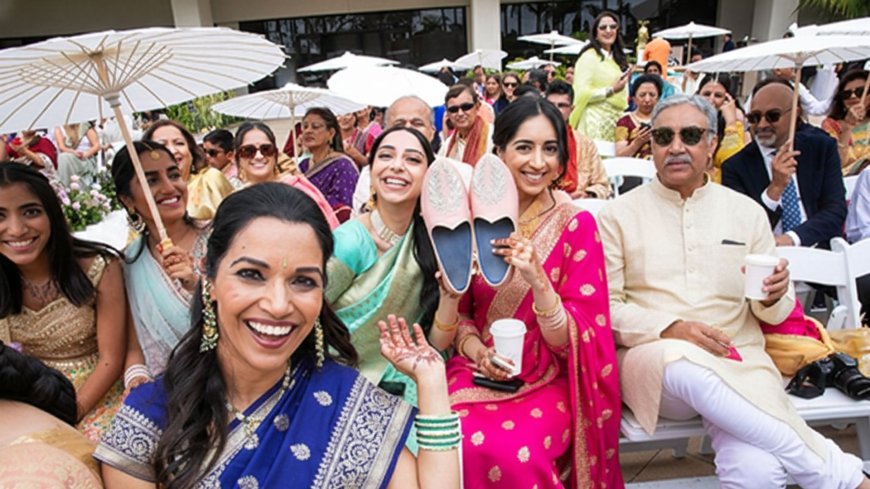
At nearly every North Indian wedding, amid sacred chants and formal vows, a light-hearted standoff unfolds. The groom’s shoes disappear. In their place begins a spirited negotiation between the bride’s side and the groom—often culminating in a cash settlement. Known as Joota Chupai or Joota Churai, the ritual has become a defining feature of contemporary Indian weddings.
While widely popular today, historians note that its origins remain largely anecdotal rather than formally documented.
What Is Joota Chupai?
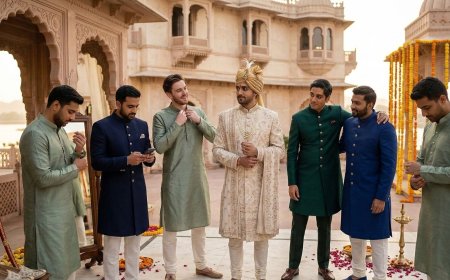
The custom typically takes place when the groom removes his footwear before stepping onto the wedding mandap for religious ceremonies. At this moment, the bride’s sisters or friends seize the opportunity to hide the shoes.
Their objective is straightforward: return the footwear only after the groom agrees to pay a negotiated amount—sometimes symbolic, sometimes substantial. The exchange is playful, often theatrical, and serves as a rare moment of levity in an otherwise structured ceremony.
Over time, the ritual has evolved into a highlight of wedding festivities, frequently planned in advance by families.
Tracing the Historical References
Scholars acknowledge that there is no definitive archaeological evidence proving the antiquity of shoe-stealing rituals in India. However, certain regional traditions and literary references suggest that playful bargaining customs existed in earlier social settings.
According to cultural historians, in some parts of northern India—particularly Punjab and Awadh—there were informal practices aimed at symbolically delaying the couple’s departure from the bride’s home. Given that travel in earlier centuries was largely on foot or horseback, footwear held practical importance. Concealing it, even temporarily, could serve as a symbolic gesture of reluctance to let the groom leave easily.
Professor Pravin Mishra of Guru Ghasidas Central University has noted that while the custom lacks formal textual endorsement in classical scriptures, its persistence reflects evolving folk traditions rather than codified religious mandates.
Cinema and Commercialisation
In the late 20th century, Indian cinema amplified the ritual’s visibility. Bollywood films often portrayed Joota Chupai as a humorous face-off between families, reinforcing its place in mainstream wedding culture.
Wedding planners now treat the ritual as an orchestrated event. Some couples allocate separate budgets for the “ransom,” while videographers capture the negotiation as a memorable highlight. The practice has thus entered India’s expanding wedding economy, which is estimated to be one of the largest in the world, valued at billions annually.
The ritual’s transformation from informal family prank to staged entertainment illustrates how cultural customs adapt within modern consumer frameworks.
Global Parallels and Cultural Exchange
Similar playful traditions exist in other parts of the world. In certain Greek wedding customs, for example, symbolic gestures involving footwear and money are incorporated into pre-wedding ceremonies.
Anthropologists also observe that parts of Southeast Asia—particularly Thailand, Malaysia and Indonesia—feature light-hearted bargaining rituals during weddings. In some cases, these practices have been influenced by Indian diaspora communities and media.
However, the specific format of hiding the groom’s shoes and demanding payment is most strongly associated with North Indian wedding culture.
A Ritual Beyond Religion
Unlike core Hindu wedding rites prescribed in scriptures such as the Grihya Sutras, Joota Chupai is not a religious obligation. Its significance lies in social bonding rather than theology.
By encouraging playful negotiation, the ritual symbolically integrates two families. It gives the bride’s relatives an opportunity to assert presence in a ceremony traditionally centred on the groom’s arrival.
In today’s weddings—whether lavish multi-day events or intimate gatherings—the shoe-stealing custom continues to thrive. It reflects how Indian matrimonial traditions blend solemn spirituality with humour, commerce and community interaction.
Far from being merely a prank, Joota Chupai has become a cultural performance—one that underscores the evolving dynamics of family, festivity and the business of celebration in modern Indi
What's Your Reaction?
 Like
0
Like
0
 Dislike
0
Dislike
0
 Love
0
Love
0
 Funny
0
Funny
0
 Angry
0
Angry
0
 Sad
0
Sad
0
 Wow
0
Wow
0