












































Le Méridien Jaipur — A Stepwell Resort Wedding Near Amber Fort: What NRI Couples Need to Know
The photographer had been in Jaipur for eleven years. She had photographed weddings at the Rambagh Palace and the Samode Haveli and the Amer Fort's ramparts at golden hour. She had the complete knowledge of the city's wedding photography landscape. She had not photographed at the Le Méridien Jaipur before the January booking arrived. She drove out on a Tuesday morning in November for the site visit. Walked through the entrance. Followed the path the property's layout directed toward the central feature. And stopped. The stepwell. Not a boutique property's decorative water feature. Not a reference to one. An actual stepwell — the baoli, the ancient Indian water harvesting structure whose geometric descent of steps into water is the most visually extraordinary architectural form the Indian tradition has produced. She took out her phone and called the London bride. She said: I am at the property. I need you to understand something before you confirm. There is a stepwell here. And I need to tell you what it is going to do to your wedding photographs. The London bride confirmed the booking the following morning. This complete guide gives NRI couples everything needed to plan a wedding at Jaipur's most photographically distinctive resort — covering the baoli tradition and what the stepwell's geometry does to the wedding photograph, the Amer Fort's twelve-minute proximity and elephant ride programme, every wedding space from the stepwell ceremony to the Grand Ballroom, two comprehensive tables with all venue costs and accommodation from ₹10,000 to ₹1,10,000 per night, complete budget from ₹2.81 crore to ₹5.72 crore — the guide series' strongest mid-range value — the Marriott Bonvoy advantage, the illuminated evening baoli cocktail reception, and the five mistakes that cost couples the stepwell's full photographic and ceremonial potential.


Le Méridien Jaipur — A Stepwell Resort Wedding Near Amber Fort: What NRI Couples Need to Know
The Stepwell
The photographer had been in Jaipur for eleven years.
She had photographed weddings at the Rambagh Palace and the Samode Haveli and the City Palace's formal courtyards and the Amer Fort's ramparts at the golden hour and the specific, sun-drenched exteriors of a hundred heritage havelis whose pink sandstone she knew by the specific quality of the light it held at every hour of the Jaipur day. She had photographed the Jaipur wedding from every angle and in every season and in every light and she had the professional's complete knowledge of the city's wedding photography landscape — the knowledge of the person who has been in the same place, with the camera, for eleven years.
She had not photographed at the Le Méridien Jaipur before the January booking arrived.
The enquiry had been specific: NRI couple, London-based, one hundred and eighty guests, three-day wedding, property near Amer. The photographer had done the research. Had found the property. Had read the stepwell.
She had driven out on a Tuesday morning in November — the site visit before the booking confirmation, the professional reconnaissance that the experienced destination wedding photographer conducts before committing to the occasion. She had arrived at the Le Méridien Jaipur on the Amer road whose routing takes the car through the outer Jaipur landscape toward the hills where the Amer Fort sits above the city, the specific approach whose direction is the direction away from the pink city's density and toward the Aravalli Hills' quieter register.
She had parked. Had walked through the entrance. Had followed the path that the property's layout directed toward the central feature.
And then she had stopped.
The stepwell.
Not the boutique property's decorative water feature, not the pool whose design references the traditional form, not the heritage element whose incorporation into the resort's landscape is the incorporation of the motif rather than the substance. The stepwell — the baoli, the specific form of the Indian subcontinent's ancient water harvesting tradition, the structure whose geometric descent of the steps into the water is the most specifically, visually extraordinary architectural form that the Indian tradition has produced.
The Le Méridien Jaipur has a stepwell.
Not a reference to one. Not an interpretation of one. A stepwell — the specific, geometric, descending-staired water structure whose form is the form of the ancient tradition and whose presence at the centre of the resort's landscape gives the property the one thing that no other Jaipur wedding venue can claim: the baoli as the event space.
The photographer had looked at it for a long time.
Then she had taken out her phone and called the London bride.
She had said: I am at the property. I need you to understand something before you confirm. There is a stepwell here. An actual stepwell. And I need to tell you what it is going to do to your wedding photographs.
The London bride had confirmed the booking the following morning.
This guide is for every NRI couple who needs to understand what the stepwell does — to the photographs, to the occasion, to the specific, irreplaceable character of the Jaipur wedding that happens beside the most ancient and the most beautiful water form the Indian architectural tradition ever produced.
The Stepwell: The Baoli Tradition
What a Stepwell Is
The stepwell — the baoli or the vav in the Indian architectural tradition — is the specific water harvesting structure whose form is the form of the inverted temple: the descent into the earth through the progressive stages of the geometric step, the water at the bottom whose level varies with the season, the walls of the descending structure whose surface the Indian craftsperson carved and decorated with the specific architectural vocabulary of the tradition.
The baoli was the practical infrastructure of the Indian subcontinent's arid and semi-arid regions — the specific engineering solution to the problem of the water whose seasonal availability required the storage structure whose depth reached below the fluctuating water table, whose stepped descent allowed the user to reach the water at every level of its seasonal variation, and whose construction was the community investment in the survival of the settlement.
But the baoli was never only the practical infrastructure. The Indian tradition's characteristic transformation of the functional into the beautiful — the same transformation that produced the tank's carved ghats, the well's ornamental superstructure, the irrigation channel's decorated sluice — was applied to the stepwell with the specific ambition of the major public work whose form was the form seen by the community every day and whose beauty was therefore the beauty of the daily life rather than the occasional ceremony.
The great stepwells of India — the Rani ki Vav at Patan in Gujarat, the Chand Baori at Abhaneri near Jaipur, the Agrasen ki Baoli in Delhi — are the structures whose specific, geometric, descending beauty is among the most extraordinary visual experiences the Indian architectural tradition offers. The Chand Baori at Abhaneri — sixty kilometres from Jaipur, thirteen centuries old, three thousand five hundred steps descending thirty metres into the earth — is the specific, local reference point for the Rajasthan baoli tradition and the structure whose visual DNA the Le Méridien Jaipur's stepwell most directly inherits.
The Stepwell at Le Méridien Jaipur
The stepwell at the Le Méridien Jaipur is the property's founding design intention — the specific, central feature around which the resort's spatial organisation is built, the water body whose geometric descent is the visual anchor of the property's aesthetic and the photographic subject around which the wedding's visual programme is most naturally organised.
The stepwell is not the heritage structure — the Le Méridien Jaipur is the contemporary resort whose stepwell is the contemporary construction in the traditional form rather than the preserved ancient infrastructure. But the construction in the traditional form is the construction that applies the geometric discipline of the baoli's design language — the precise, regular descent of the steps, the specific proportions of the treads and the risers, the relationship of the descending structure to the water at its base — with the quality and the seriousness of the design intention that makes the stepwell the genuine architectural achievement rather than the decorative borrowing.
The photographic quality: the stepwell's specific visual property is the visual property that the photographer had understood immediately on the site visit and that had produced the phone call to the London bride. The geometric regularity of the descending steps — the specific, repeating rhythm of the stair whose pattern creates the visual depth whose perspective the camera most lovingly renders — is the photographic subject whose quality is the quality of the repeating geometric pattern that the human eye finds most satisfying and that the camera, given the right light and the right angle and the right subject positioned within the descent, transforms into the wedding photograph that is unlike any other wedding photograph taken at any other Jaipur venue.
The stepwell photograph — the couple at the bottom of the descent, the geometric steps rising around and above them, the Jaipur light finding the stone's surface at the specific angle of the morning or the late afternoon — is the photograph that the London bride had understood from the photographer's description before the visual confirmation of the image. The photograph that is worth confirming the booking for.
The Property: Le Méridien Jaipur Resort and Spa
The Marriott International Standard
The Le Méridien — the international luxury hotel brand whose portfolio spans Paris and Dubai and Istanbul and New York and whose positioning within the Marriott International group is the positioning of the design-led, culturally curious, specifically aesthetic luxury brand — is the brand whose Jaipur property brings the international standard to the Amer road location with the specific combination of the global brand's professional management and the locally specific architectural feature that makes the Le Méridien Jaipur the property that is simultaneously the international hotel and the specifically, irreducibly Jaipur place.
The Marriott Bonvoy loyalty programme: the Le Méridien Jaipur's membership in the Marriott Bonvoy programme — the loyalty scheme whose membership includes a substantial proportion of the NRI travelling professional whose business travel has accumulated the points whose redemption at the wedding venue is the specific, financially meaningful benefit — is the programme benefit that the NRI couple whose Bonvoy membership is the active, points-bearing membership should factor into the venue comparison. The wedding accommodation and the event costs at the Marriott International property are the costs against which the Bonvoy points redemption and the member rate apply — the specific, practical financial advantage that the heritage property and the independent resort cannot match.
The Amer Road Location
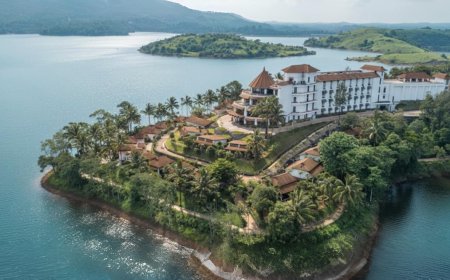
The Le Méridien Jaipur's position on the Amer road — the specific routing that connects the Jaipur city centre to the Amer Fort complex eight kilometres away, passing through the outer urban landscape whose density thins as the road approaches the Aravalli Hills — is the location that gives the property its specific strategic advantage: the proximity to the Amer Fort that makes the fort the wedding's natural guest programme destination, the distance from the city centre that provides the specific, quieter register of the urban edge, and the Jaipur airport's thirty-minute accessibility that makes the international guest's transfer the most direct of any Jaipur property.
The Amer road location means that the guests staying at the Le Méridien Jaipur are the guests for whom the Amer Fort is a twelve-minute drive rather than a twenty-five-minute city journey — the guests whose morning excursion to the fort, whose elephant ride on the fort's approach, whose specific engagement with the Amer complex's extraordinary architecture is the engagement of the convenient and the immediate rather than the organised day trip.
The Architecture and the Aesthetic
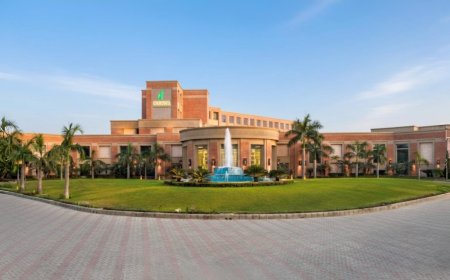
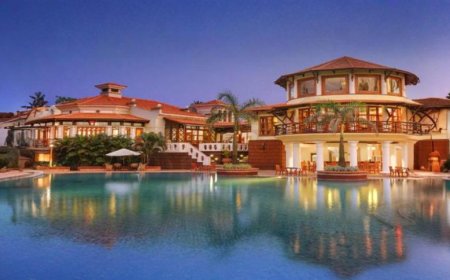
The Le Méridien Jaipur's architecture — the contemporary Rajasthan-inflected design whose pink sandstone references, whose carved detail, and whose specific colour palette locate the property within the Jaipur aesthetic tradition without the pretension of the heritage reproduction — is the architecture of the contemporary resort that knows where it is and expresses that knowledge in the building's vocabulary.
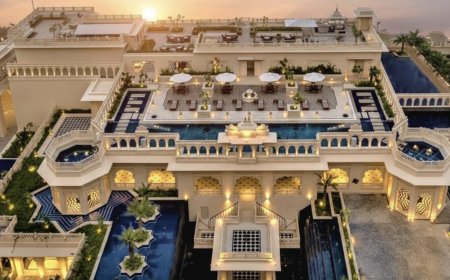
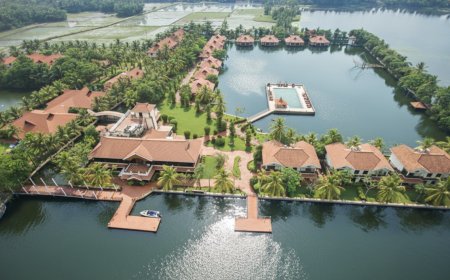
The property's central organising principle is the stepwell — the spatial decision whose consequence is the specific layout of the resort's public spaces around the baoli's presence, the rooms and the event spaces and the restaurant and the pool whose arrangement creates the multiple perspectives from which the stepwell is visible and whose visual access to the central feature gives every public space in the resort the specific quality of the view that orients the guest within the property's aesthetic world.
The pool: the Le Méridien Jaipur's pool — the resort pool whose design engages the stepwell's geometric vocabulary in the pool's own form and whose position within the property creates the visual dialogue between the modern water amenity and the ancient water form — is the outdoor space that the wedding's daytime function most naturally uses and whose photographic relationship to the stepwell the wedding photographer should plan deliberately.
The Amer Fort: The Guest Programme That No Other Jaipur Property Matches
The Fort Complex
The Amer Fort — the Amer Qila, the fort-palace complex at the town of Amer eight kilometres from the Jaipur city centre — is the sixteenth and seventeenth-century Rajput construction whose specific architectural achievement is among the finest in the Indian palace tradition: the Sheesh Mahal whose mirror-inlaid ceiling produces the specific, extraordinary experience of the single candle flame reflected a thousand times, the Diwan-i-Aam whose colonnaded arcade is the arcade of the formal Rajput court, the Ganesh Pol whose painted surface is the surface of the specific, intricate Rajput mural tradition applied to the gateway with the accumulated devotion of the daily passage.
The Amer Fort's specific quality — the quality that distinguishes it from the Jaipur City Palace and from the Hawa Mahal and from the other Jaipur heritage monuments — is the quality of the lived palace: the fort whose rooms carry the specific, inhabited character of the place where the Kachchwaha rulers actually lived rather than the ceremonial palace whose grandeur is the grandeur of the occasion rather than the domestic.
For the NRI wedding's guest programme: the Amer Fort at twelve minutes from the Le Méridien Jaipur is the guest programme asset whose proximity is the proximity of the adjacent destination — the excursion whose logistics are the logistics of the short drive rather than the half-day journey, whose organisation requires the specialist guide and the timing management but not the complex transport coordination, and whose quality as the heritage experience is the quality of one of India's most extraordinary palace complexes.
The Elephant Ride
The Amer Fort's elephant ride — the specific, traditional approach to the fort's main gate by elephant, the experience whose combination of the animal's scale and the fort's scale and the specific, processional quality of the ascent produces the guest experience that is not the tourist attraction but the living continuation of the royal tradition — is the guest programme element that the Le Méridien Jaipur's proximity most naturally enables and that the international guest most specifically values.
The wedding's guest programme that includes the Amer Fort elephant ride is the programme that gives the international guest — the cousin from Toronto, the university friend from Sydney, the colleague from London whose India experience is this wedding — the specific, visceral, embodied experience of the Rajput tradition that the heritage museum's glass case and the guided tour's audio commentary cannot provide. The elephant's back, the fort's gate, the Maota Lake below — this is the experience that the twelve-minute drive from the Le Méridien Jaipur makes available on the morning before the mehendi.
The Fort Photography Session
The pre-wedding photography session at the Amer Fort — the specific programme element whose engagement by the couple and the wedding photographer produces the pre-wedding photographs whose setting is one of India's finest palace complexes — is the specific advantage of the Le Méridien Jaipur's proximity that the wedding planner should build into the programme as the confirmed session rather than the optional consideration.
The Amer Fort's pre-wedding photography session — the couple in the Sheesh Mahal's mirror-inlaid interior, the Ganesh Pol's painted gateway, the Diwan-i-Aam's colonnaded arcade, the specific, extraordinary spaces whose photographic quality is the quality of the fort that was built to be the most beautiful place its builders could conceive — combined with the Le Méridien Jaipur's stepwell session produces the pre-wedding photography programme whose range and whose quality no other Jaipur property's combination of on-site feature and proximate heritage destination can match.
The Wedding Spaces
The Stepwell — The Ceremony and the Pre-Wedding Photography
The stepwell is the Le Méridien Jaipur's defining wedding space — not the largest, not the most capacious, but the most specifically distinctive, the most visually extraordinary, and the one that gives the property its irreplaceable credential in the Jaipur wedding landscape.
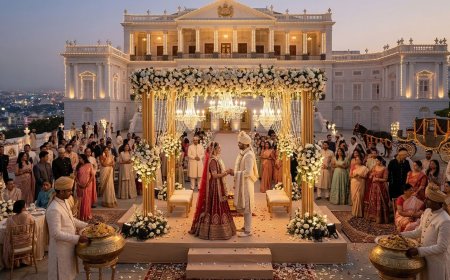
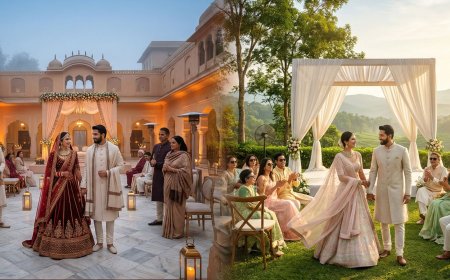
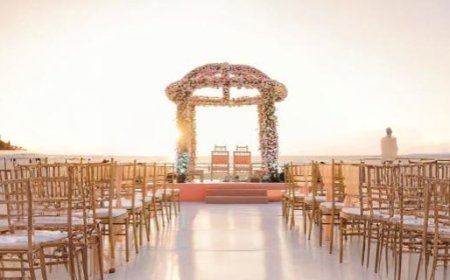
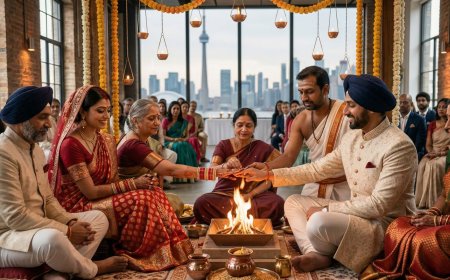
The ceremony at the stepwell — the mandap installed at the baoli's upper level, the guests seated on the steps' descending tiers, the geometric descent as the ceremony's visual frame — is the ceremony whose setting is unlike any other ceremony setting in the Jaipur destination wedding market. The stepwell's geometric form creates the natural amphitheatre whose specific spatial quality places every guest within the intimate visual proximity of the ritual — the steps' descent focuses the attention, the water at the bottom of the structure provides the specific, ambient presence of the ancient water form, and the ceremony's architecture is the architecture of the baoli rather than the wedding decorator's construction.
The stepwell accommodates up to one hundred and fifty guests for the ceremony whose setting the structure's dimensions most naturally provide — the intimate to moderate scale that makes the stepwell the ceremony for the couple whose guest list is the carefully considered rather than the comprehensive.
The pre-wedding photography at the stepwell is the session that the photographer had called the London bride about — the specific, geometric, depth-creating visual whose quality the traditional Jaipur wedding venue cannot provide because the Jaipur wedding venue does not have a stepwell. Allocate the pre-wedding session's dedicated time at the stepwell. The morning light is the light that finds the stone's surface with the specific warmth of the Rajasthan winter, the low angle whose direction creates the shadows in the step's geometry that the photograph requires. Confirm the session at seven AM on the morning before the wedding.
The Grand Ballroom
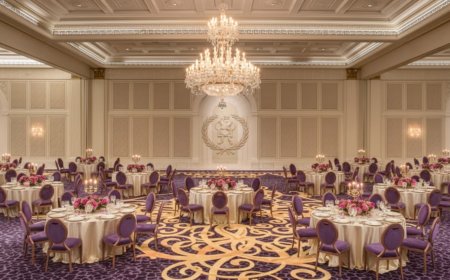
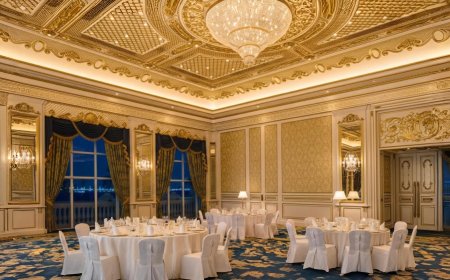
The Le Méridien Jaipur's Grand Ballroom — the primary indoor event space whose scale accommodates the large Jaipur wedding's indoor functions — is the sangeet and the reception dinner space for the occasion whose guest count requires the indoor scale that the stepwell's intimate outdoor setting cannot provide.
The Grand Ballroom accommodates up to eight hundred guests for the standing reception and up to five hundred for the seated dinner — the large Jaipur wedding scale that the Le Méridien Jaipur's primary indoor space provides and that the couple whose guest list reaches the several-hundred scale requires.
The Grand Ballroom's specific quality is the Le Méridien brand's finish quality — the international hotel standard applied to the large event space, the technical infrastructure, the lighting provision — combined with the Jaipur property's specific aesthetic inflections whose pink sandstone detail and whose craft vocabulary locate the room within the Rajasthan tradition without sacrificing the contemporary standard.
The Outdoor Event Lawns
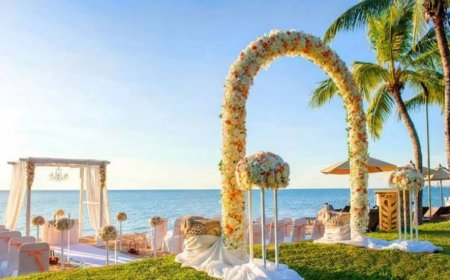
The Le Méridien Jaipur's outdoor lawns — the event spaces whose position within the resort's grounds provides the outdoor occasion's natural setting — are the wedding event spaces for the welcome dinner, the outdoor cocktails, and the outdoor function whose character the Jaipur winter season's specific, cool, clear evenings most beautifully support.
The outdoor lawn accommodates up to six hundred guests for the standing reception and up to four hundred for the seated dinner — the large scale that the resort's grounds provide and that makes the Le Méridien Jaipur the appropriate choice for the large Jaipur wedding whose outdoor events require the substantial ground.
The outdoor lawn's relationship to the stepwell — the specific visual connection between the event lawn and the baoli whose presence the event's ambient setting includes — is the quality that the Le Méridien Jaipur's outdoor occasion most distinctly possesses and that no other Jaipur wedding venue's outdoor setting can replicate.
The Pool Deck
The Le Méridien Jaipur's pool deck — the outdoor space adjacent to the resort pool whose position within the property creates the specific setting for the daytime function and the evening cocktail reception — is the wedding space for the mehendi, the poolside cocktails, and the informal pre-wedding gathering whose character the pool setting most naturally produces.
The pool deck accommodates up to one hundred and fifty guests for the standing cocktail reception — the intimate to moderate scale that makes it the space for the pre-dinner gathering and the daytime function rather than the grand occasion. The pool deck's specific quality at the Le Méridien Jaipur is the quality of its visual dialogue with the stepwell — the contemporary pool form in conversation with the ancient baoli form, the two water structures whose aesthetic relationship is the resort's central design statement.
The Private Dining and Smaller Banquet Spaces
The Le Méridien Jaipur's smaller event spaces — the private dining room, the smaller banquet halls — are the spaces for the intimate family function, the mehendi gathering, the pre-wedding family dinner, the post-wedding morning breakfast, whose character the intimate setting most fully rewards.
The private dining at the Le Méridien Jaipur is the private dining at the international hotel whose food quality and whose service standard are the Marriott International standard applied to the Jaipur property's specific culinary capability — the regional Rajasthani menu whose availability alongside the international provision gives the family gathering the flexibility the mixed-heritage NRI guest list most requires.
The Complete Planning and Pricing Tables
Table One: Wedding Spaces, Events, and Costs
| Space / Event | Capacity (Seated) | Capacity (Standing) | Approx. Venue Cost (INR) | Approx. Venue Cost (USD) | Best For |
|---|---|---|---|---|---|
| Stepwell – Ceremony | Up to 120 | Up to 150 | ₹10,00,000 – ₹20,00,000 | $12,000 – $24,000 | Pheras, baoli as frame |
| Stepwell – Pre-Wedding Photography | Couple and wedding party | — | ₹1,00,000 – ₹3,00,000 | $1,200 – $3,600 | Morning shoot, geometric depth |
| Stepwell – Cocktail Reception | Up to 80 | Up to 120 | ₹6,00,000 – ₹12,00,000 | $7,200 – $14,400 | Evening cocktails, baoli illuminated |
| Grand Ballroom – Sangeet | Up to 500 | Up to 800 | ₹35,00,000 – ₹65,00,000 | $42,000 – $78,000 | Grand sangeet, full scale |
| Grand Ballroom – Reception Dinner | Up to 500 | Up to 800 | ₹45,00,000 – ₹80,00,000 | $54,000 – $96,000 | Large formal reception |
| Outdoor Lawn – Welcome Dinner | Up to 400 | Up to 600 | ₹25,00,000 – ₹45,00,000 | $30,000 – $54,000 | Arrival evening, open air |
| Outdoor Lawn – Outdoor Reception | Up to 400 | Up to 600 | ₹35,00,000 – ₹60,00,000 | $42,000 – $72,000 | Large outdoor dinner |
| Pool Deck – Mehendi | Up to 100 | Up to 150 | ₹6,00,000 – ₹12,00,000 | $7,200 – $14,400 | Pre-wedding daytime function |
| Pool Deck – Cocktails | Up to 100 | Up to 150 | ₹5,00,000 – ₹10,00,000 | $6,000 – $12,000 | Pre-dinner cocktails |
| Pool Deck – Haldi | Up to 60 | Up to 80 | ₹3,00,000 – ₹6,00,000 | $3,600 – $7,200 | Morning ritual, inner circle |
| Private Dining – Family Dinner | Up to 40 | Up to 60 | ₹3,00,000 – ₹8,00,000 | $3,600 – $9,600 | Pre-wedding intimate gathering |
| Property Approach – Baraat | Procession format | Up to 200 | ₹3,00,000 – ₹6,00,000 | $3,600 – $7,200 | Groom's arrival, resort approach |
| Amer Fort – Pre-Wedding Session | Couple and party | — | ₹50,000 – ₹1,50,000 | $600 – $1,800 | Fort photography, Sheesh Mahal |
| Amer Fort – Guest Excursion | Up to 200 | — | ₹2,00,000 – ₹5,00,000 | $2,400 – $6,000 | Elephant ride, guided fort visit |
| Full 3-Day Wedding Package | 200–400 guests | — | ₹1,50,00,000 – ₹3,00,00,000 | $1,80,000 – $3,60,000 | All functions, full programme |
| Catering – Per Head (Welcome Cocktails) | — | — | ₹2,500 – ₹4,500 per head | $30 – $54 per head | Rajasthani and continental mix |
| Catering – Per Head (Buffet Dinner) | — | — | ₹6,000 – ₹10,000 per head | $72 – $120 per head | Le Méridien culinary standard |
| Catering – Per Head (Seated Dinner) | — | — | ₹8,000 – ₹14,000 per head | $96 – $168 per head | Formal dinner, full service |
All prices are indicative estimates. The Le Méridien Jaipur provides the bespoke quotation through the dedicated events and wedding team. The Le Méridien Jaipur's pricing sits at the mid-range of the guide series — more accessible than the Oberoi Udaivilas, the Six Senses Fort Barwara, and the major Delhi properties, and competitive with the Lalgarh Palace and the ITC Grand Bharat for the comparable guest count. The stepwell ceremony's specific value is the photographic and aesthetic value whose return exceeds any comparable ceremony space's cost in the Jaipur market.
Table Two: Accommodation, Full Budget, and Planning Essentials
| Category | Detail | Approx. Cost (INR) | Approx. Cost (USD) | Notes |
|---|---|---|---|---|
| LE MÉRIDIEN JAIPUR ACCOMMODATION | ||||
| Deluxe Room | Garden or pool view | ₹10,000 – ₹18,000 per night | $120 – $216 per night | Entry level, international standard |
| Premium Room | Enhanced view, upgraded finish | ₹16,000 – ₹25,000 per night | $192 – $300 per night | Better position, stepwell view |
| Junior Suite | Separate sitting, resort view | ₹25,000 – ₹40,000 per night | $300 – $480 per night | Key family, senior guests |
| Suite | Premier suite, full appointments | ₹40,000 – ₹65,000 per night | $480 – $780 per night | VIP family, close relatives |
| Presidential Suite | Finest suite, stepwell view | ₹70,000 – ₹1,10,000 per night | $840 – $1,320 per night | Wedding couple, finest suite |
| Total Rooms Available | Approximately 130–150 rooms | Wedding group rate negotiated | Peak season rates higher | Sufficient for medium-large wedding |
| OVERFLOW ACCOMMODATION | ||||
| Amer Heritage properties | Boutique havelis, Amer area | ₹8,000 – ₹25,000 per night | $96 – $300 per night | Heritage character, proximity |
| Jaipur city five-stars | Rambagh, Raj Palace, Samode | ₹20,000 – ₹1,50,000 per night | $240 – $1,800 per night | Premium overflow, city centre |
| Jaipur mid-range hotels | Full range, Amer road and city | ₹5,000 – ₹15,000 per night | $60 – $180 per night | Budget-conscious guest option |
| COMPREHENSIVE WEDDING BUDGET | ||||
| Venue hire – all functions (3 days) | All spaces, full programme | ₹80,00,000 – ₹1,60,00,000 | $96,000 – $1,92,000 | Mid-range, good value |
| Catering – all functions (250 guests) | In-house, all meals, all events | ₹80,00,000 – ₹1,40,00,000 | $96,000 – $1,68,000 | Three events, three days |
| Decoration and florals | Full three-event installation | ₹40,00,000 – ₹80,00,000 | $48,000 – $96,000 | Jaipur's richest decorator market |
| Photography and videography | Stepwell and fort specialist | ₹12,00,000 – ₹28,00,000 | $14,400 – $33,600 | Stepwell session essential |
| Entertainment | Sangeet, folk, DJ programme | ₹12,00,000 – ₹25,00,000 | $14,400 – $30,000 | Jaipur entertainment market |
| Destination wedding planner | Jaipur specialist, full service | ₹8,00,000 – ₹18,00,000 | $9,600 – $21,600 | Le Méridien experience preferred |
| Amer Fort excursion programme | Elephant ride, guided tour | ₹2,00,000 – ₹5,00,000 | $2,400 – $6,000 | Essential guest programme |
| Bridal and groom's clothing | Full trousseau | ₹15,00,000 – ₹40,00,000 | $18,000 – $48,000 | Personal to couple |
| Hair and makeup | Jaipur artists, on-site | ₹2,50,000 – ₹7,00,000 | $3,000 – $8,400 | Jaipur beauty market |
| Accommodation (80 rooms, 3 nights) | Wedding group rate, on-site | ₹15,00,000 – ₹35,00,000 | $18,000 – $42,000 | Most affordable mid-range range |
| Guest transport | Jaipur airport, Amer transfers | ₹4,00,000 – ₹10,00,000 | $4,800 – $12,000 | 30-minute airport transfer |
| Invitations and stationery | Stepwell and baoli design motif | ₹1,50,000 – ₹4,00,000 | $1,800 – $4,800 | Geometric baoli design language |
| Pandit and religious requirements | Jaipur officiant pool | ₹80,000 – ₹2,00,000 | $960 – $2,400 | Stepwell ceremony protocol |
| Miscellaneous and contingency (10%) | Standard variance | ₹8,00,000 – ₹18,00,000 | $9,600 – $21,600 | Standard percentage |
| TOTAL ESTIMATED RANGE | 250 guests, 3-day wedding | ₹2,81,80,000 – ₹5,72,00,000 | $3,38,000 – $6,86,000 | Mid-range, strongest value guide series |
| PLANNING TIMELINE | ||||
| Initial inquiry | Le Méridien events team | 15–18 months before | 15–18 months before | Peak dates fill ahead |
| Contract and deposit | Date confirmed, formal contract | 12–15 months before | 12–15 months before | Standard Marriott contract |
| Destination planner engaged | Jaipur specialist essential | 12 months before | 12 months before | Stepwell ceremony design expertise |
| Stepwell ceremony designer | Specialist decorator briefed | 10–12 months before | 10–12 months before | Baoli-specific mandap design |
| Photographer confirmed | Stepwell experience essential | 12–14 months before | 12–14 months before | Geometric baoli specialist |
| Amer Fort session booked | Fort photography permit | 8 months before | 8 months before | Permit required, book early |
| Elephant ride and fort excursion | Amer Fort activity booking | 6 months before | 6 months before | Group booking required |
| Guest communications | Invitation, hotel info, Amer guide | 6 months before | 6 months before | Include Amer Fort programme info |
| Stepwell photography session | Seven AM morning confirmed | 4 months before | 4 months before | Morning light is non-negotiable |
| Final guest count | Confirmed to Le Méridien team | 6–8 weeks before | 6–8 weeks before | Space and catering finalisation |
| Final payments | All vendors and venue | 4 weeks before | 4 weeks before | Confirm in writing |
The Le Méridien Jaipur offers the guide series' strongest mid-range value proposition — the stepwell's irreplaceable photographic and ceremonial credential combined with the international hotel standard and the Amer Fort proximity, at a total budget range that sits between the accessible boutique properties and the premium palace destinations. The NRI couple whose budget is the mid-range and whose requirement is the specific, photographic distinction that no Jaipur palace property can match will find the Le Méridien Jaipur the most compelling value in the guide.
The Honest Assessment: The Le Méridien Jaipur's Specific Position
What It Offers That No Other Jaipur Property Does
The Le Méridien Jaipur's specific credential — the stepwell ceremony, the geometric baoli photography, the contemporary resort quality at the international brand standard with the Amer Fort twelve minutes away — is the credential that no other Jaipur wedding property in this guide series or outside it possesses in the same combination.
The Rambagh Palace has the deeper heritage, the longer history, the more famous name. The Samode Haveli has the more intimate character, the more specifically Rajput atmosphere. The Shiv Vilas has the private lake. None of them has the stepwell — the specific, ancient, geometrically extraordinary water form whose photographic quality is the quality that the photographer with eleven years of Jaipur wedding experience had never seen until the Tuesday morning in November when she stood beside it for the first time and called the London bride.
The Le Méridien Jaipur's specific value: the stepwell is the wedding photograph that the couple who has it will show for the rest of their lives — the photograph whose setting is unlike any other wedding photograph's setting in the Jaipur market, whose geometric depth and whose ancient water form and whose specific Jaipur light make it the image that does not need the caption to identify itself as the specific, irreplaceable, this-place-and-no-other image.
What It Does Not Offer
The Le Méridien Jaipur is the contemporary resort rather than the converted heritage palace. The couple whose requirement is the centuries of history, the royal occupation's accumulated presence, the specific patina of the lived palace — who has been reading this guide series and whose imagination has been most engaged by the Lalgarh's portrait gallery or the Deogarh's family hosting — will not find that quality at the Le Méridien Jaipur. The contemporary resort's quality is the quality of the contemporary resort: the international standard, the maintained perfection, the managed uniformity of the professional hotel operation. It is not the quality of the place that has been lived in for centuries and whose walls carry the specific presence of the history.
The honest comparison: the NRI couple who chooses between the Le Méridien Jaipur and the Rambagh Palace is the couple who is choosing between the stepwell photograph and the royal palace name. Both are the genuine credentials. The choice is the choice of what the wedding's specific identity is and what the photograph that represents it most completely should be.
Common Mistakes NRI Couples Make When Planning the Le Méridien Jaipur Wedding
The first mistake is not engaging the photographer with the specific stepwell experience before the booking is confirmed. The stepwell is the Le Méridien Jaipur's primary photographic asset — the specific, geometric, depth-creating visual whose quality is fully realised only by the photographer who has worked with the baoli's specific light and whose compositional knowledge includes the specific angles and the specific times of day that produce the photograph rather than the document. The photographer who arrives at the Le Méridien Jaipur on the wedding morning without the prior stepwell session — without the site visit, without the compositional preparation, without the specific knowledge of the morning light's angle and the afternoon light's quality and the evening illumination's atmospheric effect — is the photographer who is learning the subject at the point when the learning time has been spent. Confirm the photographer's stepwell experience or stepwell site visit before the booking. The stepwell photograph is the wedding's primary visual credential and the one whose full realisation most requires the prepared professional.
The second mistake is not designing the stepwell ceremony with the specific mandap whose scale and whose form are the scale and the form that the baoli's proportions reward. The stepwell ceremony's mandap — the ritual structure whose installation at the baoli's upper level or within the descent creates the ceremony's visual frame — should be designed with the specific knowledge of the stepwell's proportions: the mandap that is too large overwhelms the geometry, the mandap that is too small is lost within the descent's scale. The mandap whose design is the design of the specific response to the specific architectural form — the structure that engages the baoli's geometry rather than imposing upon it — is the mandap that the stepwell ceremony most completely rewards. Brief the decorator with the specific brief of the baoli-responsive design. Show the decorator the reference images of the Chand Baori and the Rani ki Vav. The design conversation that begins with the stepwell's architectural character produces the ceremony aesthetic that the generic mandap brief cannot approach.
The third mistake is not booking the Amer Fort photography permit at eight months. The Amer Fort — the specific, extraordinary palace complex twelve minutes from the Le Méridien Jaipur whose interior spaces are among the finest pre-wedding photography locations in the Jaipur market — requires the photography permit whose application and whose approval the Archaeological Survey of India manages with the specific timeline that the last-minute request cannot accommodate. The permit for the Sheesh Mahal's interior session, the Diwan-i-Aam's arcade, the Ganesh Pol's painted gateway — these are the permits whose availability the eight-month booking secures and whose unavailability the last-minute request produces. Book the permit at eight months. Brief the photographer on the specific fort locations before the session is conducted.
The fourth mistake is not using the Marriott Bonvoy membership's specific financial benefits in the accommodation and the event negotiation. The Le Méridien Jaipur's membership in the Marriott International family means that the NRI couple whose Bonvoy membership includes the points, the member rate, and the specific loyalty benefits has the specific financial tool whose application to the wedding accommodation and the event costs produces the saving that the independent property cannot match. The Bonvoy member rate on the room block, the points redemption against the food and beverage costs, the specific Bonvoy event benefits whose availability at the Marriott International property is the availability of the loyalty programme's institutional infrastructure — these are the benefits whose engagement before the contract is signed produces the saving and whose non-engagement is the leaving of the specific financial advantage unused. Confirm the Bonvoy benefits with the events team before the contract negotiation begins.
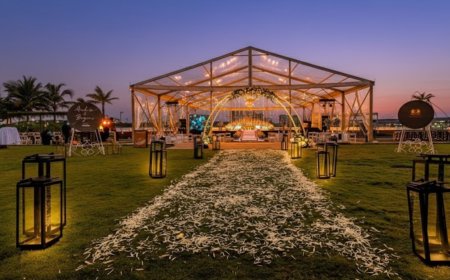
The fifth mistake is not building the stepwell's illuminated evening as the cocktail reception's setting rather than restricting the baoli to the daytime and the ceremony uses. The stepwell at the Le Méridien Jaipur in the evening illumination — the specifically designed lighting whose quality the resort has invested in for the specific purpose of the baoli's nocturnal aesthetic — is the setting whose character is entirely different from the daytime stepwell and whose specific, atmospheric, ancient-water-form-in-the-night quality produces the cocktail reception environment that no other Jaipur venue's cocktail space provides. The couple who uses the stepwell only for the daytime ceremony and the pre-wedding photography has used the baoli for two of its three best expressions. Use the illuminated evening stepwell for the cocktail reception. The photograph of the guests gathered at the illuminated baoli as the Jaipur night settles around it is the photograph that completes the stepwell's visual story.
The Phone Call
The photographer had called the London bride from the site visit.
She had said: I am at the property. I need you to understand something before you confirm. There is a stepwell here. An actual stepwell. And I need to tell you what it is going to do to your wedding photographs.
She had not described the geometry in the technical vocabulary of the architectural historian. She had described what she saw — the specific, descending, repeating steps whose rhythm the camera most lovingly renders, the water at the base of the descent, the Jaipur light finding the stone at the angle that the morning produces and that no other hour of the day replicates, the specific quality of the ancient water form in the contemporary resort whose design had been built around it precisely because the designer had understood what the photographer understood standing beside it for the first time.
The London bride had confirmed the booking the following morning.
Not because the Le Méridien Jaipur was the most famous Jaipur wedding venue. It is not. The Rambagh Palace is more famous. The Samode Haveli is more intimately heritage. The Shiv Vilas has the private lake.
The London bride had confirmed the booking because the stepwell is the one thing that no other Jaipur property has. The specific, geometric, ancient, photographically extraordinary water form whose presence at the centre of the resort gives the wedding the credential that is not the palace name, not the royal history, not the celebrated lakeside — but the baoli, the ancient Indian form of the water and the geometry and the descent, whose wedding photograph is the wedding photograph that does not need the caption.
Contact the Le Méridien Jaipur events team at fifteen months.
Engage the stepwell-experienced photographer before any other vendor.
Brief the decorator with the baoli-responsive mandap design from the first conversation.
Book the Amer Fort photography permit at eight months.
Confirm the Bonvoy benefits before the contract negotiation begins.
Plan the illuminated stepwell cocktail reception as the evening's primary setting.
And when the photographer calls from the site visit and says — I need you to understand something before you confirm, there is a stepwell here and I need to tell you what it is going to do to your wedding photographs — confirm the booking the following morning.
The stepwell is the reason.
It is enough.
Published by NRIWedding.com — The Premium Global Platform for Non-Resident Indians Planning Indian Weddings From Abroad.
What's Your Reaction?
 Like
0
Like
0
 Dislike
0
Dislike
0
 Love
0
Love
0
 Funny
0
Funny
0
 Angry
0
Angry
0
 Sad
0
Sad
0
 Wow
0
Wow
0