

























































Sarojini Nagar for Wedding Guests — What to Buy and What to Skip: The Complete NRI Guide
Coming to Delhi for an Indian wedding and wondering whether Sarojini Nagar is actually worth the crowd, the heat, and the Sunday morning queue — or whether it is the overrated tourist experience that the Google Maps crowd density image suggests? This complete NRI guide tells the wedding guest exactly what to buy and what to skip at Delhi's most democratically useful market, with the specific, category-by-category, price-range-honest, quality-assessment-practical guidance that the first-time visitor needs before entering rather than after leaving. Learn why Sarojini Nagar's export surplus and stock overrun character makes it the best single source in Delhi for the festive kurti at five hundred to three thousand rupees whose export-quality construction matches the boutique's offering at a fraction of the price, the dupatta at three hundred to two thousand rupees that solves the problem of the outfit brought from home that looks slightly wrong in the Indian wedding context, the palazzo and flared pant in the international retail size range, the stole and scarf that serves as the evening wrap for three functions, the children's Indian occasion wear at prices that make the NRI parent wonder why nobody mentioned this earlier, the potli bags and jhumka earrings and occasion accessories in the fashion-jewellery range, and the block-printed artisanal cotton saree for the buyer who knows to look for it. Learn equally specifically what to skip — the bridal lehenga that requires the boutique's quality and service, the constructed silk sarees whose hidden flaws the market's lighting obscures, the fine and traditional jewellery that belongs in Karol Bagh, the traditional wedding shoes whose sole quality is unreliable, and the designer brand claims whose accuracy cannot be verified. Understand the market's three distinct zones — the Main Market's inner ring for the best kurti and dupatta shops, the Sunday Market Extension for the widest export surplus range, and the Lane Markets for the accessories and children's wear — the optimal timing of Sunday morning before eleven or Tuesday to Thursday morning for the lowest crowd density, the hub-and-spoke group navigation protocol for the NRI wedding guest group of multiple family members from multiple countries, the pre-purchase inspection protocol for seams, hems, and embroidery attachment, and the fifteen to thirty percent negotiation range that the market's secondary-stock pricing structure makes real. Understand the five specific mistakes that cause NRI wedding guests to arrive without the guide, come at the wrong time, buy without inspection, overlook the accessories and scarves in favour of outfit categories only, and attempt Sarojini in combination with two other markets in the same half-day. This is the complete, zone-specific, category-honest, practically detailed guidance that every NRI wedding guest visiting Delhi deserves before the market rather than after it.


Sarojini Nagar for Wedding Guests — What to Buy and What to Skip: The Complete NRI Guide
The text arrived on a Tuesday morning in the group chat.
It was from Ananya's cousin Priya — the cousin who had grown up in Delhi, who had been navigating Sarojini Nagar since she was fifteen, who had the specific, insider-knowledge quality of the person who knows a market so well that she no longer sees it as a market but as an extension of her own wardrobe infrastructure.
The text said: Everyone coming to the wedding needs to go to Sarojini Nagar before the Monday. I know what you are thinking. Yes I mean it. I will take you on Sunday. No arguments.
The group chat contained fourteen people from six countries. The responses ranged from enthusiastic to uncertain to the specific, politely-expressed-but-clearly-sceptical response of the NRI cousin from Toronto who had looked up Sarojini Nagar on Google Maps and whose first image result had shown the kind of crowd density that she associated with the specific, non-optional-but-also-not-optional quality of the public transport experience during rush hour.
The Toronto cousin typed: Is it actually worth it? I have looked it up and it looks very busy.
Priya replied in six seconds: Everything worth having in Delhi involves crowds. I will explain what to buy and what to skip. Just come.
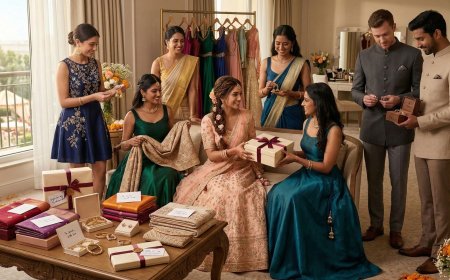
They came. All fourteen of them — from London and Toronto and Singapore and Melbourne and Hyderabad and Delhi itself — descended on Sarojini Nagar on a Sunday morning in November, eleven days before Ananya's wedding, with varying degrees of preparation and with Priya as the guide whose decade of Sarojini knowledge was the group's primary navigational asset.
Three hours later, twelve of the fourteen had purchased something. The Toronto cousin had purchased three things and had revised her position on the crowd density question entirely. The Singapore cousin who had arrived saying she only wanted to look had spent six thousand rupees and was looking slightly stunned.
"What just happened," the Singapore cousin said to Priya, at the chai stall where the group had regrouped at the end.
"Sarojini happened," Priya said.
This guide is what Priya told the group before they went in — and what she explained as they went through — documented, extended, and specifically adapted for the NRI wedding guest who is coming to Delhi and who wants to know, before the market rather than after it, what to buy and what to skip.
What Sarojini Nagar Is — The True Character of the Market
Sarojini Nagar Market — named after the poet and freedom fighter Sarojini Naidu, located in the residential colony of the same name in South Delhi's western sector — is the most democratically useful market in Delhi, which is a statement that requires some explanation because the phrase's meaning is not the one it might first suggest.
By democratically useful, the guide means: the market that serves the largest range of purchasing purposes across the largest range of budgets without being primarily suited to any single one of them. The luxury market is for the high-budget buyer. The wholesale market is for the trade buyer. The boutique is for the customer who values service and provenance. Sarojini Nagar is for everyone — for the person spending five hundred rupees and the person spending fifteen thousand rupees, for the person who knows exactly what she wants and the person who is genuinely open to discovering what she wants when she sees it.
The market's specific character is the export surplus and the stock overrun character — the specific, only-in-this-type-of-market quality of the garments that were made for a specific export order, or a specific retail season, or a specific brand's production run, and that have entered the secondary market because the original order was cancelled, or the season ended, or the production run exceeded the retail quantity, or the garment had a minor defect that makes it unsuitable for the original destination but entirely suitable for the buyer who is not the original destination.
This character explains both the market's most extraordinary quality and its most frustrating limitation. The extraordinary quality: the stock includes pieces that were made to international retail standards for brands whose original retail price was many times the Sarojini price. The garment that was made for an export order to a European or American retailer, at the quality standard that the export order required, available at the Sarojini Nagar price — this is the most specific and the most frequently realised form of the Sarojini value proposition.
The frustrating limitation: the stock is not curated, not organised by size or style or occasion, not guaranteed to be present on any return visit, and not available in the coordinated combinations — the set, the matching top and bottom, the complete look — that the boutique's organised display provides. Sarojini Nagar rewards the shopper who can identify the individual piece and who does not need the coordinated look to have been pre-assembled for her. It does not reward the shopper who needs the market to do the thinking.
Why Sarojini Nagar Matters for Wedding Guests Specifically
The NRI wedding guest's shopping situation is specific and different from the tourist's or the Delhi resident's, and Sarojini Nagar's value proposition for the wedding guest is specific to that situation.
The NRI wedding guest arriving in Delhi for a week-long wedding programme has, typically, the following clothing challenge: four to six functions, each with its own dress code and its own formality level, requiring four to six outfits that she either brought from home or needs to source in Delhi. The outfits she brought from home are the ones she planned for. The Sarojini Nagar visit is for the ones she did not plan for — the additional function outfit that the programme produced when she arrived and discovered there were more events than the invitation's programme suggested, the accessory that the outfit she brought needs and that she did not think to pack, the specific, I-see-it-now-and-I-want-it purchase that the wedding's atmosphere produces in almost every attending guest.
The wedding guest is also not the bride. She is not looking for the bridal lehenga or the designer piece or the investment purchase that requires the DLF Emporio appointment and the luxury price point. She is looking for the function outfit — the salwar-kameez for the mehendi, the anarkali for the sangeet, the specific, occasion-appropriate, not-so-formal-as-the-ceremony Indian wear that says I-dressed-for-this-occasion without the pressure of the outfit being the most important outfit in the room.
Sarojini Nagar is perfectly suited to exactly this need.
What to Buy — The Categories That Sarojini Nagar Serves Best
The Kurti — Sarojini's Single Best Purchase
If this guide had to name one single category for which Sarojini Nagar is unequivocally the best source in Delhi — better than Lajpat Nagar, better than South Extension, better than any online source — it would be the kurti.
The kurti is the Indian tunic — the waist-to-knee or knee-to-floor-length top that is worn over leggings, palazzos, or churidars as the foundational garment of the contemporary casual-to-smart-casual Indian women's wardrobe. In its wedding guest application, the kurti worn over a coordinating bottom is the appropriate outfit for the mehendi, for the casual daytime functions, for the sangeet's more relaxed attendees, and for the post-wedding family gatherings that fill the week.
Sarojini Nagar's kurti selection is the most comprehensive in Delhi at the mid-range price point: the range of fabrics — cotton, linen, georgette, silk-blend, rayon — the range of embroideries — chikankari, mirror work, block print, thread embroidery, digital print — and the range of silhouettes — A-line, straight-cut, asymmetric, kurta-length, maxi-length — is wider at Sarojini than at any single market in Delhi and the price range — three hundred rupees to three thousand rupees — is the most accessible available for this quality of garment.
The specific Sarojini kurti purchase that the NRI wedding guest should prioritise: the festive kurti — the silk-blend or georgette piece with the embroidery or the embellishment that makes it appropriate for the wedding function rather than the weekday office. These pieces exist in abundance at Sarojini and they represent the most significant value gap between the Sarojini price and the comparable boutique price.
The practical navigation for the kurti: the kurti shops are concentrated in the market's central section, around the main market's inner ring. The shops that carry the better-quality festive range are identifiable by the specific, display-conscious organisation of the stock — the pieces hung rather than folded, the embroidered pieces visible at the shop's front. The shops that carry the lower-quality casual range have the specific, folded-on-the-table, quantity-over-display organisation that signals the everyday commercial character.
The Dupatta — The Most Underestimated Purchase
The dupatta is Sarojini Nagar's most underestimated purchase category and the one that produces the most surprised satisfaction in the NRI guest who does not expect to find it here.
The dupatta bought in Sarojini — the georgette or the net or the cotton dupatta with the embroidery or the block print or the border trim — is the element that transforms the outfit brought from home into the outfit that works in the Indian wedding context. The NRI guest who has brought the Western dress or the Indo-Western fusion piece from abroad and who discovers in Delhi that it needs an Indian element to read correctly at the wedding's functions will find the dupatta the most efficient and the most cost-effective solution.
The Sarojini dupatta range: the block-printed cotton dupattas in the Indian motif vocabulary — the paisley, the floral, the geometric — that work with the Western silhouette as a styling addition; the embroidered georgette dupattas that coordinate with the salwar-kameez bought elsewhere; the heavily worked silk-blend dupattas that function as the outfit's primary decorative element for the more formal function.
The price range for the Sarojini dupatta: three hundred to two thousand rupees depending on the fabric and the work. The comparable piece at the South Extension boutique: fifteen hundred to eight thousand rupees.
The Palazzo and the Flared Pant — The Function Outfit Base
The wide-leg palazzo pant and the flared cigarette trouser — the contemporary Indian bottom wear that has replaced the churidar in the wedding guest's casual-to-smart-casual outfit vocabulary — are one of Sarojini Nagar's most reliable purchase categories.
The Sarojini palazzo and flared pant range includes: the solid-colour georgette palazzo in the wedding-season colour palette — the deep jewel tones, the pastels, the specific Indian colour combinations that the export market's production runs produce in abundance; the printed cotton palazzo for the daytime function; and the embroidered or lace-trimmed flared pant that serves the sangeet's more dressed-up requirement.
The practical note: the size range at Sarojini is the export market's size range, which means that the standard sizing — the XS, S, M, L, XL sequence of the international retail market — is more consistently available here than in some Indian retail markets where the sizing conventions differ. The NRI guest who wears international retail sizes will find the Sarojini sizing more predictable than the domestic Indian market's sizing conventions.
The Scarves and Stoles — The Most Versatile Purchase
The scarves, stoles, and light shawls that Sarojini Nagar carries in abundance are the wedding guest's most versatile and most transportable purchase — the items that add the Indian element to the outfit brought from home, that serve as the cover for the evening's temperature drop, that work as the dupatta-substitute for the garment that needs the Indian element, and that pack flat in the hand luggage without the volume concern that the kurti or the palazzo involves.
The Sarojini stole range includes: the block-printed cotton stole in the Indian motif vocabulary; the embroidered wool stole for the evening's temperature drop that the December and January wedding season produces; the silk-blend printed stole that functions as the formal evening wrap; and the specific, embellished, sequin-worked or mirror-worked stole that is the most wedding-appropriate of the range.
Price range: two hundred to fifteen hundred rupees. The comparable piece at the South Extension boutique: eight hundred to four thousand rupees.
The Children's Wedding Wear — An Unexpected Strength
The Sarojini Nagar market has an unexpected strength in the children's Indian wear category — the small lehengas, the kurta-pyjama sets, the children's Indian occasion wear that the international market sources at significant premium prices and that is available at Sarojini at prices that make the NRI wedding guest who is attending with children wonder why she did not know about this before.
The children's Indian wear at Sarojini covers the full age range from infant to early teenage — the sizes that the NRI parent needs for the functions where the children are dressed in Indian occasion wear. The quality in this category is genuinely good — the export surplus character of the stock means that many of the children's pieces were made to international retail quality standards.
The Accessories — The Specific Items That Work
The accessories category at Sarojini Nagar is the most variable of all the purchase categories — highly productive in specific sub-categories and entirely unproductive in others.
The categories that work: the jhumka and chandelier earrings in the oxidised silver and gold-tone finishes that the Indian wedding's aesthetic requires; the bangles in the glass and lac and metal varieties that the wedding functions call for; the potli bags — the small, drawstring evening bags in the Indian fabric tradition — that are the most specifically Indian and the most specifically useful accessory for the wedding guest who needs the small evening bag for the formal function; and the hair accessories — the gajra substitute, the decorative hairpins, the specific hair ornaments that the Indian wedding's grooming requires.
The categories that do not work: the fine jewellery (Sarojini does not have it; Karol Bagh does), the wedding shoes in the traditional Indian forms (quality is unreliable; better sourced elsewhere), and the heavily worked bridal accessories that require the quality assurance of the established jewellery shop.
What to Skip — The Categories That Sarojini Nagar Does Not Serve Well
The Bridal Lehenga
This has been said in the previous guides in this series and bears repeating here: Sarojini Nagar is not the source for the bridal lehenga. The bridal lehenga requires the fabric quality, the construction quality, the fitting service, and the design intelligence that the Sarojini market's secondary-stock, price-point-driven character cannot provide. The NRI bride who goes to Sarojini for the bridal lehenga will find pieces that look like bridal lehengas and that are not bridal lehengas in the quality sense. South Delhi's boutiques and the Greater Kailash designer tier are the correct sources for the bridal lehenga. Sarojini is for the wedding guest.
The Saree — Most Varieties
The saree category at Sarojini Nagar is unreliable in a specific way: the sarees available here are the sarees that did not sell through the retail channel for reasons that are not always apparent and that are not always disclosed. The NRI wedding guest who buys a saree at Sarojini and discovers that the fall has not been properly attached, or that the blouse piece is the wrong length, or that the fabric has a flaw that the lighting in the market obscured — this guest has encountered the specific, saree-category risk at Sarojini that the kurti category does not carry to the same degree.
The exception: the block-printed cotton saree in the ethnic and artisanal tradition — the Bagru print, the Ajrakh print, the Kalamkari — is the Sarojini saree purchase that is worth making. These pieces are either from the artisanal production surplus or from the export market's artisanal range, and their quality is more reliably assessable than the constructed saree's quality.
Fine or Traditional Jewellery
Sarojini's jewellery is the fashion jewellery — the oxidised silver, the gold-tone, the resin and fabric and mixed-media jewellery that the contemporary Indian fashion market produces in the export-oriented manufacturing tradition. It is appropriate for the contemporary styling that the mehendi and sangeet functions call for and that the fashion-forward wedding guest wants.
It is not the traditional bridal jewellery — the kundan, the polki, the meenakari, the genuine gold — that the more formal functions require and that the NRI guest who is attending as a close family member may need. Karol Bagh's Ajmal Khan Road is the source for the traditional mid-range jewellery. The Sarojini jewellery is for the fashion styling, not the traditional requirement.
Designer or Luxury Brand Claims
Sarojini Nagar's market has, in certain sections, stalls that claim to carry branded or designer pieces at the secondary market price. The claims may occasionally be accurate — the genuine export surplus from a brand's overproduction run. The claims are, more frequently, the specific category of the inaccurate claim that the secondary market's regulation-free character enables.
The NRI guest who is buying at Sarojini for the Sarojini value — the quality piece at the secondary-market price, without reference to brand names — will be consistently satisfied. The NRI guest who is buying at Sarojini with the expectation of finding genuine designer pieces at discounted prices will be inconsistently satisfied and will occasionally be entirely unsatisfied. The brand claim at Sarojini is not the buying signal. The garment's quality and its value at the price are the buying signals.
The Wedding Shoes — Traditional Indian Forms
The traditional Indian wedding shoes — the mojari, the jutti, the kolhapuri — are available at Sarojini but at a quality level that is inconsistent in a way that matters more for footwear than for clothing. The shoe that looks good in the market and that turns out to have inadequate sole construction or a leather quality that does not last the wedding week is a more acute problem than the kurti that is slightly less well-made than expected.
The mojari and jutti from the established South Extension shoe shops or the Janpath leather market are more reliable in quality than the Sarojini version. The Sarojini shoe purchase is the risk purchase that the informed buyer makes knowingly rather than the reliable purchase that the guide recommends.
The Navigation — How to Move Through the Market Efficiently
Sarojini Nagar's market is not a single, unified commercial space. It is a cluster of related but distinct market areas that the regular visitor distinguishes by informal name and the first-time visitor conflates into the overwhelming experience that the Toronto cousin's Google Maps image had suggested.
The market's primary zones, as the NRI wedding guest needs to understand them:
The Main Market — the central, covered section with the highest density of permanent shops — is where the kurti shops, the dupatta specialists, and the better-quality accessory stalls are concentrated. This is the zone with the most consistent quality and the most reliable selection for the function outfit categories. It is also the most crowded and the most demanding to navigate at peak hours.
The Sunday Market Extension — the additional stalls that set up on Sundays and public holidays along the market's periphery — is the zone with the highest density of the export surplus stock, the most variable quality, and the most rewarding individual finds for the buyer who is willing to spend the time. The best Sarojini discoveries — the specific piece that is extraordinary at an impossible price — are more likely to be found here than in the permanent shops, but the average quality is also more variable.
The Lane Markets — the stalls in the lanes immediately around the main market — are the zone for the accessories, the scarves, the children's wear, and the specific, category-specialist stalls that carry the items the main market's shops do not.
The Timing
Sarojini Nagar is busiest on Sundays and on public holidays, and its specific, functional quality peaks during these high-traffic times because the extended Sunday market brings the widest selection. The paradox is that the best selection coincides with the worst navigation conditions.
The practical recommendation: Sunday morning before eleven is the optimal time — the Sunday market's extended selection is available, the weekend crowd has not yet peaked, and the market's lanes are navigable at a pace that allows the considered purchase rather than the survival navigation.
Tuesday to Thursday mornings are the least crowded times and the most comfortable navigation experience, but with the reduced selection of the standard market day rather than the Sunday extension.
The Group Navigation Protocol
The NRI wedding guest group — Priya's fourteen-person group of the guide's opening story is the representative example — has specific navigation requirements that the solo visit does not.
The group that stays together as a unit will move at the pace of the slowest decision-maker and will produce the specific, standing-in-the-shop-while-someone-else-decides dynamic that multiplies the navigation time without multiplying the purchase productivity. The better protocol is the hub-and-spoke approach: the group assembles at a meeting point — the chai stall at the market's centre is the traditional Sarojini meeting point — at the beginning and the end, and individuals or pairs navigate within the market independently for the allocated time, returning to the meeting point at the agreed hour.
The guide — Priya — serves the hub function: available at the meeting point for the questions that arise, available by phone for the specific navigation problem, available for the price negotiation that the unfamiliar buyer is uncertain about conducting independently.
The Negotiation — What Is Real and What Is Theatre
The Sarojini Nagar price negotiation is real. It is not the wholesale market's professional negotiation or the boutique's price-is-fixed character. It is the specific, middle-ground, understood-by-both-parties negotiation of the secondary market where the price is presented as a starting point and the buyer's counter-offer is the expected response.
The realistic reduction at Sarojini: fifteen to twenty-five percent on individual items, twenty to thirty percent on multiple purchases from the same stall.
The specific negotiation technique that works best at Sarojini: the specific counter-offer rather than the vague "can you do better" question. The buyer who says "I will give you four hundred" rather than "can you reduce" has given the vendor the specific number that the negotiation needs to proceed efficiently. The vendor who accepts at four hundred has completed the transaction. The vendor who counter-offers at five hundred has begun a conversation that typically settles between four hundred and five hundred.
The negotiation that does not work: the aggressive, I-am-offended-by-your-price negotiation that the tourist sometimes attempts and that the Sarojini vendor, who has seen every variety of negotiating performance, will receive with the specific, unmoved quality of someone who is not performing a theatre but conducting a transaction.
The items where negotiation is least expected and least productive: the very-low-priced items — the dupattas under five hundred rupees, the accessories under three hundred rupees — where the margin is already at the minimum and where the negotiation attempts produce the specific, this-is-not-worth-the-vendor's-time quality that closes the transaction less favourably than the un-negotiated purchase.
The NRI Planning Reference Table
| Purchase Category | Buy at Sarojini? | Price Range | Quality Expectation | Best Zone |
|---|---|---|---|---|
| Festive kurti | Yes — best source in Delhi at this price | ₹500–₹3,000 | Good to excellent for export surplus pieces | Main Market inner ring |
| Casual kurti | Yes | ₹300–₹800 | Variable; assess each piece | Main Market and lanes |
| Dupatta | Yes — strong value proposition | ₹300–₹2,000 | Good for cotton and georgette; assess silk-blend | Main Market dupatta specialists |
| Palazzo and flared pant | Yes | ₹400–₹1,500 | Good; check stitching quality | Main Market |
| Scarves and stoles | Yes — excellent value | ₹200–₹1,500 | Good to excellent | Lane markets |
| Children's Indian wear | Yes — unexpected strength | ₹300–₹2,000 | Good; export surplus quality | Main Market and Sunday extension |
| Jhumka and chandelier earrings | Yes — for fashion styling | ₹200–₹1,000 | Fashion quality; not fine jewellery | Lane markets |
| Potli bags | Yes | ₹300–₹1,500 | Good for casual; assess stitching | Main Market accessories |
| Bangles | Yes — glass and lac varieties | ₹100–₹800 | Good for fashion occasion | Lane markets |
| Block-printed cotton saree | Yes — with inspection | ₹800–₹3,000 | Good for artisanal prints | Sunday extension |
| Constructed saree — silk, Banarasi | Skip — quality unreliable | — | Not recommended | — |
| Bridal lehenga | Skip — wrong market entirely | — | Not appropriate | — |
| Fine jewellery | Skip — Karol Bagh instead | — | Not available | — |
| Traditional wedding shoes | Caution — quality variable | ₹500–₹2,000 | Inconsistent sole quality | Lane markets |
| Designer brand claims | Skip — buy for garment quality not brand | — | Claims unreliable | — |
| Heavy embroidered lehenga sets | Caution — assess carefully | ₹3,000–₹8,000 | Variable; inspect embroidery quality | Main Market and Sunday extension |
| Hair accessories and gajra substitutes | Yes | ₹100–₹500 | Good for single-use occasion wear | Lane markets |
| Men's kurta-pyjama casual | Yes | ₹600–₹2,500 | Good for function wear | Main Market |
Common Mistakes NRI Wedding Guests Make at Sarojini Nagar
The first mistake is arriving without the guide — the local Delhi person who knows the market's zone structure, who can identify the export surplus quality from the domestic commercial grade, and who knows which stalls have the relevant category on the specific visit day. Sarojini Nagar without the guide is Sarojini Nagar at a fraction of its value: the quality finds are present but invisible to the eye that does not know what it is looking at, the price negotiation produces the tourist price rather than the regular buyer's price, and the zone navigation wastes the available time. The guide is Priya — the Delhi cousin, the Delhi friend, the Delhi-based family member who knows the market. Bring her.
The second mistake is arriving at the wrong time — the Sunday afternoon, the Saturday at three, the public holiday at noon — when the market's crowd density has exceeded the comfortable navigation threshold and when the queue for the fitting room, if the shop has a fitting room, is the specific, twenty-minute-in-the-heat queue that transforms the shopping enthusiasm into the endurance test. The Sunday morning before eleven, the Tuesday morning, the Thursday afternoon — these are the times that the market is navigable at a human pace. Arrive early.
The third mistake is buying the specific item that looks like the category the NRI guest needs rather than assessing the item's specific quality before purchasing. The festive kurti that looks the right colour and the right silhouette in the market's light and that turns out, on the hotel room's inspection, to have the specific, loose-thread-and-uneven-seam quality of the garment whose construction has been compromised in the production — this is the Sarojini quality surprise that the guide's buy-what-to-buy list exists to prevent. The inspection protocol at Sarojini before purchasing: check the seams, check the hem, hold the fabric up to the light to identify the thin patches or the flaws, and check the embroidery attachment on the embroidered piece — the embroidery that is already coming loose in the market has not been attached with the stitching quality that the wedding week's wearing requires.
The fourth mistake is buying the clothes and skipping the accessories and the scarves — the categories that produce the highest value-for-price ratio in the market and that the NRI wedding guest most frequently overlooks in the focus on the outfit categories. The dupatta at three hundred rupees that transforms the outfit brought from home. The stole at four hundred rupees that serves as the evening wrap for three functions. The jhumkas at two hundred and fifty rupees that coordinate with the saree sourced elsewhere. These are the purchases that the NRI wedding guest who has focused on the outfit categories misses and that the guide's what-to-buy list is specifically designed to ensure she does not.
The fifth mistake is attempting to do the Sarojini Nagar visit in the same half-day as the Karol Bagh visit or the Lajpat Nagar visit. The three markets are geographically proximate in the South Delhi sense — they are in the same general area — but the navigational and physical demands of each market are sufficient that the combination produces the specific, everything-half-done quality of the day that tried to do too much. Sarojini deserves its own morning or its own afternoon. The allocation of the dedicated two to three hour window — with the guide, with the list, with the negotiation preparation — produces the complete visit. The Sarojini Nagar portion of the everything-in-one-day visit produces the incomplete and exhausted version.
Resolution
The chai stall reassembly at twelve-thirty took longer than the guide had planned, because the Toronto cousin was still in the kurti shop.
She came out at twelve-forty-seven with three kurtis, two dupattas, one stole, and a pair of jhumkas, carrying the whole assembly in the Sarojini market's standard large white plastic bag with the specific, slightly incredulous expression of the person who has spent two thousand four hundred rupees and acquired more than she expected to acquire.
Priya looked at the bag.
"What happened," she said.
"Sarojini happened," the Toronto cousin said.
She sat down with the chai. She looked at the bag.
"The orange kurti," she said. "I saw it from the lane and I thought it was too bright and I went in to look at it and it is not too bright at all. It is exactly right. I have been looking for exactly this colour for the mehendi for eight months."
"How much," Priya said.
"Seven hundred."
Priya nodded. Fair.
"And the dupattas are for the outfits I brought from home," the Toronto cousin continued. "I did not know I needed them until I saw them. Now I understand why every outfit I brought looks slightly wrong in the wedding context. The dupatta is the missing element."
"Yes," Priya said. "It usually is."
The Singapore cousin, who had spent six thousand rupees and who had arrived saying she only wanted to look, was holding her chai with the specific, slightly dazed quality of the person who has had the Sarojini experience and who is still processing it.
"Next time I come to Delhi," she said, "I am coming here first."
"Everyone says that," Priya said, "after."
"Why does nobody say it before?"
"Because before," Priya said, "you do not know what it is. After, you do."
Bring the guide who knows the zones. Arrive before eleven on Sunday for the best selection, or Tuesday to Thursday morning for the quietest navigation. Buy the festive kurti, the dupatta, the stole, and the occasion accessories. Inspect the seams and the embroidery attachment before purchasing. Skip the sarees unless they are block-printed cotton, skip the bridal lehenga entirely, skip the brand claims, and treat the shoe category with caution. Allocate the full morning rather than the half-hour between two other markets.
The dupatta at three hundred rupees will solve the problem you brought from home.
The kurti at seven hundred rupees will be exactly the right orange.
The guide who knows the market will make both of these discoveries happen in two and a half hours rather than in four.
Bring Priya.
Published by NRIWedding.com — The Premium Global Platform for Non-Resident Indians Planning Indian Weddings From Abroad.
What's Your Reaction?
 Like
0
Like
0
 Dislike
0
Dislike
0
 Love
0
Love
0
 Funny
0
Funny
0
 Angry
0
Angry
0
 Sad
0
Sad
0
 Wow
0
Wow
0