







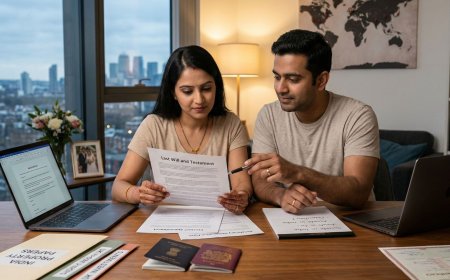




































































Updating Immigration Documents After Marriage — The Complete NRI Guide
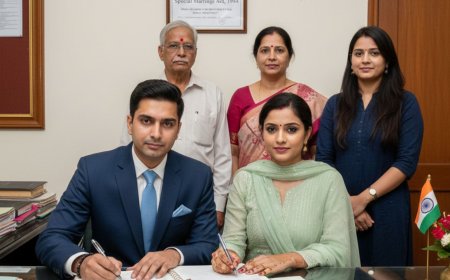
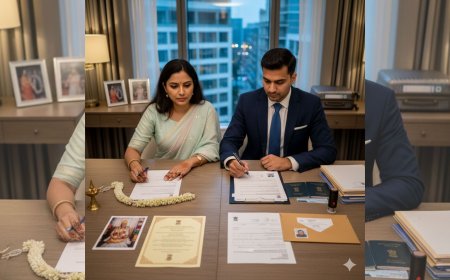
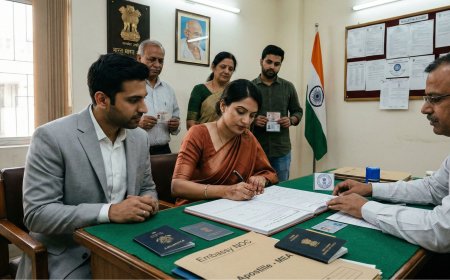
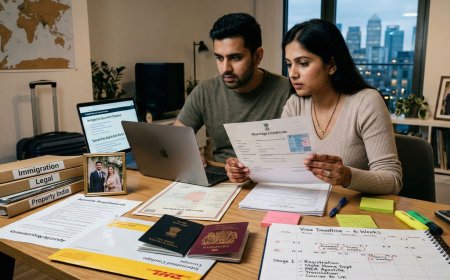
Marriage triggers an immediate and significant immigration document update process for NRI couples — one that spans multiple countries, multiple legal systems, and multiple document types that must be updated in a specific sequence to avoid cascading delays. This complete guide walks NRI couples through every immigration document that requires updating after marriage — covering the UK Biometric Residence Permit, US visa and green card processes, Canadian spousal sponsorship, UAE residency and Emirates ID updates, Australian partner visa applications, and Indian passport, Aadhaar and PAN card updates — with the correct update sequence, required documents, processing timelines, and the common mistakes that turn a manageable process into an expensive immigration complication.


The Paperwork That Follows the Celebration
The wedding is three weeks behind you.
The photographs are still being edited. The thank you messages are still going out. The families are still in the warm afterglow of everything that happened — the ceremonies, the reunions, the moments that will be referenced at every family gathering for the next thirty years.
And somewhere in the middle of all of that warmth, a quieter reality is assembling itself. Not urgently. Not dramatically. But persistently — in the form of documents that need updating, systems that need notifying, databases that need correcting, and a bureaucratic infrastructure that does not know you are married yet and will not know until you tell it.
Your passport still shows your previous name if you changed it. Your visa still lists you as single. Your biometric residence permit does not reflect your new marital status. Your employer's HR system has the wrong details. Your National Insurance records, your driving licence, your bank accounts, your professional registrations, your insurance policies — none of them know what happened three weeks ago in a wedding hall in Jaipur or Mumbai or London or Toronto.
The world continues to see the version of you that existed before the marriage. And while that version was perfectly valid then, it is now legally and administratively incomplete — in ways that create compounding complications the longer they remain unaddressed.
For NRI couples, this post-marriage administrative update process is significantly more complex than it is for couples who live in a single country with a single legal system and a single set of immigration documents. You have documents in multiple countries. You have immigration status that is a layered construct of visas, biometric permits, work authorisations, and residency records that exist in at least two national systems simultaneously.
And the relationship between those systems — how a change in one affects the status in another, what order updates need to happen in, what documents are needed to trigger each update, and what happens when updates are delayed or done incorrectly — is something that most NRI couples discover by experience rather than by preparation.
This guide changes that.
It gives you the complete, structured picture of immigration document updates after marriage for NRI couples — what needs to be updated, in what order, in each major country of NRI residence, with the specific documents required, the timelines involved, and the common mistakes that turn a manageable administrative process into an expensive and stressful immigration complication.
Because the paperwork that follows the celebration is not an afterthought. It is the legal continuation of everything the ceremony began.
The Core Reality: Why Post-Marriage Immigration Updates Matter
Your Immigration Status Is a Legal Construct
For NRI couples living abroad, immigration status is not simply a reflection of where you live. It is a legal construct — built from specific documents, specific permissions, specific conditions — that governs your right to remain in your country of residence, your right to work, your right to access public services, and your right to travel internationally and return.
Marriage changes the legal foundation of that construct. It creates new rights — the right to sponsor a spouse for family reunification, the right to apply for a dependent visa, the right to apply for settled status on the basis of a spousal relationship. It changes existing conditions — some visa categories have different requirements for married versus single applicants. And it creates obligations — the obligation to notify immigration authorities of changes in circumstances, which in most countries includes marriage.
Failing to notify immigration authorities of marriage is not simply an administrative oversight. In most jurisdictions, it constitutes a failure to comply with visa conditions — which can have consequences ranging from refusal of future applications to, in serious cases, challenges to existing immigration status.
The Compound Complexity for NRI Couples
Single-country couples face a linear post-marriage update process — one country's documents, one country's systems, one sequential list of updates. NRI couples face a parallel, interacting process across at least two countries — where the order of updates matters, where documents from one country are needed to trigger updates in another, and where delays in one jurisdiction create cascading delays in others.
The Indian passport update — requiring the marriage certificate — needs to happen before the Indian passport can be used to support UK visa applications. The UK visa update may need to happen before the Home Office biometric residence permit reflects the correct marital status. The correct biometric residence permit may be needed for financial account updates. The financial account updates may be needed for name change applications. The name change on the driving licence requires the updated passport.
Each step depends on the one before it. Understanding the sequence — and building the timeline accordingly — is the foundation of an efficient post-marriage immigration update process.
The Strategic Framework: What Needs to Be Updated and When
The Master Update Sequence for NRI Couples
Before addressing country-specific requirements, the master sequence of updates provides the logical order within which all individual updates should be managed.
Tier 1 — Foundation Documents (Complete First)
These are the documents that all other updates depend upon. They must be completed before any other category.
• Marriage certificate — government issued and apostilled
• Name change documentation — deed poll or statutory declaration if applicable
• Indian passport update — reflecting marriage and name change if applicable
Tier 2 — Primary Immigration Documents (Complete Second)
These updates establish your correct legal immigration status in your country of residence. They must be completed before employer notifications and most financial updates.
• Visa or immigration status update in country of residence
• Biometric Residence Permit or equivalent identity document update
• Travel document updates if applicable
Tier 3 — Identity Documents (Complete Third)
These updates flow from the Tier 2 immigration document updates and require the updated immigration documents as supporting evidence.
• Driving licence update
• National identity document update where applicable
• Professional registration updates
Tier 4 — Financial and Administrative Updates (Complete Fourth)
These updates can proceed once identity documents reflect the correct status.
• Bank accounts and financial institutions
• Insurance policies — health, life, home, car
• Employer HR records
• Tax records — HMRC, IRS, CRA, or equivalent
• Pension and retirement account records
• Electoral registration
Tier 5 — Indian Administrative Updates (Complete in Parallel With Tier 2)
These updates can proceed in parallel with Tier 2 and 3 updates as they operate within the Indian system independently.
• Indian passport update
• Aadhaar card update
• PAN card update
• NRI bank account marital status update
• Property and investment records in India
Country-Specific Immigration Update Guide
Updating Immigration Documents in the United Kingdom
The UK has one of the most structured post-marriage immigration update requirements of any country where NRI couples reside — and one of the most consequential in terms of the impact of getting it wrong.
Biometric Residence Permit Update
For NRI couples in the UK on a Skilled Worker visa, Student visa, or other long-term visa category, the Biometric Residence Permit is the primary immigration identity document. It must reflect accurate personal information — including name and, where applicable, marital status.
If a name change occurs as a result of marriage, the BRP must be updated to reflect the new name. This is not optional — using a BRP with an incorrect name creates complications at every identity verification point in UK daily life.
Process for BRP name change update:
• Submit an application to update the BRP through the UKVI online portal
• Required documents: current BRP, marriage certificate, deed poll or statutory declaration of name change, updated passport if passport has been updated
• Fee: currently £154 for a replacement BRP
• Processing time: typically four to eight weeks
• During processing: a certificate of application is issued confirming the update is in progress
Notifying the Home Office of Marriage
Visa holders in the UK are required to notify the Home Office of changes in personal circumstances — including marriage. For most visa categories, this is done through the online UKVI account rather than through a formal separate notification.
For visa holders whose right to remain is tied to a specific relationship — such as those on a dependent visa as a partner — marriage formalises the basis of the immigration status and should be reported promptly.
Spouse Visa Applications
For NRI couples where one partner is in the UK on a visa that does not cover their spouse — or where the spouse is outside the UK and wishes to join — a spouse visa application is the primary immigration process.
UK spouse visa requirements in 2025:
• The UK partner must meet the minimum income threshold — currently £29,000 per year gross, with planned increases
• Genuine relationship evidence — photographs, communication records, evidence of cohabitation or visits
• Accommodation requirements — adequate accommodation for both parties
• English language requirement for the applicant spouse
• Application fee and Immigration Health Surcharge
• Biometric appointment at a visa application centre
Processing time: typically eight to twelve weeks for out-of-country applications, twelve to twenty-four weeks for in-country switching applications.
Indefinite Leave to Remain and Citizenship
For NRI couples with long-term UK residency plans, marriage to a British citizen or settled person creates an immigration pathway that is distinct from the points-based system. The spouse visa route — followed by Indefinite Leave to Remain after five years and citizenship after six years — is the primary family reunification immigration pathway in the UK.
Updating Immigration Documents in the United States
The US immigration system is among the most complex in the world — and post-marriage updates within it require careful navigation of multiple agencies and multiple document types.
USCIS Notification of Marriage
US immigration law requires visa holders to report changes in circumstances — including marriage — to USCIS. The specific notification mechanism depends on visa category.
For most non-immigrant visa holders — H-1B, L-1, F-1, O-1 — marriage does not immediately change the visa status but creates options for adding a spouse through dependent visa categories H-4, L-2, F-2, and O-3 respectively.
Dependent Visa Addition for Spouses
To add a spouse to a US immigration status:
• H-4 visa for spouses of H-1B holders: Application through USCIS Form I-539 for spouses already in the US, or through consular processing for spouses outside the US. Required documents include marriage certificate, copy of principal's H-1B approval notice, copy of principal's most recent I-94.
• L-2 visa for spouses of L-1 holders: Similar process to H-4 through USCIS or consular processing.
Green Card Through Marriage
Marriage to a US citizen creates an immediate relative category for immigration purposes — the most favourable category in the US immigration system with no annual numerical limitation.
The marriage-based green card process involves:
• Form I-130 — Petition for Alien Relative — filed by the US citizen spouse
• Form I-485 — Application to Register Permanent Residence — filed by the immigrant spouse if already in the US
• Biographic and biometric processing
• Medical examination by USCIS-approved physician
• Interview at USCIS office
• Conditional green card issued for marriages of less than two years
Processing time: typically eight to twenty-four months depending on location and current USCIS backlogs.
USCIS Change of Address
All visa holders and green card holders are legally required to notify USCIS of address changes within ten days of moving. Marriage frequently involves address changes — ensure compliance with this notification requirement through Form AR-11.
Social Security Administration
If a name change occurs through marriage, the Social Security Administration must be notified and the Social Security card updated. This update is a prerequisite for employer HR updates, driving licence updates, and financial account updates in many states.
Process: Visit a local Social Security office with marriage certificate, current Social Security card, and identity documentation.
Updating Immigration Documents in Canada
Canada's immigration system is administered by Immigration, Refugees and Citizenship Canada and post-marriage updates follow a structured process.
Updating Personal Information With IRCC
Permanent Residents and temporary residents in Canada are required to keep their immigration records current — including marital status. Updates are made through the IRCC online portal or through the appropriate application form depending on the individual's immigration status.
Spousal Sponsorship
Canadian citizens and Permanent Residents can sponsor a foreign national spouse for permanent residency through the spousal sponsorship program.
Spousal sponsorship options:
• Outland sponsorship: Spouse applies from outside Canada while the Canadian partner is in Canada. Processing time typically twelve to twenty-four months.
• Inland sponsorship: Spouse already in Canada applies from within Canada. May be eligible for an open work permit while the application is processed.
Requirements include proof of genuine relationship, financial sponsorship undertaking, and compliance with all applicable immigration requirements.
Provincial Nominee Programs
Some provinces offer pathways for spouses of workers or students in the province — check the specific Provincial Nominee Program of the relevant province for spousal stream options.
Canadian Passport and Identity Documents
Name change following marriage requires updating the Canadian passport — for Canadian citizen NRI partners — and the provincial driving licence. Provincial procedures vary — check the specific province's process.
Updating Immigration Documents in the UAE
The UAE immigration system operates through a residency visa and Emirates ID framework that requires specific updates following marriage.
Residency Visa Sponsorship
In the UAE, an expatriate's residency is tied to a sponsor — typically an employer or a family member. Marriage creates the option for spousal sponsorship — where a UAE-resident spouse sponsors the other partner for residency.
Sponsorship requirements:
• The sponsoring spouse must meet a minimum salary requirement — currently AED 4,000 per month or AED 3,000 plus accommodation for husband sponsoring wife
• No minimum salary requirement for wife sponsoring husband in most circumstances — though specific conditions apply
• Required documents include marriage certificate — attested and potentially apostilled — Emirates ID, passport copies, tenancy contract or proof of accommodation
Emirates ID Update
The Emirates ID must be updated to reflect correct marital status and name if applicable. Updates are processed through the Federal Authority for Identity and Citizenship.
Marriage Certificate Attestation for UAE Use
Documents used in the UAE — including Indian marriage certificates — typically require attestation through a specific process: notarisation, state-level authentication, MEA attestation in India, followed by UAE Embassy attestation in India, followed by Ministry of Foreign Affairs attestation in the UAE.
This attestation process is distinct from the apostille process — the UAE is not a Hague Apostille Convention member state in the same way as Western countries, and the attestation chain is more complex and more time-consuming.
Action required: Begin the UAE marriage certificate attestation process as soon as possible after obtaining the marriage certificate — the process can take eight to twelve weeks through official channels.
Updating Immigration Documents in Australia
Australia's immigration system is administered by the Department of Home Affairs and post-marriage updates follow a structured process.
Partner Visa Applications
Australia's partner visa system provides a pathway for spouses of Australian citizens, permanent residents, and eligible New Zealand citizens.
Partner visa categories:
• Subclass 820/801 — Onshore Partner Visa: For applicants already in Australia. Subclass 820 is the temporary stage — allowing the applicant to live and work in Australia while the application is processed. Subclass 801 is the permanent stage — granted after two years from application if the relationship is ongoing.
• Subclass 309/100 — Offshore Partner Visa: For applicants outside Australia. Subclass 309 is the temporary stage. Subclass 100 is the permanent stage.
Requirements include evidence of genuine ongoing relationship — financial documents, communication records, statutory declarations from people who know the couple, and joint evidence of shared life.
Processing times: typically twelve to twenty-four months for temporary stage, additional twelve to twenty-four months for permanent stage.
Updating ImmiAccount
All visa holders in Australia are required to maintain accurate personal information in their ImmiAccount — the online portal through which Australian immigration is managed. Marriage and name changes must be updated through ImmiAccount promptly.
Medicare and Tax File Number Updates
Following marriage and any name change, Medicare records and the Tax File Number registration with the Australian Taxation Office must be updated. These updates require the marriage certificate and updated passport.
Updating Indian Documents After Marriage
Indian Passport Update
The Indian passport is the primary identity document for NRI couples in all international contexts. Following marriage — and particularly following a name change — the Indian passport must be updated.
Name change on Indian passport:
• Application through the Passport Seva portal — passportindia.gov.in
• Required documents: current passport, marriage certificate, deed poll or gazette notification of name change if applicable, address proof
• Application can be submitted at the nearest Indian Embassy or High Commission for NRIs abroad
• Processing time: typically four to eight weeks through Indian missions abroad
Endorsement of spouse name:
An option exists to add the spouse's name as an endorsement on the Indian passport — though this practice has become less common and less necessary as standalone marriage certificates have become more widely accepted. Consult the Indian mission on whether endorsement is required for your specific situation.
Aadhaar Card Update
The Aadhaar card — India's national biometric identity document — should reflect accurate personal information including name and marital status.
Aadhaar update process for NRIs:
Updates can be initiated online through the UIDAI portal — uidai.gov.in — for name and demographic changes. Document upload of marriage certificate and updated identity proof is required. For biometric updates, an Aadhaar enrolment centre visit is required — which for NRIs typically means completing this during an India visit.
PAN Card Update
The Permanent Account Number card issued by the Income Tax Department of India should reflect the correct name — particularly if a name change has occurred following marriage.
PAN card update process:
• Application through the NSDL or UTIITSL portal
• Required documents: current PAN card, marriage certificate, updated identity proof
• Processing time: typically fifteen to twenty working days
• New PAN card dispatched to registered address — ensure India address is accessible
NRI Bank Account Updates
Indian banks holding NRI accounts — NRE and NRO accounts — must be notified of marriage and any name change. Each bank has its own process — typically requiring submission of marriage certificate and updated KYC documentation at a branch or through the bank's NRI customer service channel.
Common Mistakes NRI Couples Make With Immigration Updates
Updating Documents in the Wrong Order
Attempting to update a driving licence before the passport has been updated. Trying to update the UK BRP before the deed poll has been processed. Applying for a spouse visa before the marriage certificate has been apostilled.
Each of these sequences fails — because the receiving authority requires the prior document as evidence. The wrong sequence does not just delay individual updates — it creates a cascade of delays across the entire update programme.
Correction: Follow the four-tier update sequence. Complete Tier 1 foundation documents before attempting any Tier 2 update. Complete Tier 2 before Tier 3. Do not attempt to shortcut the sequence — it consistently produces longer total timelines than the sequential approach.
Assuming Marriage Automatically Updates Immigration Records
Marriage does not automatically notify any immigration authority anywhere. UKVI, USCIS, IRCC, the UAE Federal Authority for Identity and Citizenship, the Australian Department of Home Affairs — none of these know about the marriage unless the couple actively notifies them through the appropriate process.
Correction: Treat every immigration authority as requiring active notification. Assume nothing has been updated until you have confirmation that the specific update has been processed.
Delaying Name Change Updates on Immigration Documents
Name change updates on immigration documents — particularly the UK BRP and equivalent documents in other countries — are time-sensitive. Operating with an immigration document that shows an incorrect name creates complications at every identity verification point — border crossings, employer right to work checks, bank account management, and any interaction with a government authority.
Correction: Prioritise name change updates on immigration documents within the first four to six weeks of marriage. Do not defer until other administrative tasks have been completed.
Not Retaining All Original Documents During the Update Process
The post-marriage update process requires submitting original documents — marriage certificate, passport, BRP — to multiple authorities at multiple points. Submitting the only copy of a critical document and then needing it for another simultaneous process is a consistent source of delay.
Correction: Obtain multiple certified copies of all critical documents before beginning the update process. Keep originals in secure storage and use certified copies for submission wherever accepted. When original submission is unavoidable, track the document's location and expected return date carefully.
Not Considering the Immigration Implications of a Spouse Joining From India
For NRI couples where one partner is in the country of residence and the other is in India, the post-marriage period triggers the spouse visa or family reunification application process. This process — in the UK, USA, Canada, and Australia — has specific requirements, specific timelines, and specific financial thresholds that must be met.
Beginning this process late — or without adequate preparation of the required documentation and financial evidence — produces delays that extend the time the couple is separated by immigration processes.
Correction: Begin the spouse visa or family reunification application process as soon as possible after marriage — ideally within the first four to six weeks. Engage an immigration lawyer to ensure the application is correctly prepared and submitted.
The Emotional and Cultural Layer: The Bureaucracy of Beginning Together
There is something quietly significant about the post-marriage administrative process — even when it feels like the least romantic part of married life.
Every document that is updated. Every authority that is notified. Every record that is corrected to reflect the marriage — each of these is a small act of making the marriage real in the systems that govern your daily life. Of bringing the legal and administrative world into alignment with the personal and emotional reality that the ceremony created.
For NRI couples specifically — who navigate multiple systems, multiple countries, multiple legal frameworks as a matter of daily life — completing the post-marriage administrative process is an act of building the infrastructure of a shared life. Of ensuring that both partners' presence in their shared country of residence is legally secure. Of creating the documentary foundation that every future decision — property, children, citizenship, career — will rest upon.
It is not glamorous. It does not carry the emotional resonance of the ceremony or the warmth of the celebration. But it is the work of building a life together that is as legally solid as it is personally real.
Do it carefully. Do it completely. Do it in the right order and with the right documents.
And when it is done — when every document reflects your married reality, when every system knows who you are together, when the administrative world has caught up with the personal one — there is a quiet satisfaction in that completion.
The bureaucracy is finished. The life begins.
Immigration Document Update Checklist for NRI Couples
Week One to Two After Marriage
• Obtain certified copies of marriage certificate — minimum five copies
• Begin apostille process for marriage certificate
• Initiate deed poll or name change process if applicable
• Begin Indian passport update process if name change occurred
• Identify all immigration documents requiring update in country of residence
Week Two to Six After Marriage
• Complete name change deed poll if applicable
• Submit BRP or equivalent immigration document update in country of residence
• Begin spouse visa or family reunification application if partner is joining from India
• Notify employer HR of marriage and name change • Update Indian Aadhaar and PAN records
Week Six to Twelve After Marriage
• Complete driving licence update once immigration document updated
• Update all bank accounts and financial institutions
• Update insurance policies — health, life, home, car
• Update HMRC, IRS, CRA, or equivalent tax authority records
• Update professional registration records if applicable
Month Three to Six After Marriage
• Confirm all immigration updates are fully processed and reflected in documents
• Update Indian NRE and NRO bank accounts
• Update investment and pension records in both countries
• Update electoral registration if applicable
• Confirm all property records reflect correct marital status
Ongoing After Marriage
• Maintain updated copies of all documents in secure accessible storage
• Review immigration status annually — ensure no conditions have changed
• Monitor spouse visa or family reunification application progress
• Update records immediately on any further change of circumstances
The Documents That Complete the Journey
The ceremony was the beginning. The marriage certificate was the record. The apostille was the international authentication. And the immigration updates are the final act — the process of ensuring that every legal and administrative system that governs your life together reflects the married reality that the ceremony created.
For NRI couples navigating this process across multiple countries, multiple document types, and multiple legal systems — it is genuinely complex. It requires sequencing. It requires attention to specific requirements in specific jurisdictions. It requires the right documents in the right order at the right time.
But it is entirely manageable. With the right framework — the four-tier update sequence, the country-specific requirements, the common mistakes avoided — the post-marriage administrative process is a finite programme with a clear end point.
And at the end of it — when every document reflects your name, your status, your marriage — the administrative world is fully aligned with the personal one.
That alignment matters. Not just for the visa applications and the immigration processes and the bank accounts and the insurance policies. But because it means that everywhere you go — in every country where your life unfolds, in every institution where your married status is relevant, in every moment where the legal world intersects with the personal one — you are seen, completely and accurately, as who you are.
A married couple. Building a life together. Fully, legally, recognisably, in every country that matters.
The paperwork is finished. The life is just beginning.
Published by NRIWedding.com — The Premium Global Platform for Non-Resident Indians Planning Indian Weddings From Abroad.
What's Your Reaction?
 Like
0
Like
0
 Dislike
0
Dislike
0
 Love
0
Love
0
 Funny
0
Funny
0
 Angry
0
Angry
0
 Sad
0
Sad
0
 Wow
0
Wow
0