























































Rent vs. Buy vs. Family Heirloom Jewelry — What Actually Makes Sense for NRI Brides?
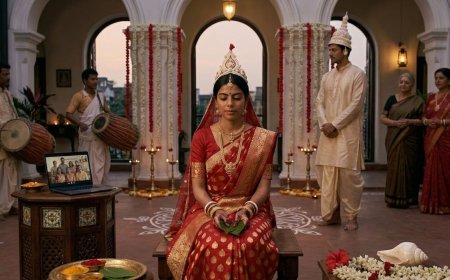
The bridal jewelry decision is one of the most significant and least honestly discussed financial choices in any NRI wedding — with a complete new bridal set costing anywhere from ₹5 lakhs to ₹50 lakhs, and the alternatives of renting or wearing family heirlooms carrying their own specific advantages and challenges that whisper culture has kept out of the open conversation. This complete guide breaks down all three options for NRI brides — covering the true cost of buying new including making charges and customs implications, the rental market reality and quality considerations, the undervalued case for family heirloom jewelry, the combination approach that most sophisticated NRI brides use, a full comparison table across every relevant dimension, and the decision checklist that helps every NRI bride allocate her jewelry budget to the option that genuinely serves her situation.


The Jewelry Decision Nobody Talks About Honestly
There is a conversation that happens in almost every NRI bridal planning process — usually late at night, usually over a video call with the mother or the mother-in-law, usually after the venue has been confirmed and the outfit has been shortlisted and the reality of what the wedding is actually going to cost has fully landed.
The conversation is about jewelry.
Not the romantic conversation about what pieces the bride will wear — that conversation happens earlier, with more excitement and less arithmetic. This is the other conversation. The one about what the jewelry is actually going to cost. The one where the number is said out loud for the first time and someone on the call goes quiet for a moment before responding.
The jewelry budget for an Indian wedding is not a small number.
A complete bridal set — necklace, earrings, maang tikka, nath, haath phool, bangles, payal, kamarband — in solid gold with quality gemstones, purchased new from a reputable jeweller, represents an investment of anywhere from ₹5 lakhs to ₹50 lakhs or more depending on the gold weight, the gemstone quality, and the making charges of the specific pieces.
For NRI brides planning from the UK or the USA or Canada — who are simultaneously managing the costs of international travel for themselves and their guests, venue deposits, vendor advances, and the hundred other financial commitments that a destination Indian wedding generates — the jewelry budget is often the cost that pushes the total beyond what had been planned.
And yet the alternatives — renting jewelry, or wearing family heirlooms — are discussed in whispers rather than openly. As if the choice to rent is an admission of financial inadequacy, or the choice to wear grandmother's jewelry rather than buying new is a compromise rather than a preference.
This guide ends that whisper culture.
Renting bridal jewelry is a legitimate, increasingly common, and sometimes genuinely superior choice. Wearing family heirloom jewelry is not a compromise — it is often the most emotionally powerful and aesthetically distinctive choice available. And buying new jewelry — when it is the right choice — should be made with full information about what you are actually buying, what it is worth, and what to consider when buying significant jewelry as an NRI from a jeweller in India.
This is the complete, honest guide to all three options — with the comparison framework that helps you decide which combination makes sense for your specific situation.
The Core Reality: Indian Bridal Jewelry Is a Multi-Layered Decision
The Three Functions of Bridal Jewelry
Indian bridal jewelry is not purely ornamental. It serves three distinct functions — and understanding which function is most important in your specific context is the foundation of making the right jewelry decision.
Function 1 — Ceremonial and Ritual: Certain jewelry pieces carry specific ritual significance in Indian wedding ceremonies. The mangalsutra in Hindu weddings. The nath in specific North Indian traditions. The toe rings in South Indian ceremonies. These pieces are not optional from a ceremonial perspective — their presence at the ceremony carries meaning that transcends aesthetics.
Function 2 — Aesthetic and Photographic: The complete bridal look — the full jewelry set that creates the visual identity of the bride in the wedding photographs — is a statement of personal aesthetic, cultural heritage, and the specific character of the celebration. These pieces will be visible in the photographs that are shared for years and displayed in homes across multiple countries.
Function 3 — Investment and Asset: Gold and diamond jewelry purchased at a wedding is simultaneously a celebration expense and a financial asset — particularly relevant in Indian cultural contexts where jewelry is a traditional form of wealth storage and a significant component of a woman's personal financial security.
The decision framework flows from these three functions:
- Ceremonial pieces require actual ownership — renting a mangalsutra is not the right approach
- Aesthetic and photographic pieces are strong candidates for rental consideration — particularly elaborate, trend-sensitive pieces that will not be worn again
- Investment pieces should be purchased, but with clear eyes about what the investment actually represents
Option 1 — Buying New Jewelry
What It Actually Means to Buy Bridal Jewelry in India
For NRI brides, buying jewelry in India — rather than in the country of residence — is the standard approach, and for good reason. The combination of lower making charges, access to traditional craftsmanship that is unavailable abroad, the specific designs of regional Indian jewelry traditions, and the social context of shopping with family makes India the natural place for bridal jewelry purchase.
But the NRI jewelry buying process has specific considerations that domestic buyers do not face.
The gold price reality: Gold jewelry pricing in India has two components — the gold value (determined by the international gold price and the purity of the gold) and the making charges (the labour and craftsmanship cost that varies significantly by jeweller, design complexity, and region). Making charges range from eight to thirty-five percent of the gold value depending on the piece and the jeweller.
The purity question: Indian jewelry is sold in 22-karat gold for most bridal pieces — higher than the 18-karat gold that is standard in the UK and Europe. 22-karat gold is softer and more prone to scratching but has a richer, warmer colour that is specifically suited to the Indian aesthetic. Understanding what you are buying — and comparing prices on a per-gram, same-purity basis — is essential for NRI buyers who may be more familiar with 18-karat pricing.
The hallmarking requirement: BIS hallmarking — the Bureau of Indian Standards certification of gold purity — has been mandatory for gold jewelry sold in India since 2021. Never buy Indian gold jewelry without BIS hallmarking.This is the basic consumer protection that guarantees you are receiving the purity you are paying for.
The making charges negotiation: Making charges are partially negotiable at most Indian jewellers — particularly for large purchases, for established family relationships with a jeweller, or for NRI buyers who are making multiple purchases. The negotiation is expected and appropriate.
Pros of Buying New
The investment dimension is real — partially: Gold jewelry purchased at a wedding does retain value in the way that most other wedding expenditure does not. If you buy ₹10 lakhs of gold jewelry and the gold price rises twenty percent over five years, the gold value of your pieces has increased — and you can sell at the higher price if you choose to. This is a genuine financial reality that distinguishes jewelry from flowers and catering.
However — the making charges are not recoverable: When you sell jewelry, you sell it at the prevailing gold price for the weight of gold in the piece — not at what you paid for it including making charges. Making charges of fifteen percent on a ₹10 lakh purchase represent ₹1.5 lakhs of unrecoverable cost. The investment case for jewelry is real but partial.
The ownership flexibility: Owned jewelry can be worn again — to subsequent functions, to family occasions, to the events that occur across a marriage that call for traditional Indian attire. For NRI brides who attend multiple Indian weddings and functions in their social community, the pieces that are bought new can have a multi-event wearability that rental pieces do not.
The customisation possibility: Buying new jewelry allows the bride to commission pieces to her specific design requirements — incorporating family motifs, specific gemstone preferences, or design elements that are personal and distinctive. Rental pieces are, by definition, designs that other brides have also worn.
The emotional significance of new pieces: For some families and some brides, the purchase of new bridal jewelry — presented by the family, selected together, carried through generations — is itself a significant ceremonial act. The jewelry is not just an accessory but a marker of the occasion, a family investment in the daughter's new beginning.
Cons of Buying New
The cost is the primary constraint: A complete new bridal set in solid gold at current gold prices represents a significant investment that, for many NRI couples managing destination wedding costs, pushes the total beyond what is sustainable. The ₹15-25 lakh complete bridal jewelry purchase — which represents the mid-range of quality new bridal sets in major Indian cities — is a substantial allocation within a total wedding budget that is already under significant pressure from venue, travel, and vendor costs.
Much of it will not be worn again: The elaborate pieces that complete the full bridal look — the heavy maang tikka, the elaborate haath phool, the full nath — are pieces that, in practical terms, most NRI brides do not wear again after the wedding. Buying these pieces at full price for a single occasion is a low-return use of the jewelry budget.
The trend sensitivity of some designs: Bridal jewelry designs are trend-sensitive in ways that the gold itself is not. The specific design vocabulary of 2025 bridal jewelry — the particular style of jhumkas, the specific aesthetic of the necklace setting — may not be the design vocabulary that looks timeless in photographs twenty years from now. Buying trend-sensitive designs at significant cost is a risk that rental eliminates.
The NRI storage and insurance challenge: Significant gold jewelry, once purchased, requires secure storage and appropriate insurance — both in India during the period between purchase and the wedding, and in the country of residence after the wedding. NRI brides purchasing jewelry in India face practical questions about how it travels, how it is declared at customs, and how it is insured in transit and in the country of residence.
Option 2 — Renting Jewelry
The Rental Market Reality
Bridal jewelry rental in India has evolved from a discreet, slightly stigmatised practice into a mainstream, well-organised market — driven by the combination of rising gold prices, growing awareness of the sustainability argument for rental, and the specific circumstances of NRI brides who need complete bridal sets for one occasion without the investment that purchase requires.
The rental market offers:
• Complete bridal sets in gold-plated, kundan, polki, and jadau styles
• Pieces that replicate the aesthetic of solid gold jewelry at a fraction of the purchase cost
• Styled consultations with rental specialists who understand the bridal look requirements
• Insurance and authentication of the pieces during the rental period
• Rental periods of one to three days for the wedding events
The rental pricing structure: Rental fees are typically calculated as a percentage of the piece's retail value — ranging from three to eight percent of retail price for a one to three day rental. A set of pieces with a retail value of ₹20 lakhs — which represents an elaborate complete bridal set — might rent for ₹60,000 to ₹1,60,000 for the wedding period.
The geographic availability: Jewelry rental services are concentrated in India's major wedding markets — Delhi, Mumbai, Hyderabad, Chennai, Bengaluru, and Jaipur. NRI brides planning weddings in these cities have the most access to quality rental options. For destination wedding locations in smaller cities, rental coordination may require the rental company to ship pieces to the venue — with security and insurance requirements that add complexity.
Pros of Renting
The cost efficiency is dramatic: The rental fee for a complete bridal set that would cost ₹15-25 lakhs to purchase is typically ₹75,000 to ₹2,00,000 — a saving of ₹13-23 lakhs that can be redirected to other wedding priorities or retained entirely. For NRI brides whose total wedding budget is under significant pressure, the rental option can make the difference between a financially sustainable celebration and one that creates long-term debt.
Access to pieces beyond the purchase budget: Rental makes accessible the quality and aesthetic of pieces that the purchase budget would not support. The bride who cannot allocate ₹25 lakhs to jewelry purchase can access the complete look of a ₹25 lakh set through rental at a fraction of the cost — appearing in the photographs with the full bridal aesthetic without the full financial commitment.
No post-wedding storage and insurance concern: The pieces are returned after the wedding — the NRI bride does not face the question of how to store, insure, and potentially declare at customs a significant quantity of gold jewelry.
The sustainability argument: High-quality bridal jewelry that is worn once and then sits in a safe for decades is, from a sustainability perspective, a poor use of significant resources. Rental pieces that are worn by multiple brides across multiple years represent a more sustainable use of the craftsmanship and material that went into their creation.
Freedom to prioritise real gold where it matters most: The rental approach allows the bride to focus the purchase budget on the pieces with the most investment value and the most personal significance — typically the mangalsutra, the core gold bangles, and any pieces with specific family or cultural significance — while renting the elaborate aesthetic pieces that complete the look but do not carry investment value.
Cons of Renting
The authenticity question for some families: For families in which the gifting of gold bridal jewelry is a significant family tradition — where the mother-in-law's presentation of the bridal set carries ceremonial and relational significance — rental may not be appropriate for those specific pieces, regardless of its financial logic. The decision to rent must be made with full awareness of the family context.
Quality variation in the rental market: The bridal jewelry rental market is not uniformly high quality. Rental pieces range from excellent — high-quality gold-plated or kundan pieces that are virtually indistinguishable from real gold in photographs — to clearly costume jewelry that does not photograph well and is visibly different from solid gold in person. Rental requires more careful vendor selection than purchase — the reputable rental companies produce excellent results, the less reputable ones do not.
The fit and comfort limitations: Rented pieces are not customised to the bride's specific measurements — bangles are available in standard sizes, necklace lengths are fixed, and earring weights cannot be adjusted. For brides with specific fit requirements or sensitivity to heavy earrings, rental pieces may be less comfortable than pieces that can be selected or modified for the individual.
The logistics of rental management on the wedding day: Rented jewelry must be managed carefully throughout the wedding — accounting for each piece at the end of every event, ensuring that nothing is lost or damaged in the movement between functions, and returning it in the condition in which it was received. This management responsibility adds a logistical layer to the already complex wedding day.
Option 3 — Family Heirloom Jewelry
The Heirloom Reality
Family heirloom jewelry — pieces passed down through the family, worn by mothers and grandmothers at their own weddings — is perhaps the most undervalued option in the Indian bridal jewelry conversation, and the one whose advantages are most consistently underappreciated.
The heirloom is not a compromise. In many ways, it is the superior choice — aesthetically, emotionally, and practically.
What makes heirloom jewelry distinctive:
The craftsmanship of older Indian jewelry — pieces made in the pre-industrial era of Indian jewelry production, when all work was done by hand by craftsmen whose skills have not been fully replicated by contemporary production — is often genuinely superior to new jewelry at comparable price points. The filigree work, the meenakari, the kundan setting, the specific weight and balance of antique South Indian gold pieces — these represent a level of craft intensity that contemporary making charges do not cover and contemporary jewellers do not routinely deliver.
The specific aesthetic value of age: Old gold has a different colour from new gold — the specific warmth of aged yellow gold, the patina of pieces that have been worn and polished and worn again over decades, is visually distinctive in a way that new gold is not. In photographs, authentic antique jewelry has a quality that high-quality reproductions approximate but do not fully match.
Pros of Heirloom Jewelry
The emotional and cultural significance: Wearing the jewelry that your mother or grandmother wore at her wedding is an act of connection across time — a visible, tangible link between the current celebration and the weddings that preceded it in the family line. For NRI brides whose families have been separated from their cultural origins by migration, this connection carries particular emotional weight — the heirloom piece is a physical presence of the heritage that geography has made distant.
The photographic distinctiveness: Authentic antique Indian jewelry is visually distinctive in the wedding photograph in ways that both new and rental pieces are not. The specific quality of old craftsmanship, the particular aesthetic of regional historical jewelry traditions — the Hyderabadi satlada, the Rajasthani borla, the Kerala palakka mala, the Chettinad jewelry tradition — produces photographs that are unlike any other bridal look.
Zero additional cost: The heirloom piece has no purchase cost at the wedding — it is already owned by the family. The jewelry budget that would otherwise be allocated to purchase can be redirected to other wedding priorities.
The story: Every heirloom piece has a story — where it came from, who wore it first, what occasion it was made for, who in the family has worn it since. The piece that comes with a story is worth more — in aesthetic terms, in emotional terms, in the terms of what it contributes to the meaning of the occasion — than the piece that was purchased from a showroom last month.
Cons of Heirloom Jewelry
Availability and completeness: Not every family has heirloom jewelry available for the bride to wear. Pieces may have been sold, divided between family members, or simply not preserved. The heirloom option is only available to the bride whose family has pieces that are relevant, accessible, and appropriate for the wedding.
Condition and restoration requirements: Antique jewelry may require restoration before it can be worn — cleaning, re-stringing of beads, re-setting of stones that have loosened, repair of clasps and closures. This restoration work takes time and requires a skilled traditional jeweller — not every contemporary jewellery shop can restore antique pieces appropriately. The restoration cost is real — though typically much lower than purchase cost.
Style misalignment: The heirloom pieces available in the family may not align with the bride's specific aesthetic vision for the wedding. A bride planning a contemporary, design-forward wedding may find that grandmother's traditional heavy gold pieces do not work with the bridal look she has developed. The heirloom is not always the right aesthetic choice— even when it is the right emotional one.
The weight and wearability of antique pieces: Antique Indian gold jewelry — particularly South Indian pieces and older North Indian sets — can be significantly heavier than contemporary pieces. The weight that is beautiful in the wedding photographs may be genuinely uncomfortable over a full day of wedding events. Understanding the wearability of specific antique pieces — and planning event timing and rest periods accordingly — is a practical consideration.
The insurance and security complexity: Significant antique jewelry that is traveling from India to the wedding location — or from the family home to the venue — requires appropriate insurance and security arrangements. For NRI brides whose family heirlooms are in India, the logistics of bringing the pieces to the wedding location and returning them safely adds complexity that new purchase or local rental does not.
The Combination Approach: What Actually Works Best
The most sophisticated and most practically effective approach to NRI bridal jewelry is not a single choice from the three options — it is a combination that allocates each piece or category of piece to the option that serves it best.
The Combination Framework
Buy new — for pieces with investment value and repeated wearability:
• The mangalsutra — ceremonially significant and worn throughout the marriage
• Core gold bangles — worn regularly, investment value, family gifting tradition
• Simple gold earrings — versatile, wearable at multiple occasions, good investment value
• Any piece that the family is specifically gifting as a ceremonial tradition
Rent — for elaborate statement pieces worn once:
• The heavy bridal necklace and earring set — the statement piece of the bridal look
• The maang tikka — elaborate, trend-sensitive, rarely worn again
• The haath phool — beautiful in photographs, impractical for regular wear
• The nath — ceremonially worn at the wedding, rarely appropriate afterward
• The kamarband — worn once, difficult to restyle for regular occasions
Use family heirlooms — for pieces with story, craftsmanship, and family significance:
• Grandmother's specific pieces that align with the bridal aesthetic
• Regional traditional pieces that connect the bride to specific cultural heritage
• Any antique piece whose craft quality surpasses what new purchase can deliver
• Pieces whose story makes them meaningful beyond their aesthetic value
The Complete Comparison Table
| Dimension | Buy New | Rent | Family Heirloom |
|---|---|---|---|
| Upfront Cost | ₹5L–₹50L+ for complete set | ₹60K–₹2L for complete set | Zero purchase cost |
| Long-Term Value | Gold value retained; making charges lost | No residual value | Already owned; restoration cost only |
| Aesthetic Control | Full — commission to specification | Limited to available rental inventory | Limited to what family possesses |
| Design Distinctiveness | Contemporary or traditional — your choice | Shared designs worn by multiple brides | Unique — genuine antique character |
| Photographic Quality | Excellent — new gold photographs well | Good — quality rental pieces photograph well | Outstanding — authentic antique quality |
| Emotional Significance | New purchase significance | Low | Highest — generational connection |
| Post-Wedding Use | Can wear again at functions | None — returned after wedding | Can wear again at functions |
| NRI Storage/Insurance | Complex — must carry or ship | None — returned in India | Complex if pieces are in India |
| Ceremonially Appropriate | Yes — for all pieces | Conditional — not appropriate for all ritual pieces | Yes — highest appropriateness |
| Customisation | Full — commission to your design | None — standard rental inventory | None — fixed as inherited |
| Planning Lead Time | 3–6 months for custom; less for ready pieces | 1–3 months for booking | Depends on restoration requirements |
| Family Gifting Tradition | Supports traditional gifting practice | May not be appropriate for gifted pieces | Already fulfils family tradition |
| Sustainability | Lower — single occasion for elaborate pieces | Higher — multiple brides per piece | Highest — multi-generational use |
| Quality Assurance | BIS hallmarking — verifiable | Variable — depends on rental company reputation | Authentic — though may need restoration |
| Best For | Investment pieces; mangalsutra; core bangles | Statement pieces; elaborate one-occasion pieces | Pieces with story; antique craftsmanship |
The NRI-Specific Jewelry Buying Guide: If You Choose to Purchase
For NRI brides who choose to purchase — whether all pieces or the investment-appropriate subset — the following guidance is specific to the NRI buying context.
Where to Buy
The family jeweller relationship: If the family has an established relationship with a specific jeweller — a jeweller who has served the family for a generation, who knows the family's aesthetic preferences and customisation history — this relationship is the most valuable asset in the jewelry purchase process. The trust component of a multi-generational jeweller relationship is not replicated by walking into a showroom cold.
The major organised jewellery chains: Tanishq, Malabar Gold, Kalyan Jewellers, Joyalukkas — the organised retail chains offer BIS hallmarking, transparent pricing, exchange and return policies, and the institutional accountability that independent jewellers do not uniformly provide. For NRI brides without established family jeweller relationships, the organised chains provide a reliable starting point.
The regional craft traditions: The most distinctive Indian bridal jewelry comes from the regional craft centres where specific traditions have been refined over generations — Hyderabad for polki and uncut diamond work, Rajasthan for kundan and meenakari, Tamil Nadu for temple jewelry, Kerala for palakka and nakshatramala, Bengal for the specific shakha-pola tradition. For NRI brides with specific regional cultural roots, sourcing jewelry from the craft tradition of that region produces the most culturally authentic and most aesthetically distinctive result.
The Customs and Import Declaration
For NRI brides carrying jewelry purchased in India back to their country of residence — or for family members bringing jewelry to an abroad wedding — the customs declaration requirements are real and must be understood before travel.
UK: Jewelry brought into the UK from outside the EU is subject to customs duty and VAT if its value exceeds the personal allowance. Significant jewelry purchases require declaration and may be subject to import duty.
USA: US residents returning from abroad must declare all goods purchased, including jewelry. Items over $800 require declaration and may be subject to customs duty.
Canada: Canadian residents must declare all goods brought into Canada from abroad over the CAD $800 exemption.
The honest guidance: Declare accurately. The consequences of non-declaration — seizure, fines, and potential travel complications — are significantly worse than the customs duty on declared goods. Consult a customs broker or the relevant national customs authority for current specific rules before travel.
Common Mistakes NRI Brides Make With Bridal Jewelry
Allocating Too Much of the Budget to Jewelry at the Expense of Other Priorities
The jewelry is the element of the bridal look that is most susceptible to budget expansion — each additional piece feels incremental in the moment, but the cumulative cost of a complete bridal set purchased new can represent twenty to thirty percent of the total wedding budget.
Correction: Set the jewelry budget as a fixed allocation before beginning any shopping. Stick to it by choosing the combination approach — purchasing investment pieces and renting elaborate occasion pieces — rather than attempting to purchase everything.
Not Considering the Combination Approach
Many NRI brides treat the jewelry decision as a binary — either buy everything or rent everything — without exploring the combination approach that optimises both aesthetics and cost.
Correction: Categorise every piece in the bridal jewelry plan by its function — ceremonial, investment, aesthetic-only — and apply the appropriate option to each category.
Renting Without Checking the Quality in Person
Rental jewelry quality varies significantly across providers — and the photographs on a rental company's website may not accurately represent the quality of the pieces in person. NRI brides who rent without seeing the pieces, or without having a trusted representative assess them, risk discovering the quality gap on the wedding day.
Correction: Visit the rental company in person — or send a trusted representative — to assess the specific pieces before confirming the rental. Photograph the pieces against the bridal outfit fabric to assess the colour compatibility.
Not Assessing Heirloom Pieces Early Enough for Restoration
Heirloom pieces that require restoration — re-stringing, stone re-setting, clasp repair — need to be assessed and sent to a restorer months before the wedding, not weeks. The assumption that antique pieces are ready to wear without assessment is consistently wrong and consistently discovered too late.
Correction: If family heirloom pieces are being considered, physically assess them at least six months before the wedding. Photograph them in natural light, assess the condition of settings, strings, and closures, and identify any restoration requirements immediately.
Buying Jewelry Without Understanding the Resale Reality
Some NRI brides are given the impression that bridal jewelry is a full investment — that the pieces will retain their complete purchase value and can be sold for what was paid. This is not accurate. The making charges — which represent a significant proportion of the purchase price — are not recovered on resale.
Correction: Understand that jewelry is a partial investment — the gold value is retained, the making charges are not. Factor this into the buy-versus-rent decision. For pieces that will not be worn again, the rental option preserves more total financial value than purchase followed by storage.
The Emotional Truth: What the Jewelry Actually Means
Beyond the financial analysis and the practical frameworks, there is an emotional truth about Indian bridal jewelry that deserves acknowledgment.
The jewelry is not just decoration. In Indian cultural tradition — across Hindu, Muslim, and Jain wedding traditions, across North and South Indian regional variations — the specific pieces of bridal jewelry carry symbolic weight that their monetary value does not capture. The mangalsutra is a vow made visible. The sindoor that the mangalsutra frames is the mark of a new identity. The bangles that circle the wrists are the sound of celebration that guests hear before they see the bride arrive.
For NRI brides — who have often grown up at a distance from the cultural traditions that give these pieces their meaning — the wedding is sometimes the first occasion on which the full weight of that symbolism is felt. The maang tikka placed by the mother's hands. The grandmother's bangles slid onto the wrists. The nath that was worn at the same ceremony a generation ago.
These moments are not about the jewelry. They are about what the jewelry carries — the continuity, the connection, the specific human act of passing something valuable from one generation to the next.
Whether you buy, rent, or inherit — choose pieces that carry meaning for you. The financial decision matters. The aesthetic decision matters. But the emotional truth of what you wear on this specific day matters most.
The jewelry you choose is the frame for the beginning of a marriage.
Choose it thoughtfully. Choose it honestly. Choose it in the full understanding of what it costs, what it is worth, and what it means.
The Decision Checklist
Before Making Any Jewelry Decision
• Set the total jewelry budget as a fixed allocation — before any shopping or consultation
• Identify which family heirloom pieces are available and assess their condition
• Determine which pieces have ceremonial or family gifting significance that requires purchase
• Research rental companies in the wedding city — visit or arrange representative visits
For Pieces You Are Considering Buying
• Confirm BIS hallmarking on all gold pieces
• Understand the making charges as a proportion of total price
• Assess post-wedding wearability — will you actually wear this again?
• Understand the customs declaration requirements for carrying to your country of residence
For Pieces You Are Considering Renting
• Visit the rental company in person or arrange a representative visit
• Photograph rental pieces against the bridal outfit fabric
• Confirm the rental insurance terms — what happens if a piece is lost or damaged?
• Confirm the rental period covers all wedding events
For Family Heirloom Pieces
• Physically assess condition at least six months before the wedding
• Identify any restoration requirements and engage a specialist restorer
• Confirm logistics for bringing pieces to the wedding venue safely
• Arrange appropriate insurance for transit and the wedding period
The Jewelry That Makes Sense
There is no universally correct answer to the rent versus buy versus heirloom question.
There is only the answer that makes sense for your specific situation — your budget, your family context, your aesthetic vision, your plans for post-wedding life, and your own emotional relationship with what the jewelry means.
The bride who buys new and builds a jewelry collection that she wears through decades of Indian occasions — who looks at her mangalsutra every day and remembers the ceremony — has made the right choice for her life.
The bride who rents the elaborate pieces and allocates the savings to the honeymoon or the house deposit — who appears in the photographs with the full bridal aesthetic and then returns the pieces without the long-term financial burden — has made the right choice for her circumstances.
The bride who wears her grandmother's pieces — who carries the specific weight of the past into the present, who appears in the photographs wearing the same jewelry that appeared in a photograph fifty years earlier — has made the choice that no amount of money can replicate.
The combination bride — who buys the mangalsutra, rents the heavy set, and wears grandmother's bangles — has made the most sophisticated choice of all. The choice that honours the investment case where it is real, exercises financial intelligence where it matters, and preserves emotional significance where it is irreplaceable.
All four brides are right. For their specific situations, their specific families, their specific weddings.
The jewelry that makes sense is the jewelry that makes sense for you.
Choose it with full information. Wear it with full presence. Let it mean what it means.
Published by NRIWedding.com — The Premium Global Platform for Non-Resident Indians Planning Indian Weddings From Abroad.
What's Your Reaction?
 Like
0
Like
0
 Dislike
0
Dislike
0
 Love
0
Love
0
 Funny
0
Funny
0
 Angry
0
Angry
0
 Sad
0
Sad
0
 Wow
0
Wow
0