





































































Alsisar Mahal — A Fresco-Covered Shekhawati Palace Wedding the World Doesn't Know About Yet
The groom had made a wrong turn outside Jhunjhunu. The wrong turn that takes the car off the highway and into the Shekhawati interior whose villages the destination wedding circuit has not yet found. They had been driving to Alsisar for the site visit. The wrong turn took them through a village whose walls — the exterior walls facing the public road — were covered in paintings. The bride said: stop the car. They stood on the road and looked at the painted walls for fifteen minutes. Then the bride said: if the palace has this, it's the one. The wedding planner said: the palace has more of this. This complete guide gives NRI couples everything needed to plan a wedding at the Shekhawati's most extraordinary fresco palace — covering the region's open-air gallery heritage, the Thakur family's four-century lineage, every wedding space from the painted courtyard to the rooftop star terrace, two comprehensive tables with all venue costs and accommodation from ₹6,000 to ₹45,000 per night, complete budget from ₹1.52 crore to ₹3.30 crore — the most accessible palace in the guide series — the fresco photography requirement, the discovery window that is closing, and the five mistakes that cost couples the most at this destination.


Alsisar Mahal — A Fresco-Covered Shekhawati Palace Wedding the World Doesn't Know About Yet
The Wrong Turn
The groom had made a wrong turn outside Jhunjhunu.
Not the dangerous wrong turn — the wrong turn that adds forty minutes to a journey that is already three hours from Jaipur, the wrong turn that takes the car off the highway and into the specific interior of the Shekhawati region whose roads are the roads of the working agricultural landscape rather than the tourist route, whose villages are the villages that the destination wedding circuit has not yet found, and whose specific, unrepeatable character is the character of the place that does not know it is being looked at.
They had been driving to Alsisar for the site visit — the groom and the bride and the wedding planner who had suggested Alsisar six weeks earlier with the specific confidence of the professional who has seen something that her clients have not seen yet and who knows, with the certainty that the professional experience produces, that the seeing will be decisive.
The wrong turn had taken them through a village whose main street was also the only street, lined on both sides with the havelis whose walls — the exterior walls facing the public road, the walls that in any other architectural tradition would be the plain functional boundary between the private property and the public street — were covered in paintings.
Not the faded ghost of the paintings. Not the suggestion of the paintings that the weather and the century have reduced to the specific melancholy of the almost-gone. The paintings. The bright, specific, narrative paintings of the Shekhawati fresco tradition — the merchant's house whose outer wall carried the story of the Ramayana in the specific flat-perspective figural style of the nineteenth-century Marwari painter, the colours whose mineral quality the decades had deepened rather than diminished, the specific human world of the paintings whose subjects included the camel caravan and the royal court and the specific domestic detail of the Shekhawati life that the painter had documented with the care of the person who understood that the documentation was also the preservation.
The bride had said: stop the car.
The groom had stopped the car.
They had stood on the road of the village whose name they did not know and looked at the painted walls for fifteen minutes. The wedding planner had stood with them, saying nothing, because she had been here before and she knew that the standing and the looking was the right response and that the words could wait.
Then the bride had said: if the palace has this, it's the one.
The wedding planner had said: the palace has more of this.
The wrong turn outside Jhunjhunu was the beginning of the understanding of what the Alsisar Mahal is — the palace in the heart of the Shekhawati region whose fresco tradition is the specific, endangered, extraordinarily beautiful art form that the couple who marries at Alsisar inherits as the context of their occasion.
This guide is for the NRI couple who has not yet made that wrong turn — and who needs the complete knowledge to understand why the destination they have not heard of is the destination they have been looking for.
The Shekhawati: Understanding the Context
The Open-Air Gallery
The Shekhawati region — the semi-arid plateau in the northeastern part of Rajasthan, bounded roughly by the cities of Sikar, Jhunjhunu, and Churu — is known among the art historians, the heritage conservationists, and the specific category of the traveller who pursues the authentic over the accessible as the world's largest open-air fresco gallery.
The nineteenth century produced in the Shekhawati the specific phenomenon of the merchant princes — the Marwari trading families whose commercial success in the trading networks of pre-colonial and colonial India produced the extraordinary wealth that flowed back to the home region and was expressed in the construction and the decoration of the havelis and the palaces whose painted walls are the Shekhawati's most distinctive and most imperilled heritage.
The Shekhawati merchant who had made his fortune in Calcutta or Bombay returned to the ancestral village to build the haveli whose exterior and interior walls were covered in the paintings that demonstrated the success, the culture, and the specific world-view of the family whose name the building carried. The painter — the local artist whose skill was the hereditary craft of the Shekhawati's specific painting tradition — was engaged to cover every surface with the subjects that the merchant specified and that the tradition sanctioned: the mythological narrative, the royal court, the hunting scene, the specific wonder of the new technologies — the train, the motor car, the aeroplane — that the nineteenth-century merchant had encountered in the commercial cities and whose representation on the home wall was the documentation of the encounter with modernity.
The result — accumulated across the hundred and fifty years of the Shekhawati's mercantile prosperity — is the landscape of the painted walls that the wrong turn outside Jhunjhunu revealed, and that the Alsisar Mahal sits at the heart of as the palace whose own walls carry the tradition at the scale of the royal patronage.
The Alsisar Estate: History and Lineage
Alsisar — the small town whose name most people outside Rajasthan have not encountered and whose specific location on the map of the Shekhawati requires the deliberate seeking rather than the incidental finding — has been the seat of the Thakurs of Alsisar since the sixteenth century. The Thakurs of Alsisar were the Rajput nobles whose jagir — the landed estate granted by the Rajput overlord — included the town of Alsisar and the surrounding villages whose agricultural productivity sustained the estate's wealth.
The Alsisar Mahal — the palace that is now the heritage hotel and the wedding destination — was built across the eighteenth and nineteenth centuries, the successive Thakurs adding to the original fort structure until the building achieved the specific form that it has today: the fort palace whose outer defensive walls enclose the inner courtyard complex, whose rooms carry the frescoes of the Shekhawati tradition at the quality that the royal patronage produced, and whose specific, intimate scale is the scale of the noble estate rather than the great maharaja's court.
The current management — the Thakur family whose lineage extends the historical occupation of the property into the present — operates the Alsisar Mahal as the heritage hotel and the wedding destination with the specific personal commitment of the family who understands the property as the home whose hosting of the guests and the wedding couples is the continuation of the hospitality tradition rather than the purely commercial enterprise.
The Frescoes: What Makes Alsisar Different
The Alsisar Mahal's frescoes are the feature that separates it from every other palace wedding venue in India — not because the other palaces do not have the paintings, but because the Shekhawati fresco tradition is the specific art form whose quality at Alsisar is the quality of the royal patronage applied to the specific regional tradition at its height.
The frescoes at Alsisar cover the courtyard walls, the corridor ceilings, the room interiors, the gateway arches — the continuous painted surface that makes the palace the inhabited painting rather than the building that contains paintings. The subjects follow the Shekhawati convention — the mythological narrative, the court scene, the hunting party, the battle — but the specific quality of the Alsisar frescoes, whose pigments have been maintained with the specific care that the Thakur family's conservation commitment produces, is the quality that the heritage conservationist describes as among the finest surviving examples of the tradition.
For the wedding couple: the frescoes are the visual context of every photograph taken at the Alsisar Mahal. The mandap installed in the courtyard is the mandap whose backdrop is the continuous fresco of the Shekhawati tradition. The ceremony photographs are the photographs taken against the painted wall whose subjects are the mythological narratives that the Indian wedding's own ritual is embedded within. The photography at Alsisar has a specific depth — the visual depth of the painted context — that the plain stone wall of the comparable palace does not provide.
The Wedding Spaces
The Painted Courtyard
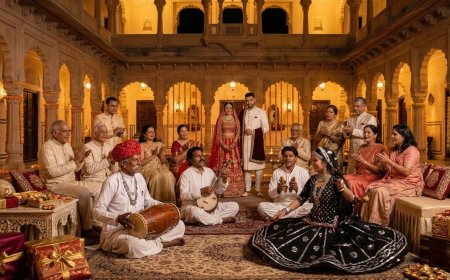
The primary courtyard of the Alsisar Mahal — the central enclosed space around which the principal rooms of the palace are organised and whose walls carry the fresco paintings at the full height and the full width of the enclosure — is the Alsisar wedding's defining space and the space that the wedding photographs most consistently return to as the image that captures the venue's specific character.
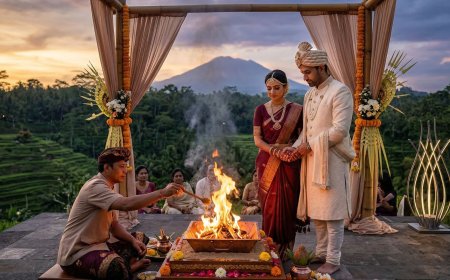
The painted courtyard ceremony — the mandap whose position at the courtyard's centre places the couple within the continuous fresco narrative, whose guests are seated facing the walls whose paintings are the visual company of the occasion — is the ceremony whose setting is unlike any ceremony setting in the Indian wedding venue landscape. The couple does not stand in front of the painting. They stand within it — within the continuous, surrounding, ancient narrative whose presence gives the contemporary occasion the specific resonance of the continuity.
The courtyard capacity is up to one hundred and twenty guests for the seated ceremony and reception and up to one hundred and seventy for the standing function. The scale is the intimate destination wedding scale — the scale that makes every guest proximate to the occasion rather than an observer of it from the distance.
The Fresco Corridors and the Painted Rooms
The corridors whose ceilings are the continuous painted surface — the specific Shekhawati architectural tradition of the decorated ceiling whose paintings look down at the people moving beneath them — are the transition spaces of the Alsisar Mahal that function as the wedding's secondary visual experience.
The guest who walks from the accommodation to the courtyard ceremony passes through the fresco corridor. The guest who moves from the welcome reception to the dinner passes beneath the painted ceiling whose subjects — the flying celestials, the ornamental borders, the narrative panels — are the overhead company of the transition. The corridors are not the event spaces. They are the experiential connective tissue of the palace that the wedding's programme moves through.
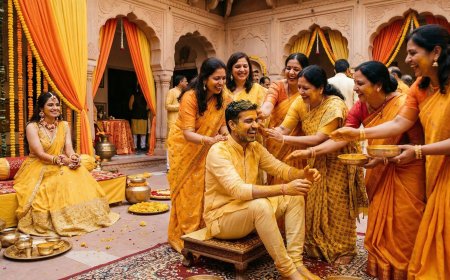
The painted rooms — the interior spaces whose walls carry the specific, intimate fresco subjects of the private apartment — are the spaces for the pre-wedding functions whose intimacy the enclosed room most rewards: the mehendi circle, the family gathering, the morning ritual whose participants are the inner circle for whom the painted room's intimate enclosure is the appropriate scale.
The Rooftop
The Alsisar Mahal's rooftop — the elevated terrace whose view encompasses the Shekhawati landscape, the town of Alsisar below, and the specific desert-edge sky that the northeastern Rajasthan produces — is the sunset and the nighttime event space whose specific quality at the hour when the stars appear is the quality that the Shekhawati's distance from the major city's light pollution most completely enables.
The Shekhawati night sky — the specific, overwhelming star density of the remote location whose nearest major city is three hours away — is the sky that the rooftop reveals at the end of the evening's events, when the occasion's last gathering moves to the terrace and the guests look up and encounter the Milky Way with the specific shock of the person who has lived in London or Toronto and who has forgotten, or never known, what the sky looks like in the absence of the artificial light.
The rooftop capacity is the intimate scale — up to eighty guests for the cocktail reception and up to fifty for the seated dinner. The rooftop is the space for the occasion whose scale is the intimate gathering rather than the large event, and whose specific gift is the view and the sky rather than the capacity.
The Fort Walls and the Gateway
The Alsisar Mahal's exterior — the fort walls whose defensive purpose has been preserved in the architecture while the defensive function has long been replaced by the aesthetic — and the gateway whose proportions and whose painted arch are the palace's public face are the wedding spaces for the baraat, the arrival procession, and the specific ceremonial approach whose architectural framing gives the occasion the specific drama of the historical entrance.
The groom's baraat arriving at the Alsisar Mahal's painted gateway — the procession that approaches through the town's streets and arrives at the fort's entrance whose arch carries the fresco above — is the baraat whose setting is the specific, unrepeatable combination of the living town and the historical palace that only the Alsisar offers.
The NRI Couple's Specific Case for Alsisar
The Undiscovered Advantage — And Its Window
The Alsisar Mahal sits at the specific point on the discovery curve where the quality is established and the obscurity is still intact — the point that is the most valuable moment in the trajectory of the undiscovered place whose discovery is coming.
The international destination wedding market has not yet found the Shekhawati in the systematic way that it has found the Udaipur and the Jaisalmer. The travel writers have written about it — the Shekhawati's fresco heritage has the specific, passionate coverage of the destination that the connoisseur knows and the mass market has not yet processed. The wedding photographers have shot there — the photographers who pursue the specific visual depth that the fresco context provides have been at Alsisar and their work has circulated in the professional community. But the large-scale NRI wedding circuit — the family WhatsApp groups, the settled destination wedding vendor ecosystems, the standardised planning packages — has not yet arrived at Alsisar with the full weight of its attention.
The window is open. It will not be open indefinitely. The couple who chooses Alsisar in the next two to three years is the couple who is ahead of the discovery in the specific way that produces the occasion that still belongs to itself — that has not yet been shaped by the expectations of the mass market's arrival.
The Cost Advantage
The Alsisar Mahal's pricing reflects the boutique property's structure and the destination's relative obscurity — the combination that makes the Alsisar wedding meaningfully more accessible than the comparable experience at the major palace destinations while delivering the heritage quality, the fresco beauty, and the personal hosting that the comparable experience at Udaipur or Jaisalmer costs significantly more to provide.
The NRI couple whose wedding vision is the authentic Rajasthan palace experience — the frescoes, the courtyard ceremony, the heritage rooms, the personal family hosting — and whose budget cannot reach the Umaid Bhawan's or the Suryagarh's cost structure will find at Alsisar the specific combination of the quality and the accessibility that the major destinations do not offer.
The cost advantage is the temporary advantage — the advantage that the discovery curve eliminates as the destination's reputation grows and the pricing adjusts to the demand. The couple who books Alsisar before the adjustment is the couple who has the quality at the accessibility that the quality will not always be available at.
The Cultural Depth
The Shekhawati region surrounding Alsisar is the cultural destination whose depth — the painted havelis of Mandawa, the step wells of Nawalgarh, the specific merchant palace tradition of Fatehpur — gives the wedding's guest programme the content that the major tourist destination's packaged experience cannot provide.
The guest at the Alsisar Mahal wedding who spends the morning before the evening's sangeet on the guided fresco tour of the nearby Nawalgarh havelis — the art historian's guided tour whose depth of engagement with the painting tradition is the specific cultural experience that the heritage destination uniquely provides — is the guest who arrives at the sangeet with the specific knowledge of the tradition whose paintings surround them, and for whom the evening's occasion is therefore the immersive cultural experience rather than the beautiful backdrop.
The fresco tour as the guest programme: the Alsisar Mahal wedding's pre-wedding guest programme should include the Shekhawati fresco tour as the essential cultural dimension — not the optional excursion but the planned, guided, specific engagement with the tradition that is the wedding's visual and cultural context. The destination wedding that gives its guests the knowledge of the destination's meaning is the destination wedding whose experience is the deepest.
The Logistics: Managing the Remote Destination
The Access
Alsisar is approximately two hundred and thirty kilometres from Jaipur — the three-hour road journey whose routing through the Shekhawati landscape is the arrival experience whose quality the couple should frame for the guests in advance rather than leave to the incidental discovery.
From Jaipur: the primary access route for the NRI couple whose international guests are flying into the nearest major airport. The Jaipur International Airport receives the direct international flights from the Gulf and the connecting flights from the European and the North American hubs via Delhi or Mumbai. The three-hour road journey from Jaipur to Alsisar through the Shekhawati — the drive whose roadside havelis are the preview of the destination's specific character — is the arrival experience that the coordinated convoy transforms from the logistical necessity into the first act of the wedding's cultural programme.
From Delhi: the four and a half hour road journey from Delhi whose routing through the southern Haryana and into the Rajasthan interior is the longer option for the guests flying into the Delhi hub. The Delhi option is relevant for the international guests whose connecting flights arrive at Indira Gandhi Airport and whose onward journey to Alsisar is the road journey rather than the Jaipur connection.
The overnight train option: the Jaipur to Jhunjhunu train — whose journey time is approximately three hours and whose arrival at the Jhunjhunu station places the guests forty-five minutes by road from Alsisar — is the train alternative for the guests who prefer the rail experience. The Jhunjhunu to Alsisar road transfer should be coordinated by the wedding planner rather than left to the individual guest's navigation.
The Vendor Ecosystem
The Alsisar vendor ecosystem is the smallest of the Rajasthan palace destinations in this guide — the consequence of the destination's relative obscurity and its distance from the major city's vendor infrastructure. The decorator, the caterer, the photographer, and the entertainment company who operates at the Alsisar Mahal's quality level is the vendor who travels from Jaipur — the three-hour journey that adds the transport cost and the logistical management to every vendor engagement.
The experienced Rajasthan destination planner — specifically the planner whose knowledge of the Shekhawati region extends beyond the major Rajasthan destinations — is the professional whose vendor relationships determine the quality of the Alsisar wedding's execution. The planner who has worked at Alsisar specifically, or who has the Shekhawati region's vendor ecosystem as part of the professional knowledge, is the planner whose engagement the Alsisar wedding requires before any other planning decision is made.
The Complete Planning and Pricing Tables
Table One: Wedding Spaces, Events, and Costs
| Space / Event | Capacity (Seated) | Capacity (Standing) | Approx. Venue Cost (INR) | Approx. Venue Cost (USD) | Best For |
|---|---|---|---|---|---|
| Painted Courtyard – Ceremony | Up to 100 | Up to 170 | ₹8,00,000 – ₹14,00,000 | $9,600 – $16,800 | Pheras within fresco walls |
| Painted Courtyard – Sangeet | Up to 120 | Up to 170 | ₹10,00,000 – ₹18,00,000 | $12,000 – $21,600 | Sangeet, fresco backdrop |
| Painted Courtyard – Reception Dinner | Up to 120 | Up to 170 | ₹12,00,000 – ₹22,00,000 | $14,400 – $26,400 | Wedding dinner, courtyard setting |
| Rooftop Terrace – Cocktails | Up to 50 | Up to 80 | ₹5,00,000 – ₹10,00,000 | $6,000 – $12,000 | Sunset drinks, Shekhawati sky |
| Rooftop Terrace – Seated Dinner | Up to 50 | — | ₹8,00,000 – ₹14,00,000 | $9,600 – $16,800 | Intimate starlit dinner |
| Fresco Corridor – Welcome Reception | Up to 60 | Up to 100 | ₹4,00,000 – ₹8,00,000 | $4,800 – $9,600 | Arrival welcome, painted ceilings |
| Painted Rooms – Mehendi | Up to 40 | Up to 60 | ₹3,00,000 – ₹6,00,000 | $3,600 – $7,200 | Intimate pre-wedding function |
| Painted Rooms – Haldi | Up to 30 | Up to 50 | ₹2,00,000 – ₹4,00,000 | $2,400 – $4,800 | Morning ritual, inner circle |
| Fort Gateway and Approach – Baraat | Procession format | Up to 100 | ₹2,00,000 – ₹5,00,000 | $2,400 – $6,000 | Groom's painted arch arrival |
| Garden Area – Welcome Dinner | Up to 80 | Up to 120 | ₹6,00,000 – ₹12,00,000 | $7,200 – $14,400 | First evening, arrival gathering |
| Full Property – Exclusive Buyout (per day) | All spaces | All spaces | ₹30,00,000 – ₹60,00,000 | $36,000 – $72,000 | Complete exclusive use |
| Full 3-Day Wedding Package | 80–120 guests | — | ₹60,00,000 – ₹1,20,00,000 | $72,000 – $1,44,000 | All functions, full programme |
| Shekhawati Fresco Tour – Guest Programme | Up to 120 | — | ₹1,50,000 – ₹4,00,000 | $1,800 – $4,800 | Guided Nawalgarh, Mandawa tour |
| Rajasthani Folk Evening | Musicians, dancers, puppet | ₹2,00,000 – ₹5,00,000 | $2,400 – $6,000 | Cultural entertainment evening | |
| Catering – Per Head (Welcome Cocktails) | — | — | ₹2,000 – ₹4,000 per head | $24 – $48 per head | Arrival evening, canapes |
| Catering – Per Head (Buffet Dinner) | — | — | ₹5,000 – ₹9,000 per head | $60 – $108 per head | Sangeet or welcome dinner |
| Catering – Per Head (Seated Dinner) | — | — | ₹7,000 – ₹12,000 per head | $84 – $144 per head | Formal reception dinner |
All prices are indicative estimates. The Alsisar Mahal's pricing reflects the boutique heritage property's structure — the lowest venue cost of the five palace destinations in this guide series, with the Jaipur vendor transport premium adding to the overall budget. The exclusive property buyout is the strongly recommended approach. The Thakur family management team provides the bespoke quotation directly.
Table Two: Accommodation, Full Budget, and Planning Essentials
| Category | Detail | Approx. Cost (INR) | Approx. Cost (USD) | Notes |
|---|---|---|---|---|
| ALSISAR MAHAL ACCOMMODATION | ||||
| Heritage Room | Fresco-decorated walls, courtyard | ₹6,000 – ₹10,000 per night | $72 – $120 per night | Original painted rooms, authentic |
| Deluxe Heritage Room | Larger room, better fresco quality | ₹10,000 – ₹16,000 per night | $120 – $192 per night | Upgraded frescoes, better view |
| Suite | Separate sitting area, premier frescoes | ₹18,000 – ₹28,000 per night | $216 – $336 per night | Key family, VIP guests |
| Royal Suite | Premier suite, finest fresco room | ₹28,000 – ₹45,000 per night | $336 – $540 per night | Couple's suite, wedding night |
| Total Rooms Available | Approximately 30–35 rooms | Full buyout strongly recommended | Rate negotiated for wedding group | Smallest property in guide series |
| OVERFLOW ACCOMMODATION | ||||
| Alsisar and nearby village homestays | Local family heritage properties | ₹2,000 – ₹5,000 per night | $24 – $60 per night | Characterful, basic facilities |
| Mandawa Castle (30 min away) | Heritage hotel, Shekhawati | ₹8,000 – ₹18,000 per night | $96 – $216 per night | Quality overflow, fresco context |
| Nawalgarh heritage hotels (45 min) | Multiple heritage properties | ₹5,000 – ₹15,000 per night | $60 – $180 per night | Overflow with cultural character |
| Jaipur hotels (3 hours away) | Full range available | ₹6,000 – ₹60,000 per night | $72 – $720 per night | For guests needing city infrastructure |
| COMPREHENSIVE WEDDING BUDGET | ||||
| Venue hire – all functions (3 days) | Full property exclusive | ₹30,00,000 – ₹60,00,000 | $36,000 – $72,000 | Most accessible of guide's palaces |
| Catering – all functions (100 guests) | Approved caterers, all meals | ₹30,00,000 – ₹55,00,000 | $36,000 – $66,000 | Three events, three days |
| Decoration and florals | Full installation, Jaipur vendors | ₹25,00,000 – ₹50,00,000 | $30,000 – $60,000 | Transport premium from Jaipur |
| Photography and videography | Destination team, fresco specialist | ₹10,00,000 – ₹25,00,000 | $12,000 – $30,000 | Fresco photography expertise needed |
| Entertainment | Folk musicians, dancers, sangeet | ₹8,00,000 – ₹20,00,000 | $9,600 – $24,000 | Shekhawati folk tradition |
| Destination wedding planner | Shekhawati specialist essential | ₹7,00,000 – ₹15,00,000 | $8,400 – $18,000 | Smallest fee in guide series |
| Bridal and groom's clothing | Full trousseau | ₹15,00,000 – ₹40,00,000 | $18,000 – $48,000 | Personal to couple |
| Hair and makeup | Artist travels from Jaipur | ₹2,00,000 – ₹5,00,000 | $2,400 – $6,000 | Three-hour travel, accommodation needed |
| Accommodation – full property (3 nights) | 30–35 rooms, wedding group rate | ₹7,00,000 – ₹16,00,000 | $8,400 – $19,200 | Most affordable full buyout in guide |
| Guest transport – Jaipur convoy | Airport to Alsisar, coordinated | ₹4,00,000 – ₹10,00,000 | $4,800 – $12,000 | Three-hour journey, essential coordination |
| Vendor transport from Jaipur | All vendors travel to destination | ₹3,00,000 – ₹7,00,000 | $3,600 – $8,400 | Every vendor travels three hours |
| Shekhawati fresco tour programme | Guided Nawalgarh and Mandawa | ₹1,50,000 – ₹4,00,000 | $1,800 – $4,800 | Essential guest programme |
| Invitations and stationery | Fresco motif design language | ₹1,00,000 – ₹3,00,000 | $1,200 – $3,600 | Shekhawati painting aesthetic |
| Pandit and religious requirements | Travels from Jaipur or Jhunjhunu | ₹80,000 – ₹2,00,000 | $960 – $2,400 | Confirm travel and accommodation |
| Miscellaneous and contingency (10%) | Remote destination variance | ₹8,00,000 – ₹18,00,000 | $9,600 – $21,600 | Higher percentage for remote location |
| TOTAL ESTIMATED RANGE | 100 guests, 3-day wedding | ₹1,52,30,000 – ₹3,30,00,000 | $1,83,000 – $3,96,000 | Most accessible palace in guide series |
| PLANNING TIMELINE | ||||
| Initial inquiry | Contact Thakur family directly | 15–18 months before | 15–18 months before | Smaller team, personal response |
| Contract and deposit | Date confirmed, terms agreed | 12–14 months before | 12–14 months before | Direct family negotiation |
| Shekhawati planner engaged | Regional specialist non-negotiable | 12 months before | 12 months before | Before any vendor contact |
| Jaipur vendor sourcing | Decorator, caterer, photographer | 10 months before | 10 months before | All travel three hours to venue |
| Fresco tour guide arranged | Heritage specialist, Nawalgarh | 6 months before | 6 months before | Book early, limited specialists |
| Guest transport coordination | Jaipur airport convoy confirmed | 6 months before | 6 months before | Central to guest experience design |
| Overflow accommodation arranged | Mandawa Castle or Nawalgarh hotels | 6 months before | 6 months before | If guest count exceeds 35 rooms |
| Vendor accommodation confirmed | All Jaipur vendors need rooms | 3 months before | 3 months before | Alsisar has limited external options |
| Final guest count | To Thakur family team | 6–8 weeks before | 6–8 weeks before | Catering and space planning |
| Final payments | Venue and all vendors | 4 weeks before | 4 weeks before | Confirm everything in writing |
The Alsisar Mahal's total budget range is the most accessible in this guide series — reflecting the boutique property scale, the smaller guest count's efficiency, and the destination's current pricing position ahead of the discovery curve's full impact. The fresco photography specialist is the specific vendor whose engagement is more important here than at any other destination in the guide — the courtyard's painted walls are the photography's primary subject and require the photographer who understands how to work with the fresco's specific light and colour.
The Photography: The Fresco as the Subject
Why Alsisar Changes the Wedding Photograph
The wedding photography at the Alsisar Mahal is fundamentally different from the wedding photography at every other palace destination — not because the photographer is different, and not only because the building is different, but because the fresco changes the photograph's relationship to its background in a way that the plain stone wall, however beautiful, does not.
The plain stone wall — the Chittar sandstone of the Umaid Bhawan, the Jaisalmer yellow of the Suryagarh — is the beautiful background whose colour and texture enrich the photograph. The fresco wall is the subject. The fresco wall is the narrative whose presence in the frame gives the photograph a second layer of meaning — the mythological story unfolding behind the human story, the ancient painted world providing the context for the contemporary occasion, the visual depth of the centuries-old surface against which the present moment is photographed.
The couple standing before the Shekhawati fresco is not the couple photographed against the wall. They are the couple photographed within the ongoing story — within the painted world that the Shekhawati tradition created and that the Alsisar Mahal has preserved and that is, in the specific quality of the wedding photograph, the visual evidence of the occasion's specific, unreplicable depth.
The photographer's requirement: the Alsisar wedding requires the photographer who understands the fresco's specific photographic demands — the mineral pigment's colour response to different light conditions, the compositional requirement of the continuous narrative surface, the specific positions within the courtyard where the fresco's depth is most completely captured. The photographer who has worked at Alsisar specifically, or whose portfolio demonstrates the specific competence with the painted interior, is the photographer whose engagement the Alsisar wedding requires above all others.
Common Mistakes NRI Couples Make When Planning the Alsisar Wedding
The first mistake is not engaging the Shekhawati-specialist destination planner before any other planning decision is made. The Alsisar Mahal's vendor ecosystem — the caterers, decorators, photographers, and entertainment companies who can execute at the quality the palace occasion requires — is not discoverable through the general Rajasthan wedding vendor search. It is the specific knowledge of the planner who knows the Shekhawati region and whose professional relationships include the Jaipur-based vendors who have worked at Alsisar. The couple who begins the vendor search without the specialist planner's guidance will spend months discovering the specific gaps that the planner's knowledge fills in the first conversation.
The second mistake is not building the fresco tour into the guest programme as the essential rather than the optional. The guests who attend the Alsisar Mahal wedding without the guided engagement with the Shekhawati fresco tradition — whose knowledge of the paintings on the walls around them is limited to the aesthetic appreciation of the beautiful surface — have experienced the decoration. The guests who have had the guided fresco tour of the Nawalgarh havelis before the wedding's evening functions have experienced the tradition — and for whom the painted walls of the courtyard are not the beautiful background but the specific, known, appreciated cultural inheritance that the occasion is embedded within. The fresco tour is not the optional excursion. It is the cultural foundation of the Alsisar wedding's specific meaning.
The third mistake is choosing the Alsisar for the cost advantage without the full understanding of the remote location's logistical implications. The Alsisar Mahal is three hours from Jaipur. Every vendor travels three hours to the venue. Every guest travels three hours from the airport. The convoy requires the coordination. The vendor accommodation requires the arrangement. The contingency for the unexpected requires the higher percentage. The couple whose budget accounts for the venue's lower cost but not for the remote location's logistical premium will discover the gap between the planned and the actual in the vendor quotations.
The fourth mistake is not engaging the fresco photography specialist. The courtyard's painted walls are the Alsisar wedding's most distinctive visual asset and the photographic subject that most requires the specific competence. The photographer whose portfolio is the standard palace wedding photography — the architectural backdrop, the golden hour poolside, the beautiful sandstone context — may not have the specific knowledge of how to photograph the fresco's mineral colour in the courtyard's specific light conditions. The fresco is the subject. Engage the photographer who knows how to photograph it.
The fifth mistake is underestimating the discovery window's closing speed. The Alsisar Mahal is being found — slowly, specifically, by the NRI couples and the destination wedding photographers and the travel writers whose search for the authentic and the undiscovered has brought them to the Shekhawati ahead of the mass market. The window in which the Alsisar offers the undiscovered quality at the accessible price is the window whose closing is already underway. The couple who defers the decision — who bookmarks the guide and returns to it in eighteen months — may find the dates less available, the pricing adjusted, and the specific undiscovered quality beginning its transformation into the discovered one. The window is open. The decision belongs in it.
The Right Wrong Turn
The wedding was in November.
The bride and the groom had returned to the Shekhawati in the monsoon's aftermath — the specific October light of the post-monsoon Rajasthan whose quality is the quality that the painters of the Shekhawati were working in when they covered the walls with the mineral pigments that the light still finds, two centuries later, with the same warmth.
The wrong turn outside Jhunjhunu on the site visit had not been repeated on the wedding journey — the coordinated convoy from the Jaipur airport had taken the correct road, the efficient road, the road that arrived at Alsisar in three hours without the detour through the village whose painted walls had been the first revelation.
But the bride had told the story at the welcome dinner. She had told it in the courtyard of the Alsisar Mahal, standing in front of the fresco whose subjects she now knew — the wedding planner had arranged the fresco scholar's briefing before the dinner — and she had described the wrong turn and the village and the fifteen minutes of standing on the road looking at the painted walls and the specific moment when she had understood that the Shekhawati was not the beautiful thing to look at but the ongoing thing to be inside of.
She had said: I wanted to get married inside the painting. And here we are.
The hundred and eight guests in the courtyard had looked around them — at the painted walls, at the fresco ceiling of the corridor, at the gateway arch whose painting looked down at the gathering — and had understood what she meant.
The painting is not the backdrop.
The painting is the place.
And the place is still here, still largely undiscovered, still available to the couple who finds it before the finding becomes the finding that everyone does.
Contact the Thakur family at fifteen months.
Engage the Shekhawati planner before the vendor search begins.
Book the fresco tour for the guest programme before the wedding programme is built.
Find the photographer who knows how to photograph the mineral pigment in the courtyard light.
And make the wrong turn outside Jhunjhunu — deliberately, specifically, on the site visit, before the wedding, so that the village whose painted walls are the preview of the destination's meaning is the first thing rather than the incidental discovery.
The right wrong turn.
It is where the understanding begins.
Published by NRIWedding.com — The Premium Global Platform for Non-Resident Indians Planning Indian Weddings From Abroad.
What's Your Reaction?
 Like
0
Like
0
 Dislike
0
Dislike
0
 Love
0
Love
0
 Funny
0
Funny
0
 Angry
0
Angry
0
 Sad
0
Sad
0
 Wow
0
Wow
0