














































The Photographer Who Asked the Right Question: The NRI Couple's Complete Guide to Blended Family Photo Session Planning at Your Indian Wedding
Tell me about your family — the open question that the photographer had learned to ask in the first meeting, whose answer was the information she needed to design the photograph session that would serve the specific people in the room rather than the generic wedding family portrait the tradition assumes. The blended family's photograph session cannot follow the standard template without producing the specific failures the template was not designed to address — the divorced parents forced into the same frame, the stepchild who does not know how to hold their body in the configuration, the deceased parent whose absence is marked rather than honored. This guide delivers a complete framework covering the family mapping conversation, the configuration list from must-have to specifically avoided, the sequence design principles, the children's preparation conversation and comfort assessment, the young child's timing and duration needs, the child with specific needs, the divorced parents' separate sequences, the new partner's place in configurations, the deceased parent's photograph incorporated into the family portrait, the session day briefing, and the time allocation that reflects the blended family's actual complexity.


Blended Family Photo Session Planning at Your Indian Wedding
The NRI couple's practical guide to photographing the family that actually exists — the specific planning that produces photographs the whole family will want to keep rather than the session that tries to document a family that is not there
The Photographer Who Asked the Right Question
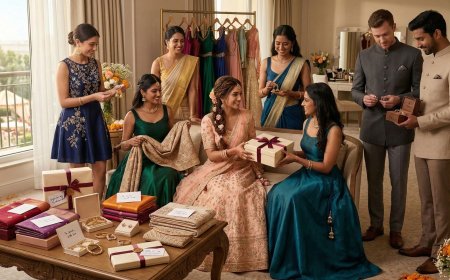
The photographer had been shooting Indian weddings for eleven years. She had photographed families of every configuration — the large, intact, multigenerational families whose group photographs required a wide-angle lens and significant organizational patience, and the families whose configurations were more complex: the divorced parents who had not been in the same room for four years, the stepchildren whose relationship to the occasion was still being negotiated, the deceased grandparent whose photograph was held by the surviving spouse, the half-siblings who had met for the first time at the wedding.
She had learned, over eleven years, that the family photograph session is the moment in the wedding day that reveals most clearly whether the planning has accounted for the family that actually exists or the family the tradition assumes.
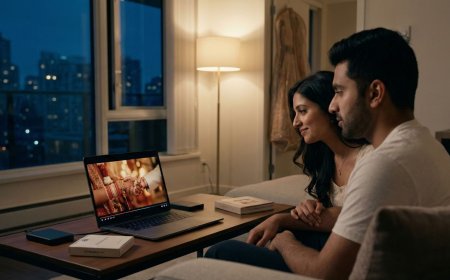
In her first meeting with the couple, she asked the question she had learned to ask in the first meeting:
"Tell me about your family."
Not "how many people are in your family" — the logistical question whose answer is a number. Tell me about your family. The open question whose answer is the information she needed to design the photograph session that would serve the specific people in the room rather than the generic wedding family portrait.
The couple looked at each other in the specific way that couples look at each other when they are deciding how much to explain.
Then they explained.
The groom had been married before. He had a daughter of nine from the first marriage who lived primarily with her mother but who would be at the wedding. The bride had not been married before but had a close relationship with her two younger brothers, one of whom had Down syndrome and whose photograph experience needed specific thought. The bride's parents were divorced — her mother was at the wedding, her father was not. The groom's parents were both present and had a relationship with the groom's daughter that was warm and well-established.
The photographer listened. She made notes. She did not simplify the complexity or suggest it could be managed without specific thought.
She said: "Here is how we are going to do this."
What followed was a photograph session plan that was specific to the family that existed — whose configurations acknowledged the actual relationships in the room, whose sequence was designed to manage the complexity rather than be overwhelmed by it, and whose results were photographs that the entire family, in all its configurations, looked back on with genuine warmth.
This guide provides the planning framework she used.
Why the Blended Family Photo Session Requires Specific Planning
The Complexity That the Standard Session Does Not Address
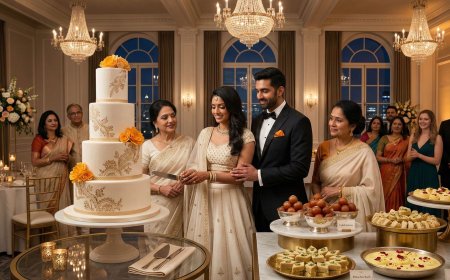
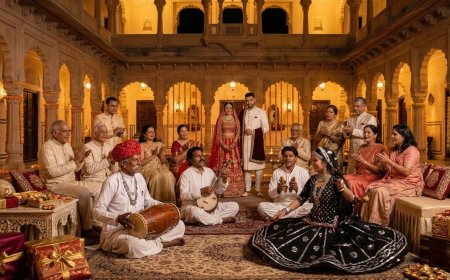
The standard wedding photograph session is designed for the traditional family configuration — the couple at the centre, surrounded by their respective intact families, photographed in the configurations that the tradition assumes. The parents with the couple. The siblings with the couple. The extended family in the large group. The two families together.
The blended family's photograph session cannot follow this template without producing the specific failures that the template was not designed to address:
The configuration that places the divorced parents side by side — who have not been in the same frame for years and who will not be comfortable in the same frame now — produces the specific stiffness that the photograph captures and preserves.
The configuration that places the stepchild in the family portrait as though they are a child of both partners — when their actual relationship is more nuanced than this — produces the specific awkwardness of the child who does not know how to hold their body in the configuration.
The configuration that omits the stepchild entirely — that photographs the couple's family without including the child who is part of it — produces the absence that the child will notice in the photographs for the rest of their life.
The configuration that does not account for the deceased parent — that photographs the surviving parent and the wedding party as though the family is complete — produces the photograph that marks the absence rather than acknowledging it.
The standard session's failure in each of these cases is not the photographer's failure — it is the planning's failure. The photographer who has not been told about the family's specific configuration cannot design around the complexity they do not know exists.
The Photographs That Will Be Looked At for Decades
The wedding photographs are among the most permanent documents a family produces — the images that will be on walls and in albums and on phones and eventually in the hands of people who were not at the wedding, who will use the photographs to understand who the family was and how it was configured at this specific moment.
The photograph that captures the family honestly — that includes everyone who belongs and excludes the configurations that do not reflect the actual relationships — is the photograph that serves the family's long-term record. The photograph that papers over the complexity — that forces configurations that do not reflect the actual family — is the photograph that the family will look at with the specific discomfort of the image that is technically accurate and emotionally false.
The planning goal: photographs that the entire family, including the children of previous relationships and the complicated corners of the family configuration, will want to have and to keep.
The Planning Framework: Before the Session
The Family Mapping Conversation
The photographer should receive a complete picture of the family's configuration — every significant relationship, every complexity, every person whose presence at the session requires specific thought — before the wedding day.
The family mapping conversation should cover:
The divorced or separated parents:
Which parents are present? What is the quality of the relationship between the divorced parents — are they able to be photographed together, or does the session need to be designed so they are never in the same frame simultaneously? Is there a new partner for either parent who will be at the wedding, and if so, how does the new partner fit into the photograph configurations?
The children of previous relationships:
Which children are present? What is each child's relationship to each adult in the family — to the biological parent, to the step-parent, to the step-parent's family? Are there configurations that the child is comfortable with and configurations that would be uncomfortable? Has anyone spoken to the child about the photograph session and what it will involve?
The deceased family members:
Is there a deceased parent, grandparent, or sibling whose memory is being honored at the wedding? Is there a photograph of the deceased person that will be incorporated into the family portrait? Who holds the photograph? Which configurations will include it?
The complex extended family:
Are there estranged family members who are present? Family members whose relationships to specific others in the family require management in the photograph configurations? Half-siblings, step-grandparents, or other extended family members whose place in the configurations requires specific thought?
The children with specific needs:
Are there children — including children with disabilities, children with sensory sensitivities, very young children — whose photograph experience requires specific accommodation? What does that accommodation look like in practice?
The Configuration List
Based on the family mapping conversation, the photographer and the couple should produce a configuration list — the specific photograph groupings that will be taken, in the specific order they will be taken, with the specific people in each grouping named.
The configuration list for the blended family is more detailed than the standard wedding's photograph list — because the complexity of the family means that the groupings must be designed rather than assumed.
The configuration list should include:
The must-have configurations:
The photographs that must exist — the couple alone, the couple with the children of previous relationships, the couple with each set of parents separately, the children of previous relationships with their biological parent. These are the configurations whose absence would be a specific failure of the session.
The aspirational configurations:
The photographs that would be wonderful if the family's dynamics allow — the couple with all the parents together, the children with both parents and step-parents, the full extended family. These configurations should be attempted where the dynamics permit and gracefully omitted where they do not.
The specific avoided configurations:
The configurations that should not be attempted — the divorced parents who cannot be photographed together, the family member combinations whose discomfort would be captured in the image. The photographer who knows in advance which configurations to avoid is the photographer who does not create the awkward session moment of attempting a configuration that does not work.
The Sequence Design
The sequence of the photograph configurations — the order in which they are taken — should be designed to manage the session's emotional and logistical complexity.
The principles of sequence design for the blended family:
Start with the easiest configurations:
The couple alone — the session's emotional anchor, the configuration that is simplest and most comfortable. The photographs of the couple alone at the beginning of the session establish the session's warmth and give the photographer the opportunity to build the couple's comfort before the more complex configurations begin.
Children's configurations early:
The children of previous relationships should be photographed early in the session — when their energy and patience are highest, before the session's length has depleted them. The child who has been standing around for forty-five minutes while the adults are photographed is the child whose expression in their own photographs reflects the waiting rather than the occasion.
Manage the divorced parents' configurations:
The divorced parents who cannot be in the same configuration should be photographed in separate sequences — the mother's family configurations followed by the father's family configurations, or vice versa, with the transition between them managed so the two parents are not waiting in the same space at the same time.
Build the complex configurations from the simpler ones:
The large group photograph should follow the smaller groupings rather than precede them — the family members who have already been photographed together in smaller configurations have already established their comfort with the session and can maintain their engagement through the larger configuration.
End with the large group if it is achievable:
The large group photograph — the full extended family — should be the session's final configuration if it is being attempted. The logistics of the large group photograph consume significant time and patience, and ending the session with it means the earlier configurations have not been delayed by the large group's organisation.
The Children: The Session's Most Important Variable
Understanding the Child's Experience
The photograph session from a child's perspective — particularly a child of a previous relationship who is navigating the blended family's complexity — is an experience that is simultaneously emotionally loaded and logistically demanding.
The child is being asked to stand in configurations that represent the family's relationships in a specific, public, permanent way. The configurations communicate something about who belongs to whom, who is central and who is peripheral, whose family this is. The child who feels uncertain about their place in the blended family is navigating these communications in the middle of a photography session in which they are expected to look happy.
The planning that serves the child acknowledges this complexity rather than ignoring it.
The Preparation Conversation
The child should be told about the photograph session before the wedding day — not the detailed production planning, but the specific, age-appropriate explanation of what will happen and what their role will be.
"There will be a time during the wedding when we take photographs of the family together. You will be in some of them. I want to tell you what they will be like so it is not a surprise."
The preparation conversation should cover: approximately how long the session will take, which configurations the child will be part of, whether there are any configurations the child is uncertain about and how those concerns will be addressed.
The child who knows what to expect is the child who can be present to the session rather than anxious about what is coming next.
The Child's Comfort With Each Configuration
Some configurations will be more comfortable for the child than others — and the planning should account for this rather than requiring the child to perform comfort they do not have.
The child who is comfortable with their biological parent but uncertain about the step-parent is not the child who should be placed in the step-parent's arms for the photograph. The configuration should reflect the actual relationship rather than the relationship the adults would like to document.
The child who is asked whether they are comfortable with a specific configuration — who is given the genuine option to decline — is the child whose photograph in that configuration, if they agree, captures their genuine comfort rather than their performed compliance.
The Young Child's Specific Needs
The very young child — the toddler, the infant — has specific needs in the photograph session that the planning must accommodate.
The timing:
The young child's photograph should be taken at the time of day when they are most manageable — not during nap time, not when they are hungry, not in the late evening when they are overtired. For many young children, the early-to-mid morning is the optimal window.
The duration:
The young child's patience for the photograph session is limited in a way that the adult's patience is not. The child's configurations should be taken first and completed efficiently rather than extended beyond the child's capacity.
The familiar adult:
The young child photographs most naturally with the familiar adult — the parent or caregiver whose presence is comfortable and whose direction is trusted. The unfamiliar photographer directing the young child produces the specific stiffness of the child who is uncertain. The photographer who works through the familiar adult — who asks the parent to prompt the child rather than directing the child directly — produces the natural expression.
The Child with Specific Needs
The child with a disability, with sensory sensitivities, with anxiety, or with other specific needs requires the photograph session to be specifically adapted rather than adapted in the moment.
The photographer should be told about the child's specific needs before the session — not as a detail but as a primary planning consideration. The photographer who knows that a specific child has sensory sensitivities can plan the session's length, the lighting, the number of people in the frame, and the physical proximity to reduce the sensory load.
The specific adaptations that may be required: a shorter session, the child's favorite object present in the photograph, the familiar caregiver in every configuration, the quiet space available between configurations, the permission to take breaks without the break being a failure of the session.
The photograph of the child with specific needs that captures the child genuinely — in a configuration that is comfortable, with the people who are familiar, in a session whose specific accommodations have allowed the child to be present — is more valuable than the technically perfect photograph of a child who is visibly managing rather than genuinely present.
The Divorced Parents: Managing the Specific Complexity
The Photographs That Include Both
The divorced parents who can be photographed together — whose relationship is sufficiently functional that the same frame does not capture the specific discomfort of people who do not want to be there — are the divorced parents for whom the photograph planning is simplest.
The configuration that places the divorced parents on either side of the couple, with space between them, is the configuration most commonly used for the divorced parents who can manage the same frame. It is not the configuration that communicates a family relationship between the parents — it communicates the couple at the centre, with each parent at their side, which is the accurate representation of the relationships.
The Photographs That Separate Them
The divorced parents who cannot be photographed together — or who can be photographed together but where the photograph will capture the discomfort rather than the occasion — require the session to be designed so their configurations are entirely separate.
The separate configuration approach: the couple with the mother and her family in one sequence, the couple with the father and his family in a separate sequence, the two sequences timed so the parents are not in the same space simultaneously.
The logistics of the separate sequence require the session schedule to manage the two parents' presence at the session — the parent who is photographed first and who then withdraws from the session space before the other parent's sequence begins, rather than both parents waiting together for their respective configurations.
The New Partners
The divorced parent's new partner — if present at the wedding — has a specific place in the photograph configurations that the planning must address.
The new partner should be included in the configurations that reflect their actual relationship to the family — typically the configurations with their partner and their partner's immediate family, and the configurations with any stepchildren whose relationship to them is warm enough to be photographed.
The new partner should not be included in the configurations that include the other biological parent — the photograph that includes both of the child's parents and their respective new partners is the photograph that is most complex to manage and that most requires the advance confirmation that everyone involved is comfortable with the configuration.
The Deceased Parent: The Honored Absence
The Photograph That Includes Them
The photograph that includes the deceased parent through their image — the printed photograph held by the surviving parent or by the child, incorporated into the family portrait — is the specific photographic honoring whose planning requires specific thought.
The photograph to be used — the specific, chosen image of the deceased parent — should be decided before the wedding day rather than searched for in the moment. The image should be printed at the appropriate size for the photograph configuration and available to the person who will hold it.
The configuration: the surviving parent holding the photograph at the level where it is visible in the frame without being the frame's dominant element. The photographer's angle that includes the held photograph naturally rather than requiring an awkward arrangement. The briefing to the surviving parent on how to hold the photograph and where to look.
The Emotional Management
The photograph configuration that includes the deceased parent's image is the configuration most likely to produce genuine emotion in the family members being photographed — and the photographer should be prepared to manage this gently rather than efficiently.
The configuration should not be rushed. The moment it produces — the specific feeling of the family including the person who is not there in the document of the occasion — is worth the time it takes. The photographer who moves through this configuration at the session's standard pace has not read the moment correctly.
The Session Day: The Practical Management
The Briefing on the Day
Before the photograph session begins, the photographer should have a brief conversation with the key family members whose configurations require specific management — the divorced parents who need to know the sequence, the stepchild who needs to know which configurations they will be part of, the surviving parent who needs to know how the photograph with the deceased parent's image will be handled.
The brief conversation — three to five minutes with each relevant person — gives them the specific information they need to be prepared for the session rather than uncertain about what is coming.
The Coordinator's Role
For weddings with a professional wedding coordinator, the coordinator should manage the logistics of the photograph session — the gathering of the right people for each configuration, the sequencing of the divorced parents' separate times, the management of the children's breaks. The photographer should be photographing, not managing the logistics of who is where.
For weddings without a coordinator, a specific trusted family member should be briefed on the session's sequence and assigned the role of gathering people for each configuration.
The Time Allocation
The blended family photograph session requires more time than the standard wedding's session — the additional configurations, the management of the divorced parents' separate sequences, the children's accommodations, the emotional pacing of the more complex moments all add time that the standard session estimate does not include.
The photographer who has been given an honest picture of the family's complexity should provide a time estimate that reflects it — and the session should be scheduled with the additional time built in rather than squeezed into the standard allocation.
The Photographs That Are Worth Having
The photograph session for the blended family, planned with the specific attention this guide describes, produces something that the unplanned session does not: photographs that the entire family — in all its configurations — wants to have.
The stepchild who was photographed with both her father and her stepmother separately, and in a configuration with all three of them that she had been asked about and had agreed to — who had been treated as someone whose comfort in the configurations mattered rather than as an element to be arranged — is the child who looks at those photographs as an adult and sees herself genuinely present rather than managed into position.
The divorced mother who was photographed with her daughter and her daughter's new husband in her own sequence, without the specific discomfort of the shared frame, is the mother who has a photograph she is glad to have.
The surviving parent who held the photograph of their deceased spouse in the family portrait, who felt the specific weight of including them in the document of the occasion — who wept briefly during the configuration and was given the time to do so — has the photograph that is the most honest record the family could have made of who was there and who was held in love from their absence.
The groom's daughter, nine years old, who was photographed at the beginning of the session when her patience was highest, who was asked which configurations she was comfortable with, who was given the permission to take a break when the session's length became too much — who was treated, in other words, as someone whose experience of the session mattered — is the child who smiled genuinely in every photograph she was part of.
The photographer who asked the right question in the first meeting — tell me about your family — had the information she needed to design the session that served each of these people.
The planning that begins with that question produces the photographs worth keeping.
NRIWedding.com — Expert guidance for Indian weddings planned across borders.
What's Your Reaction?
 Like
0
Like
0
 Dislike
0
Dislike
0
 Love
0
Love
0
 Funny
0
Funny
0
 Angry
0
Angry
0
 Sad
0
Sad
0
 Wow
0
Wow
0