






























































Elopement in India: Small Legal Wedding Now, Big Celebration Later — The Complete NRI Wedding Planning Guide
One morning, a couple visited a Sub-Registrar’s office in Mumbai with two witnesses and completed their legal marriage in just twenty-two minutes. There were no decorations—just paperwork, signatures, and a quiet moment that made their union official. Afterward, they celebrated with a simple breakfast nearby. Months later, their large December wedding with hundreds of guests still took place, but it felt different: the ceremony was a celebration of a marriage that already existed. This guide helps NRI couples plan a legal marriage before or instead of a big wedding, covering registration laws, documentation, witness planning, family communication, and how to balance a private legal moment with a larger celebration later.


Elopement in India: Small Legal Wedding Now, Big Celebration Later
The Registry Office at Ten in the Morning
The appointment was at ten.
The groom had worn a suit — not the wedding sherwani that was hanging in his parents' house in Pune, waiting for the December ceremony that two hundred and forty people had been invited to attend, but the grey suit he wore to client presentations, with a white shirt and the tie that the bride had given him for his birthday two years ago.
The bride had worn a silk kurta in deep green — not the bridal lehenga that the designer in Mumbai was still working on, not the red and gold that tradition required, but the kurta she had bought in Jaipur on the trip where the groom had first told her he loved her, which seemed, on balance, the right thing to wear.
They had brought two witnesses. The groom's university friend, who had known about the plan for three weeks and had kept the secret with the specific loyalty that the situation required. The bride's colleague from the London office who happened to be in Mumbai for work that week and who had received a WhatsApp message on Wednesday evening asking whether she was free on Friday morning and whether she owned anything that could pass for occasion wear.
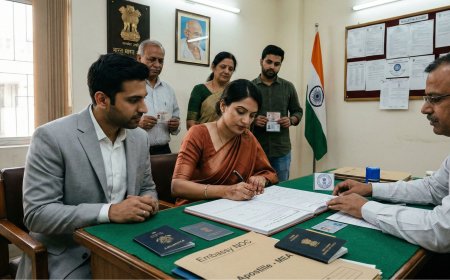
The Sub-Registrar's office in Mumbai was not decorated for weddings. It had the specific atmosphere of a government office that processes a high volume of paperwork across a wide range of purposes — the fluorescent lighting, the stacked files, the ceiling fan that moved the warm air without cooling it, the clerk who had seen everything and was not moved by any of it. The ceremony took twenty-two minutes. They signed the register. The witnesses signed the register. The Sub-Registrar signed the register. The clerk stamped several things.
They were married.
They went to the restaurant around the corner — the specific South Indian restaurant whose idli the bride had been eating since childhood — and had breakfast. The groom's friend ordered extra filter coffee. The bride's colleague took a photograph of the couple's hands, the new ring visible in the frame, which the bride asked her not to post anywhere and which the colleague did not post anywhere.
They were married.
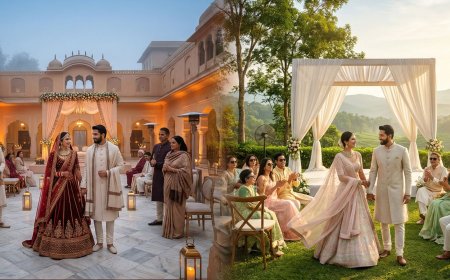
The December wedding — the two hundred and forty guests, the December venue in Pune, the lehenga, the sherwani, the four days of ceremony and celebration — was still happening. Nothing about it had changed except one thing.
The couple getting married in December was a couple who was already married.
And that specific fact — the marriage that had already happened, quietly, on a Friday morning in a Mumbai registry office, before the guests arrived and the camera crew set up and the families assembled — was the thing that the bride, on the morning of the December ceremony, would describe to her closest friend as the best decision she had made in the entire year of planning.
"I already knew it was real," she said. "The December ceremony was the celebration. The Friday morning was the marriage."
What Elopement in India Actually Means
The Terminology
The word elopement carries, in its traditional use, the suggestion of secrecy and urgency — the couple who runs away to get married against the wishes of their families, the romantic escape that prioritises the marriage over the occasion. This is not, or not necessarily, what is being described here.
The elopement in the context of this guide is the small, legal marriage — the civil registration of the marriage, conducted with minimal ceremony and minimal witness count — that happens either before or instead of a larger celebration. It may be entirely secret. It may be known to both families. It may be a pragmatic legal step before the religious ceremony. It may be the couple's actual preferred form of marriage, with the larger celebration planned separately for the family community.
The elopement in India exists on its own spectrum — from the fully secret marriage that the families do not know about until after the fact, to the fully disclosed and family-supported small civil ceremony that precedes the larger religious celebration by weeks or months, to the small destination ceremony that replaces the large wedding entirely.
This guide addresses the full spectrum — the legal mechanics that apply to all versions, the planning considerations that are specific to each version, and the communication decisions that the elopement requires regardless of where on the spectrum it falls.
The Legal Framework: How the Small Legal Marriage Works in India
The civil marriage in India is registered under one of two primary legal frameworks — the Hindu Marriage Act of 1955 or the Special Marriage Act of 1954 — and the choice between them has specific implications for the couple's circumstances.
The Hindu Marriage Act:
The Hindu Marriage Act applies to marriages where both parties are Hindu, Buddhist, Jain, or Sikh. The marriage can be registered under this Act at the Sub-Registrar's office in the district where either partner has resided for at least thirty days before the application. The registration requires the marriage to have already been solemnised — the Act registers an existing marriage rather than conducting it. For the elopement couple, the solemnisation can be a simple ceremony conducted before the registration, with the Pandit's or the officiant's signature as evidence.
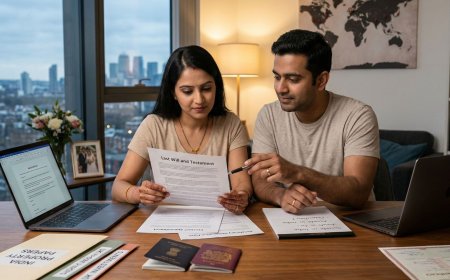
The documents required: proof of identity for both parties, proof of age, proof of residence, proof of the solemnisation of the marriage, two passport photographs each, and the witness documentation.
The Special Marriage Act:
The Special Marriage Act applies to marriages of any religion — it is the civil marriage framework that allows Hindu-Muslim, Hindu-Christian, or any other interfaith couple to marry legally regardless of their religious backgrounds. It also applies to Hindu couples who prefer the civil route.
The Special Marriage Act process involves a notice of intended marriage submitted to the Marriage Officer of the district where either party has resided for at least thirty days. The notice is displayed publicly for thirty days — a requirement that exists to allow objections to be filed and that is the specific element of the Special Marriage Act process that makes the secret elopement logistically complex. After the thirty-day notice period, the marriage is solemnised before the Marriage Officer and registered.
The notice period and the elopement:
The Special Marriage Act's thirty-day public notice period is the specific element that most affects the elopement couple's planning. The notice is displayed at the Marriage Officer's office and — in the digital age — may be accessible online, which means that the notice period is not as private as the couple might prefer. The Hindu Marriage Act does not require a prior notice period, which makes it the more practical option for couples who are marrying within the Hindu religion framework and who want to minimise the advance notice.
The NRI-specific documentation:
For NRI couples who are marrying in India — who are resident abroad and are in India for the marriage — the documentation requirements include the additional step of verifying that neither party has a subsisting marriage. The affidavit of single status — a notarised document declaring that the person is not already married — is the standard requirement. This affidavit should be prepared in the country of residence before the India trip, notarised, and apostilled for use in Indian legal proceedings.
The Reasons: Why Couples Choose This Path
The Legal Clarity Before the Religious Ceremony
The most common reason that NRI couples choose to register their marriage civilly before the religious ceremony is the legal clarity that the civil registration provides — particularly for couples navigating immigration, visa applications, and cross-border legal matters that require a marriage certificate before the religious ceremony date.
The couple whose visa application, whose spouse visa, whose financial or property decision requires a marriage certificate that does not yet exist — because the religious ceremony is six months away — faces a specific legal gap that the civil registration closes. The marriage certificate from the Mumbai registry office, apostilled and submitted to the relevant authority, provides the legal standing that the couple needs now rather than after the December ceremony.
For the NRI couple in the UK, the US, Canada, or Australia — where the immigration system's processing timelines often require evidence of marriage months before the couple's planned wedding date — the civil registration in India or in the country of residence is the pragmatic legal step that enables the administrative processes to begin.
The Practical Desire to Already Be Married
Separate from the legal requirements, many couples have a genuine preference to be legally married before the large celebration — to have the specific, private experience of the marriage itself before the occasion that the families and the guests are primarily attending.
The large Indian wedding — with its multi-day programme, its two hundred guests, its vendor management, its family logistics — is an extraordinary occasion that is also, for many couples, not the occasion where the specific experience of getting married is most fully available to them. The couple who stands at the mandap before two hundred people and manages the ceremony's physical and social demands simultaneously is the couple whose attention is divided between the internal experience of the marriage and the external management of the occasion.
The couple who has already been to the registry office on a Friday morning and has already had the specific private experience of the marriage — who already knows what it feels like to be married to this person — is the couple who can stand at the mandap in December and be fully present for the celebration rather than for the first experience of the marriage.
This is the reason the bride in the guide's opening described the Friday morning as the best decision of the planning year. The December ceremony was real and was meaningful and was the occasion she had always imagined. But the registry office had been the marriage.
The Alternative to the Large Wedding
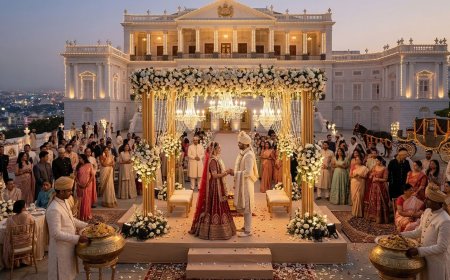
For some couples, the elopement is not the legal step before the large wedding — it is the alternative to the large wedding. The couple who does not want the large Indian wedding, who cannot afford it, who does not have the family support for it, or who simply prefers the specific intimacy of a small ceremony — this couple uses the elopement as the wedding itself, with a separate celebration planned for whenever and wherever it is practical.
The elopement-as-wedding is a different planning exercise from the elopement-as-legal-step — it requires the couple to think about the small ceremony as the occasion they want it to be, rather than as the administrative procedure that precedes the occasion. The registry office wedding that is also the wedding the couple wanted — not just the legal mechanism but the genuine celebration of the marriage in its small, intimate, specific form — requires the specific attention and the specific preparation that the couple's vision of the occasion deserves.
The Family Complexity
Some elopements happen because the large wedding is not possible — not because of the couple's preference but because of the family's circumstances. The families who cannot agree on the wedding's form, the families whose opposition to the marriage is genuine and whose presence at a large wedding would compromise the occasion, the interfaith couple whose religious ceremony is complicated by the traditions' requirements — these couples sometimes choose the civil registration as the path to being legally married without requiring the family alignment that the large religious ceremony needs.
The elopement that is driven by family complexity requires the most careful communication planning — because the families who are not present at the legal marriage will learn of it, and the manner in which they learn of it and the framing in which it is presented to them determines whether the marriage's beginning is a source of family conflict or a resolved fact that the subsequent celebration can build on.
The Planning: What the Small Legal Wedding Requires
The Documentation Preparation
The civil marriage in India requires specific documentation that must be prepared in advance — some of it in the country of residence, some of it in India, and all of it before the registry office appointment.
The preparation timeline:
Six to eight weeks before the intended registration date: begin the document preparation. Identify the specific Sub-Registrar's office or Marriage Officer at the intended location. Contact the office directly to confirm the current documentation requirements — the requirements can vary by district and can change, and the information available online may not reflect the current requirements of the specific office.
Four to six weeks before: prepare the country-of-residence documents. The affidavit of single status, the notarised and apostilled copies of the passport and any required identity documents, the proof of residence documents. These preparations require notarisation and apostille, which take time — begin early.
Two to four weeks before: confirm the appointment at the registry office. Some Sub-Registrar offices require an appointment; others operate on a walk-in basis. Confirm the specific procedure for the specific office before arriving on the day.
The witnesses:
The civil marriage registration requires two adult witnesses who are present at the registration and who sign the marriage register. The witnesses must have identity documents with them. The elopement couple should identify their witnesses early and confirm their availability for the specific date and the specific location.
The witness selection for the secret elopement is the specific decision that requires the most careful consideration — the person who knows about the marriage before the families do is the person whose discretion the secret depends on. Choose witnesses whose ability to keep the confidence is genuinely trusted.
The Ceremony Design
The small legal marriage need not be only the administrative procedure — it can be a genuine occasion, small and specific and designed for the two people who are at the centre of it.
The location:
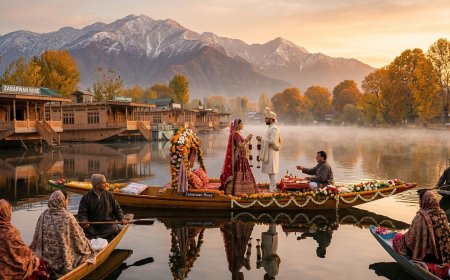
The registry office is the legal requirement — but the moment before or after the registry office can be designed. The couple who exchanges private vows in a specific location before the registry office appointment — the garden of a heritage property, the rooftop of the building where they first met, the ghats of a river that is significant to their tradition — has created a private ceremony that is the marriage in its most personal form before the legal registration makes it official.
The dress:
The elopement's dress — as demonstrated in the guide's opening — is the specific opportunity to wear something personal rather than ceremonially required. The kurta from the Jaipur trip, the suit worn to client presentations, the simple saree that was the grandmother's — the elopement's clothing can be the expression of the couple's daily lives and their personal history rather than the performance of the bridal tradition.
This does not mean the elopement couple cannot dress with care and beauty — many elopement couples dress as formally and as lovingly as any bridal couple. It means the dress is chosen for personal significance rather than ceremonial convention.
The witness gathering:
The two witnesses who are legally required can be joined by a small number of people whose presence the couple specifically wants — a close friend, a sibling, a parent who knows and is supportive — without expanding the occasion into the large wedding that the elopement is designed to avoid. The small gathering of four to six people who are present for the legal marriage and who go to the restaurant afterward is the elopement in its fullest form — the legal procedure wrapped in the warmth of the specific people who love the couple most.
The Celebration: Planning the Big Event Later
For the couple whose elopement is the legal step before the large celebration — or whose elopement is the wedding and whose large celebration is planned separately — the relationship between the small legal marriage and the big event requires specific planning decisions.
The disclosure timing:
When does the large celebration's guest community learn that the couple is already legally married? The options range from immediate disclosure — the save the date that announces both the legal marriage and the upcoming celebration — to delayed disclosure — telling the families first and the broader community when the invitations go out — to the celebration itself, where the couple announces during the reception that they have been married since the previous spring.
The disclosure timing has specific implications for each option. The immediate disclosure gives the guest community the full picture from the beginning but may generate the specific feeling among the families that the celebration is an afterthought to a decision that has already been made. The delayed disclosure gives the families the news in the proper sequence but requires the secret to be maintained across the planning period. The celebration disclosure is the most dramatically satisfying narrative but is the disclosure that the family may feel most ambushed by if they were not among the early-informed.
The celebration's character when already married:
The large celebration that happens after the legal marriage has a specific character that differs from the large celebration that is also the legal marriage. The December ceremony in Pune is the celebration of a marriage that already exists — the rituals, the traditions, the communal gathering are the acknowledgment and the honouring of the marriage rather than its creation.
Some couples find that this distinction — the ceremony as celebration rather than as creation — is the thing that allows them to be most fully present for the large ceremony. Others find that the distinction creates a specific distance between the ceremony's religious framing (this is the moment of the marriage) and the legal reality (the marriage happened in October). This tension should be thought through before the elopement, not discovered during the religious ceremony.
The religious ceremony's integrity:
For the couple who has a religious tradition in which the ceremony itself constitutes the marriage — in which the saptapadi, the laavaan, the Nikah, or the exchange of vows is the moment the marriage exists rather than the moment it is celebrated — the prior civil registration creates a specific theological question. The Pandit who conducts the ceremony may or may not know that the couple is already legally married. The religious ceremony's meaning, in the tradition's own terms, may be different if the officiants and the community understand it as the creation of the marriage versus the celebration of an existing one.
The couple should discuss this question with the officiants before the ceremony — honestly, directly, and with the specific question of whether the prior civil registration affects the ceremony's religious character or the officiant's willingness to conduct it in the usual form.
The Communication: Telling the Families
The Secret Elopement
The fully secret elopement — in which the couple is legally married without the knowledge of either family — requires the most specific communication planning because the secret cannot be maintained indefinitely and the disclosure, when it happens, will be received in the context of the secrecy as much as in the context of the marriage.
The disclosure preparation:
Before the elopement happens, the couple should have decided — together, explicitly — when the secret will be disclosed, to whom, in what order, and in what framing. The disclosure that is planned before the elopement is the disclosure that happens on the couple's terms. The disclosure that is not planned before the elopement happens reactively — when a family member discovers it through unexpected means, when the legal documentation surfaces, when the secret becomes unsustainable — and the reactive disclosure is the hardest to manage.
The disclosure framing:
The framing of the disclosure is as important as the timing. The family that is told "we got married secretly because we couldn't deal with the planning" receives the information differently from the family that is told "we wanted the experience of being married before the celebration — we wanted to know what it felt like to be married to each other before we stood before you and made it public." Both framings are honest descriptions of possible realities. The framing that reflects the couple's actual reason is the one that gives the family the best chance of receiving the news as the couple intends it.
The family response:
The Indian family's response to the news of a secret elopement — particularly in the context of a large wedding that is being planned or has already been celebrated — varies as widely as Indian families vary. Some families receive it with genuine understanding and warmth. Some feel that the secrecy was a specific exclusion from a moment that should have included them. Some have complex feelings about the legal marriage preceding the religious ceremony.
The couple who has anticipated these responses — who has thought through the specific feelings of the specific family members whose response matters most — is the couple who can receive the family's reaction with empathy rather than defensiveness. The family's response is not an assessment of the marriage's validity. It is the specific human reaction of people who love the couple and who have feelings about how they were included in or excluded from a significant moment.
The Supported Elopement
The elopement that is known to and supported by the families — the couple who tells the parents before the civil registration, who perhaps invites the parents to the registry office, who plans the civil marriage as a disclosed step before the larger celebration — is the elopement with the least communication complexity and the most family integration.
The case for telling the parents:
The family that knows about the civil registration and supports it is the family that can be present for it if the couple chooses — the parents who attend the registry office morning, who go to the South Indian restaurant for breakfast afterward, who hold the knowledge of the Friday morning marriage through the months of planning the December ceremony. The supported elopement has all the legal and practical advantages of the civil registration without the secret.
The case for the intimate circle:
Some couples tell the immediate families but not the extended family or the broader community — maintaining the intimate character of the civil marriage within a small circle of knowledge while the larger guest community knows only about the December ceremony. This middle path — disclosed to the people whose knowledge matters most, private from the broader community — is the most common form of the supported elopement.
The Elopement as the Wedding Itself
The Couple Who Does Not Want the Big Celebration
For the couple who genuinely does not want the large Indian wedding — whose elopement is the wedding rather than the step before the wedding — the planning considerations are different from those described above.
The elopement-as-wedding couple must still navigate the family conversation — but the family conversation in this case is about the wedding itself rather than about the pre-wedding legal step. The couple who is not having the large wedding that the families expected is the couple who must make the most direct and the most honest case for why.
The alternative celebration:
The elopement couple who offers an alternative celebration — the party after the registry office, the family dinner that acknowledges the marriage, the gathering of the community that does not have the structure of the wedding but that gives the families and friends the occasion to celebrate — is the couple who addresses the family's need for communal acknowledgment without giving the families the large wedding they expected.
The alternative celebration can be as simple or as elaborate as the couple chooses — from the restaurant dinner for twenty people to the garden party for a hundred. Its purpose is the acknowledgment of the marriage in a communal setting that the families can participate in and that fulfills, in some form, the social function of the wedding celebration.
Common Mistakes Couples Make With the Elopement Plan
The first mistake is not researching the specific documentation requirements of the specific registry office before arriving. The requirements vary by district, by the parties' religions, and by the specific Sub-Registrar's current practice. The couple who arrives at the registry office on the planned day without the correct documents — the apostilled affidavit, the residence proof, the witness documentation — may not be able to complete the registration on that day. Research the specific requirements of the specific office, confirm them directly with the office, and prepare every document on the list before the appointment.
The second mistake is not deciding on the disclosure timing and framing before the elopement happens. The secret that has not been planned for disclosure becomes the secret that discloses itself — through documentation, through the legal paper trail, through the witness who mentions it, through the family member who notices the new ring before the planned announcement. Decide when and how the disclosure will happen before the elopement, so that the disclosure is managed rather than reactive.
The third mistake is not discussing the prior civil registration with the religious officiants before the large ceremony. The Pandit or the Imam or the Granthi who discovers during the ceremony preparation that the couple is already legally married — who was not told in advance — is the officiant whose trust has been compromised rather than the officiant who was given the opportunity to participate in the ceremony with full knowledge of its context. Have the honest conversation with the officiants early.
The fourth mistake is planning the elopement as only the legal procedure and not as the occasion it can be. The registry office appointment is twenty minutes. The morning around it — the specific location chosen for the private vows, the breakfast at the restaurant that matters, the photograph of the hands with the new ring — is the elopement's occasion. The couple who plans only the procedure and not the morning has missed the specific gift of the elopement: the freedom to design the intimate occasion exactly as they want it.
The fifth mistake is underestimating the emotional significance of the legal marriage for the couple themselves — and not giving that significance the space it deserves. The couple who treats the registry office as purely administrative — who goes straight from the signing to the next item on the planning list — has not given the specific experience of the marriage its due. The morning of the legal marriage is the morning the couple gets married. It deserves to be treated as the occasion it is, even in its simplicity.
The Marriage and the Celebration
The bride wore the lehenga in December. The groom wore the sherwani. Two hundred and forty people attended the ceremony in Pune. The mandap was decorated with the flowers the family had chosen. The Pandit conducted the ceremony with the specific authority of someone who has conducted thousands of ceremonies and who understands, better than most, what the rituals are for.
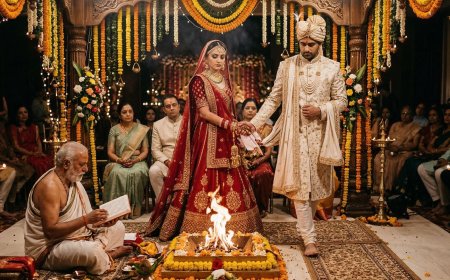
The bride stood at the sacred fire and performed the rituals and spoke the words and walked the seven steps and was, in every sense that the tradition recognised, married.
She was also, in the legal sense, already married — had been since the Friday morning in October when she and the groom and two witnesses had sat in the Sub-Registrar's office under the fluorescent lighting and signed the register while the ceiling fan moved the warm air without cooling it.
Both were real. Both were the marriage.
The October morning had given her the specific private experience of the marriage itself — the knowledge of what it felt like to be married to this person, before the occasion, before the guests, before the performance of the tradition. The December ceremony had given her the communal acknowledgment — the gathering of the people who loved them, the specific weight of the rituals that connected the marriage to the tradition it came from, the celebration that the October morning could not have been.
The elopement had not diminished the ceremony.
The ceremony had not retroactively diminished the elopement.
They were two different things that the marriage needed — the private and the public, the legal and the sacred, the intimate and the communal — and the couple had found the specific form that gave them both.
Plan the legal marriage as an occasion, not only a procedure.
Decide on the disclosure before the secret exists.
Talk to the officiants honestly.
Give the registry office morning the space its significance deserves.
And let the celebration in December be what it can only be when you already know — from a Friday morning in October, in a South Indian restaurant afterward, with extra filter coffee — that the marriage is real.
Published by NRIWedding.com — The Premium Global Platform for Non-Resident Indians Planning Indian Weddings From Abroad.
What's Your Reaction?
 Like
0
Like
0
 Dislike
0
Dislike
0
 Love
0
Love
0
 Funny
0
Funny
0
 Angry
0
Angry
0
 Sad
0
Sad
0
 Wow
0
Wow
0