





































































Intimate NRI Weddings Under 50 Guests: How to Plan — The Complete Guide to Small Indian Weddings Abroad
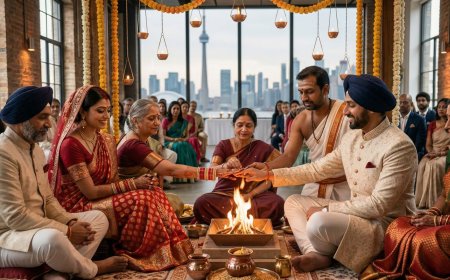
At the start of wedding planning, the groom’s mother listed 212 guests and the bride’s family added 186 more—nearly 400 names before the couple included their own friends. This led to a long discussion about expectations, costs, and the kind of wedding they truly wanted. The couple realized they preferred a genuinely intimate celebration where every guest mattered and meaningful conversations were possible. Over four months, the list was carefully reduced to just 47 people. The result wasn’t a smaller version of a big wedding, but a completely different experience. This guide helps NRI couples plan intimate weddings under 50 guests, covering family conversations, venue choices, budget priorities, guest selection, and creating a deeply personal celebration.

Intimate NRI Weddings Under 50 Guests: How to Plan
The List That Kept Getting Shorter
The first list had two hundred and twelve names on it.
The groom's mother had produced it on the second day of the engagement celebration — a WhatsApp message containing a voice note explaining the list, followed by the list itself as a photograph of a handwritten page, followed by a second voice note clarifying that this was the preliminary list and that some names could be removed if necessary, though she hoped it would not come to that.
The bride's family had produced a list of one hundred and eighty-six names.
The couple had looked at the combined total — three hundred and ninety-eight names, before a single friend of the couple themselves had been added — and had a conversation that lasted three hours and covered, at various points, the nature of obligation, the economics of large Indian weddings, the specific dynamics of two families with different expectations about the scale of a celebration, and the question of what kind of wedding they actually wanted.
What they wanted, it emerged, was small.
Not small as a compromise or a concession to budget. Small as a genuine preference — the specific quality of the occasion where every person in the room is someone whose presence is genuinely significant, where the couple can speak to every guest at length, where the dinner table conversation can be heard, where the photographs contain only the faces that matter most.
The conversation with the families took longer than three hours. It took, in total, approximately four months — a series of conversations, some of them difficult, that moved the combined list from three hundred and ninety-eight names to forty-seven.
Forty-seven people. The couple's parents and siblings. The grandparents who were able to travel. Four friends each. The priest. The wedding planner. The two cousins whose absence would have been a specific grief.
The wedding that resulted from the forty-seven-person list was not a smaller version of the wedding the families had originally imagined. It was a different kind of wedding entirely — one that required different planning, different venues, different vendor relationships, and a different understanding of what the occasion was for.
This guide is for the couple who has chosen that different kind of wedding — or who is considering it, and wants to understand what it actually involves before making the choice.
The Choice: Understanding What Intimate Means
The Intimate Wedding Is Not a Compromise
The most important clarification for the NRI couple considering an intimate wedding is that the choice is not a compromise — not a smaller wedding because the bigger one is unaffordable, not a restricted guest list because the venue cannot accommodate more, not a reduced occasion because the couple did not try hard enough to plan something larger.
The intimate wedding is a specific choice about what the wedding is for. It is the choice to prioritise depth over scale — the specific quality of the occasion where the couple is genuinely present with every person there, where the relationships in the room are the relationships that have mattered most, where the wedding is a gathering rather than a production.
This distinction matters because the couple who chooses the intimate wedding as a genuine preference is in a different position from the couple who accepts it as a constraint. The couple who genuinely wants forty-seven people can plan for forty-seven people without the specific anxiety of the occasion that is somehow not enough — because it is exactly what they chose.
The intimate wedding under fifty guests is not the wedding that could not be bigger. It is the wedding that did not want to be.
The Family Conversation
For most NRI couples, the decision to have an intimate wedding is not made in isolation — it is made in the context of families who have expectations about the scale and the guest list that may differ significantly from the couple's own preference.
The family conversation about guest list size is one of the most consistently difficult planning conversations that NRI couples navigate — and the conversation about reducing the list to under fifty is the most difficult version of it.
The principles for navigating it:
The decision belongs to the couple. The families' input is heard with genuine respect and the families' feelings about exclusion from the guest list are acknowledged with genuine empathy — but the final decision is the couple's. This principle must be established clearly and consistently, without aggression and without apology.
The reason for the choice matters. The family that is told "we are having a small wedding to save money" will feel like a financial calculation has been applied to their relationships. The family that is told "we want a wedding where every person there is someone we can genuinely be present with — and that means fewer than fifty people" is being given the couple's actual reason, which is harder to argue with and more respectful to hear.
The alternative celebration. For most NRI families, the solution that makes the intimate wedding acceptable is the provision of an alternative celebration — a reception in India after the honeymoon, a party in the UK or US that the couple's wider community is invited to, a celebration that gives the extended family and friends the occasion they want without changing the wedding itself. The intimate wedding ceremony with a subsequent wider celebration is the structure that most consistently satisfies both the couple's preference and the family's need for a communal occasion.
The Venue: What Changes When the Guest Count Is Under Fifty
The Venue Opportunity
The intimate wedding's most significant planning advantage is the range of venues that become available when the guest count is under fifty. The venues that a two-hundred-person guest list requires — the large banquet halls, the sprawling heritage properties, the resort ballrooms — are replaced by a significantly more interesting, more personal, and often more beautiful range of possibilities.
The venue categories that work for under fifty guests:
Private heritage havelis:
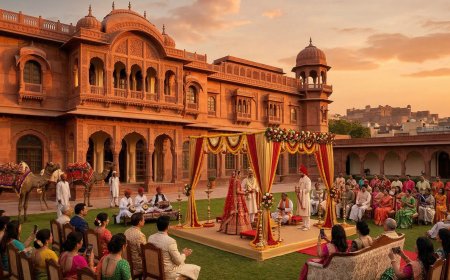
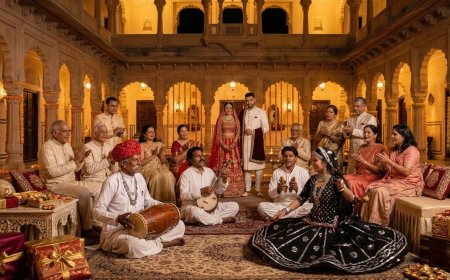
India's smaller heritage properties — the private havelis in Rajasthan's old cities, the restored merchant houses in Gujarat, the colonial bungalows in the hill stations — are specifically suited to intimate gatherings. These properties accommodate between twenty and sixty guests in spaces that are architecturally extraordinary, historically significant, and entirely impractical for a two-hundred-person wedding. The couple who could not have their wedding in a four-hundred-year-old haveli with a guest list of two hundred can have it there with a guest list of forty-seven.
Private villas:
India's private villa rental market — particularly in Goa, Alibaug, Coorg, and the Nilgiris — offers properties designed for private gatherings of twenty to sixty people. The private villa provides the intimate wedding with a setting that is entirely the couple's own — no other guests, no other events, no other priorities — for the duration of the wedding.
Boutique hotels:
The smaller boutique hotels — properties with between ten and thirty rooms — can be taken over entirely for the intimate wedding, providing a setting that is both beautiful and entirely private. The boutique hotel buyout, which is financially impossible for most couples at a large wedding scale, becomes a realistic option when the guest count is under fifty.
The couple's own meaningful location:
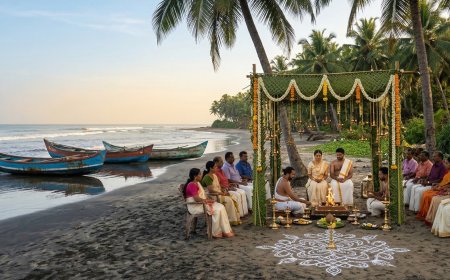
The intimate wedding has the specific option that the large wedding does not — the location that is personally significant rather than commercially suitable. The terrace of the bride's family home in Chennai. The garden of the groom's grandfather's house in Ahmedabad. The specific place that matters, rather than the venue that can accommodate the numbers.
The Venue Negotiation
The intimate wedding couple's relationship with the venue is different from the large wedding couple's — and the negotiation dynamic reflects this.
The buyout conversation:
The venue that normally hosts events for two hundred guests has a minimum revenue expectation for the space. The couple who wants to use the space for forty-seven guests should expect the conversation about the minimum spend — the amount the venue requires to make the event financially viable regardless of the guest count.
The minimum spend conversation should be had directly and early — before the couple invests significant emotional attachment in a venue that cannot accommodate the financial reality of a small guest list. The minimum spend at many Indian wedding venues is set at the level that a large wedding naturally meets — the small wedding couple may need to find a venue whose minimum spend structure is designed for smaller events, or to negotiate a buyout arrangement that covers the venue's revenue requirement without requiring the per-head catering cost of a full guest list.
The advantage:
The intimate wedding couple has a specific negotiating advantage in the vendor market: they are easier to serve. The photographer who photographs forty-seven people across two events is doing a significantly more manageable job than the photographer who photographs two hundred people across four days of events. The caterer who feeds forty-seven guests a plated dinner has a simpler production challenge than the caterer managing five hundred covers across a buffet setup. The premium vendor — the photographer who limits their bookings, the chef who specialises in small intimate events, the floral designer whose work is best appreciated in an intimate space — is often more accessible to the intimate wedding couple than to the large wedding couple.
The Budget: How Intimacy Changes the Economics
The Per-Head Cost Reality
The common assumption about the intimate wedding is that it costs significantly less than the large wedding. The reality is more nuanced.
The fixed costs:
Many of the wedding's significant costs are fixed regardless of the guest count — the venue hire, the photography and videography, the priest's fee, the couple's outfits, the decor, the musicians, the accommodation. These costs do not scale down with the guest count. The intimate wedding couple pays the same photography fee, the same ceremony decor cost, and the same venue hire as the large wedding couple — but divides these costs across forty-seven guests rather than two hundred.
The variable costs:
The costs that do scale with guest count — catering, favours, stationery, transportation — are significantly lower for the intimate wedding. A plated dinner for forty-seven guests at a premium per-head rate may cost less in total than a buffet for two hundred at a lower per-head rate.
The reallocation opportunity:
The intimate wedding's budget is best understood not as a smaller budget but as a reallocation opportunity — the money that the large wedding spends on feeding and accommodating a large guest list can be reallocated to the per-guest experience of a smaller group.
The intimate wedding couple who saves significantly on catering volume can allocate that saving to a level of catering quality — the specific chef, the specific menu, the specific service style — that is not financially viable at large scale. The money that the large wedding spends on basic accommodations for two hundred guests can buy an extraordinary experience for forty-seven.
The Budget Reallocation Framework
From volume to quality in catering:
The intimate wedding replaces the large buffet with a seated plated dinner — a significantly higher per-head cost that is manageable at small scale. The intimate wedding can have a specific chef — a guest chef from a celebrated restaurant, a regional specialist, a chef whose cuisine is personally significant to the couple — who would not be financially viable for a two-hundred-person wedding. The menu can be curated with the same attention that a high-end restaurant applies to its tasting menu rather than the production logistics that large catering requires.
From standard to extraordinary in venue:
The money saved on the volume costs of a large wedding — the additional staff, the additional equipment, the additional logistics — can fund the upgrade from a standard wedding venue to the boutique heritage property or the private villa buyout that is the intimate wedding's specific opportunity.
From comprehensive to exceptional in photography:
The intimate wedding couple who is not paying for four photographers across four days of events can allocate the photography budget to the single best photographer whose work they most admire — the photographer whose day rate is at the top of the market but whose work is extraordinary — and receive coverage of the entire wedding from that photographer rather than distributing the budget across multiple adequate photographers.
From breadth to depth in flowers and decor:
The intimate wedding does not need to decorate a five-hundred-square-metre ballroom. The decor budget that would be spread thin across a large venue can be concentrated in the smaller space, producing a level of floral and decor quality that is genuinely extraordinary — the specific flowers, the specific designer, the specific aesthetic — rather than the adequate coverage that a large venue requires.
The Guest List: The Forty-Seven People
The Selection Principles
The guest list for an intimate wedding under fifty people is the most consequential planning decision the couple will make — and the most emotionally complex. Every person included represents a relationship the couple has assessed as genuinely significant. Every person excluded represents a relationship the couple has assessed as not meeting that specific standard for this occasion.
The selection framework:
Start with the non-negotiables — the people whose absence would be a specific grief. The parents. The siblings. The grandparents who can travel. This group typically represents fifteen to twenty people and forms the fixed core of the intimate guest list.
Add the people who are genuinely close — the friends whose relationship with the couple is one of genuine intimacy rather than pleasant acquaintance, the cousins with whom the couple has a real relationship rather than a family obligation, the colleagues who have become genuinely important. The selection should be ruthlessly honest — the test is not "would this person be hurt to be excluded" but "would our wedding be specifically less meaningful without this person present."
Stop when the list reaches the target number. Do not expand the list to accommodate social pressure, to balance the numbers between the two families, or to include people who would be "useful" to have at the wedding for social or professional reasons. The intimate wedding's list is the list of genuine significance — not the list of everyone the couple could justify including if pressed.
The Exclusion Conversations
The guests who are not invited to the intimate wedding — who will know that the wedding has happened and who will know that they were not included — require a specific communication approach.
The proactive communication:
The couple who communicates the intimate wedding decision proactively — before the invitations go out, before the excluded guests hear about the wedding through other channels — has significantly more control over the narrative than the couple who communicates reactively after exclusions have been noticed and felt.
The proactive message: "We have decided to have a very intimate wedding ceremony — fewer than fifty guests — with only our immediate families and our closest friends. We wanted you to hear this from us directly so you know that your exclusion from the ceremony reflects our choice about the occasion rather than our feeling about our relationship with you. We hope to celebrate with you at [specific alternative — the reception, the party, the gathering] and we wanted you to know how much your relationship means to us."
This message — personalised for each significant excluded relationship — is more work than a generic announcement. It is also the specific communication that preserves the relationships that the couple values and that the intimate wedding decision might otherwise damage.
The Children Question
The intimate wedding under fifty guests faces a specific version of the children question — the decision about whether to include children in the guest count — that has a different calculus than the large wedding.
At a large wedding, the children question is primarily logistical — entertainment, supervision, the impact on the catering and seating. At an intimate wedding under fifty, the children question is also mathematical — three children accompanying parents represent six percent of a fifty-person guest list.
The intimate wedding couple who wants the guest list to consist entirely of adults capable of the specific quality of adult presence that makes the intimate occasion what it is — the conversation, the witness, the genuine engagement — may choose a no-children policy. The couple who wants the specific quality of an occasion that includes the youngest generation of the family — the nieces and nephews, the small cousins — includes them as genuine participants rather than logistical challenges.
The decision should be made explicitly and communicated clearly and consistently — the same policy applied to all families without exception.
The Programme: What the Intimate Wedding Looks Like
The Events
The intimate wedding's programme is typically simpler than the large NRI wedding's — fewer events, fewer transitions, fewer logistics. But simpler does not mean less meaningful.
The core events:
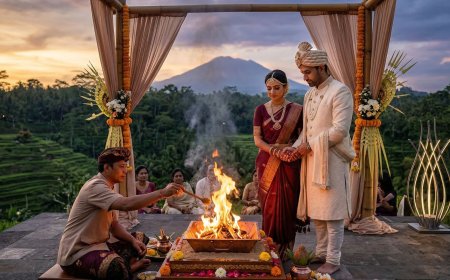
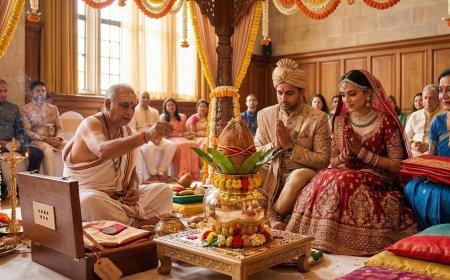
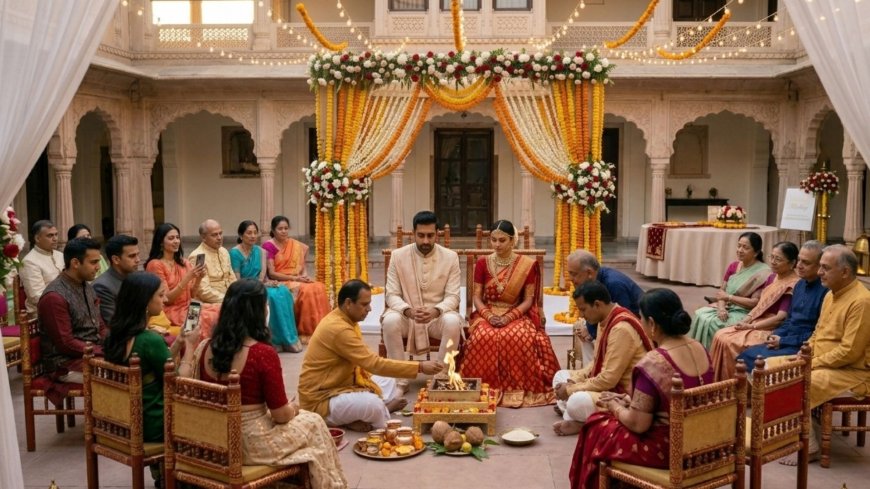
The ceremony — the ritual that constitutes the marriage. At the intimate scale, the ceremony can be longer and more participatory than the large wedding's ceremony allows. The priest who is speaking to forty-seven people can explain the significance of each ritual as it happens, can invite specific family members to participate in specific moments, can conduct the ceremony at a pace that allows the meaning to be present rather than managed.
The dinner — the meal that follows the ceremony. At the intimate scale, the dinner is a single table or a small number of tables where the full guest list is in one conversation. The groom's grandmother and the bride's university friend are at the same table. The dinner is the occasion where the two families — which have perhaps never been in the same room before — become acquainted, and the intimate scale is the condition under which that acquaintance can deepen into something genuine.
The optional additions:
A pre-wedding gathering — the evening before the ceremony, an informal dinner or drinks where the full guest list meets for the first time. At the intimate scale, this gathering is not a production — it is an actual dinner, with actual conversation, where the forty-seven people begin the process of knowing each other.
A farewell breakfast — the morning after the ceremony, a relaxed meal where the couple and their guests spend their last hours together before the dispersal. At the intimate scale, this meal has a specific quality of aftermath — the ceremony has happened, the formal occasion is complete, and the gathered people are simply together.
The Ceremony at Intimate Scale
The intimate ceremony has specific possibilities that the large ceremony does not.
The participatory ritual:
At a large wedding, the ceremony rituals are performed by the couple and the priest while the guests observe. At the intimate wedding, the ritual can involve the guests — the specific family members who light the sacred fire, the friends who tie the threads, the grandmother who blesses the couple with rice and flowers. The intimate ceremony's guest count makes genuine participation possible rather than the symbolic inclusion that a large ceremony can manage.
The pause and explanation:
At a large wedding, the ceremony moves at the pace required to manage the schedule and the guests' attention. At the intimate ceremony, the priest can pause between rituals to explain what has just happened — what the specific Sanskrit verse means, why the specific action has the specific significance, what the couple's ancestors would have recognised in the ritual they have just witnessed. The forty-seven people in the ceremony space can hear this explanation clearly and engage with it genuinely.
The personal vows:
The intimate ceremony is the ideal context for personal vows — the specific words the couple has written for each other, spoken to the specific people whose presence matters most. At two hundred guests, personal vows require amplification and projection and the management of a large audience's attention. At forty-seven guests, the personal vow is a genuinely intimate communication — heard clearly, received personally, witnessed by the people who love the couple most.
The Meal at Intimate Scale
The intimate wedding meal is the occasion's social heart — the time when the gathered community sits together and becomes, for the duration of the meal, a single group rather than a collection of separate relationships.
The communal table:
For the intimate wedding under fifty, the single long communal table — one table at which all forty-seven guests are seated — is the specific format that most clearly expresses the occasion's character. Everyone is at the same table. There is no top table and lower tables, no distinction between the important guests and the less important guests. The couple sits at the centre or the end of the table, visible and accessible to everyone.
The communal table requires a dining space that can accommodate the table's length — typically a long, narrow room, a terrace, a garden — and a seating plan that places the right people adjacent to each other. The seating plan at an intimate wedding has the same interpersonal complexity as the large wedding's seating plan, compressed into a single table.
The menu as expression:
At the intimate scale, the menu can be designed as a specific expression of the couple's combined culinary heritage — the Tamil dishes that represent the bride's family, the Gujarati dishes that represent the groom's family, the specific regional specialties that carry cultural significance, presented to forty-seven people with the care and explanation that a tasting menu receives.
The chef at the intimate wedding can speak to the guests about the menu — its origins, its significance, the specific ingredients that make each dish what it is. This is not possible at two hundred covers. It is entirely possible, and genuinely delightful, at forty-seven.
The Vendor Relationships at Intimate Scale
The Premium Vendor Access
The intimate wedding's most consistent advantage in the vendor market is access to the premium vendors who limit their bookings and whose work is most suited to the intimate scale.
The photographer:
The photographer who takes on four or five weddings per year — who limits bookings specifically to maintain the quality of attention they bring to each — is the photographer who is most likely to have availability for the intimate wedding's single-day or two-day programme. The couple whose budget was previously insufficient for this photographer's day rate may find that the reduced programme scope makes the booking financially viable.
The chef:
The guest chef experience — a celebrated chef cooking a specific menu for the intimate gathering — is the catering format that is only possible at small scale. The chef who cooks for forty-seven guests can be present throughout the meal, can interact with the guests, can adjust and respond to the specific occasion in a way that a catering operation producing five hundred covers cannot.
The musician:
The intimate wedding's musical programme — a classical musician performing live during the ceremony, a specific singer performing at the dinner — is the live music experience that the large wedding typically cannot afford for the full guest experience. The intimate wedding's budget, reallocated from volume to quality, can fund the live musician whose performance in an intimate space is genuinely extraordinary.
The Vendor Briefing at Intimate Scale
The vendor briefing for the intimate wedding should specifically communicate the intimate scale's character — not just the guest count, but what the intimate occasion is for and what it should feel like.
The briefing language:
"This is a wedding for forty-seven people — every one of whom is genuinely close to us. The occasion should feel like a gathering of people who love each other, not a production for a large audience. Every decision should be calibrated for a group of forty-seven rather than a crowd of two hundred — the scale of the flowers, the pace of the service, the volume of the music. We want the guests to feel the intimacy of the occasion in every detail."
The vendor who understands this brief produces the intimate wedding experience. The vendor who scales down their standard large-wedding approach without internalising the intimate character produces a smaller version of the wrong thing.
The Specific NRI Considerations
The International Guest Proportion
At the intimate NRI wedding, the proportion of international guests is typically higher than at a large NRI wedding — because the intimate guest list, by definition, consists of the closest relationships, and for many NRI couples the closest relationships are distributed globally.
The forty-seven-person intimate wedding may have twenty international guests — a higher international proportion than a two-hundred-person wedding where the international guests are a subset of a much larger India-based list. The logistics of the intimate wedding — the accommodation, the airport transfers, the hospitality — must be planned with this international proportion explicitly in mind.
The hosted guest experience:
At the intimate scale, the couple can genuinely host their international guests — not in the logistical sense of providing information, but in the personal sense of being present with them, showing them the city, introducing them to the Indian family members they have not met, creating the specific experience of being genuinely welcomed rather than adequately accommodated.
The intimate wedding couple who picks up their international guests from the airport, who takes them to the specific restaurant for dinner on the first night, who introduces them personally to each member of the Indian family — this couple is using the intimate scale's specific gift: the ability to be genuinely present with every person there.
The Documentation Strategy
The intimate wedding's documentation — the photography and videography — should be calibrated for the intimate scale rather than the large wedding's documentation approach.
The intimate photography:
The intimate wedding does not need five hundred edited images — it needs the two hundred photographs that most completely and honestly capture the occasion. The photographer who shoots an intimate wedding with the specific mandate to capture the relationships — the conversations, the expressions of genuine emotion, the specific moments of connection between the forty-seven people — produces a different and more specifically valuable archive than the photographer who applies the large wedding coverage approach to a smaller occasion.
The intimate film:
The intimate wedding film — a single film of the complete occasion rather than a highlights film and an event film and a full-length film — can capture the entire occasion in a format that is genuinely watchable rather than the multi-hour archive that the large wedding produces.
Common Mistakes NRI Couples Make With Intimate Weddings
The first mistake is planning the intimate wedding as a scaled-down large wedding rather than as a different kind of occasion. The intimate wedding that has the same programme structure, the same vendor categories, the same event sequence as the large wedding — simply with fewer people — has not made the transition from scale to intimacy. The intimate wedding requires different thinking about what the occasion is, not just different numbers in the spreadsheet.
The second mistake is not having the family conversation early and directly enough. The family that discovers the intimate wedding decision late — after the invitations have gone out, after the guest list has been finalised without their input — is the family that feels excluded from a decision that affects them significantly. Have the conversation early, have it directly, and have it with genuine respect for the families' feelings even while holding firm to the couple's choice.
The third mistake is underestimating the per-person cost of the intimate wedding. The couple who chooses the intimate wedding expecting it to cost significantly less than the large wedding and who has not accounted for the fixed costs that do not scale with guest count may find the budget reality surprising. The intimate wedding costs less in total, but often more per person — because the fixed costs are divided across fewer guests and because the intimate wedding's specific character invites investment in quality that the large wedding distributes across volume.
The fourth mistake is choosing a venue that is too large for the occasion. The intimate wedding in a venue designed for two hundred people produces the specific feeling of insufficiency — the forty-seven people rattling around a space that was built for a different scale, the decor budget stretched thin to cover a large space, the acoustic challenges of a large room with a small group. Choose the venue for the guest count — smaller, more beautiful, more personal — rather than defaulting to the large venue at a fraction of its capacity.
The fifth mistake is not communicating the intimate wedding decision to the excluded relationships proactively and personally. The extended family and friends who learn through other channels that the wedding has happened and that they were not included — who piece together from social media photographs that the forty-seven-person ceremony has occurred without them — are the relationships that are most damaged by the intimate wedding choice. Proactive, personal communication to the significant excluded relationships is not optional — it is the specific respect that the intimate wedding decision requires.
The Wedding That Fits in One Room
The forty-seven people at the couple's intimate wedding in the private haveli in Udaipur sat at a single long table on the terrace, under string lights, with the old city visible beyond the low wall.
The priest had explained every ritual as it happened. The grandmother who had always wanted to bless her grandson at his wedding had done so, in the specific way that her tradition prescribed, in front of the forty-seven people who mattered most. The groom's university friend from London and the bride's aunt from Chennai had been seated next to each other and had discovered, over the three-hour dinner, that they had both lived in Singapore for overlapping years and had both, independently, eaten at the same specific restaurant that neither of them had thought of in years.
The guest chef had come out of the kitchen after the main course and explained the menu — the specific village in Tamil Nadu where the bride's grandmother had learned to make the curry that was the third course, the specific spice market in Ahmedabad where the groom's mother had sourced the cumin that was in the dal, the specific way that the two regional cuisines had been made to sit together in a single menu as an expression of the union they were celebrating.
The couple had spoken personally to every one of the forty-seven guests during the evening. Not the brief, managed greeting of the large wedding reception — the actual conversation, the genuine exchange, the specific moment of presence with each person who had come.
At eleven o'clock, when the last guest had gone to bed, the couple sat alone on the terrace of the haveli and looked at the city.
They were married.
And they had been present for it — genuinely, completely, without the management of two hundred people pulling their attention in every direction simultaneously.
That presence — the specific quality of being genuinely there for the occasion rather than producing it — is what the intimate wedding is for.
Choose it deliberately.
Plan it for what it is rather than what it is not.
Have the family conversations early.
Find the right forty-seven people.
And be present with every one of them.
Published by NRIWedding.com — The Premium Global Platform for Non-Resident Indians Planning Indian Weddings From Abroad.
What's Your Reaction?
 Like
0
Like
0
 Dislike
0
Dislike
0
 Love
0
Love
0
 Funny
0
Funny
0
 Angry
0
Angry
0
 Sad
0
Sad
0
 Wow
0
Wow
0