





































































Mehendi Outfit Shopping in Delhi: The Complete NRI Guide to Yellows, Greens and Pastels on a Budget
The mehendi outfit is item seven on the NRI bride's Delhi shopping list — allocated the smallest budget, given the least planning time, and expected to sort itself out. This complete guide shows why the mehendi outfit shopping in Delhi is one of the most enjoyable, most accessible, and most budget-friendly elements of the entire wedding shopping trip when approached with the right framework. Covering the complete mehendi colour palette from the deep marigold yellow and the forest green to the warm pastel and the craft cotton alternative, the four Delhi markets — Lajpat Nagar, Janpath, Sarojini Nagar, and Palika Bazaar — the silhouette guide, the full eight-thousand-rupee budget breakdown, and the five common mistakes NRI brides make with the mehendi outfit brief, this is the honest, practical, complete guide.


Mehendi Outfit Shopping in Delhi — Yellows, Greens and Pastels on a Budget
The budget conversation for the mehendi outfit had a specific quality that the budget conversation for the bridal lehenga had not had — the quality of the conversation that everyone knows is slightly absurd but that is necessary anyway because the slightly absurd conversation is the only one that produces the number that the planning requires. Kavita had spent approximately three months, a significant amount of money, and a considerable quantity of emotional energy on the bridal lehenga brief. The mehendi outfit brief had been allocated, by the family's collective consensus, a budget of eight thousand rupees. Her mother had said this number with the specific confidence of someone who considers it generous. Her masi had said this number with the specific confidence of someone who considers it entirely workable. Kavita had said this number with the specific confidence of someone who has not yet been to the market and who is about to discover what eight thousand rupees buys in the Delhi mehendi outfit market in 2025.
What eight thousand rupees buys, it turns out, is a great deal — if the shopping is done with the right information, in the right markets, with the right brief and the right disposition. It buys significantly less if the shopping is done without these things, which is the situation that the NRI bride who has spent three months on the bridal lehenga and forty-five minutes on the mehendi outfit tends to find herself in.
Kavita had arrived in Delhi for the wedding shopping with the mehendi outfit as item seven on the list — below the bridal lehenga, the reception saree, the sangeet lehenga, the jewellery, the accessories, and the specific dupatta for the ceremony that the family had been discussing since the engagement. Item seven had the eight-thousand-rupee budget and the vague brief of something yellow and comfortable and festive that was not going to get ruined if the mehendi went on it in places it was not supposed to go.
The vague brief of something yellow and comfortable and festive that was not going to get ruined turned out to be a more specific brief than it initially appeared, and the Delhi market for this specific brief turned out to be more interesting, more varied, and more richly stocked than the item-seven status suggested it deserved.
This article is for Kavita — and for every NRI bride who has allocated item seven on the list to the mehendi outfit and who deserves to know that the mehendi outfit shopping in Delhi is one of the most enjoyable, most accessible, and most budget-friendly elements of the entire wedding shopping trip, provided it is approached with the right framework and the right markets.
The Mehendi Outfit: What It Is and What It Needs to Be
The mehendi function occupies a specific position in the Indian wedding's multi-day sequence that determines everything about the outfit brief. It is the first major wedding function — the celebration that begins the public expression of the wedding occasion, that gathers the family and the close friends before the larger ceremonies, and that has its own specific aesthetic character that is distinct from the ceremony and the reception.
The mehendi aesthetic has, over the last decade of the Instagram Indian wedding, developed a specific and widely recognised visual vocabulary — the yellows and the greens and the pastels, the floral and the garden imagery, the loose and the comfortable fabrics, the specific, sunlit quality of the outdoor or semi-outdoor function that the mehendi aesthetic typically inhabits. This vocabulary has been so consistently and so widely adopted that the yellow mehendi outfit has become, in some corners of the Indian wedding aesthetic conversation, a cliché — the predictable choice that the fashion-forward bride is beginning to move away from in favour of the unexpected colour and the unconventional silhouette.
This article does not adjudicate the cliché question. It acknowledges that the yellows and greens and pastels remain the dominant mehendi aesthetic for the majority of NRI Indian weddings, that this aesthetic is dominant for good reasons — the colours are genuinely beautiful in the outdoor light that the mehendi function typically inhabits, they photograph magnificently, and they have the specific, this-is-the-beginning-of-the-wedding quality that the festive palette provides — and that the budget for this aesthetic is significantly lower than the budget for the ceremony and reception outfits, which is an invitation to explore the Delhi market with the specific pleasure of the shopping that does not require the price negotiation to be conducted in lakh.
The mehendi outfit brief has four specific requirements that distinguish it from the ceremony and reception brief and that determine which Delhi markets are the correct markets for it.
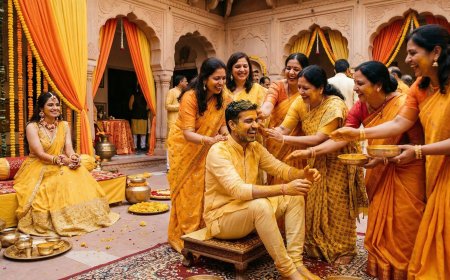
The first requirement is the haldi tolerance. The mehendi function is the function at which haldi — the turmeric paste — is applied to the bride, and turmeric stains. The mehendi outfit is the outfit that will receive the turmeric paste, the rose water that accompanies it, and the general cheerful mess of a celebration that involves food, colour, and the specific productive chaos of a large family gathering. The fabric must be chosen with the explicit understanding that it may not survive the day in the condition it entered it, and the price must be set accordingly.
The second requirement is the comfort and mobility. The mehendi ceremony requires the bride to sit for an extended period — the time that the mehendi artist takes to complete the intricate design — in a position that may not be comfortable for a tightly fitted or heavily structured garment. The salwar, the sharara, the lehenga in the lighter weight, the kurta set — garments that allow the sitting, the reaching, the general physical ease of the ceremony — are the correct silhouettes for the mehendi. The fitted corset blouse and the heavily structured skirt are not.
The third requirement is the festive character. The mehendi is a celebration — the first official celebration of the wedding sequence — and the outfit should reflect this. The festive palette, the embellishment that is appropriate to the celebration without being excessive relative to the ceremony outfit, the garment that says this is the beginning of something wonderful rather than the garment that is simply comfortable — these are the standards that the festive character requirement produces.
The fourth requirement is the budget appropriateness. The mehendi outfit is not the ceremony lehenga. It does not require the ceremony lehenga's budget, and the bride who spends the ceremony lehenga's budget on the mehendi outfit is either not planning the ceremony outfit correctly or is making an aesthetic statement about the function's relative importance that the rest of the wedding's outfit brief should reflect.
The Mehendi Colour Palette: What Works and Why
The Yellows
Yellow is the dominant mehendi outfit colour for reasons that go beyond the cultural tradition — though the cultural tradition is genuine and deep, with yellow being the colour of the turmeric that the haldi ceremony uses and the colour of the spring and the new beginning in the Indian calendar's symbolic vocabulary. The practical reason that yellow works at the mehendi is the outdoor light. The mehendi function typically happens in the morning or the early afternoon, in the outdoor or the semi-outdoor setting that provides the natural light that the photograph requires, and yellow in natural light is one of the most photographically generous colours available — it catches the light, it reflects the warmth, and it produces the specific, luminous quality that the bright morning sun and the diffused afternoon light each bring out in different ways.
The specific yellows that work best at the mehendi range from the deep mustard and the turmeric gold at the warm end of the spectrum to the pale butter and the lemon at the cooler, lighter end. The specific yellow that works best for any individual bride is the yellow that is most compatible with her specific complexion — the warm-toned bride whose skin has the golden or olive undertone will typically carry the deeper mustards and the bright sunflower, while the cooler-toned bride will carry the lemon and the pale yellow more successfully.
The yellow that does not work for the mehendi — or rather, the yellow that works less well than the alternatives — is the garish yellow of the cheap synthetic fabric, which photographs poorly and which has the specific quality of the colour that is too bright to be warm and too flat to be interesting. The yellow to avoid at the budget end of the market is the neon-adjacent synthetic. The yellow to find is the warm, golden, natural-fibre yellow that the cotton, the silk cotton, and the light silk each produce in their specific and beautiful ways.
The Greens
The greens of the mehendi palette are the second dominant colour family — from the deep bottle green at the most formal end to the sage and the pistachio and the mint at the lighter, more casual end of the spectrum. The greens work at the mehendi for the same reason the yellows work — the outdoor light brings out the depth and the vibrancy of the green in ways that the indoor light does not, and the green in the garden or the outdoor setting has the specific, this-is-exactly-right quality of the colour that belongs in the landscape it is photographed against.
The specific greens that work best for the mehendi outfit depend on the complexion and on the shade of green. The deep jewel greens — the emerald, the forest, the bottle — work best with the warmer and the deeper complexions, and they provide the most formally festive character of the green family. The lighter greens — the sage, the pistachio, the pale mint — work across a wider range of complexions and provide a lighter, more informal festive character that is appropriate for the more relaxed mehendi occasion.
The green that works least well at the budget end of the market is the flat, cold green of the synthetic fabric — the green that looks correct on the hanger and washes out in the photograph. The green to find is the specific, warm-toned green that the natural fibre and the correct dye produce, and which the Delhi market carries in abundance at every price point from the accessible to the premium.
The Pastels
The pastel palette — the soft pink, the pale lilac, the light peach, the dusty rose — is the third option for the mehendi outfit and the option that has developed the most significant fashion following in recent years. The pastels work at the mehendi because they provide the festive character without the brightness of the yellow and the green, and because they photograph with the soft, dreamy quality that the light fabric and the outdoor setting produce together.
The specific pastels that work best for the mehendi are the pastels with warmth — the peach that has the orange undertone, the dusty rose that has the brown undertone, the mauve that has the grey undertone — rather than the cold pastels of the pure white-based palette. The warm pastel works with the Indian complexion in the same way that the jewel tone works — it has enough depth and enough warmth to complement rather than drain.
The Unconventional Choices
The mehendi palette is not limited to the yellows, greens, and pastels — and the bride who wants to distinguish her mehendi look from the dominant aesthetic has genuine options at the budget price point that are worth exploring. The terracotta and the burnt orange are the warm alternatives to the yellow that carry the same outdoor-light quality. The turquoise and the teal are the alternatives to the green that provide the vibrancy without the conventional green of the standard palette. The rust and the deep peach are the alternatives to the pastel that provide warmth without the standard blush or lilac.
The Delhi Markets for the Mehendi Outfit Brief
Lajpat Nagar: The Primary Market
Lajpat Nagar Central Market is the correct primary market for the mehendi outfit shopping, and it is the correct primary market for a specific reason: the volume and the variety of the mehendi-appropriate outfit at the budget price point is greater at Lajpat Nagar than at any other Delhi market. The salwar suits, the kurta sets, the lighter lehengas, the sharara and the gharara — all in the yellow and green and pastel palette, all at the price points that the mehendi budget accommodates — are Lajpat Nagar's specific strength for the mehendi brief.
The specific section of Lajpat Nagar that is most productive for the mehendi outfit is the ready-made garment section — the shops that carry the finished, ready-to-wear salwar suit and the kurta set in the festive palette. These shops are concentrated in the main Central Market lanes and in the surrounding blocks, and they carry the full range of the mehendi palette at prices that typically run from eight hundred rupees for the basic cotton kurta set to twelve thousand rupees for the embroidered silk cotton sharara at the upper end of the budget-market range.
The NRI bride with the eight-thousand-rupee mehendi budget will find the Lajpat Nagar market well-stocked at every price point below and approaching this figure. The brief — something yellow and comfortable and festive — can be fulfilled at Lajpat Nagar for three to four thousand rupees without compromising the festive character, and for six to eight thousand rupees with the embellishment and the fabric quality that elevate the outfit from the functional to the genuinely beautiful.
The Lajpat Nagar shopping for the mehendi outfit should be structured as a comparison exercise rather than a first-one-found purchase — the mehendi outfit at this market is available in enough variety that the bride who looks at three or four options before committing will find the outfit that is specifically right rather than the outfit that is generally adequate. The comparison exercise takes one to two hours rather than the full day that the bridal lehenga shopping requires, and the comparison is worth the time.
Sarojini Nagar: The Budget Alternative
Sarojini Nagar — the market that this series has previously noted is not the market for the ceremony wedding shopping — is the correct market for a specific subset of the mehendi outfit brief: the entirely casual, entirely comfortable, entirely won't-mind-if-it-gets-ruined mehendi outfit that the bride who is most concerned about the haldi tolerance and least concerned about the festive character requires.
Sarojini Nagar carries cotton kurtas, light cotton salwar suits, and the export surplus garments in the yellow and the green palette at prices that run from two hundred rupees to two thousand rupees for the complete outfit. The quality is mass-market and the embellishment is minimal, but for the bride whose primary mehendi outfit criterion is the haldi tolerance — whose attitude toward the turmeric stain is the pragmatic acceptance of the woman who knows what the ceremony involves — the Sarojini Nagar option is entirely legitimate and significantly cheaper than any alternative.
The Sarojini Nagar mehendi outfit is not the outfit for the bride who wants the Instagram mehendi photograph to be the photograph she shows for twenty years. It is the outfit for the bride who understands that the mehendi photograph is about the mehendi, the family, and the celebration — and that the outfit is the comfortable, cheerful background rather than the foreground subject.
Janpath: The Specific Cotton and Craft Alternative
Janpath Market — the open-air market that runs along the Janpath road in central Delhi, adjacent to Connaught Place — is the specific market for the mehendi outfit brief that includes the handloom cotton, the block-printed cotton, and the craft-textile alternative to the embroidered synthetic that Lajpat Nagar typically carries.
The Janpath vendors carry block-printed cotton kurtas, handloom cotton salwar sets, and the specific, artisanal textile pieces that the craft-conscious bride wants for the mehendi outfit — the pieces that say this is handmade and this is specific rather than this is mass-produced and this is available at every market in Delhi. The Janpath cotton outfit in the indigo block print or the natural dye yellow or the hand-stitched kurta set is the mehendi outfit for the bride whose aesthetic brief includes the craft tradition alongside or instead of the embroidered synthetic.
The Janpath price range for the mehendi outfit — the cotton kurta, the salwar set, the handloom piece — runs from five hundred rupees to three thousand rupees, which places the Janpath mehendi outfit at the lower end of the budget range and leaves the remainder for the accessories and the footwear that complete the look.
The Janpath shopping experience is the bargaining experience — the vendors at Janpath negotiate aggressively and the first price is significantly above the final price. The NRI buyer who is comfortable with the market negotiation will find Janpath productive. The buyer who is not comfortable with the negotiation should either bring someone who is or accept that the Janpath price is higher than the negotiated price and assess whether the outcome is still worth the visit.
Palika Bazaar: The Underground Option
Palika Bazaar — the underground market beneath Connaught Place's central park — is the Delhi market that the NRI wedding shopping brief does not typically include and that is worth including specifically for the mehendi accessories rather than the outfit itself. Palika Bazaar carries the bangles, the imitation jewellery sets, the hair accessories, and the specific, colourful accessories that complete the mehendi look at prices that are the lowest available in the Delhi market for these categories.
The bangle sets in the yellow and the green that coordinate with the mehendi outfit, the marigold hair garlands for the bridal hair styling, the colourful artificial flowers that the mehendi decoration brief includes — all of these are available at Palika Bazaar at prices that reflect the underground market's specific position at the absolute bottom of the Delhi retail price range. The quality is mass-market, but for the accessories whose function is the specific, this-one-day festive decoration rather than the heirloom quality of the wedding jewellery, the Palika Bazaar quality is entirely appropriate.
The Palika Bazaar shopping experience requires the same comfort with the negotiation and the underground market atmosphere that the Chandni Chowk shopping requires — it is not the managed retail environment of the CP boutiques, and the buyer who enters expecting the CP experience will be disappointed. For the buyer who brings the correct disposition — the curiosity, the negotiating confidence, the willingness to engage with the market on its own terms — Palika Bazaar produces the specific, cheerful, this-was-exactly-right outcome that the mehendi accessories brief deserves.
The Mehendi Outfit Silhouettes: What to Buy and Why
The Salwar Suit: The First and Best Choice
The salwar suit — the kurta, the salwar, and the dupatta — is the first and best choice for the mehendi outfit at every budget level, and it is the first choice for the specific reasons that the mehendi brief requires. The salwar provides the comfort and the mobility that the sitting ceremony demands. The kurta provides the festive character and the embellishment platform that the celebration requires. The dupatta provides the styling versatility that allows the look to be adapted across the mehendi function's indoor and outdoor elements.
The specific salwar suit that works best for the mehendi is the suit in the natural fibre — the cotton, the silk cotton, the chanderi cotton — rather than the synthetic. The natural fibre breathes in the outdoor setting, photographs with the warmth that the synthetic cannot replicate, and has the specific relationship to the body that makes the extended wearing comfortable in a way that the polyester does not. At the Lajpat Nagar budget price point, the natural fibre salwar suit is available in the yellow and the green and the pastel palette at prices from two thousand to eight thousand rupees for the complete set.
The Kurta Set: The Comfortable Alternative
The kurta set — the long kurta with the matching palazzo or the legging — is the alternative to the salwar suit that provides the same comfort and mobility with a slightly more casual silhouette. The kurta set is the mehendi outfit for the bride who wants the festive character without the structured formality of the salwar suit — the outfit that says this is a celebration and this is comfortable in the same garment.
The kurta set at the budget price point is the most widely available of the mehendi outfit options at the Lajpat Nagar and Janpath markets, with the palace pant kurta set in the natural fibre and the festive colour being the specific combination that the mehendi brief most commonly produces at these markets.
The Lighter Lehenga: The Festive Alternative
The lighter lehenga — the cotton or the chanderi skirt with the blouse, at the weight and the price of the occasion wear rather than the bridal wear — is the festive alternative for the bride who wants the lehenga silhouette at the mehendi without the bridal lehenga's budget requirement. The lighter lehenga in the yellow or the green or the pastel at Lajpat Nagar runs from four thousand to twelve thousand rupees for the complete set — the price that the mehendi budget accommodates while providing the silhouette that the bride who loves the lehenga shape prefers.
The lighter lehenga at this price point uses the cotton, the chanderi, or the georgette rather than the silk, and uses the block print or the light embroidery rather than the heavy zardozi — all of which produce the outfit that is specifically right for the mehendi occasion. The heavy silk and the heavy zardozi are the ceremony brief. The cotton and the block print are the mehendi brief. The distinction is not a compromise — it is the correct garment for the correct occasion.
The Sharara and the Gharara: The Festive Formal
The sharara — the wide-legged pant with the long kurta — and the gharara — the gathered pant with the shorter kurta — are the festive formal alternatives for the bride who wants the more elaborate silhouette at the mehendi. Both garments provide the visual interest of the layered silhouette without the weight and the embroidery commitment of the bridal lehenga, and both are available at the Lajpat Nagar market in the mehendi palette at prices that are at the upper end of the mehendi budget — eight to fifteen thousand rupees for the complete sharara or gharara set in the quality fabric and the appropriate embellishment.
The Mehendi Accessories: Completing the Look
The mehendi look is completed by the accessories — the bangles, the jewellery, the flowers in the hair, the footwear — and the accessories are the element of the mehendi brief that is most enjoyably and most inexpensively addressed in the Delhi market.
The Bangles
The bangles are the essential mehendi accessory — the specific, colourful, this-is-a-celebration arm covering that the mehendi function requires and that the glass bangles and the lac bangles of the Indian bangle tradition provide at the most affordable price point of any wedding accessory. The Lajpat Nagar bangle shops, the Palika Bazaar bangle stalls, and the Chandni Chowk bangle market each carry the full range of the mehendi bangle — the yellow and gold for the yellow outfit, the green for the green outfit, the mix of colours for the bride who wants the full-spectrum arm stack that the mehendi aesthetic currently favours — at prices from one hundred to five hundred rupees per dozen, which makes the bangle the most affordable significant element of the entire wedding wardrobe.
The Hair Flowers and the Floral Accessories
The marigold garland for the hair, the fresh flower arrangement for the bridal braid, and the specific floral hair accessories that the mehendi styling requires are available at the Delhi flower markets — the Mehrauli flower market, the INA flower market — and through the mehendi event's florist who typically provides the decoration flowers alongside the ceremony's floral accessories. The fresh flower accessories are sourced on the day of or the day before the mehendi function and are not a Delhi shopping trip item — they are a Delhi market item whose sourcing requires the local florist contact rather than the wedding shopping visit.
The artificial flower accessories — the fabric marigolds, the silk florals, the synthetic garland that serves the same styling function as the fresh flower without the same day's delivery requirement — are available at the Palika Bazaar and the Lajpat Nagar accessory shops at prices from one hundred to five hundred rupees per piece. These are the accessories for the NRI bride whose mehendi function is abroad rather than in Delhi and who needs the accessories to travel in the suitcase rather than to be sourced on the day.
The Budget Breakdown: Eight Thousand Rupees at the Mehendi
The eight-thousand-rupee mehendi outfit budget, applied to the Delhi market with the framework this article provides, produces the following allocation:
The outfit itself — the salwar suit or the kurta set in the natural fibre and the festive colour — accounts for three to five thousand rupees at the Lajpat Nagar or Janpath market. The quality natural fibre outfit in the yellow or the green at this price point is genuinely beautiful and genuinely appropriate for the occasion.
The bangles — the full arm stack in the coordinating colour, sourced at Lajpat Nagar or Palika Bazaar — account for two hundred to five hundred rupees. The bangle is the accessory that gives the most visible value for the least money of any element of the wedding wardrobe.
The hair accessories — the artificial florals or the hair pins in the coordinating colour — account for two hundred to five hundred rupees at the Palika Bazaar or the Lajpat Nagar accessory shops.
The footwear — the juttis or the flats in the coordinating colour — account for five hundred to two thousand rupees at the Defence Colony or GK-1 M-Block footwear shops, where the quality craft footwear is available at the budget price point that the mehendi brief warrants.
The remainder of the budget — five hundred to two thousand rupees depending on the specific allocations — is the contingency for the accessories that the shopping trip reveals are available and appropriate, and for the specific, this-is-exactly-right item that the market produces that the brief did not anticipate.
Common Mistakes NRI Brides Make With the Mehendi Outfit Brief
The first mistake is overspending on the mehendi outfit at the expense of the ceremony and reception budgets. The mehendi outfit is the item-seven item on the list, and the bride who has spent three months on the ceremony lehenga and six minutes on the mehendi outfit has her priorities correctly ordered. The bride who, once in the market, falls in love with a mehendi outfit at the ceremony lehenga's price point has allowed the market's temptation to reverse the priority ordering. The mehendi outfit is beautiful and worth the appropriate budget. It is not worth the ceremony budget, and the bride who spends the ceremony budget at Lajpat Nagar on a mehendi outfit and then has insufficient budget for the ceremony piece has made the most significant outfit planning error of the wedding wardrobe.
The second mistake is choosing the synthetic fabric for the mehendi outfit in the belief that the synthetic is more haldi-tolerant than the natural fibre. The synthetic fabric and the natural fibre both stain with turmeric — the turmeric's staining capacity is not fabric-specific — and the synthetic has the additional disadvantages of the poor photography quality and the discomfort in the outdoor setting that the natural fibre does not share. The natural fibre that is stained with turmeric can be laundered with varying success depending on the specific fabric and the specific dye. The synthetic that is stained with turmeric has the same laundering prospects. Choose the natural fibre for the outfit quality and accept the turmeric staining as the occasion's specific and affectionate souvenir.
The third mistake is leaving the mehendi accessories to the day of or the day after the mehendi function. The bangle that is purchased on the morning of the mehendi — from the shop near the venue, in the urgency of the last-minute discovery that the bangles were not in the plan — is the bangle at the venue-adjacent shop's price and in the venue-adjacent shop's limited selection. The bangle purchased at Lajpat Nagar during the Delhi shopping visit is the bangle at the market price and in the market's full selection. The accessories brief deserves its own line item on the Delhi shopping list rather than the afterthought that it typically occupies.
The fourth mistake is not confirming the mehendi artist's colour palette before buying the outfit. The mehendi decoration at the modern NRI mehendi function includes not only the henna on the bride's hands but the surrounding decoration — the flowers, the fabric, the specific colour palette that the mehendi artist and the event decorator have agreed on. The bride who buys the yellow outfit and discovers that the mehendi decoration palette is terracotta and rust has created a colour conflict that the photographs will record. The outfit colour should be confirmed against the mehendi decoration palette before the outfit is purchased.
The fifth mistake is not considering the dupatta as a styling variable. The dupatta of the mehendi outfit is the single most flexible element of the mehendi look — it can be draped, worn, removed, or replaced to change the outfit's character across the function's different moments. The bride who has only the matching dupatta of the salwar suit has one look. The bride who has the matching dupatta and a second dupatta in a contrasting or complementary colour has two looks and the styling versatility to use them across the function. The second dupatta at the Lajpat Nagar price point costs three hundred to eight hundred rupees and provides a styling flexibility that costs significantly more to achieve at any other market.
The Complete Reference Table: Mehendi Outfit Shopping in Delhi
| Garment | Best For | Where to Shop | Price Range | Fabric Recommendation | NRI Budget Note |
|---|---|---|---|---|---|
| Salwar suit — embroidered | Standard mehendi brief | Lajpat Nagar Central Market | ₹2,000 – ₹8,000 | Cotton, silk cotton, chanderi | Best value for festive character |
| Salwar suit — plain quality | Comfort-first brief | Janpath; Lajpat Nagar | ₹800 – ₹3,000 | Handloom cotton | Good photography in natural light |
| Kurta with palazzo | Casual festive brief | Janpath; Lajpat Nagar | ₹600 – ₹4,000 | Cotton, rayon | Most comfortable for sitting ceremony |
| Lighter lehenga | Lehenga silhouette preference | Lajpat Nagar | ₹4,000 – ₹12,000 | Cotton, chanderi, georgette | Not the bridal brief; occasion weight only |
| Sharara set | Festive formal brief | Lajpat Nagar upper range | ₹8,000 – ₹15,000 | Georgette, silk cotton | Upper end of mehendi budget |
| Sarojini Nagar cotton kurta | Haldi-tolerant priority | Sarojini Nagar | ₹200 – ₹2,000 | Cotton | For bride who prioritises haldi tolerance |
| Block print cotton — Janpath | Craft aesthetic brief | Janpath | ₹500 – ₹3,000 | Cotton handloom | Best for craft-conscious aesthetic |
| Glass bangles — bangle stack | All mehendi outfits | Lajpat Nagar; Palika Bazaar | ₹100 – ₹500 per dozen | Glass; lac | Most affordable festive accessory |
| Artificial flower hair accessories | NRI bride — takes abroad | Palika Bazaar; Lajpat Nagar | ₹100 – ₹500 per piece | Fabric; silk artificial | Fresh flowers for Delhi function; artificial for abroad |
| Juttis and flats | All mehendi outfits | Defence Colony; GK-1 M-Block | ₹500 – ₹2,000 | Leather; fabric | Comfort for full-day function |
| Contrasting dupatta | Styling versatility | Lajpat Nagar | ₹300 – ₹800 | Matches or contrasts outfit | Low-cost styling variable |
| Complete eight-thousand budget | Standard NRI mehendi brief | Lajpat Nagar primary; Janpath secondary | ₹8,000 total | Natural fibre throughout | Outfit ₹4,000; accessories ₹2,000; footwear ₹1,500; contingency ₹500 |
What Kavita Found
The mehendi outfit shopping took three and a half hours, which was three hours less than the bridal lehenga shopping had taken on day one and which felt, in the specific way that the shopping for the item-seven item on the list feels when it turns out to be more enjoyable than expected, like the best three and a half hours of the entire Delhi visit.
She had started at Lajpat Nagar. She had looked at twelve outfits before the thirteenth — a cotton silk sharara set in a specific, deep marigold yellow that was not the bright yellow she had been imagining and not the pale yellow that the standard mehendi palette tended toward but a third yellow, a warm and slightly tawny yellow that the cotton silk produced in this specific weave and this specific dye in a way that no description had prepared her for. The price was sixty-two hundred rupees. It was within the budget. She bought it in forty minutes.
The accessories had taken another hour — the bangle stack at Lajpat Nagar in the coordinating orange and gold, the hair pins at the accessory shop three stalls down, the juttis in the ivory that provided the contrast the outfit required and that the GK-1 M-Block footwear shop had in the correct size. The total spend was seven thousand four hundred rupees.
She called her mother from the Lajpat Nagar café. She said: It is done. Her mother said: What did you find? She described it. Her mother was quiet for a moment and then said: That colour sounds like the turmeric at its best — not bright, not pale, but the colour it is when it is most itself. Kavita said: Yes. Exactly that.
Go to Lajpat Nagar for the mehendi outfit brief with the natural fibre criterion and the budget in mind. Look at twelve before you buy the first. Allocate separate budget lines for the outfit, the bangles, the hair accessories, and the footwear. Confirm the mehendi decoration palette before the outfit colour is committed to. Consider the contrasting dupatta as the lowest-cost styling upgrade available in the market.
And when the thirteenth salwar suit or the seventh kurta set or the fourth sharara is the specific, warm, this-is-exactly-the-colour-the-occasion-requires yellow that the Delhi market has been holding for you since item seven on the list was written — buy it, wear it, and let the turmeric do whatever it does, because the photograph of you in the right colour at the right celebration is the photograph that the eight thousand rupees was for.
Published by NRIWedding.com — The Premium Global Platform for Non-Resident Indians Planning Indian Weddings From Abroad.
What's Your Reaction?
 Like
0
Like
0
 Dislike
0
Dislike
0
 Love
0
Love
0
 Funny
0
Funny
0
 Angry
0
Angry
0
 Sad
0
Sad
0
 Wow
0
Wow
0