




























































The Fire Never Goes Out: Inside the Parsi Zoroastrian Wedding Traditions NRIs Are Keeping Alive Across the World
The Parsi Zoroastrian wedding — built around the ancient Ashirvad ceremony, the Haath Borvanu ritual joining of hands, and prayers in the three-thousand-year-old Avestan language — is one of the rarest and most spiritually profound wedding traditions in the world. For NRI Parsi couples planning their union from London to Sydney, these rituals are not just cultural heritage but an act of civilisational continuity for a global community of fewer than two hundred thousand people. This guide covers every ceremony in depth, with practical planning guidance for diaspora cities and destination weddings in Mumbai and Surat.


The Parsi wedding — centred on the ancient Zoroastrian Ashirvad ceremony — is one of the rarest, most spiritually layered, and least documented wedding traditions in the world. For NRI Parsi couples planning their union from London to Sydney, these rituals are not just cultural heritage — they are an act of civilisational defiance, a declaration that a community of fewer than two hundred thousand people intends to carry its three-thousand-year-old fire into the future.
You grew up with a community small enough that everyone knew everyone. The agiary [fire temple] was not just a place of worship — it was the heartbeat of your social world, the place where births and deaths and marriages were all brought to be witnessed by the same sacred flame. Your mother knew the prayers in Avestan before she knew them in English. Your father's sudreh [the sacred inner garment worn by Zoroastrians] was white and worn close to the skin every day of his adult life, not just on ceremonial occasions.
You're in London now, or Toronto, or Melbourne, and you're planning your wedding. The community is small here too — perhaps smaller than you'd like — but it is present, and it is fierce in its love for what it carries. You want the Ashirvad[the Zoroastrian blessing ceremony that forms the core of the Parsi wedding]. You want the Haath Borvanu [the ritual joining of hands]. You want the prayers in Avestan that your grandmother would recognise. You want all of it, done properly, even from this distance.
This article is your guide.
🌟 DID YOU KNOW?
The Parsi community in India descended from Zoroastrian refugees who fled Persia — present-day Iran — around the 8th to 10th century CE to escape religious persecution following the Arab conquest. They landed on the coast of Gujarat and negotiated their settlement with the local Hindu king Jadi Rana, promising to blend into the local culture like sugar dissolving in milk — sweetening it without changing it. This agreement, according to Parsi legend, is why Zoroastrian wedding ceremonies retain their ancient Persian structure while incorporating distinctly Indian elements.
The global Parsi Zoroastrian population is estimated at fewer than 200,000 people worldwide, making this one of the smallest religious communities on earth. Despite this, the community has produced a disproportionate number of influential figures in business, law, music, and science — including Freddie Mercury, Zubin Mehta, Homi Bhabha, and the Tata family. The wedding ceremony is therefore not just a personal event but a community act of survival.
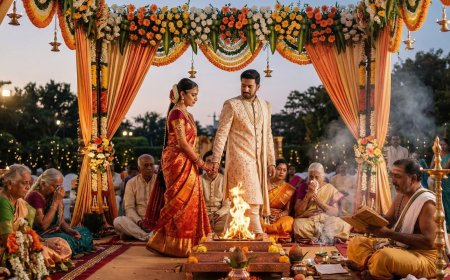
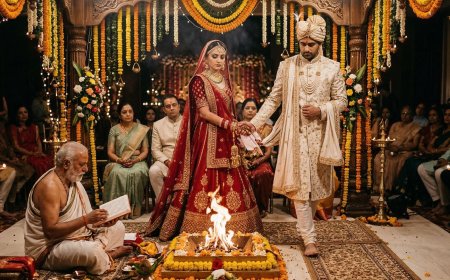
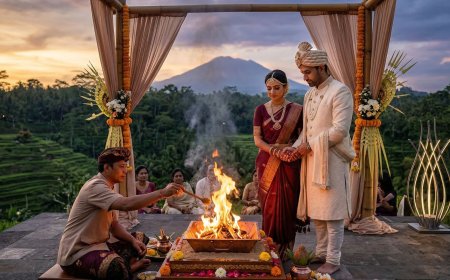
The Atash [sacred fire] that burns in a Zoroastrian fire temple is never allowed to go out. In the highest grade of fire temple — the Atash Behram — the fire may have been burning continuously for centuries. The presence of fire at a Zoroastrian wedding is not decorative. It is the witness. It is the oldest guest in the room.
What Is the Parsi Zoroastrian Wedding?
The Parsi wedding is built around the Ashirvad ceremony — the word means blessing in Gujarati — which is the religious solemnisation of the marriage conducted by Zoroastrian priests. This is the ceremony that makes the marriage spiritually and religiously valid in the eyes of the community and the Divine.
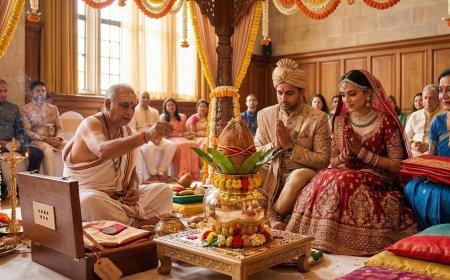
The Ashirvad is conducted by two Dasturs or Mobeds [Zoroastrian priests] who recite prayers in Avestan [the ancient Iranian language of the Zoroastrian scriptures, related to Sanskrit], the sacred language of the Avesta [the Zoroastrian holy scripture]. The ceremony takes place in the presence of fire — traditionally at an agiary [fire temple] or with a consecrated fire present at the venue — and the entire ritual is structured around the Zoroastrian cosmological belief that Asha [truth, righteousness, and cosmic order] is the highest principle of the universe, and that a marriage blessed in its name participates in the divine order of creation.
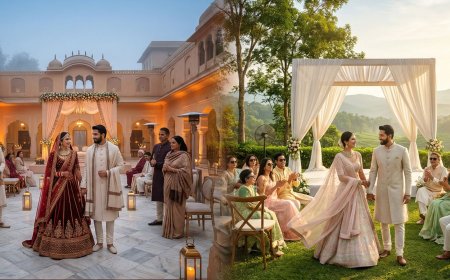
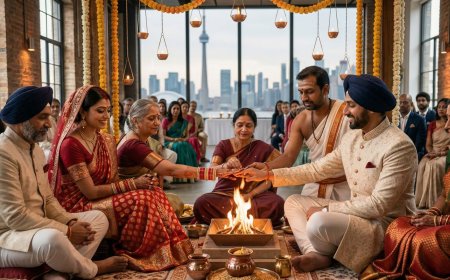
The ceremony begins with the couple seated facing each other, separated by a white cloth held by the priests. The Haath Borvanu [literally the joining of hands, the ritual handholding ceremony] takes place as the priests wind a thread — Maravni [sacred thread used in Zoroastrian rituals] — around the joined hands of the couple seven times, symbolising the sevenfold binding of their union. The priests then recite the Pav Mahal prayers [prayers of purification and sanctification], followed by the central Ashirvad prayers in Avestan. The white cloth is dropped at a specific moment in the ceremony — its falling marks the moment the marriage is spiritually complete. Rice and rose petals are showered on the couple by the congregation.
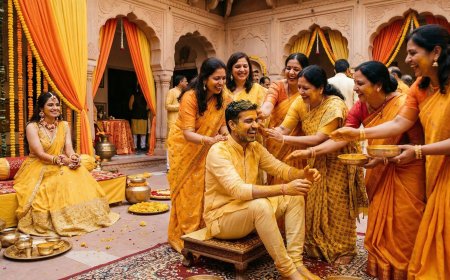
Before the Ashirvad, several pre-wedding rituals take place over the preceding days. The Nahn [ritual purification bath] is performed by both the bride and groom separately — a purification ceremony conducted with the assistance of a priest, involving sacred water and prayers that prepare the individual spiritually for the marriage. The Rupiyo Peravanu [the adorning with silver] is a ceremony in which the bride is dressed in her wedding finery by female elders of the family. The Supra ni Boi [the ceremony of the auspicious tray] involves the preparation and presentation of a tray carrying ritual items — including eggs, coconut, betel leaves, vermillion, and dried dates — that symbolise fertility, sweetness, and abundance.
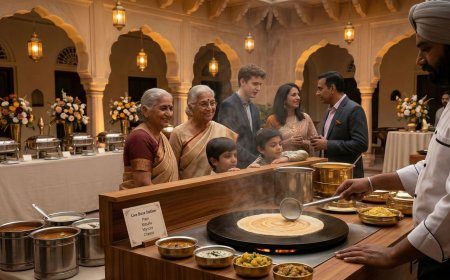
The wedding feast that follows is a Parsi culinary occasion of legendary proportions — Patra ni Machhi [fish steamed in banana leaf with green chutney], Sali Boti [lamb curry with crispy potato straws], Lagan nu Custard [the ceremonial wedding custard, sweet and saffron-tinged], and Pulao Dal [rice and lentil dish specific to Parsi celebrations] are the non-negotiables of a Parsi wedding table. This food is not background to the event. It is the event.
Community Comparison Table
| Community/State | Local Wedding Ceremony Name | Key Tradition | How NRIs Abroad Adapt It |
|---|---|---|---|
| Parsi Zoroastrian (India) | Ashirvad | Priest-led Avestan prayers, Haath Borvanu, sacred fire presence, Parsi feast | Find Mobeds through Zoroastrian Association abroad, source ritual items from community |
| Irani Zoroastrian | Aghd | Persian-influenced ceremony with mirror and candles, Avestan prayers | Irani Zoroastrian diaspora in US and UK maintain their own ceremonial traditions |
| Kashmiri Pandit | Lagan ceremony | Pandit-led Sanskrit rites, walnut offerings, wazwan feast | Connect with Kashmiri Pandit Samaaj chapters in diaspora |
| Tamil Brahmin | Vivaham | Vedic fire ceremony, tying of thali, complex multi-day rituals | Find Tamil Brahmin priests through temple networks abroad |
| Punjabi | Anand Karaj | Four laavans around Guru Granth Sahib, palla ceremony | Conducted at local Gurdwara worldwide |
| Bengali Hindu | Biye | Shubho Drishti, sindoor ceremony, conch shell rituals | Bengali cultural associations and priests available in major diaspora cities |
| Marathi | Vivah Sohala | Antarpat ceremony, mangalsutra, saat phere | Marathi mandals in diaspora maintain priest networks |
| Goan Catholic | Church wedding + Roce | Coconut milk blessing ceremony, Portuguese-influenced Mass | Find Goan parish priests in UK and Canada |
| Jewish | Chuppah ceremony | Wedding canopy, seven blessings, breaking of glass | Synagogues worldwide; Bene Israel Jewish community in India has its own traditions |
| Muslim (Bohra) | Nikah + Misaaq | Contract of marriage, Dawoodi Bohra specific prayers | Bohra Jamaat centres in diaspora cities conduct ceremonies |
The Meaning Behind the Ritual
Zoroastrianism is the world's oldest continuously practised monotheistic religion, and its wedding ceremony carries the philosophical weight of three millennia. At the centre of Zoroastrian theology is the cosmic struggle between Asha [truth and order] and Druj [falsehood and chaos], and the human being's sacred duty to choose truth in every act of life. Marriage, in this worldview, is not merely a social arrangement. It is a spiritual alliance — two people choosing to live in truth together, to support each other's Ashavand [righteousness], and to bring more light into the world through their union.
The sacred fire present at the ceremony is not a symbol of God — in Zoroastrianism, fire is understood as the most perfect visible representation of the divine attribute of light and truth. To marry in the presence of fire is to marry in the presence of that truth. The sevenfold winding of the Maravni thread around the joined hands encodes the seven Amesha Spentas[the seven divine attributes or archangels of Zoroastrian theology] into the physical act of binding — the couple is not just tied to each other but to the seven highest principles of the divine order.
The rice and rose petals showered by the congregation are an act of collective blessing — the community calling abundance, beauty, and fertility down upon the couple. Nothing in this ceremony is accidental. Everything means something.
For any non-Zoroastrian guest or partner trying to understand what they are witnessing, the most honest explanation is this: you are watching two people pledge to each other, and to the oldest living tradition of human spirituality, that they will spend their lives choosing truth — together.
Doing a Parsi Zoroastrian Wedding Abroad: The Practical Reality
Planning a Parsi wedding abroad is one of the more complex tasks in the NRI wedding landscape, for one straightforward reason: the community is small, the priests are few, and the ritual knowledge is concentrated in a very specific network of people. But the Parsi diaspora is also among the most organised, educated, and mutually supportive communities in the world, and once you plug into that network, doors open quickly.
Finding a Mobed: This is your first and most critical step. Zoroastrian Associations in major diaspora cities maintain lists of Mobeds available for ceremonies. In the UK, the Zoroastrian Trust Funds of Europe based in London is the primary organisation — contact them early, explain your requirements in detail, and ask specifically about Mobeds who conduct the full Ashirvad with Haath Borvanu. In Canada, the Zoroastrian Society of Ontario in Toronto and the Zoroastrian Society of British Columbia in Vancouver are your key contacts. In Australia, the Zoroastrian Association of Victoriain Melbourne and the Zoroastrian Association of New South Wales in Sydney maintain active community structures. In the US, the Federation of Zoroastrian Associations of North America coordinates across chapters in Houston, Chicago, New York, and the Bay Area.
The Sacred Fire: This is the element that requires the most careful advance planning. A consecrated fire cannot be improvised. Speak with your Mobed about the specific requirements for establishing a sacred fire presence at your venue — some Mobeds travel with the necessary equipment and materials for establishing a consecrated fire at an external location; others will require the ceremony to be at or adjacent to an agiary. In cities with an agiary — London has the fire temple at the Zoroastrian Centre in Harrow — this is straightforward. In cities without one, work with your Mobed to understand what is possible and what is required.
Sourcing Ritual Items: The Supra ni Boi tray requires specific items — fresh coconut, betel leaves, betel nuts, dried dates, vermillion, eggs, and a specific arrangement that varies slightly by family tradition. In London, Wembley and Southall's South Asian grocery stores carry most of these. In Toronto, Gerrard Street and Pape Avenue's South Asian shops are reliable. In Houston, Hillcroft Avenue, and in Sydney, Harris Park carry Indian groceries including betel leaves and coconut. The Maravni thread and other specifically Zoroastrian ritual items should be sourced through your Mobed or through community members — these are not commercially available in mainstream shops.
The Feast: Patra ni Machhi requires banana leaves, pomfret or white fish, and a specific green chutney — achievable in any city with a South Asian grocery presence. Lagan nu Custard is made at home by aunties who consider the recipe non-transferable. The honest advice is the same as for every community feast that matters: involve your family's cooks as early as possible, transport the knowledge from Mumbai or Surat if necessary, and accept that some dishes will only be right if made by specific hands.
Venue Considerations: Fire — even a small consecrated fire — requires advance conversation with any UK or Australian venue. Most will need to disable smoke alarms in the immediate area and will require confirmation that the fire is contained and supervised. This is manageable but must be arranged explicitly and in writing. Do not leave this conversation until the week of the wedding.
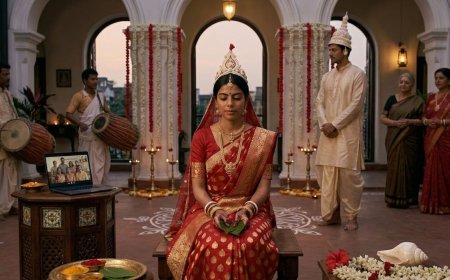
Time Zone Coordination: For family joining from Mumbai via live stream, aim for a ceremony start between 4 PM and 6 PM UK time, or between 8 AM and 10 AM US East Coast time — these windows correspond to comfortable evening hours in India. The Parsi community in Mumbai is tight-knit and your live-streaming setup will be scrutinised with love and attention to detail. Test everything twice.
Doing a Parsi Wedding as a Destination Wedding in India
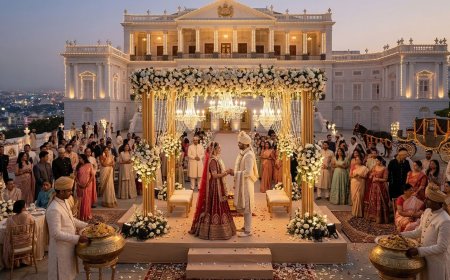
For NRI Parsi couples choosing to marry in India, the answer begins and often ends in Mumbai. The city holds the largest Parsi community in the world outside Iran, with multiple agiaries, a deep network of Mobeds, and an infrastructure of caterers, venues, and community organisations that have been managing Parsi weddings for generations. The iconic Rustom Faramna Agiary and other fire temples in the Dadar Parsi Colony area provide ceremonial settings of irreplaceable authenticity.
Surat is the other great Parsi heartland — the city where many Parsi families trace their Gujarat roots and where traditional ceremonies are conducted with a formality and completeness that even Mumbai sometimes struggles to match. For a destination wedding that immerses non-Indian guests in the full experience of Parsi community life, a Surat wedding followed by a Mumbai reception offers the best of both worlds.
When briefing local Mobeds on your specific family traditions — because Parsi families from different regions of Gujarat and Maharashtra have their own variations in prayer sequences and ritual details — put everything in writing and share it in advance. Bring photographs of how the ceremony was conducted at your parents' or grandparents' wedding if available. Local Mobeds are knowledgeable but responsive to specific family customs when those customs are clearly communicated.
For non-Parsi, non-Indian guests, prepare a detailed ceremony programme in English explaining each stage of the Ashirvad, what the Avestan prayers mean in broad terms, and what the ritual actions signify. Parsi weddings are not common experiences for outsiders, and your guests will treasure a guide that helps them understand what they are witnessing.
What You Need: Ritual Checklist
Ritual Items: Consecrated fire or arrangements for sacred fire presence, Maravni thread, white cloth for separation of couple, Supra ni Boi tray with coconut, betel leaves, betel nuts, dried dates, vermillion and eggs, rose petals and rice for showering, sudreh and kusti [the sacred cord worn by Zoroastrians] for both bride and groom, bride's traditional white or ivory dress with mathubanu [head covering], wedding garlands, Lagan nu Custard ingredients, banana leaves for Patra ni Machhi.
People Required: Two Mobeds or Dasturs for the Ashirvad ceremony, female elders for Rupiyo Peravanu dressing ceremony, community members for Supra ni Boi preparation, AV team for live streaming to Mumbai family, dedicated tech person for video call management, caterer experienced in Parsi cuisine, photographer briefed on ceremony sequence and significance.
Preparation Steps: Contact Zoroastrian Association in your city twelve months ahead. Confirm Mobeds eight to ten months ahead. Arrange sacred fire requirements with venue six months ahead. Source ritual items through Mobed or community three months ahead. Prepare English ceremony programme for non-Parsi guests two months ahead. Arrange Parsi cuisine caterer or community cooks four months ahead. Test live stream setup one week before.
NRI.Wedding connects Parsi couples with Mobeds across diaspora cities, community vendors, Parsi cuisine caterers, and photographers who understand the rarity and significance of what they are documenting. We know how much this matters.
5 Questions NRI Couples Always Ask
Can the Ashirvad be conducted at a hotel or private venue rather than an agiary?
Yes, in many diaspora cities where there is no agiary, the Ashirvad is regularly conducted at hotels, private halls, or community centres, provided a consecrated fire can be properly established at the venue. Your Mobed will guide you on the specific requirements for the fire and the sacred space. The key is early communication with both your Mobed and your venue — fire requirements need to be agreed in writing, smoke alarm protocols need to be established, and the Mobed needs to inspect or approve the space in advance.
My partner is not Parsi and not Zoroastrian. Can we still have a full Ashirvad?
This is a question with significant weight in the Parsi community, where rules around inter-marriage and the admission of non-Parsis to the religion have been debated for decades. The traditional position of the Parsi Panchayat is that Ashirvad is conducted between two Zoroastrians. However, practices vary between communities and between individual Mobeds — some will conduct a modified blessing ceremony for interfaith couples. This conversation must happen directly and honestly with your Mobed and your community elders. Approach it with full transparency and respect for the tradition's boundaries, while also being clear about your own situation. There is no single universal answer, but there is a conversation worth having.
How do we make the Avestan prayers meaningful for guests who don't understand the language?
The most effective approach is a beautifully designed ceremony programme — not a translation of the Avestan text, which is liturgically complex, but a page-by-page description of what each prayer is asking for and what each ritual action means. Many Mobeds will also be willing to offer brief spoken explanations in English at key moments of the ceremony. Ask your Mobed in advance whether they are comfortable doing this and how they prefer to structure it.
We need to coordinate the ceremony with family in Mumbai who cannot travel. What is the best setup?
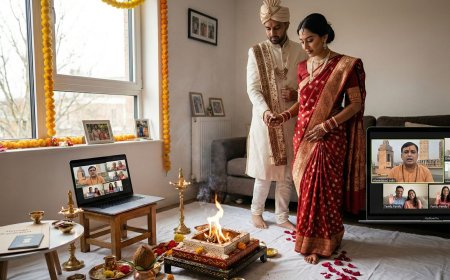
Position a dedicated tablet or laptop on a stable, elevated stand where Mumbai family can see both the couple and the fire throughout the ceremony. Assign someone specifically to manage this connection — not someone with a ceremonial role — and ensure they have a charged backup device. Test the connection at the same time of day, twenty-four hours before the wedding, to verify lighting and audio levels. The Ashirvad prayers carry a specific acoustic quality; ensure your microphone setup captures the Mobeds clearly for remote family.
Should we complete our civil registry before or after the Ashirvad?
Most NRI Parsi couples in the UK, Australia, and Canada complete the civil registry separately — often weeks or even months before the Ashirvad — and treat the Ashirvad as the wedding in every meaningful sense. The civil certificate is a legal document. The Ashirvad is the moment your community, your priests, and your sacred fire witness your union. Your family will count the Ashirvad date as your anniversary. So will you, in your heart.
The Emotional Angle
There is something that happens when you sit before the fire at your Ashirvad that is almost impossible to prepare for. You have heard the Avestan prayers your entire life — at Navjotes, at funerals, at New Year celebrations — and you thought you knew what they sounded like. But when the Mobed begins and the prayers are for you, specifically for you and the person sitting across from you, the familiar sounds become something else entirely.
For NRI Parsi families, the Ashirvad carries a weight that goes beyond the personal. The global Parsi community is shrinking. Every wedding is therefore not just a celebration but a statement — we are still here, we are still choosing this, we are still carrying this fire. The community members who fill the room at a Parsi Ashirvad are not simply guests. They are witnesses to an act of civilisational continuity. They know it. You know it. The Mobed reciting three-thousand-year-old prayers in a community centre in Harrow or a hotel ballroom in Toronto knows it.
The thread winds around your hands seven times. The white cloth falls. The rice and rose petals come down like a small, beautiful storm. And somewhere in Mumbai, the family watching on a laptop screen is crying, because they recognise every word of what is being said, and they know that the fire has not gone out.
It never goes out.
A Moment to Smile
At a Parsi wedding in Melbourne three years ago, the catering team — briefed extensively on the non-negotiable centrality of the Lagan nu Custard — produced a dessert that the bride's aunt described, upon first tasting, as "structurally correct but spiritually absent." The aunt in question, seventy-three years old and resident of Melbourne for thirty-one years, spent the remainder of the reception at the kitchen pass directing adjustments to the saffron and rose water ratios with the focused authority of someone who had made this custard for forty years and was not about to watch it fail at her niece's wedding.
The second batch, produced under her direct supervision, was consumed entirely within twenty minutes. The caterer asked for the recipe. The aunt smiled and said she would think about it. She has not yet provided it. This is considered correct behaviour.
Quotes From the Diaspora
"When the Mobed started the Ashirvad prayers, I had this moment of complete stillness. I thought — this is exactly what my grandmother heard at her wedding in Surat in 1954. The same words. The same fire. That continuity is everything to me." — Shireen Irani, Parsi Zoroastrian, London
"My daughter-in-law is not Parsi. The community had feelings about this. But when she stood at that ceremony with such reverence — she had learned what every part of it meant — I saw people's hearts change in real time. Respect is its own kind of belonging." — Mehroo Contractor, Parsi, resident of Toronto for twenty-four years, mother of the groom
"We did our Ashirvad in Houston. There were eleven Parsis in the room, including the Mobed. Eleven people. But those eleven people made it feel like the whole community was there, because in a way, it was — we are all carrying the same thing." — Zarine Panthaky, Parsi Zoroastrian, Houston
Your Fire Travels With You
The Parsi Zoroastrian wedding tradition is not merely ancient. It is alive — carried in the prayers of Mobeds, in the hands of aunties who make Lagan nu Custard from memory, in the white thread wound seven times around joined hands in cities the original Zoroastrian refugees could never have imagined. It has survived the fall of empires, the crossing of oceans, and the slow arithmetic of a shrinking community that refuses to let its fire go out.
If you are planning your Ashirvad — in London or Melbourne, in Mumbai or Surat, in Toronto or Houston — NRI.Wedding is here to help you do it with full ceremonial integrity. From Mobeds and sacred fire arrangements to Parsi cuisine caterers, community vendors, and photographers who understand the rarity and beauty of what they are documenting, we are here for every prayer, every circle of thread, every grain of rice.
Light the fire. Say the words. Let the cloth fall.
Your fire travels with you. Keep it burning.
This article covers Parsi Zoroastrian wedding traditions including the Ashirvad ceremony, Haath Borvanu, and Supra ni Boi rituals, with practical planning guidance for NRI Parsi couples in the UK, Canada, Australia, and the US, and destination wedding guidance for Mumbai and Surat.
What's Your Reaction?
 Like
0
Like
0
 Dislike
0
Dislike
0
 Love
0
Love
0
 Funny
0
Funny
0
 Angry
0
Angry
0
 Sad
0
Sad
0
 Wow
0
Wow
0