

















































Taj Amer Jaipur — A Wedding for 2,000 Guests Near Amber Fort: The NRI Large-Format Jaipur Guide — The Complete NRI Wedding Planning Guide
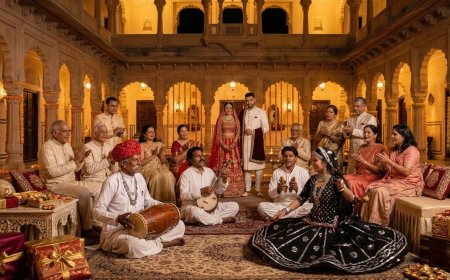
Suresh had a number that nobody else in the destination wedding planning conversation was prepared to take seriously. The number was eight hundred. Not eight hundred as a maximum or as the outer limit of what could theoretically be managed at a heritage property with careful crowd control. Eight hundred as the working assumption — the number of guests that the Indian side of the family alone represented, before the groom's London connections and the bride's Toronto colleagues and the international friends from both sides were added to the count. He had been told, politely and with varying degrees of directness, by three wedding planners and two venue representatives, that eight hundred guests was not a destination wedding. It was a mass gathering. That the destination wedding format was calibrated for a guest list that began at fifty and stretched, at the most ambitious, to three hundred. Suresh had listened to all of these opinions. He had considered them. He had rejected them. The eight hundred guests were not an excess. They were the family. The love letter of the wedding. He was not reducing the size of the love letter. One planner, in the course of explaining why the heritage venues could not manage his numbers, let slip: there is one property near the Amber Fort that has the capacity. The Taj Amer. A primary event lawn that accommodates two thousand standing guests. The Amber Fort on the ridge above the northern boundary, illuminated at night, visible from every outdoor event space on the property. The large-format Taj Hotels property that the boutique wedding planning conversation had been systematically undervaluing because its commission structure pointed toward smaller venues. This guide gives NRI couples the complete framework for the Taj Amer large-format wedding — every event space with detailed pricing, the Amber Fort backdrop imperative, the large-format planner requirement, the drone photography case, the three-day program at scale, and the specific mistakes that separate the couple who owns the large wedding from the couple who apologises for it.


Taj Amer Jaipur — A Wedding for 2,000 Guests Near Amber Fort: The NRI Large-Format Jaipur Guide — The Complete NRI Wedding Planning Guide
Suresh had a number that nobody else in the destination wedding planning conversation was prepared to take seriously.
The number was eight hundred. Not eight hundred as a maximum, not eight hundred as the outer limit of what could theoretically be managed at a heritage property with careful crowd control and supplementary catering stations. Eight hundred as the working assumption — the number of guests that the Indian side of the family alone represented, before the groom's London connections and the bride's Toronto colleagues and the international friends from both sides of a relationship that had been built across two continents over eleven years were added to the count.
He had been told, politely and with varying degrees of directness, by three wedding planners and two venue representatives, that eight hundred guests was not a destination wedding. It was a mass gathering. That the destination wedding format — the intimate setting, the heritage property, the personal experience — was calibrated for a guest list that began at fifty and stretched, at the most ambitious, to three hundred. That above three hundred, the intimate quality that justified the destination format was diluted beyond recovery and the couple would be better served by a large city hotel with a ballroom of sufficient capacity.
Suresh had listened to all of these opinions. He had considered them. He had rejected them.
Not because he was unreasonable or because he had not understood the argument. Because the argument, however logically presented, missed a fundamental truth about his family and his fiancée Anita's family and the specific culture of Indian celebration that both families had been practising for generations. The eight hundred guests were not an excess. They were the family. Not the extended family in the loose sense of people who had met once at a distant cousin's wedding and been included on the list by obligation. The actual family — the people who had been at every significant event of both families' lives across three generations, who had travelled from Rajasthan and Mumbai and London and Toronto for every wedding and every naming ceremony and every significant occasion, who would be genuinely hurt not by the absence of a heritage property backdrop but by the absence of an invitation.
The eight hundred guests were the love letter of the wedding. He was not reducing the size of the love letter.
He had found the Taj Amer through a specific piece of information that one of the planners had let slip in an otherwise discouraging conversation about large-format destination weddings in Jaipur. The planner had said, in the course of explaining why the heritage venues could not manage his numbers: there is one property near the Amber Fort that has the capacity. It is the Taj. But it is not — and here the pause had been audible — what most of our clients are looking for. Suresh had asked: what are most of your clients looking for? The planner had said: something smaller. Suresh had said: I am not most of your clients. Tell me about the Taj Amer.
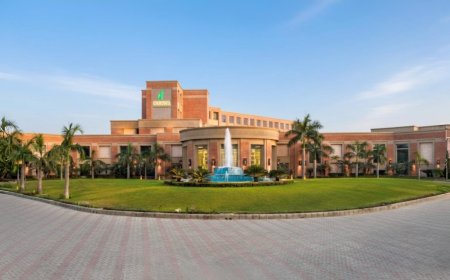
The Taj Amer, the planner had explained with the specific reluctance of someone whose commission structure pointed toward smaller venues, was a large-format Taj Hotels property on the Amer road outside Jaipur, adjacent to the historic Amber Fort, with one of the largest outdoor event capacities of any hotel in Rajasthan. The primary event lawn alone could accommodate two thousand standing guests. The combined capacity of all the property's event spaces, across multiple simultaneous activations, could manage a wedding program for a guest list significantly above a thousand.
Suresh had said: book the site visit.
This guide is for every NRI couple whose guest list has been generating polite discouragement from the heritage venue circuit — for Suresh in London and every couple who deserves the complete framework for the large-format Jaipur wedding that puts two thousand guests in the shadow of the Amber Fort.
Understanding Taj Amer: The Large-Format Palace Hotel
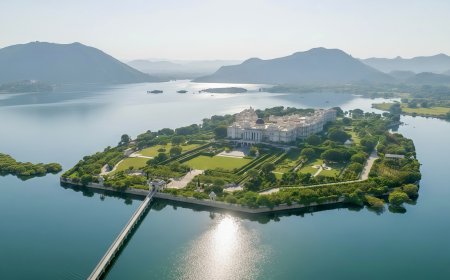
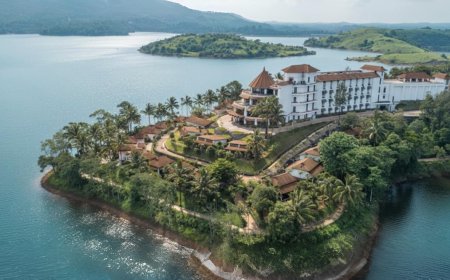
The Taj Amer Jaipur is a large-format luxury hotel on the Amer road — the road that leads from the heart of Jaipur to the Amber Fort, one of the most visited and most photographed heritage monuments in Rajasthan — positioned in the specific landscape where the Jaipur plains transition to the Aravalli foothills and the fort-studded ridgeline that defines the city's northeastern horizon.
The property was developed by the Taj Hotels group as the flagship large-format luxury property in the Jaipur market — the hotel for the guests and the events that the heritage boutique properties could not accommodate, the conferences and the large corporate gatherings and, critically, the large Indian weddings for which Jaipur had always been a preferred destination but for which the heritage venue landscape had always provided insufficient capacity for the truly large guest list.
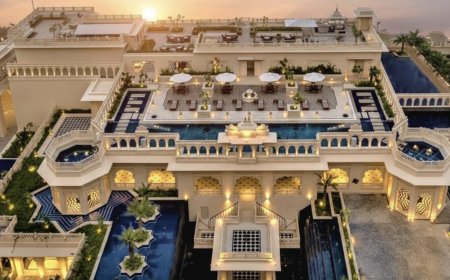
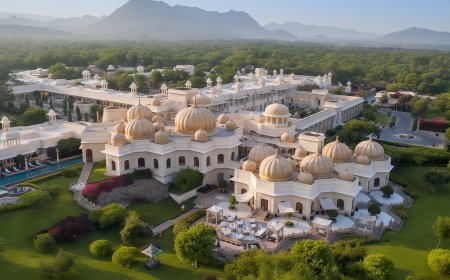
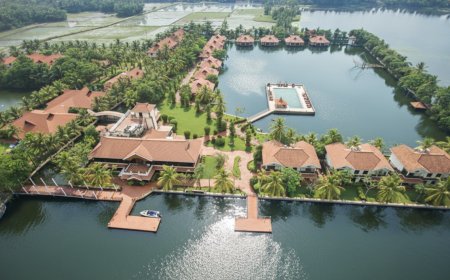
The hotel has two hundred and sixteen rooms and suites, distributed across a property whose footprint is considerably larger than most of the heritage properties discussed in this series. The outdoor event infrastructure — the lawns, the gardens, the terraces — has been specifically developed for the large-format wedding and event market, with the primary event lawn sized for the genuinely large Indian wedding rather than the boutique destination gathering. The indoor ballroom infrastructure matches the outdoor capacity, with multiple ballroom spaces that can be used simultaneously or combined for events of significant scale.
The Amber Fort is visible from multiple positions within the Taj Amer property — the fort on its Aravalli ridge, illuminated at night, providing the specific heritage backdrop that the destination wedding in this location requires. The fort's proximity — the Taj Amer is positioned within the Amber road corridor that leads to the fort, within sight of its southern battlements — gives the property the heritage context that the large-format wedding needs to justify the destination format. The wedding that takes place at the Taj Amer is not merely a large hotel wedding that happens to be in Jaipur. It is a large hotel wedding in the shadow of one of the most extraordinary fort complexes in India, with the fort's silhouette on the ridge as the permanent backdrop to every outdoor event.
The Amber Fort: The Wedding's Permanent Backdrop
The Amber Fort — the Amer Qila — was built by the Kachawaha Rajputs over a period of approximately one hundred years between the late sixteenth and early eighteenth centuries, on a ridge of the Aravalli hills above the old capital of Amer, eleven kilometres from Jaipur. The fort is among the finest examples of Rajput architecture in India — its Sheesh Mahal, its Diwan-i-Khas, its formal garden courtyard, and the specific quality of the approach through the Maota Lake reflecting the fort's lower battlements have made it one of the most photographed buildings in the subcontinent.
The fort that is visible from the Taj Amer's outdoor event spaces is not the distant silhouette of a fort that happens to be in the general direction of the venue. It is the Amber Fort, close enough to be read architecturally, its battlements and its towers and the specific profile of its Rajput construction visible in the quality of detail that the nearby position provides. At night, when the fort is illuminated, its presence above the Taj Amer's event spaces produces the specific quality of having a lit palace on the horizon — the orange-gold of the floodlit sandstone against the Jaipur night sky, visible from every outdoor event space on the property, providing the heritage backdrop that no interior designer and no decorator can manufacture.
For the large NRI wedding — the wedding for eight hundred or a thousand or two thousand guests — the Amber Fort backdrop resolves one of the primary aesthetic challenges of the large-format event: the challenge of providing a visual context that is worthy of the occasion when the occasion is too large for the intimate heritage property. The Amber Fort as backdrop scales to any event size. It is visible from two thousand positions simultaneously. It is the same extraordinary thing whether seen by fifty guests or two thousand. The large-format wedding at the Taj Amer has the most important visual element of its setting provided by history and by geography rather than by the event design, and this matters.
The NRI Large-Format Wedding: Understanding What the Scale Requires
The wedding for eight hundred or a thousand or two thousand guests is not simply a larger version of the wedding for one hundred and fifty. It is a different operational category — a different set of challenges, a different planning framework, a different relationship between the couple and the event — and the guide that treats it as merely a scaling problem rather than a structural one is not serving the couple who needs to understand what managing this scale actually requires.
The catering operation for two thousand guests is a professional food service operation of significant complexity. The kitchen infrastructure, the service staff-to-guest ratio, the logistics of serving a multi-course meal to two thousand covers simultaneously, the food safety and temperature management requirements of a large banquet operation — these are the specific challenges of the large-format wedding catering that the boutique venue's kitchen is not designed to manage and that the Taj Amer's kitchen infrastructure specifically is.
The sound system for an outdoor event of two thousand guests is a professional audio installation of a scale that requires specific engineering — the line arrays, the delay stacks, the monitoring infrastructure — that produces consistent sound quality across the entire guest area rather than the degraded experience of the guests at the perimeter of the event space who are beyond the effective throw of an insufficiently scaled system. The Taj Amer's outdoor event infrastructure includes the power supply, the rigging points, and the ground conditions that the professional outdoor audio installation requires. The boutique heritage venue's courtyard does not.
The guest management at an event of two thousand people — the arrival flow, the seating allocation, the catering service sequencing, the bar service distribution, the departure management — is a logistics operation that requires specific planning and specific staffing at a scale that the intimate heritage venue's event management team is not structured to provide. The Taj Amer's event management infrastructure, built for the large-format corporate and wedding market, provides the operational framework for this scale as a matter of routine rather than as an extraordinary challenge.
The NRI couple who chooses the Taj Amer for a large-format wedding is choosing a venue that is specifically designed for the scale of their event. This is not a compromise. It is the correct choice.
The Event Spaces: Capacity at Every Level
The Amber Lawn: The 2,000-Guest Outdoor Centrepiece
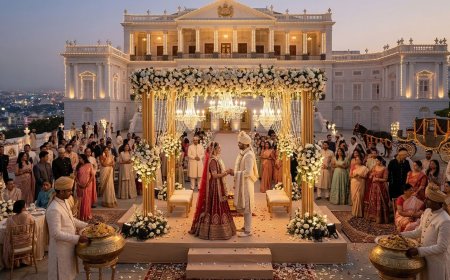
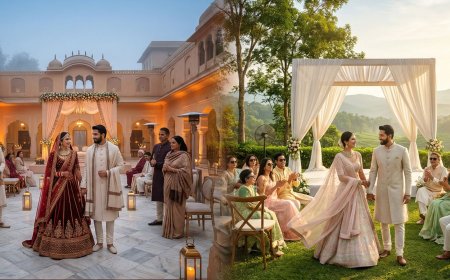
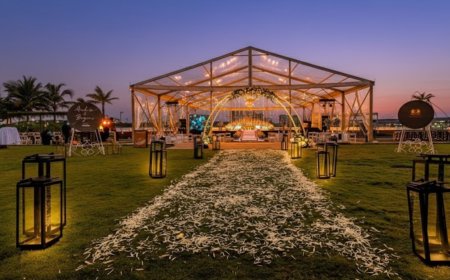
The Amber Lawn is the primary outdoor event space of the Taj Amer and the space that makes the property unique in the Jaipur wedding market. The lawn is the largest single outdoor event space available at any hotel in Rajasthan — a vast, level, well-maintained lawn that accommodates up to two thousand guests for a standing reception and up to twelve hundred for a seated dinner. The Amber Fort is visible above the lawn's northern edge, its battlements and towers providing the permanent backdrop that the lawn's scale requires.
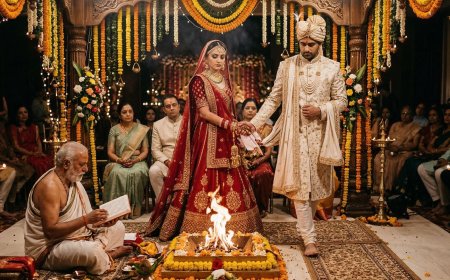
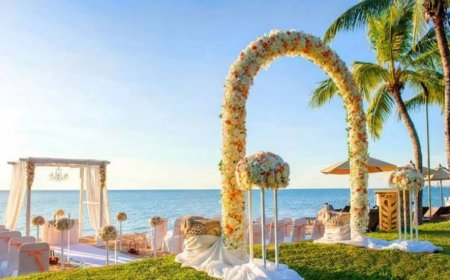
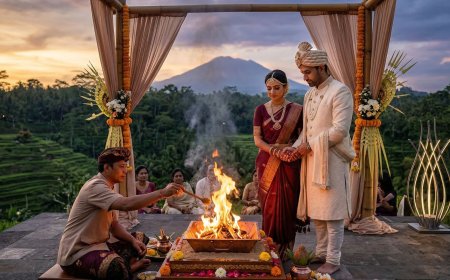
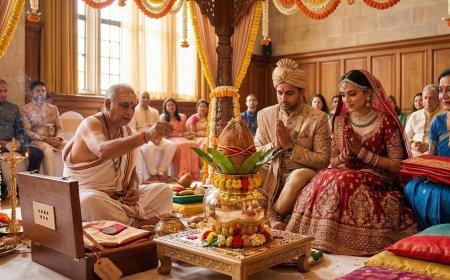
The ceremony on the Amber Lawn — the mandap positioned at the centre of the vast space, the two thousand guests arranged in concentric formations around the ceremony structure, the Amber Fort on the ridge behind — is a ceremony of genuinely monumental scale. Not the intimate ceremony of the boutique heritage wedding. A different thing: the public ceremony, the ceremony that is witnessed rather than merely attended, the ceremony whose scale communicates something about the family that has gathered — the love letter of the wedding made visible in the number of people standing in the field.
The logistical management of two thousand guests on the Amber Lawn — the arrival flow, the seating configuration, the audio coverage, the catering service, the departure — requires specific planning that the Taj Amer's event management team has the infrastructure and the experience to provide. The couple who briefs the event team on the guest count and the program at the beginning of the planning process, rather than discovering the operational requirements incrementally, is the couple whose Amber Lawn event runs smoothly.
The Mughal Garden: The Formal Ceremony Alternative
The Mughal Garden — a formally designed garden space within the hotel property, laid out in the charbagh tradition with the water features and the formal planting geometry of the Mughal garden vocabulary — provides the formal ceremony alternative for the couple whose ceremony requires the structure and the visual vocabulary of the historic garden rather than the open scale of the Amber Lawn.
The Mughal Garden accommodates up to five hundred guests for a seated ceremony and up to eight hundred for a standing reception. Its specific quality is the formal garden enclosure — the water channels and the parterres and the formal planting providing the architectural organisation of the outdoor space — that produces a ceremony setting of structured grandeur rather than the open-field scale of the Amber Lawn.
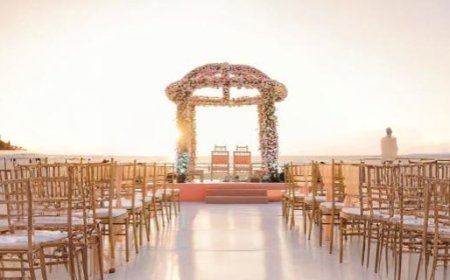
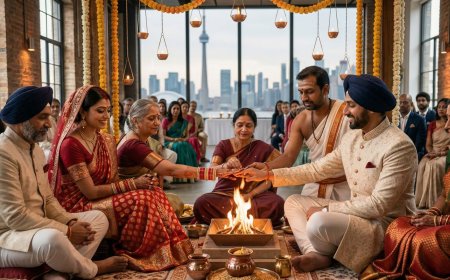
The pheras in the Mughal Garden — the mandap at the garden's formal centre, the water channels visible on either side, the charbagh geometry organising the ceremony space, the fort visible above the garden's northern boundary — is the ceremony setting that combines the historical garden vocabulary with the fort backdrop in a composition that is specifically of this place and this tradition.
The Grand Ballroom: The Indoor Ceremonial Heart
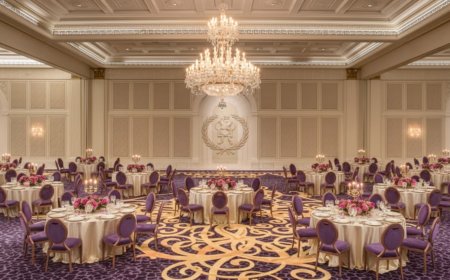
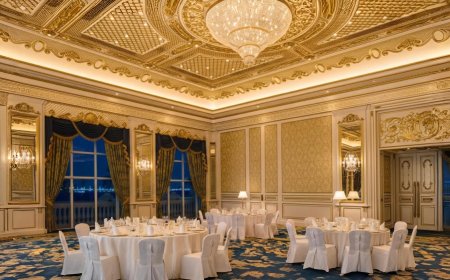
The Grand Ballroom of the Taj Amer is one of the largest hotel ballrooms in Jaipur — a formally configured indoor event space with the technical infrastructure and the operational capacity for the large-format NRI wedding's most demanding events. The ballroom accommodates up to two thousand guests for a standing reception and up to twelve hundred for a seated dinner.
The Grand Ballroom's technical infrastructure — the professional sound system, the lighting grid designed for the event market, the staging infrastructure, the kitchen adjacency and the service logistics — is the contemporary Taj Hotels event standard applied to a space of significant scale. The sangeet for a thousand guests, the formal wedding dinner for eight hundred seated guests, the elaborate ceremony with professional production — these are events that the Grand Ballroom accommodates as a matter of operational routine.
The ballroom can be divided into separate sections for simultaneous events — the wedding ceremony in one section, the children's entertainment in another, the overflow seating from the main ceremony in a third — producing the operational flexibility that the complex, multi-component large-format wedding program requires.
The Poolside Lawn: The Social Event Space
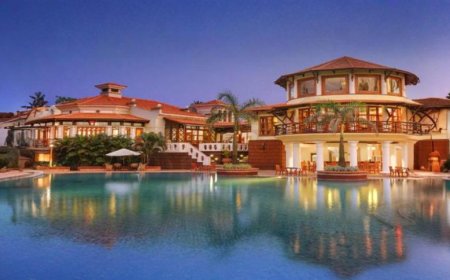
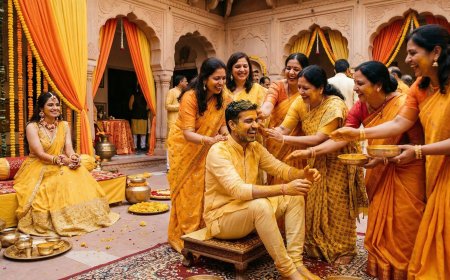
The poolside lawn — the outdoor space surrounding the hotel's swimming pool and the associated garden areas — provides the social event space for the informal elements of the wedding program. The mehendi ceremony, the haldi, the morning gatherings of the multi-day program — these are the events that the poolside lawn accommodates with the combination of outdoor openness and the hotel's architectural containment.
The poolside lawn accommodates up to four hundred guests for a standing reception and up to two hundred and fifty for a seated event. At the scale of the large NRI wedding, the poolside lawn is the space where the manageable subset of the guest list — the inner circle, the immediate family, the closest friends — can have the intimate experience that the Amber Lawn's scale cannot provide. Design the program to use the poolside lawn for the events where intimacy matters most, and the Amber Lawn for the events where scale communicates the wedding's character most directly.
The Pre-Function Areas and Garden Terraces
The pre-function areas and garden terraces of the Taj Amer — the transition spaces between the ballroom and the outdoor event areas, the upper terraces with the Amber Fort views, the garden walkways that connect the different zones of the property — provide the social infrastructure for the large event that the primary event spaces cannot fully accommodate. The arrival cocktail reception, the transition between the ceremony and the dinner, the post-ceremony gathering of the family's inner circle while the reception is being configured — these are the events that the pre-function areas accommodate with the specific combination of architectural enclosure and the fort backdrop that the property's position provides.
Complete Pricing and Planning Reference
| Category | Detail | Approximate Range | Notes |
|---|---|---|---|
| Amber Lawn venue hire | Up to 1,200 seated / 2,000 standing | ₹15,00,000–₹30,00,000 per event | Largest outdoor space in Jaipur; fort backdrop |
| Mughal Garden venue hire | Up to 500 seated / 800 standing | ₹8,00,000–₹16,00,000 per event | Formal ceremony; charbagh geometry |
| Grand Ballroom venue hire | Up to 1,200 seated / 2,000 standing | ₹18,00,000–₹35,00,000 per event | Full production infrastructure; divisible |
| Poolside Lawn venue hire | Up to 250 seated / 400 standing | ₹5,00,000–₹10,00,000 per event | Mehendi, haldi, intimate sub-events |
| Pre-Function and Terrace hire | Up to 300 standing | ₹3,00,000–₹6,00,000 per event | Cocktail, transition, arrival gathering |
| Accommodation — Deluxe Room per night | Standard hotel rooms | ₹15,000–₹25,000 | Contemporary luxury; garden views |
| Accommodation — Premier Room per night | Superior position | ₹22,000–₹35,000 | Enhanced views; Aravalli or fort facing |
| Accommodation — Suite per night | Full suite | ₹45,000–₹85,000 | Palace suites; Amber Fort views |
| Accommodation — Presidential Suite per night | Flagship accommodation | ₹1,20,000–₹2,00,000+ | Full butler service; panoramic fort view |
| Catering per cover — multi-course dinner | Large banquet | ₹3,500–₹6,000 | Taj culinary team; large-scale service |
| Catering per cover — daytime event | Lunch or breakfast | ₹2,000–₹3,500 | Full service; multiple stations |
| Décor and florals per event | Full wedding decoration | ₹10,00,000–₹40,00,000+ | Scale-appropriate; fort vocabulary |
| Photography and videography | Full wedding | ₹3,50,000–₹12,00,000 | Large-format specialists; drone essential |
| Sound and lighting per event | Large outdoor | ₹4,00,000–₹10,00,000 | Professional line arrays; full coverage |
| Wedding planner fee | Large-format specialist | ₹8,00,000–₹20,00,000 | Large NRI wedding experience essential |
| Transport — Jaipur airport to Taj Amer | Per vehicle | ₹1,000–₹2,000 | 20 minutes; Amer road |
| Total three-day wedding — 500 guests | Without full buyout | ₹1,50,00,000–₹2,80,00,000 | Full program; standard NRI large wedding |
| Total three-day wedding — 800 guests | Full program | ₹2,20,00,000–₹4,00,00,000 | Complete large-format program |
| Total three-day wedding — 1,500+ guests | Full program | ₹3,50,00,000–₹7,00,00,000+ | Maximum scale; peak season premium |
The Large-Format Wedding Planner: Why the Specialist Is Non-Negotiable
The large-format wedding — the wedding for five hundred, eight hundred, a thousand, two thousand guests — requires a wedding planner who has specifically managed events at this scale and who has the operational systems, the vendor network, and the on-the-ground staffing structure that the large event requires. The boutique destination wedding planner, however excellent their work at the intimate heritage property, is not the right planner for the Taj Amer wedding of a thousand guests. The scale of the operational challenge is different in kind, not merely in degree.
The large-format wedding planner manages a team, not a collection of vendor relationships. They have a senior event coordinator, multiple junior coordinators, a dedicated logistics manager, a dedicated guest management coordinator, and the on-the-ground staffing that the arrival of two thousand guests at a single venue requires. They have managed the catering operation for a thousand seated covers before and know the specific failure modes — the cold food, the service sequencing problems, the bar queue management — that occur when the large banquet is not properly planned. They have managed the audio installation for two thousand outdoor guests and know the specific acoustic challenges of the Amber Lawn that the standard outdoor audio solution does not address.
Finding the right large-format wedding planner for the Taj Amer requires asking specifically about scale. Not: have you worked at the Taj Amer? But: what is the largest wedding you have managed, what was the specific operational challenge at that scale, and how did you resolve it? The planner who answers this question with specific, operational detail — the detail of someone who has actually managed the large event and who knows its specific problems — is the planner to appoint. The planner who answers with general statements about their experience is the planner who has not managed the scale and whose learning curve is the couple's operational risk.
The Drone Photography Imperative
The large-format wedding at the Taj Amer has a specific photography requirement that does not apply in the same way to any other venue in this series: the drone.
The aerial perspective is the only perspective from which the full scale of the large NRI wedding can be photographed as a single composition. The ground-level photograph of a thousand guests on the Amber Lawn shows a partial view of a large crowd. The aerial photograph of a thousand guests on the Amber Lawn — the entire assembly visible, the mandap at the centre, the Amber Fort on the ridge above the northern boundary of the lawn — shows the entire event as a single image of extraordinary power. The family standing in formation for the group photograph, arranged around the couple at the centre of the Amber Lawn with the fort behind them: this is an image that is only available from the air.
The drone photography brief for the Taj Amer wedding should specify the aerial positions that use the fort backdrop most directly — the shot from the north that places the fort above the assembly, the shot from the height that shows the full extent of the lawn and the full assembly of guests, the movement shot that begins at the crowd level and rises to reveal the fort above — as the primary objectives for the aerial footage. The videographer who has not worked at the Taj Amer before will not know these positions without the briefing. The planner who has worked there will.
Designing the Large-Format Program: Three Days at Scale
The three-day program for a wedding of eight hundred to two thousand guests requires a different structural approach from the program for a hundred and fifty guests, and the differences are worth specifying rather than leaving to the couple's intuition.
The first day — the arrival day — is the day when the guest management challenge is most significant and the event quality most difficult to maintain. Eight hundred guests arriving at the Taj Amer across a six-hour arrival window requires specific management: the check-in process for two hundred and sixteen hotel rooms plus the overflow accommodation in nearby Jaipur hotels, the transport coordination from Jaipur airport and the city's hotels, the welcome event that is sized and programmed to absorb the arriving guests in waves rather than requiring everyone to be present simultaneously. Design the arrival day's welcome event as a flowing, informal gathering rather than a formal event with a fixed start time. The guests who arrive at two in the afternoon should have something to attend. The guests who arrive at eight in the evening should have something to attend. The flowing welcome does not require the logistical precision of the formal event and does not penalise the guests who arrive early or late.
The second day — the main ceremony day — is the day when the Amber Lawn performs its most important function. The ceremony should be scheduled for the late afternoon, when the Amber Fort catches the golden hour light and the lawn is in the warm pre-sunset illumination that the Jaipur November and December produce. The ceremony for a thousand guests on the Amber Lawn requires the arrival management of a thousand people finding their seats within a forty-five minute window — a process that requires specific planning, specific signage, specific staff at specific positions, and a ceremony start time that has been communicated to guests with sufficient clarity that the window is actually observed. The reception dinner that follows the ceremony requires the same level of planning for the catering service — the sequencing of a thousand covers in a format that maintains food quality and service warmth is a specific operational challenge that the planning must address explicitly.
The third day — the departure day — is the day that the large-format wedding most frequently mismanages. The departure of eight hundred guests from a Jaipur hotel, coordinating airport transfers for international guests, city transfers for domestic guests, and the specific logistics of the guests who are staying on for sightseeing — this is a logistics operation of significant complexity that requires a dedicated coordinator and a specific departure management plan. Build the departure plan with the same detail as the arrival plan. The guests who leave well — who have their transport coordinated, who know when to be in the lobby, who receive their farewell gift as they depart — leave with a final impression of the wedding that the departure experience determines as much as the ceremony.
The Amber Fort Visit: Making the Heritage Accessible at Scale
The Amber Fort is not merely the backdrop of the Taj Amer wedding. It is one of the most extraordinary heritage monuments in India, and the NRI couple whose international guests have come to Jaipur specifically because of the wedding has an obligation to give those guests the fort experience — the guided tour of the interior, the elephant ride to the fort gate, the specific encounter with the Sheesh Mahal and the Diwan-i-Khas and the formal garden courtyard — that the proximity of the Taj Amer makes straightforwardly possible.
The fort visit for a large wedding group requires specific coordination. The Amber Fort has a timed entry system and a maximum visitor capacity that applies even to organised wedding groups. The group visit should be booked through the fort's management in advance, with the specific date and the approximate group size confirmed. The visit should be guided — a knowledgeable guide for each sub-group of twenty to thirty guests, ensuring that everyone can hear the explanation and that the movement through the fort's many spaces is coordinated.
The morning of the pre-wedding day — the first day of the three-day program, after the arrival and before the mehendi ceremony — is the natural scheduling position for the fort visit. The coaches depart from the Taj Amer at eight in the morning. The group reaches the fort in fifteen minutes. Two hours in the interior. The coaches return for lunch. The afternoon mehendi begins with guests who have spent their morning inside one of the finest fort complexes in India and who understand, now, why the fort on the ridge has been the backdrop to everything since they arrived.
Common Mistakes NRI Couples Make With the Taj Amer Large-Format Wedding
The first mistake is not appointing the large-format specialist planner from the beginning. The boutique wedding planner who manages the intimate heritage property wedding is not the right planner for the Taj Amer wedding of a thousand guests. This is not a judgment on the boutique planner's quality. It is a statement about the difference in operational scale. The large-format wedding requires the large-format planner. Appoint them before any other vendor. Their vendor network, their operational systems, and their specific experience at this scale are the foundation on which every other planning decision rests.
The second mistake is not building the arrival day's welcome event as a flowing, informal program. The formal welcome event with a fixed start time for eight hundred arriving guests is the welcome event that has half the guests missing the opening because they arrived after the event began. The flowing welcome — the outdoor reception that runs from four in the afternoon to nine in the evening, that absorbs guests as they arrive, that has food and drink and entertainment available throughout rather than at a fixed moment — is the welcome event that works at this scale.
The third mistake is under-resourcing the guest management staffing. The arrival of a thousand guests at a single venue over a six-hour window requires specific staffing — the reception desk staff, the room allocation coordinator, the transport coordinator, the welcome event manager — that exceeds what the hotel's own front-of-house staffing provides as a matter of course. Supplement the hotel's staffing with the wedding planner's own operational team. The guest who arrives at the Taj Amer for the large NRI wedding and is met with the disorganisation of under-staffed arrival management has their first impression of the wedding shaped by that disorganisation, regardless of how extraordinary the subsequent events are.
The fourth mistake is not commissioning the drone photography. The aerial perspective is the only perspective from which the full scale of the large NRI wedding can be photographed as a single composition, and the Amber Fort backdrop makes the aerial photograph of the Taj Amer wedding among the most extraordinary wedding images available at any venue in India. Commission the drone operator. Brief them on the fort positions. Ensure their operating permit for the Amber Fort proximity zone has been obtained in advance — the fort's proximity to the hotel requires specific clearance for drone operation that must be secured through the appropriate channels before the wedding day.
The fifth mistake is treating the large format as an apology rather than as a celebration. The NRI couple who has invited eight hundred or a thousand or two thousand guests and who begins the planning conversation with the apologetic framing of it is a big wedding — the framing that implies that bigness is a problem rather than a quality — is starting the planning from a position of unnecessary self-deprecation. The large Indian wedding is not the intimate wedding with a problem. It is a different and specific form of celebration — the celebration that encompasses the full community of the family, that communicates through its scale the depth of the relationships that the family has built across generations, that is large because the love is large. Own the size. Plan for it with the seriousness and the precision it deserves. Celebrate the eight hundred guests as the eight hundred people without whom the love letter would be incomplete.
Suresh's wedding was in December, on the second Saturday of the month when the Jaipur winter was producing the specific quality of cool clear weather that the city reserves for its most important occasions. The ceremony was on the Amber Lawn at four-thirty in the afternoon, with nine hundred and twelve guests arranged in the specific formation that the event management team had planned in the preceding months — the concentric semicircles of seating around the central mandap, the aisles that allowed the procession to move through the assembly, the sound coverage that put the pandit's voice in equal quality at the front row and the back.
At four forty-five the Amber Fort caught the light. The battlements and the towers and the specific Rajput profile of the fort's construction turned the specific orange-gold that the Jaipur sandstone produces at this hour, and the nine hundred and twelve guests and the couple at the pheras and the pandit and the family members in the ceremony space all had the fort in their peripheral vision simultaneously.
Suresh's grandmother, who was eighty-four and who had attended more than forty weddings in her life and who was seated in the front row with the specific privilege of the family elder, looked at the fort for a moment between the pheras. Then she looked at her grandson. Then she said something in Rajasthani that his aunt, seated beside her, translated afterward as: this is what a wedding is supposed to be.
She was right. Nine hundred and twelve people. The Amber Fort. The December light.
That is what a wedding is supposed to be when the family is this large and the love letter is this long.
Appoint the large-format planner first. Build the arrival as a flowing welcome rather than a fixed event. Staff the guest management at the scale the event requires. Commission the drone. Invite the eight hundred. Put them on the lawn. Let the fort be in the sky above all of them simultaneously.
The fort has been receiving large gatherings on the plain below it since 1592. It knows how to be the backdrop. It has always known.
Published by NRIWedding.com — The Premium Global Platform for Non-Resident Indians Planning Indian Weddings From Abroad.
What's Your Reaction?
 Like
0
Like
0
 Dislike
0
Dislike
0
 Love
0
Love
0
 Funny
0
Funny
0
 Angry
0
Angry
0
 Sad
0
Sad
0
 Wow
0
Wow
0